
The American Hop-hornbeam is such a special tree that it has at least a dozen names. Aside from its Latin name of Ostrya virginiana, it goes by: American Hop-hornbeam, American Hophornbeam, Eastern Hop Hornbeam, Hop Hornbeam, Hophornbeam, Hop Horn Beam, Ironwood, Leverwood, Wooly Hop hornbeam, Virginia Hornbeam.
.
How to Identify the American Hop-Hornbeam
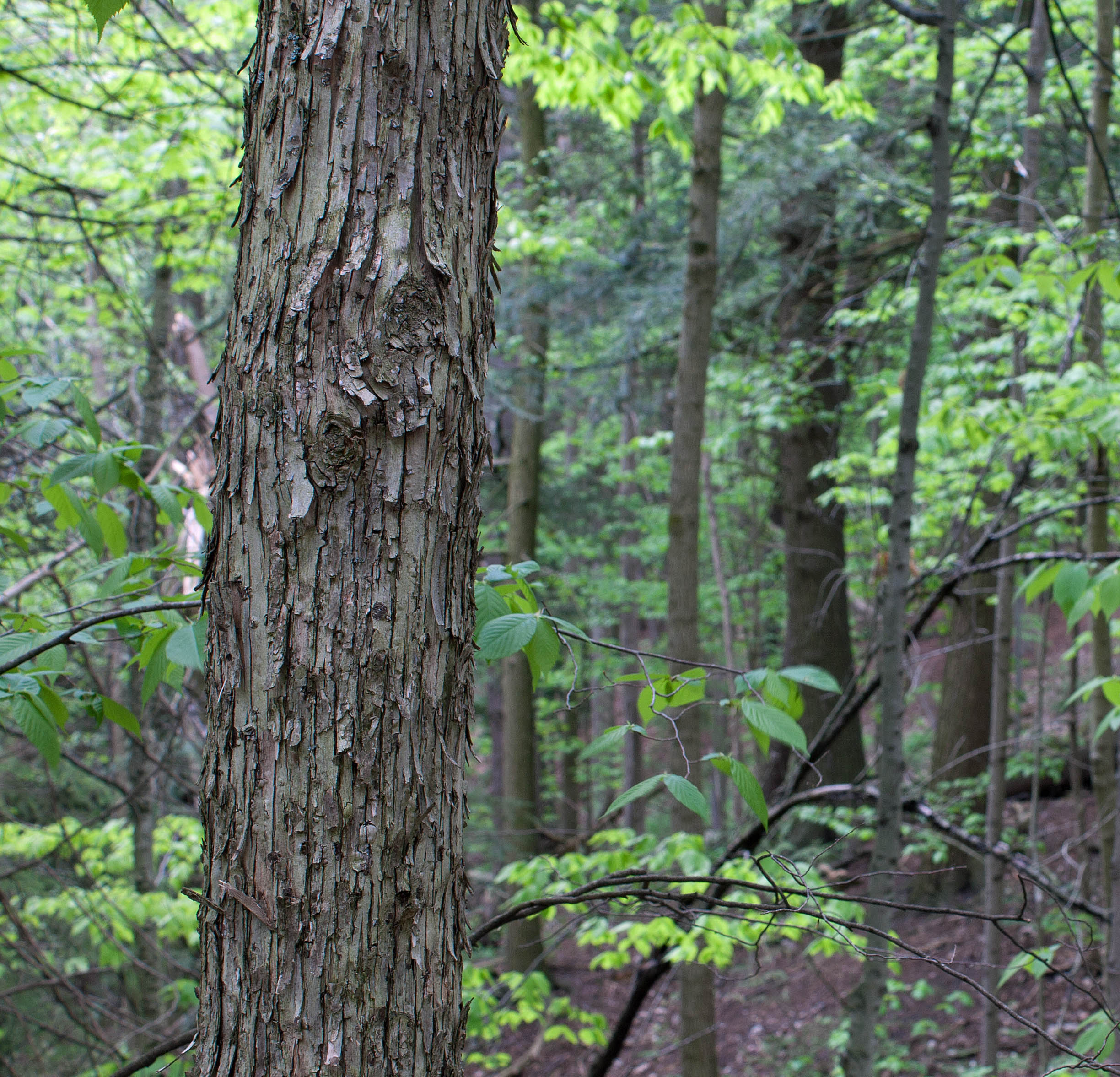
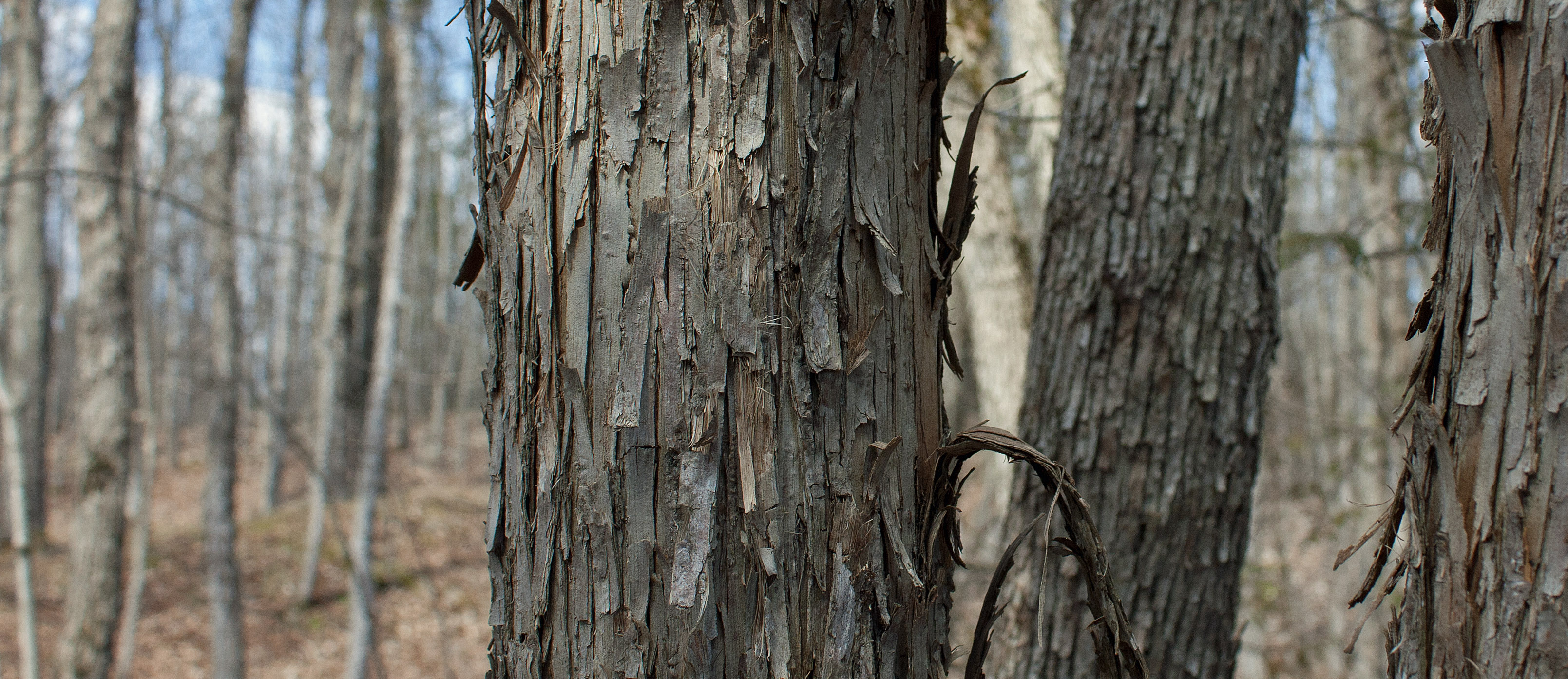
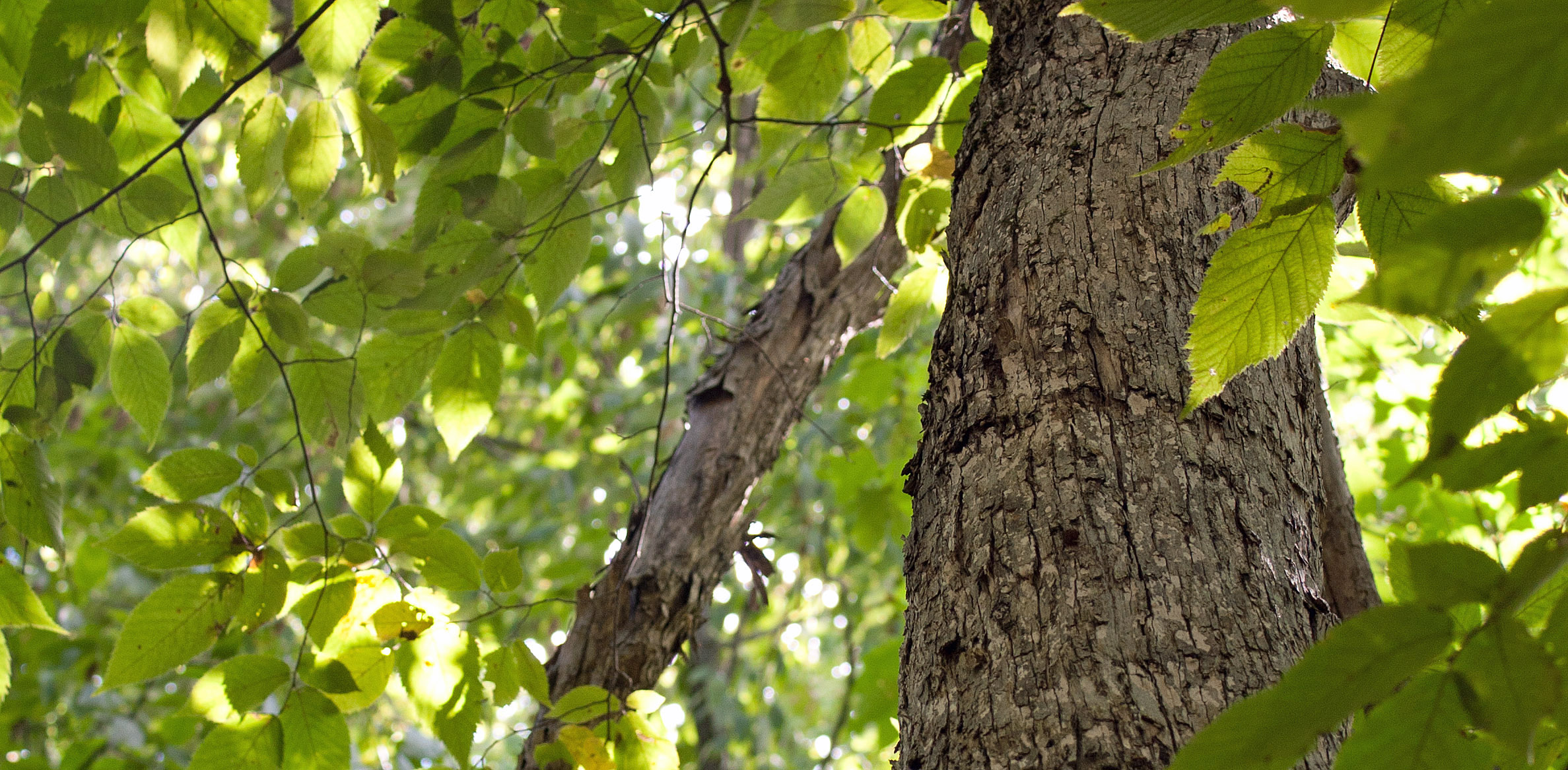
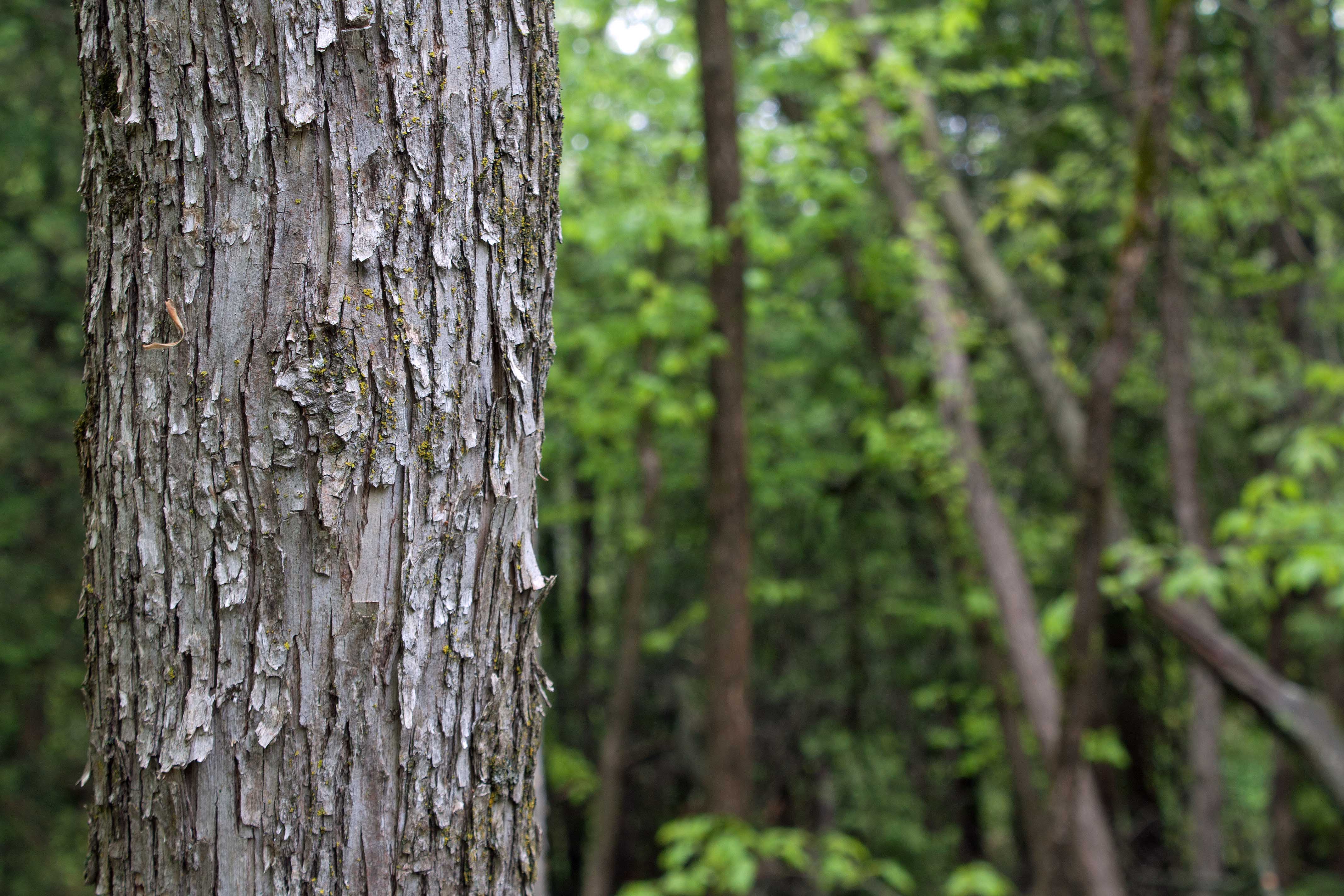
The American Hop-hornbeam (Ostrya virginiana) or American Hophornbeam, belongs to the birch family Betulaceae. It is actually easy to identify because of its telltale shaggy, peeling bark, which you can use year round (even in winter when leaves and seeds or catkins are not around or hidden under snow).

.
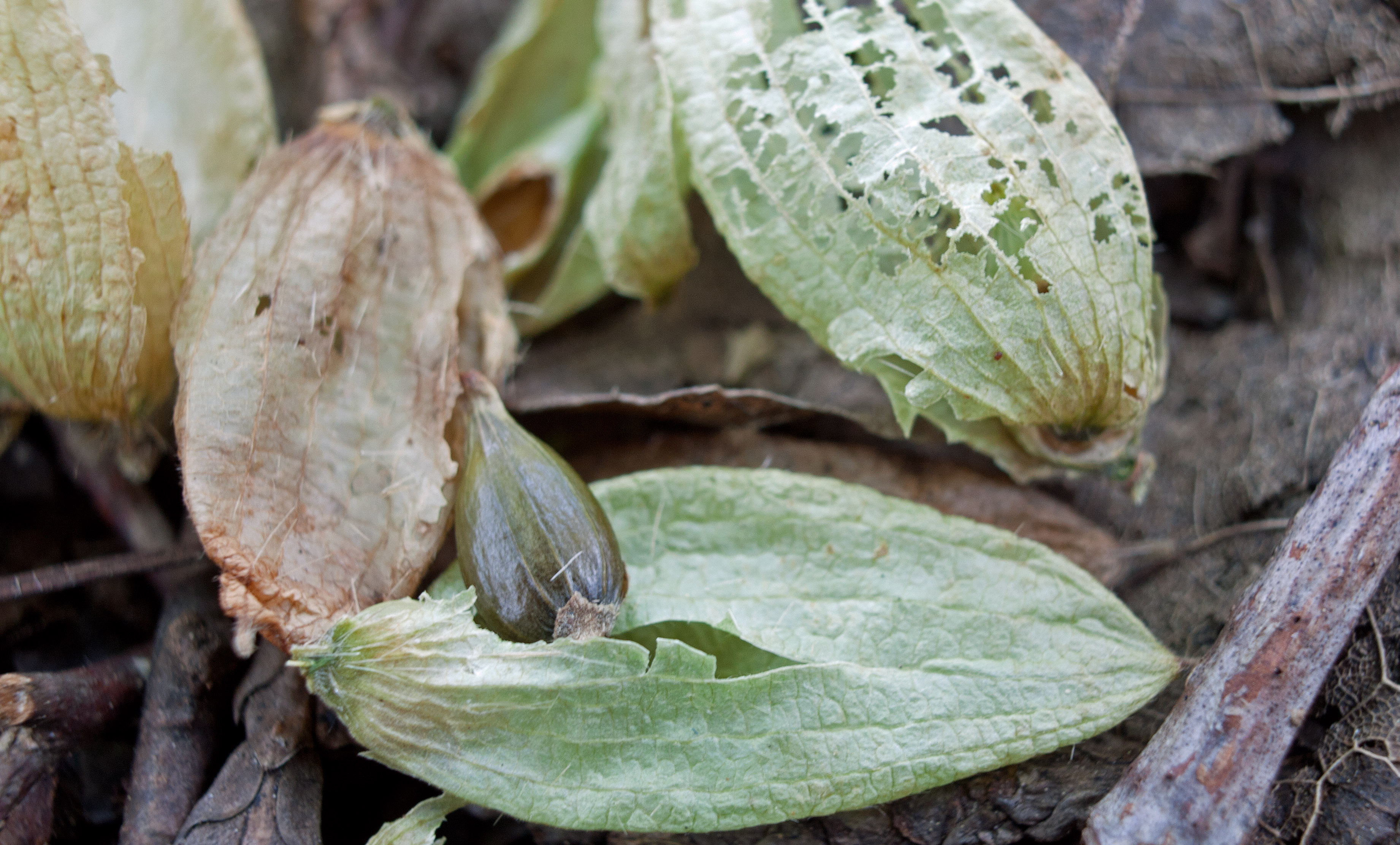
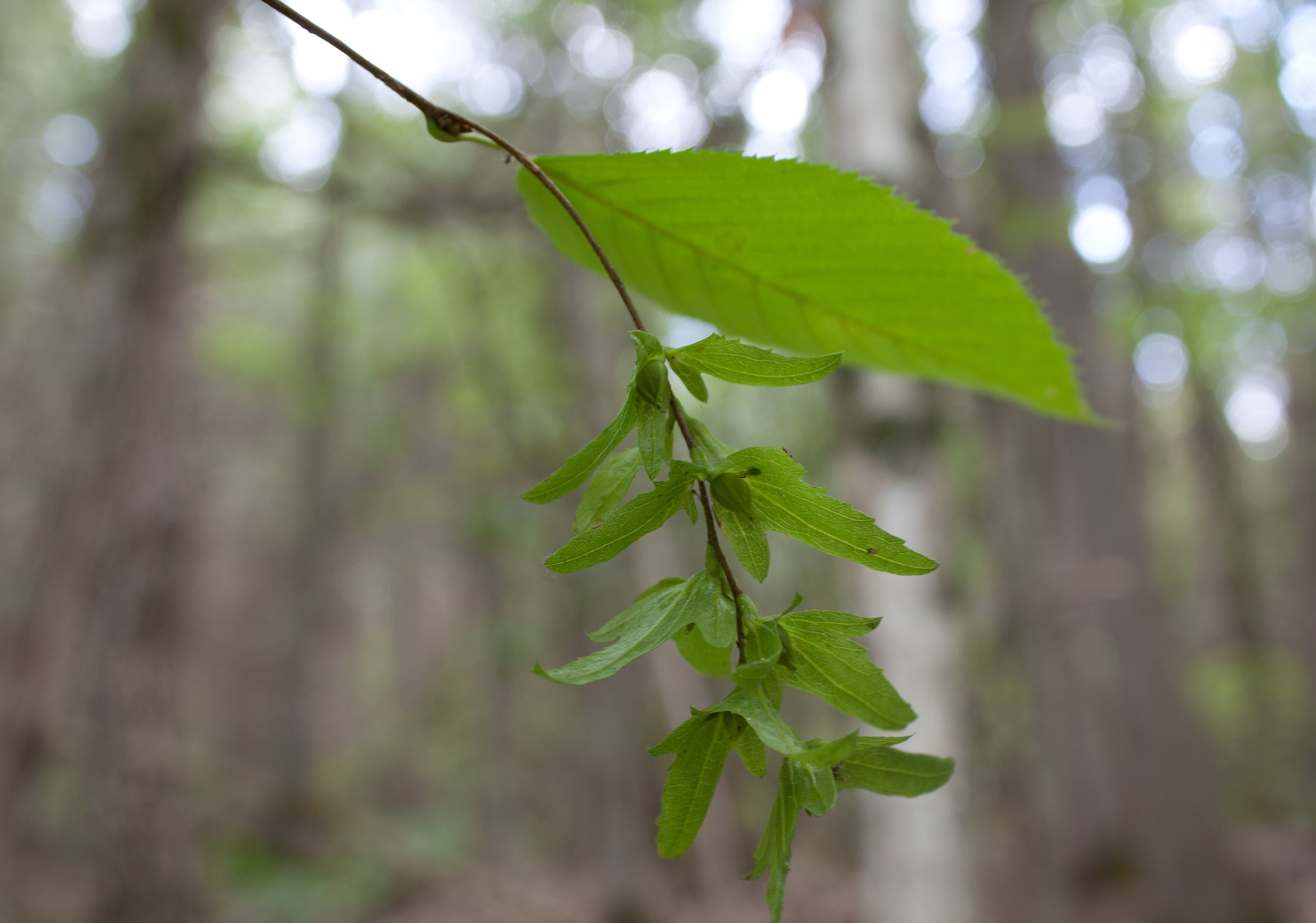
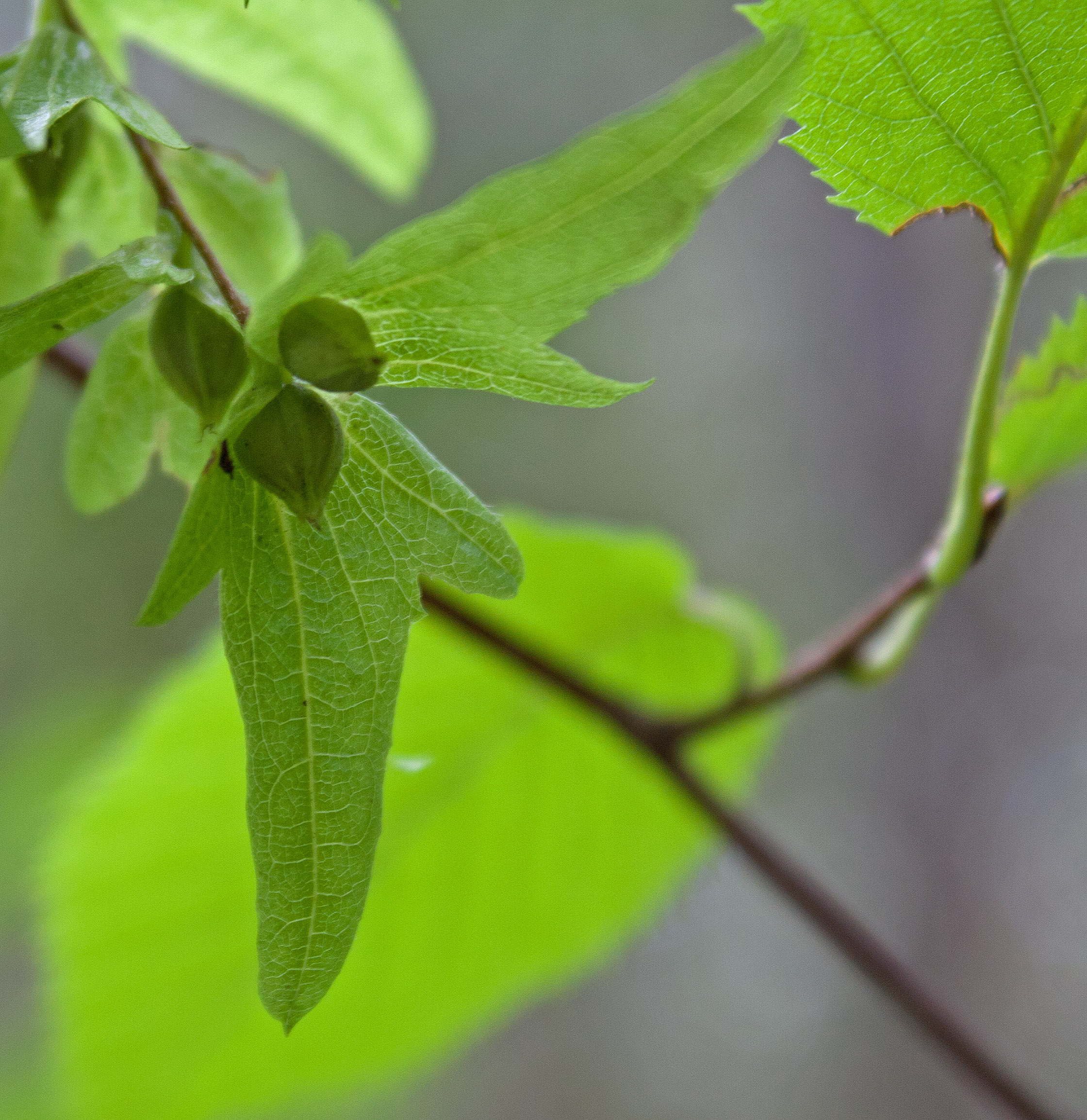
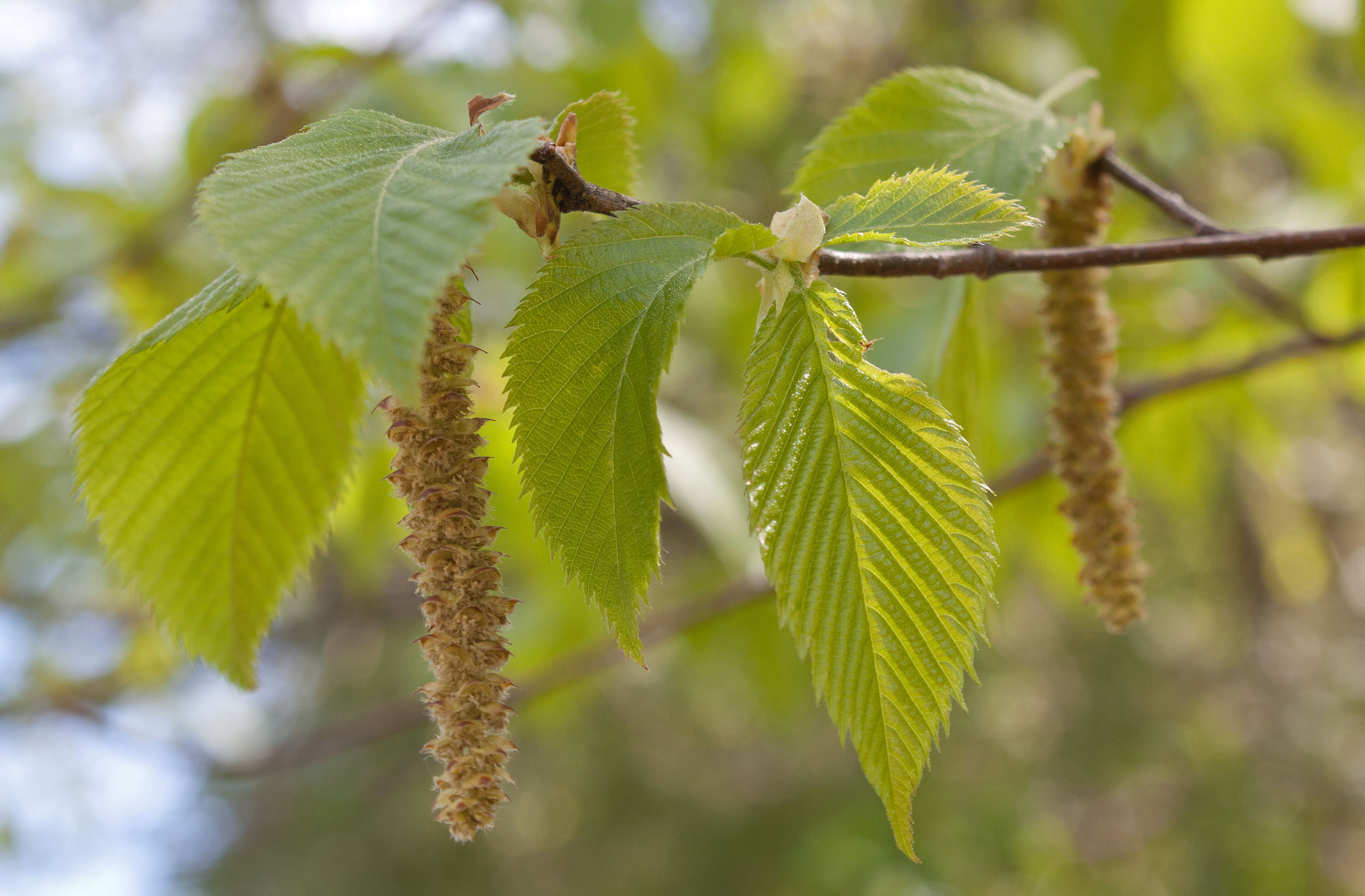
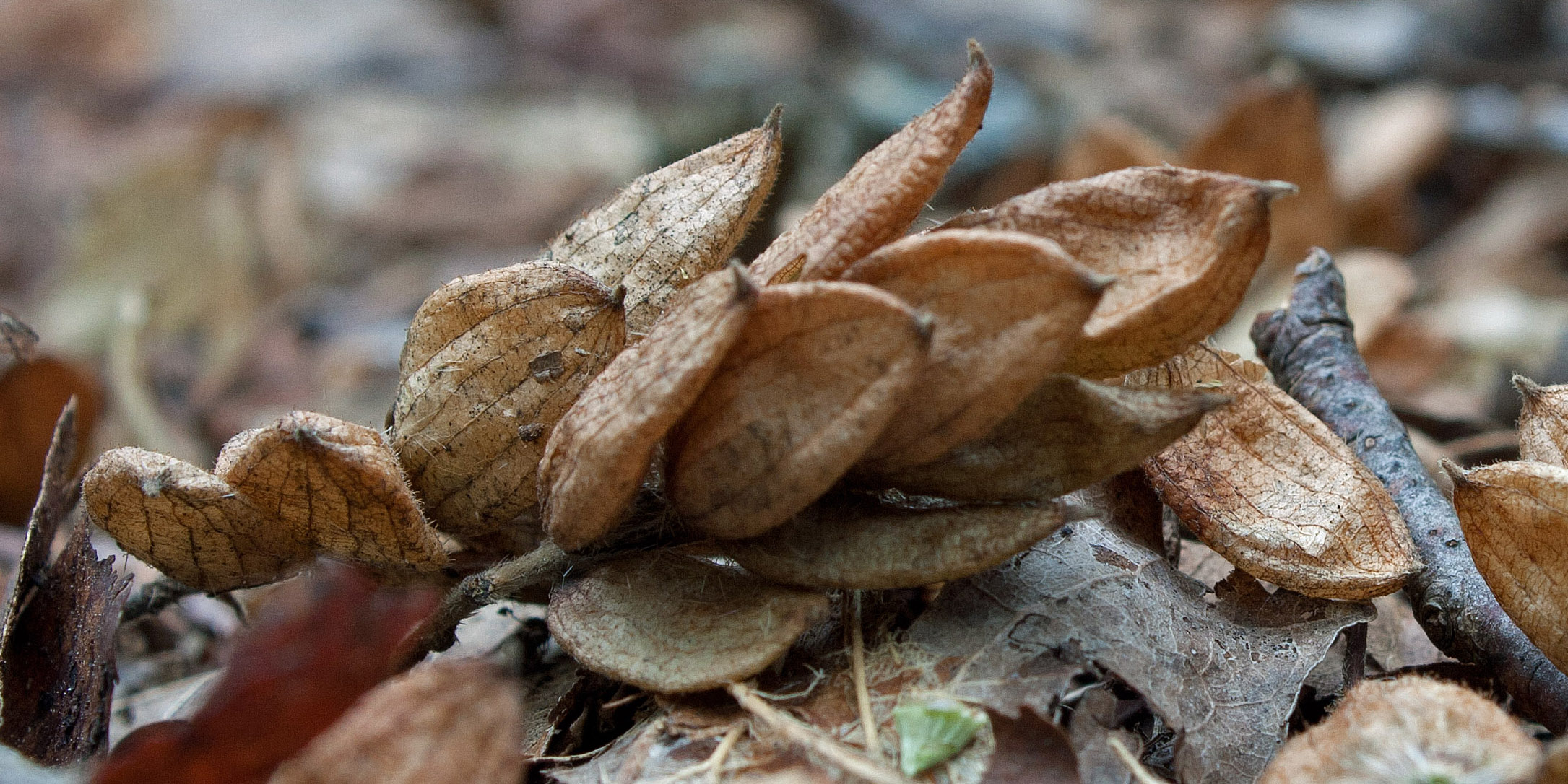
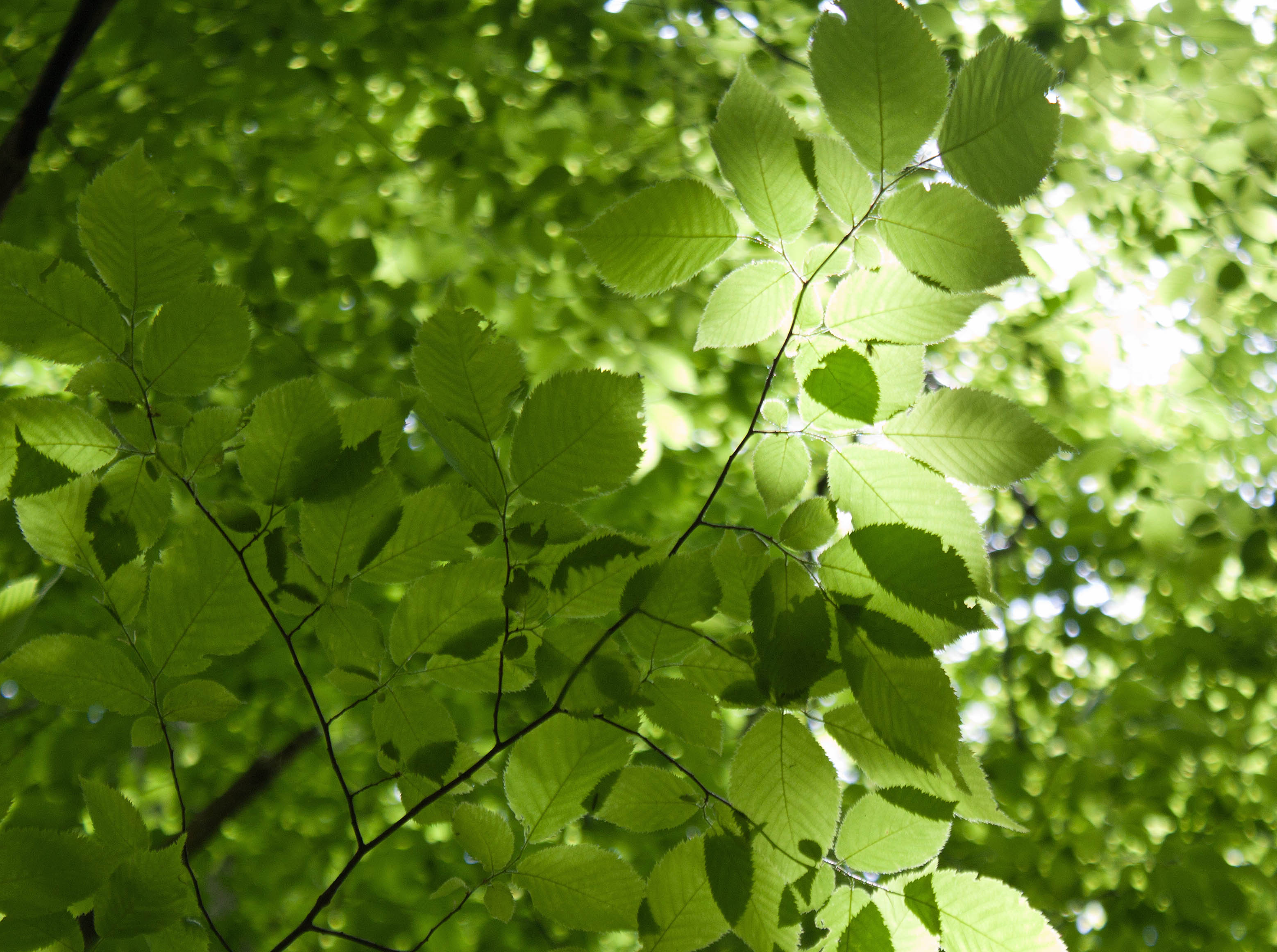
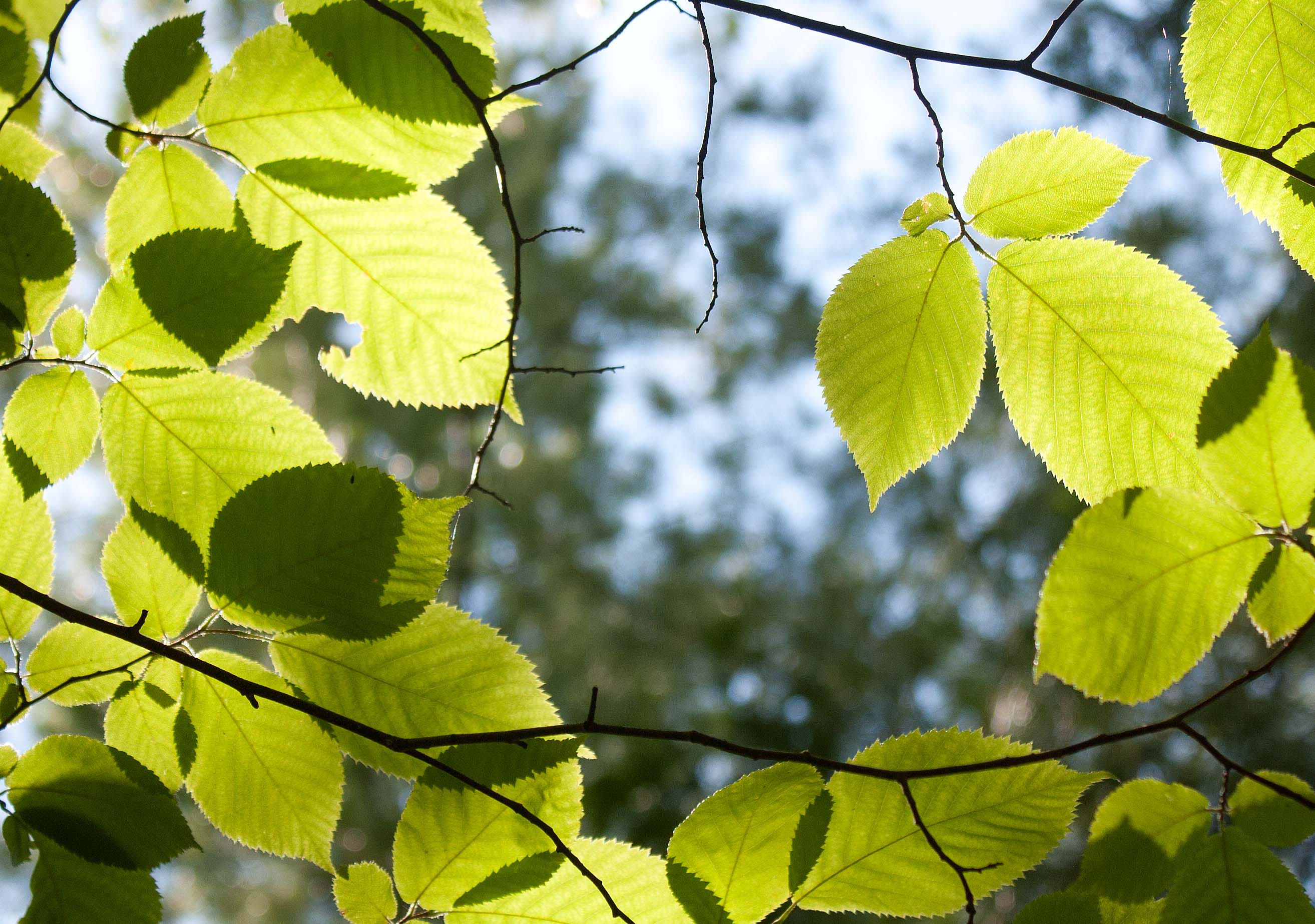
Additional diagnostics to tree bark include “chickens feet”-looking catkins; beech-like simple and pinnately veined leaves with small teeth or serrations; drooping clusters of papery ‘hop-like’ fine-haired bladders (involucres), each sac holding a pumpkin-like nutlet inside. The bladders turn brown and papery in the fall but the seeds inside stay a dark green.

.
The meaning of its name comes from “hop” referring to the hop-like fruit clusters, ‘hornbeam’ from the European tree whose wood was used to yoke oxen with a ‘beam’ to yoke ‘horned’ beasts of burden. The genus Ostrya may come from the Greek word ostrua, which means a tree with very hard wood, or ostruos, meaning scale (in reference to the scaly catkins). The species name, virginiana, of course refers to “from Virginia.” The tree often leans and grows crooked (like the black locust); I’ve often seen them leaning over the river with limbs outstretched.
Because of its very dense and hard wood, the American Hop-hornbeam is also called ironwood (which is confusing, given that other tree species go by that name), roughbark ironwood, or deerwood.

.
Ironwood (Ostraya virginiana) vs. Ironwood (Carpinus caroniniana)
The American Hop-hornbeam (Ostraya virginiana) should not to be confused with the American Hornbeam (Carpinus caroliniana), also part of the birch family and also called ironwood because its wood is also very dense and hard. The American hornbeam’s bark is smooth and ‘muscled’, and is often called musclewood for its muscle-like ridges on smooth-gray beech-like trunk. For this reason this ironwood is also called Blue Beech; its leaves also resemble the beech tree.
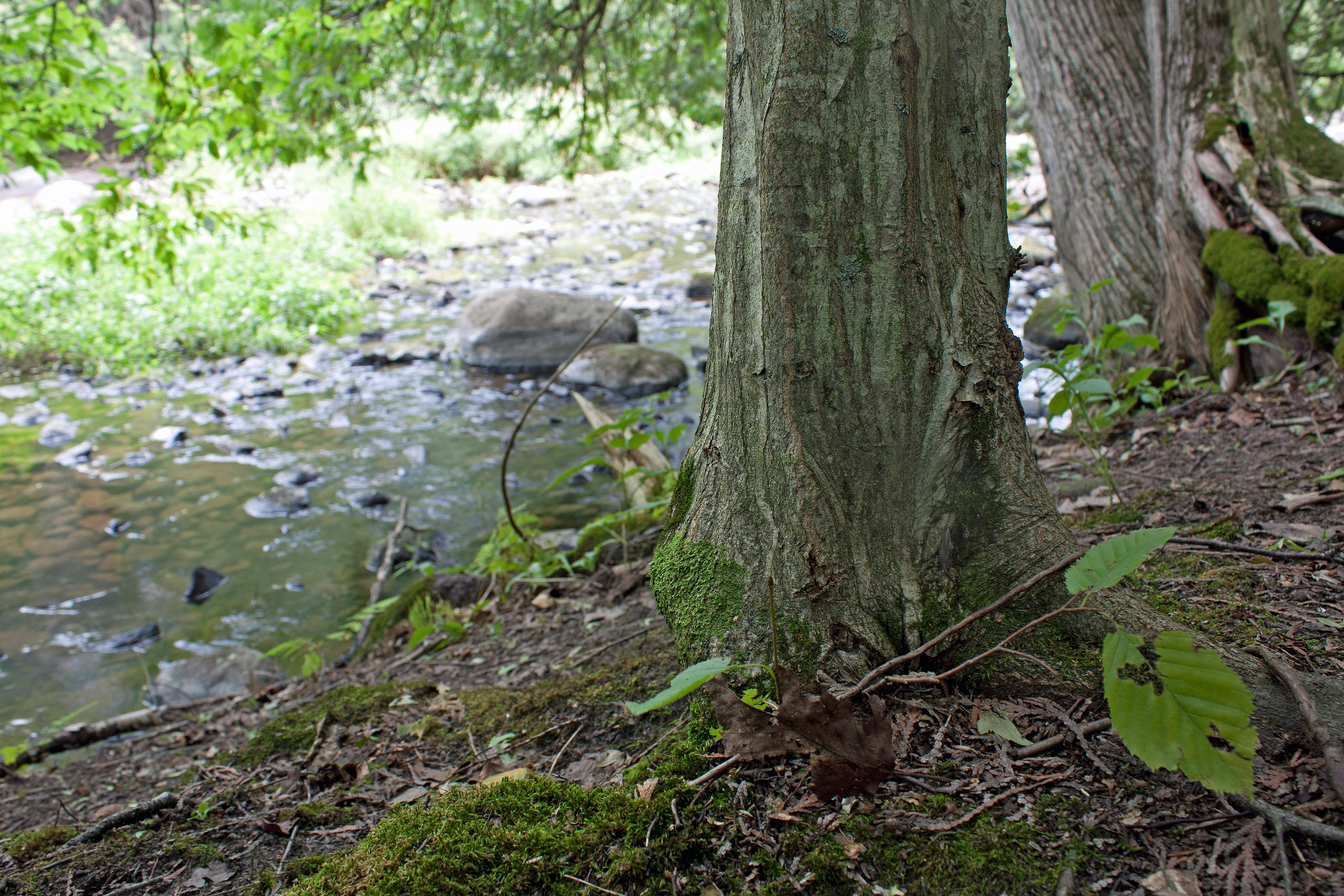

According to The Druids Garden, the blue beech also has similar wood, leaves and hop-looking fruit to the American Hop-hornbeam. The Blue Beech also occurs in the same type of habitat as American Hop-hornbeam. I found it near the banks of Jackson Creek and other creeks in the Kawarthas; in one case growing right next to the American Hop-hornbeam.
.
Hop-Hornbeam Distribution & Ecology

.
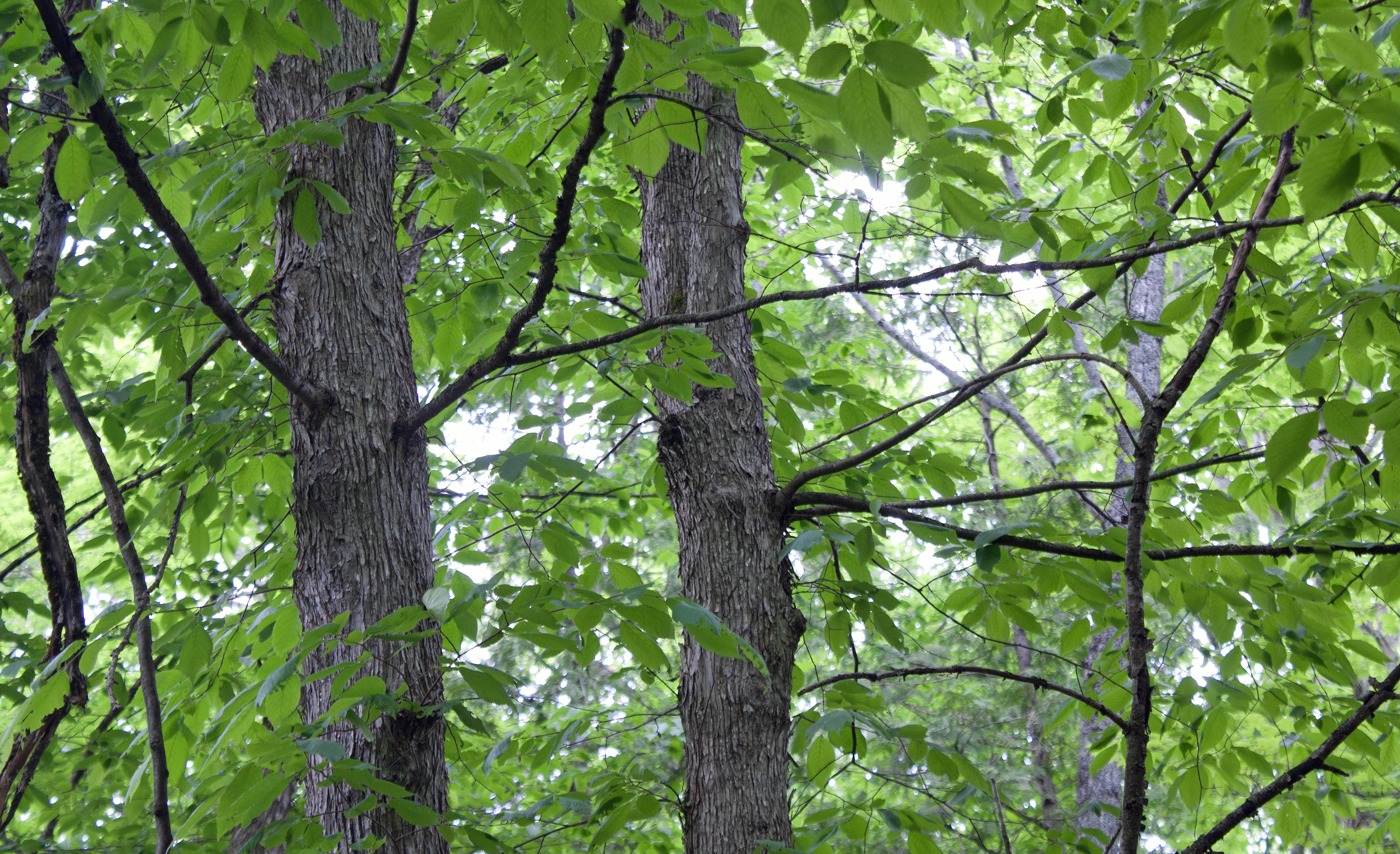
The Hop-hornbeam is a slow-growing medium-high understory tree, native to the Eastern and Midwest United States and Canada. It generally reaches 15 to 25 feet but often up to 40 feet with an flat-topped and open crown spread two-thirds as wide. It can reach as high as 60 feet and two feet in diameter, given the right conditions (though rarely) and lives an average of 50-150 years. While mature trees show the telltale shaggy bark, young trees are more smooth, grey, with small lenticels.
.
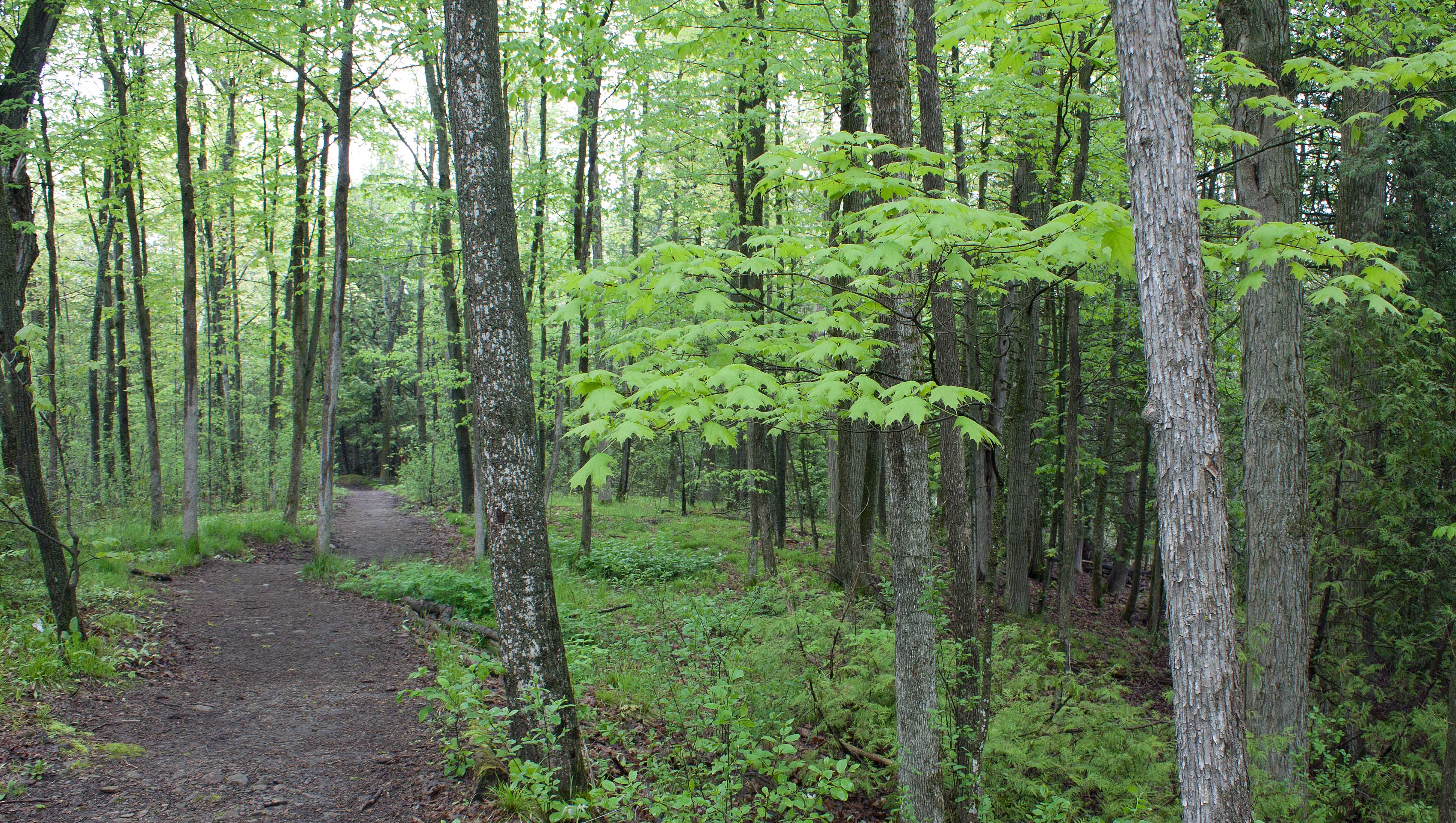
The American Hop-hornbeam likes to grow in well-drained mixed shady forests, on damp hillsides and especially along the edges of streams. I’ve encountered it most often in the Carolinian forest by the river of the Little Rouge River woodland and in both the mixed deciduous-coniferous forest dominated by cedar-hemlock-pine in Jackson Creek and Trent Nature Sanctuary near Peterborough (on the northern edge of the Carolinian forest). I’ve seen them in a mix of black walnut, ash, birch, maple, beech and oak in the lowland by the river. Not sensitive to drought, the Hophornbeam will not tolerate flooding. According to Wildflower, it is also resistant to insects (except the gypsy moth), disease, wind, ice, and most stresses of urban living. However, it is very sensitive to salt (hence not so good in urban settings where salt is used on roads in winter).
.
The Hop-hornbeam is the only species of the genus Ostrya that is native to Canada. It is a very hard tree, closely grained and good for making tool handles, and firewood; though incredibly hard to cut down. According to Hosie, it was once used for runners on sleighs. In Book of Forest and Thicket, John Eastman writes that if you attempt to chop down this tree, the axe will literally bounce back at you–hence the well-earned name of “Ironwood.”
.
Hop-Hornbeam Reproduction
.
Male flowers of the American Hop-hornbeam emerge in spring, as 5 cm catkins that hang in groups of one to three. The female flowers occur on the same tree, even the same branch (making the Hop-Hornbeam monoecious); they occur in small inconspicuous clusters at the ends of branches about half an inch long and broadly cylindrical, blooming from mid- to late spring. they are cross pollinated by wind and once fertilized begin to swell into compound fruit that look like the fruit of a hop vine. The nutlets are enclosed inside overlapping inflated sacs that are ovoid in shape and somewhat flat. They are greenish at first and slightly shiny, but later become dull brown.
.
The seeds, buds and catkins serve as a food source for songbirds, squirrels, pheasants, and grouse. Credit Valley Conservation writes that, “Birds such as ruffed grouse, downy woodpeckers, rose-breasted grosbeaks and purple finches will visit to feast on the catkins or seeds. Others will rest in the tree’s dense, protective branches.” In Book of Forest and Thicket, John Eastman writes that in the winter months, warblers, foxes, game birds and squirrels eat the nutlets. Beavers also use them in building and white-tailed deer eat the foliage, particularly in winter.
.
Human Uses for American Hop-Hornbeam
According to Canadian Tree Tours, Hop-hornbeam is apparently too small and its wood too hard and dense for most commercial uses. However, they and The Druids Garden say that it is good for making tool handles, fence posts and firewood. Erichsen-Brown in Medicinal and Other Uses of North American Plants describes a range of uses that Ironwood had in historical times in North America. Of the physical uses, the heartwood of the trees (the strongest part) were used for things requiring strength such as ox goads, cogwheels, handles, sleigh runners, and finishing poles. Erichsen-Brown notes that the Chippewa used the wood for the frames of their dwellings and as poles in wigwams. Erichsen-Brown also mentions several traditional Native American uses of the tree as medicine.
John Eastman writes that because of the density of the wood, it was once used to make gunpowder.

.

Nina Munteanu is a Canadian ecologist / limnologist and novelist. She is co-editor of Europa SF and currently teaches writing courses at George Brown College and the University of Toronto. Visit www.ninamunteanu.ca for the latest on her books. Nina’s bilingual “La natura dell’acqua / The Way of Water” was published by Mincione Edizioni in Rome. Her non-fiction book “Water Is…” by Pixl Press (Vancouver) was selected by Margaret Atwood in the New York Times ‘Year in Reading’ and was chosen as the 2017 Summer Read by Water Canada. Her novel “A Diary in the Age of Water” was released by Inanna Publications (Toronto) in June 2020.
 The Meaning of Water
5 thoughts on “American Hop-Hornbeam—A Tree Study”