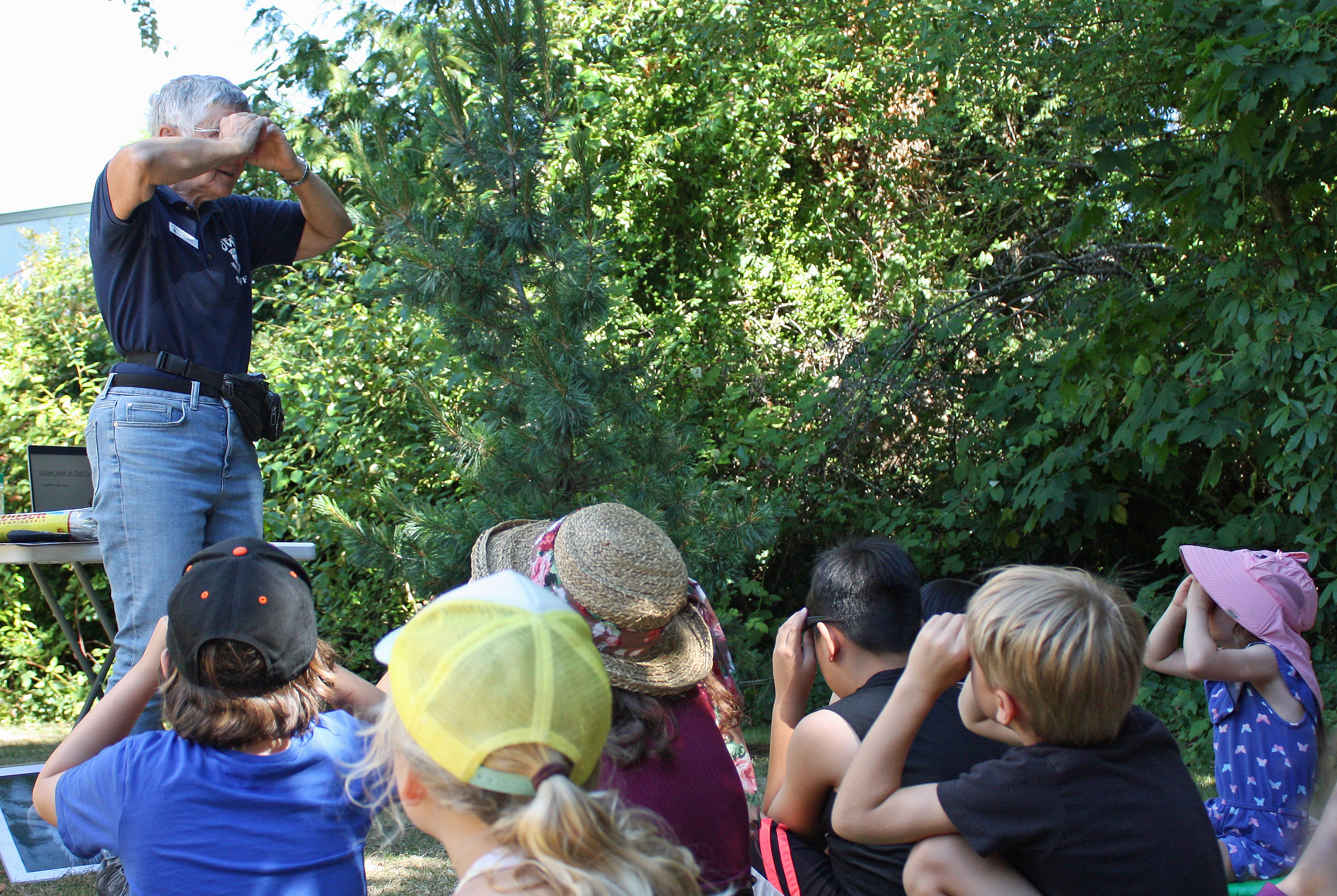
When good friend Anne retired as a physiotherapist, I knew she would soon find something else to pursue. Anne is an active woman who enjoys gardening, her dogs and her birds, and doing good works in the community. I was right; within a year of retiring, she found a place as an educator, working for Orphaned Wildlife Rehabilitation Society (OWL) in Ladner, BC. She was soon travelling with two ambassador birds all over the Lower Mainland to schools and libraries giving educational presentations on raptors and their conservation.
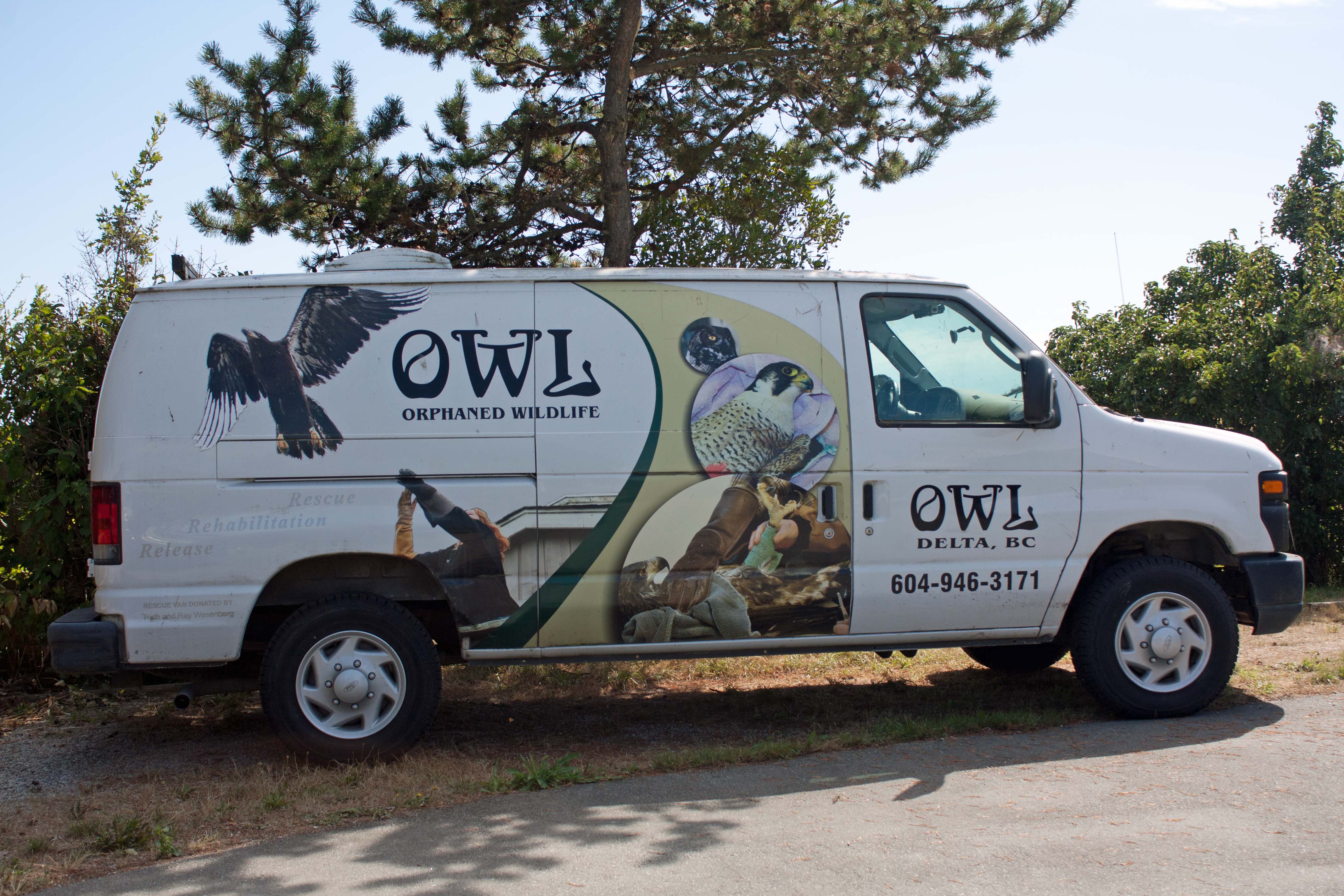
OWL is a non-profit society dedicated to the rescue, rehabilitation, and release of injured and orphaned raptors (including eagles, falcons, hawks, osprey, owls, and vultures), and to educating the public on the conservation and importance of these magnificent creatures. The organization became a registered society in 1985 and has rescued and released thousands of raptors since then with birds coming from all over British Columbia, Canada and the United States. In a recent interview with the Delta Optimist, OWL raptor care manager Rob Hope shared that ninety percent of their patients come with human-caused injuries that include injuries related to “Cars, windows, lead [poisoning], rodenticides, electrocutions, entanglements in fishing lines and netting.” On rare occasions, a raptor will come with injuries from a fight. Eagles are known to engage in a locked grapple that neither can escape.
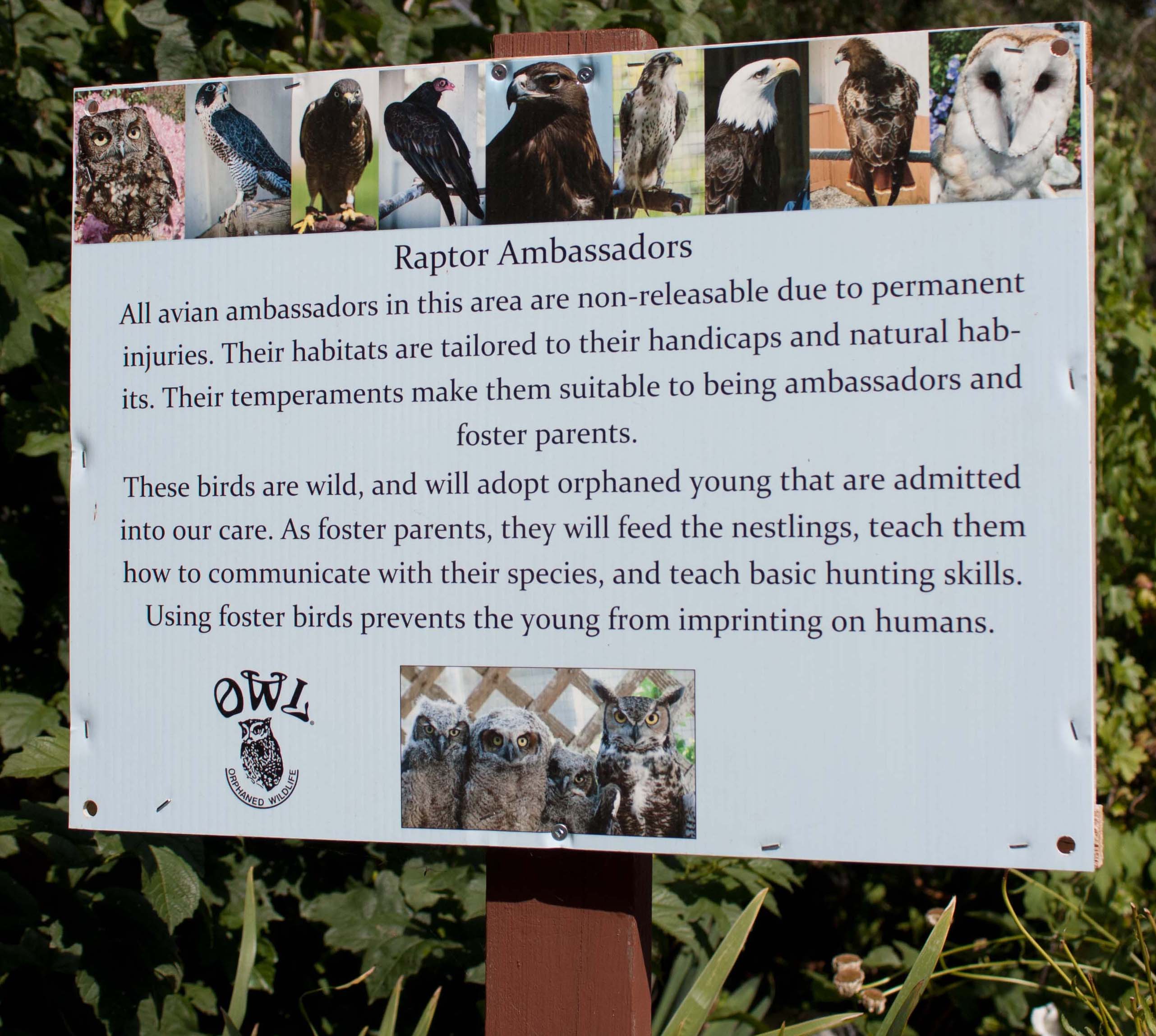
Some birds that come to OWL cannot be released for various reasons. OWL has jobs for them. Some assist with fostering orphans to prevent the young from imprinting on people; others become OWL’s ambassador birds for its educational program. Educational programs include onsite programs (OWL’s Schoolhouse for educational tours) and offsite programs like those Offsite talks run from a half hour to one hour and are usually in two parts—an educational slideshow with interesting raptor facts followed by a meeting with two of OWL’s ambassadors.
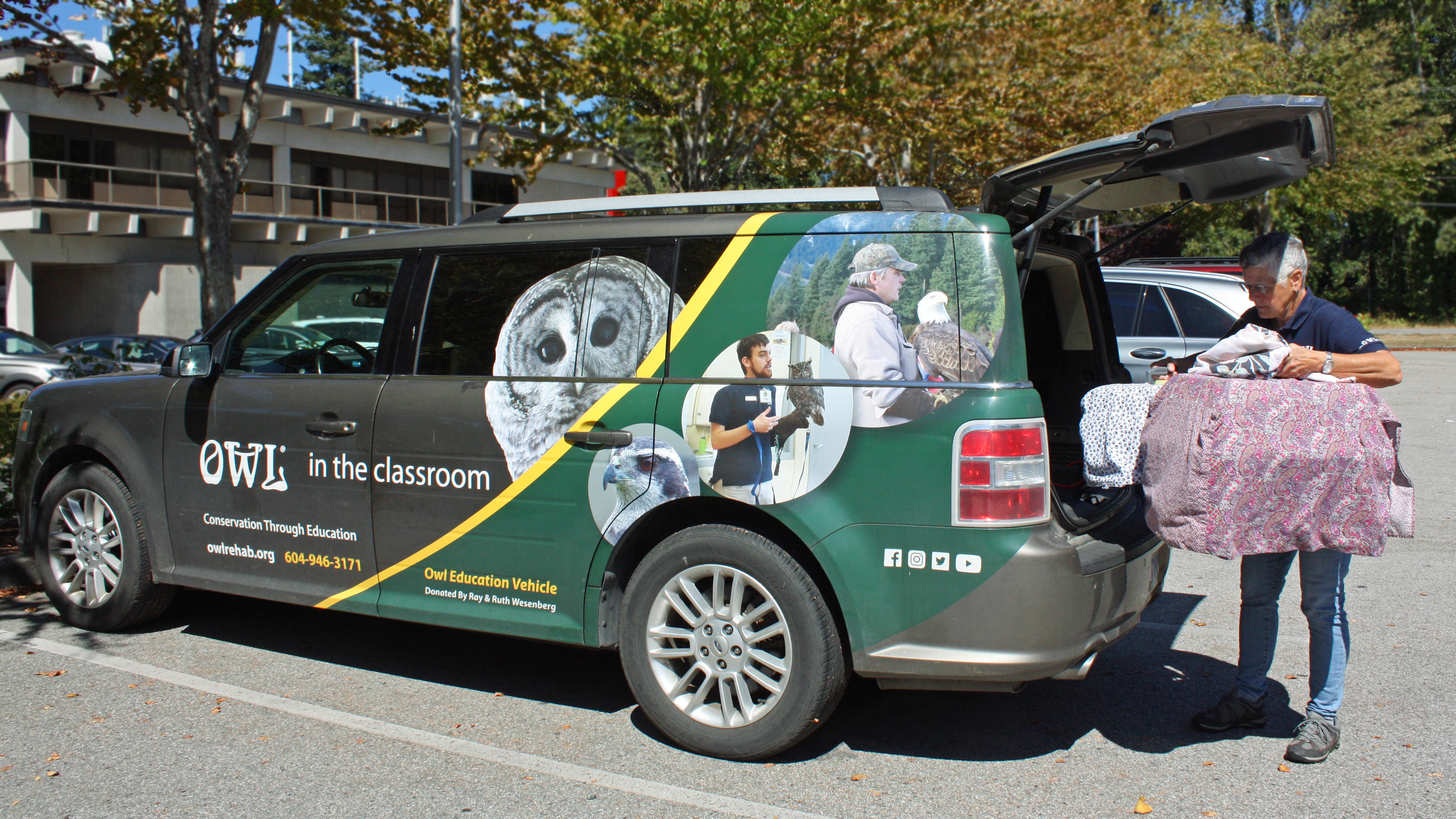
Anne let me accompany her on one of her excursions to two libraries to give her presentation. Her talk, like all other presentations focused on the following:
- Function of the OWL Society: as an animal rescue/release and healing centre
- Basic biology and behaviour of raptors: including their life cycle, specialized adaptations, where they like to live, use of feathers, and more
- Sizes and types of raptors: with a focus on BC raptors from eagles to the pygmy owl
- Dangers to raptors and other wildlife: from littering to climate change
- What citizens can do to help raptors and other wildlife: from addressing littering to climate change
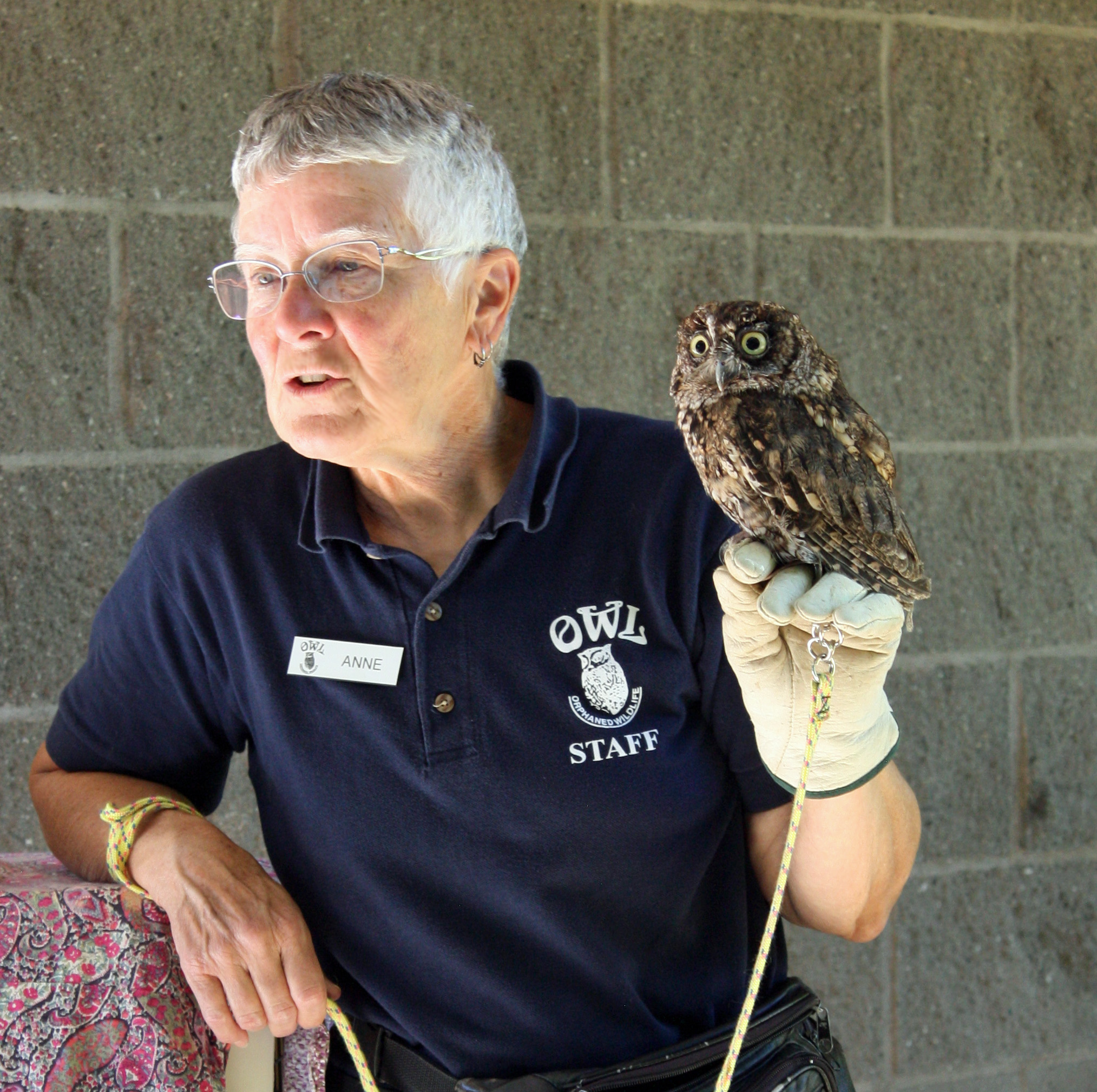
On the day I accompanied her, we visited two libraries in White Rock. Anne brought Luna, a male Western Screech Owl, and Flinger, a female Roadside Hawk as her raptor ambassadors. Luna arrived at OWL in September 2015 from a facility in Smithers, where he was involved in a captive breeding and research program. Twenty-six-year-old Flinger came to OWL in 1997 from Hope with severe malnourishment. The wild hawk had been illegally brought in across the border and only discovered because its owners brought it to a vet who confiscated the bird and brought it to OWL for treatment.
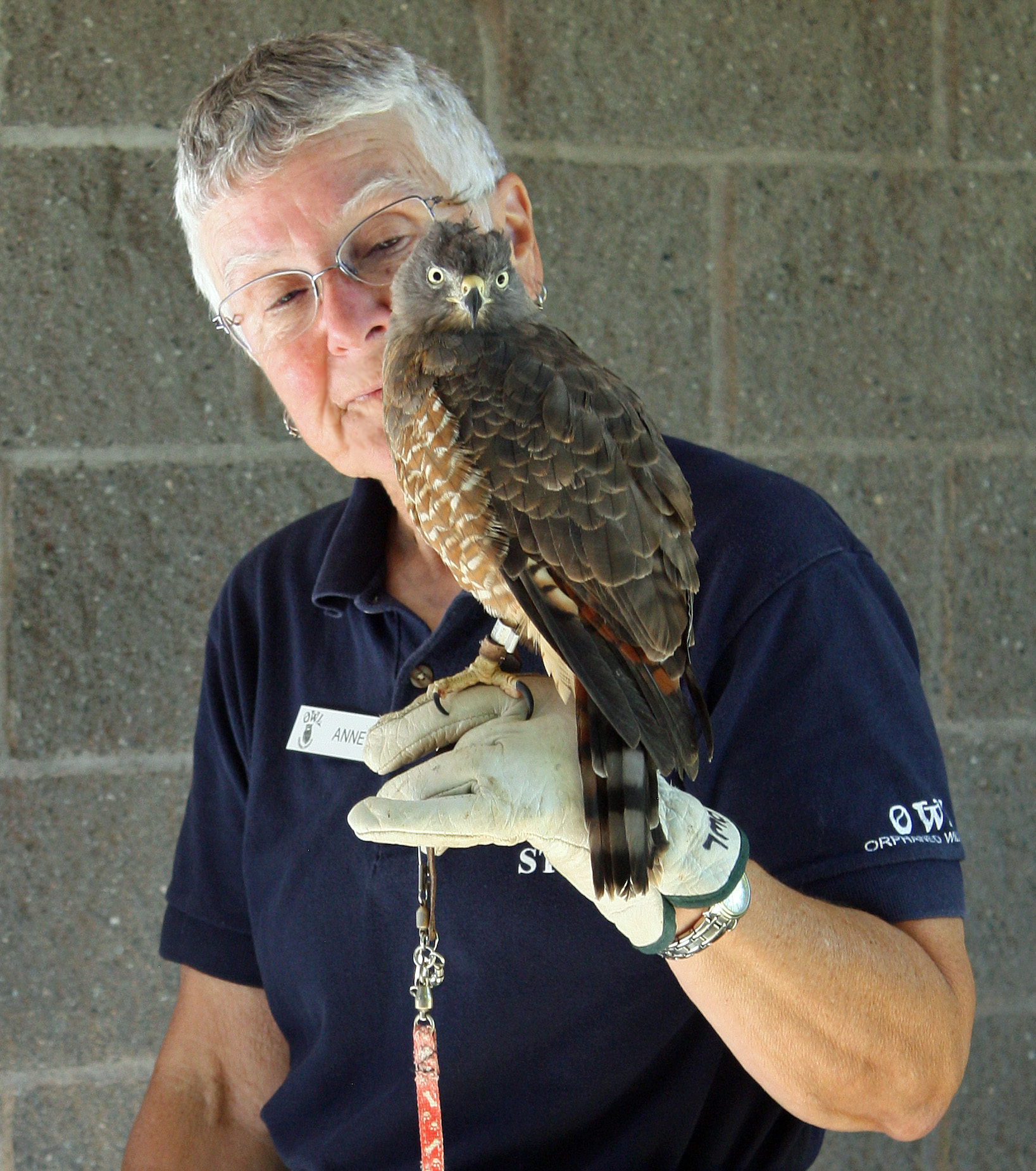
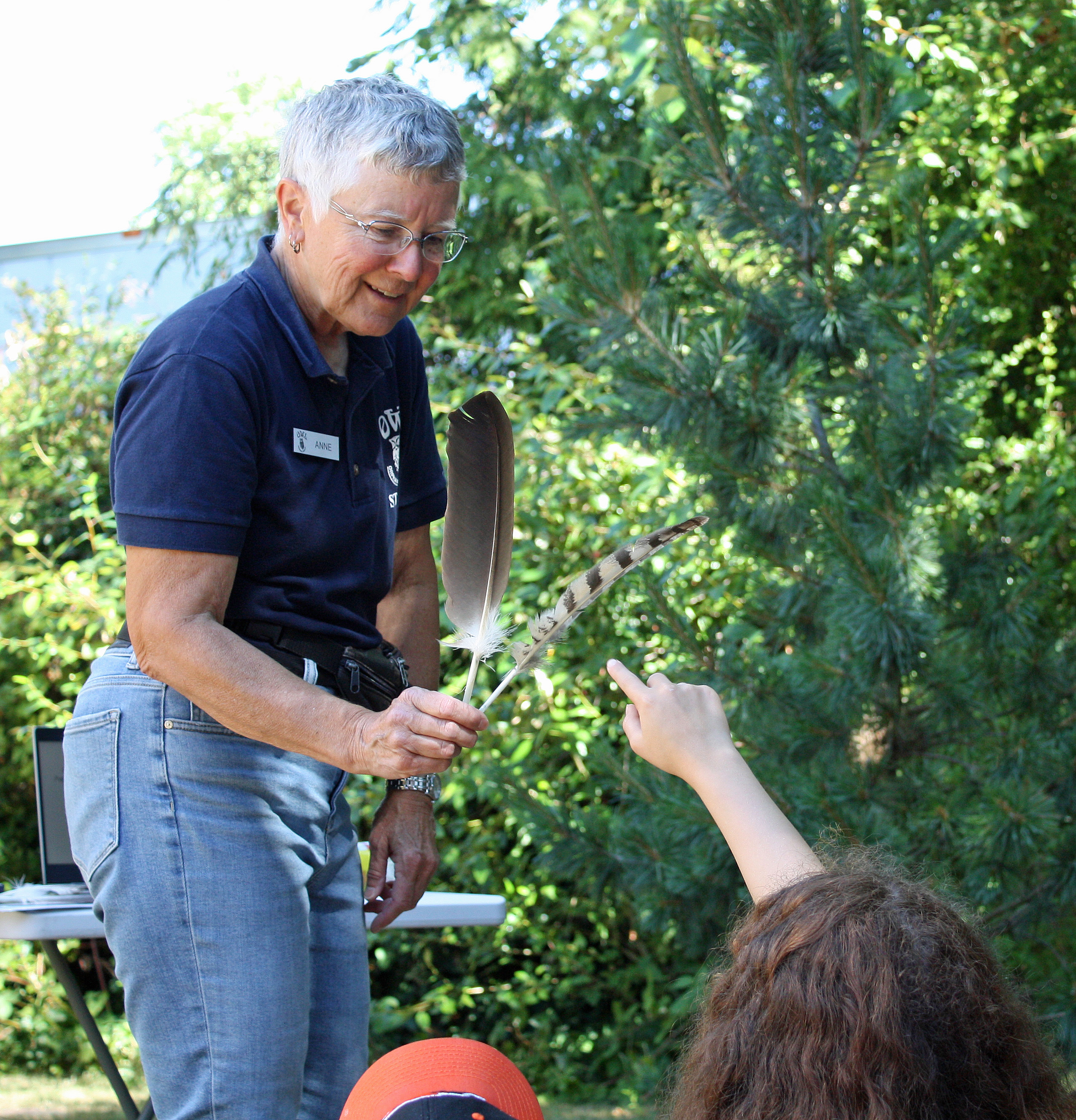
Anne held the rapt interest of her students with an informative and riveting narrative, filled with wild and crazy raptor facts. For instance, did you know that the owl’s face is called a facial disk because it resembles and acts like a satellite dish, efficiently collecting light and sound? Or that an eagle’s talon wields a force of 800 pounds per square inch (a strong man can only manage to squeeze out seventy pounds) that can easily crush your arm? Or that you can estimate an eagle’s age because of its changing plumage as it develops from a juvenile to an adult. Or that an owl’s crazy ability to turn its head aka The Exorcist is due to the added bones in its neck (fourteen for an owl vs seven for a human). Or that a Spotted Owl is endangered because its preferred habitat, the old growth forest which alone provides large enough trees for it to nest in their hollows, is itself endangered from indiscriminate logging and forest fires?
Anne shared with me that what she likes best about her job in the OWL educational program for schools and libraries is how she is able to “turn on” kids to the environment, and birdlife particularly, to help them become better environmental citizens and wildlife stewards, who respect and conserve our natural ecosystems.

“What I really enjoy,” says Anne, “is when I get a tiny piece of information to somebody who didn’t know and I can see them have an ‘aha’ moment. That light goes on in their faces. Or there’s that super-eager child with a great interest in birds and I’ve been able to give them something more that they can take back with them.”
I spoke to one of the volunteers at OWL’s facility in Ladner, a student in wildlife biology at McGill University in Montreal. She says that OWL helped allay her feelings of powerlessness about encountering injured birds. Seeing them come to OWL, get treated and released back into the wild has been heartening and brings this student back summer after summer to work there.
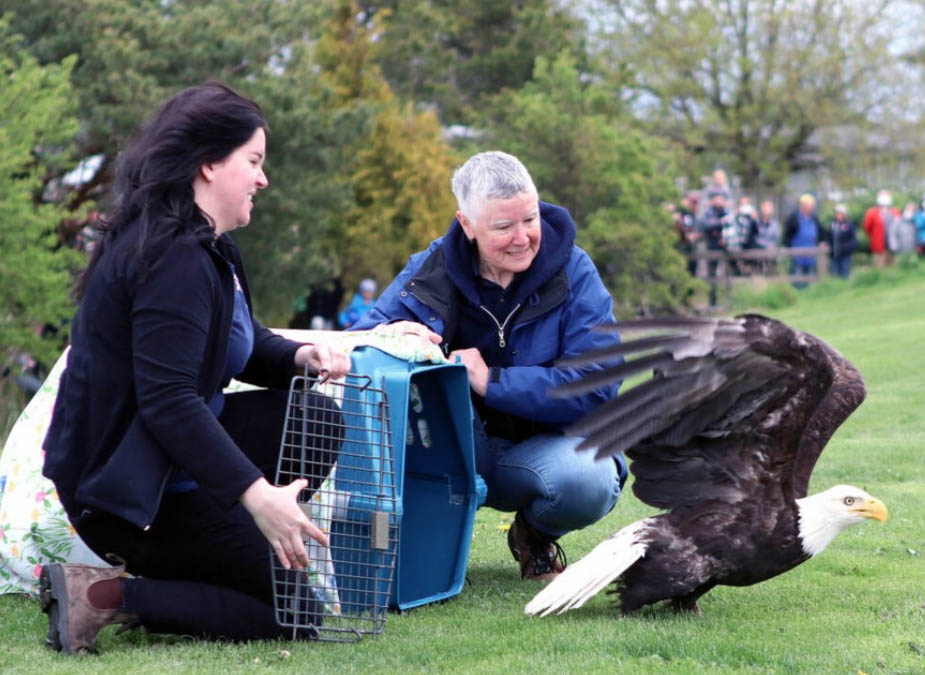
In May of 2023, Anne participated in the release of a rehabilitated eagle. The raptor had recovered from an electrocution and had a large gash on its leg. The release was made in honour of a popular former employee who had passed away.
If you spot an injured raptor, you can call OWL Rehab at: 604-946-3171
Their informative website is: OWLrehab.org.

Nina Munteanu is a Canadian ecologist / limnologist and novelist. She is co-editor of Europa SF and currently teaches writing courses at George Brown College and the University of Toronto. Visit www.ninamunteanu.ca for the latest on her books. Nina’s bilingual “La natura dell’acqua / The Way of Water” was published by Mincione Edizioni in Rome. Her non-fiction book “Water Is…” by Pixl Press(Vancouver) was selected by Margaret Atwood in the New York Times ‘Year in Reading’ and was chosen as the 2017 Summer Read by Water Canada. Her novel “A Diary in the Age of Water” was released by Inanna Publications (Toronto) in June 2020.
 The Meaning of Water
One thought on “Learning About Raptors with OWL”