
When I was last visiting the west coast rainforest of British Columbia, I wasn’t aware of how few Spotted Owls there remained in the south coast old growth forests of BC. The Northern Spotted Owl is going as fast as the old-growth is disappearing.

Recent headlines revealed that two of three Spotted Owls (Strix occidentalis caurina) released in the Canadian wild were found dead in early May of 2023. Once as many as a thousand thrived in the old-growth forests of southwestern BC; today, only one Spotted Owl remains.
“… Her precise location in the misty forest is a closely guarded secret and her lonely presence has become a symbol of the country’s inability to save a species on the verge of destruction.”—Leyland Cecco, The Guardian
Ruth Kamnitzer of Mongabay tells us that “Northern spotted owls are about half a meter (20 inches) tall, with deep-brown feathers flecked with white, and large dark eyes with a pale hooked beak.” They feed on northern flying squirrels (Glaucomys sabrinus), bushy-tailed woodrats (Neotoma cinerea) and other small prey. They nest in broken-off “chimney tops” of old snags, or in other large tree cavities where branches have broken off. To keep cool, they roost on boughs beneath the dense canopy.

The northern spotted owl nests primarily in tree cavities, mostly top cavities of trees with broken tops, but also in side cavities of hollow tree trunks. The vast majority of nests occur in Douglas-fir (Pseudotsuga menziesii) trees (87% of the time) as well as western red cedar (Thuja plicata) and western hemlock (Tsuga heterophylla) trees.

“The owl’s dependence on a closed forest with widely spaced big trees where they can nest, hunt and roost is why their historic distribution along North America’s Pacific coast — from northern California to southern British Columbia — matches that of the old-growth forests. The trees, some more than 25 m (82 ft) tall in these ancient forests are hundreds, even thousands, of years old.”—Mongabay


Owls have long been associated with mystical and supernatural elements of human experience. They are considered harbingers of death, protectors of the spirit world. Their silence movement is otherworldly.
Friend Anne at OWL explains that it’s partly due to softer feathers—think polar fleece vs satin. “The leading edge of the first primary and lesser amounts of the second and third primary feathers have a comb-like makeup,” says Anne. “One child [at one of her OWL presentations] said it looked like eyelashes. The back edge of the feather is also fringed. Both of these opening along the edge of the wind helps to direct the displaced air of each wing stroke away from the wing, reducing wind turbulence. The softness of the feathers act to muffle the movement of the individual feathers and the movement of the air passing over it.” I remember her demonstration of an eagle’s wing flapping vs an owl’s wing flapping. While the eagle’s wing made a typical rush sound, the owl’s wing was dead silent.

The owl’s keen eyesight is only bested by its incredible hearing, allowing it “to experience the world on a seemingly different plane of existence,” according to Cecco.
“They’re ‘gifted with the extension of the senses we have lost or never attained, living by voices we shall never hear’ when they move through their environment,” says ecologist Jared Hobbs, quoting the naturalist Henry Beston. “I tell people that when you get close to an owl, you need to be calm because it is, quite literally, listening to the beating of your heart … to discern your intent.”

Greatest Threat to Spotted Owl is Logging & Habitat Destruction
The greatest threat to the Spotted Owl is logging the old-growth forest, and the destruction of its biodiverse habitat. Generations of industrial development and logging have fractured the landscape and gutted their habitat. Logging changed the structure of the forests, simplifying stands of diverse forest ecosystems into monocultures of young, fast growing replacements. Less than 3% of the most productive big-treed forest is left in British Columbia, according to the 2020 report “Last Stand for Biodiversity.”

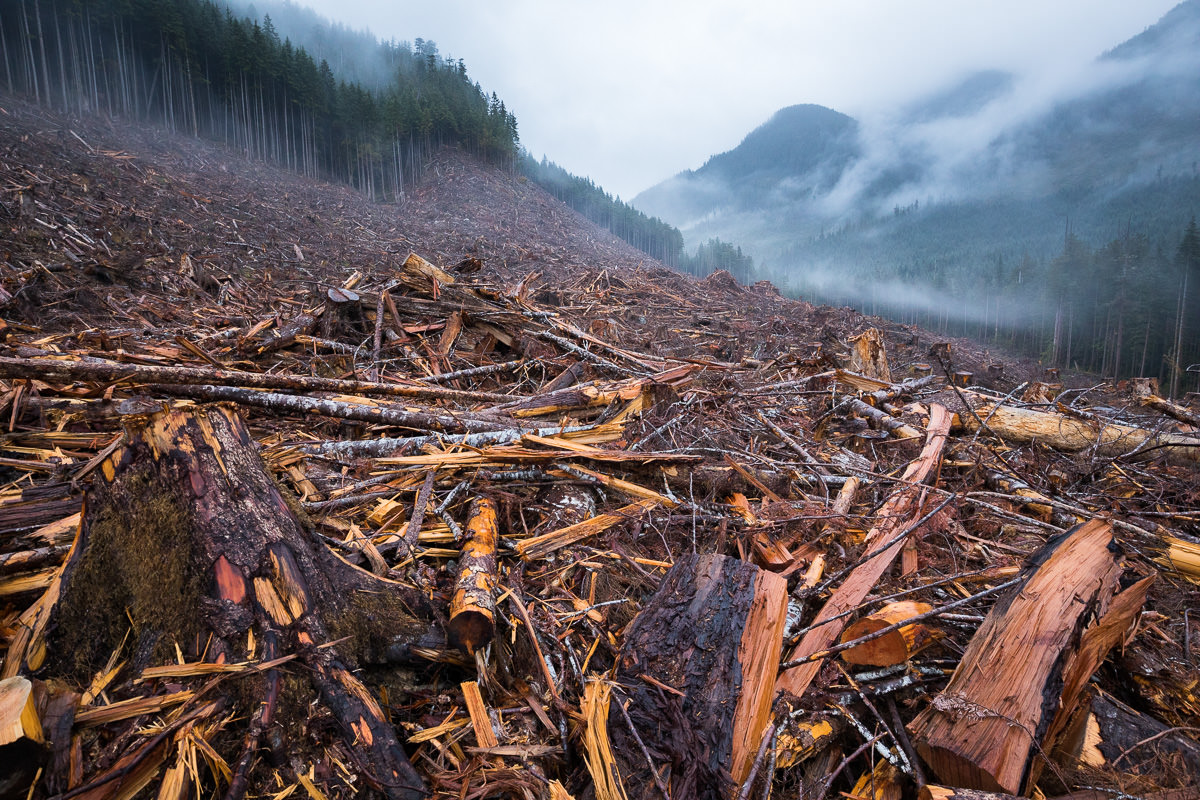
In the 1990s forty breeding pairs of Spotted Owls were recorded in the BC forests. Numbers declined precipitously to the single raptor remaining today. Hobbs, who worked there as a species-at-risk biologist noted that while the adult owls lived into old age, the juveniles were dying before they could acquire a territory of their own to produce young. “Spotted Owls require as much as 3,000 hectares (7,400 acres) of forest to hunt and survive, says Hobbs, because their diet is largely limited to just two species of small rodent,” writes Cecco. With extensive logging and restructuring of once diverse forest into monoculture, young owls were forced to fly further to find food and suitable nesting habitats; the young owls began to starve. A key oversight of the BC plan still now is that the province’s recovery plan does not account for the checkerboard of clear-cuts impacting the young dispersing owls.
Kamnitzer writes: “Spotted Owls mate for life, sticking in their patch of forest and often nesting at the same roost year after year. In the fall, juveniles strike out to look for territory of their own. But now the young owls are forced to cross a matrix of clear-cuts and young forests. In the open canopy, the young owls are more liable to be picked off by predators. From 2004-2006, provincial biologists tracked seven dispersing wild juveniles, all of which died.”

Spotted Owl Sentinels of Ecosystem Health & Habitat Destruction
Owls are sentinels, keystone indicator species, for a healthy biodiverse forest. The fate of the forest is linked to the bird’s decline. The owl’s decline signals something deeply wrong with a forest ecosystem. “If you wanted to know if the rivers were healthy, you looked at the salmon. And if you wanted to know if the forests were healthy, you looked at the spotted owls,” says Chief James Hobart of the Spô’zêm First Nation. “They were messengers.” The Spotted Owl is also an ‘umbrella species’, a creature selected for preservation because their recovery inadvertently helps myriad other plants and animals.
We’ve known this for decades, since the 1980s, when the link between northern spotted owls and healthy old-growth forests was made. Hobart says that he has witnessed northern spotted owls virtually disappear within his lifetime. By the early ‘90s the spotted owl population in British Columbia was less than 100 breeding pairs, a fifth of what the population had been before colonization. The province implemented a plan that set aside habitat for the owls; but some was already in existing parks and much of the rest still allowed logging. By 2002 here were only 22 owls left. A breeding program was created. But, the provincial government continued to give the logging industry precedence over old-growth preservation and wildlife conservation. Timber remained the most valued aspect of a forest—not biodiversity, carbon sequestration or wildlife habitat. Joe Foy, with the Wilderness Committee says, “that is why we ended up with a broken forest, and this species almost gone.”

“For decades, the Canadian government and the province of British Columbia have fretted over the owls’ “catastrophic population decline”. The country’s environment minister has warned it faces “imminent threats to its survival” and a number of management plans have been drawn up, revised and reassessed amid community and scientific consultations.
The most recent survey identifies more than 300,000 hectares (740,000 acres) of protected habitat; but critics say the plan is “completely watered down” and falls short because key areas are withheld from protection and logging in old growth forests is still permitted. Portions of old growth forest have been designated “future critical habitat” but only the designation “core critical habitat” triggers federal protections,” writes Cecco in The Guardian.
The Wilderness Committee and Ecojustice have demanded an emergency order to halt all planned logging in critical Spotted Owl habitat. The fate of this endangered species—all but extirpated by human destruction of ancient forests—hangs in the balance.

To save the Spotted Owl in Canada, action should have occurred by now. It could have, but it didn’t. Environment Minister Steven Guilbeault, who was once an environmental activist, missed his chance to redeem himself since taking office with less than effective action. In February, the minister recognized the imminent threats to the Spotted Owl’s survival. He could have recommended an emergency order to Cabinet. But he didn’t. Meantime, the logging season commenced, putting 2,500 hectares of vital habitat at risk. Two of the three captive-born young owls released into the wild died.
When British Columbia released its plan for the spotted owl’s recovery in 2006, it hoped to have 250 mature owls in the wild, enough for a “self-sustaining” population. Today, there is just one.
For advocacy groups, the inability of the British Columbia and Canadian governments to reverse the decline reflects a failure and weakness of the laws meant to protect endangered species. Canada’s environment commissioner agrees, suggesting in a scathing report that the federal government has abandoned its efforts, leaving grassroots organizations to fight for the province’s wildlife.

Hobbs, who previously served as a scientific adviser to British Columbia’s spotted owl recovery team, says the current plight is a scathing indictment of the provincial government’s failure to recover the species and the “rapacious commercial greed” of the logging industry, which continues to cut down old-growth forests amid mounting public backlash. “I worked so hard to protect habitat, meanwhile the habitat kept rolling by on the back of the logging trucks every day that I was out there.”

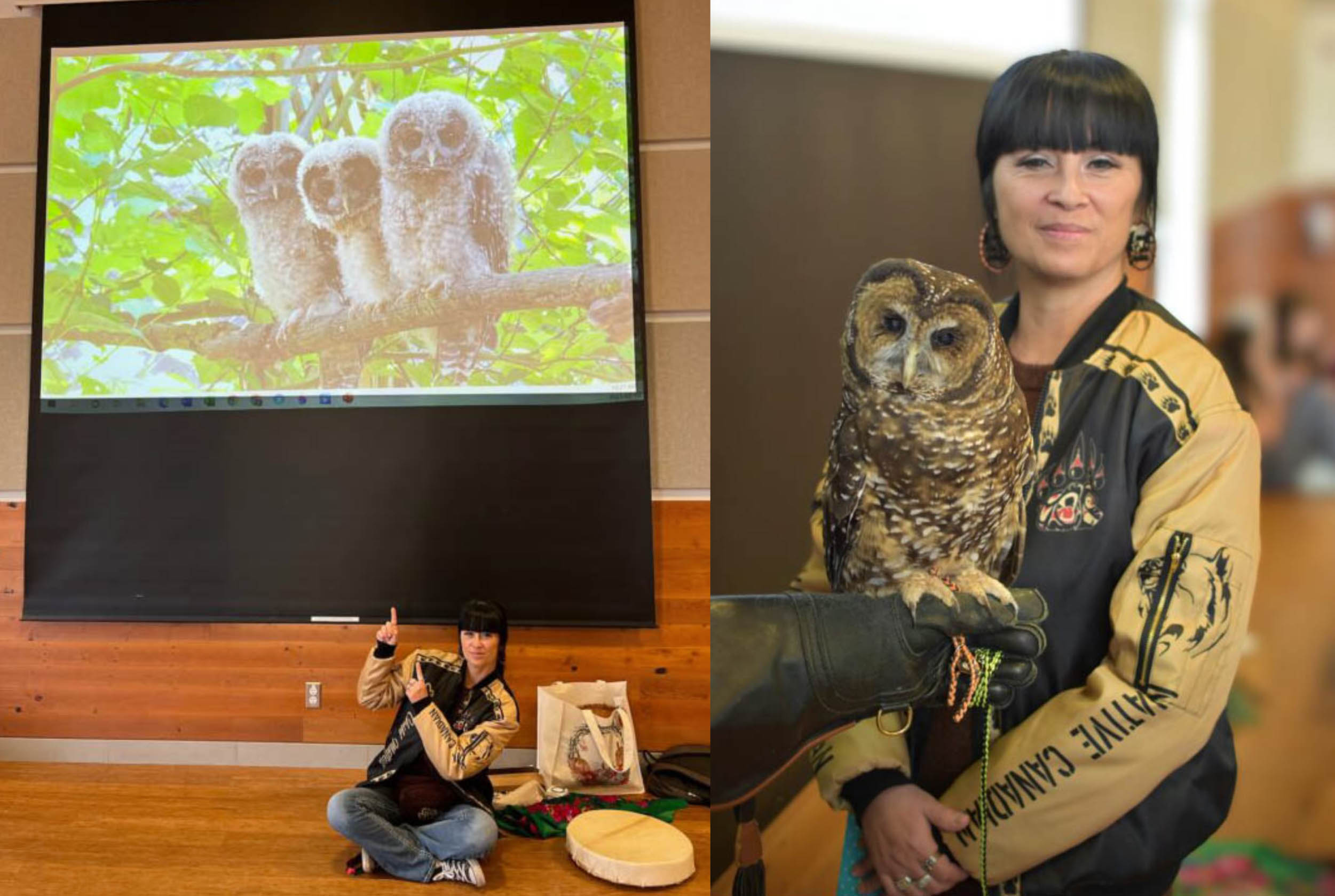
A while ago, the Spô’zêm First Nation and environmental groups formed the Northern Spotted Owl Breeding Program (NSOBP) devoted to raising birds to release and repopulate the wild—not so simple when their habitat is being destroyed. Early efforts have been met with tragedy.

It doesn’t look good for the Spotted Owl. Canada missed its chance once again as environmental and climate leader. The spotted owl’s eradication is imminent. It will likely soon join more than 130 other species that have disappeared from the Canadian wild.
The Spotted Owl Going Extinct in the USA from Habitat Destruction
Despite some decisive wins in protecting the forest, the prospects for the northern spotted owl in the US are also dire. In 2017 as few as 3,000 remained in the Pacific Northwest, down from more than 15,000 in the 1990s, according to estimates from the US Forest Service. Environmental advocates see a bleak future for a species where the birthrate is collapsing in some areas by as much as 9% every year.
Susan Jane Brown, a senior lawyer with the Western Environmental Law Center in Washington state, has spent the past two decades fighting for the spotted owl; she laments, “I think the spotted owl is going to go extinct in my lifetime. And for someone who has spent their entire career trying to conserve the species, that’s a failure.”
As with most other native species in trouble with their degrading environments, invasive interlopers come calling to outcompete them. The Spotted Owl’s nemesis is the Barred Owl, recently come in from eastern North America; it consumes a wider range of prey and is more able to adapt to the destruction of the old-growth ecosystems. Essentially, outcompeting the Spotted Owl for increasingly scarce resources. The recent practice in America’s Pacific Northwest and Canada of culling the Barred Owl (to give the Spotted Owl a chance to fight back) is, I think, a useless, negative and desperate attempt. The invaders are just a symptom of a greater ill—habitat destruction. That is what we must look to repair.
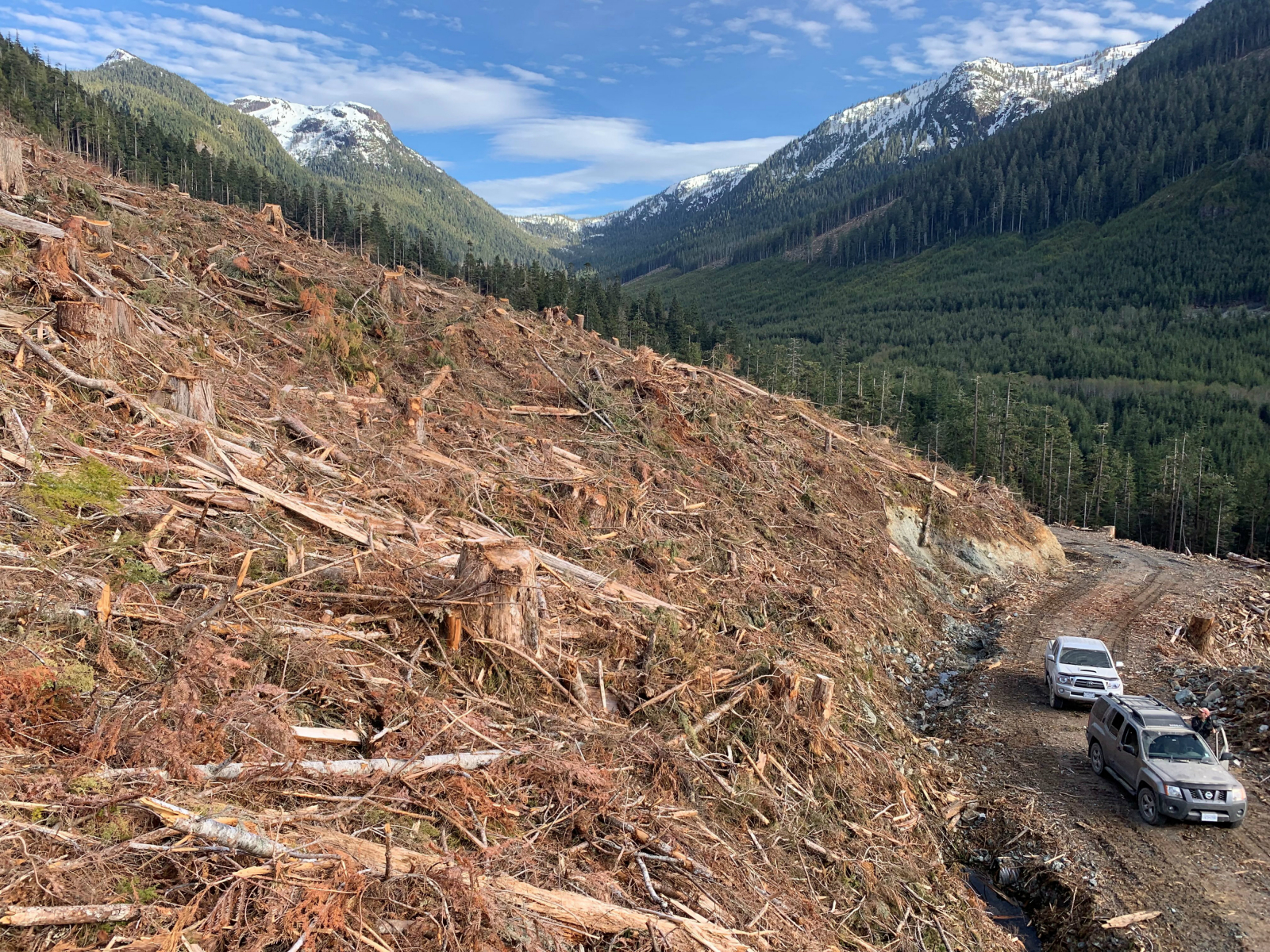
“Every time you log old-growth forests, you reset the clock a few hundred years. We – and the owls – just need the passage of time.”
Jared Hobbs, former BC scientific adviser
As the Spotted Owl struggles existentially with its last female in the wild, the simple answer stands before us—simple but so hard: STOP LOGGING THE OLD-GROWTH FOREST. Because it isn’t just the Spotted Owl’s existence at stake here; it is indirectly ours too.


p.s. The Guardian recently reported that Canadian cabinet ministers of the Canadian Liberal government rejected the request by Steven Guilbeault, the country’s environment minister, for an emergency order to protect the northern spotted owl. This would necessitate a stop in logging of the the Spô’zêm Nation territory, including the Spuzzum and Utzlius watersheds, as well as a further 2,500 hectares (6,200 acres) of forest habitat that are at risk of logging. Unfortunately, despite being required by law since January to recommend an emergency order, Guilbeault delayed making his request for eight months. “The Wilderness Committee, represented by environmental law charity Ecojustice, went to court on 18 October to determine if Guilbeault’s eight-month delay in recommending this emergency order to cabinet adheres to requirements under the federal Species at Risk Act.” Ecojustic lawyer Andhra Azevedo said, “The minister has been required by law since January to recommend an emergency order…To state the obvious, we have emergency orders under the Species at Risk Act to respond to emergencies–what we’ve seen by the minister and now cabinet is nowhere close to an emergency response.”

Nina Munteanu is a Canadian ecologist / limnologist and novelist. She is co-editor of Europa SF and currently teaches writing courses at George Brown College and the University of Toronto. Visit www.ninamunteanu.ca for the latest on her books. Nina’s bilingual “La natura dell’acqua / The Way of Water” was published by Mincione Edizioni in Rome. Her non-fiction book “Water Is…” by Pixl Press (Vancouver) was selected by Margaret Atwood in the New York Times ‘Year in Reading’ and was chosen as the 2017 Summer Read by Water Canada. Her novel “A Diary in the Age of Water” was released by Inanna Publications (Toronto) in June 2020.
 The Meaning of Water
One thought on “The Age of Extinction: The Plight of the Spotted Owl is Our Plight—We Just Don’t Know it Yet…”