
I like my daily walks. I find that walking helps me centre myself. Depending on the time I have, some walks last half an hour to an hour. Other walks will stretch from three hours to a day long. These aren’t city-walks.


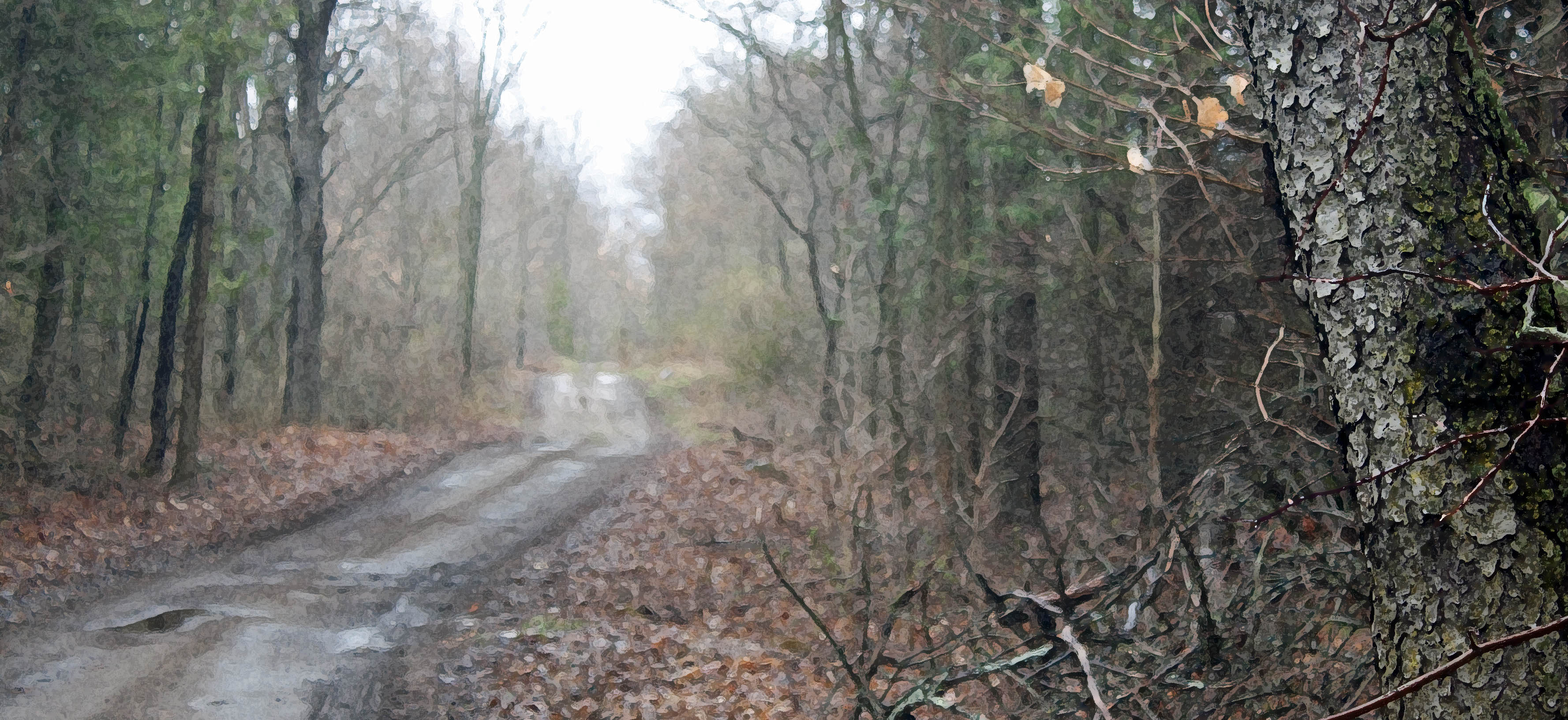
My favourite place to walk is in the forest, by a river.
Is it the solitude? The negative ions, the fresh pungent scents of damp loam, moss and trees? The humbling magnificence of these stately trees? The fishy bog smell of algae? Or the unknown treasures hiding in plain sight for me to discover? Whatever the combination, I find the journey most pleasing. And freeing.


It is also here, wandering in the forest, that my creativity flourishes as I find expression through the joy of discovery.
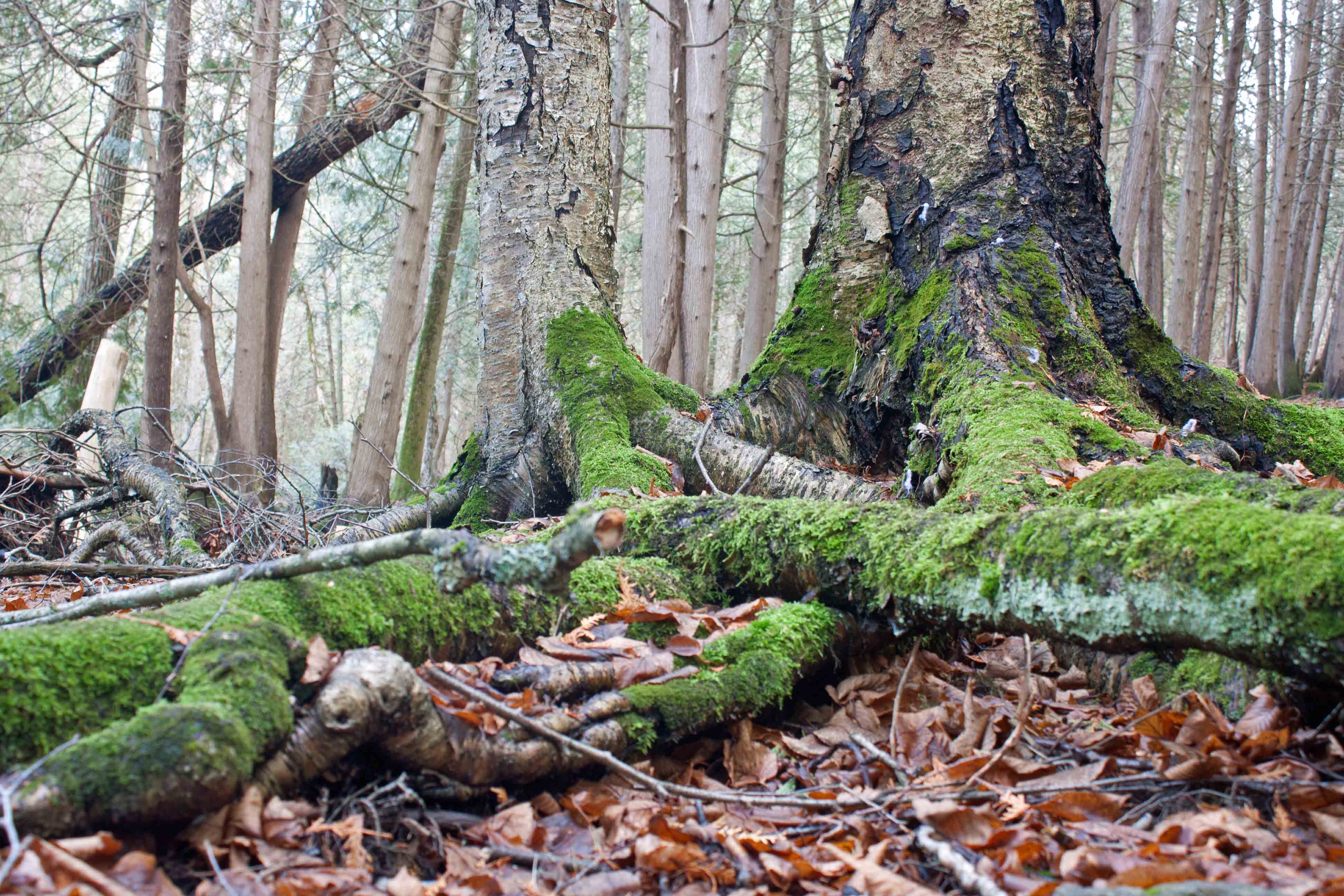
The first step is to lose myself…
That’s the fun part: not knowing what’s beyond that hillside or down that ravine on the shores of the creek I barely see or around that bend in the root-gnarled trail among the swamp cedars. Like a moth to light, I’m drawn to the unknown. Ever the explorer.


It is often here, as I walk along uneven trails or maneuver through undergrowth, up hills or down stream banks to explore and record with my camera, that I do my best thinking … Well, best in that it does not feel like thinking; more like simply ‘being.’ As my body responds to Nature’s sensual treasures, my ingenuous mind ‘walks away’ from restrictions of consciousness and roams in a kind of euphoric state of simple joy. Freed from thinking to feel and sense. In discovery.
No need for a destination. The journey is my destination…

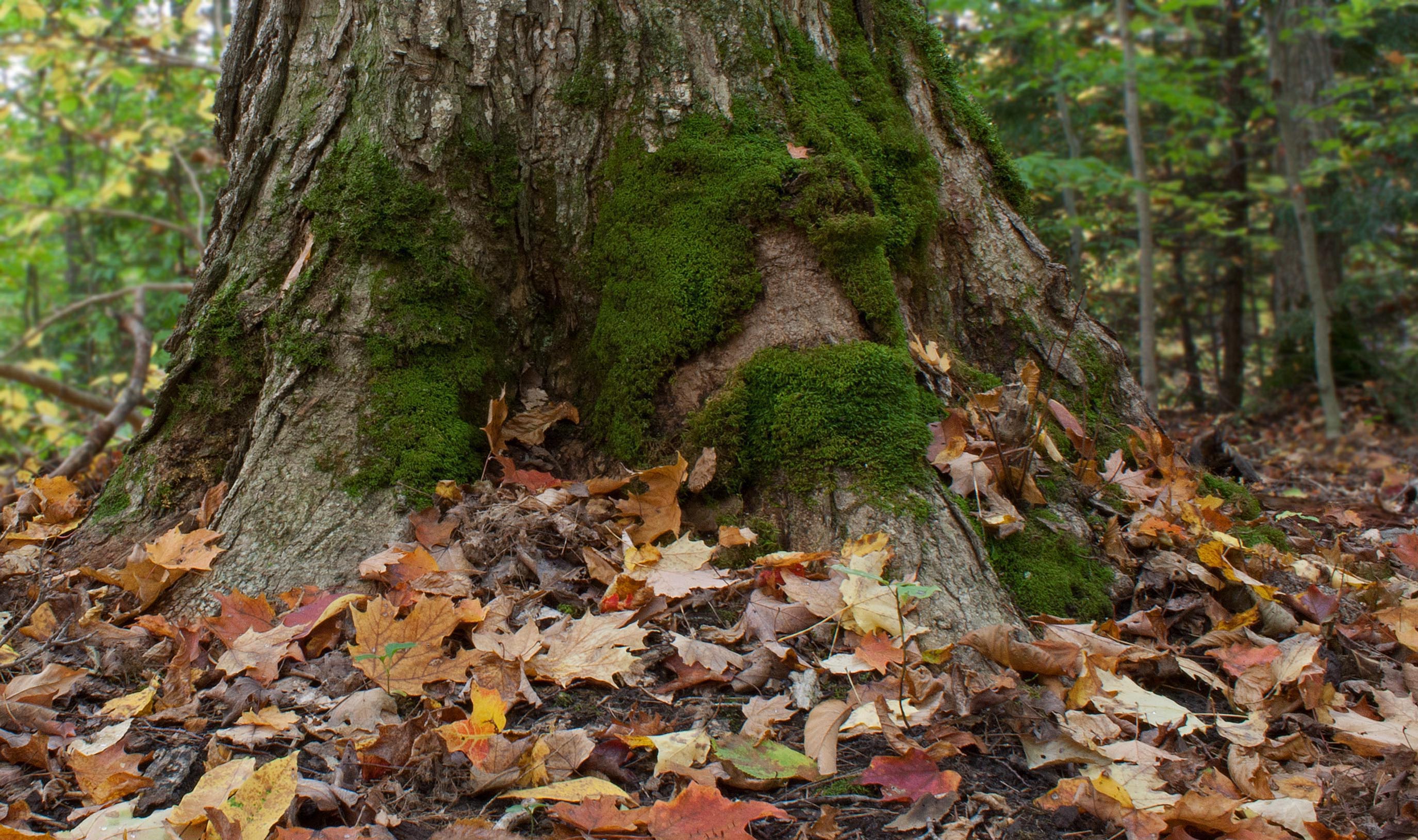
Walking in a forest unclutters my mind and frees my soul. The forest is simple in its natural complexity. Its beauty combs out the tangles of human encumbrance and grounds me in the simplicity of natural life.

I go prepared. Depending on the kind of walk, I’ll bring my clementine to snack on or I bring a hearty lunch and fruit snacks I carry in my backpack, along with a notebook and first aid kit. And, of course, I bring my camera. When I stop for lunch or snack, I choose my location thoughtfully, sometimes a place to sit, but mostly with a view of something worth studying. Lunch or snack stops are particularly alluring with unexpected experience. It is then, when I’ve stopped walking and have become quiet like a tree, when nature closes around me like a soft blanket and often gifts me with a precious sight or sound. A nearby red squirrel eating a nut. A bird flitting from berry to berry in a viburnum shrub. Often times, I will be rewarded with the sight of a mushroom right at my feet or next to where I sit. That is often followed by the sight of many more.
As though the one had to be first seen to reveal the many.
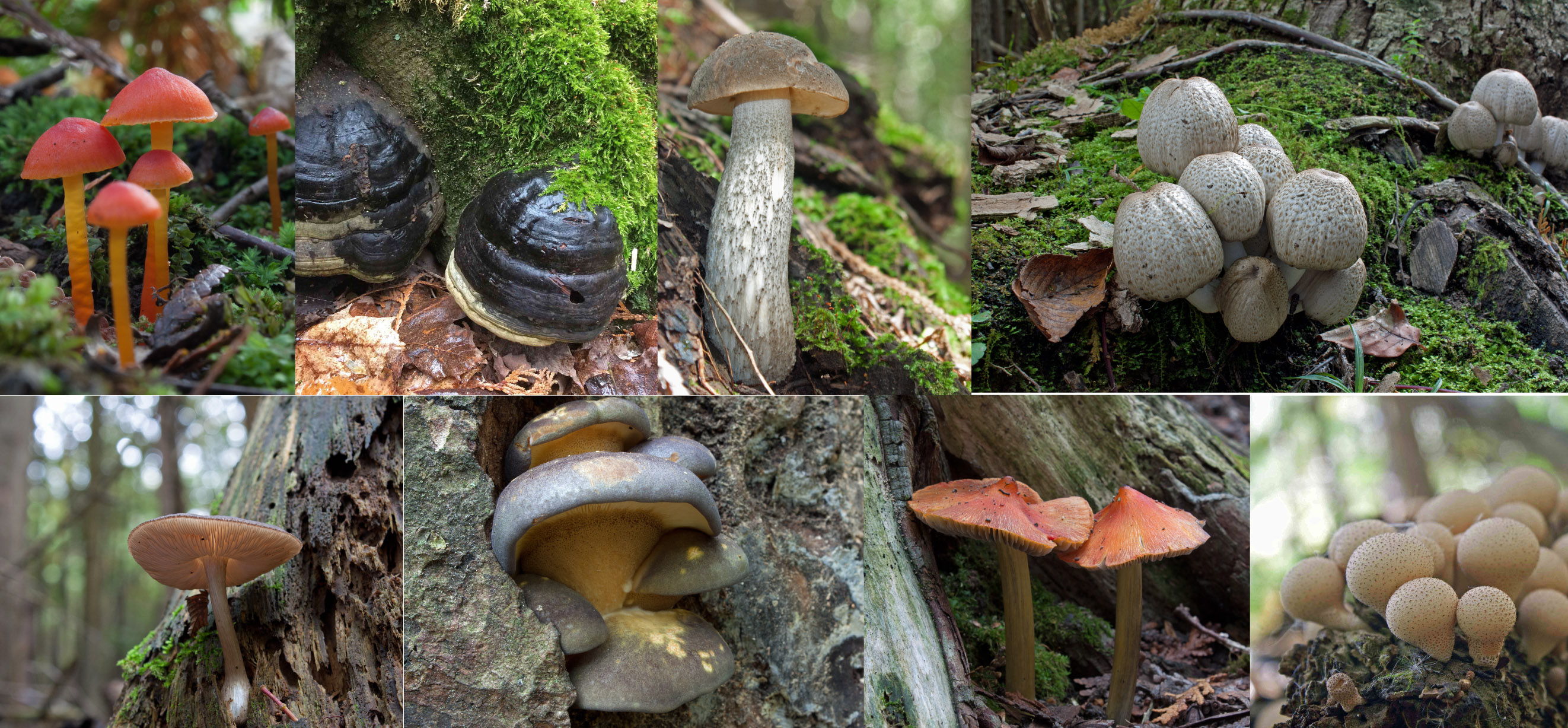
Now lost, I open myself to possibility…
Like the propagules of Virginia creeper, my senses reach out to find the unexpected. I’m looking to be surprised. To discover something new. Something that will draw me outside myself.


The river trickles in the background as I step through dappled light and inhale the organic scents of the forest. The forest and the river help me re-align and focus—without trying.
That’s the magic of it. It’s in the not trying.
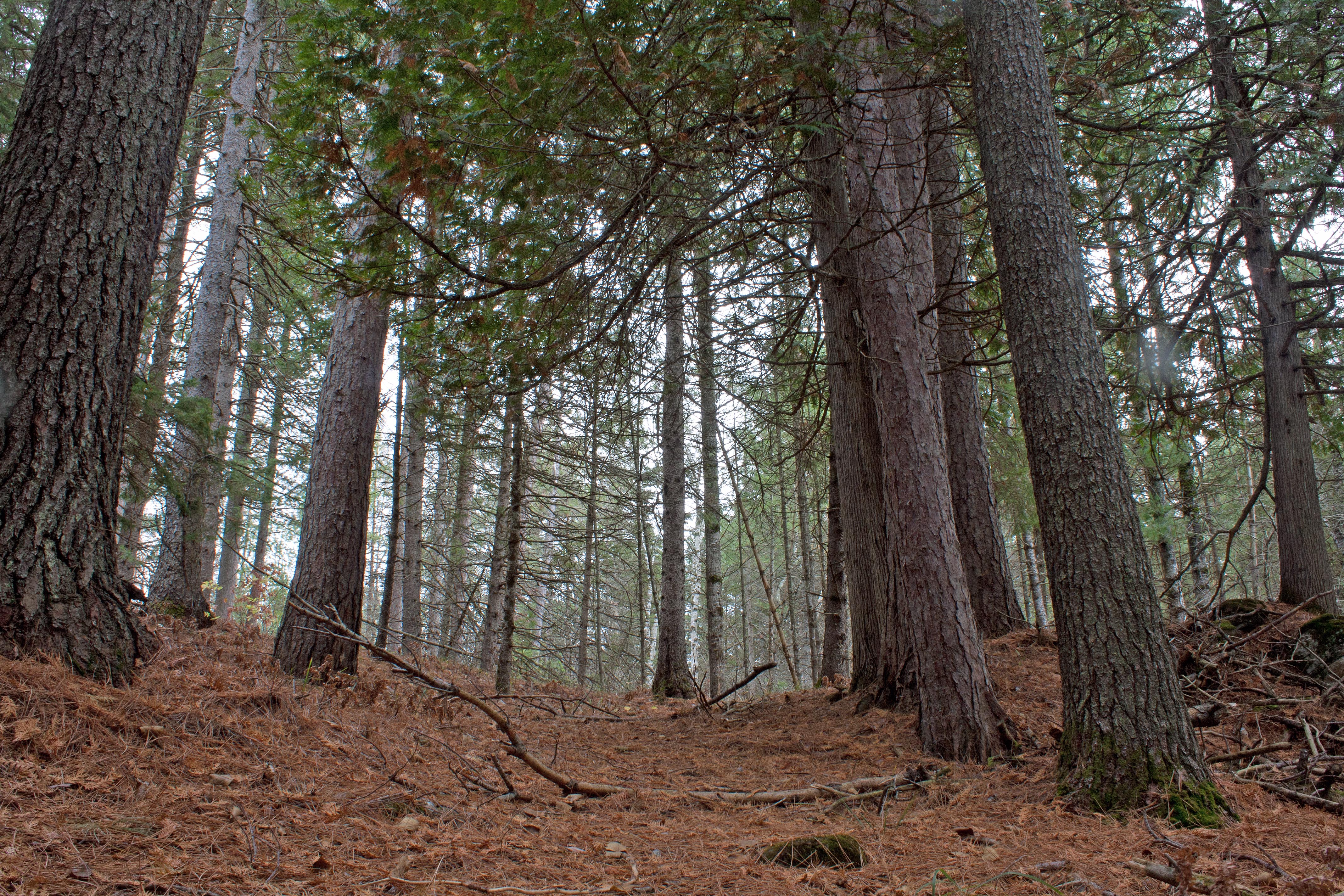
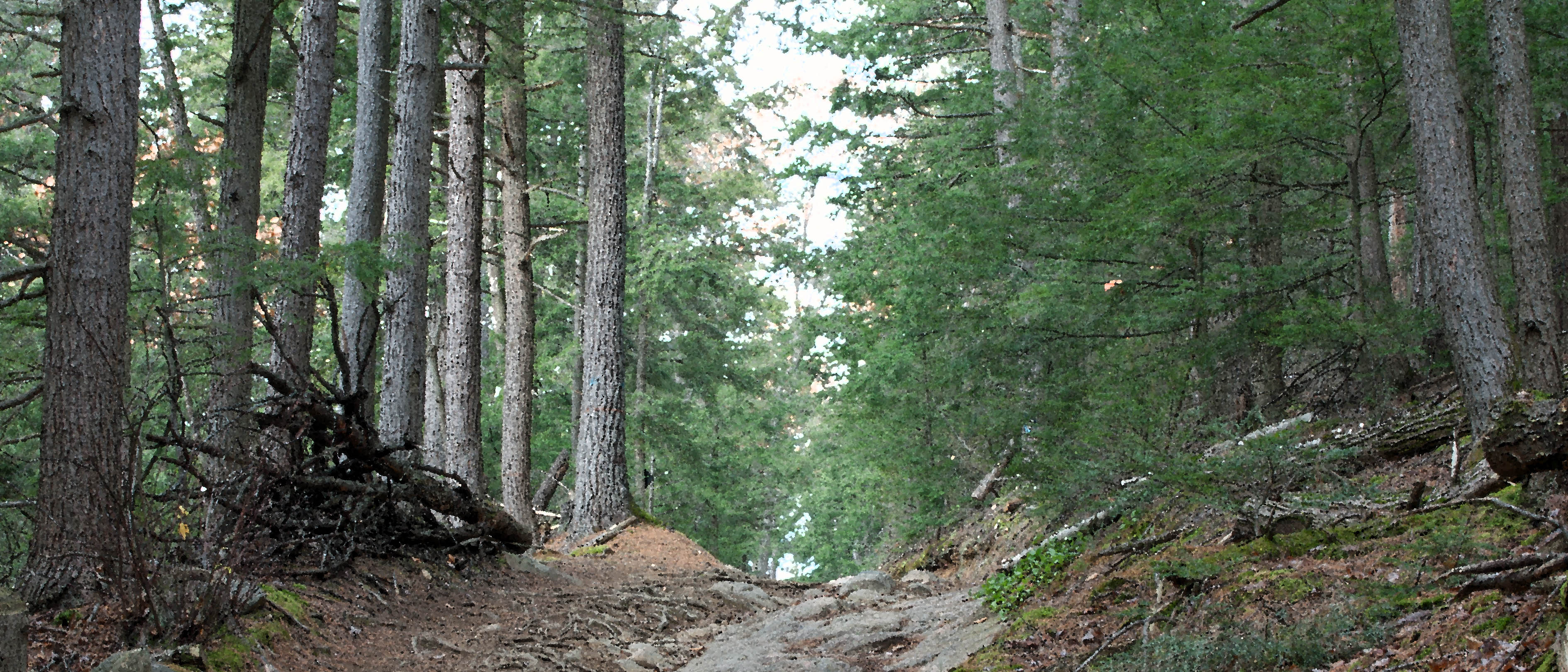
I take my camera (and tripod) with me on most walks for those moments that I can never anticipate: like the time a deer stepped gracefully out from behind a tree not three metres from me in a moss-covered red pine forest.
I was in the process of setting up my camera on its tripod to capture the trail through the pines when the deer moved gracefully into my sight. Startled, we both froze–she in mid-stride and I with hand poised on my camera. We stared at one another for a moment made eternity. The deer then sprang away and loped through the trees, disappearing within seconds. I stood, hands fixed on my camera shutter button, and smiled. I had not taken a picture. But I now basked in that frozen moment of fascination between two curious animals, a deer and a human.
In the April 2014 issue of the Journal of Experimental Pshychology: Learning, Memory and Cognition, Stanford researchers Marily Oppezzo and Daniel L. Schwartz demonstrated that walking boosts creative inspiration. Using the Guildford’s Alternative Uses Test they showed that the act of walking significantly increased creativity for 81% of the participants. Oppezzo and Schwartz were able to demonstrate that the creative ideas generated while walking were not irrelevant or far-fetched, but innovative and practical.

In the September 3 2014 issue of The New Yorker, journalist Ferris Jabr describes why walking opens the mind to creativity. It begins with changes to our chemistry: “when we go for a walk, the heart pumps faster, circulating more blood and oxygen not just to the muscles but to all the organs—including the brain. Many experiments have shown that after or during exercise, even very mild exertion, people perform better on tests of memory and attention. Walking on a regular basis also promotes new connections between brain cells, staves off the usual withering of brain tissue that comes with age, increases the volume of the hippocampus [a brain region crucial to relational memory and contextual learning], and elevates levels of molecules that both stimulate the growth of new neurons and transmit messages between them.”

So, I walk and I create in my mind and my heart as I prepare to write my next novel…

Nina Munteanu is a Canadian ecologist / limnologist and novelist. She is co-editor of Europa SF and currently teaches writing courses at George Brown College and the University of Toronto. Visit www.ninamunteanu.ca for the latest on her books. Nina’s bilingual “La natura dell’acqua / The Way of Water” was published by Mincione Edizioni in Rome. Her non-fiction book “Water Is…” by Pixl Press (Vancouver) was selected by Margaret Atwood in the New York Times ‘Year in Reading’ and was chosen as the 2017 Summer Read by Water Canada. Her novel “A Diary in the Age of Water” was released by Inanna Publications (Toronto) in June 2020.
 The Meaning of Water