
The art of being happy lies in the power of extracting happiness from common things
Henry Ward Beecher


I grew up in a small town in the Eastern Townships of Québec, where the four seasons shifted from one to another in dramatic fashion. When I wasn’t in school or doing homework, I spent much of my playtime exploring the adjacent woodland, a typical mixed hardwood forest, dominated by maples and beeches, together with birches, poplars, oaks, and hemlocks. I was there during all seasons, often on the ground looking for treasures hidden in the forest duff or teasing out the shrubs, mosses and lichens for magical things they concealed. I remember in primary school drawing the sugar maple (Acer saccarum), its iconic broad arms stretched out and dressed in beautiful maple leaves. The sugar maple, with its stunning colours in fall, along with the robin and its inspiring song in spring and summer, were my icons of Canadian life.
Then there was winter…

I remember winter in Québec lasting six months with deep and constant snow (though this is no longer the case with global warming upon us). During my adventures in the winter forest, it was the tall American beech (Fagus grandifolia) that captured my youth’s imagination. Its smooth trunk resembled stone more than wood. There was something rather elegant, even mysterious, about this handsome tree that stood singularly pale and smooth in an umbrous rough crowd, and held onto its copper-coloured leaves in the cold of winter, long after its hardwood neighbours gave up theirs.

This stubborn inclination of the beech tree is known as marcescence. Part of my unruly personality embraced this calm eccentricity of the beech in championing the bleakest of the seasons. It was in winter that I was reminded how common this hardwood tree is in the north temperate forests of eastern Canada. You could spot its tan-bronzed leaves from afar through the sparse skeletal forest. But this common tree is far from ‘common’…


In the waning sun of a late winter afternoon, as dark silhouettes of maple and birch raise imploring limbs that quiver in a chill wind, the arms of the pale beech glow like a warm camp fire, leaves lit like melting copper candles in the captured rays of a setting sun.

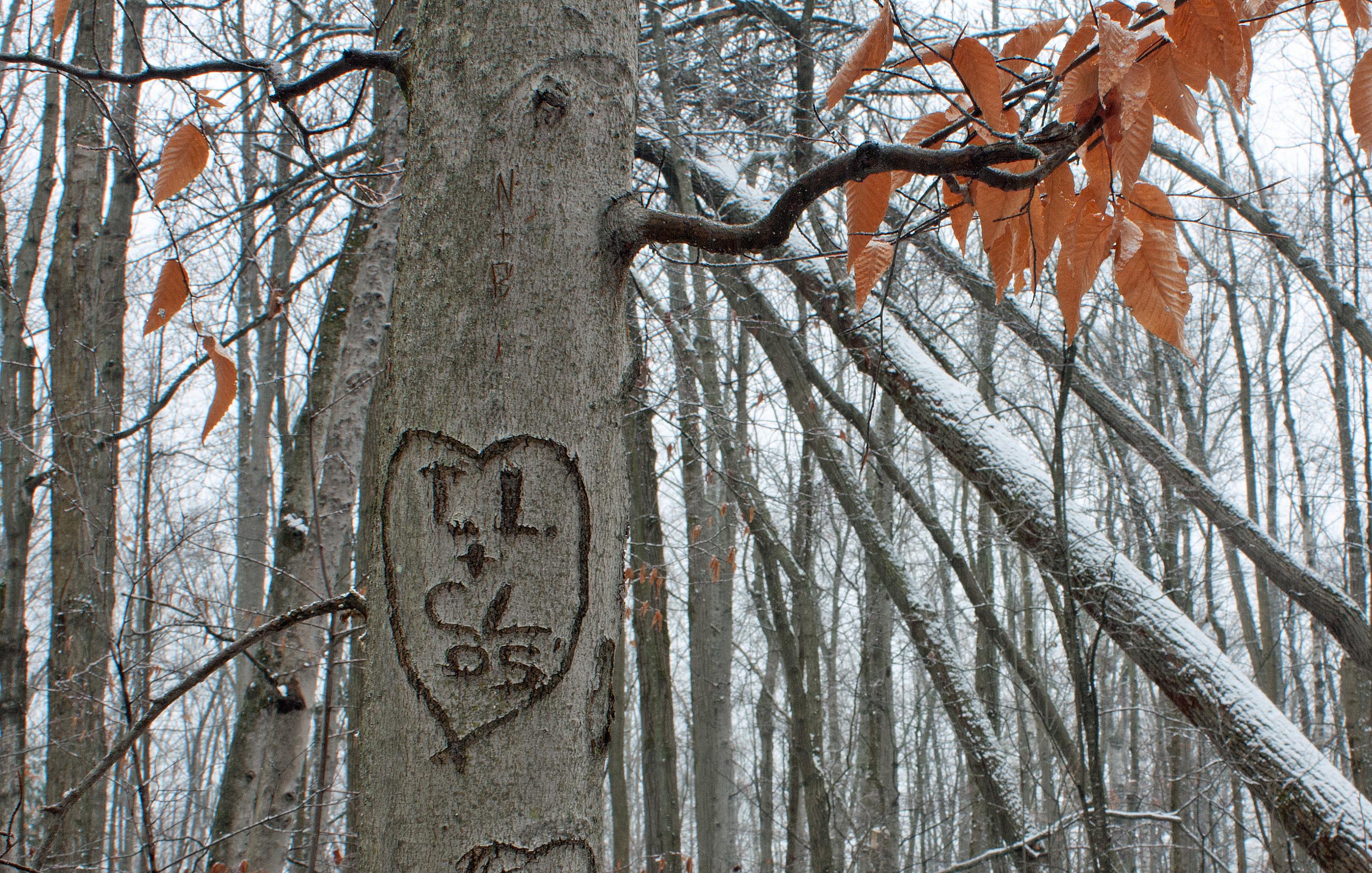
Drawn to the smooth bark of the beech like a pen to paper, my older brother carved some twaddle into the inviting surface. As much as I wanted to mimic his action—like I did almost every deed of his—I hesitated. I couldn’t bring myself to cut into this elegant and incredibly handsome tree; I couldn’t hurt it or tarnish that clean surface with some twaddle only important to me in that moment. Something told me that this was overly selfish and not kind to the tree. I demurred and kept the reason to myself; If I’d told my brother, he would have, no doubt, ridiculed me for being overly sensitive—like an older brother would. I’ve since learned that, despite assurances that bark mutilation or stripping does not harm the tree (so long as one doesn’t form a ring that effectively cuts off the cork cambium and the flow of phloem), scientists have finally recognized that any injuries to tree bark, no matter how small, can introduce disease and pests that will harm the tree. I felt vindicated that my childhood hesitation was not born of confabulation or delusional fantasy from some mystical German fable; my natural instincts and sensibilities had served me well.


The Strategy of the Beech Tree
Every tree has its unique strategy to thrive in the forest, and these often compliment other tree strategies in what ecologists call niche partitioning–an ecological approach to successful co-existence.
This brings me to the natural question of why the beech has brashly, if not vainly, elected to grow its bark thin and smooth when most other hardwood trees and conifers—particularly pine, oak, black locust and willow—have invested in thick and rough protective bark against invading pests. The answer given by Northernwoodlands is that a thin bark requires less investment of energy and allows more photosynthesis to occur in its bark, particularly in late fall but also in winter when it is below freezing (scraping away the outer bark on a twig or young branch will reveal the thin green cork skin). Given its smooth texture, thin bark also helps thwart epiphytes such as mosses, lichens, and algae that become a nuisance by blocking sunlight needed in photosynthesis, interfering with heat regulation, and blocking lenticels that help in gas exchange.
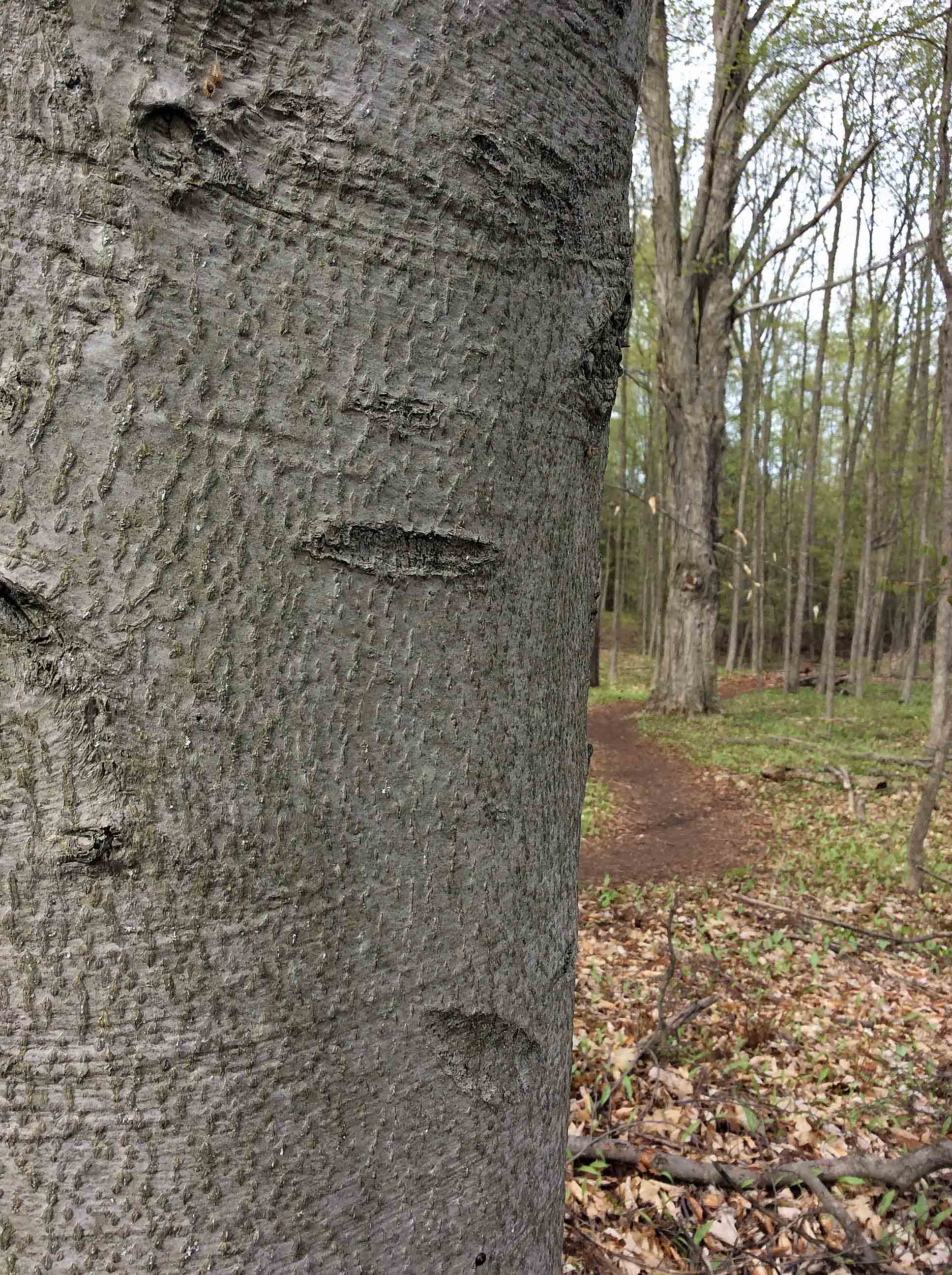
Each tree has its unique toolkit and it’s these kinds of trade-offs that help create a diversely healthy forest ecosystem. Along with its energy-saving bark, the beech uses much less water than other trees (requiring 22 gallons vs. 36 gallons for most other trees to produce one pound of wood) and grows rapidly. The beech is able to create a humid microclimate and a good supply of alkaline humus on the ground and its seedlings can push their way through the thick layer of leaves on the ground.
How the Beech Tree Grows & Reproduces
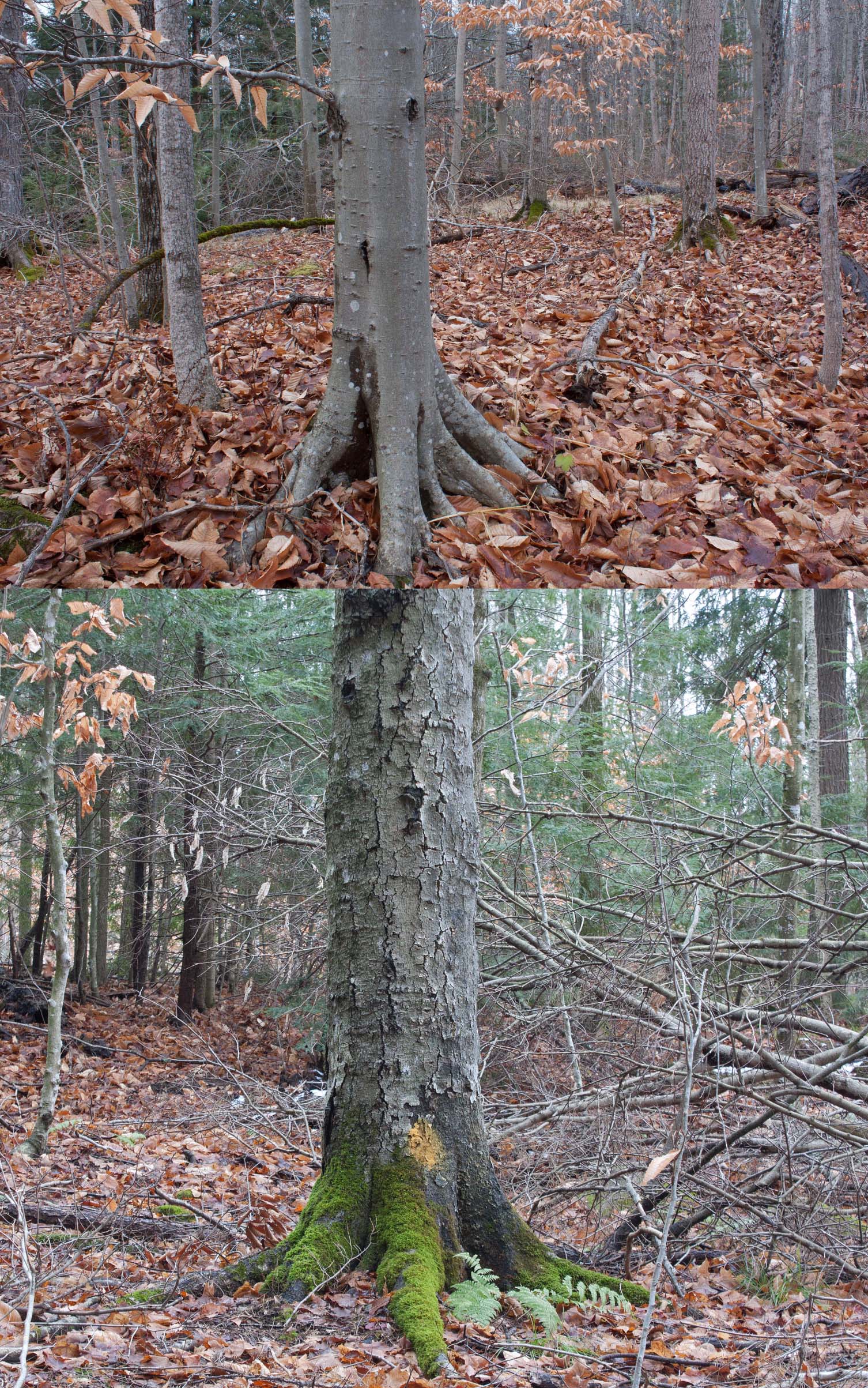
In the wild, the American beech tree (Fagus grandifolia) grows up to 120 feet high and can live to three hundred years, possibly more–often still retaining its handsome youthful bark. But more often, when a beech tree reaches middle age (past 80 years), its bark starts to wrinkle, starting from the bottom up. ArbTalk suggests that the older beech tree does this in a response to attacking scale insects by adding additional protective bark. Moss, algae and lichen colonize the trunk’s nooks and small crevices, where moisture from recent rains linger. German forester and author of The Hidden Life of Trees Peter Wohlleben tells us that you can estimate the age of a beech tree by observing how far up the green growth is on the trunk. Another way is by observing how wide they’ve become. Wohlleben notes that, just like people, trees stop growing tall and instead get wider with age.

Beeches reproduce vegetatively (through root sprouts) and sexually (through wind-pollinated flowers to seeds). Root sprouts are called coppice, which occurs where trees have been cut or roots even slightly damaged; the tree responds to this stress by putting out dozens or even hundreds of new sprouts.
The beech reaches sexual maturity at 80 to 150 years of age. Such a tree may only be person-height with a diameter of your thumb. This is partially because once the beech sapling establishes, its growth is subdued by the shaded canopy of its mother trees. Wohlleben suggests counting the small yearly growth nodes on a branch of a young beech to count the growth years. Using this approach, Wohlleben noted that a seven foot high one-inch diameter European beech (Fagus sylvatica) in the German forest he was caretaking was already well over 25 years old.
Modest wind-pollinated flowers create seeds, within three-sided beech nuts enclosed in spiny burs that mature in September to October. During my many walks in the beech forest, I’ve been hard pressed to find many; this is because they are snatched by squirrels, deer, and bluejays as quickly as they are dispersed. These edible nuts were once sold in volume, writes Tim Palmer in The Twilight of Hemlocks and Beeches, who adds that the tree’s inner bark and its leaves are also edible. Palmer informs me that Fagus grandifolia means “edible large leaves,” and Fagus derives from the Greek fagito, to eat.

The beech tree can produce at least thirty thousand beechnuts every five years—now more like every two or three years, due to climate change. The tree is sexually mature at eighty to one hundred and fifty years, depending on light conditions. Given that beeches can grow to four hundred years old, 1.8 million beechnuts are produced in one beech tree’s lifetime. “From these,” writes forester Peter Wohlleben in The Hidden Life of Trees, only “one will develop into a full-grown tree … all the other hopeful embryos are either eaten by animals or broken down into humus by fungi or bacteria.” Poplar trees produce far more of their fluffy seeds—some 54 million fluffy seeds annually—but for their extra output, their outcome is no greater than the beech.

Beechnuts, like acorns of oak trees, are particularly attractive to browsers (given they contain up to 50 percent oil and starch, great for helping browsers put on a protective layer of fat for winter) and will be picked clean quickly. This is why every several years a “mast” year occurs. “Mast” comes from the German word mästen, “to fatten,” and describes a year when beeches and oaks bloom and set a particularly large crop of seeds together. This ensures that some are left to sprout in the spring.
Implications of mast year production (usually from a “fat” summer), can influence other aspects of a tree’s metabolism. For instance, sugar maples (Acer saccharum) develop more watery sap in a spring following a mast year because they used their stored sugars to produce their bumper seeds the previous fall.

The Beech Tree Is the ‘Socialist’ of the Forest
According to German forester Peter Wohlleben beeches are one of the most social of trees, able to count, learn and remember, nurse sick neighbours, warn each other of danger by sending electrical signals across a fungal mycorrhizal network, and even keep ancient stumps alive for centuries by feeding them sugar through their roots. Young beech saplings, growing beneath the shade of adult trees receive sugars from their mother trees through their roots.
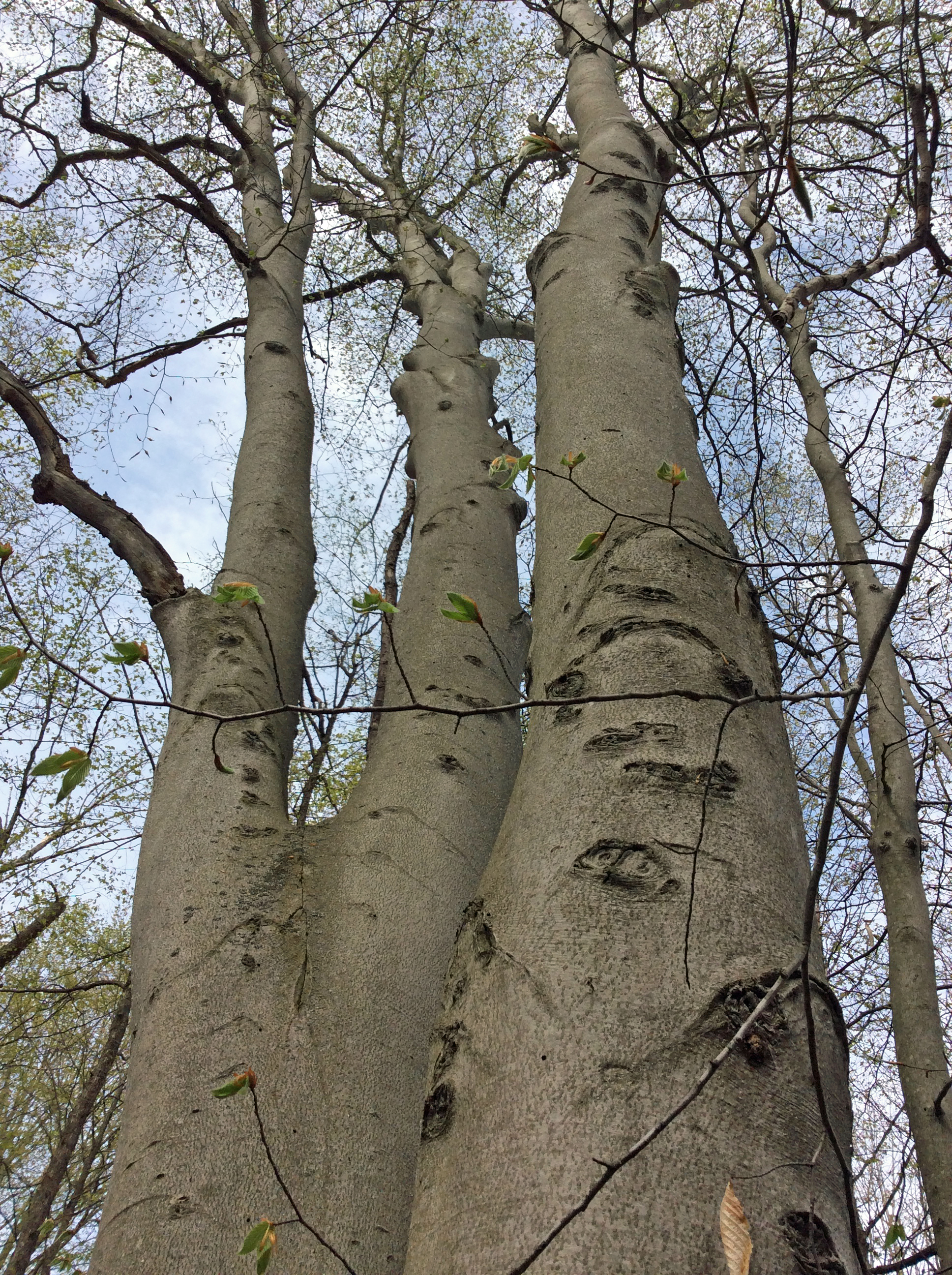

The social nature of the beech tree is made most apparent when compared with Nature’s archetype for strength and solitude: the oak tree. In his book The Hidden Life of Trees, Wohlleben writes, “Whereas beeches last barely more than two hundred years outside the cozy atmosphere of their native forests, oaks growing near old farmyards or out in pastures easily live for more than five hundred.” As a note, beech trees can live well over four hundred years in their preferred habitat within a stand of other beeches. Wohlleben adds that, “Even severely damaged [oak] trees with major branches broken off can grow replacement crowns and live for a few hundred years longer … a storm-battered beech is able to hang on for no more than a couple of decades.” Oaks are made of stern stuff, says Wohlleben, who found them growing in places no other tree would and explains: the advantage of this hardscrabble existence is the lack of competition from other trees, such as the successfully competitive beech tree. When provided with more ideal conditions, the beech out-competes the oak in the race for more light by achieving a higher crown through rapid growth. Its young saplings can also tolerate less light over other trees like the oak, which is why the beech does so well in a dark hemlock forest.

The beech is particularly social in its growth; older trees share nutrients via their root systems with younger saplings; surrounding beeches pump sugar to a stump to keep it alive so it can continue to provide other essentials.
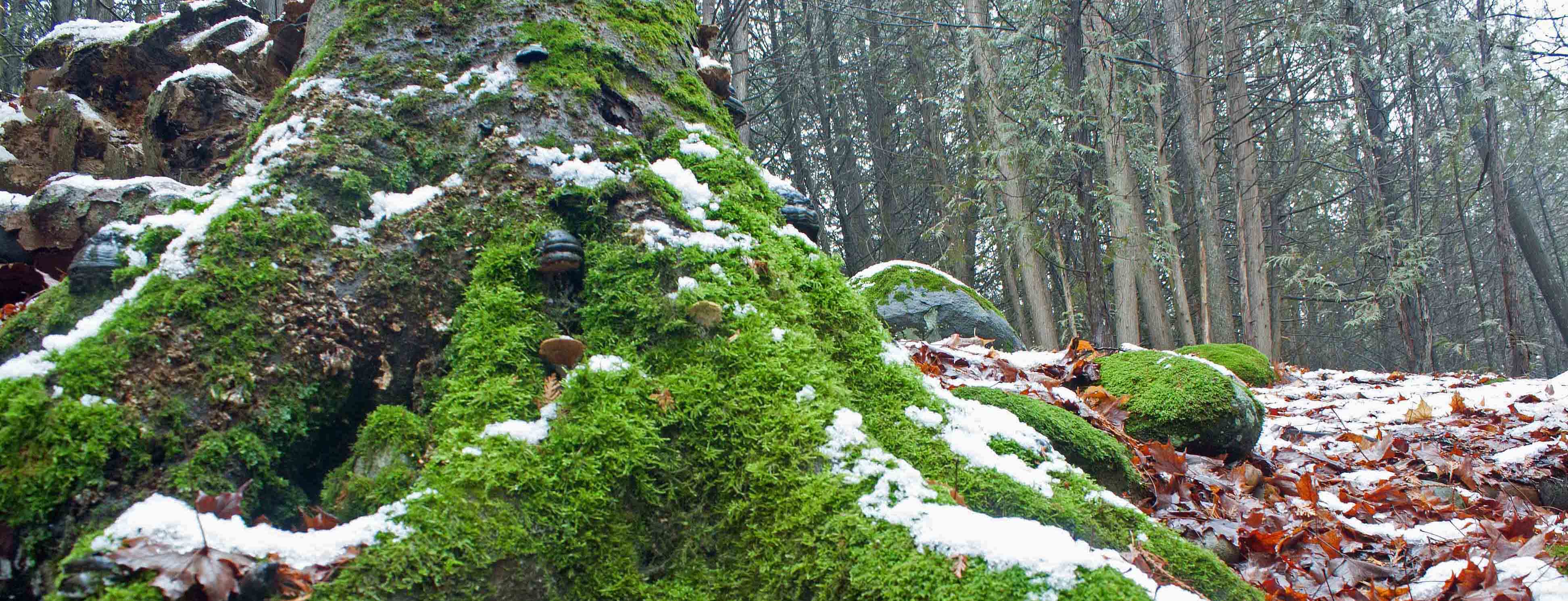
Wohlleben relates a remarkable find in an old beech forest in Germany; one day he stumbled across what he thought was a circular patch of mossy stones. When he took a closer look, he realized that these were not stones but the remains of an ancient four-hundred year old felled giant beech–still alive and green with chlorophyll. The old stump was kept alive by neighbouring trees!
Wohlleben adds that as a rule “friendships that extend to looking after stumps can be established only in undisturbed forests.”
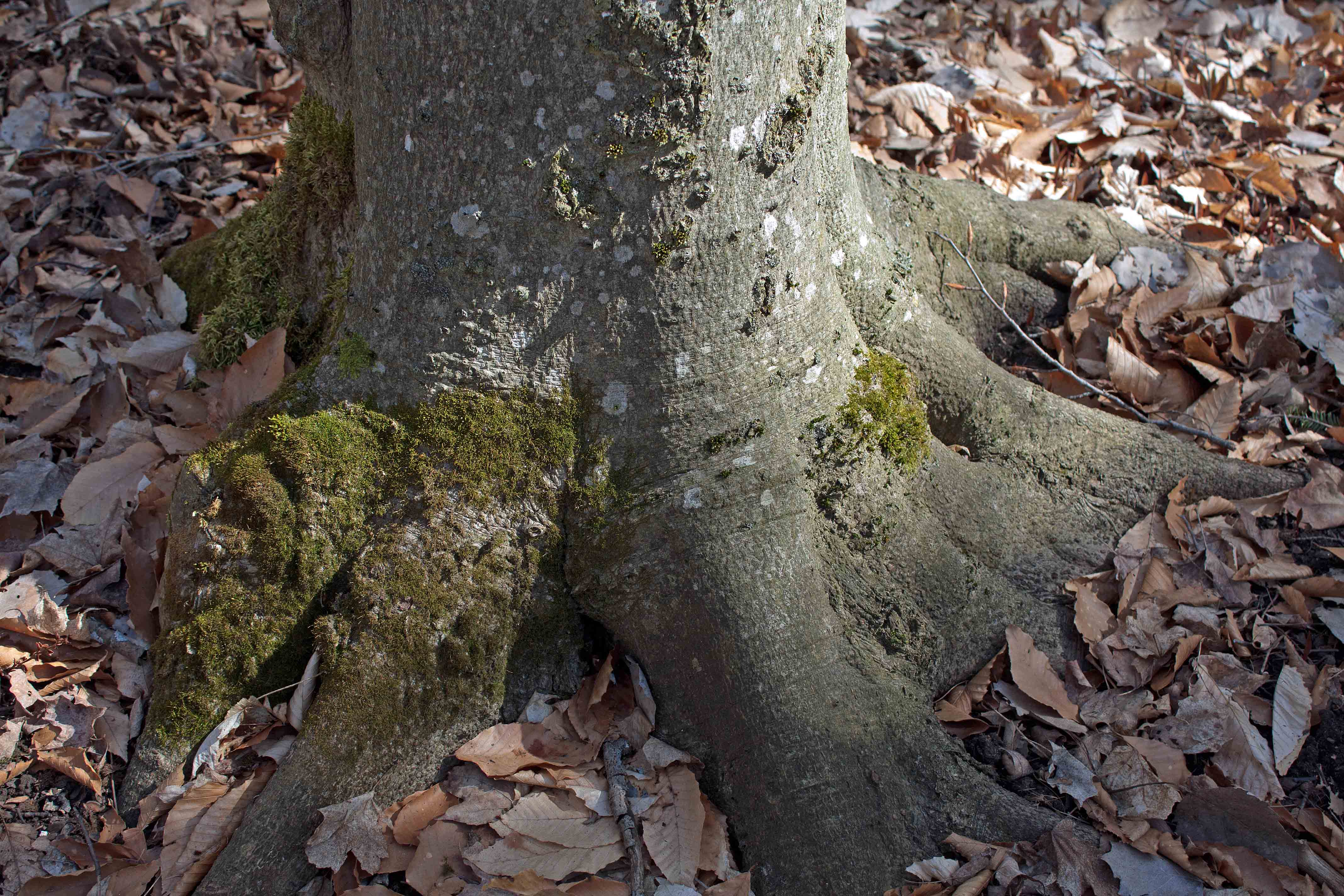
“Thick silver-gray beeches remind me of a herd of elephants. Like the herd, they look after their own, they help their sick and weak back up onto their feet, and they are even reluctant to abandon their dead.”
Peter Wohlleben, The Hidden Life of Trees, Illustrated Edition, 2018
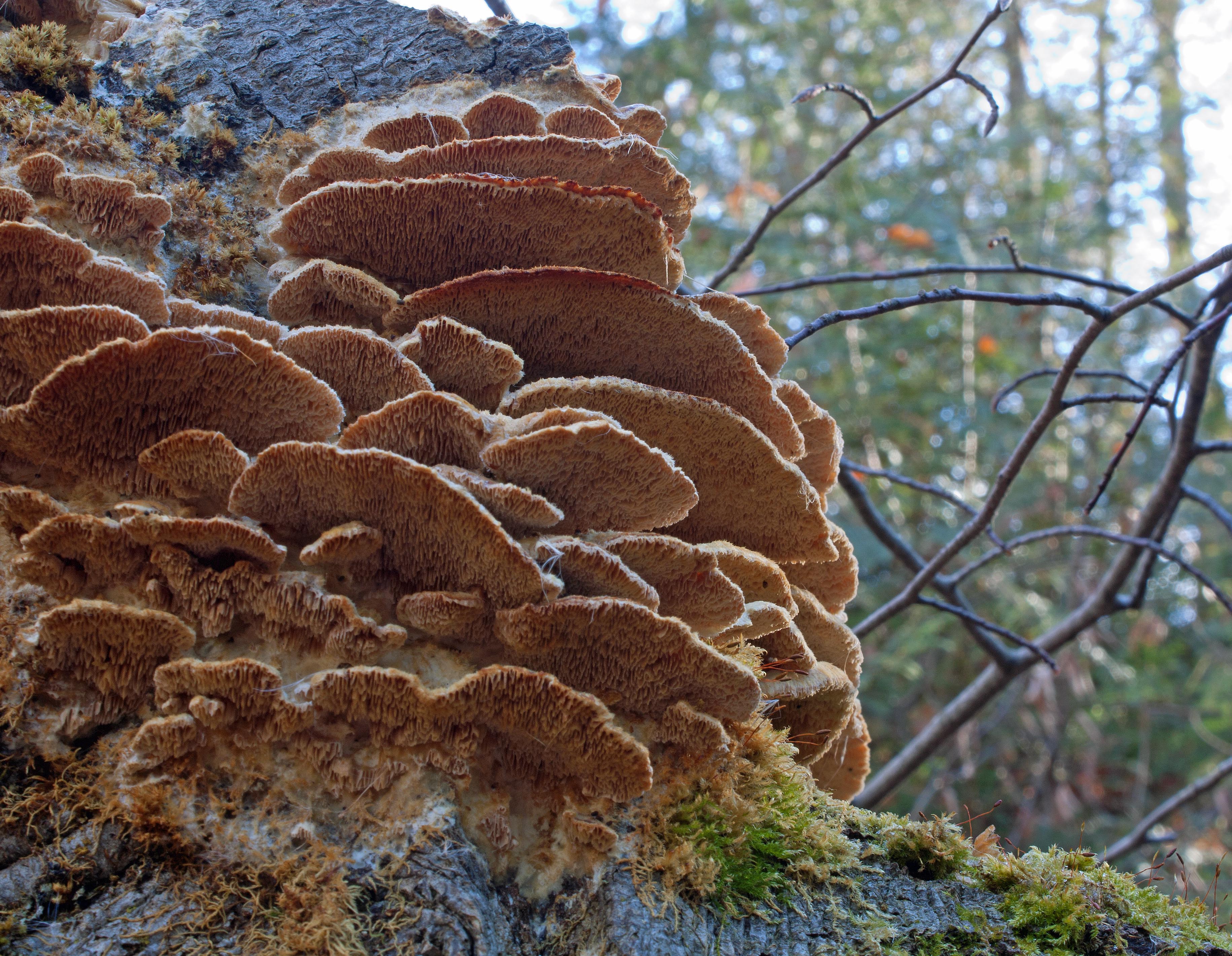
Beech trees even practice a kind of “socialism versus capitalism” by synchronizing their photosynthesis: “equalizing between the strong and the weak and ensuring that all are equally successful.” Whoever has an abundance of sugar shares; whoever is in need of sugar receives from others. The beech epitomizes the opposite of neoliberal capitalism by growing together in community, sharing nutrients and water that are “optimally divided among them so that each tree can grow into the best tree it can be,” writes Wohlleben.
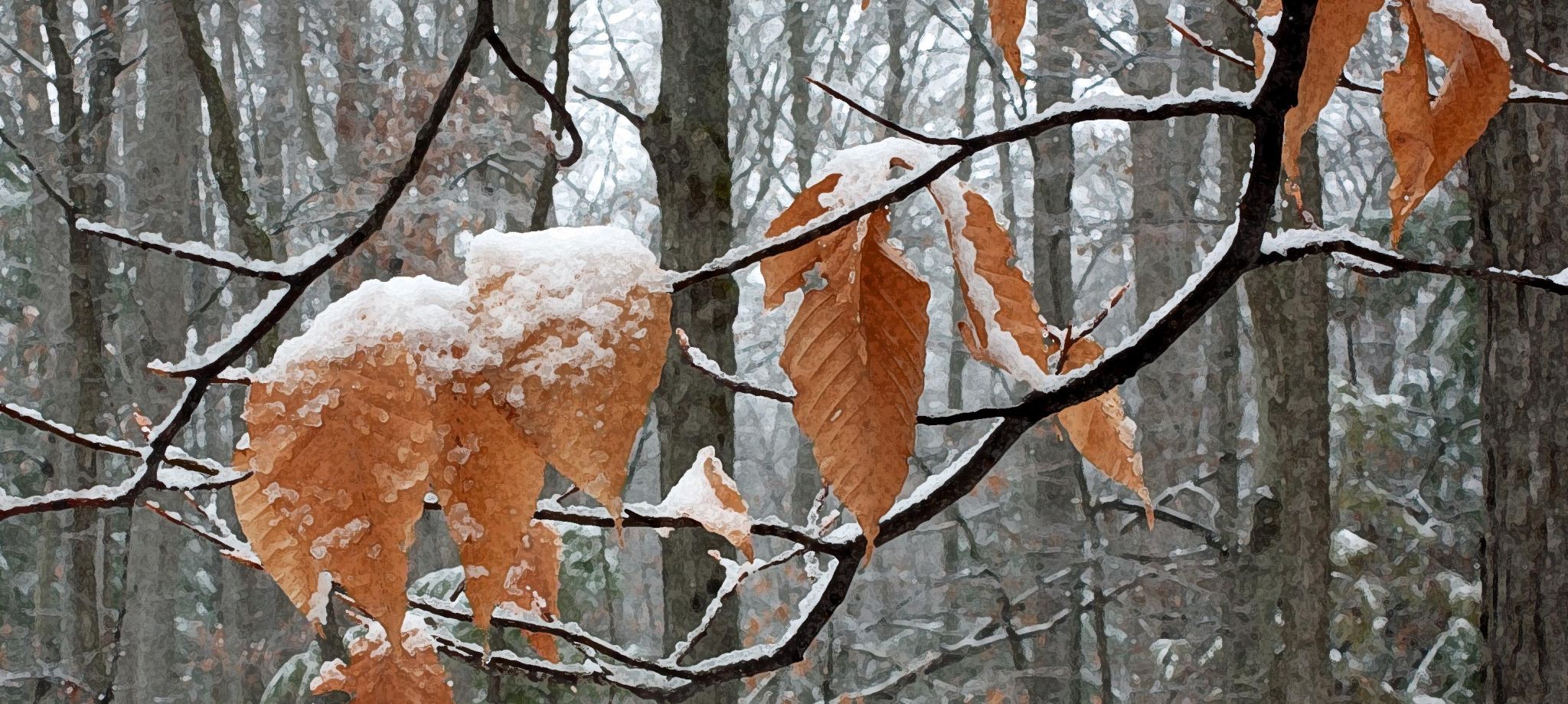
In such a system, says Wohlleben, it is not possible for the trees to grow too close to each other. “Huddling together is desirable and the trunks are often spaced no more than three feet apart.” Researchers in northern Germany have discovered that a beech forest is more productive when the trees are packed together. When trees grow together, nutrients and water are communally divided so that each tree can grow optimally. When foresters ‘help’ by thinning a forest, the individual trees may be more productive but are not as long-lived, writes Wohlleben.
“This is because a tree can be only as strong as the forest that surrounds it.”
Peter Wohlleben, German Forester

Beech Trees Use Allelopathy to Balance their Ecosystem
The beech co-exists with the maple to form a climax closed canopy northern hardwood forest. Both have seeds that are shade tolerant, allowing them to grow in low light conditions. The mixed mesophytic beech-maple climax forests that I currently walk in the lower Kawarthas of Ontario, also support basswood, red and white oak, hemlock, American hophornbeam, various poplars (typically largetooth aspen), pine, ash, and yellow or white birch.


How the two species—American beech (Fagus grandifolia) and sugar maple (Acer saccharum)—maintain co-dominance without competitively excluding the other is achieved through differing sensitivities to disturbances and through allelopathy, a phytotoxic chemical interference of beech—mostly through leaf leachate—that slightly suppresses sugar maple seedling growth, which can be considered a case of amensalism. However, this suppression establishes a balanced ecosystem in which both species benefit. A healthy and balanced hierarchy of complexity in a fully functioning ecosystem is achieved.
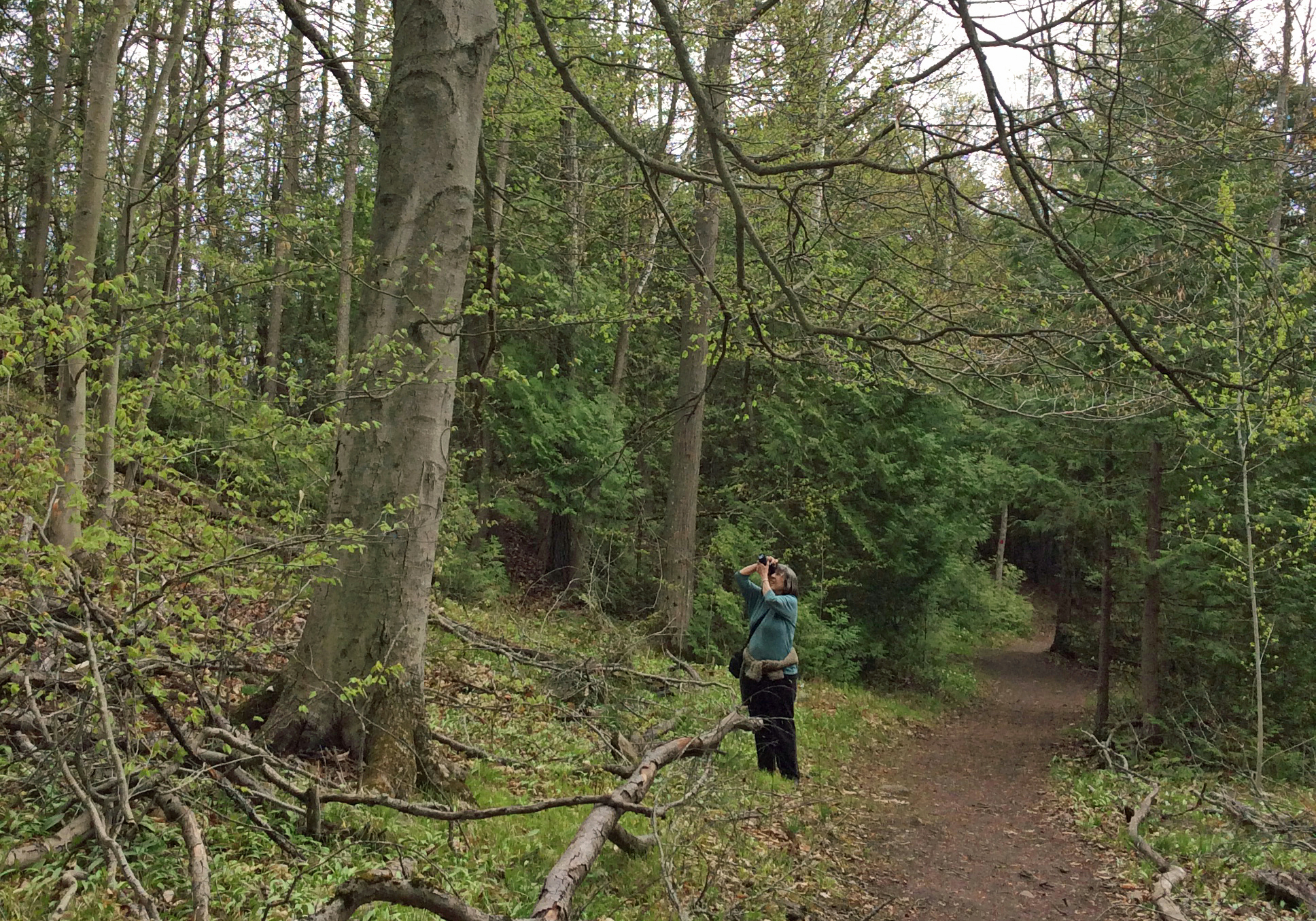
It could be argued that most amensalistic interactions—particularly those involving suppression—serve the role, like predation, of creating a more balanced and healthier ecosystem with complex biodiversity. In his book The Hidden Life of Trees, Peter Wohlleben describes such a role by “mother” trees on their own saplings. “Young trees are so keen on growing quickly that it would be no problem at all for them to grow about eighteen inches taller per season,” writes Wohlleben about a beech stand he studied in Germany. The young beech trees don’t grow fast because their mother trees don’t let them. The mother trees shade their offspring with a dense canopy that only lets in three percent of the total sunlight, while feeding them via their root system. The light-deprived saplings are forced to grow more slowly. This slow growth, argues Wohlleben, creates an inner wood with smaller cells and almost no air and renders the trees flexible, more resistant to breaking in storms and more resistant to harmful fungi.

How the Beech Tree Lives
In a 2018 interview with Richard Grant of Smithsonian Magazine, Wohlleben pointed out two massive elderly beech trees growing next to each other, their winter crowns not encroaching into each other’s space and shared, “these two are old friends. They are very considerate in sharing the sunlight, and their root systems are closely connected. In cases like this, when one dies, the other usually dies soon afterward, because they are dependent on each other.” Like an old couple.

Like many other north temperate trees, the beech tree emits saliva-specific pheromones that summon beneficial predators to dispatch insects feeding on them. Unfortunately not even this seems to help the beech against the beech bark disease, now spreading throughout the American beech tree’s range. A combination of introduced scale insect and several fungi (Cryptococcus and Neonectria), whose created cankers multiply and eventually girdle the tree and kill it. I noticed some beech trees in South Drumlin Park with raised lesions, suggesting (according to Parmer) that the tree has walled off and localized the infection—a sign of tolerance of the deadly invaders. Time will tell. But, according to Palmer, the blight has left some trees untouched within an infected stand, suggesting that some are resistant, and giving me hope for this majestic incredibly handsome tree.

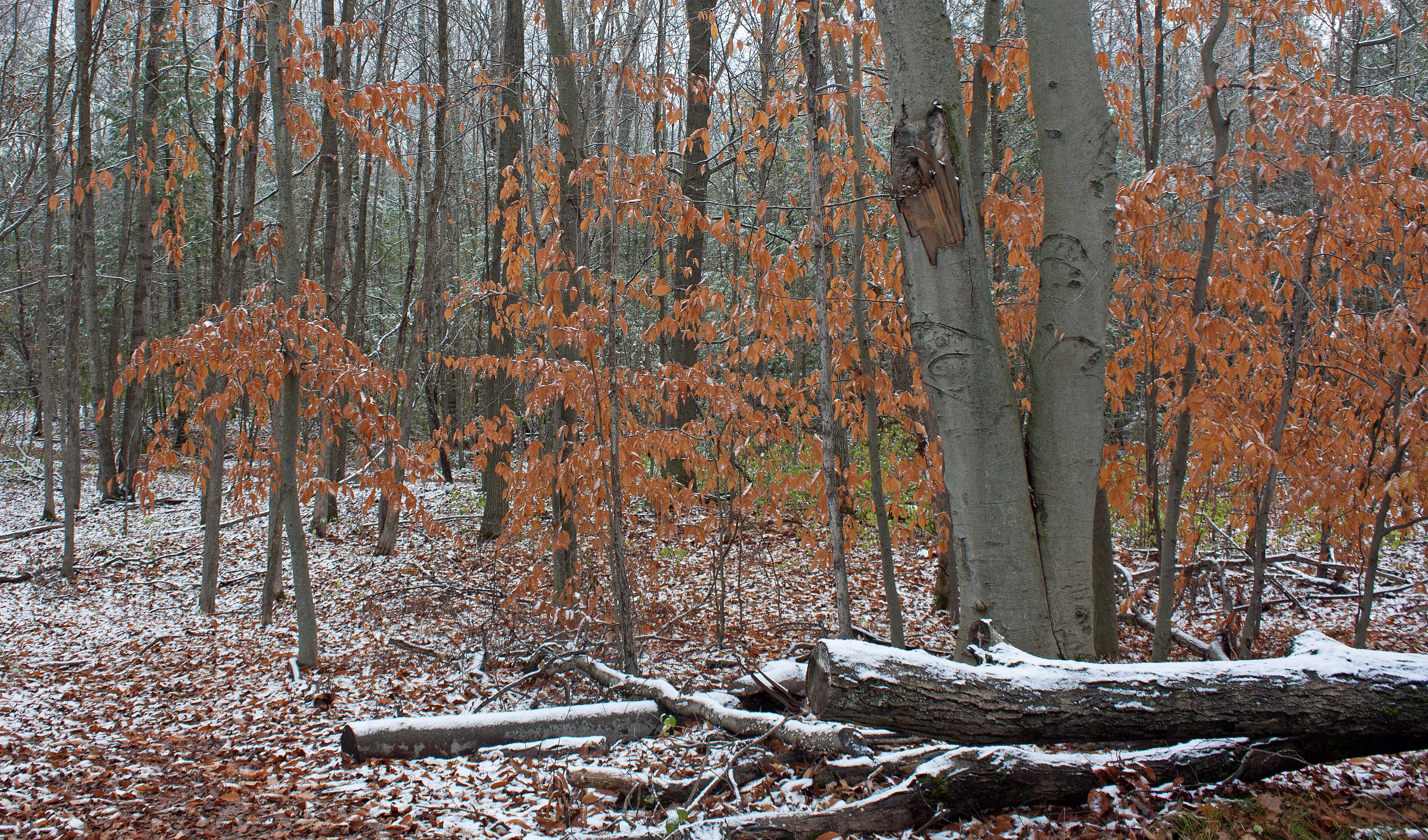
Today is my son’s birthday, possibly the best day of my life, the day I brought this beautiful boy into the world. It’s also Saint Lucia’s Day, a celebrated day of light, particularly in the Scandinavian countries who commemorate the martyr Lucia of Syracuse, who, as legend has it, brought food to Christians hiding in Roman catacombs, lighting her way with a candlelit wreath on her head. And on this day, my thoughts fly to the beech tree, how it lights up an otherwise bleak monochromatic landscape with its golden bronze leaves. How it will prevail, despite the bark disease that ravages these brilliant trees of light in the dark forest.
Like the beech tree, I live in the moment. And this moment is good and full of promise.

Erika of Sovereignty Herbs, on her own werifesteria walk, captures a stunning photograph of a magnificent ancient beech. Erika writes a charming and informative reflection on the beech tree:
Winter. I’ve never much cared for the cold. The moisture from my hot breath is forming icicles on the scarf wrapped around my head as I persevere upslope. “It’s easy to scorn away the beauty of the world in such temperatures”, I say to myself, awaiting the warmth of an elevated heart rate and rushing circulation. Eyes wide open; I begin to recognize a color and movement in the winter woods that I have often ignored. The breeze is tickling the marcescent copper-colored leaves of the American Beech (Fagus grandifolia Ehrh.) They are everywhere…speckling the slopes of this mixed mesophytic winterland, donating their brilliance and tenacity to an otherwise sleepy landscape. My mind is now deeply entranced with what is sparkling before my eyes…“Surely I have noticed you before?” I ask through labored breath.

“When the leaves have forsaken the trees, and the woods are chilly and desolate, there seems nothing to attract one to these bare sentinels of the forest, but Mother Nature has always something to offer to those who love her.”
Elizabeth H. Kirkbride, “A Winters Walk”, 1907


.
p.s. When Solarpunk author BrightFlame learned the term ‘marcescence’ upon reading this article, they responded at first on Bluesky with a question: “How might we all be marcescent among the social/political forest?” To which I responded with: “That’s a great question, BrightFlame … I must ponder it… 🙂 I guess, you said it: solarpunk–by embracing it, writing it, reading it.” BrightFlame followed with a wonderfully inspirational post on their site, called Learning from Forest Marcescence.
.
References:
Braun, L. 1950. The Deciduous Forests of Eastern North America. Blackburn Press, Caldwell, NJ.
Escudero, A. and J.M. del Arco. 1987. Ecological significance of the phenology of leaf abscission. Oikos 49:11-14
Hane, Elizabeth N., Steven P. Hamburg, Adelia L. Barber, and Jennifer A. Plaut. 2003. “Phytotoxicity of American beech leaf leachate to sugar maple seedlings in a greenhouse experiment.” Can. J. For. Res. 33: 814-821.
Munteanu, Nina. 2019. “The Ecology of Story: World as Character.” Pixl Press, Vancouver, B.C. 198pp.
Palmer, Tim. Year. “Twilight of the Hemlocks and Beeches.” Keystone Books, Pennsylvania State University. 171pp.
Wohlleben, Peter. 2016. “The Hidden Life of Trees.” Greystone Books, Vancouver, B.C. 288pp.
Wohlleben, Peter. 2018. “The Hidden Life of Trees: The Illustrated Edition.” Greystone Books Ltd., Vancouver. 165pp.

Nina Munteanu is a Canadian ecologist / limnologist and novelist. She is co-editor of Europa SF and currently teaches writing courses at George Brown College and the University of Toronto. Visit www.ninamunteanu.ca for the latest on her books. Nina’s bilingual “La natura dell’acqua / The Way of Water” was published by Mincione Edizioni in Rome. Her non-fiction book “Water Is…” by Pixl Press (Vancouver) was selected by Margaret Atwood in the New York Times ‘Year in Reading’ and was chosen as the 2017 Summer Read by Water Canada. Her novel “A Diary in the Age of Water” was released by Inanna Publications (Toronto) in June 2020.
 The Meaning of Water
4 thoughts on “When A Beech Tree Lights the World—A Tree Study: What the Beech Tree Can Teach Us…”