
Here, in the northern temperate zone, the seasons distinguish themselves with splendid drama. The fresh autumn bluster fans a brief flame of colour that heralds a cold and snowy winter. The neon procession of yellows, reds, oranges and violets of deciduous trees and shrubs are led by the maples—both sugar maple and red maple—whose vivid pigments blaze like candles in the wind.

As the name of the season tells us, within a month the colourful leaves lose their colour and fall, carpeting the ground in a thick layer of dead leaves that quickly rot in the fall rains, food for decomposers and saprophytes that will transform them, in turn, to food for the trees that lost them.

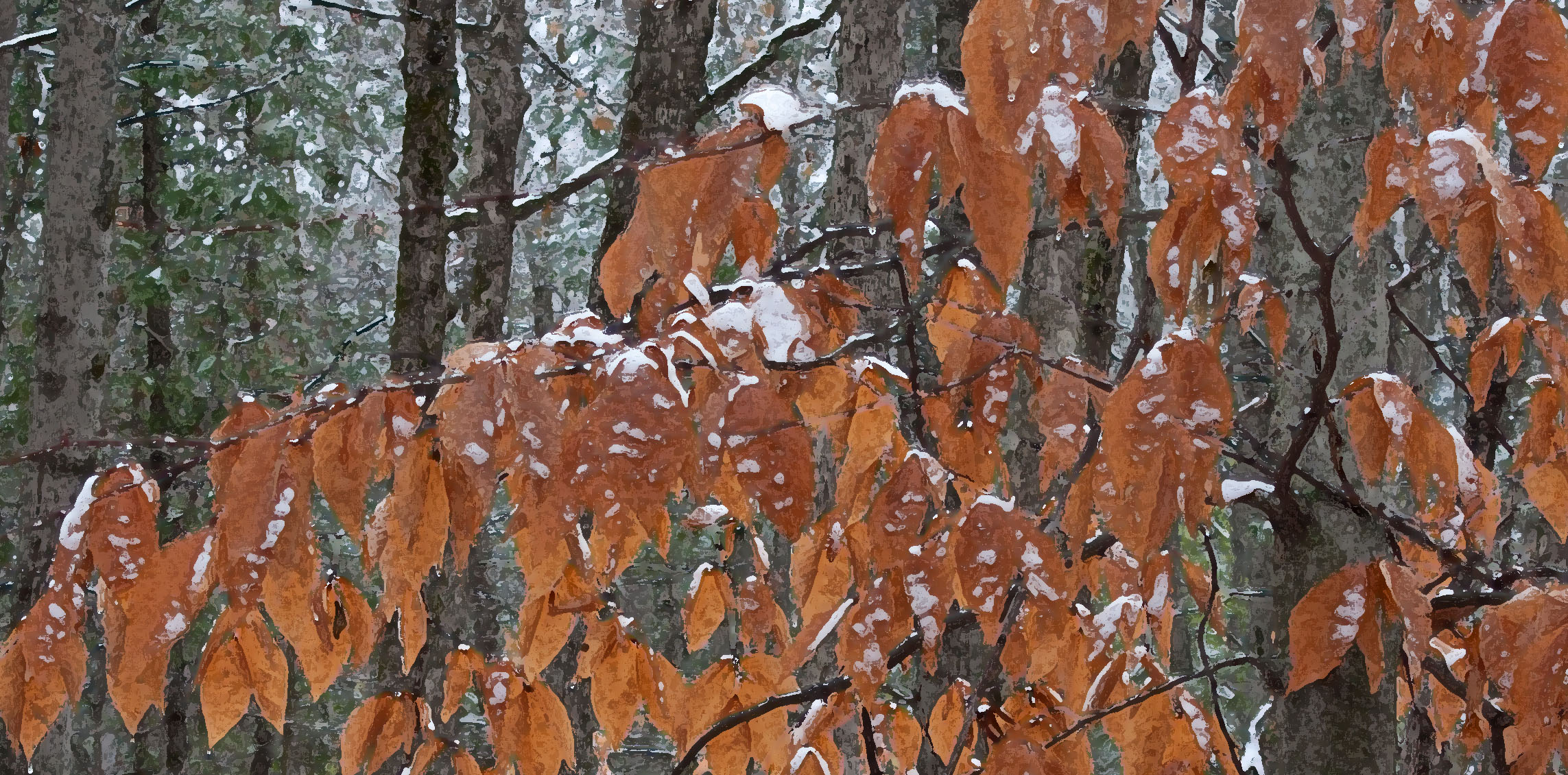
But not all species of deciduous tree follow this flamboyant display. Leaves of some trees don’t turn a brilliant colour; instead, they wither into papery brown or copper corpses. These leaves don’t fall until the next spring when emerging spring buds push them free. This phenomenon is called marcescence, which comes from the Latin word “to fade.” The American beech (Fagus grandifolia), along with oaks (Quercus species), American hophornbeam (Ostrya virginiana), and witchhazels (Hamamelis species) experience marcescence.
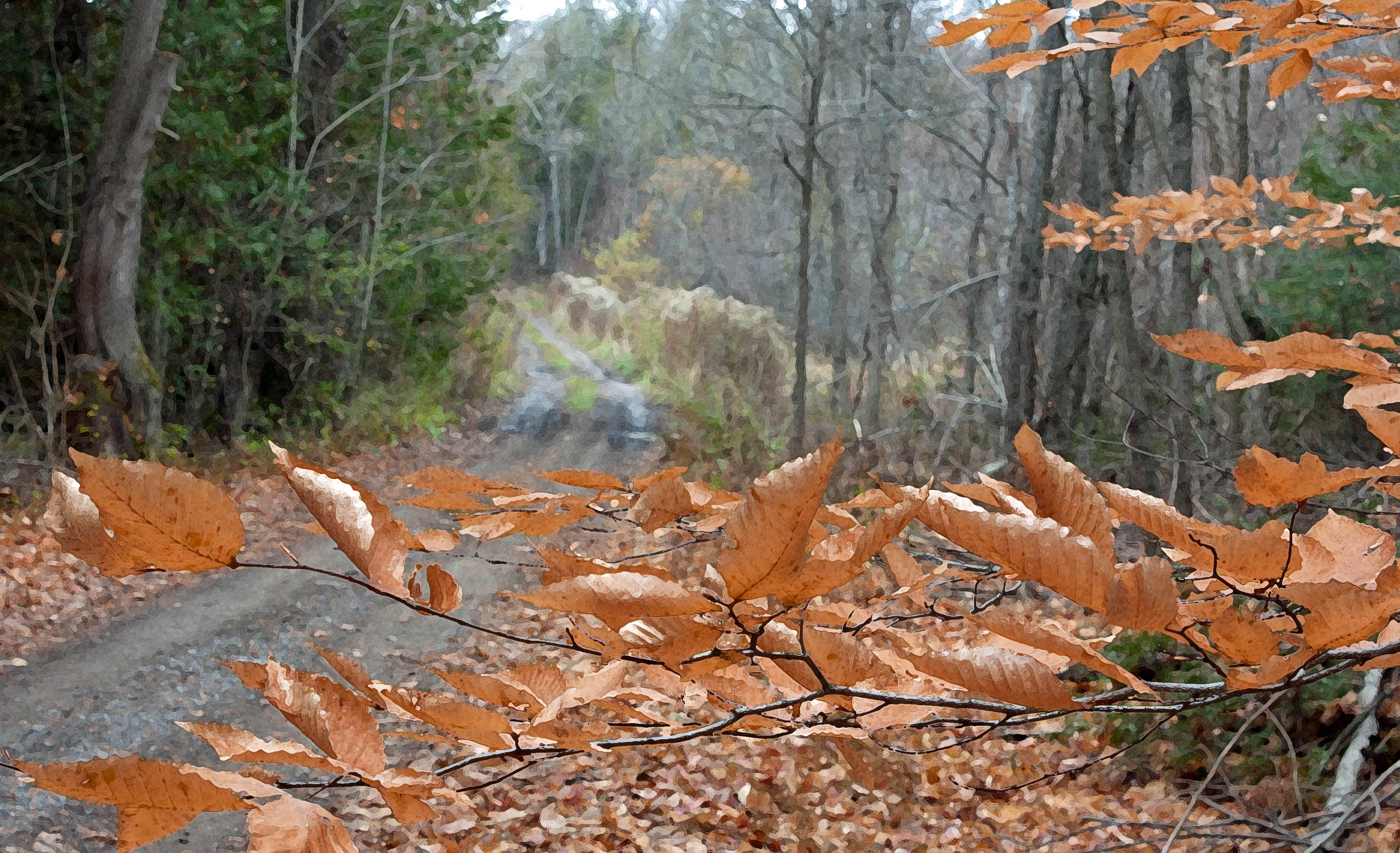


Leaf marcescence is more common in younger trees, but can often occur in the lower, more juvenile limbs of larger, more mature trees. I’ve observed this in the local forests of the Kawarthas where I’ve witnessed marcescence. After a long warm autumn quickly followed by the onset of cold weather, maples may also display marcescence.
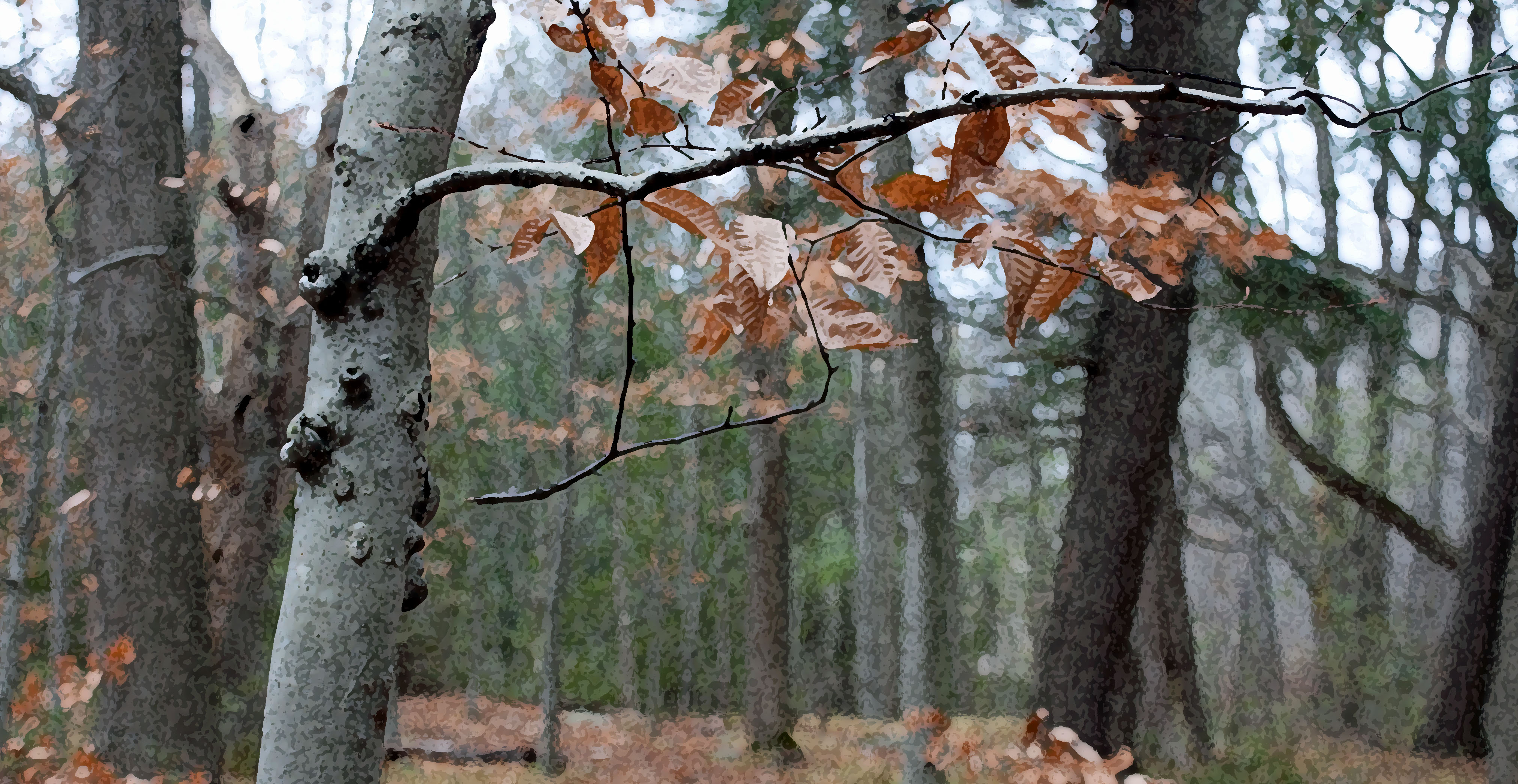
By late November / early December, the ground is often covered in light snow and I find myself crunching through half-frozen leaf litter and loam, dusted with a new snowfall. By then the mixed forests are an open rolling panorama or gnarly-branched trees devoid of leaves. I’m able to wander freely among the maples and beeches, oaks, birches, and hophornbeams, eyes roaming for a splash of tan colour in the prevalent grey. And I’m often rewarded. During my winter walks in Jackson Creek Park, Trent Nature Sanctuary, or South Drumlin Park, I often encounter oak, beech and hophornbeam trees with marcescent leaves.

On one day after a light snow in November, I was walking the Red Trail of Trent Nature Sanctuary; I walked along a hogsback that overlooked an undulating maple-beech forest also populated with marcescent red oak and hophornbeam. But the beech was King Marcescent here, its leaves stubbornly clinging to the branches, with the finest show of them all. The snow melted quickly, leaving a light dusting here and there as I stopped to take in the winter soundscape and the rattling of curled up papery leaves in a chill breeze.

One late afternoon, after a December snow, I was walking in Jackson Creek Park, along a root-gnarled trail, amid lanky grey cedars and moss-covered boulder erratics. I spotted a cloud of flaming copper on the slope to the creek: a young beech tree whose marcescent leaves had caught the fire of the raking sun. Beside the flaming beech tree stood a very old dead beech snag and toppled log, overgrown with moss and tinder polypores. The fallen snow covered the ground in a white canvas for this splendid showy beech.

Marcescence Explained
Leaves of temperate woody plants typically create an abscission zone at the base of the petiole (leaf stalk). This zone of cells, which is typically activated in the fall by temperature and light, is designed to separate and allow the leaf to fall from the plant. However, in plants that experience marcescence, the enzymes responsible for producing this abscission layer, are not activated until the spring.
Other trees, such as maple, may have marcescent leaves in fall and winter if an early freeze kills the leaves before the abscission layer develops or completes development. Pests and disease may also kill leaves before an abscission layer is created.

Why Marcescence Is a Good Thing
While no one really knows why some trees hold on to their leaves through fall and winter, several theories have been forwarded based on studies of marcescence in beech, oak, and hophornbeam.
One theory is related to protection of leaf buds from desiccation or wildlife. The theory suggests that the presence of these leaves on the branch help deter winter browsing by deer or moose. Less nutrient-dense and less tasty brown leaves (compared to more tasty buds and twigs) surround the buds of the tree like a protective shell. The dried leaves also provide some shelter from winter winds for birds. Delayed drop of leaves until the next spring also helps conserve soil moisture by adding shade to the forest floor. This may be particularly helpful in poor soil habitats.
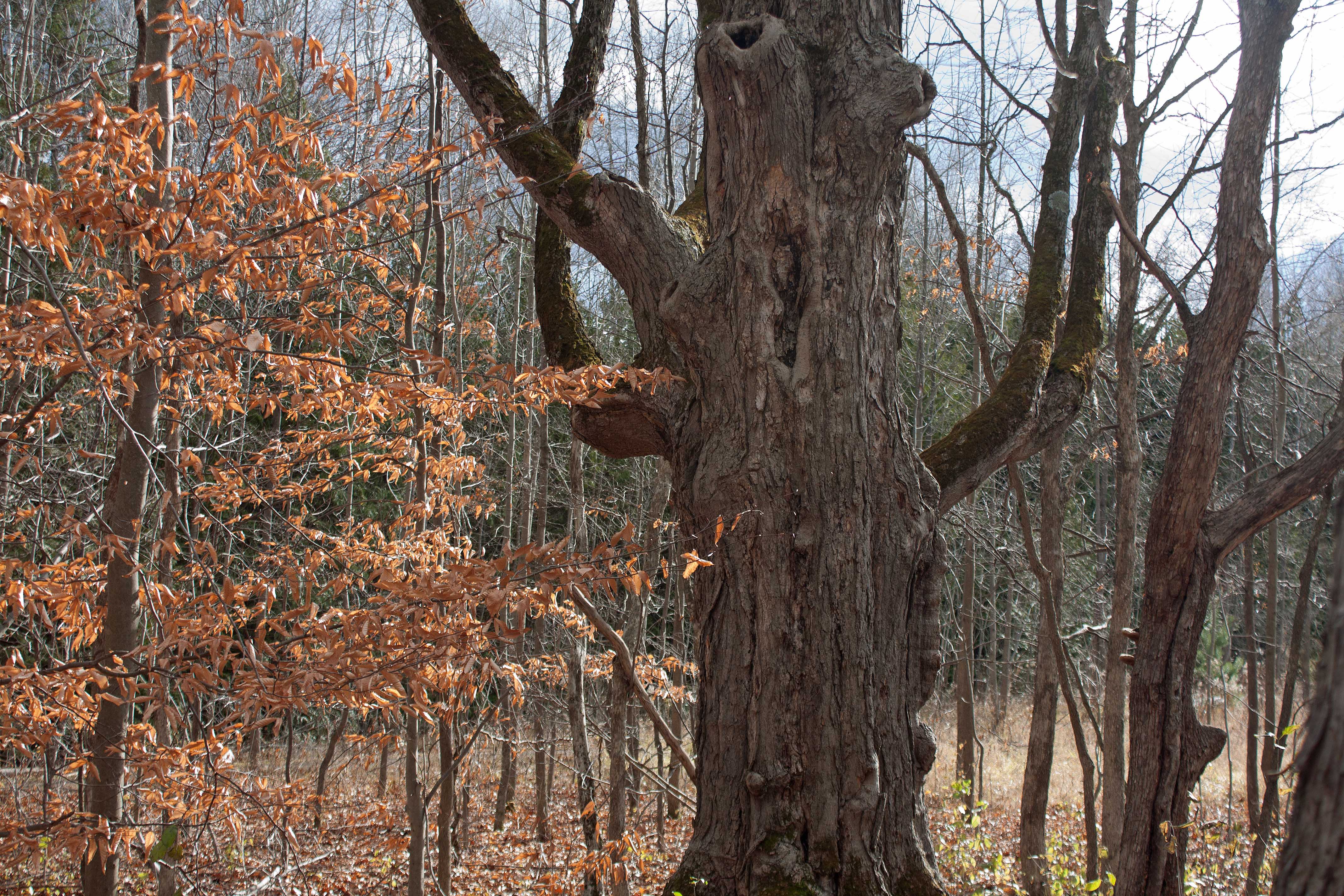
Another theory relies on the observation that marcescent leaves most often occur in juvenile trees. Given that retaining leaves into the winter may help the tree receive more nutrients, marcescence gives smaller young trees, previously shaded by the mature trees, a chance to capture more sunlight. Slowing the process of leaf loss may help maximize growth before winter temperatures arrive. This advantage may be particularly relevant in habitats with poor soil conditions.
Delayed drop of leaves until the next spring also helps conserve soil moisture by adding shade to the forest floor. This may be particularly helpful in poor soil habitats. When growth is most vulnerable in early spring, compost provided by the newly dropped and decomposing leaves gives these plants a competitive advantage over plants that have previously dropped their leaves in the fall.
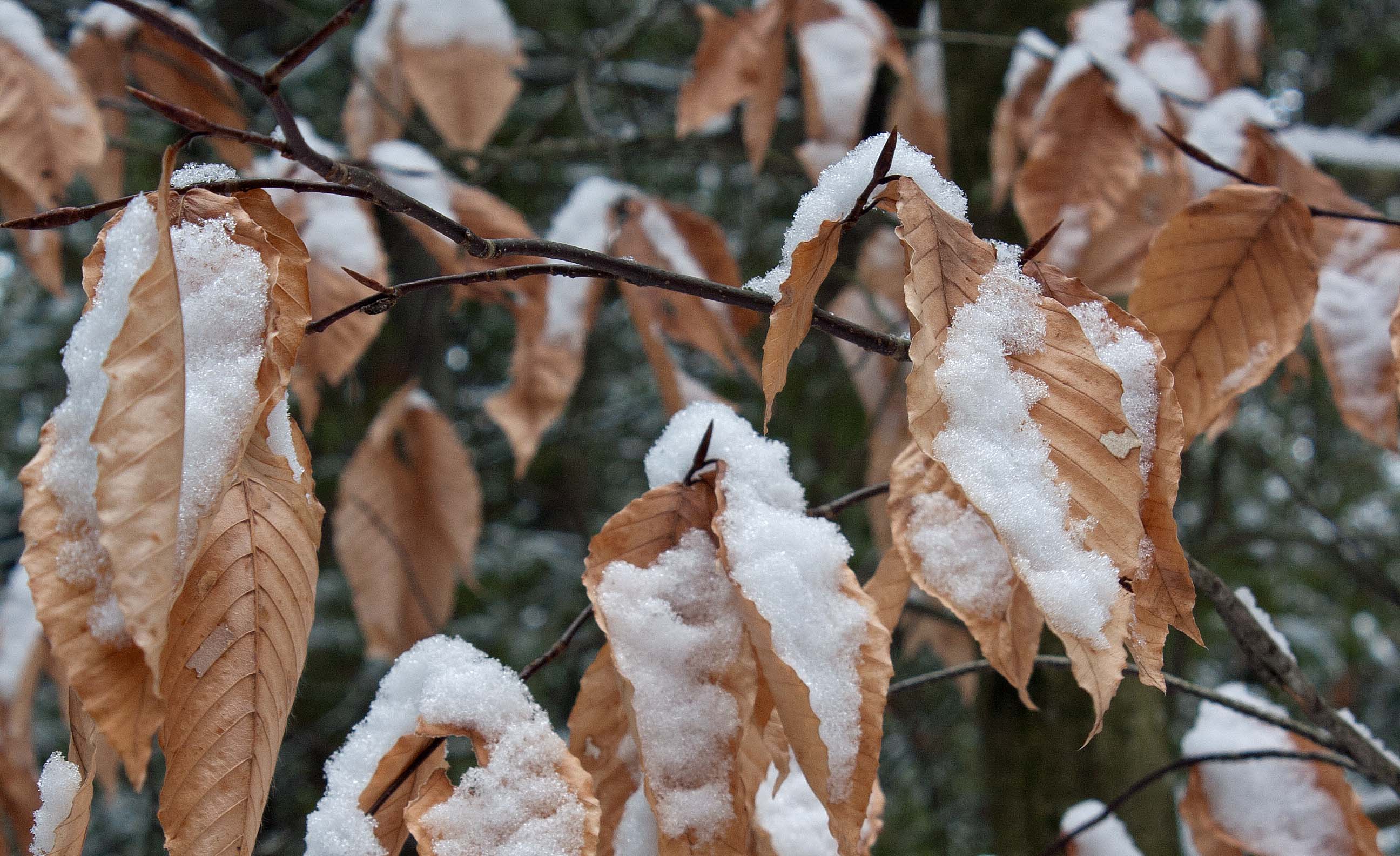
Keeping its leaves in the winter also permits a tree to trap snow, providing more water in spring when the snow melts. Dead leaves collect more snow, providing the tree with more water in spring when the snow melts.

All to say that the beech tree is a cool creative tree.

References:
Barnett, Tonya. 2021. “What is Marcescence: Reasons Leaves Don’t Fall From Trees.” Gardening Know How
Kling, Andrew. 2022. “The Mystery of Marcescence.” University of Maryland Extension
Friedman, William. 2021 “The Essence of Marcescence.” Harvard Arboretum
Williamson, Joey. 2019. “Winter Leaf Marcescence.” Clemson College of Agriculture
Wikipedia

Nina Munteanu is a Canadian ecologist / limnologist and novelist. She is co-editor of Europa SF and currently teaches writing courses at George Brown College and the University of Toronto. Visit www.ninamunteanu.ca for the latest on her books. Nina’s bilingual “La natura dell’acqua / The Way of Water” was published by Mincione Edizioni in Rome. Her non-fiction book “Water Is…” by Pixl Press (Vancouver) was selected by Margaret Atwood in the New York Times ‘Year in Reading’ and was chosen as the 2017 Summer Read by Water Canada. Her novel “A Diary in the Age of Water” was released by Inanna Publications (Toronto) in June 2020.
 The Meaning of Water
2 thoughts on “The Beech Tree Calls the Sky Marcescent–A Tree Study…”