
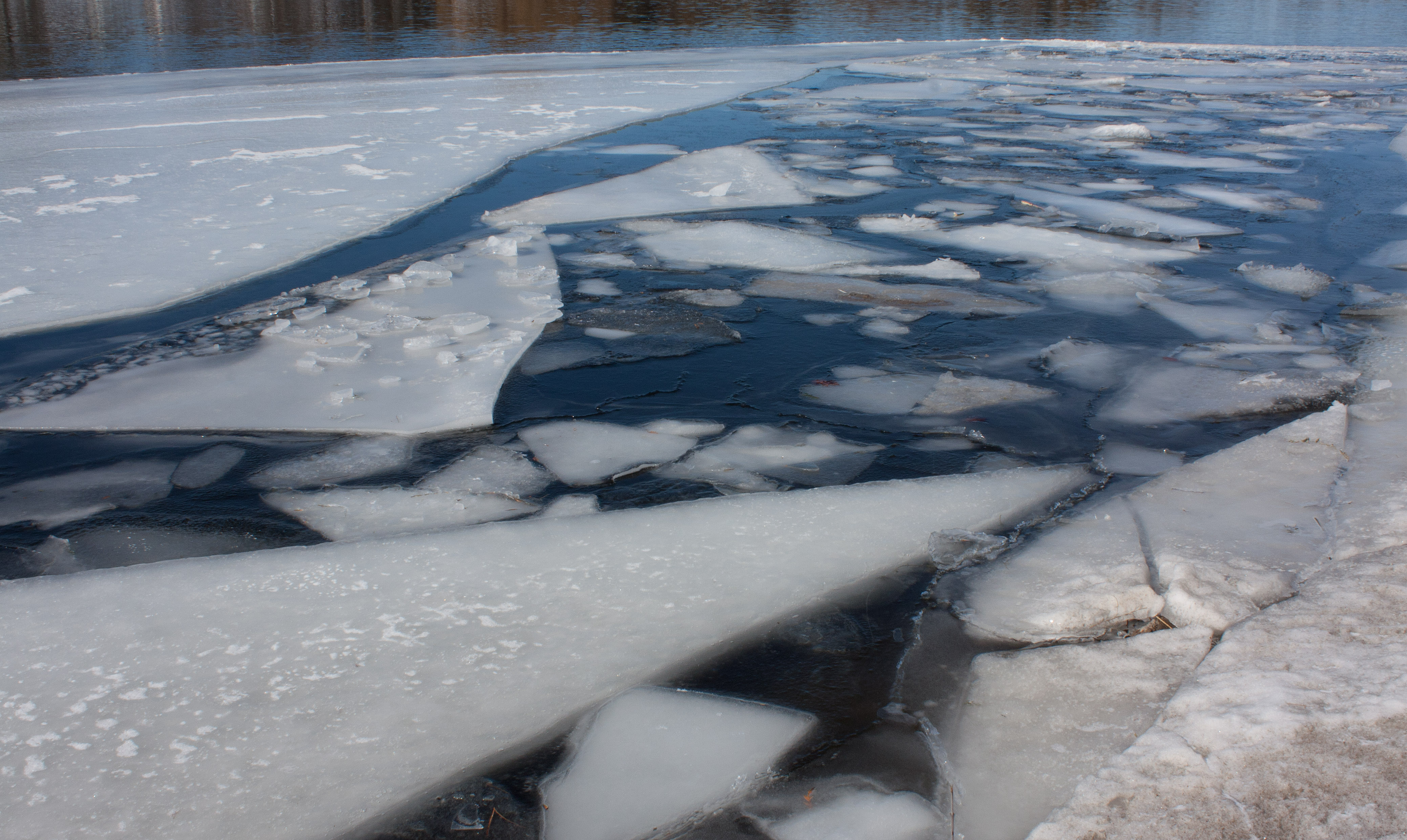
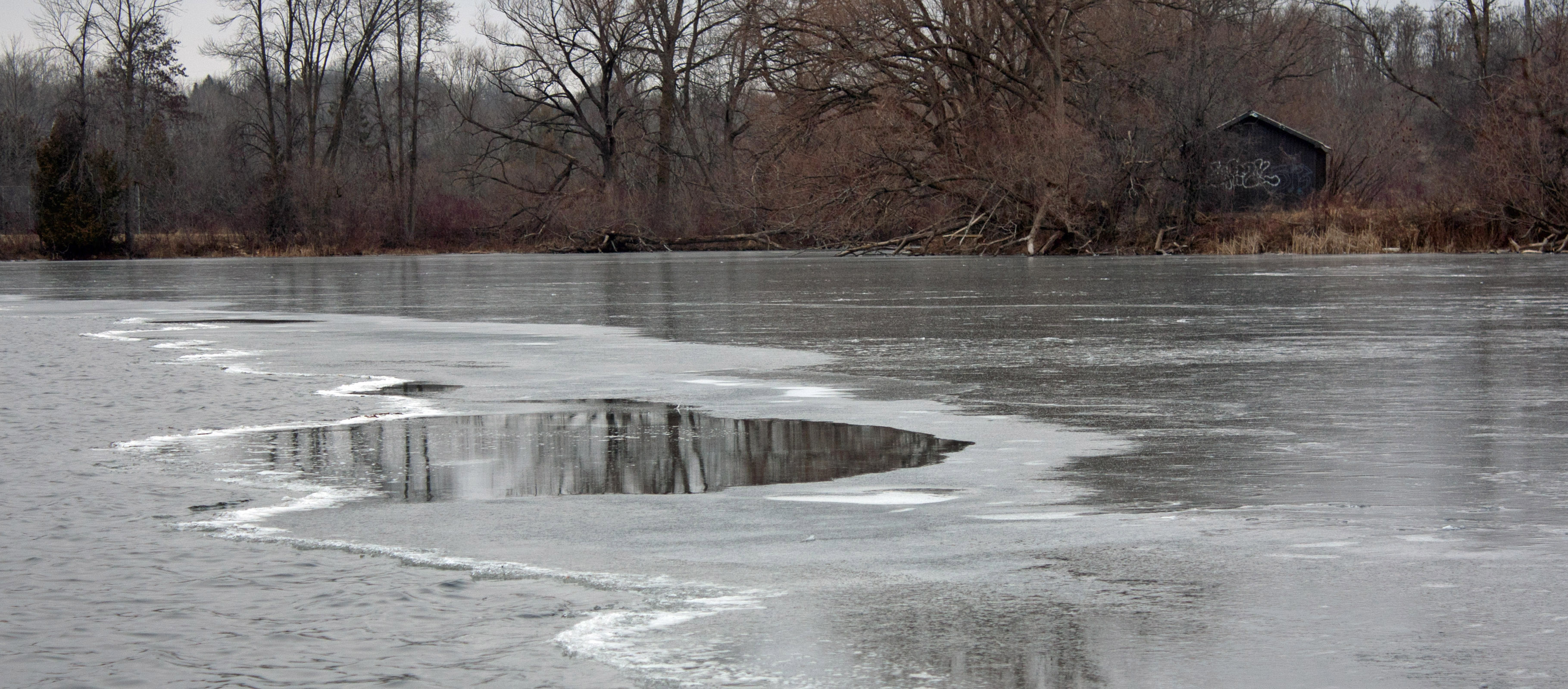
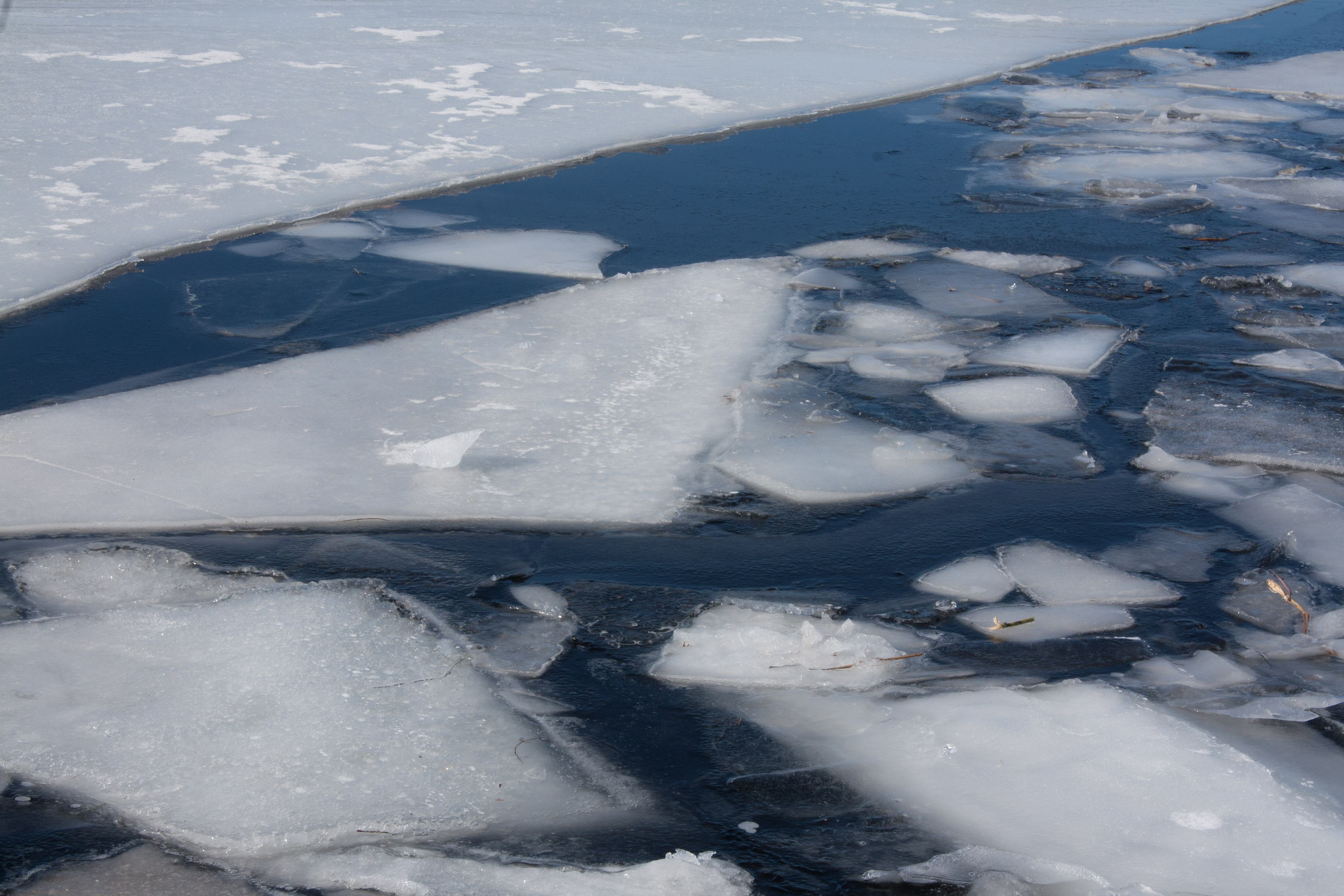
Pale and blue like the sky above her, she floats on the dark water, a fragile lacework, held there as if by will alone against the seductive dance of entropy.
Refusing to melt.
A thin film of frigid wetness faces the beating rays of a warming sun with the glib determination of protracted anticipation. Waiting for that precise moment when she would finally surrender the comfort of structure to the thrill of chaos. Give in to violent change and join her unruly brethren in the dance of life and death.
I’m reminded of my organic chemistry labs, where we watched the magic of titration. How the accumulation of one chemical (the titrant) elicited a colour-reaction from another (the indicator and analyte) but only when it reached that threshold of saturation—what we called the endpoint. Then, in an instant—in a single drop of the pipette— the colour changed. As though it were saying, “Enough! Enough!” and finally revealed its true colour.
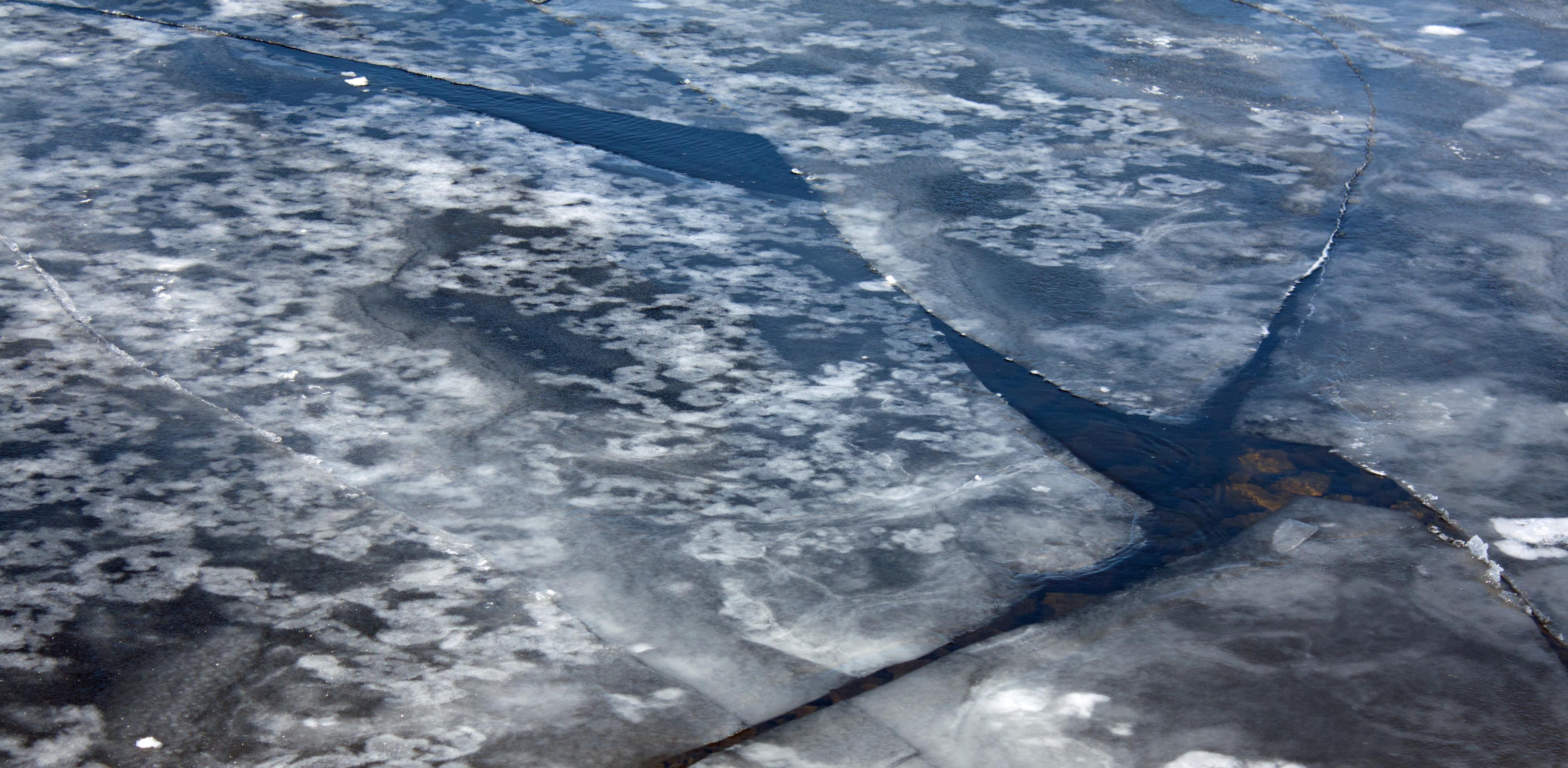
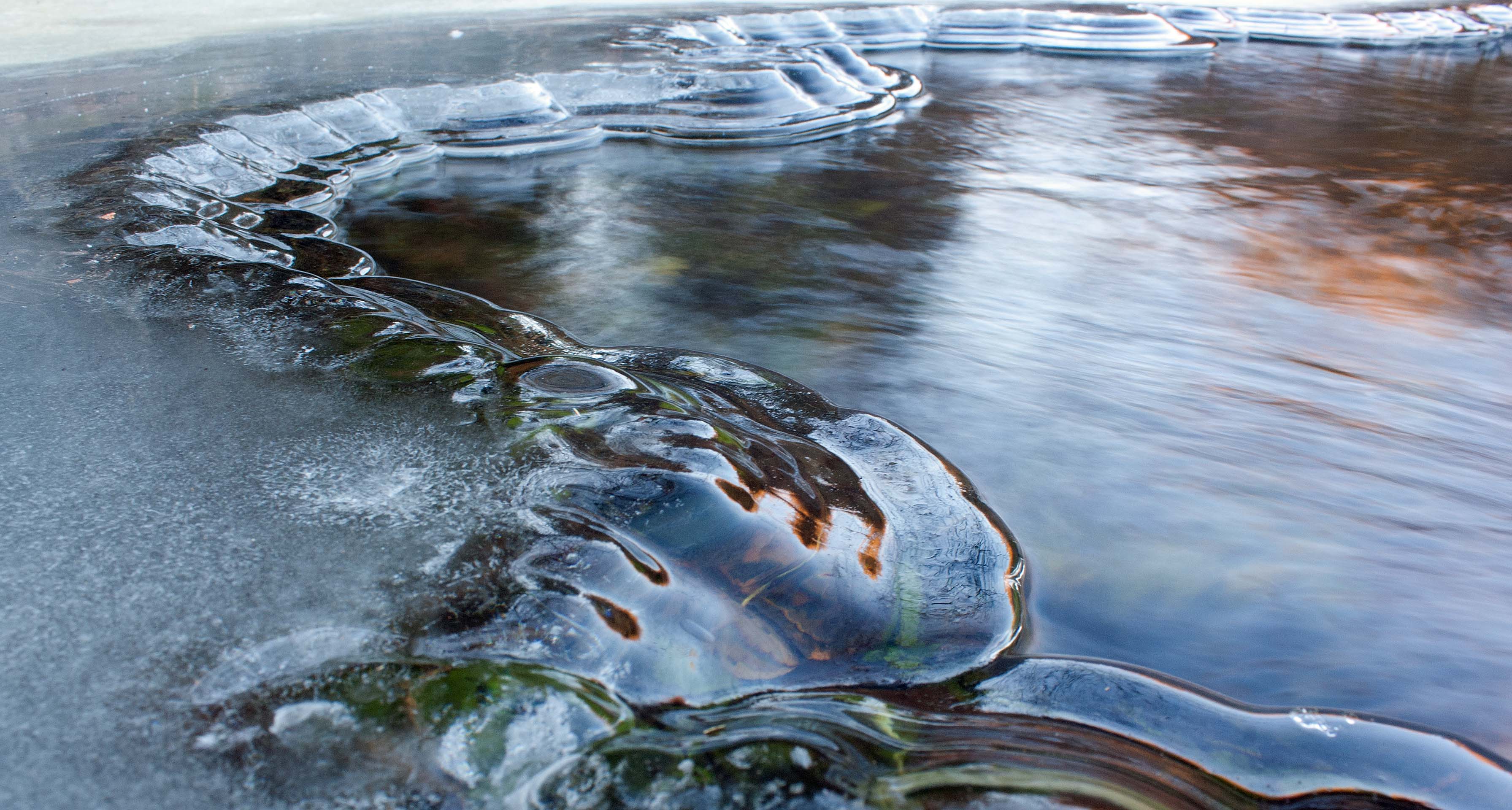
Ice ‘hesitates’ in melting because energy is required to overcome the attractive forces between the water molecules in the solid form.


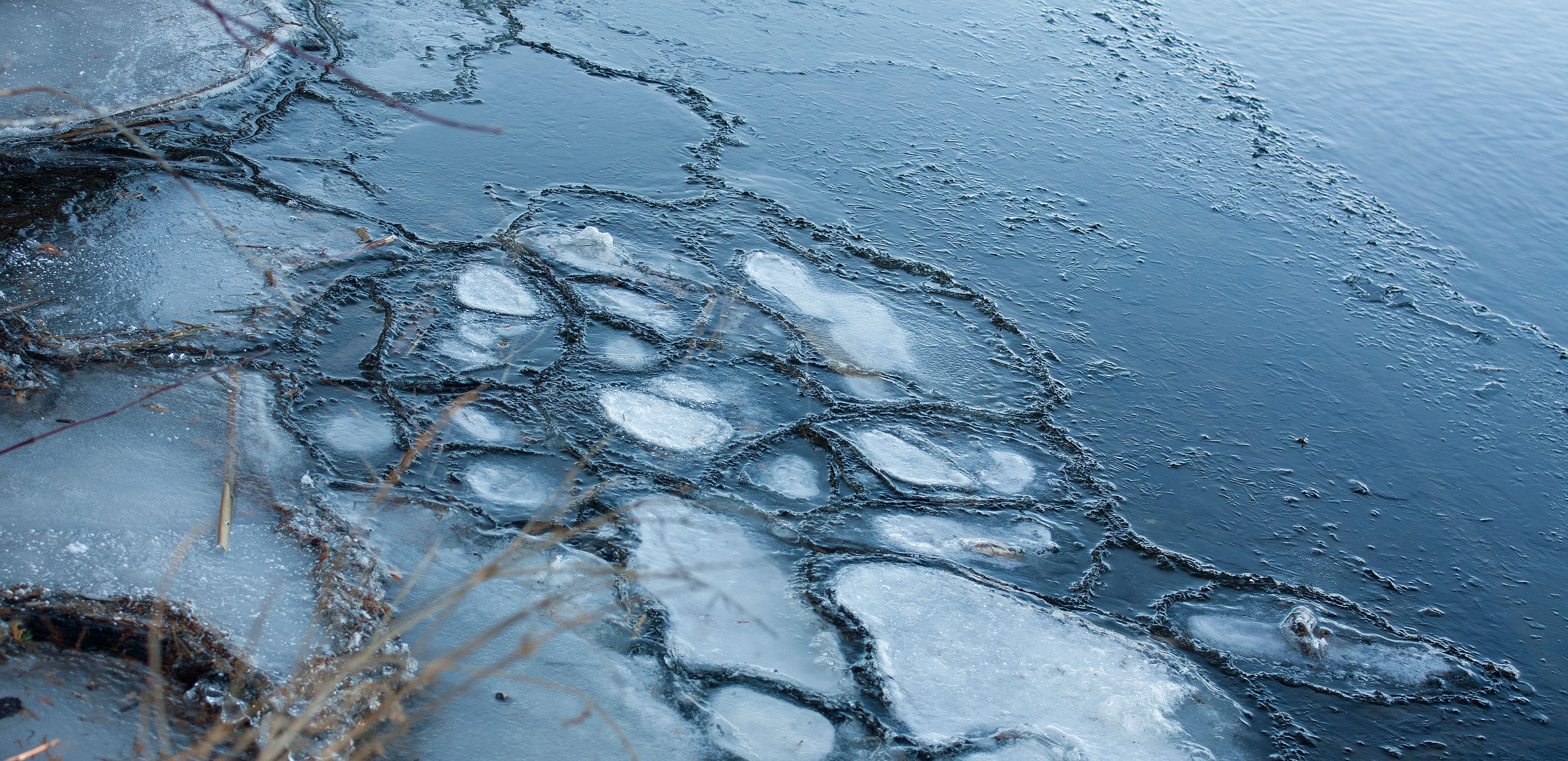

Lumenlearning shows how much energy is needed to melt a kilogram of ice at 0ºC to produce a kilogram of water at 0°C. They demonstrated that a lot of energy is required and represents the same amount of energy needed to raise the temperature of 1 kg of liquid water from 0ºC to 79.8ºC.

We examine the effects of phase change more precisely by considering adding heat into a sample of ice at −20ºC (graph). The temperature of the ice rises linearly, absorbing heat at a constant rate of 0.50 cal/g⋅ºC until it reaches 0ºC. Once at this temperature, the ice begins to melt until all the ice has melted, absorbing 79.8 cal/g of heat. The temperature remains constant at 0ºC during this phase change. Once all the ice has melted, the temperature of the liquid water rises, absorbing heat at a new constant rate of 1.00 cal/g⋅ºC. At 100ºC.
Lumanlearning
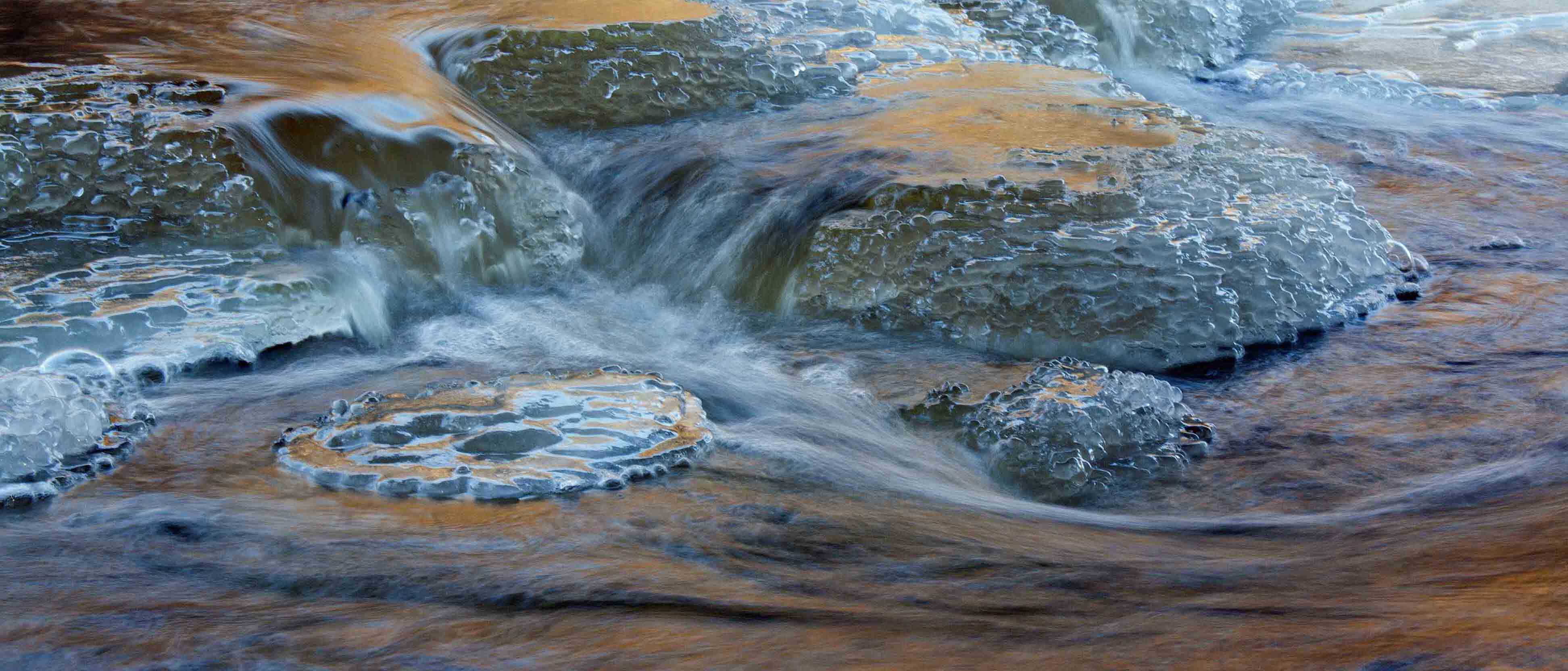
This hesitancy of ice to give way to water when temperatures rise, gives it personality. As a solid organized form of water with internal order, ice has properties that are actually mineral-like. It has, after all, a crystal structure with fixed hexagonal form, a fundamental composition H2O.

Ice forms when the temperature lowers to zero degrees Centigrade. Liquid water expands, becomes less dense and more organized. In its solid state, water is crystalline, mineral-like, and floats over more dense liquid water. This is one of water’s many anomalous properties; most other liquids grow more dense in their solid states as molecules pack together tightly when the kinetic energy (temperature) decreases. The hydrogen bonds in water ice are strong, but their orientation causes molecules to push apart, lowering density, and forming a lattice or crystalline structure.
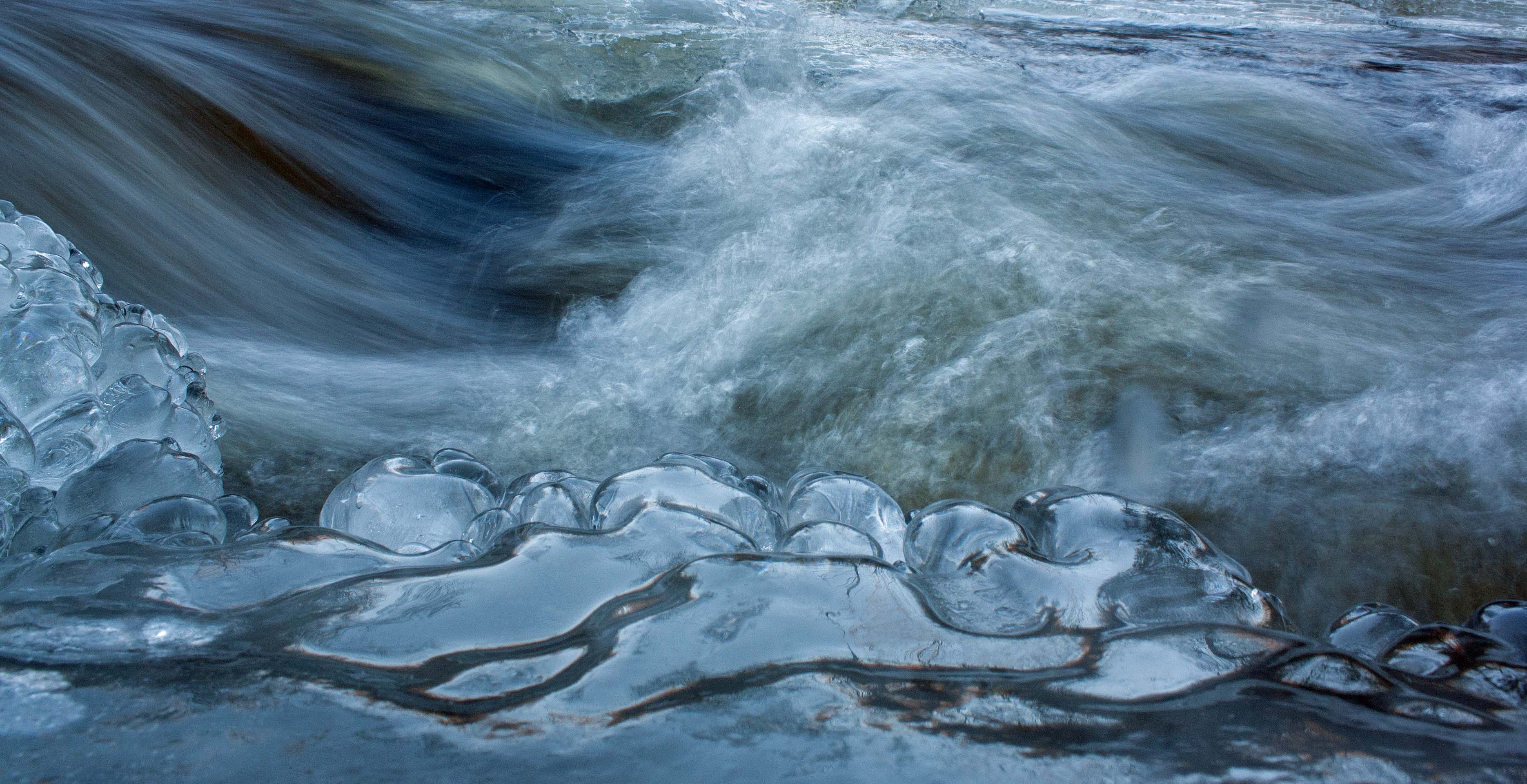
This life-giving anomalous property allows a lake to not freeze completely so that aquatic life can survive through the winter. And it’s beautiful…


Nina Munteanu is a Canadian ecologist / limnologist and novelist. She is co-editor of Europa SF and currently teaches writing courses at George Brown College and the University of Toronto. Visit www.ninamunteanu.ca for the latest on her books. Nina’s bilingual “La natura dell’acqua / The Way of Water” was published by Mincione Edizioni in Rome. Her non-fiction book “Water Is…” by Pixl Press (Vancouver) was selected by Margaret Atwood in the New York Times ‘Year in Reading’ and was chosen as the 2017 Summer Read by Water Canada. Her novel “A Diary in the Age of Water” was released by Inanna Publications (Toronto) in June 2020.
 The Meaning of Water