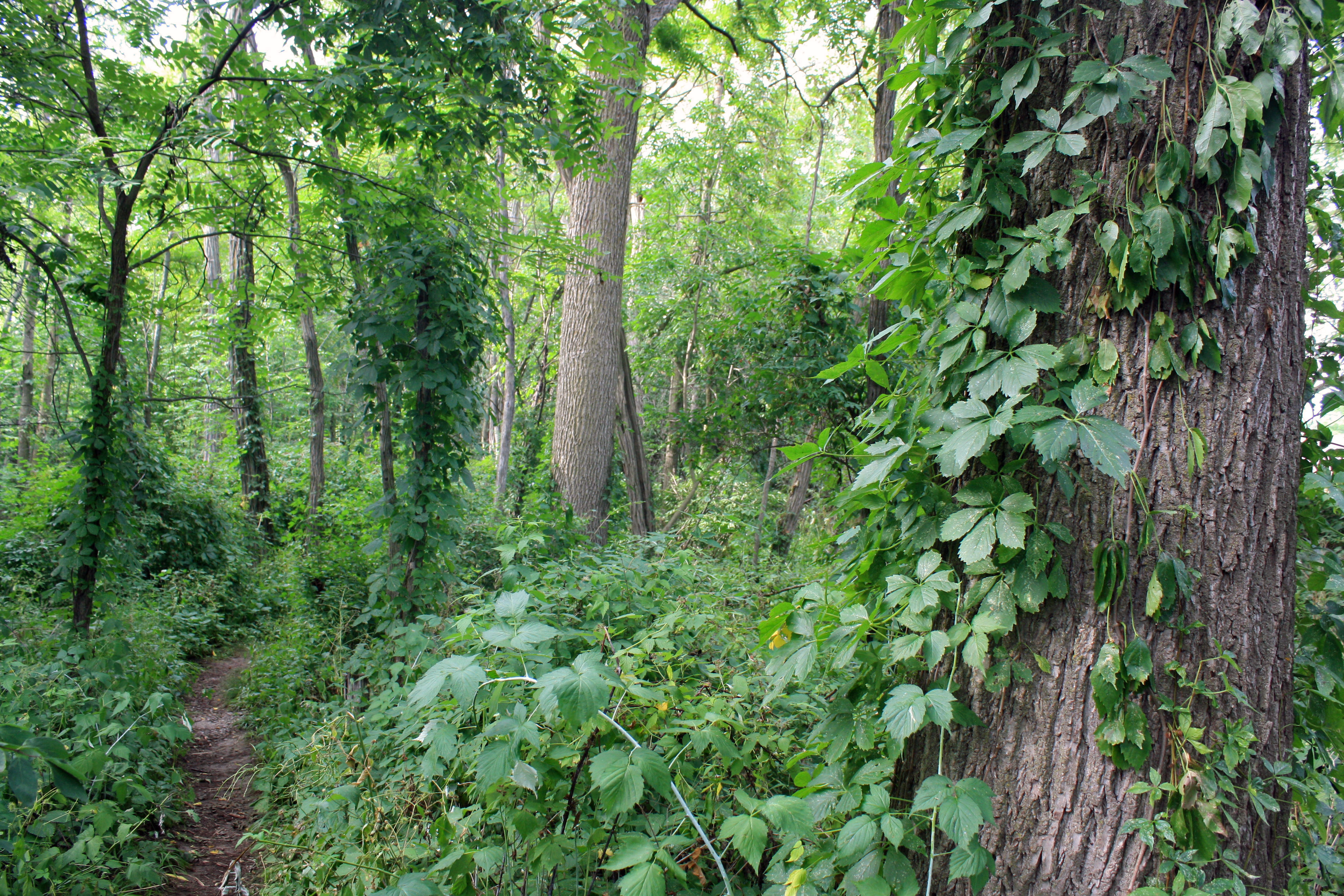
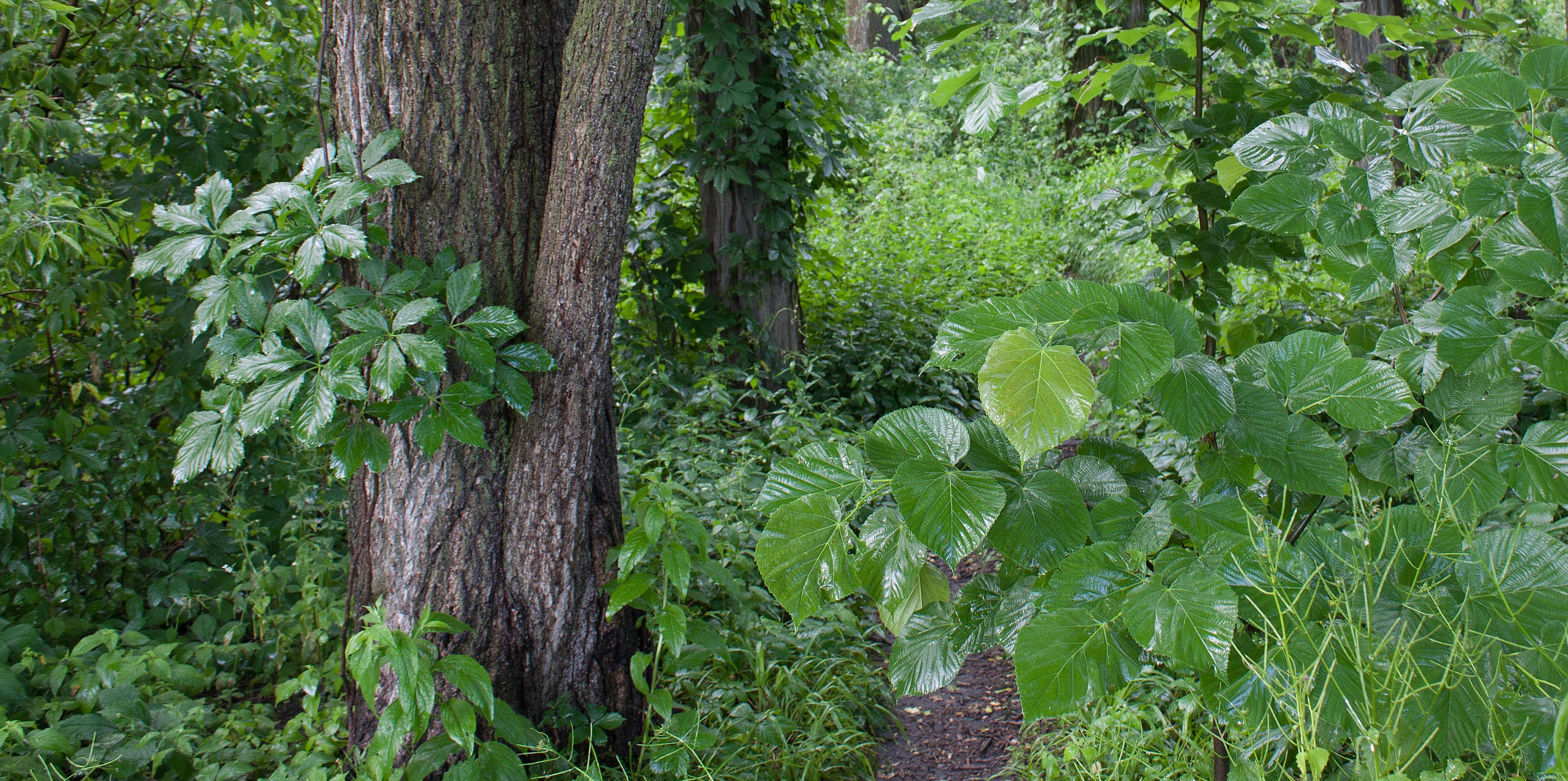
The path in the riparian woodland in summer with Black walnut in foreground, ON (photo by Nina Munteanu)
The spring day is rather warmish and the sun has emerged after several days of light rain. It’s been a few days since I’ve walked through the oak-maple-ash riparian forest by the Otonabee River near my house. I’ve been following the emergence of an old friend, Jack-in-the-Pulpit (Arisaema triphyllum) clustered near several very large black walnut trees. They’ve been coming up along the small path every spring in this location and several others since I first arrived during the year of Covid.
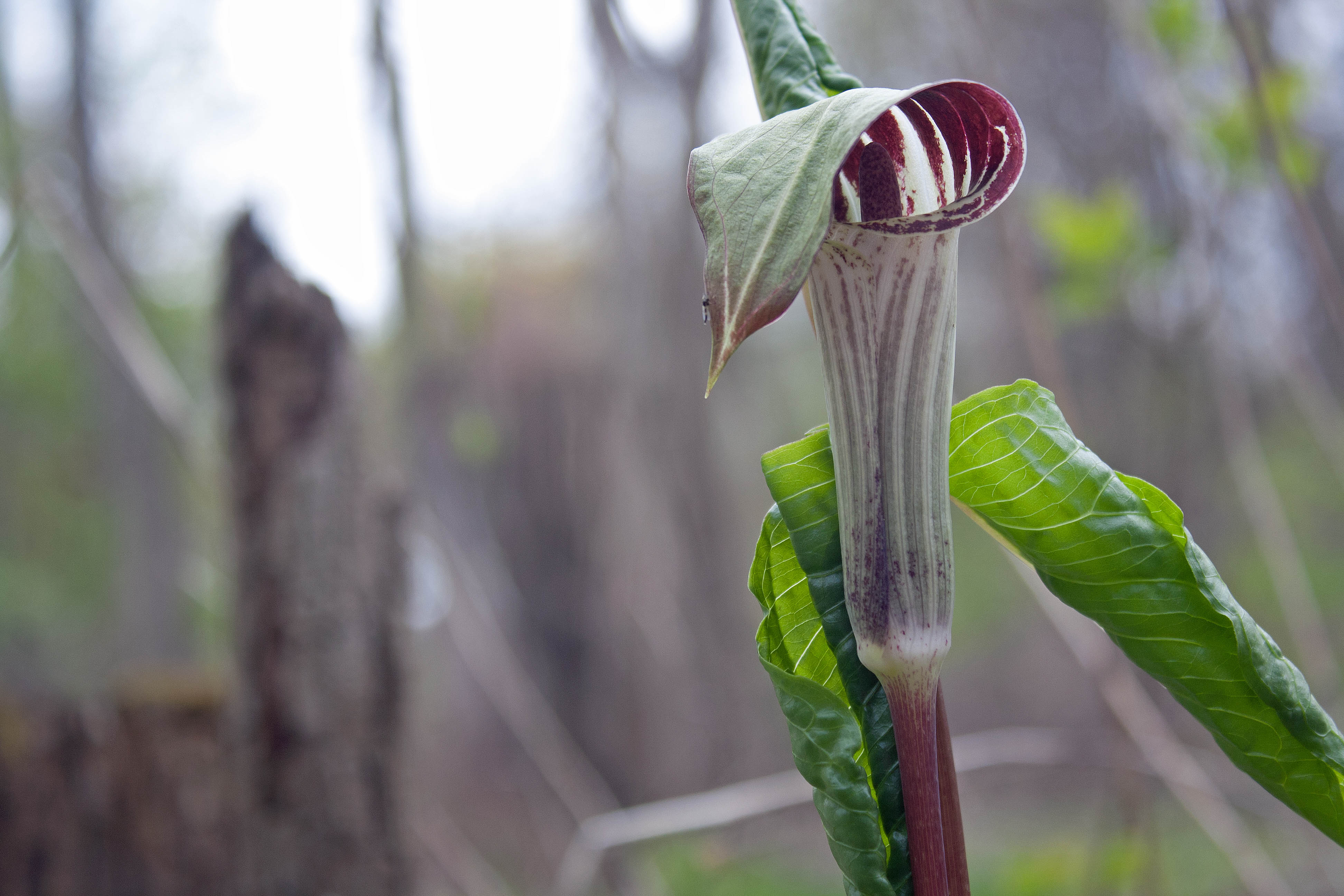
Jack-in-the-pulpit, showing trifoliate leaves, vase-like hooded spathe with spadex holding flowers inside, Ontario riparian woodland (photo by Nina Munteanu)
Jack-in-the-pulpit is a strange looking perennial woodland wildflower native to North America and commonly grows under the shade of a deciduous woodland. It features a small hidden flower that stands beneath a hooded modified green leaf in the shape of a flask with red to purple stripes and looks totally badass!
I’m reminded of the time I first discovered them one spring day in an Ontario woodland since seeing them in Quebec, where I’m originally from. I had discovered a small woodland along the Little Rouge Rivernear Markham, Ontario, and took much joy in exploring this rich forest ecosystem.
.
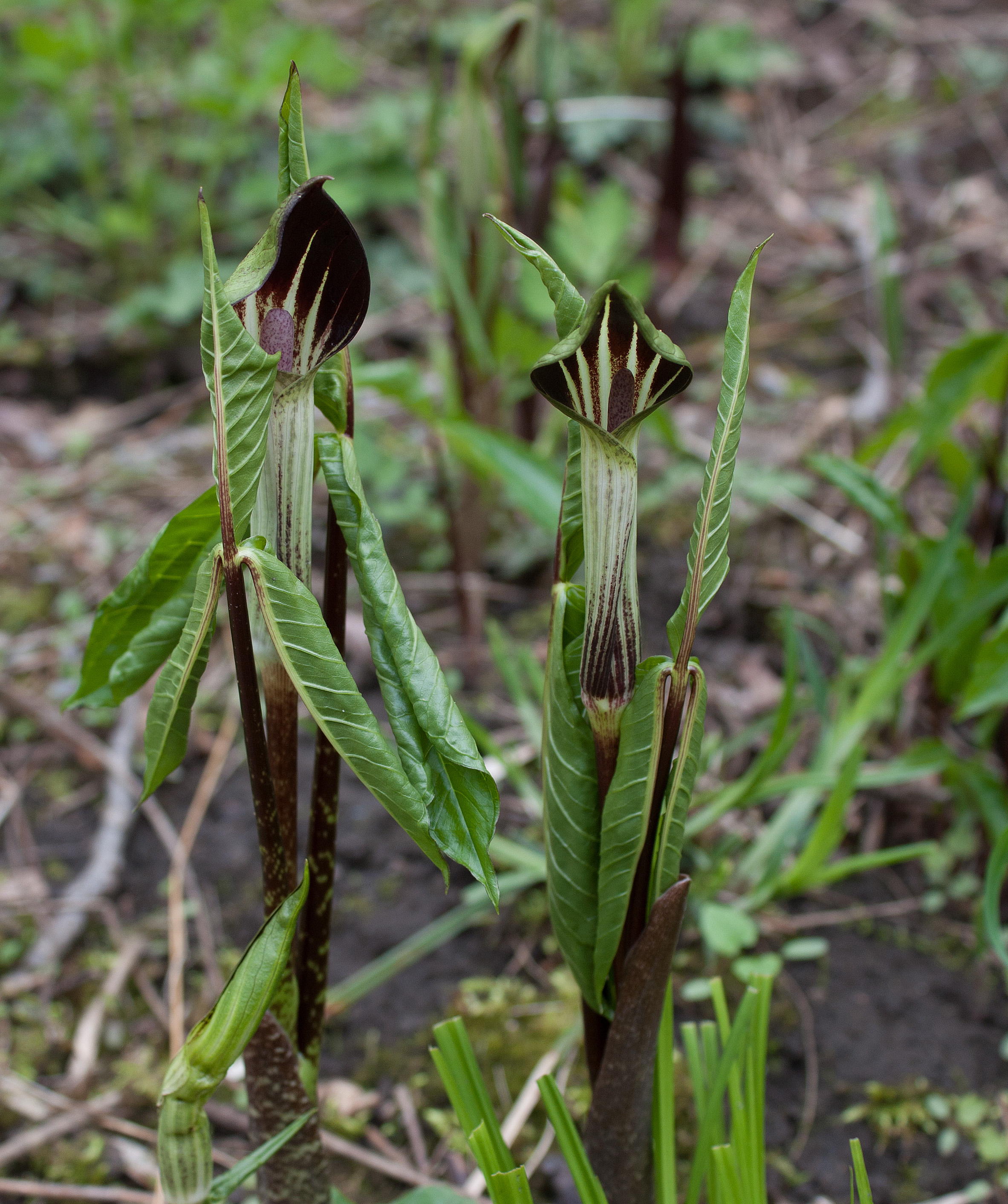
As I peer at the living mosaic, I spot a familiar friend I’ve not seen in a while: Jack-in-the-pulpit. They are all over the forest floor, pushing up in profusion, their large hooded and striped flowers appearing in shades of green, greenish-white and purple. The ‘flower’ features a modified leaf structure that forms a hooded spathe (the pulpit) that surrounds a fingerlike central spadix (Jack), giving the plant its common name. The actual flowers inside are not showy; it is the hooded veined spathe that calls my attention from a distance in spring.
This rather bizarre looking plant is even more bizarre in behaviour.
.
I meet a nature photographer on the path and we get to talking about the spring flowers. He tells me a wonderful story about this strange plant: the young Jack-in-the-pulpit plant first emerges as a male plant from a vegetative cormlet, putting out male flowers, which produce pollen. As it grows, (and if sufficient carbohydrates have been stored in its corm), the plant switches sex and the larger spadix puts out female flowers, which can then produce seeds and a cluster of berries: ‘Jack’ becomes ‘Jill’. A more nutrient rich soil or brighter area accelerates the growth and shortens the transition from male to female. But, if conditions grow difficult from lack of nutrients or stress from drought, the female plant reverts back to being a male plant. This cycle—called sequential hermaphroditism (dichogamy)—ensures that the plant is strong enough to reproduce and produce healthy seeds. Jack is patient and wise. And a shapeshifter.
.
Riparian mixed deciduous forest, habitat of Jack-in-the-pulpit, ON (photo by Nina Munteanu)
.
Ecology
Jack-in-the-pulpit is also known as bog onion, lord-and-lady, and indian turnip. This long-lived (+25 years) perennial emerges every spring from corm-like roots. It grows best in rich, moist (mesic) deciduous forests and floodplains that offer shade, nutrients, and enough water. Its range is wide, spanning across eastern North America, primarily northeastern U.S. and southeastern Canada. The plant normally has two leaves, each with three leaflets that resemble trillium, which shares the same native habitat. I saw several white trilliums nearby.
.
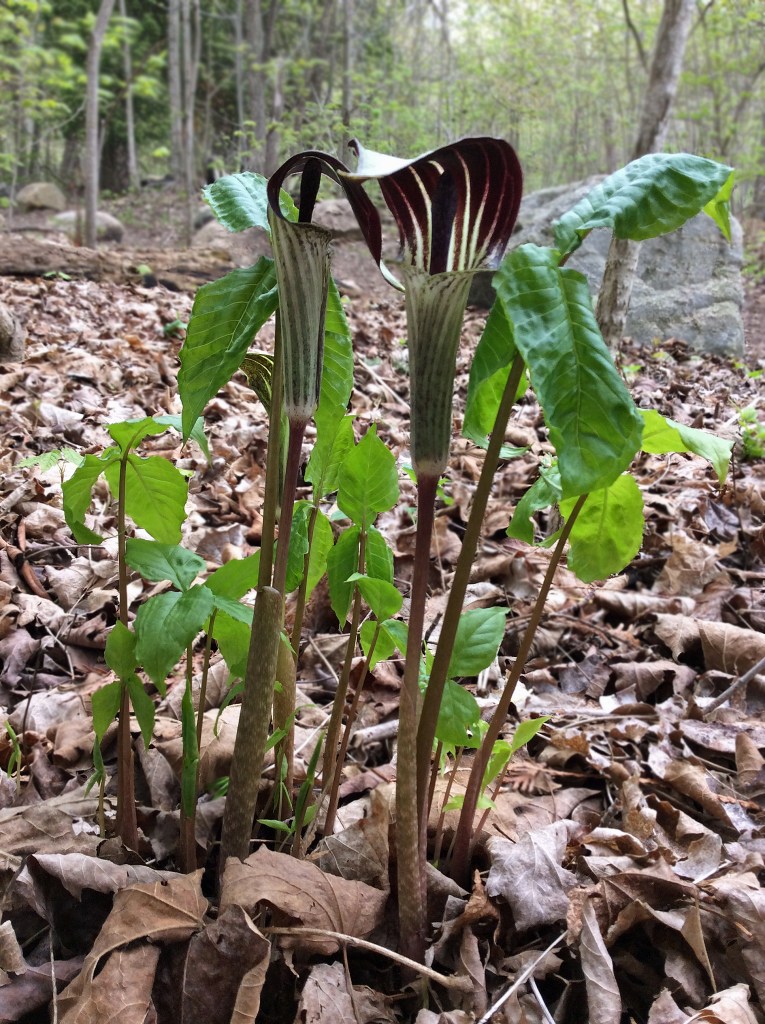
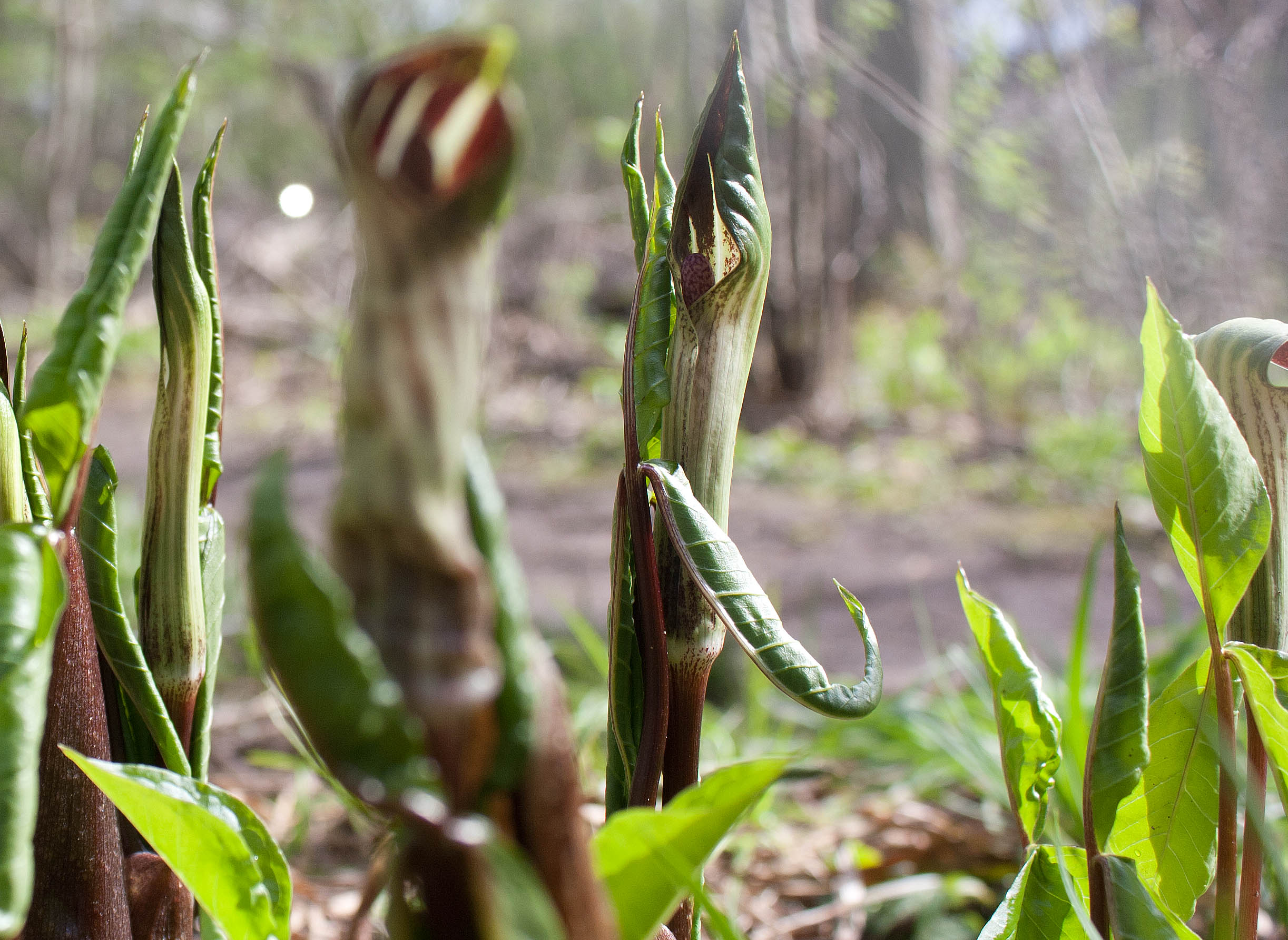
Young Jack-in-the-pulpit shoots emerging in May, ON (photo by Nina Munteanu)
Young shoots of Jack-in-the-pulpit, showing trifoliate leaves, ON (photo by Nina Munteanu)
.
Life Cycle
In spring, Jack-in-the-pulpit emerges from the soil out of a corm root (like a bulb) that spreads with secondary roots or from a germinating seed that has fallen the previous year. It normally has three stalks wrapped together; two stalks form its trifoliate leaves and the third stalk becomes the flower structure. The stalk begins as a red-brown tube/hook that keeps growing from the soil and develops the flower stalk and trifoliate green leaves with long stems (petioles). Mature plants stand from 30 to 60 cm high with a single fleshy, stout green stalk called a peduncle often covered with reddish-purple streaks. Jack-in-the-pulpit focuses on root production during its first years; it will not flower until the plant is 3-5 years old.
The flower consists of a spadix (Jack) inside a spathe (pulpit). The spathe, which begins at the stalk or peduncle, raps around the spadix like a vase and curls over the top, forming a pointed hood. The small flowers are hidden inside the spathe and attached to the spadix.
.
The inflorescence of Jack-in-the-pulpit can be male (male flowers only), bisexual (with both male and female flowers), or female (female flowers only). The male flowers consist of four stamens and the female flowers are a fuzzy stigma on an ovary, which has several small seeds.
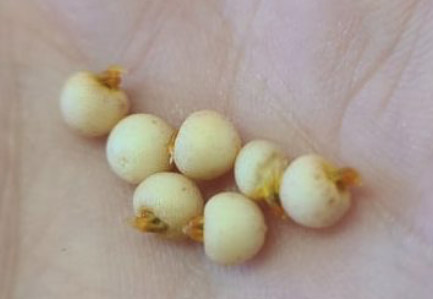
Tiny seeds of each berry (photo by GrowBuiltIt)
.
The inflorescence of Jack-in-the-pulpit can be male (male flowers only), bisexual (with both male and female flowers), or female (female flowers only). The male flowers consist of four stamens and the female flowers are a fuzzy stigma on an ovary, which has several small seeds.
The site inaturalist notes that the sex-changing lifecycle of Jack-in-the-pulpit relies mostly on size (and age) of the plant: “in small (younger) plants, most if not all of the flowers are male. As the plant matures and grows larger, the spadix produces female flowers as well as male flowers. The transition from male to female continues until eventually the plant produces female flowers only. This is an example of dichogamy, a rare phenomenon in flowering plants.
As it flowers from spring into summer, Jack-in-the-pulpit is pollinated by small flies such as fungus gnats, gall gnats and beetles. Lured by the musty scent the fungus gnats enter the hooded spathes, intending to lay eggs on what they are duped into believing is a fungus. NYBG tells us that “fungus gnats normally lay their eggs on fungi so that when the eggs hatch the larvae will have a readily available food source.” In male pulpits, the pollen-dusted gnats are able to escape from a hole at the bottom and carry the pollen to a flower of another plant. But in a female pulpit, which doesn’t have an exit hole, the gnat is unable to crawl out of the slippery spathe or fly out past the hood; it’s effectively trapped and will die but not before rubbing off the pollen it gathered from another flower on the fuzzy stigma of the female Jack-in-the-pulpit. This, says inaturalist, makes “Jill-in-the-pulpit a femme fatale in the plant world” luring its pollinators with a lovely fungal stink into a death trap.
Jack-in-the-pulpit does not self-pollinate. Male flowers have already died before the female flowers of the same plant mature; female flowers need to be pollinated by the male flowers of a different plant. This practice of dichogamy maintains a healthy gene pool for the species.
.
Wildlife Use & Warning
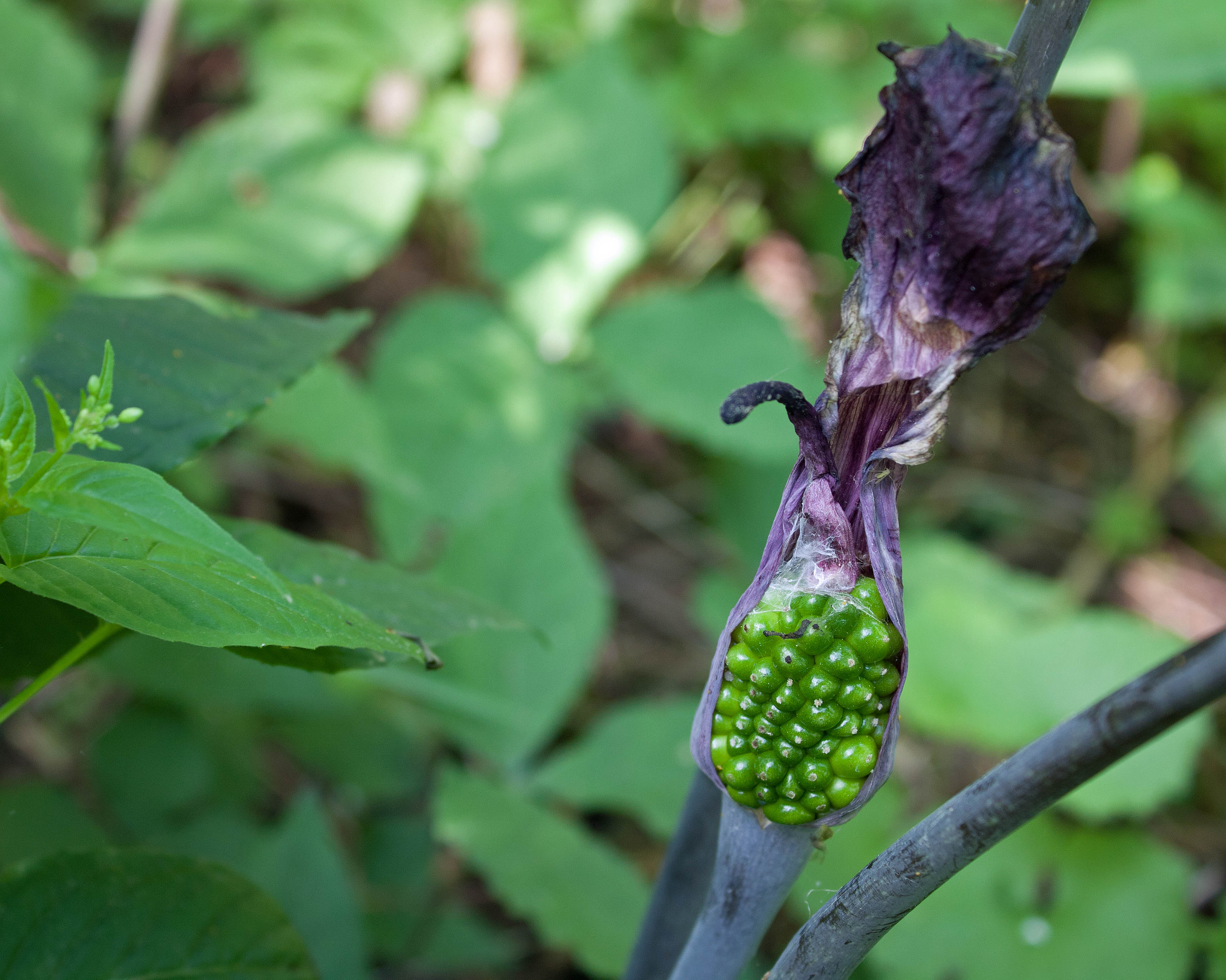
Young green berries develop from the ovaries beneath the flower stalk (spadix) and modified leaf (spathe) of Jack-in-the-pulpit, ON (photo by Nina Munteanu)
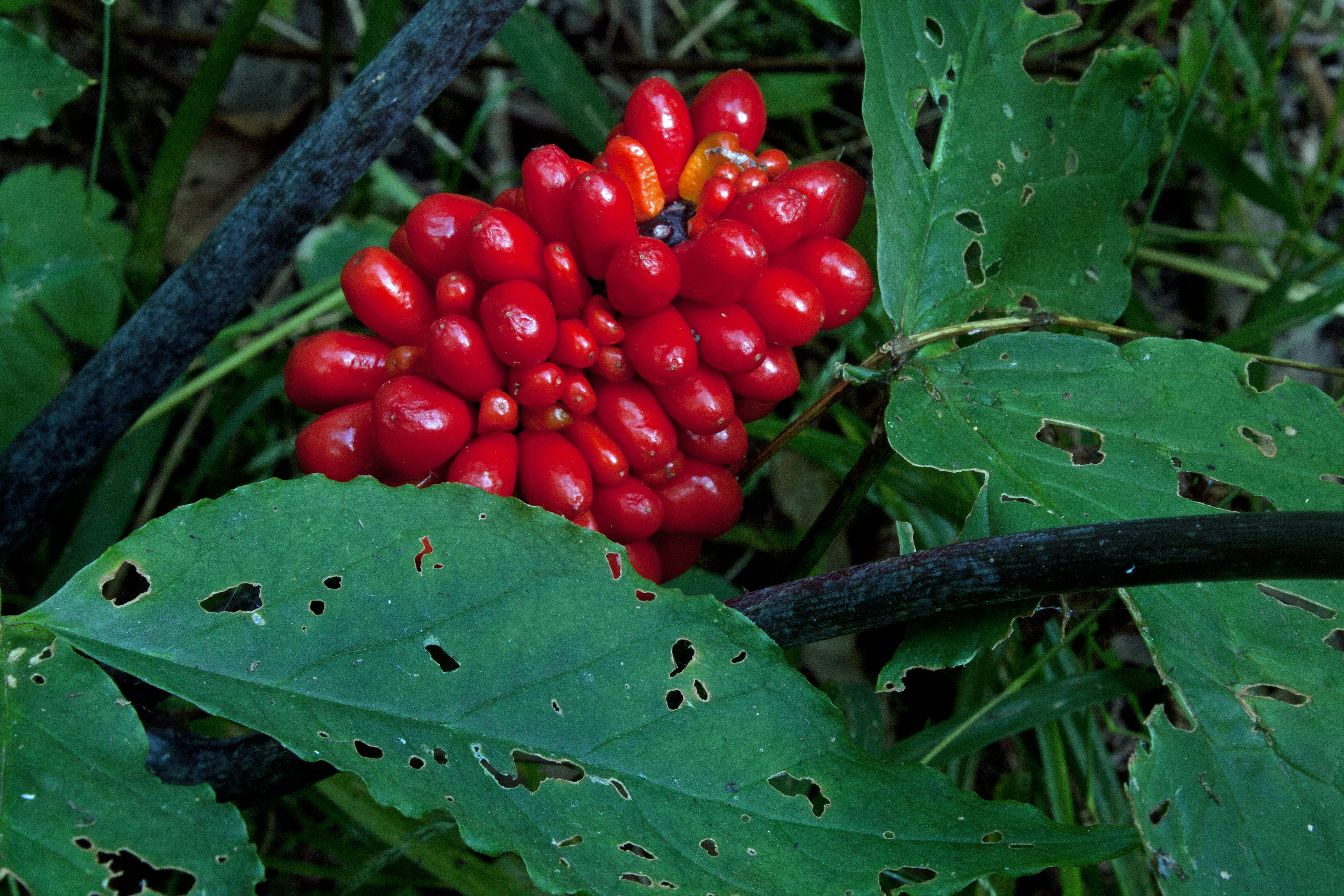
In mid-summer the fertilized ovaries ripen into berries, looking green at first. By late summer / early fall, the berries are bright red and resemble tiny ripe tomatoes. These are eaten by birds, such as thrushes, and rodents. Each berry contains several seeds that ripen in the fall. Beware of eating them, though! The berries, foliage and roots of this plant will cause painful irritation and swelling of the mouth, throat and digestive system if ingested. The roots can cause blisters on skin if touched. This is because the plant contains needle-like calcium oxalate crystals and other acrid substances to discourage predation by deer and rabbits. Dogs are also likely susceptible.
Ripe red berries of Jack-in-the-pulpit, Riparian forest, ON (photo by Nina Munteanu)
.
Medicinal and Garden Uses
inaturalist reports that if the plant is cooked, it can be eaten as a root vegetable. “The calcium oxalate crystals produce a peppery flavour.” Joe Foster at GrowBuildIt, writes that Native Americans have used the root as treatment for sore eyes: “steam would be generated from Jack-in-the-pulpit to treat sore eyes. An infusion of roots was also used as a wash for listless babies.” The Cherokee used a poultice of root to treat headaches and skin ailments. Preparations were made to treat rheumatism, bronchitis, and snake bites.
Joe Foster adds that Jack-in-the-pulpit is a robust plant, not bothered by any known diseases. It “is the PERFECT woodland garden plant! It loves the shade, and moisture. So it would also be a great addition to a rain garden. Give this plant shade and moisture in rich soil, and it will take care of itself.”
.
Young Jack-in-the-pulpit plants showing purplish shoots, unfolding trifoliate leaves and hooded spathes holding flowering spadix, Riparian forest, ON (photo by Nina Munteanu)
.
Nina Munteanu is a Canadian ecologist / limnologist and novelist. She is co-editor of Europa SF and currently teaches writing courses at George Brown College and the University of Toronto. Visit www.ninamunteanu.ca for the latest on her books. Nina’s bilingual “La natura dell’acqua / The Way of Water” was published by Mincione Edizioni in Rome. Her non-fiction book “Water Is…” by Pixl Press (Vancouver) was selected by Margaret Atwood in the New York Times ‘Year in Reading’ and was chosen as the 2017 Summer Read by Water Canada. Her novel “A Diary in the Age of Water” was released by Inanna Publications (Toronto) in June 2020.


 The Meaning of Water