
.
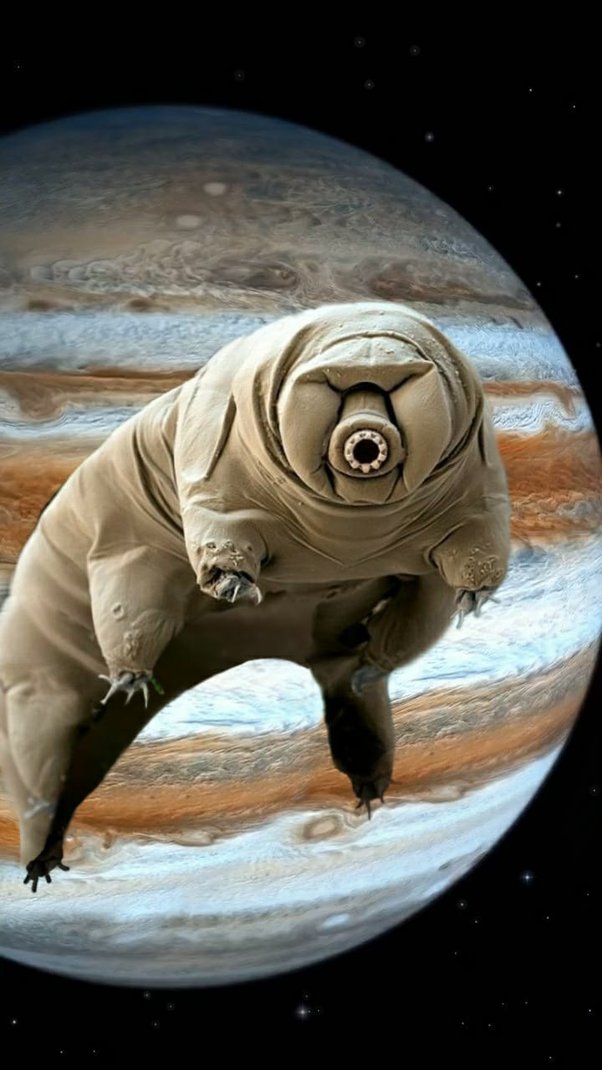
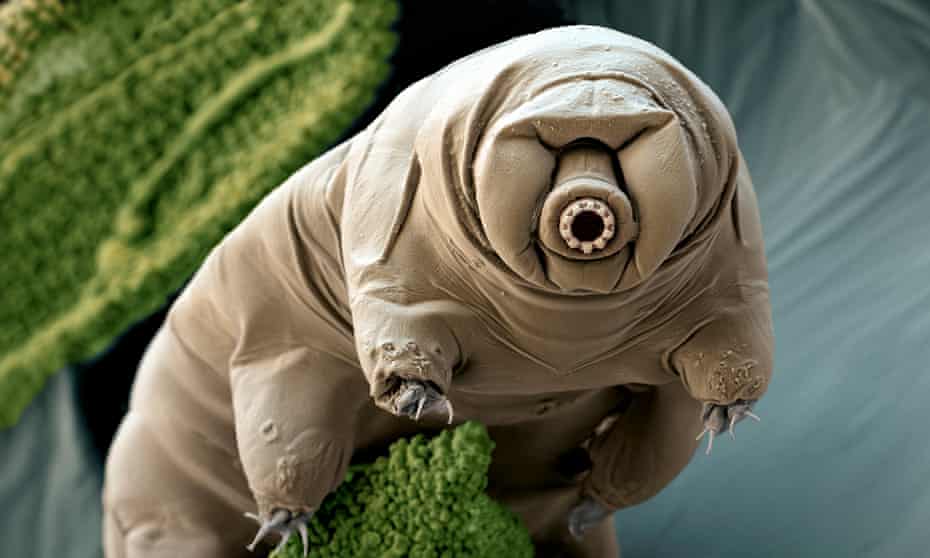
The water bear, also known as a tardigrade or moss piglet, is a plump microscopic organism with eight clawed legs that lives and feeds in damp environments. They mostly suck on the fluids of plant cells, animal cells, and bacteria. Don’t let their tiny size fool you; these creatures are superheroes when it comes to surviving adverse environmental stresses. Besides lack of water or oxygen, they tolerate freezing and thawing, X-ray radiation, toxic chemicals, huge pressure changes, and temperature ranges. They’ve been taken into outer space and survived to make more of themselves.
.
.
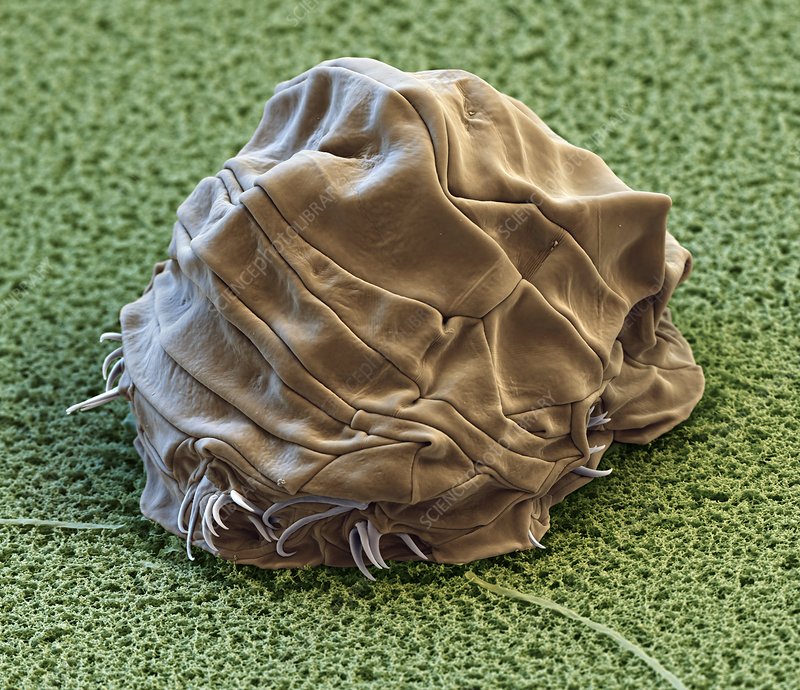
Tardigrades respond to adverse environmental stresses through “cryptobiosis”, a process that greatly slows their metabolism. Tardigrades survive dry periods by shrivelling up into a little ball or tun and waiting it out. They make a protective sugar called trehalose, which moves into the cells to replace the lost water. You could say that the water bear turns into a gummy bear.
.
Tardigrades have revived after a 100 years of desiccation. The antioxidants they make soak up dangerous chemicals and tardigrades can also repair damaged DNA from long term dry-out. In low oxygen, the tardigrade stretches out, relaxed muscles letting more water and oxygen enter its cells. The tardigrade’s cold-resistant tun also prevents ice crystals that could damage cell membranes.
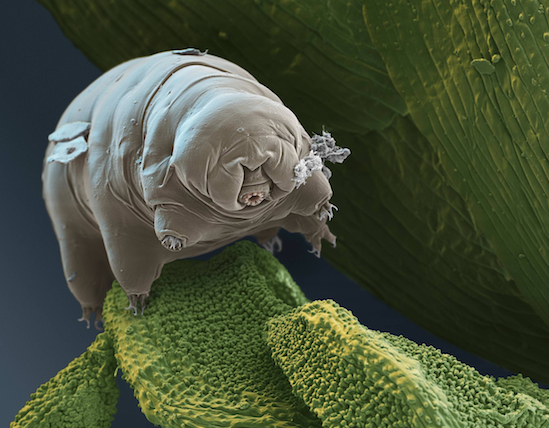
Smart entrepreneurs have caught on to the wily ways of the water bear by developing innovative products using biomimicry.
The Biomimicry Institute described several products by companies such as Biomatrica that were inspired by this the water bear; not just mimicking form but mimicking process, a way to save energy and provide social benefits. Biomatrica developed ways to store biological samples like tissues, DNA, and cells, using a technique used by the water bear to survive dehydration. “Not only does this technology save labs money, it also protects scientists’ valuable research from being lost due to power outages,” writes the Biomimicry Institute.
Another company, Stabiltech, mimicked the water bear’s survival strategies; the company focused on stabilizing vaccines and pharmaceuticals, solving the problem of requiring a “cold chain;” instead of keeping these materials refrigerated from manufacture to delivery, they were stored dry. Vaccines can now be delivered into parts of countries with no electricity and remain viable.
.
.

Nina Munteanu is a Canadian ecologist / limnologist and novelist. She is co-editor of Europa SF and currently teaches writing courses at George Brown College and the University of Toronto. Visit www.ninamunteanu.ca for the latest on her books. Nina’s bilingual “La natura dell’acqua / The Way of Water” was published by Mincione Edizioni in Rome. Her non-fiction book “Water Is…” by Pixl Press (Vancouver) was selected by Margaret Atwood in the New York Times ‘Year in Reading’ and was chosen as the 2017 Summer Read by Water Canada. Her novel “A Diary in the Age of Water” was released by Inanna Publications (Toronto) in June 2020.
.
 The Meaning of Water
2 thoughts on “When Water Bears Inspire Industry…”