
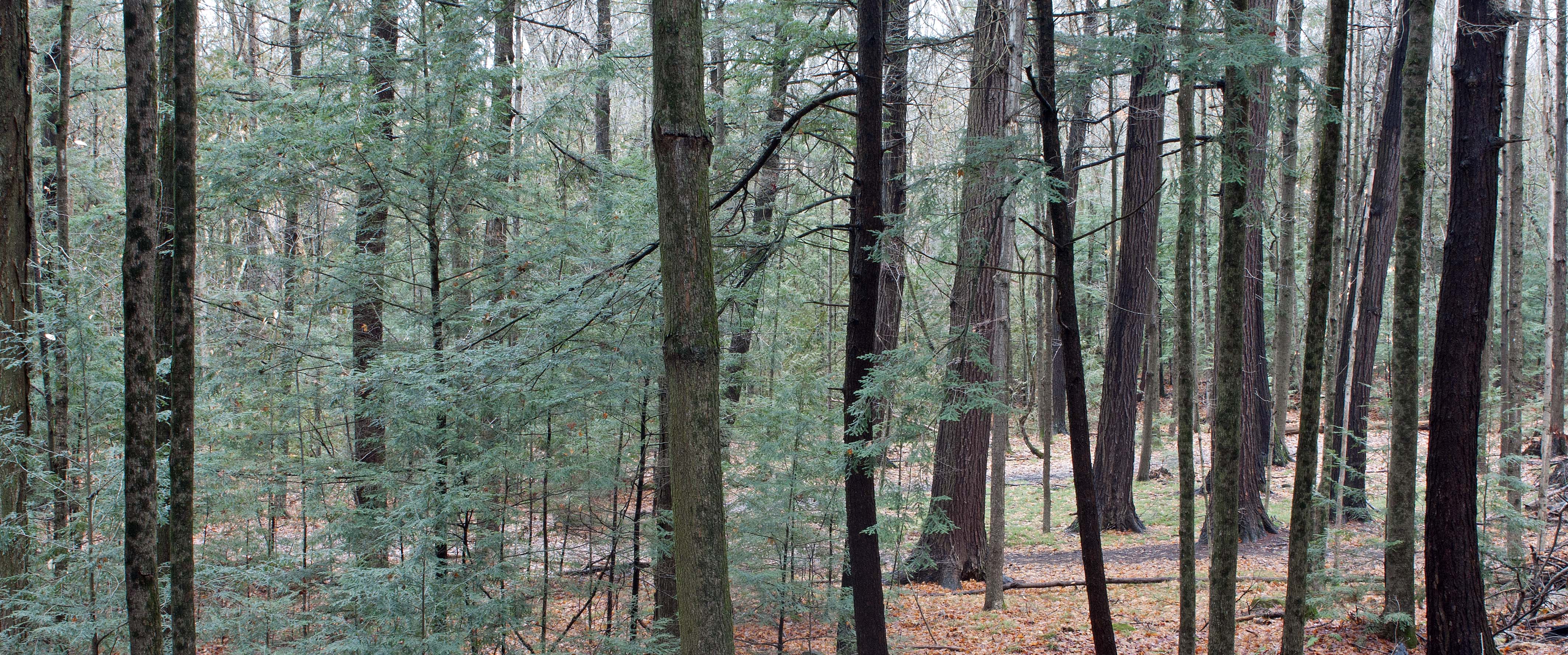
In early-October of 2022, I went on a guided mushroom hike with the Peterborough Field Naturalists in Mark S. Burnham Provincial Park, a mixed old-growth forest of hemlock/cedar and maple/beech. The 39-hectare park lies just east of the town of Peterborough off Highway #7 and features 2.5 km of trails on two interconnected loops that meander along and over a drumlin through maple, beech, hemlock and elm forest, some of which are among the oldest in Ontario. The world’s oldest sugar maple (over 330 years) lives here.
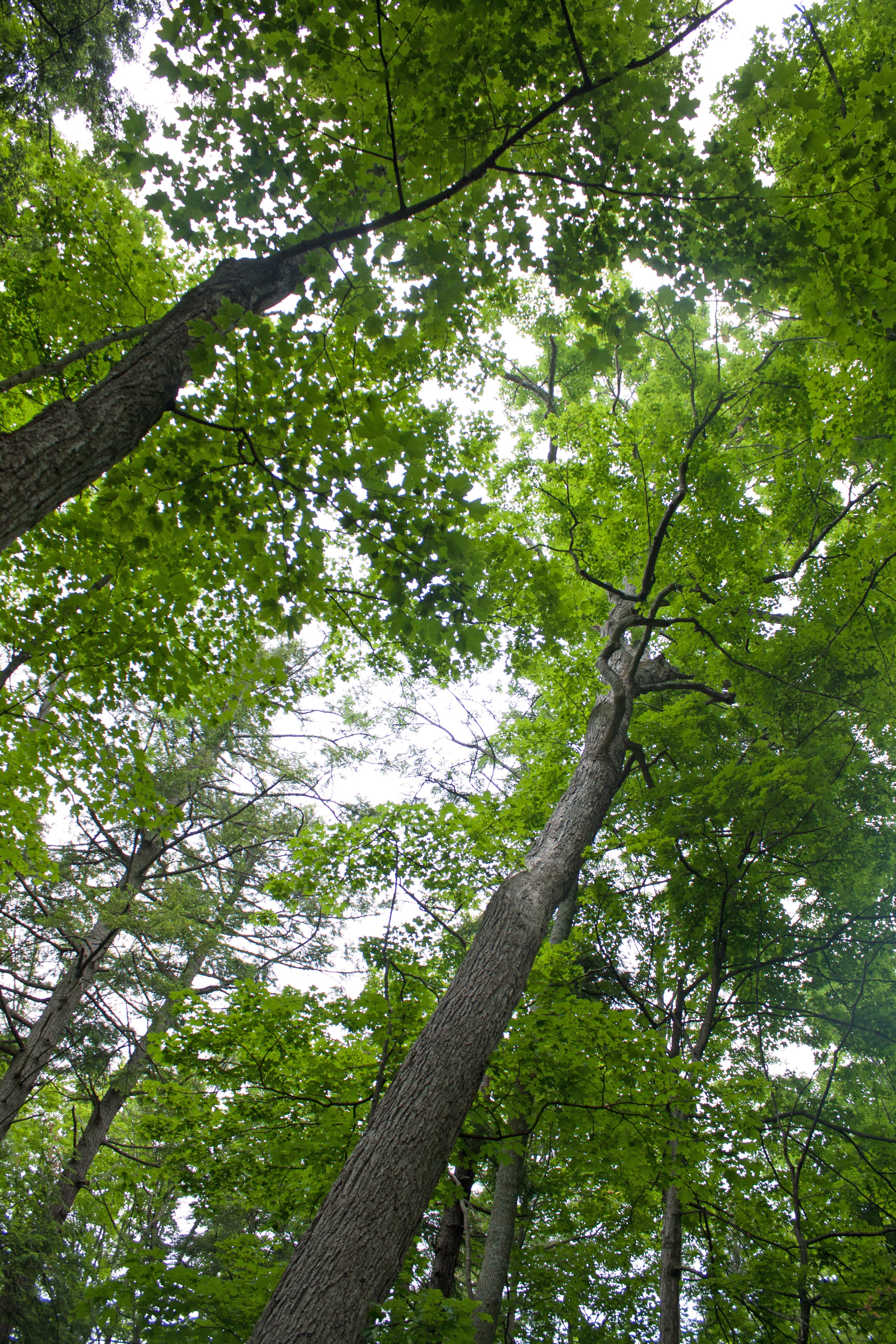

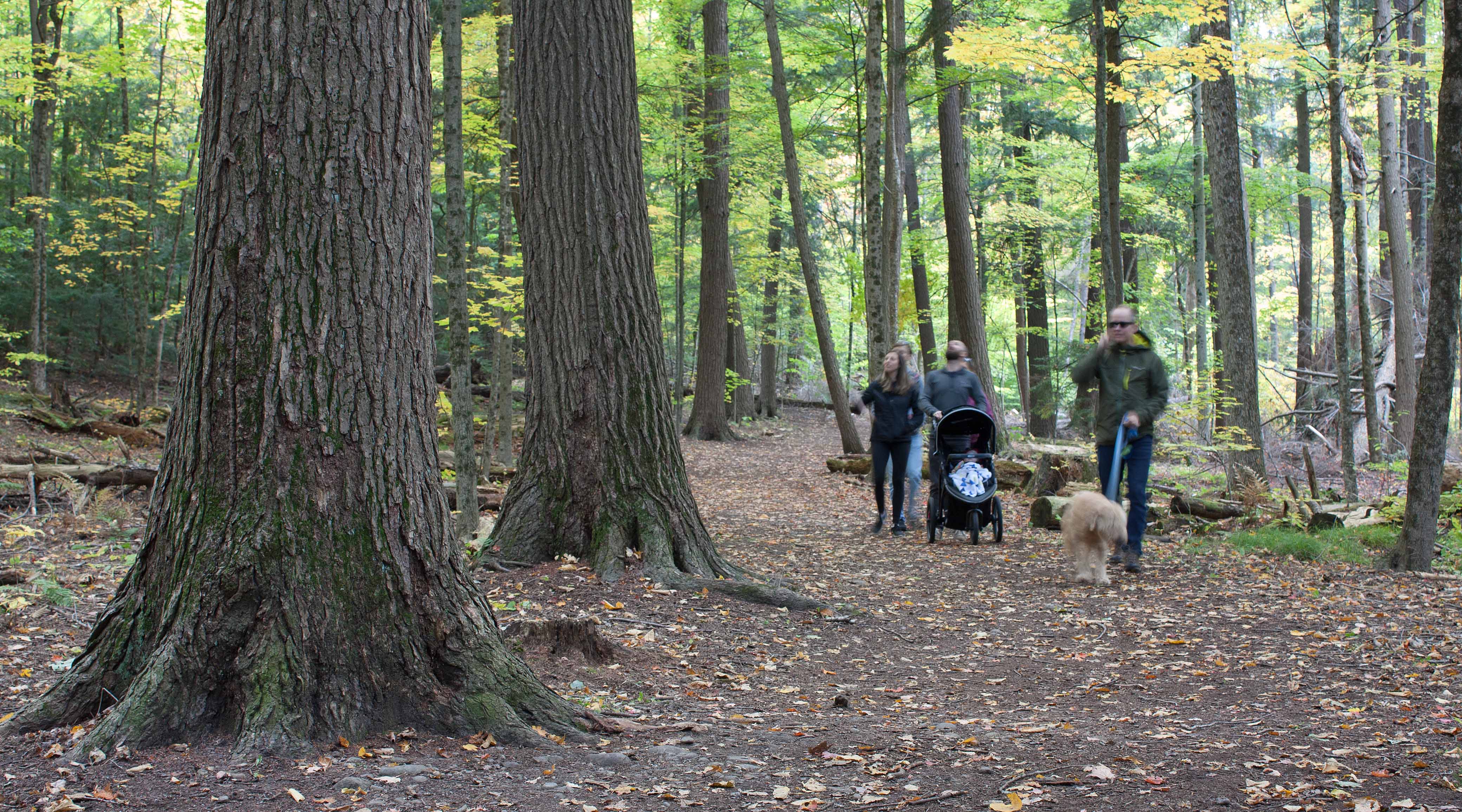
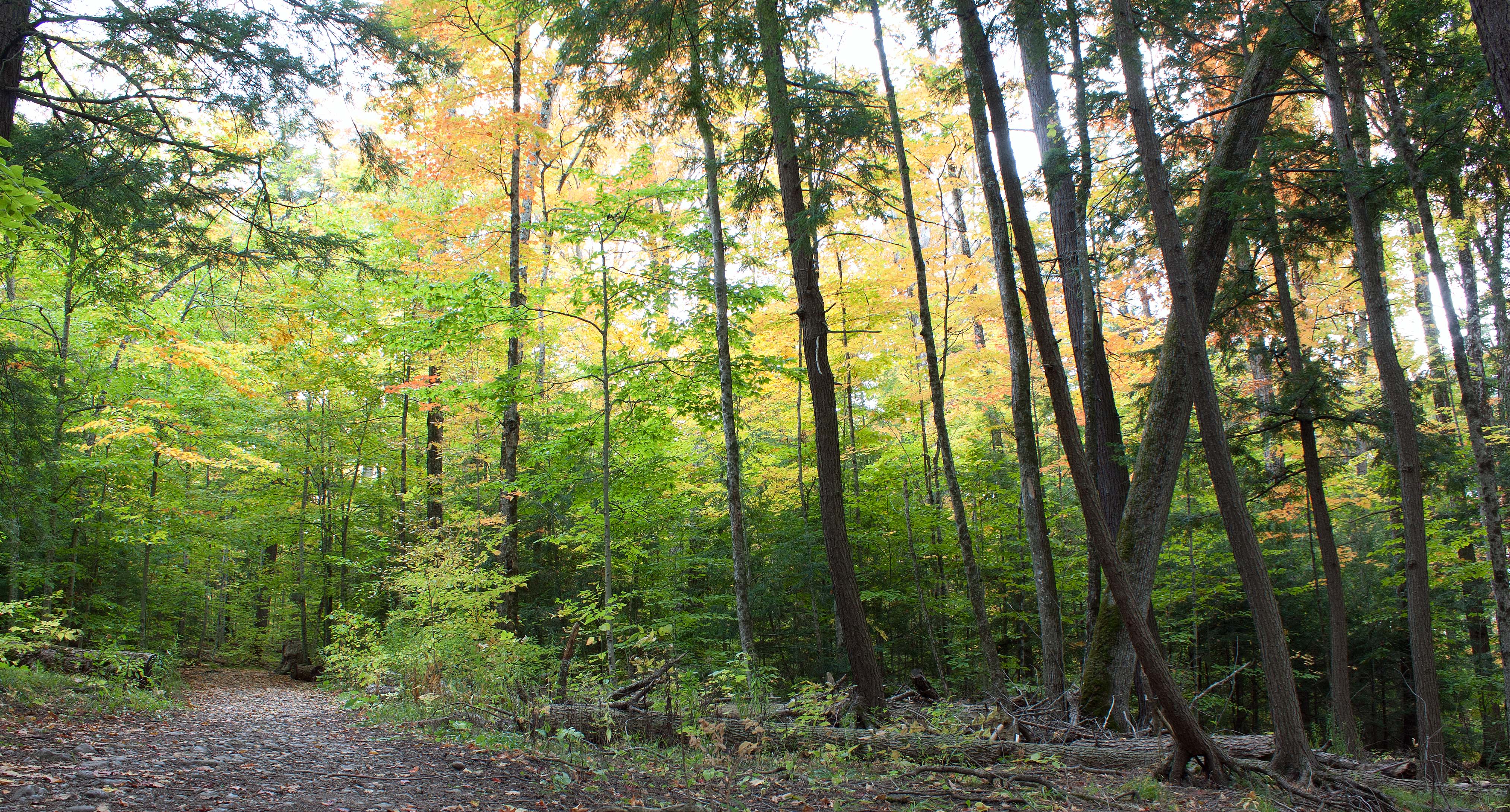
Led by Sue Paradisis and Rachel Baehr, the casual and informative two-hour walk through old-growth forest focused on the extensive fungal network that helps sustain this ecosystem. Sue and Rachel led twelve of us past several large old beech trees along lowland swamp beneath a canopy of giant old hemlocks and cedars. We then walked up the drumlin into the autumn brilliance of a mixed deciduous forest of beech, ash, and maple trees. Sue talked about the underground symbiotic mycorrhizal network that connects an ecosystem’s vegetation and helps transport nutrients and defense compounds from plant to plant.
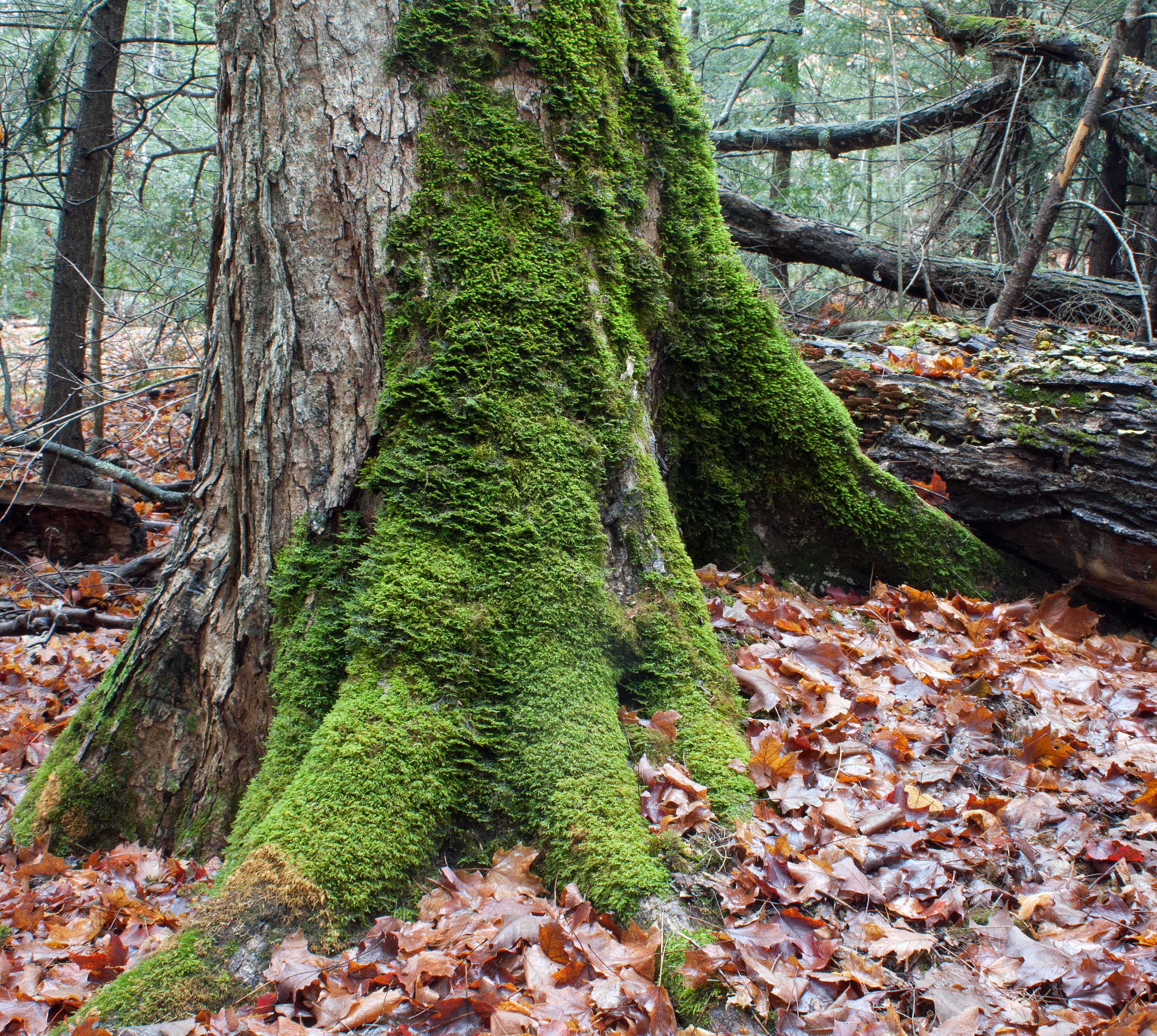
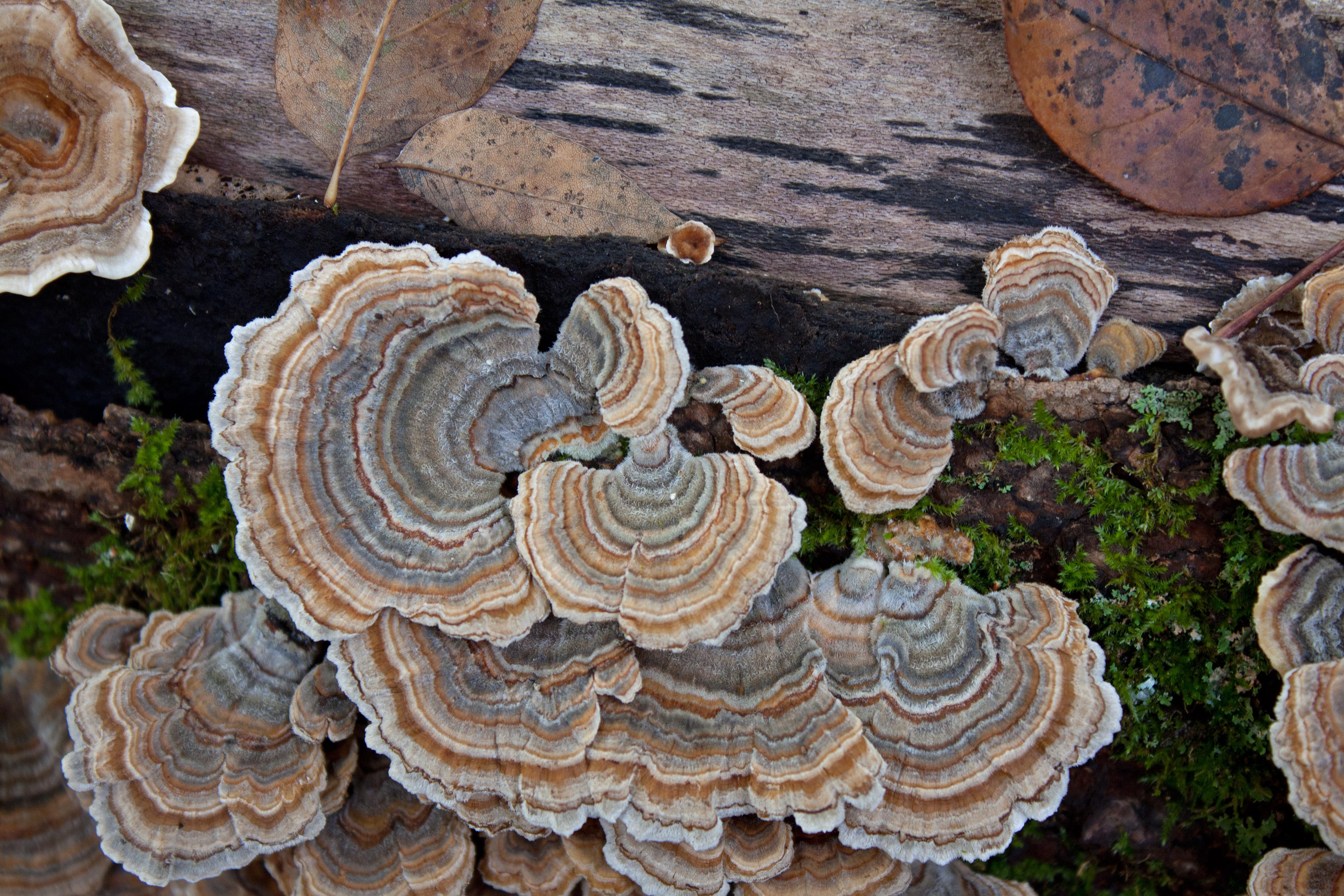
Rachel pointed out many fruiting bodies of the forest’s fungal network that grew mostly on the decaying wood of nursery logs and stumps. Examples included several polypores, Pholiota, the slime mold Wolf’s Milk, Lacquer bracket fungus, and frilly Turkey Tail.


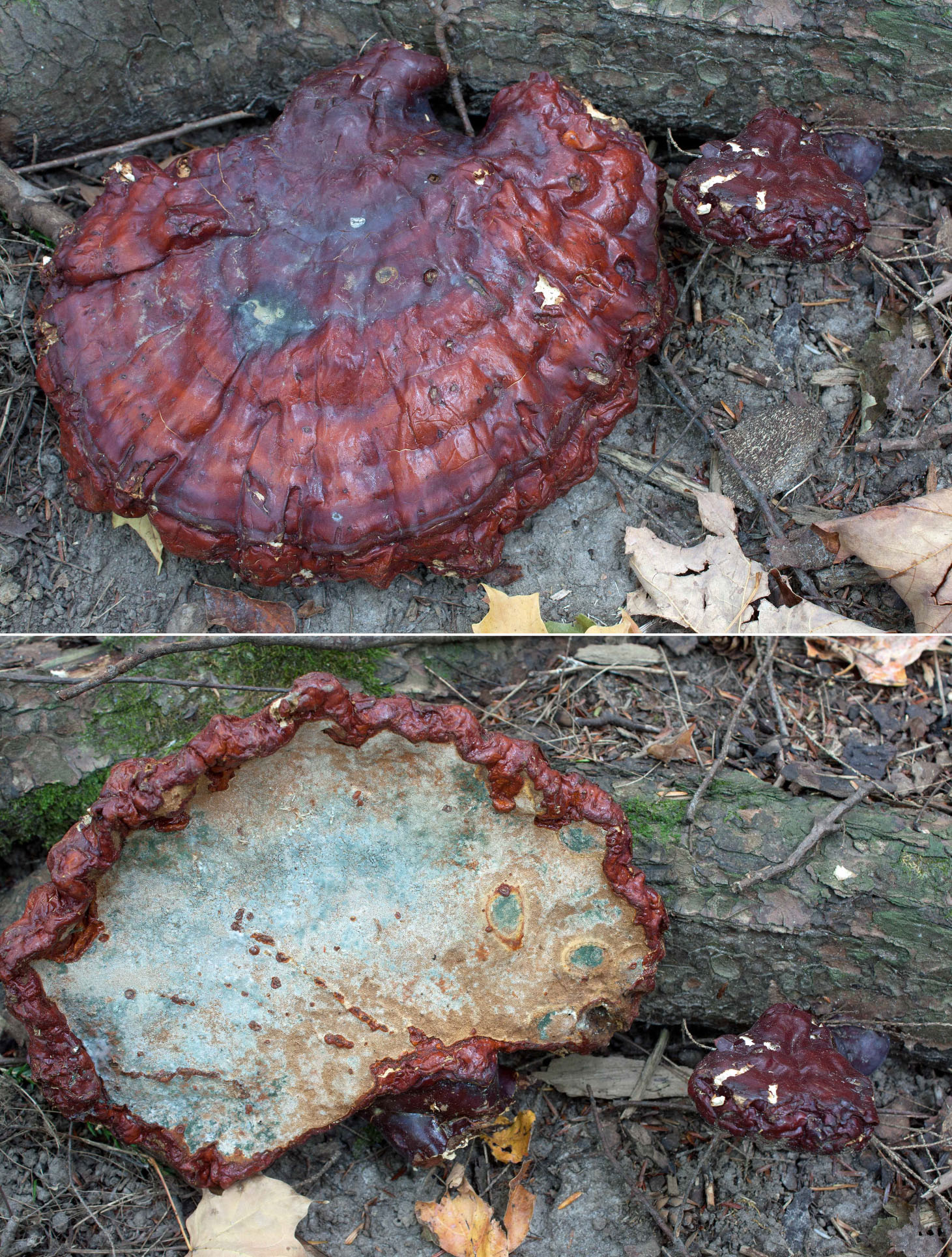
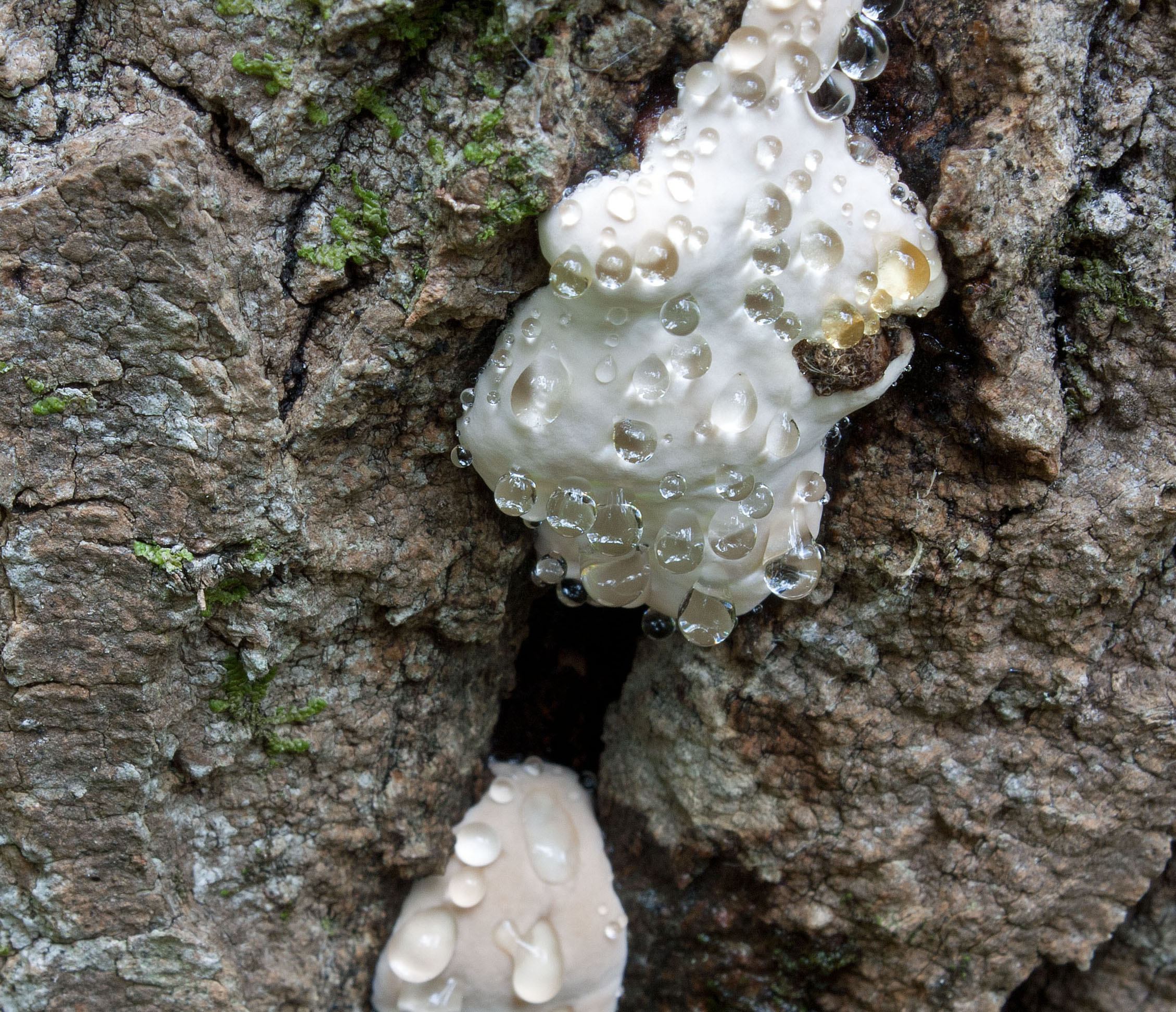
Rachel also talked about the phenomenon of guttation, when certain mushrooms ‘weep,’ just like leaves do. This is a way the mushroom excretes excess water and is common among corticioid and many bracket fungi such as polypore Fomitopsis pinicola. Rachel then pointed up an old maple tree to where a cluster of Chicken of the Woods mushroom—highly coveted for their taste—perched comfortably out of reach from would-be foragers.
Little Brown Mushrooms
In the swamp lowland, my attention was drawn by a thriving culture of Little Brown Mushrooms (LBMs) scattered on a decaying log. It was just another pretty brown saprobic mushroom growing out of a rotting cedar log in a bed of moss. The mushroom was unassuming but rather beautiful, forming attractive clusters in a mix of moss and porous decaying wood. Their caps were convex to flat and rufous brown at the centre then fading to honey yellow towards the edge. The gills were cream-coloured and furrowed. I noticed that the stems (stipe) were streaked and sported a pale collar or annulus—remnants of the partial veil. Many were bent like the trunks of black locust in a thick forest. At the base of several mushroom stipes, I spotted a white cloud of fungal mycelium, spreading out into the moss.
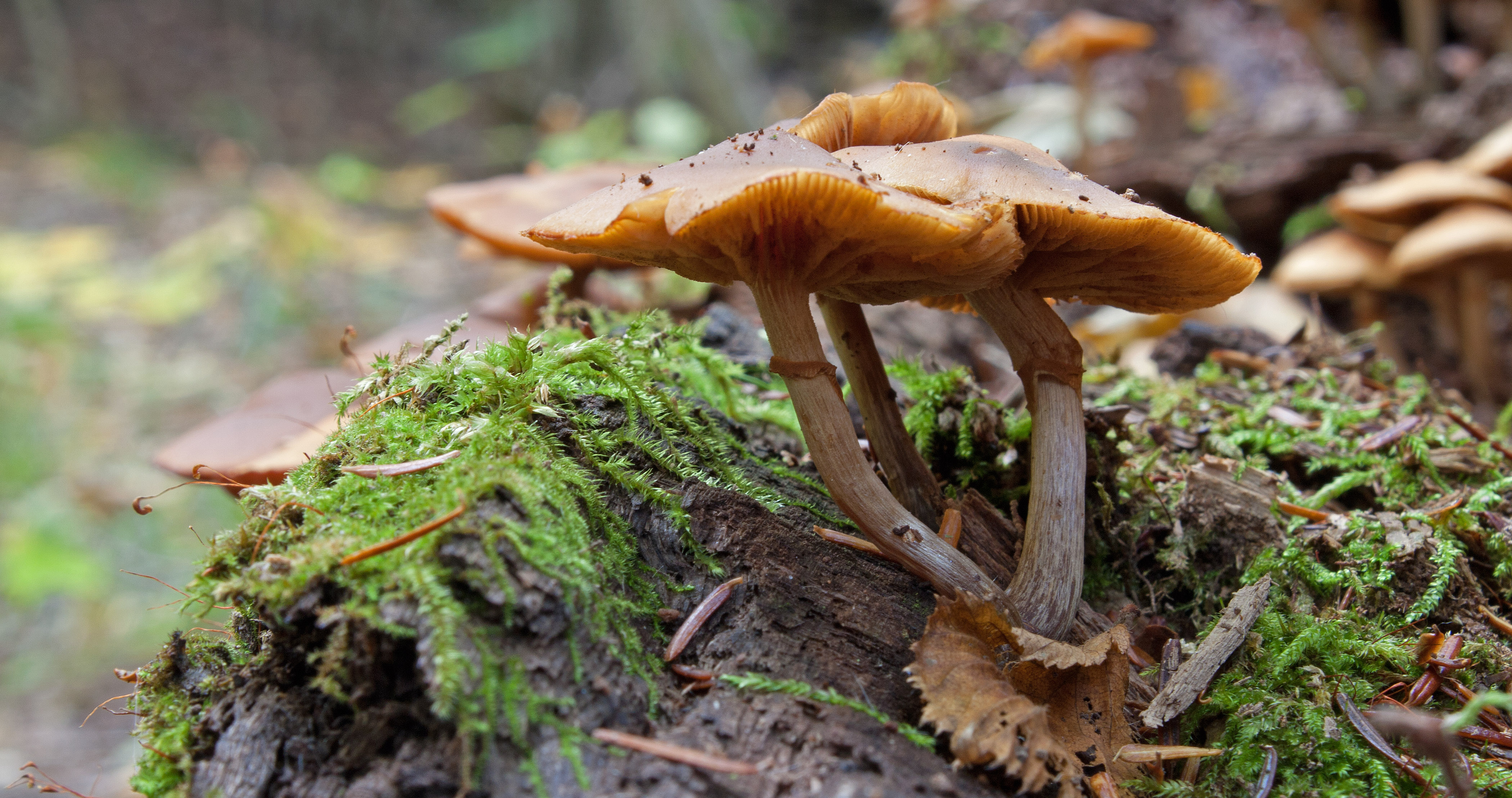
I only realized after checking my field guide that this ordinary brown mushroom is one of the most deadly on the planet. This little brown mushroom turned out to be Galerina marginata, also known as Funeral Bell in the UK. First Nature tells us that Galerina marginata contains the same deadly poisonous toxins that occur in Amanita phaloides, the Death Cap (an unassuming white mushroom) and Destroying Angels (Amanita virosa complex). In a nutshell, the α-amanitin toxin binds to and disables an enzyme responsible for making new proteins. Without the enzyme, cells can’t function, resulting in severe liver derangement and culminating in hemorrhagic liver necrosis. Without prompt treatment, the victim will experience rapid organ failure, coma, and death. Thirty grams or half a cap of Galerina (one bite) is enough to kill a human with onset of symptoms within six to 24 hours.
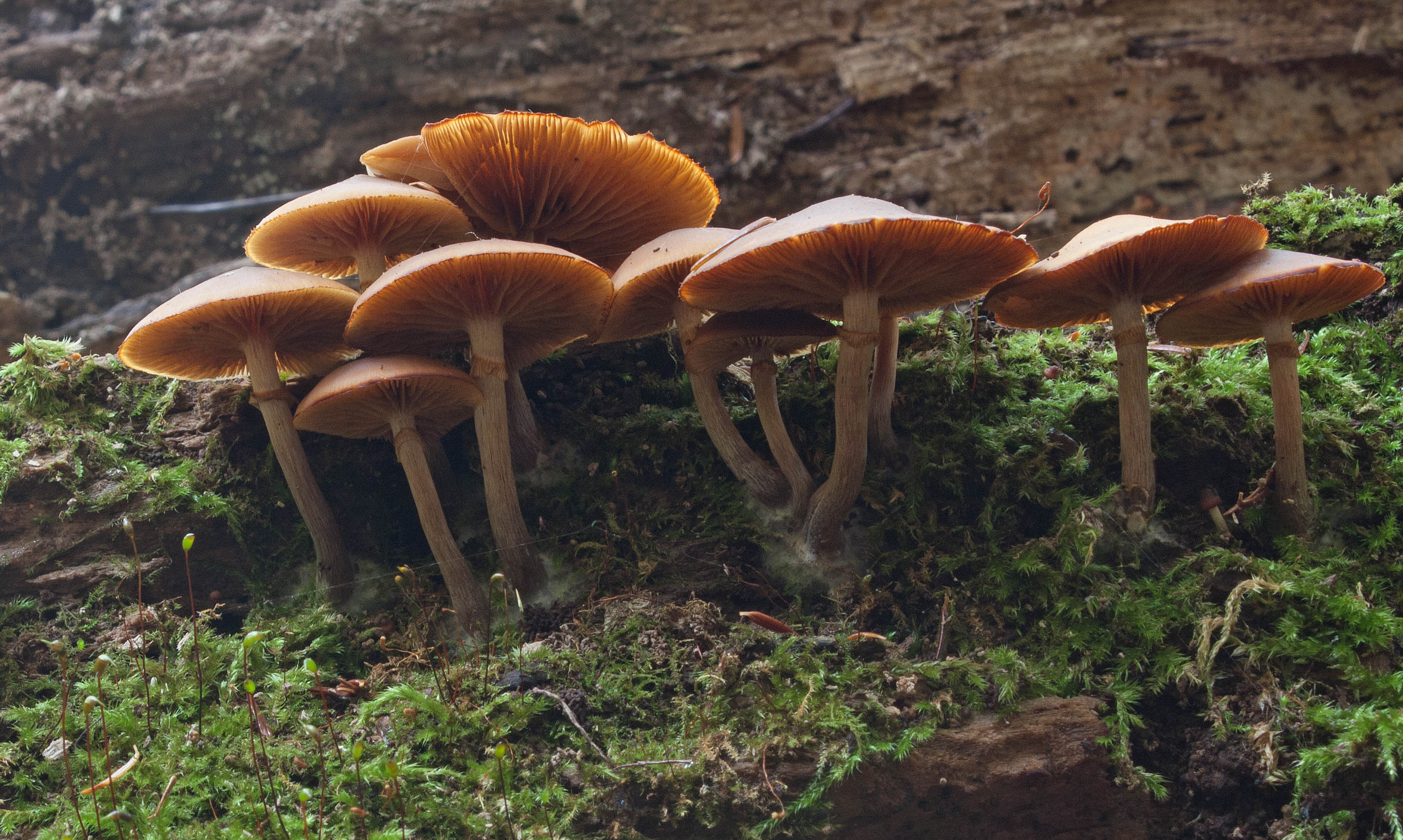
Galerina marginata is a saprobic fungus, which likes well-decayed conifer stumps and broadleaf tree logs. It is best seen in autumn and is found all across the northern hemisphere’s temperate zone (including Europe, Asia, and North America). According to First Nature Galerina means ‘like a helmet’ and marginata means bordered, referring to the generally paler marginal area of the cap compared with the centre.
The hygrophanous cap is initially hemispherical then becomes broadly convex or almost flat shaped. The cap, which can be 1-7 cm in diameter, is rufous brown in the centre, fading to honey yellow towards the edge. Margins may be faintly striate. Gills are close, adnate, pale cream-fawn to ochraceous honey-coloured and turn slightly rusty as they mature. The stem, 2-7mm n diameter and 2-7 cm tall, are often curved. Buff at the apex and browner towards the base, they are longidunally fibrillose below the pale ring or collar.

Good friend and naturalist Merridy Cox is fond of telling people that for every edible mushroom there is an evil twin. In this case the evil twin posed by Galerina marginata has its edible twin in the popular edible mushroom, Kuehneropmyces mutabilis (Wood Tuft or Brown Stew Fungus). The Wood Tuft is a close relative and has a similar size and colour range but a pale cap centre and darker rim. Mycologist Timothy J. Baroni cautions mushroom foragers that Galerina marginata can also be mistaken for the edible Honey Mushroom (Armillaria spp.) which occur in similar habitats, have a vaguely similar brownish colouration, but are larger, produce white spores, and have black stiff hairs on the cap.
Little Brown Mushrooms (LBMs) often go unnoticed because they are hard to spot and are usually too small to consider worth eating. The “Deadly Galerina” is therefore usually not dangerous on its own. Fungus Fact Friday contend that “the real danger from this mushroom comes when it is accidentally collected along with a group of edible mushrooms.” Velvet Foot Mushroom (Flammulina velutipes), Brick Caps (Hypholoma sublateritium), and Magic Mushrooms (Psilocybe spp.) are most commonly confused with G. marginata. All of these can be found on decaying wood and may occur together on the same substrate. Fungus Fact Friday suggests “you should never eat any little brown mushrooms growing on wood.” Period. I agree. Not worth the risk.
Fall Colours to Spring Calls and Curious Wildlife
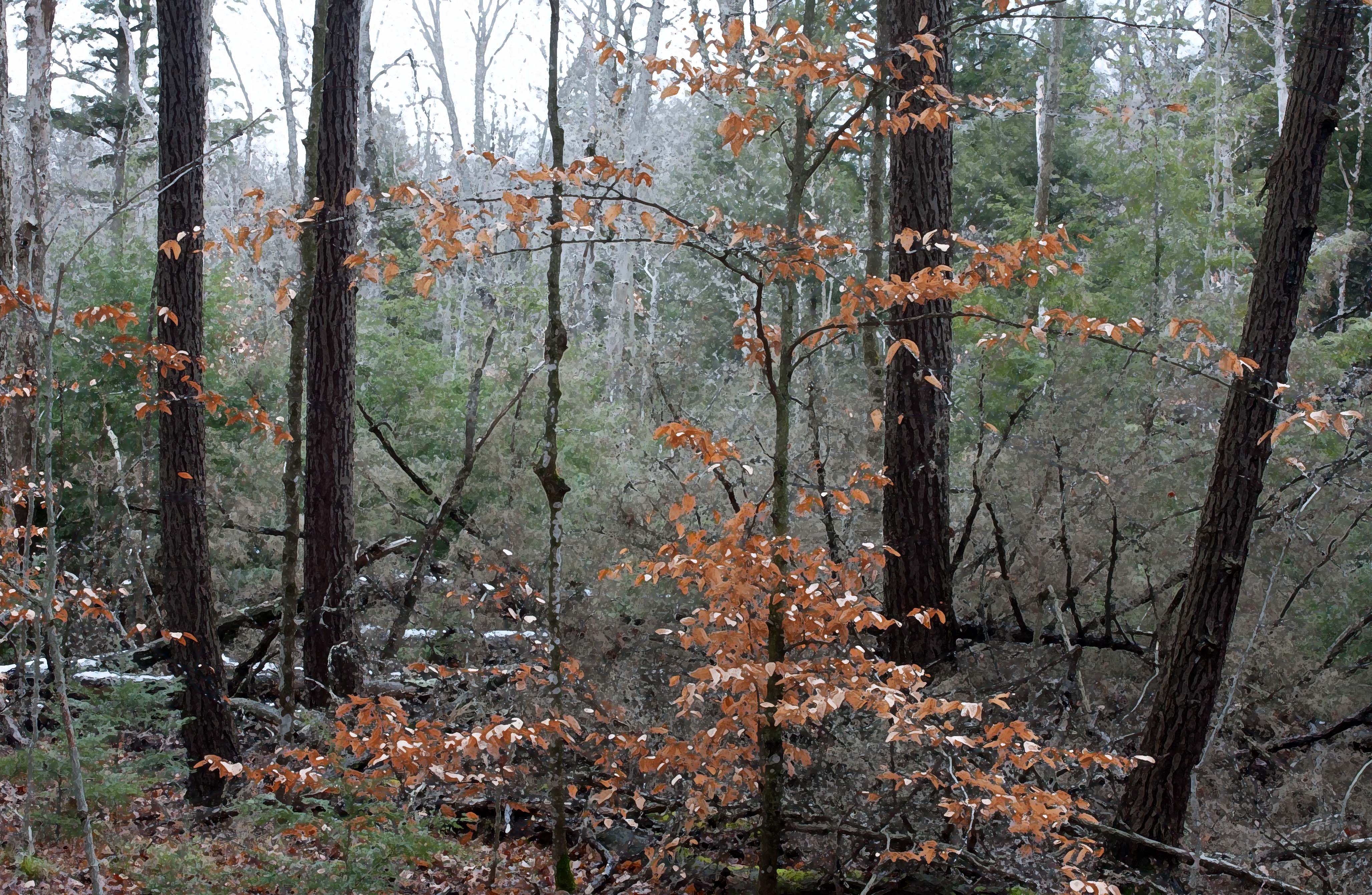
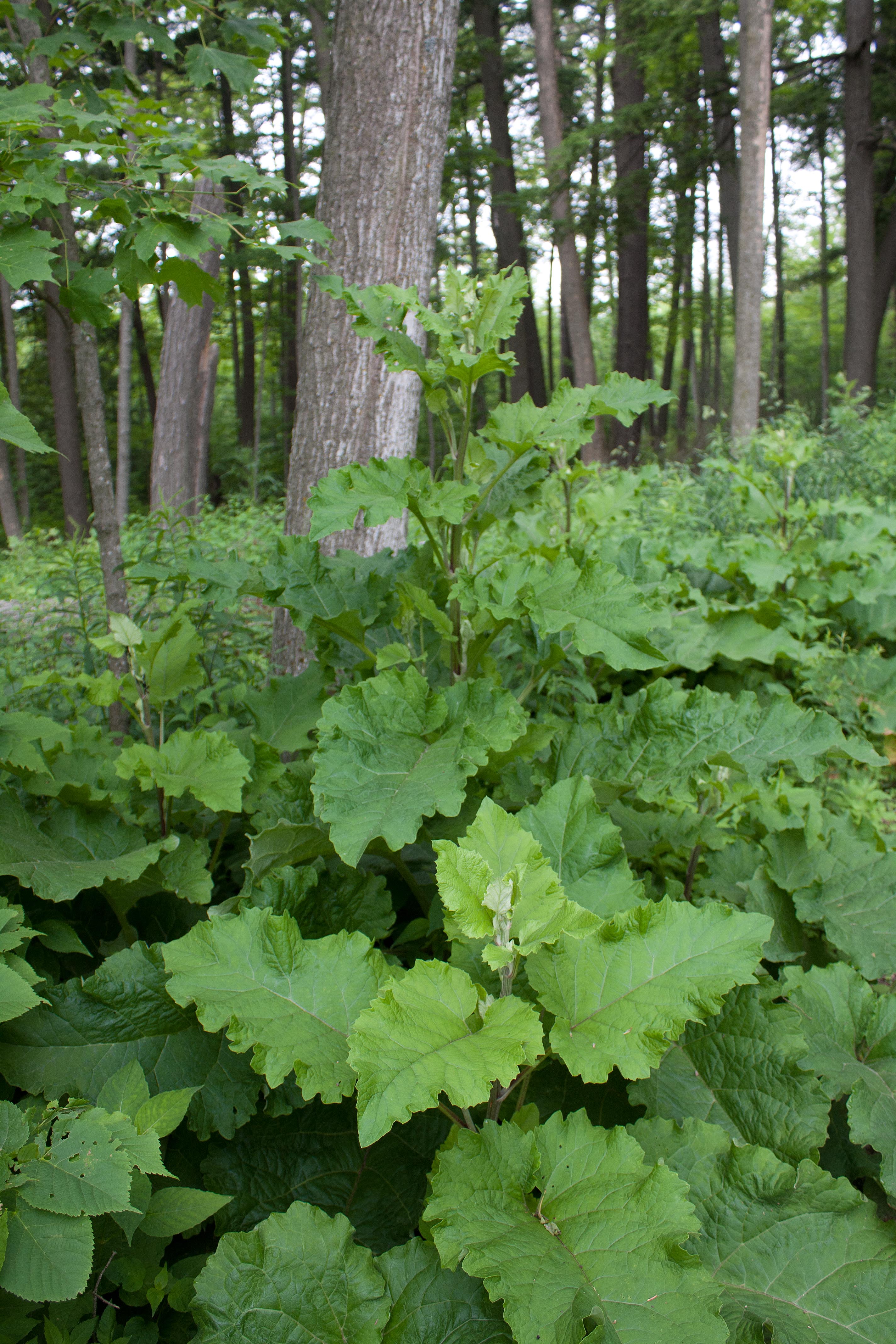
I’ve since returned alone many times throughout the seasons to quietly walk among the brilliant colours in the fall, the brooding shades of winter, the restless greens of spring and baroque hues of summer– taking in the sharp smells and muted textures of the dark lowland forest. Senses wide, I experience Nature’s gifts through each season. The rustling leaves of beech and the low hush of hemlock in a cool wind. The musky smell of swamp water and sweet rot of vegetation. The halting shrill of the Blue Jay.
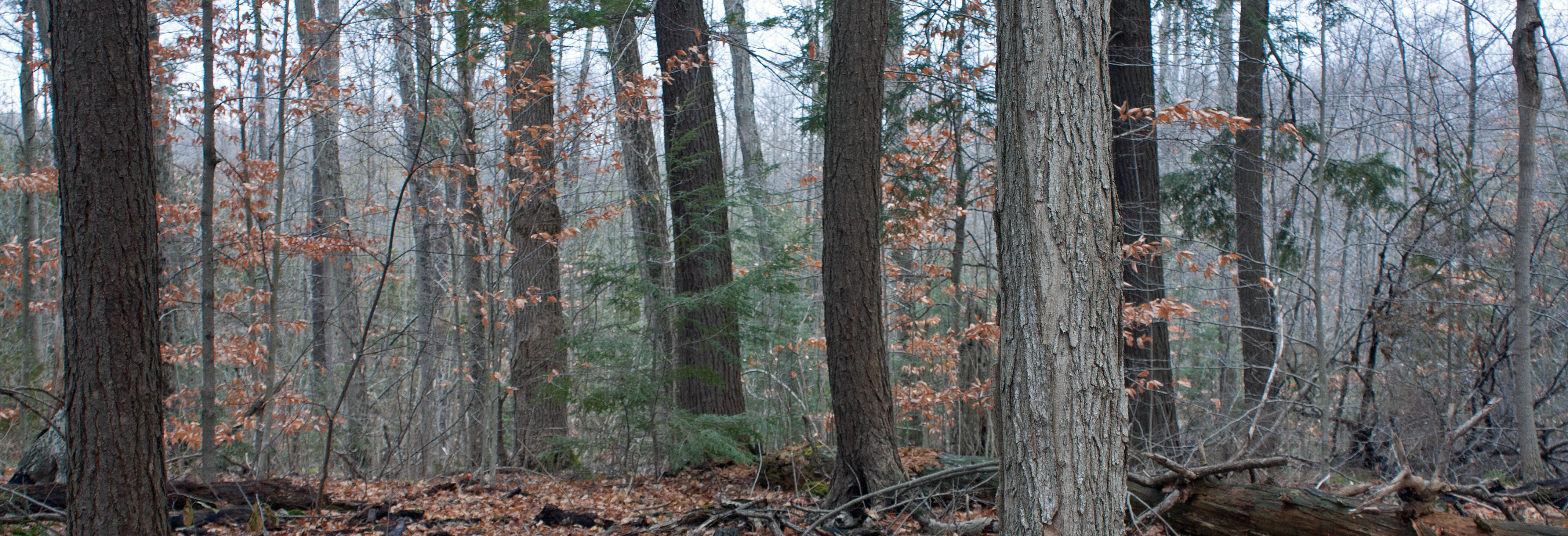

The primeval shriek of a Pileated Woodpecker one spring walk sent shivers through me with imaginings of timeless ancient scenes, when these hundred-year old trees were still young and the drowned cedar jungle west of me harboured roaming amphibians and reptiles.
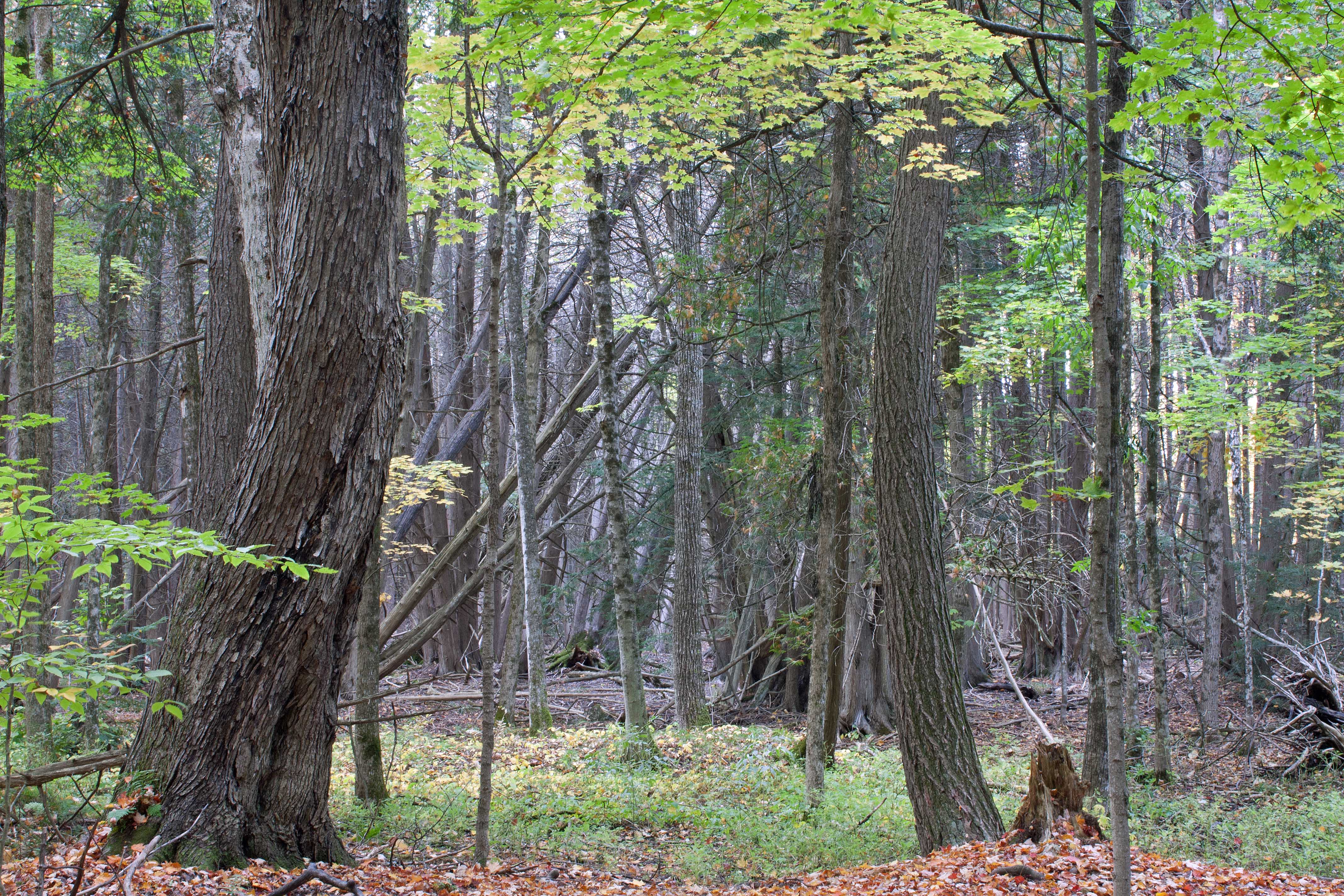
During an autumn walk, a giant toad—the biggest I’d ever seen!—waddled across my path in the hemlock-beech swamp forest. I think it was an American toad, mottled and rough with warts. He looked rather grumpy and took his time, somehow confident—or not caring—that I could step on him and squish him easily. He was rather jiggly as he lumbered on. I did not take his picture; I don’t think he wanted me to, so I didn’t. Soon after, a small garter snake slithered across my path, less confident of my steps. It froze once it was safely out of my way. Good snake…
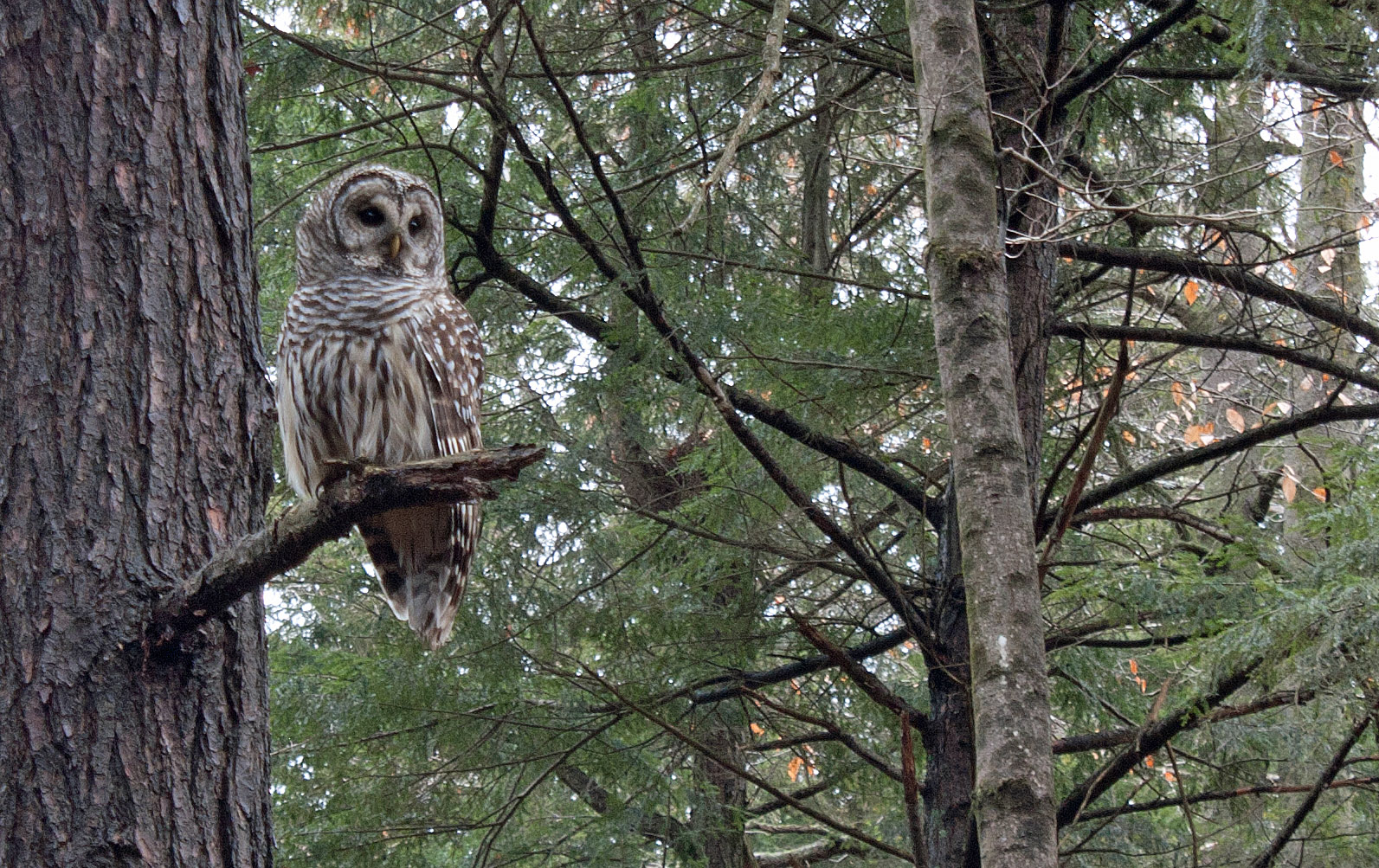
The forest is always alive with the domestic chaos of wildlife busy with itself. Chipmunks chug and red squirrels scold from the tree tops. On an early winter walk through the ancient lowland forest, a large Bard Owl swooped close a perch on an old hemlock. It regarded me with possible curiosity and posed for me as I crept closer through the dark forest. This lovely creature seemed to study me as I sighed at its regal beauty and took its picture.

The trail steeply climbs east out of the old-growth swamp forest to the top of a drumlin and I find myself in a completely different ecosystem of maple-hop hornbeam-ash and beech forest. On the gradual descent back to the parking lot, as I walk beneath a dense canopy of mixed deciduous forest in early fall, I discover more fungi; puffballs, oyster mushrooms and Turkey Tail.
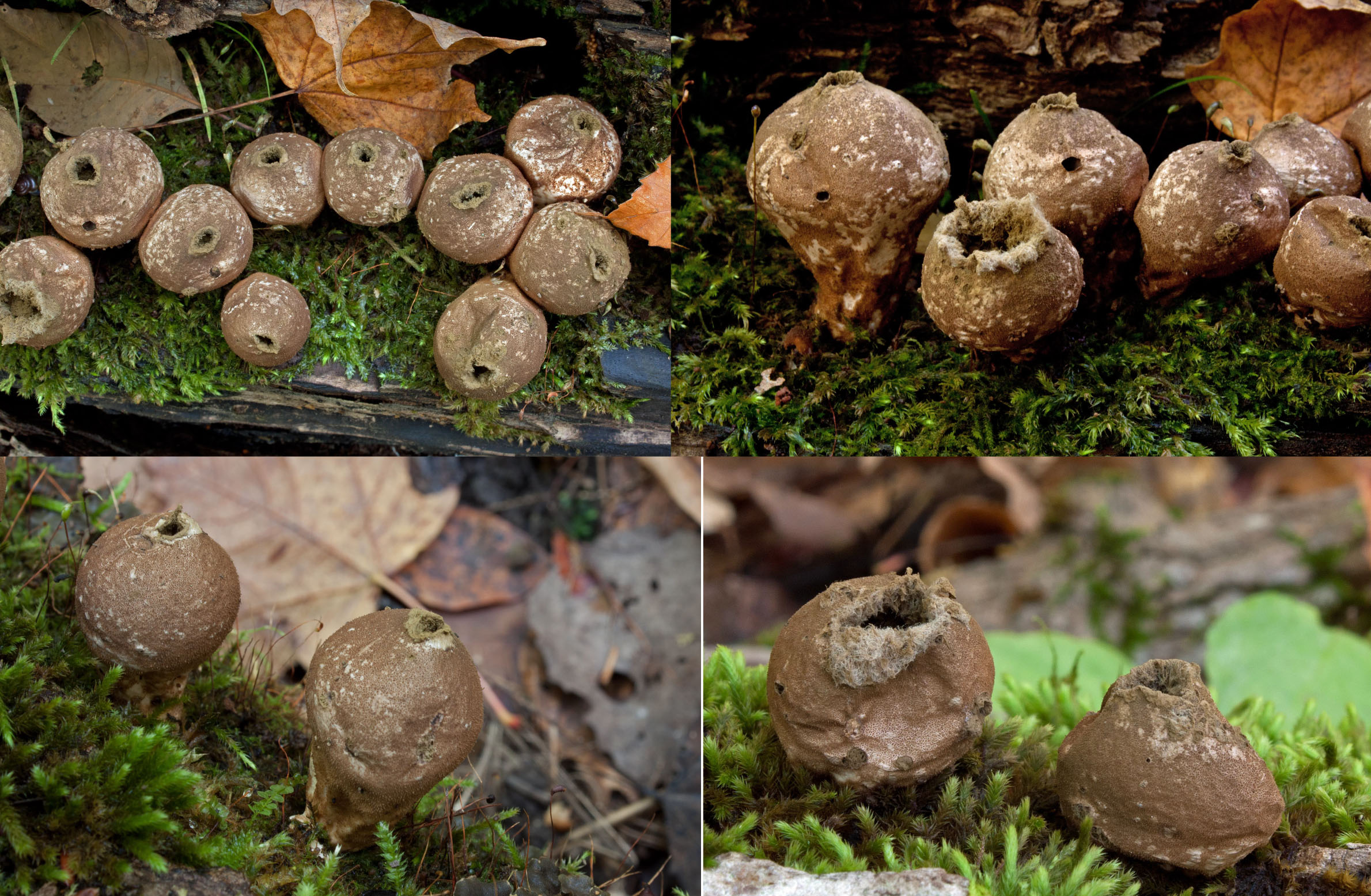
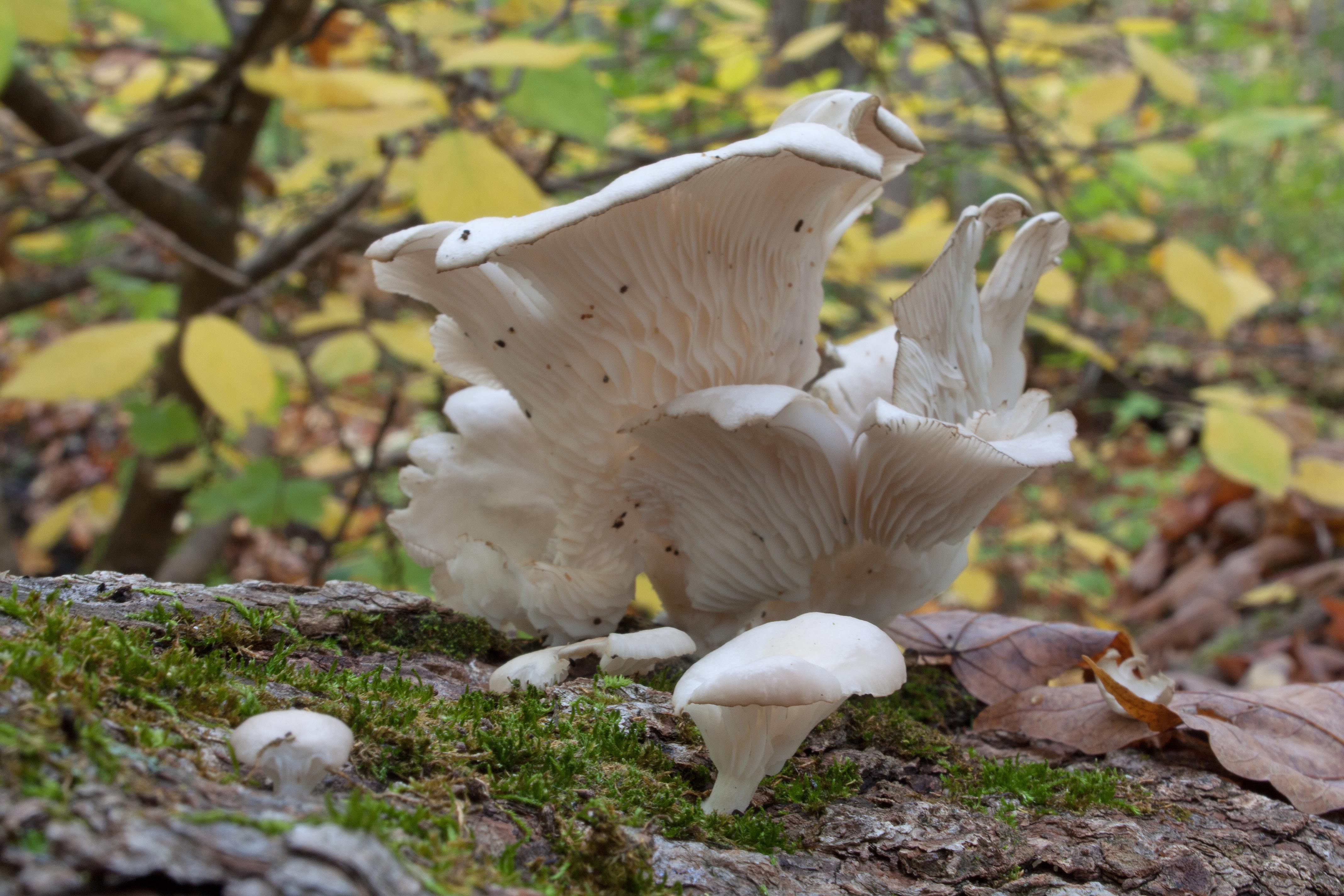
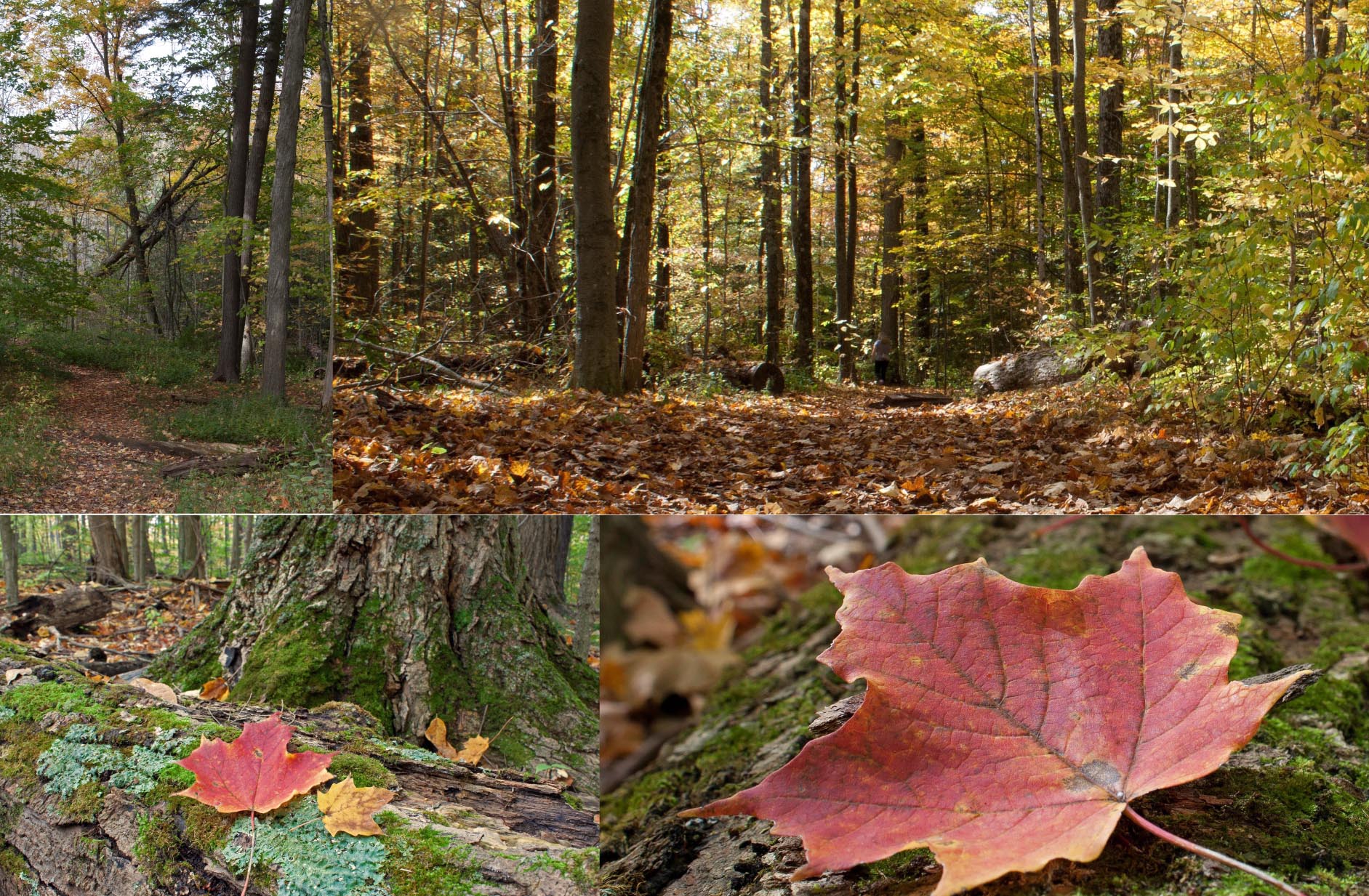
In the fall, this quiet descent on the eastern face from the top of the drumlin through beeches and maples glows with the brilliance of golden-coppers and flaming reds and oranges.


Nina Munteanu is a Canadian ecologist / limnologist and novelist. She is co-editor of Europa SF and currently teaches writing courses at George Brown College and the University of Toronto. Visit www.ninamunteanu.ca for the latest on her books. Nina’s bilingual “La natura dell’acqua / The Way of Water” was published by Mincione Edizioni in Rome. Her non-fiction book “Water Is…” by Pixl Press (Vancouver) was selected by Margaret Atwood in the New York Times ‘Year in Reading’ and was chosen as the 2017 Summer Read by Water Canada. Her novel “A Diary in the Age of Water” was released by Inanna Publications (Toronto) in June 2020.
 The Meaning of Water