
I spend a lot of time on my computer, researching articles on the internet, writing on my computer, communicating with friends and colleagues. It all seems so effortless, so easy. Without much thought, I just turn on my computer. Type in an address. Hit a play button or click on a site. So clean and easy…Not so clean and easy. Where does all that information exchange go? How and where is it stored? Lurking behind a user’s ease is a growing shadow of a dark cloud.
Rain is coming…
In an article entitled “The Weight of the Cloud” in the Spring 2024 Issue of Yes! Magazine, Steven Gonzales Monserrate summarizes five serious and escalating impacts that Data Centres exert on the planet and life on it: 1) Electrical Inequity; 2) Digital Desertifiction; 3) Growing Problem of E-Waste; 4) Data Colonialism; and 5) Digital Noise Pollution.
Electrical Inequity: Gonzales Monserrate notes that data centres are always on, using electricity constantly to perform remote computation and to keep from overheating. He cites the example of Hurricane Maria striking Puerto Rico in 2017; “residents suffered for nearly a year with no electricity while data centers continued to operate uninterrupted thanks to fleets of diesel generators.”
Digital Desertification: Gonzales Monserrate notes that data centres are among the top 10 water consuming industries in the U.S. today; on average a data centre uses 3 to 5 million gallons of water per day (equal to the daily water use of 30,000 to 50,000 people). He notes that the total water footprint of data centres remains unknown with no regulation or transparency.
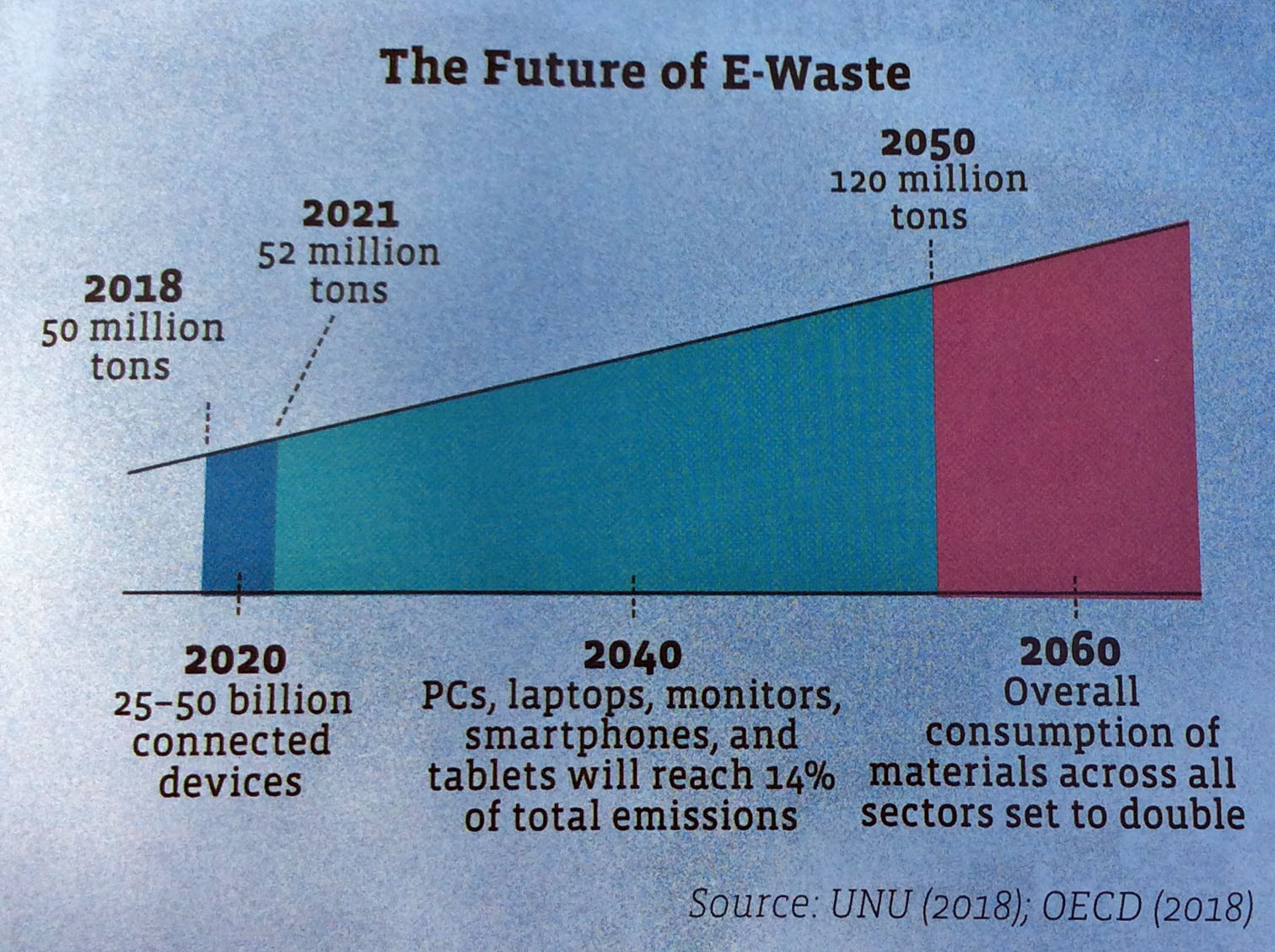

Growing Problem of E-Waste: Gonzales Monserrate notes that data centres drive demand for rare metals (e.g., cobalt, lithium) that precipitate child labor and other atrocities. “The average lifespan of a server in these data centers is only two to five years,” he adds and notes that only 20% of electronic waste is recycled annually. “Most ends up in e-waste graveyards in the Global South, where salvagers smelt down their valuable components, toxifying local soils, watersheds, and their own bodies in the process.” This is ripe material for a science fiction eco-novel. And it’s already been written: Chen Qiufan’s highly evocative and disturbing Waste Tide.
Data Colonialism: given that data centres require a great deal of land for their operation, companies are encroaching on indigenous lands. Gonzales Monserrate provides several examples. Zuckerberg’s Meta is constructing data centres in traditional lands of the Sami peoples, interfering with their traditional livelihood practices. Construction of the Datagonia hub in Chile poses risk to the Licken Antay peoples.
Digital Noise Pollution: The air handlers, chillers, and diesel generators within data centres create constant noise. Nearby residents complain of ill effects, increased hypertension, insomnia and anxiety and depression. Gonzales Monserrate notes that the average noise level of a data centre ranges 70-96 dBA and compares it to an Airbus A321 taking off (79.4 dBA) or a person shouting (72-85 dBA). He adds that the Country noise ordinance limit for a residential area is 55 dBA. For general reference, long or repeated exposure to sounds above 70 dBA can cause hearing loss.
As artificial intelligence applications and virtual reality infrastructures expand, bits will heat up, drink more, and shout louder as more data centres are constructed to accommodate increases.
Gonzales Monserrate leaves us with this cautionary note: “every time you hit the play button or upload a photo to the cloud, you are sending bits hurtling at the speed of light through undersea cables as thin as your hairs. You do this effortlessly, but the countless servers and storage drives in faraway data centers take a heavy toll on both communities and the environment.”
Worth pondering as I head outside to the patio to read my book before it starts to rain…
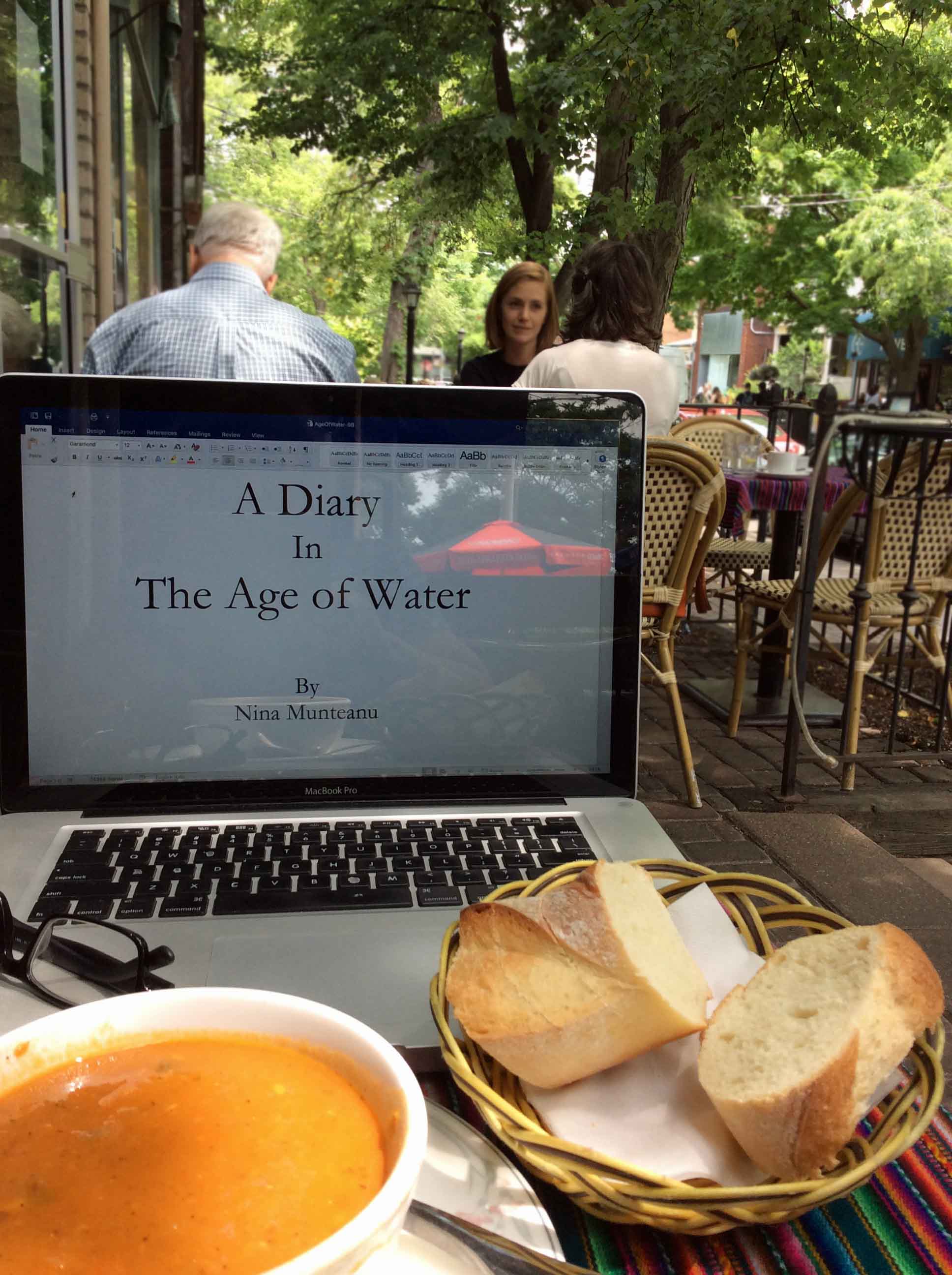

Nina Munteanu is a Canadian ecologist / limnologist and novelist. She is co-editor of Europa SF and currently teaches writing courses at George Brown College and the University of Toronto. Visit www.ninamunteanu.ca for the latest on her books. Nina’s bilingual “La natura dell’acqua / The Way of Water” was published by Mincione Edizioni in Rome. Her non-fiction book “Water Is…” by Pixl Press (Vancouver) was selected by Margaret Atwood in the New York Times ‘Year in Reading’ and was chosen as the 2017 Summer Read by Water Canada. Her novel “A Diary in the Age of Water” was released by Inanna Publications (Toronto) in June 2020.
 The Meaning of Water