
Whenever I’m visiting Vancouver (which is most summers), I like to explore several new destinations. An important requisite is that the destination include old-growth forest. Lucky for me, the Vancouver area has many such places. I visited three in August: Lighthouse Park, Rice Lake, and Hyannis Trail.
Lighthouse Park, West Vancouver
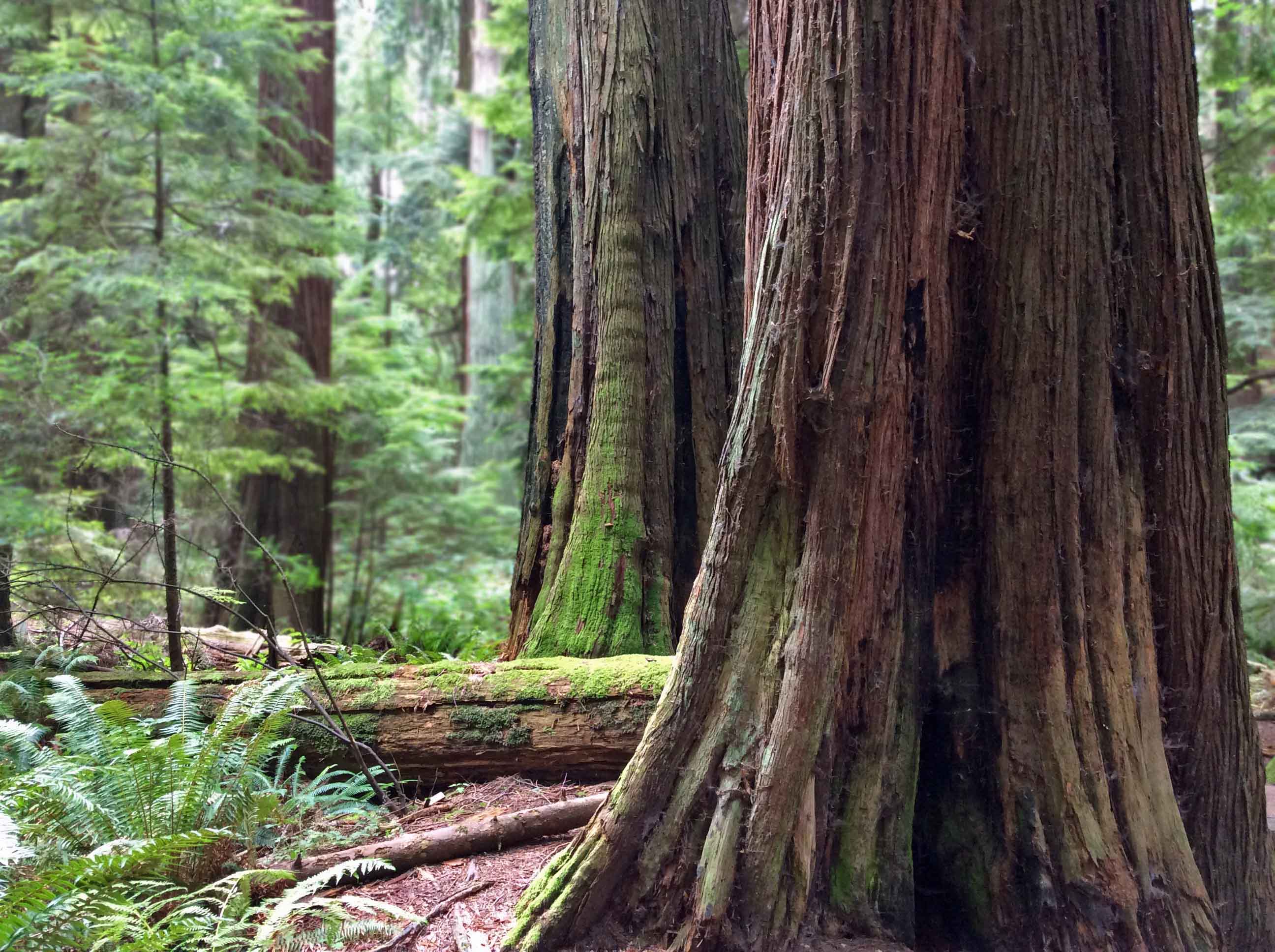
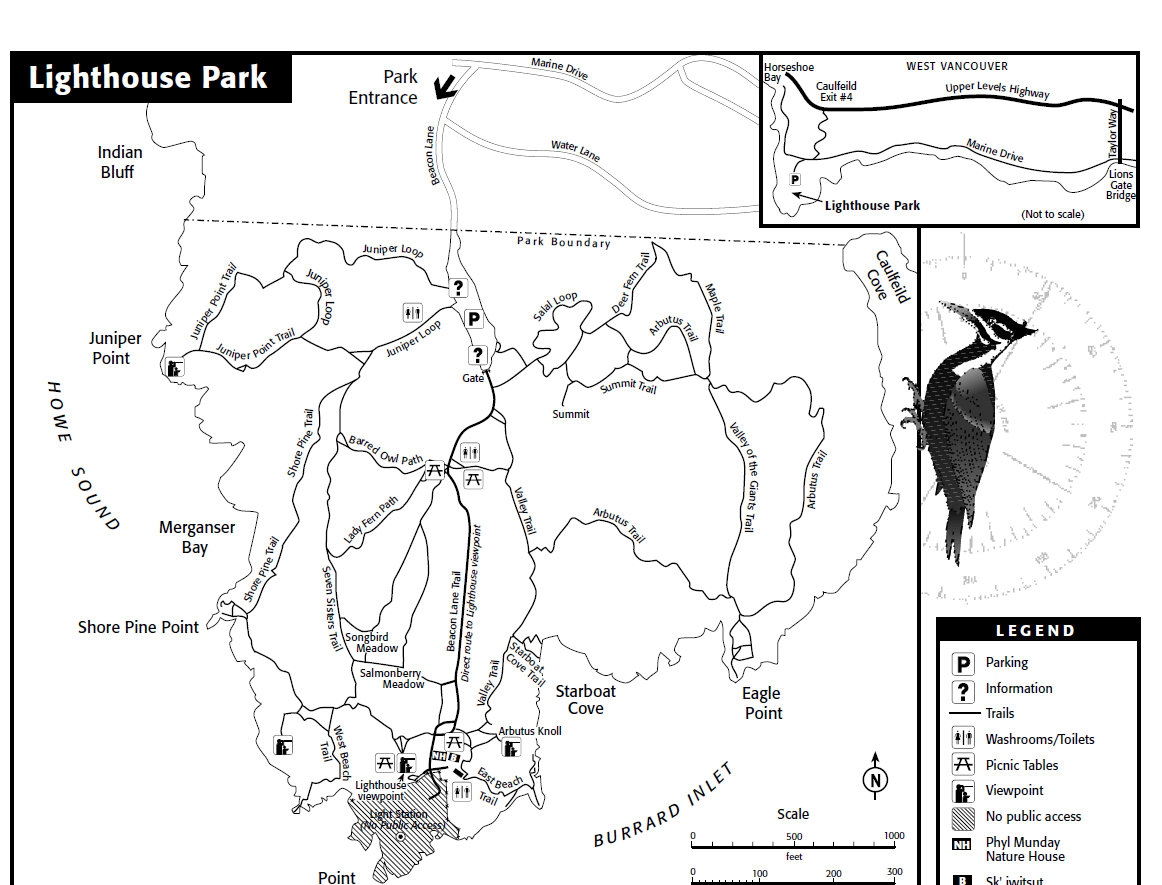
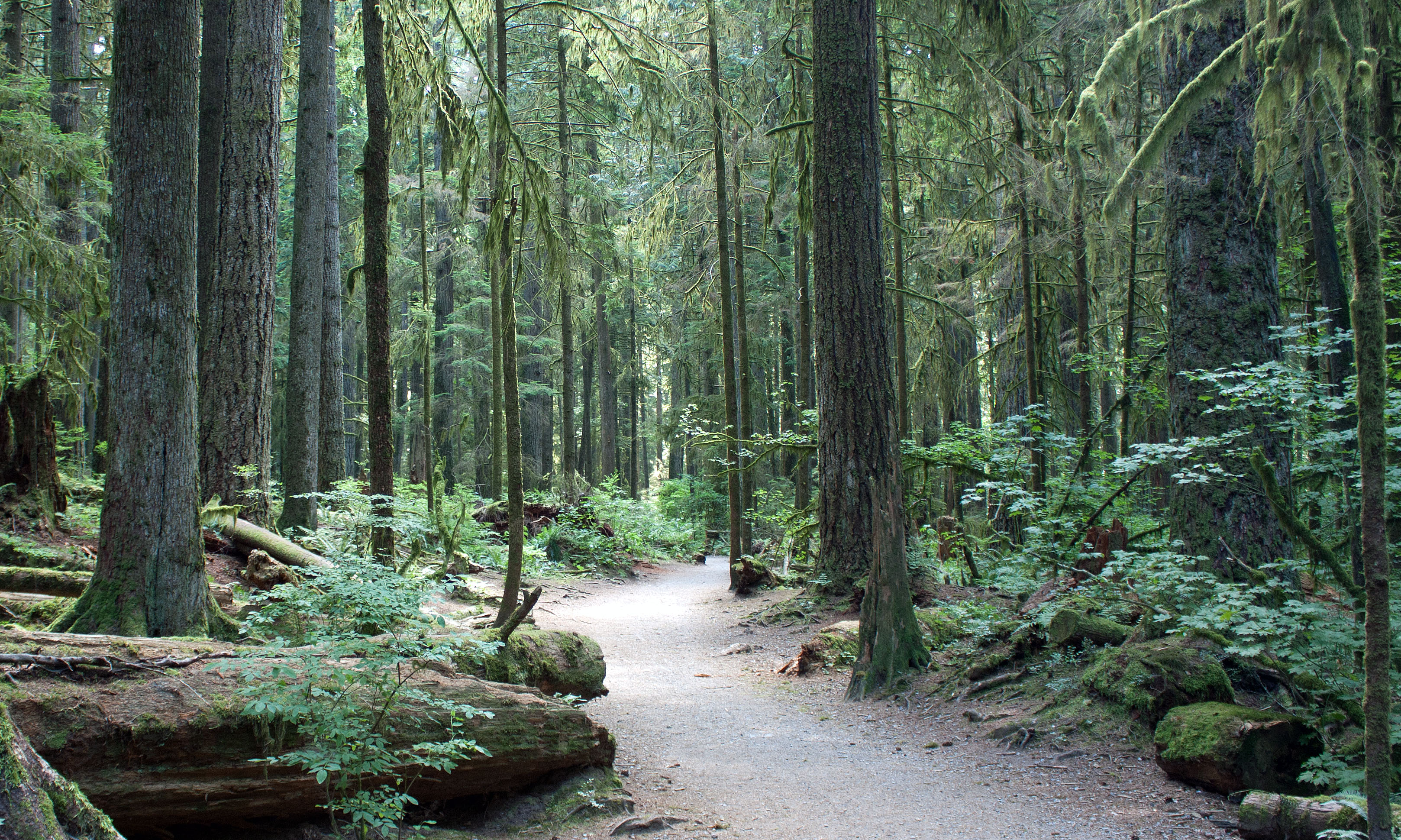
Lighthouse Park, in West Vancouver, is a favourite haunt of mine. The park is a 75-hectare patch of rocky coastline, crowned by an old-growth forest of 70 m tall Douglas firs and Western red-cedar at least 500 years old. Snugly nestled amid the urban sprawl of West Vancouver, the forest reserve was set aside by the federal government in 1874 as a dark backdrop to the lighthouse. The urban oasis now offers a glimpse into Vancouver’s wild past, when virgin coastal rainforest that covered most of the southern British Columbia coastline dripped with life.
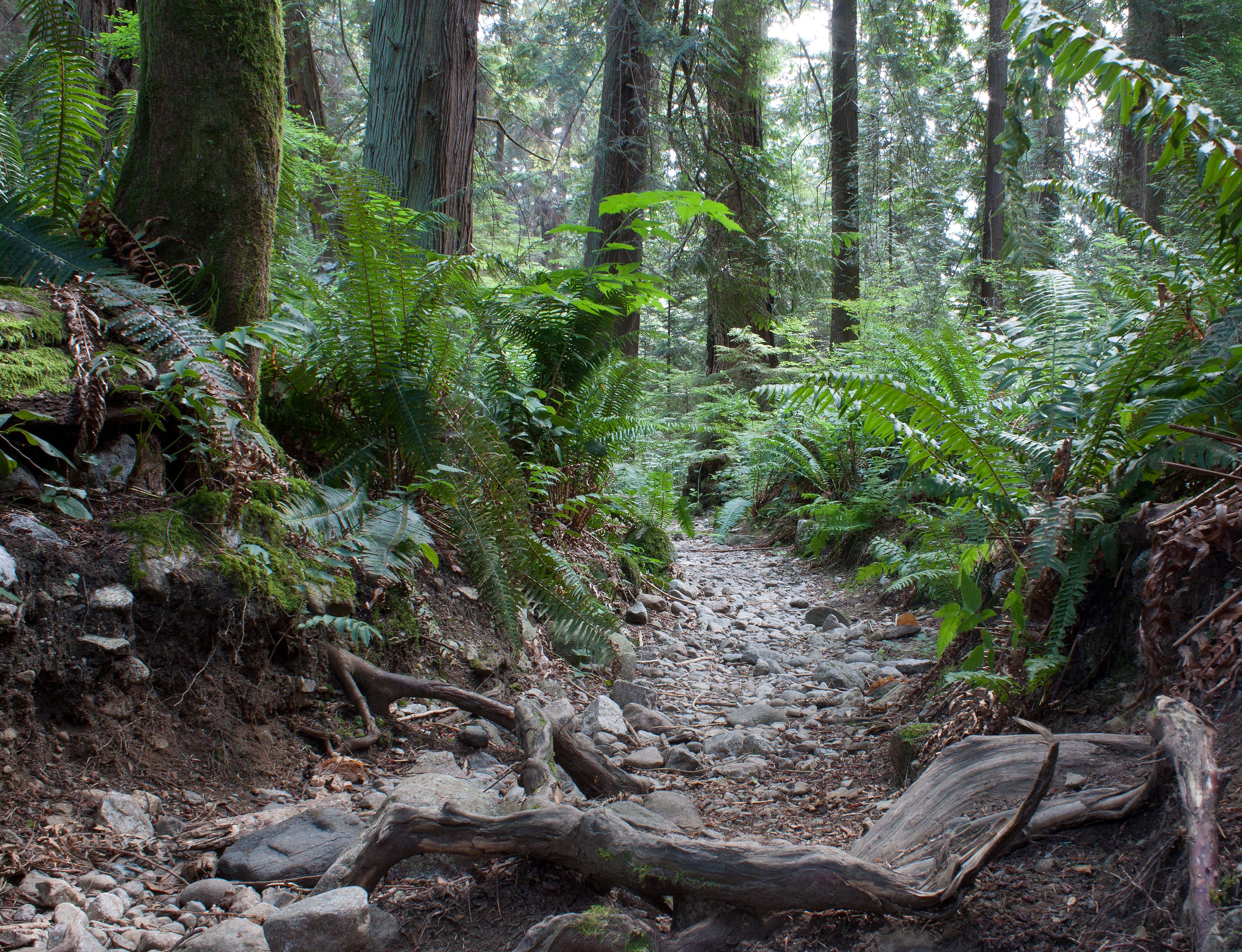
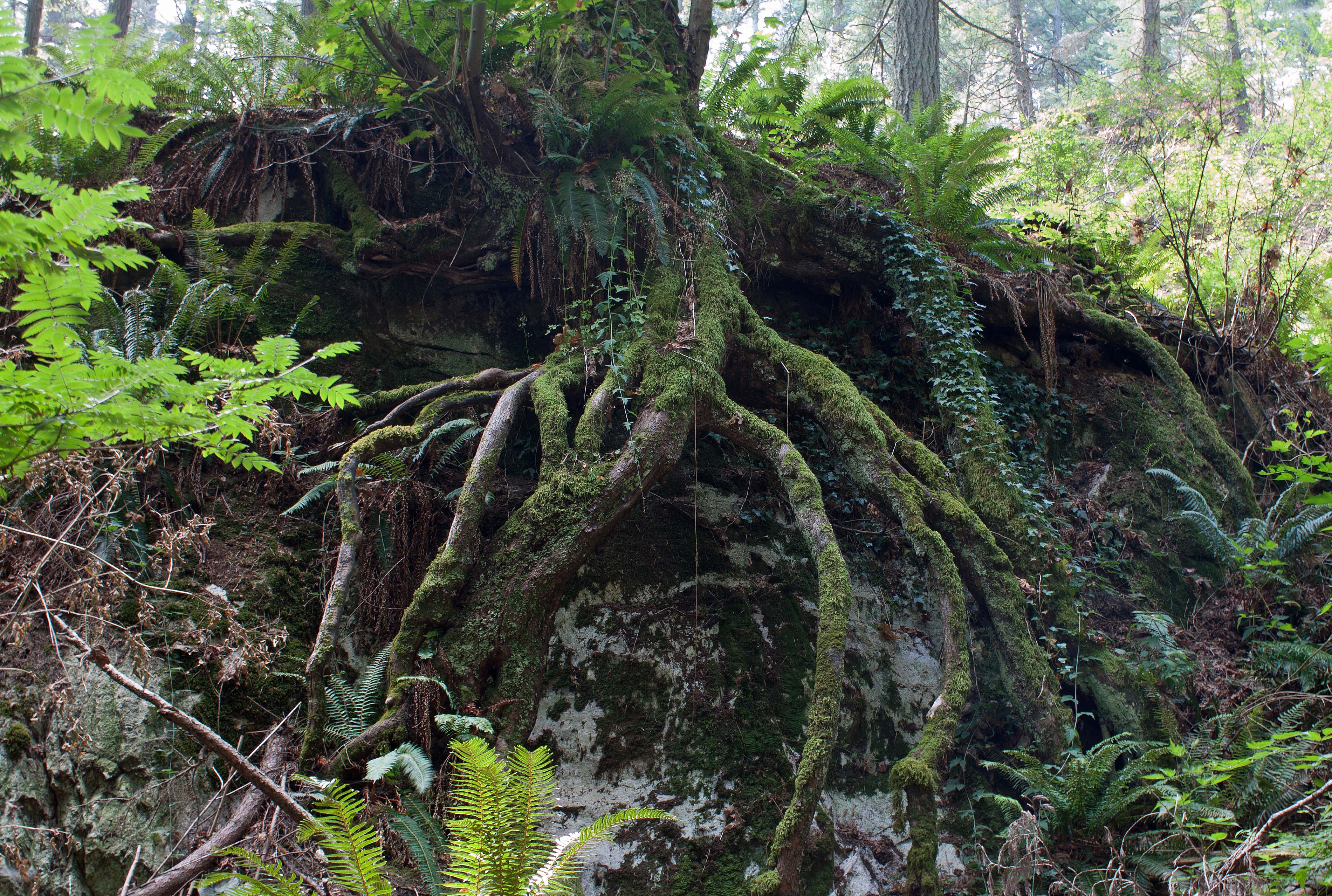
My favourite walking trail is the Valley of the Giants Trail. I took the main and popular Beacon Lane Trail then veered off onto the Valley Trail, losing literally everyone, to scramble up the steep switchback that led to the Arbutus Trail. The Arbutus Trail climbed over a long hill then descended into the Valley of the Giants. Here, I entered a truly magical realm, of thriving first-growth Douglas-fir (Pseudotsuga mensiesii), Western red-cedar (Thuja plicata), and Western hemlock (Tsuga heterophylla).
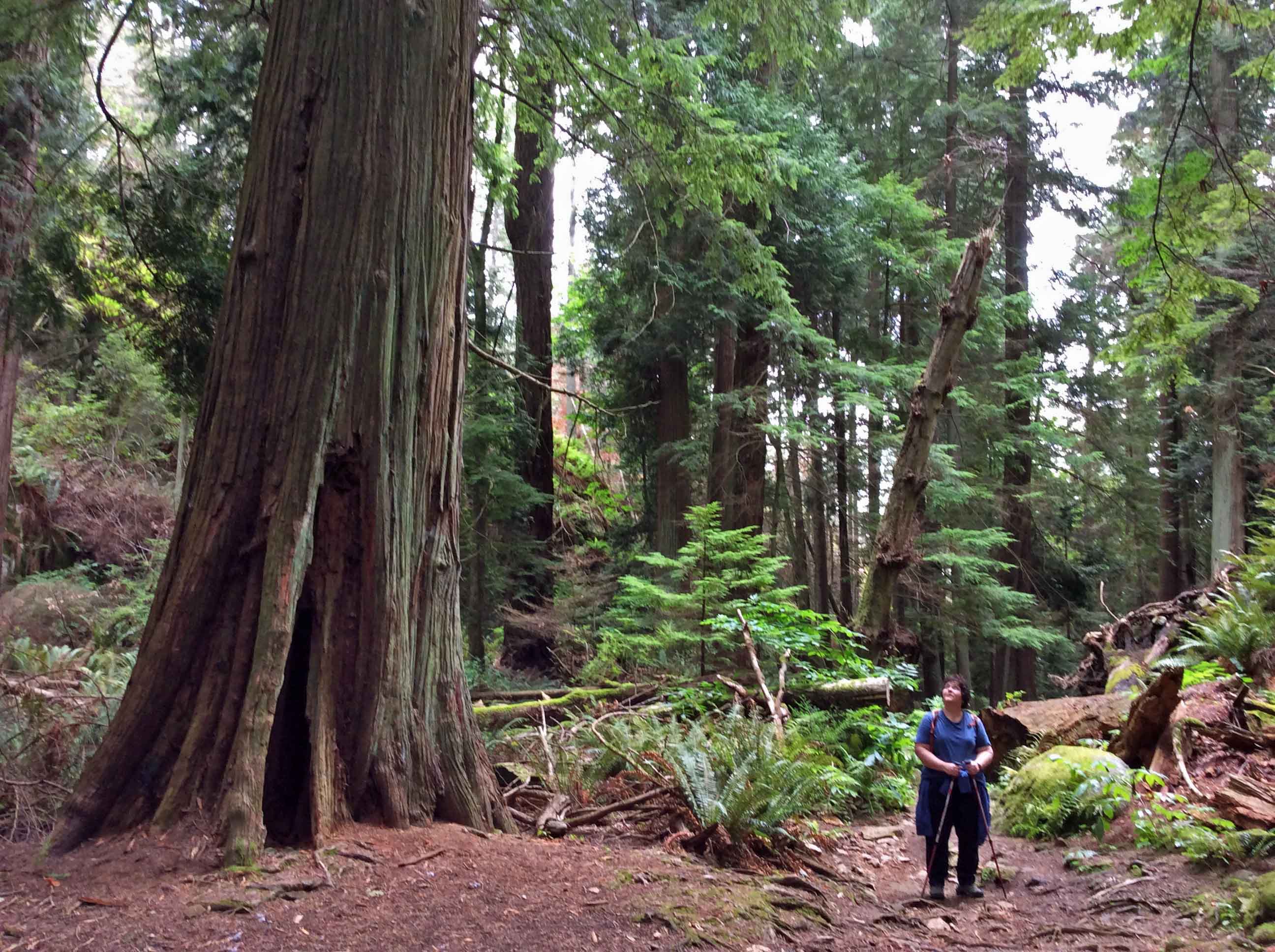
Red-cedars with wide buttresses and stringy bark rose like massive columns in a cathedral. Towering Douglas-fir with grooves in their bark up to 20 centimeters deep pierced the sky with their crowns. The understory was a tangle of moss-covered nursery logs, lush ferns, huckleberry, salal, and Oregon grape. Moss and lichen covered everything, forming a textured mosaic on the forest floor, trees and logs. I walked with the careful steps of a rapt pilgrim through deer and ostrich ferns over spongy organic soil, created by hundreds of years of old-growth.
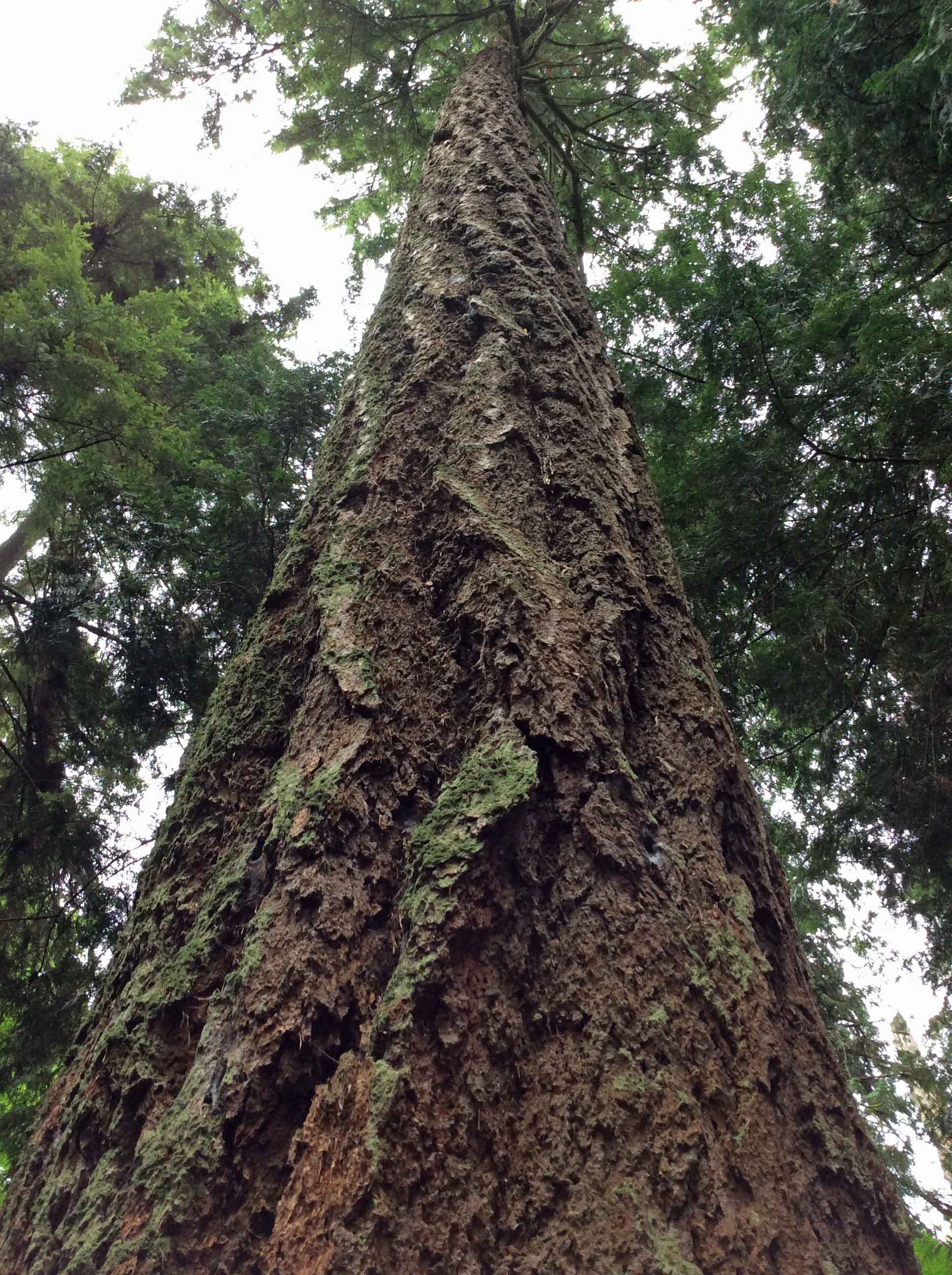
Douglas fir trunks grew in a kind of helix form (their furrowed bark distinctly spiraled up); this helps them increase wind firmness and overall stability. I’m told that this makes the trees less stiff and allows them to bend more easily with less breakage in the wind. I also read that the helix grain—which occurs in more trees than otherwise thought—helps better distribute sap and nutrients in vessels and tracheids throughout the tree.
I was scolded by a Douglas Squirrel and spotted many of their Douglas fir caches. I also noted holes dug in the lofty trees by the pileated woodpecker. Lighthouse Park is the only first growth location left on the North Shore where one can see the transition from wet CWH subzone (north end of park) to dry CWH subzone (south end of park).
.
Rice Lake, Lower Seymour Conservation Area
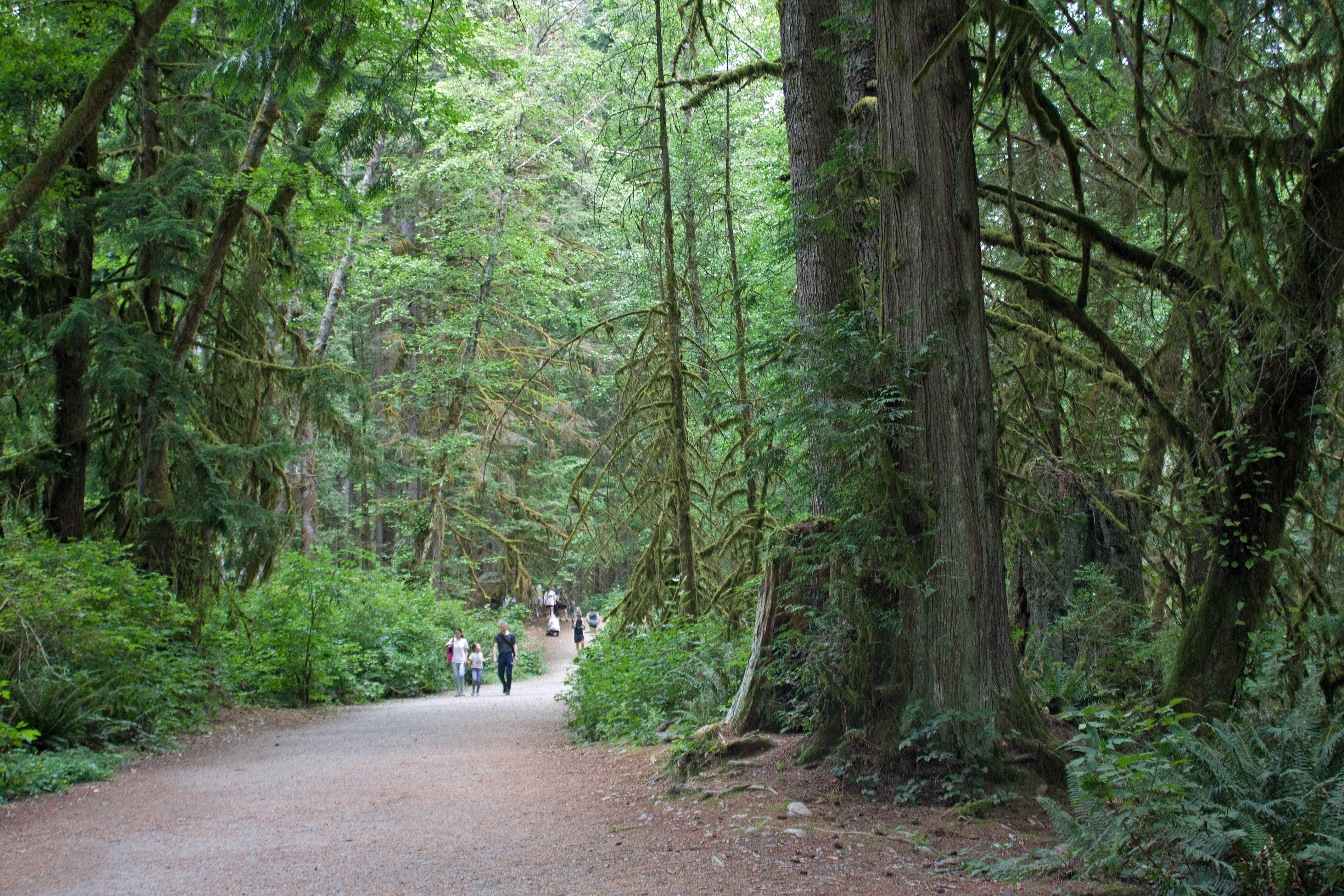
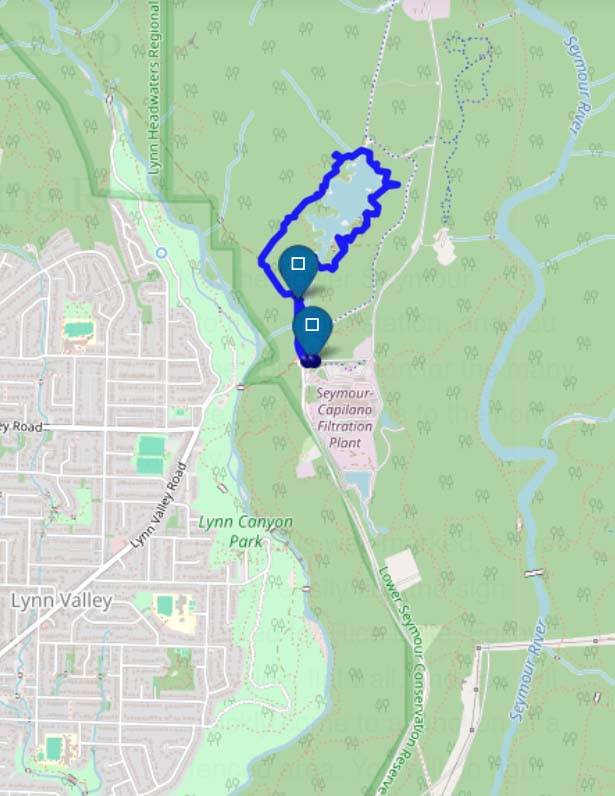
Son Kevin took me to this beautiful and easy trail through mostly old-growth that looped around Rice Lake. We accessed the trail from the Seymour Demonstration Forest parking lot (at the end of Lillooet Road, up past Capilano University). Rice Lake is part of a natural wonderland region that includes Lynn Canyon Park (with its suspension bridge) and Lynn Headwaters Regional Park. Rice Lake, and Hyannis Trail (see below) are both located in the southerly part of the Lower Seymour Conservation Reserve, a 5,668-hectare park with spectacular rugged landscapes, forested slopes, and pristine waters with many glorious trails for walkers and cyclists.
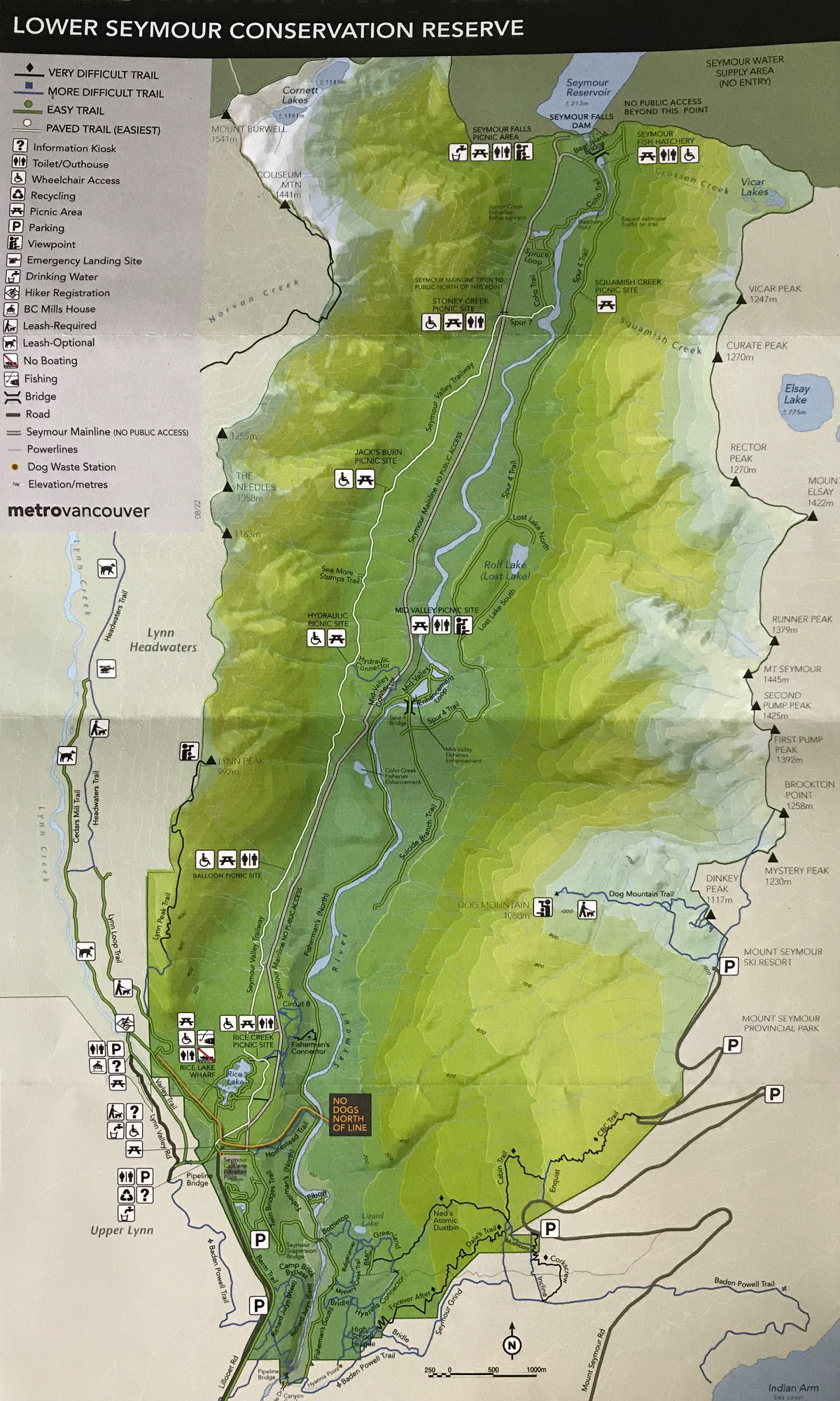
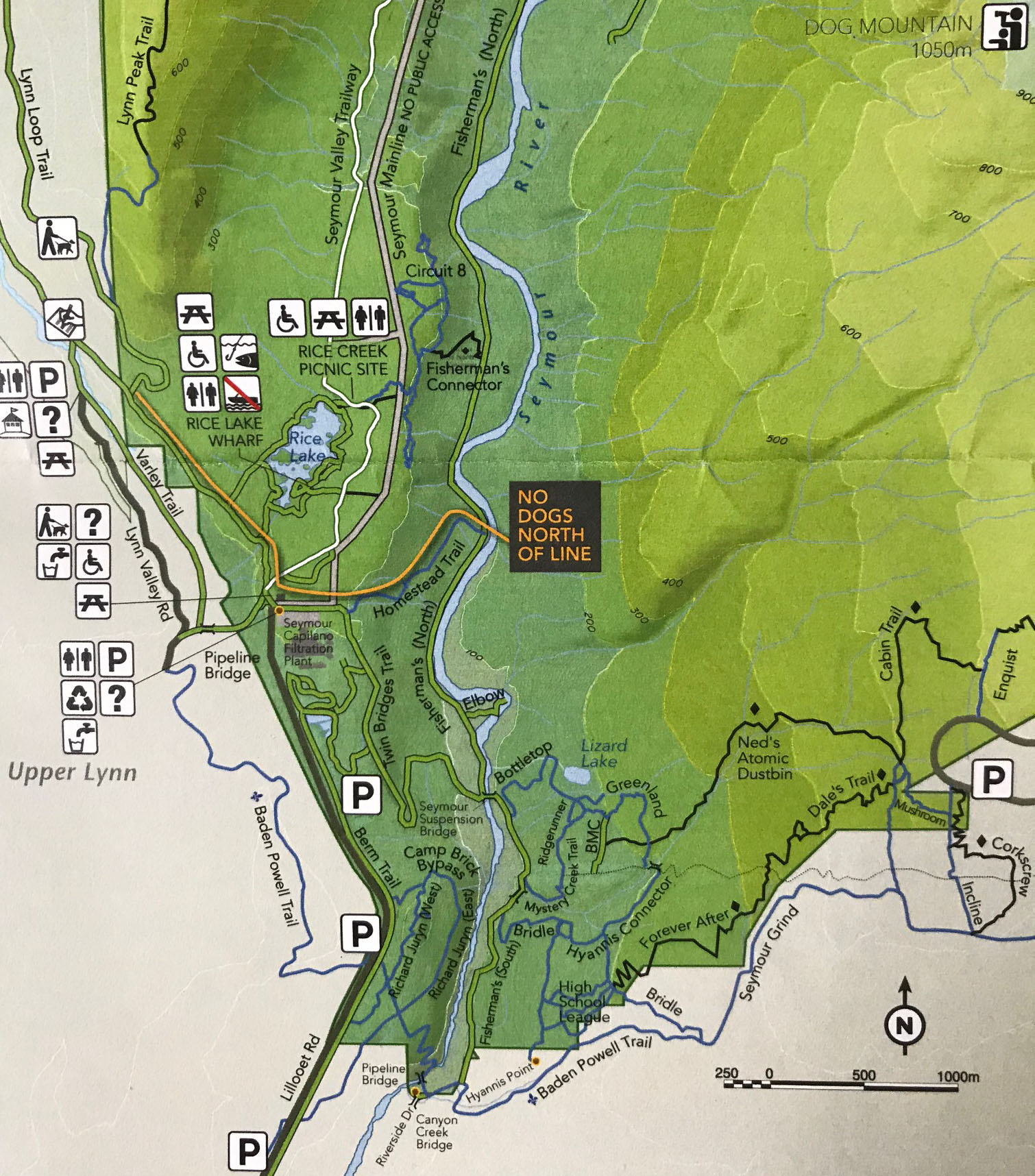
The 3 km route around Rice Lake takes between 30 and 60 minutes depending on how fast you walk and if you stop for breaks to enjoy the view—which we did.
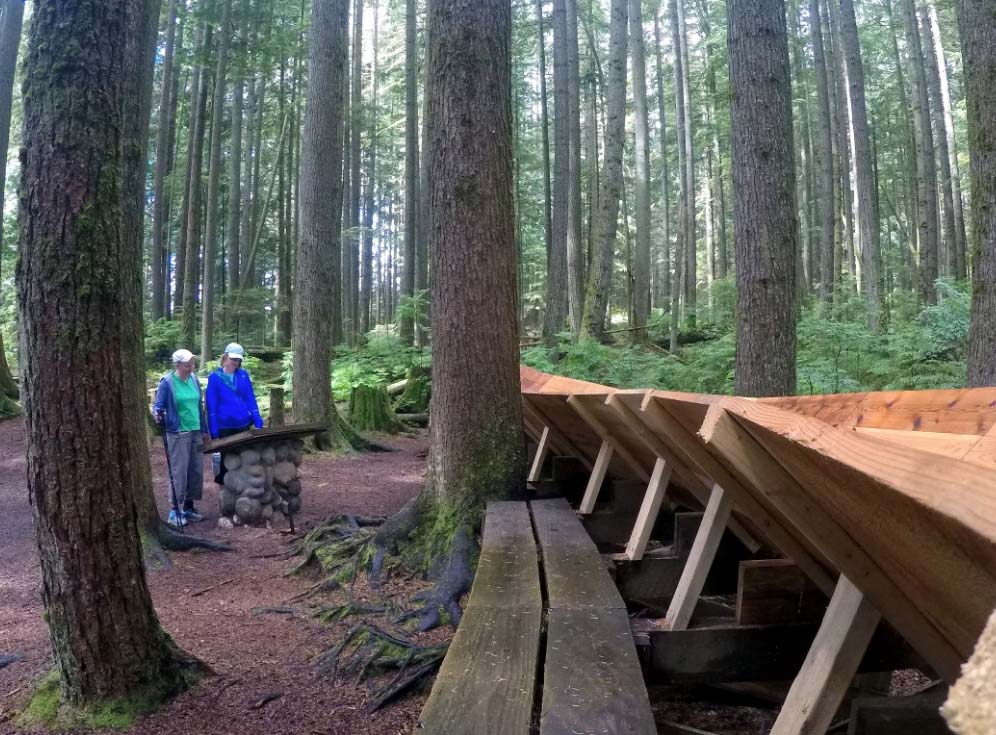
Shortly after the gate to the park, we stopped in the forest to look at a wooden structure that is a replica of an old log chute from bygone logging days. Before tractor trailers, helicopters and heavy machinery, these water-filled chutes snaked for kilometers, taking fresh cut logs from the area and carrying them all the way down to the ocean. Rice Lake was used in the past as a source of water to drive logs down to the ocean.
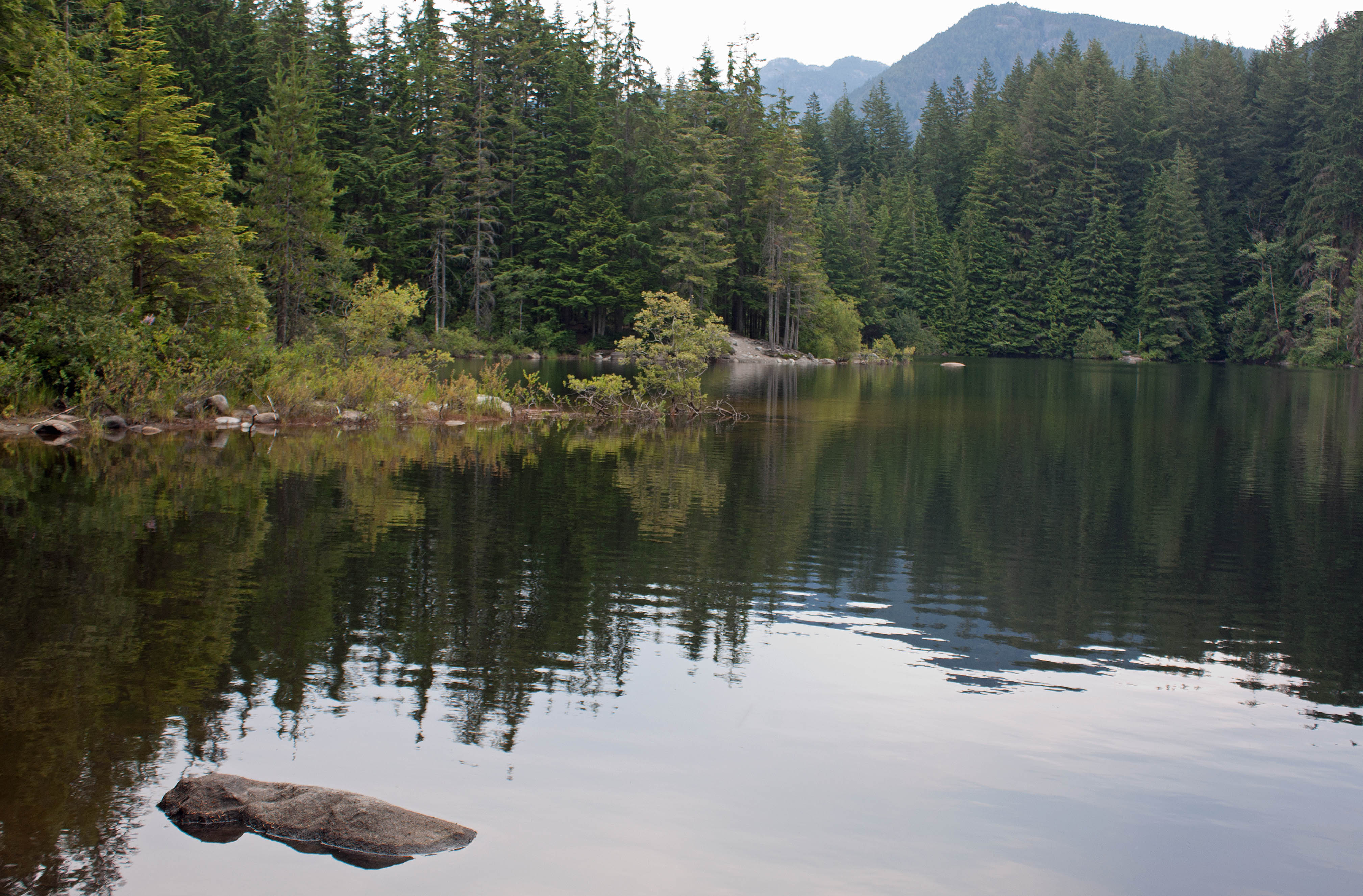
We soon reached Rice Lake, a calm quiet lake on the edge of the Lynn Headwaters Regional Park in North Vancouver. We walked its perimeter, stopping here and there to enjoy the views across the lake and along its shoreline. Several of the viewpoints had benches, where people could stop and relax to take in the lake’s natural beauty. Long-legged herons and a wide variety of colourful ducks were active around the lake. We spotted an eagle circling high above.
.
Hyannis Trail, North Vancouver
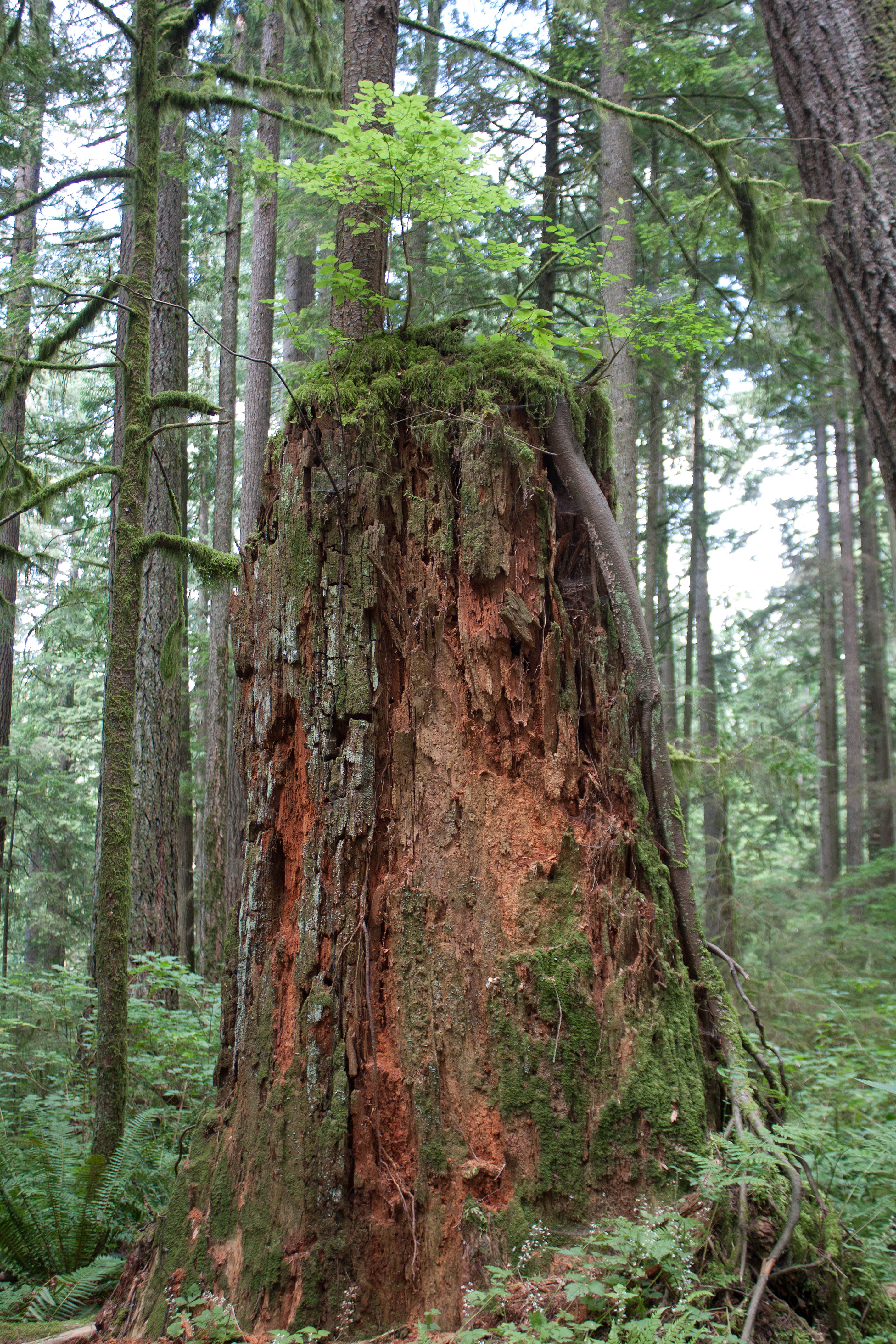
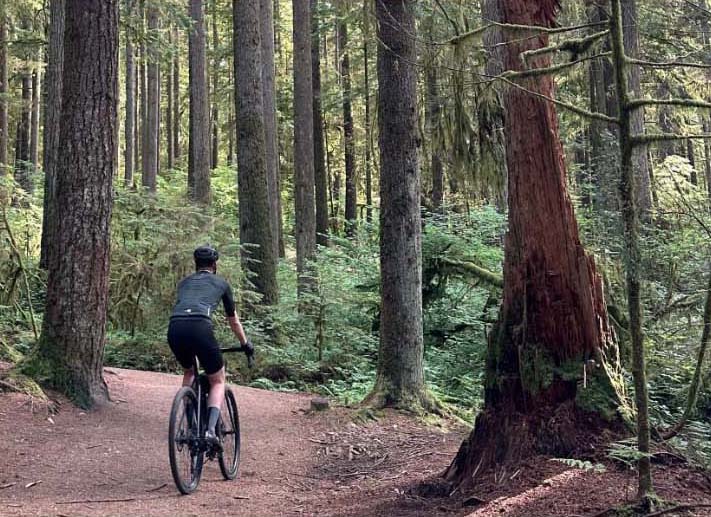
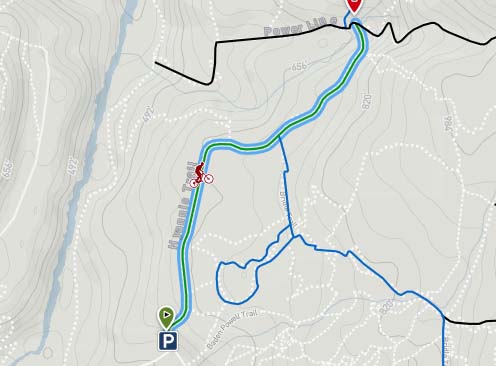
My son Kevin showed me this trail, located in the lower part of the Lower Seymour Conservation Reserve, with entrance off Hyannis Drive in North Vancouver. We parked on Hyannis Drive and entered the popular trail, which begins as a wide and smooth path under towering old growth trees of mostly Douglas fir and Western red-cedar. The trail has only minimal changes in elevation and is often frequented by dog-walkers, hikers, and trail runners. Kevin and I did a short walk, passing to the right of a large stump with two trees growing out of it and continued straight on Hyannis Trail towards the Powerline Trail.
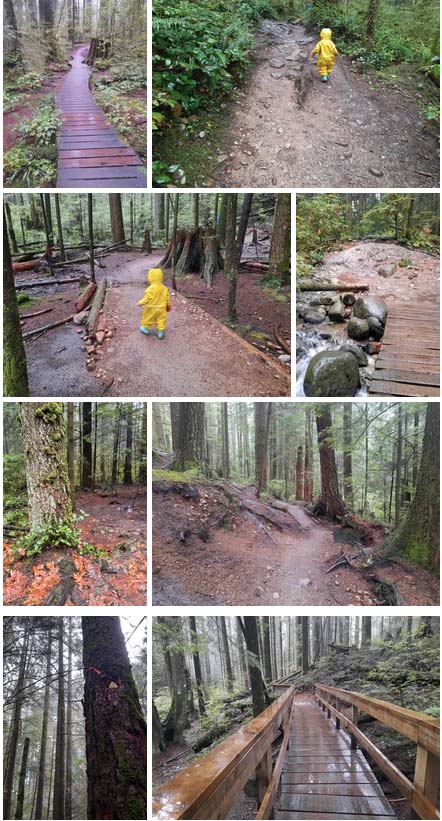
The NorthshoreKids site describes a wonderful loop from Hyannis Trail along Bridle Path and Baden Powell Trail, which crosses the rushing waters of Canyon Creek and over several boardwalks and series of wooden stairs looping back to Hyannis Trail. I intend to go back there in early winter when I return to Vancouver for good!
.
United Strangers Coffee: NorthShore Respite
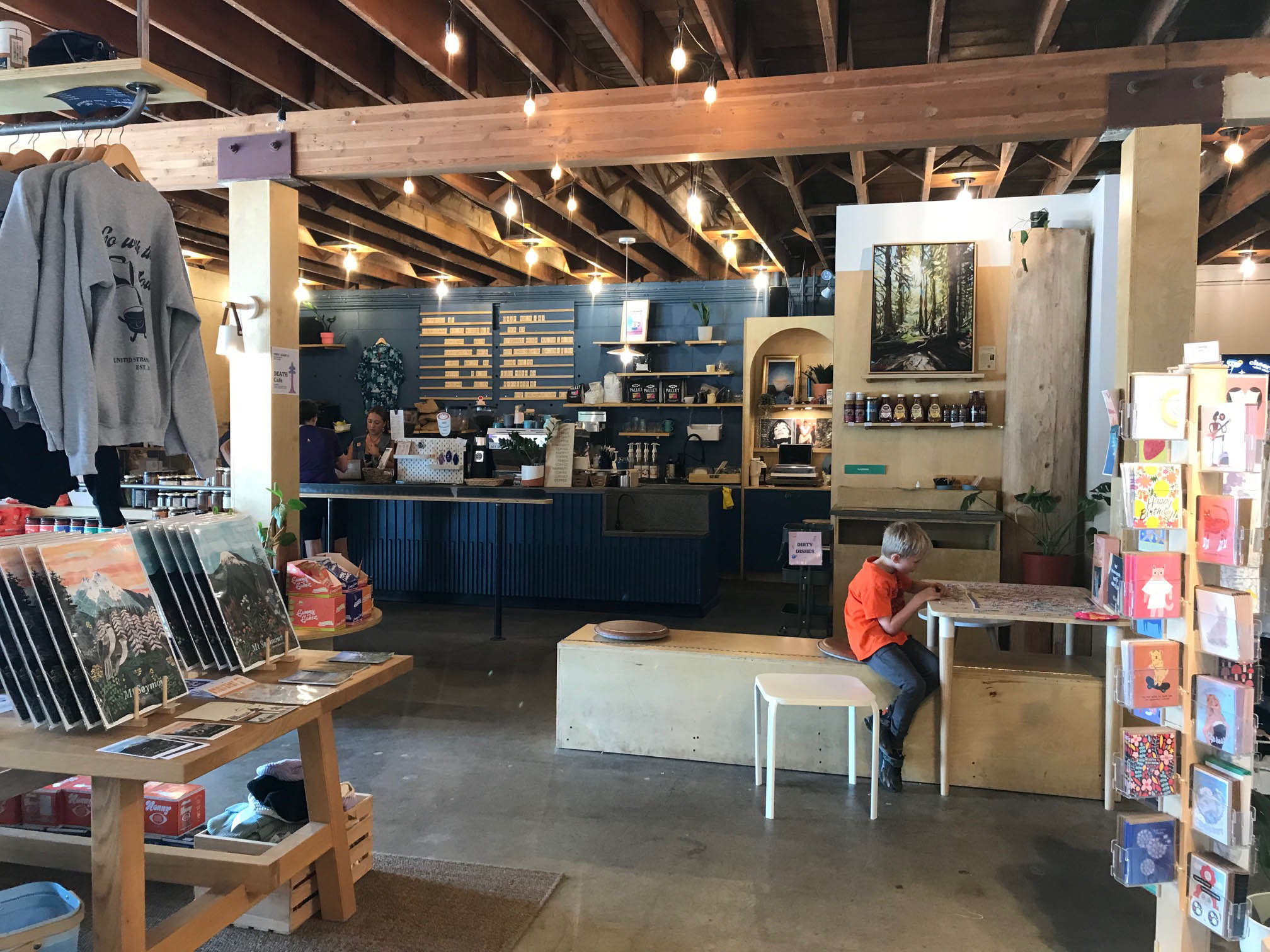
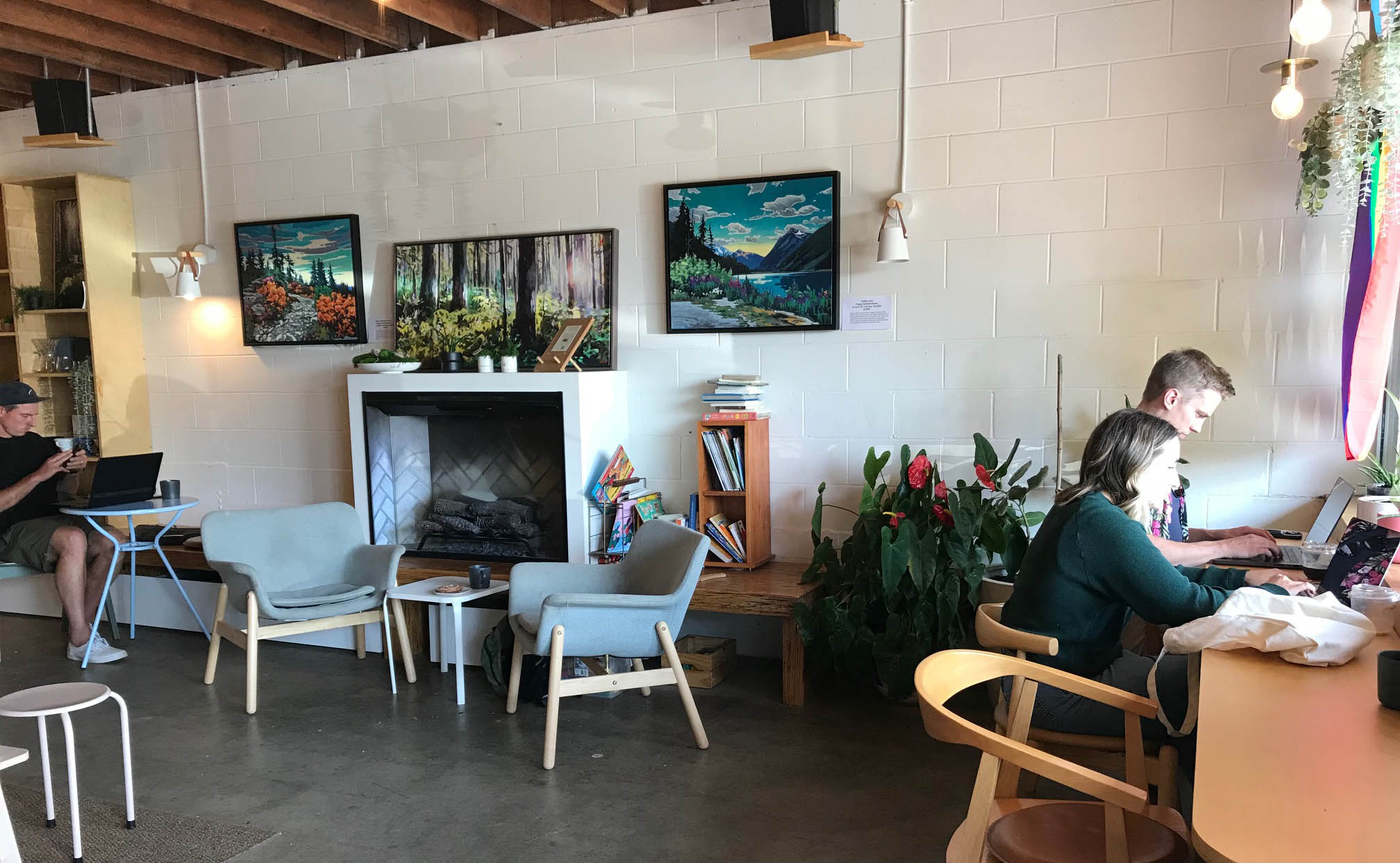
Kevin had earlier introduced me to United Strangers Corner Store & Coffee Shop, a casual-hipster store and café with a great vibe, frequented by cyclists heading up Seymour trails. I had noted the friendly staff and rich interior with great seating and awesome artwork. So, I made a point of stopping there on my way back. I sat by the fire place under a stunning old-growth forest painting by Joanne Hastie and enjoyed the varied clientele that passed through as I drank my London Fog (made with oat milk) and ate my banana loaf.
.
Power of Old-Growth
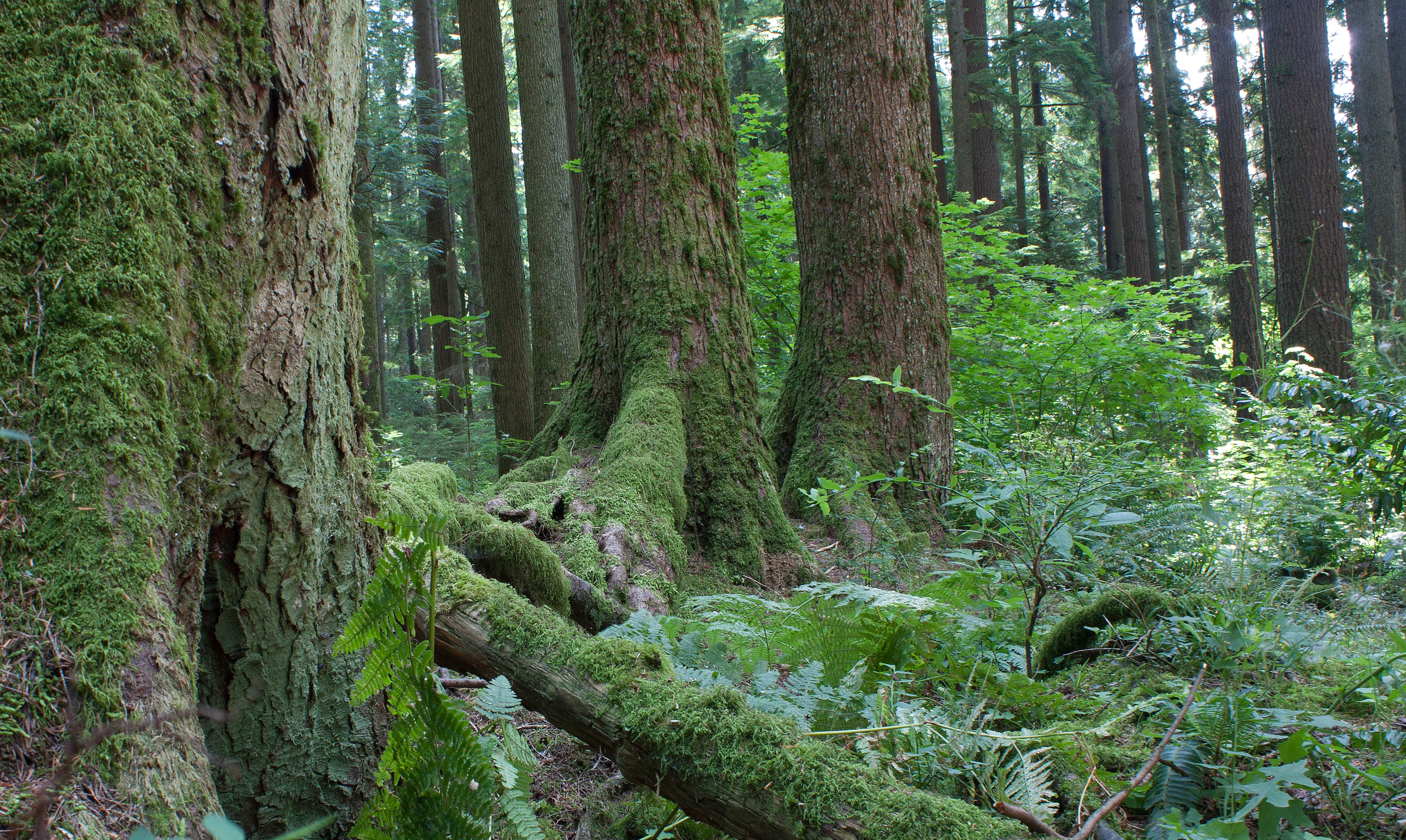
“Old-growth temperate rainforests are, per unit area, the largest and most long-lived stores of carbon in the terrestrial biosphere,” write scientists Urrutia-Jalabert, Malhi, and Lara in the September 9 2015 issue of PloS ONE.
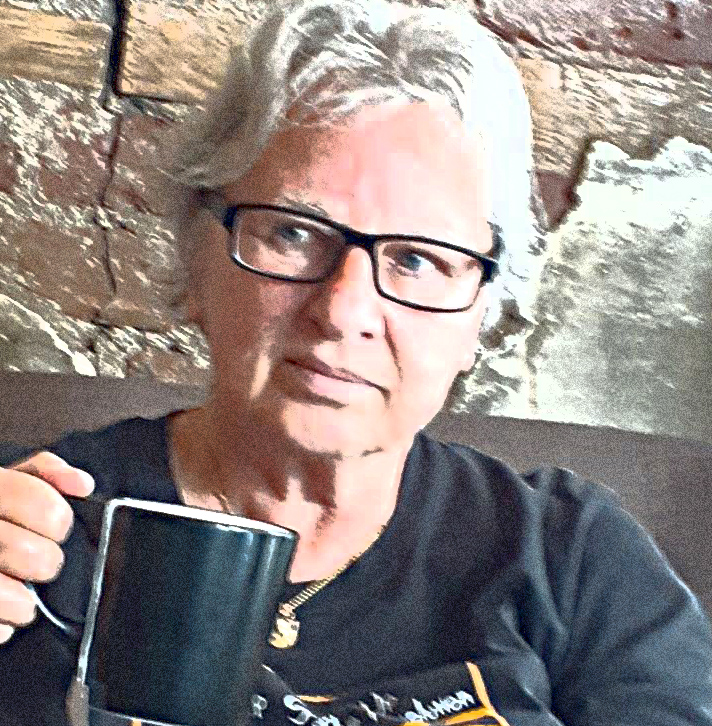
Nina Munteanu is a Canadian ecologist / limnologist and novelist. She is co-editor of Europa SF and currently teaches writing courses at George Brown College and the University of Toronto. Visit www.ninamunteanu.ca for the latest on her books. Nina’s bilingual “La natura dell’acqua / The Way of Water” was published by Mincione Edizioni in Rome. Her non-fiction book “Water Is…” by Pixl Press (Vancouver) was selected by Margaret Atwood in the New York Times ‘Year in Reading’ and was chosen as the 2017 Summer Read by Water Canada. Her novel “A Diary in the Age of Water” was released by Inanna Publications (Toronto) in June 2020.
 The Meaning of Water