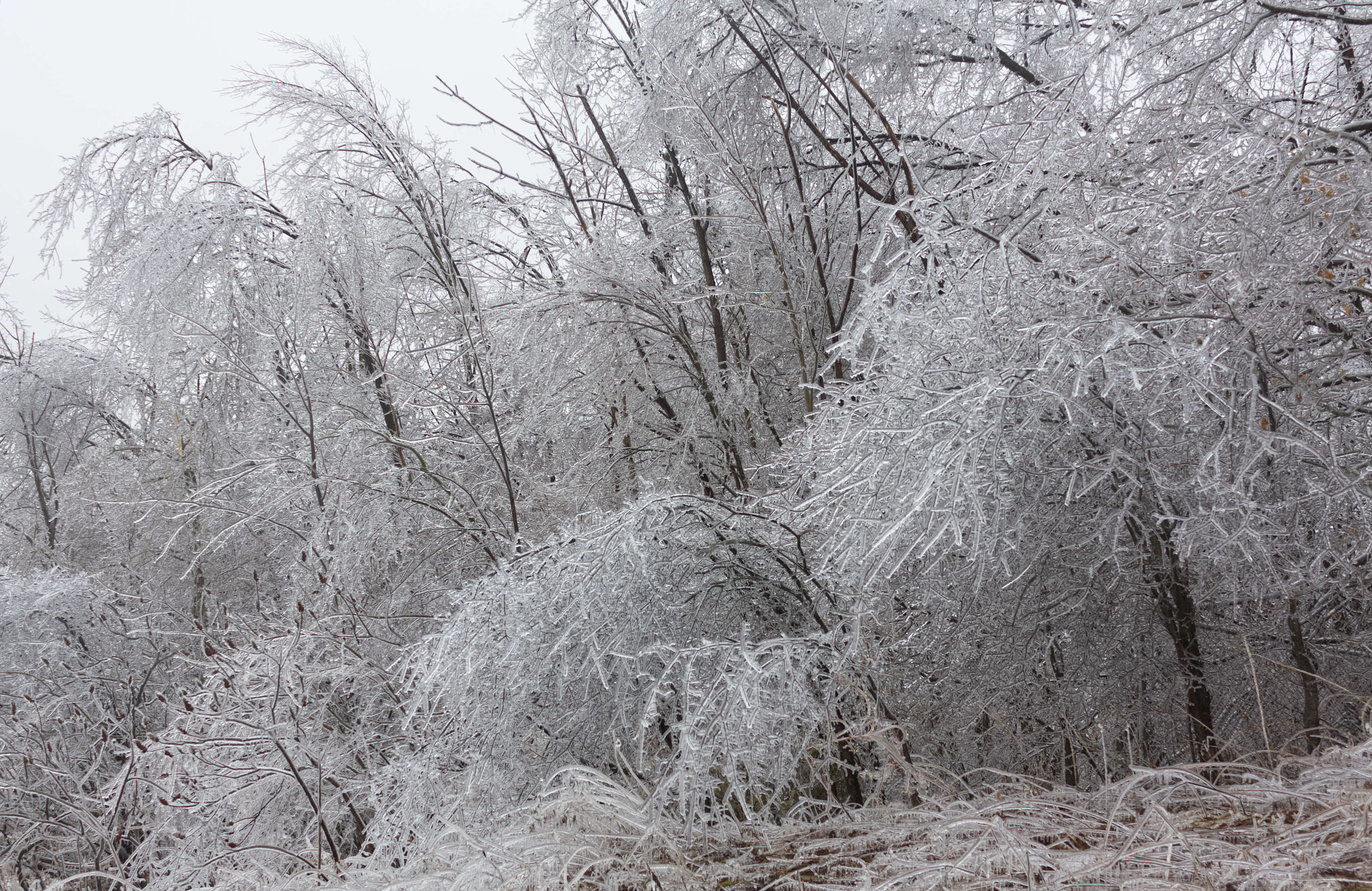
An unprecedented ice storm hit our area Friday night. I woke on Saturday morning to a kind of ‘wonderland’ that covered the forested hillside in a white ‘frost’. In truth, everything was covered in a thick layer of ice. By that evening, the power went off everywhere. In the house, we huddled around candles and traded stories of other calamities. The stories—like always—turned into ghost stories set in the dark of night.
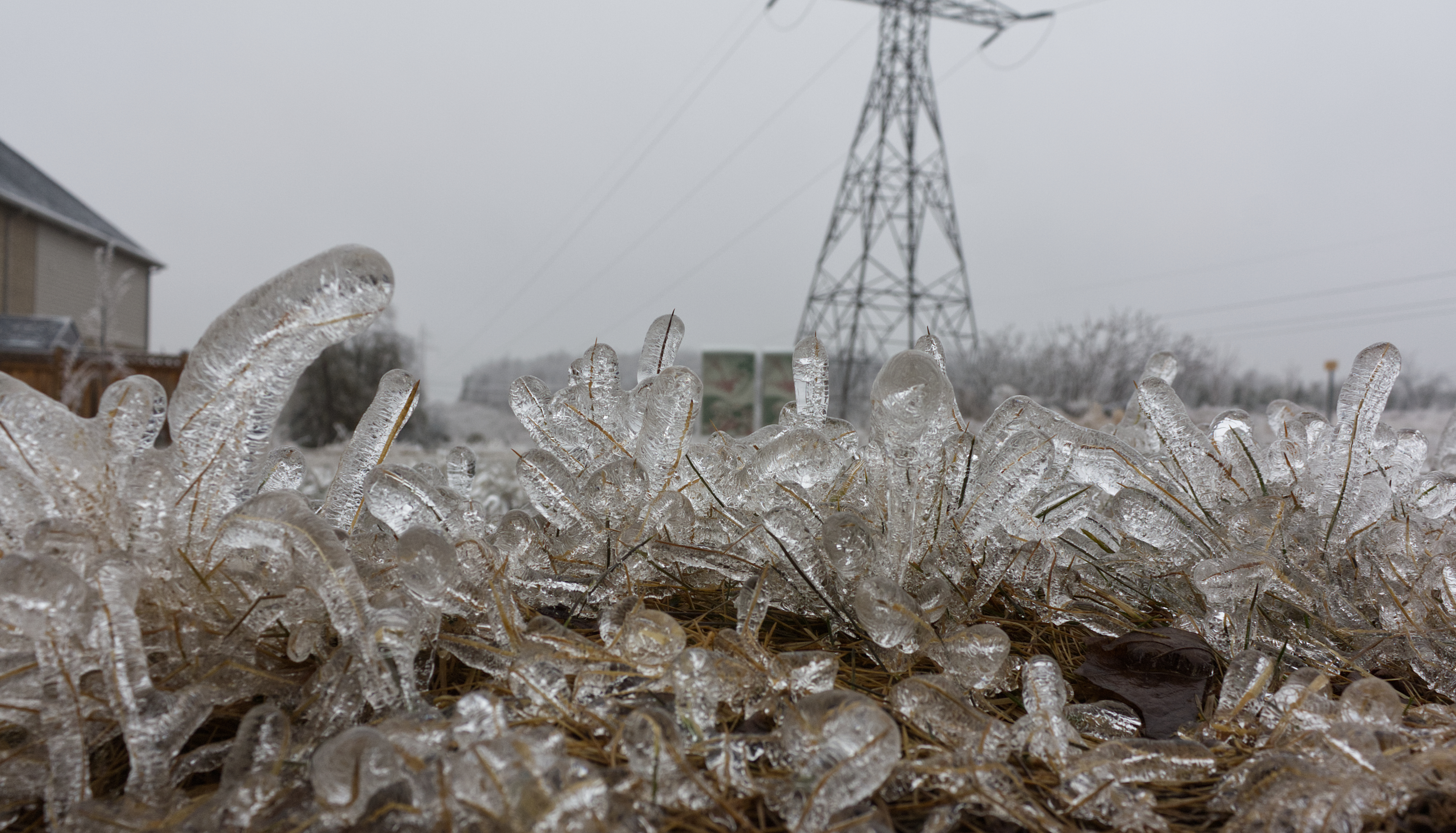
I picked my way around the tree debris and bowing limbs over the sidewalk toward an easement meadow surrounded by mixed forest. I was looking for adventure amid the booming and cracking of tree limbs and the moody sibilance of freezing rain.

.
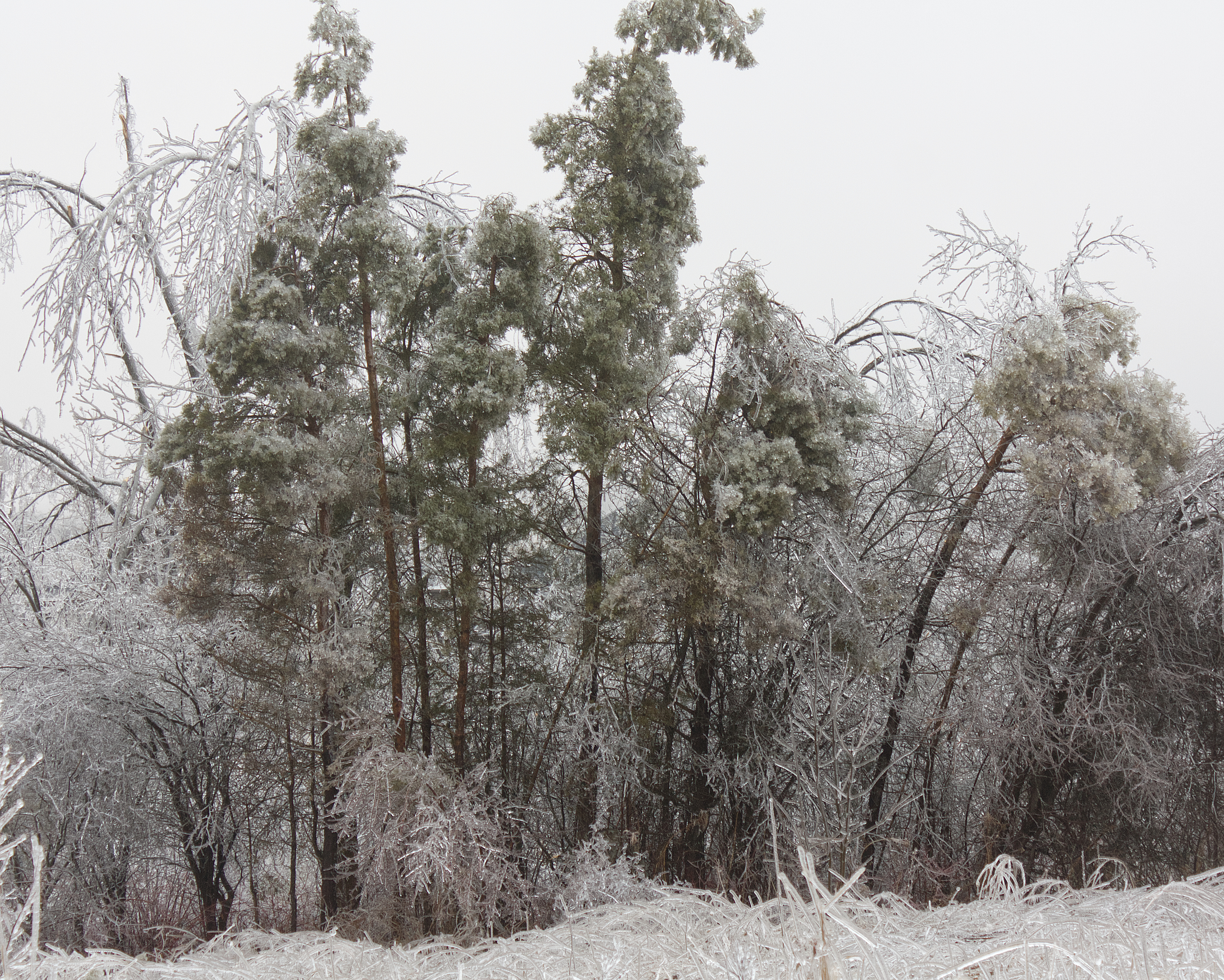
On Sunday, even more ice accrued on every surface from branches and twigs to blades of grass. Inch-thick ice encased tiny stems or grass blades, fixing them into weird ice-sculptures. I walked through the easement meadow, taking pictures of ice-trapped rigid herb stems and shrub twigs and weeping branches of large maples, oaks and poplars of the surrounding forest. Weighed down by finger-thick ice, these tall stately trees now bowed in humble abeyance to Nature’s spring vagaries and the silent power of water transformed.
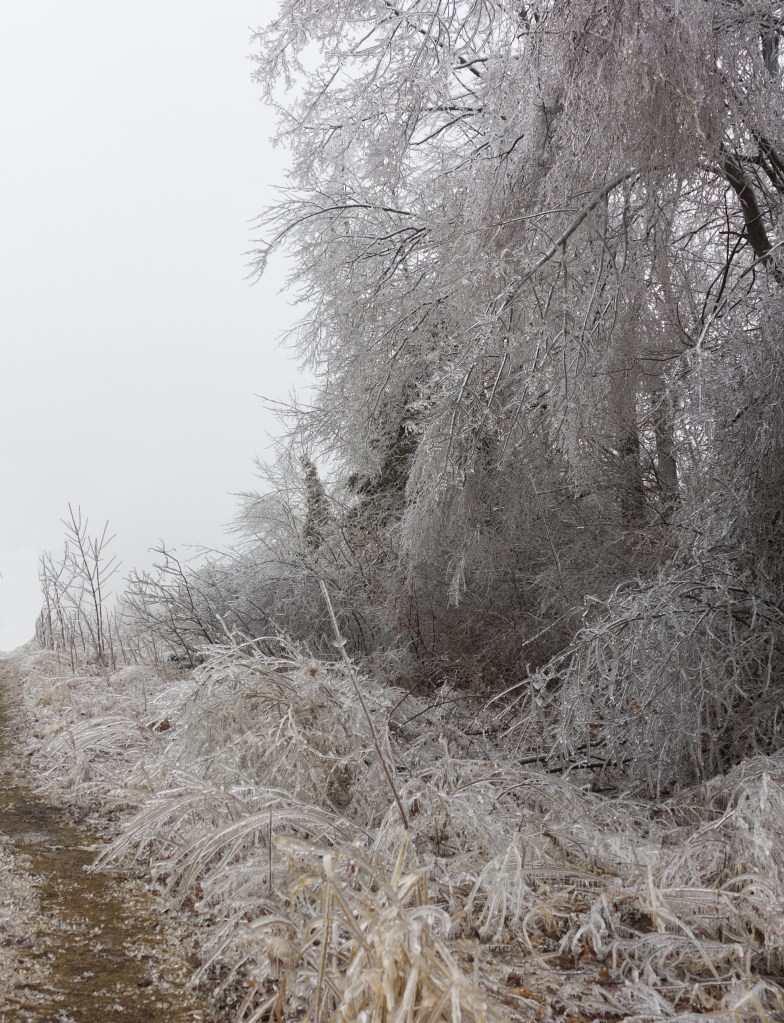
Path through easement meadow along forest, bowing under thick ice cover (photo by Nina Munteanu)
.
On Sunday, even more ice accrued on every surface from branches and twigs to blades of grass. Inch-thick ice encased tiny stems or grass blades, fixing them into weird ice-sculptures. I walked through the easement meadow, taking pictures of ice-trapped rigid herb stems and shrub twigs and weeping branches of large maples, oaks and poplars of the surrounding forest. Weighed down by finger-thick ice, these tall stately trees now bowed in humble abeyance to Nature’s spring vagaries and the silent power of water transformed.
.

.
My boots crunched on sheet ice; it tinkled like glass with each step. The icy rain whispered like water ghosts sharing dystopian tales as I gazed at the glass forest.

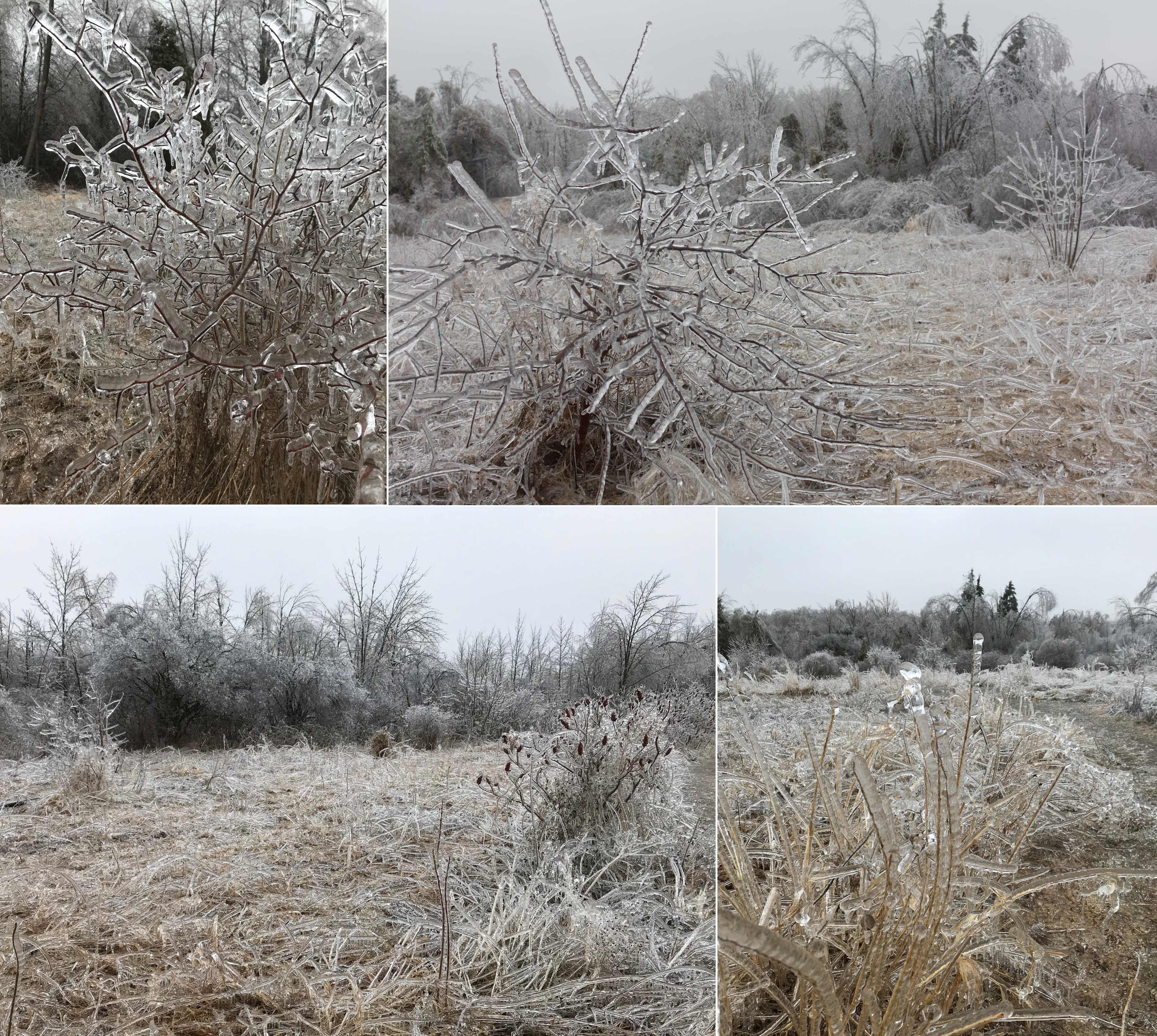
Oddly, but not surprisingly, the draping conifer trees–the firs, spruces, pines and cedars–seemed to weather the ice storm with fewer branches breaking. Part of their success over their deciduous cousins most likely lies in their morphology, how their branches drape as opposed to the heaven-ward reaching branches of maples and oaks.
A. Saturday’s ice accrue on a young pine; B. Sunday’s ice accrue; C. close up showing ice patterns (photos by Nina Munteanu)
.
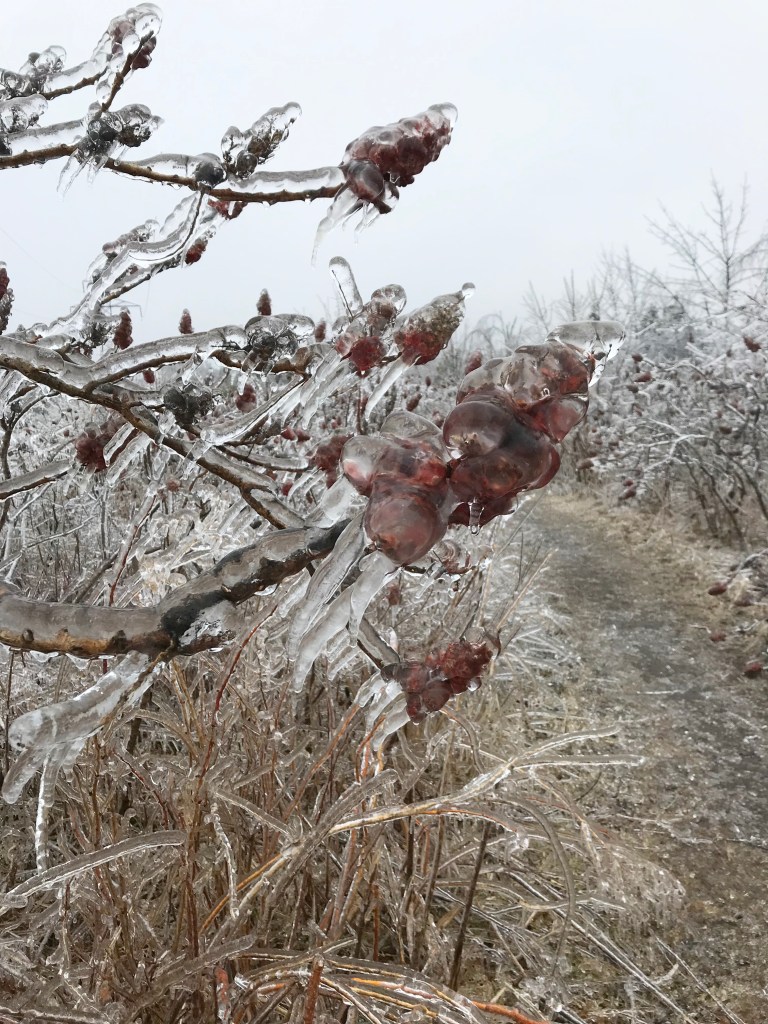
I entered a stand of bent-over staghorn sumacs, their wily branches looking like silvery worm tracks of wayward travellers.

.
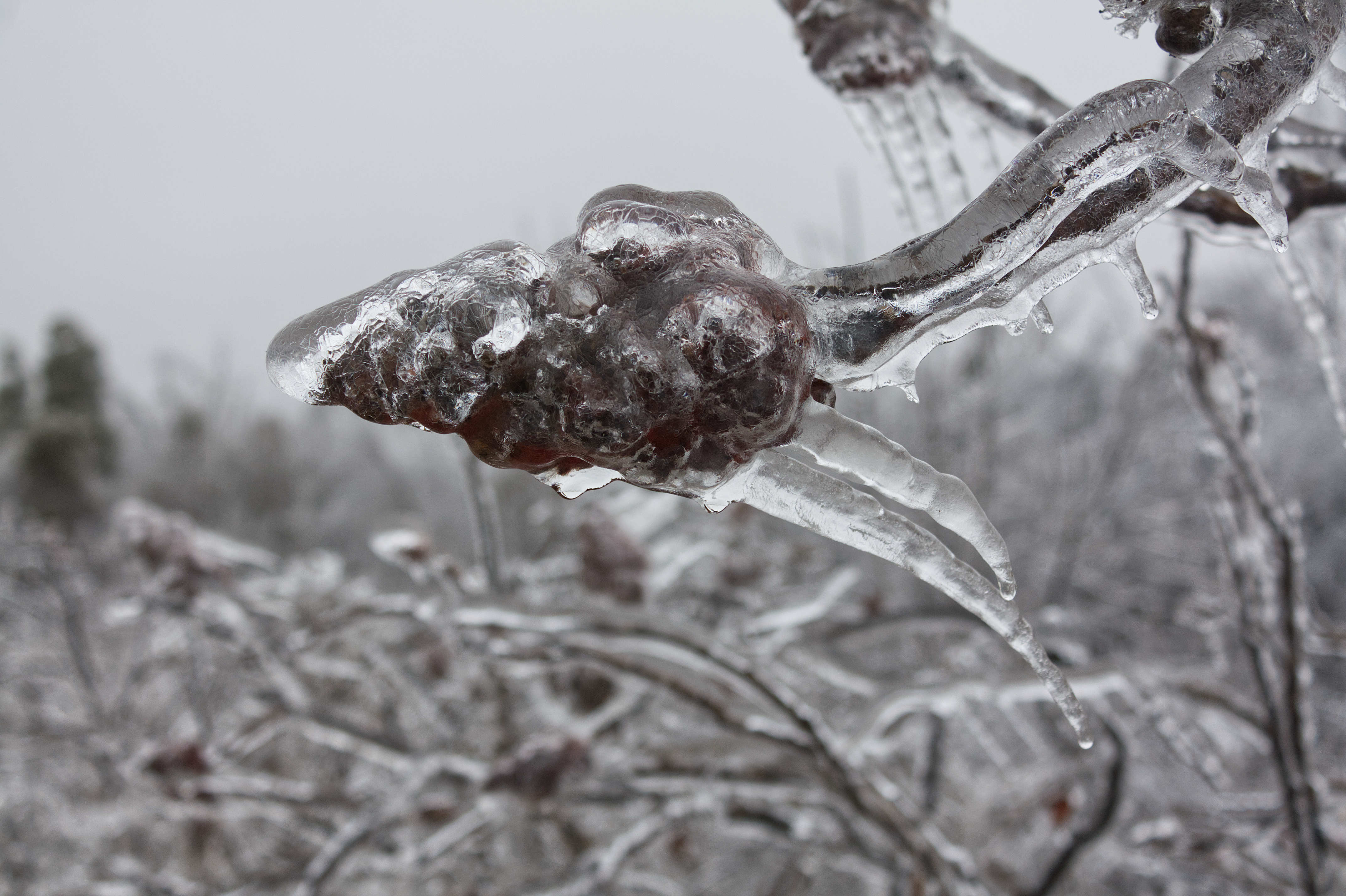
Red bobs shone red-silver with thick ice, filigreed with the patterns of water. The staghorn bobs looked like flying rocket ships with icicle jet streams. Together, the brilliant red rocket ships formed a mass exodus looking for adventure.
Staghorn sumacs ‘flying’ en mass toward unknown adventures (photo by Nina Munteanu)
.

The booms and cracks of large branches breaking and falling echoed in the forest around me, followed by the sound of glass shattering.

I reached the fence post where I’d earlier studied colonizing lichen. I found them, winking at me behind a Goethe glass window of ice, and recognized my friends: Parmelia, Physcia, Cyphelium and Caloplaca. The ice rippled with interlocking lenses that formed hexagonal patterns, mimicking the crystalline structure of water. Trapped beneath this thick glassy layer was a warped mosaic of orange, yellow, and green lichen; beautiful but untouchable, like jewels locked in a glass case. A stunning frozen poem to Nature’s cruel beauty.
Lichen-covered fence post (photo by Nina Munteanu)
.

.
I kicked one ice-covered shrub, a red osier dogwood whose bright red branches had bowed to touch the ground as if in prayer; my thought was to break off the ice and free the branches. It worked, most of the time. In one case the whole branch snapped off to my violence, brittle like the ice encasing it. I thought better, thinking Nature would take care of itself without my clumsy interventions.
Ice is just frozen water. As a liquid, water is pliable, moving freely around obstacles without effect; the scouring nature of liquid water is actually carried out by the sediment and grit it carries. I thought it fascinating how water in its solid form—ice—can break things including solid wood. Even rock.

After two days of ice accretion, it grew mild and rained throughout the third day, thawing the ice off everything. The only evidence that remained of this natural calamity were the broken branches littering the ground. Otherwise, all had bounced back as the ice turned to water.

It’s odd how calamity brings people together; for the first time since the three of us came to this place to live, we sat over drinks and played cards in the candlelight of the dark evening, laughing and cheating and telling stories. When the power came on later, we reverted to our independence, as if released, to go our own way. Like molecules dispersing. Like ice to water…

.

Nina Munteanu is a Canadian ecologist / limnologist and novelist. She is co-editor of Europa SF and currently teaches writing courses at George Brown College and the University of Toronto. Visit www.ninamunteanu.ca for the latest on her books. Nina’s bilingual “La natura dell’acqua / The Way of Water” was published by Mincione Edizioni in Rome. Her non-fiction book “Water Is…” by Pixl Press(Vancouver) was selected by Margaret Atwood in the New York Times ‘Year in Reading’ and was chosen as the 2017 Summer Read by Water Canada. Her novel “A Diary in the Age of Water” was released by Inanna Publications (Toronto) in June 2020.
.
 The Meaning of Water
2 thoughts on “Ontario Ice Storm: A Cruel Beauty Stills the World”