One of my favourite places to walk in the fall when I was in Ontario was through the old growth hemlock forest of Catchacoma (55 km north of Peterborough, off County Rd 507 to Gooderham). The walk through stately hemlocks, oaks and birches along an old logging road and trail, took me up into undulating Shield Country where huge paleozoic lichenized granite outcrops had thrust up into misty cliffs and gnarly bluffs off dystrophic wetlands.
.

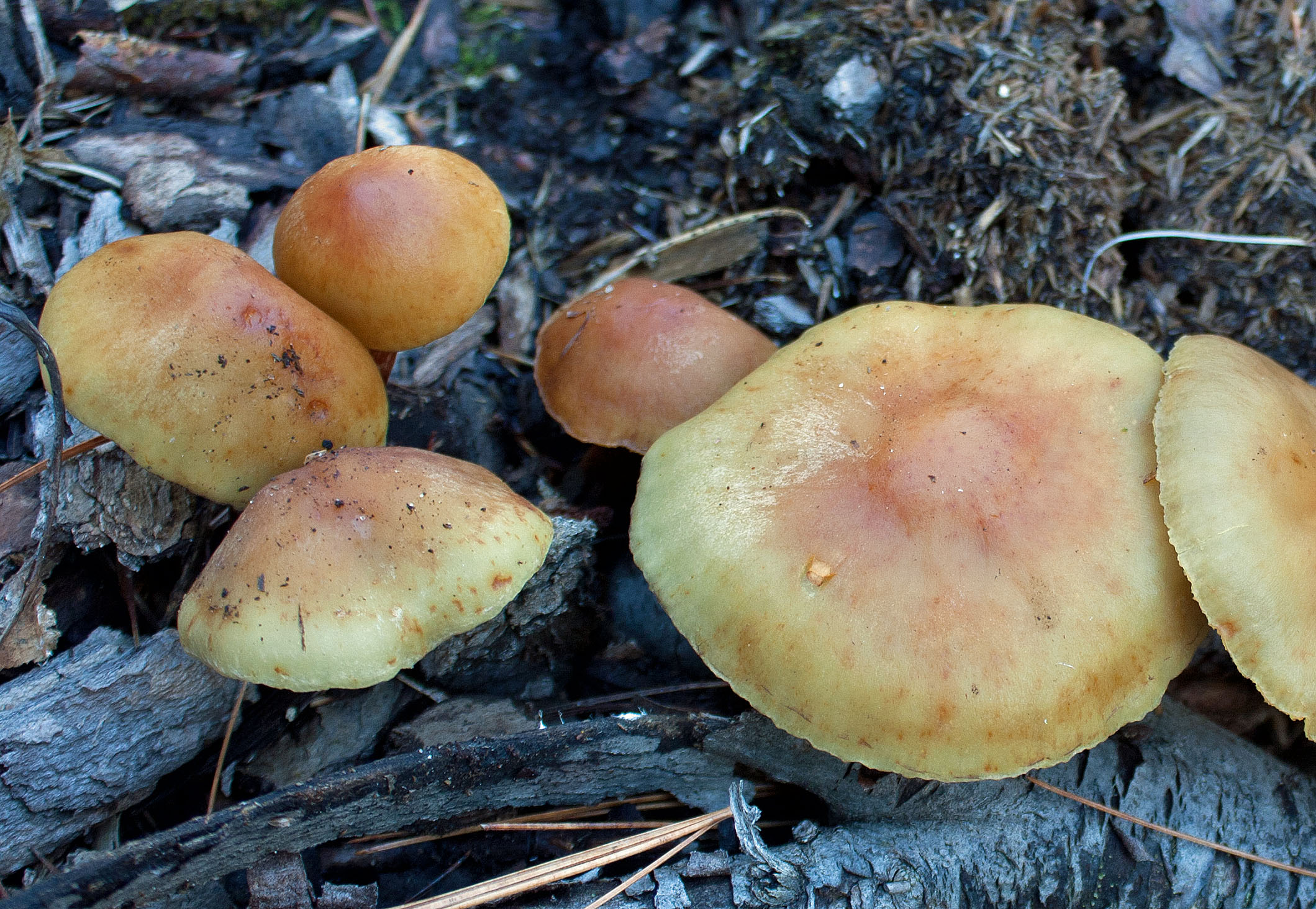
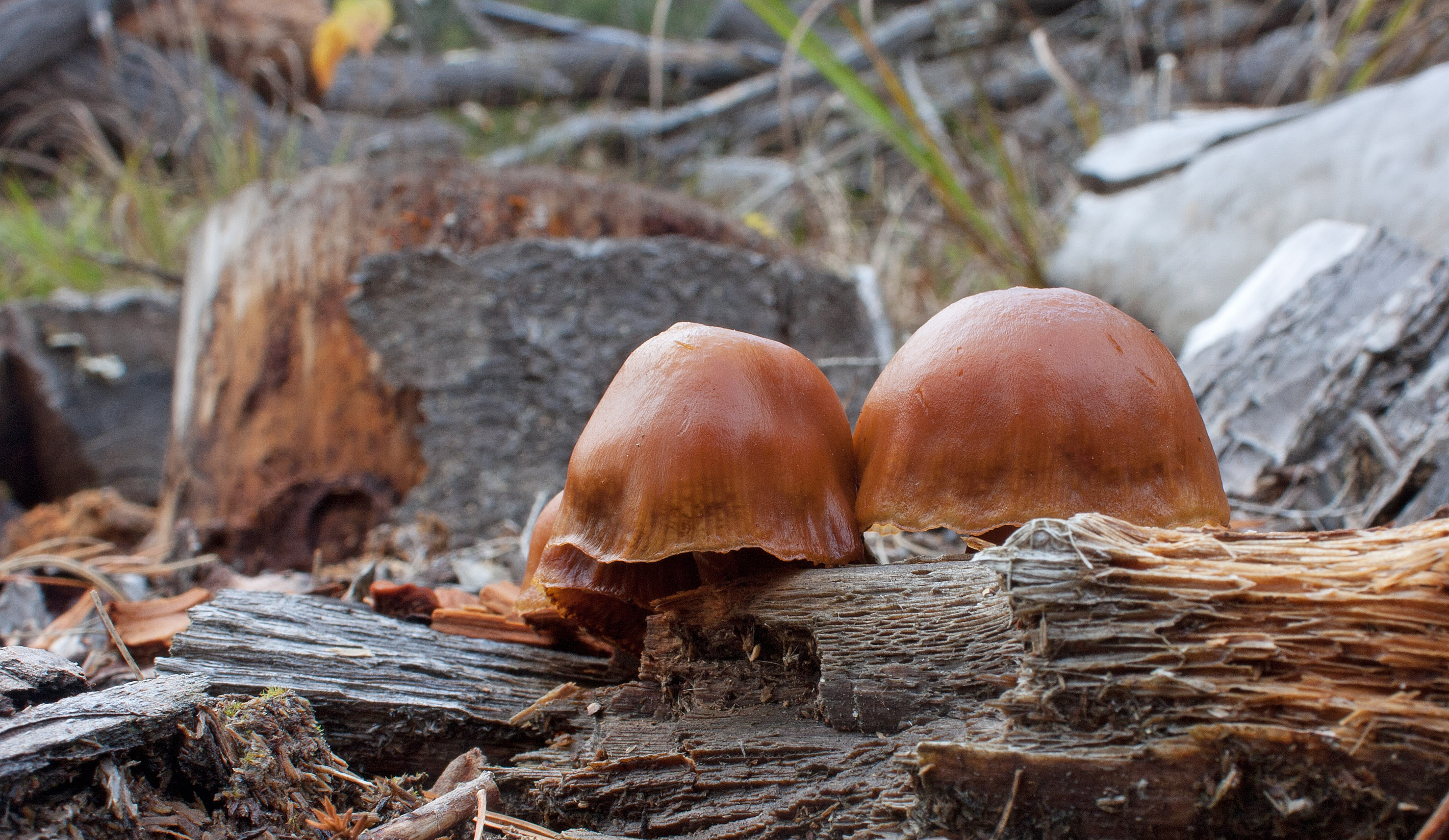
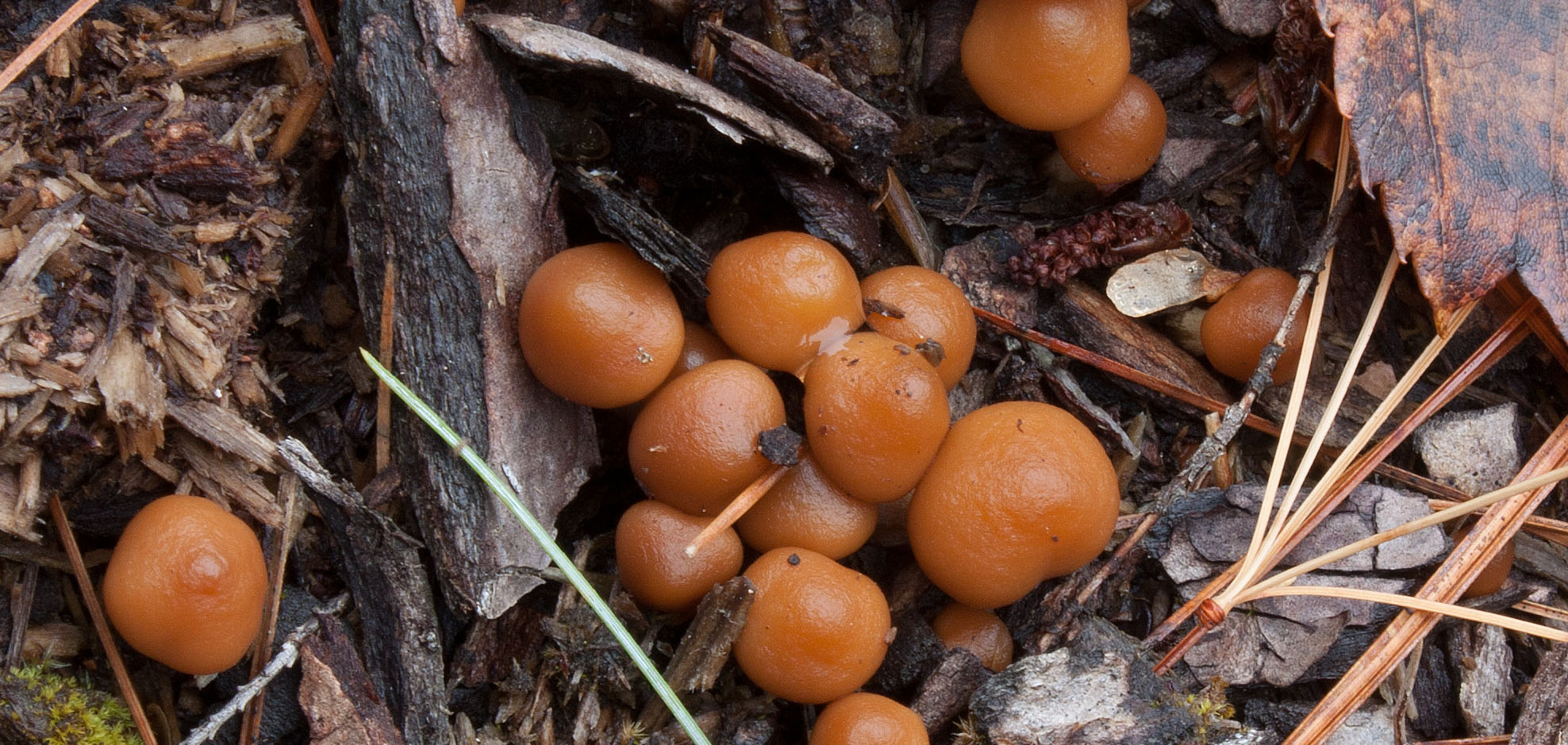
One October morning, as I was walking up the logging road that took me past a clearing where a large pile of logs are stockpiled, I had to stop. That’s where I saw them: little brown mushrooms, emerging in clusters out of the loam on the edge of the road like blushing pebbles, sweating in the sun.
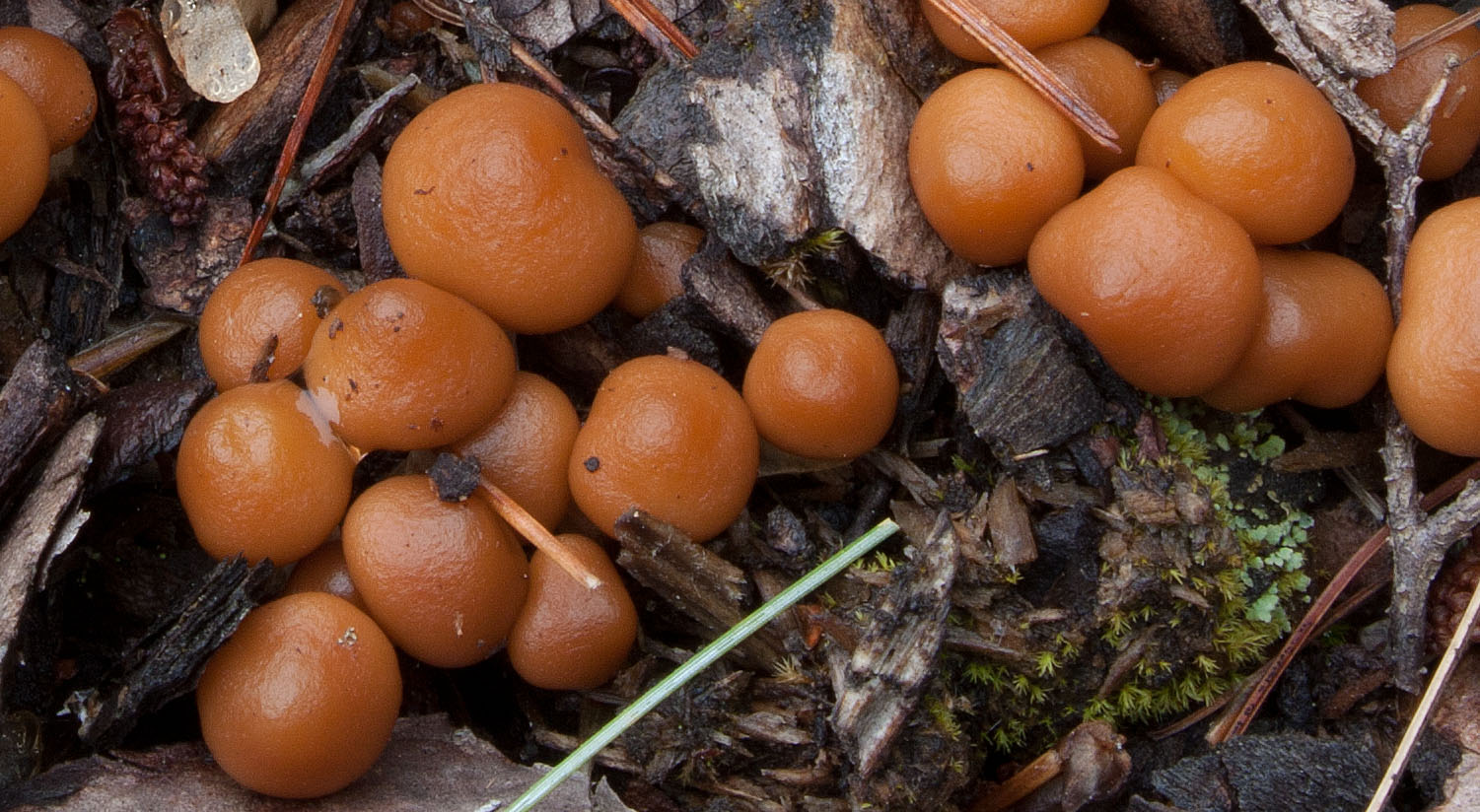
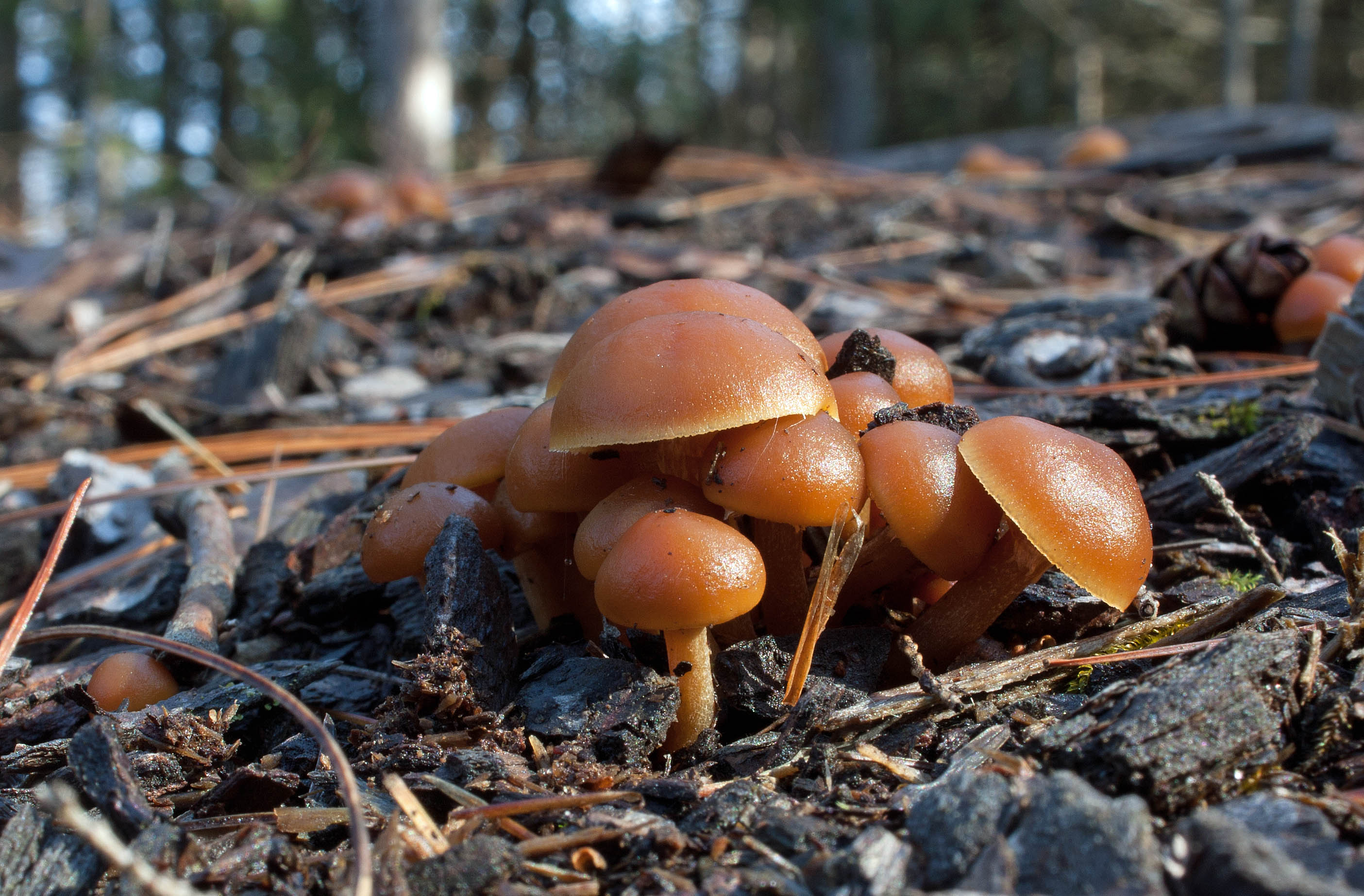
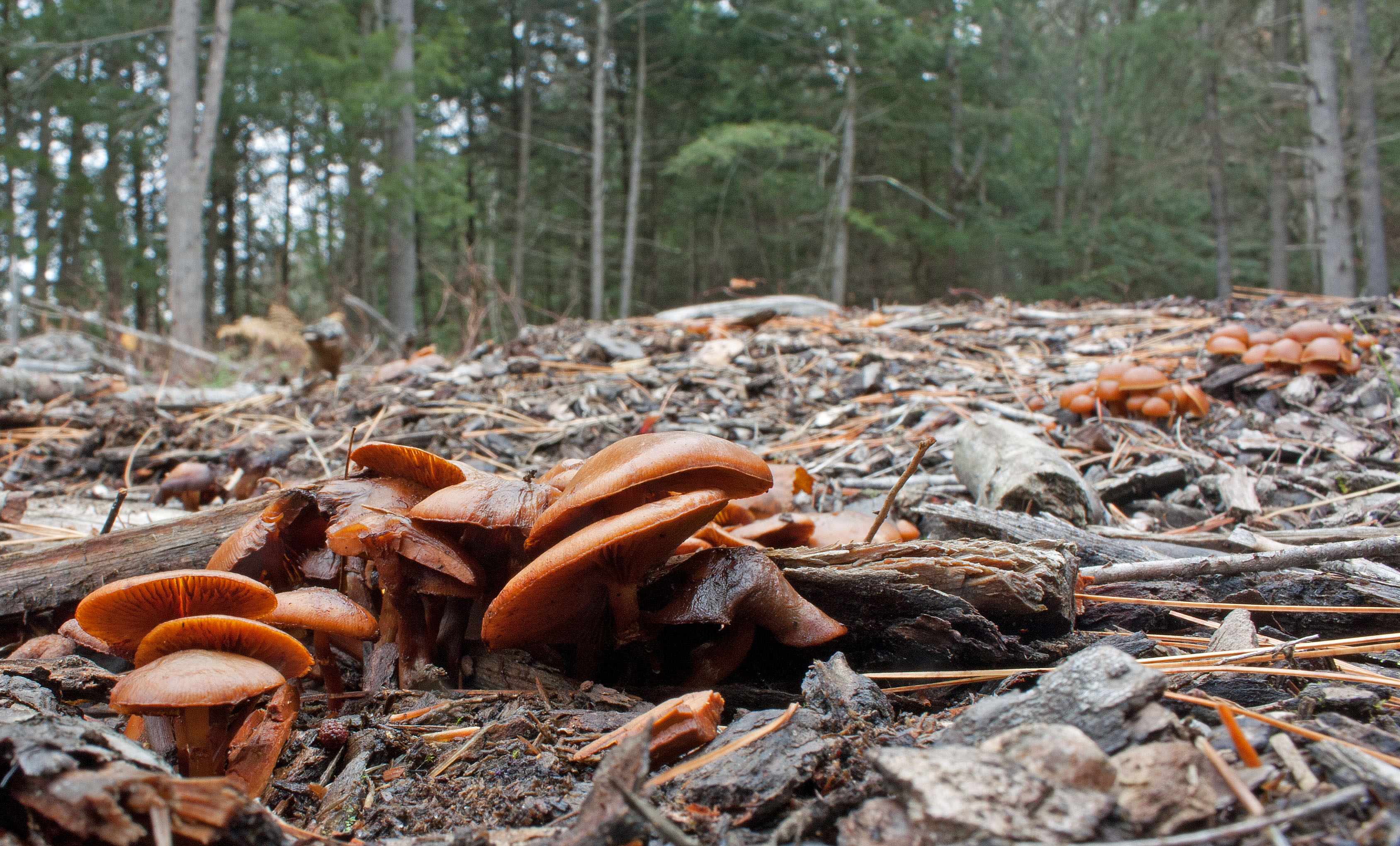
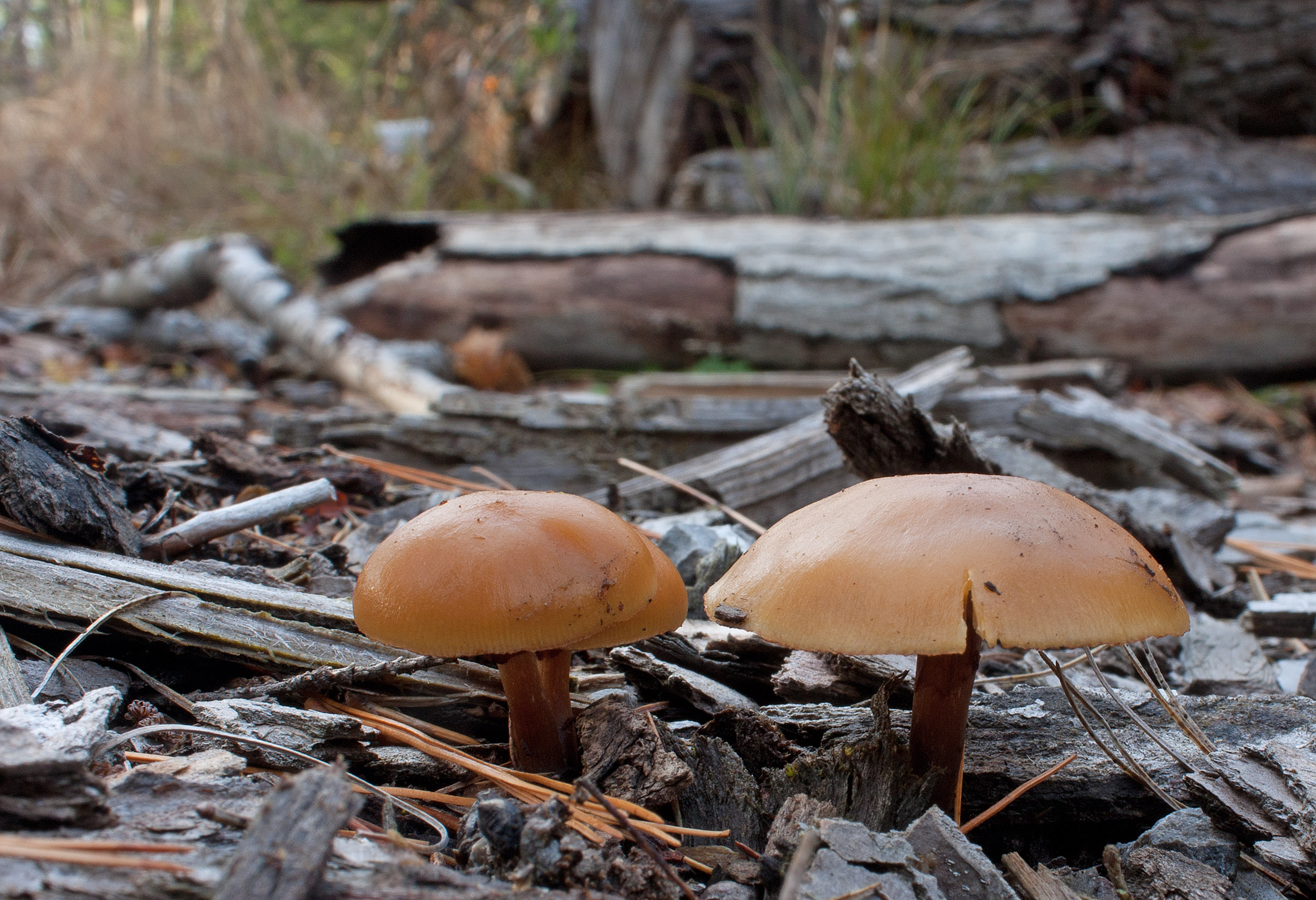
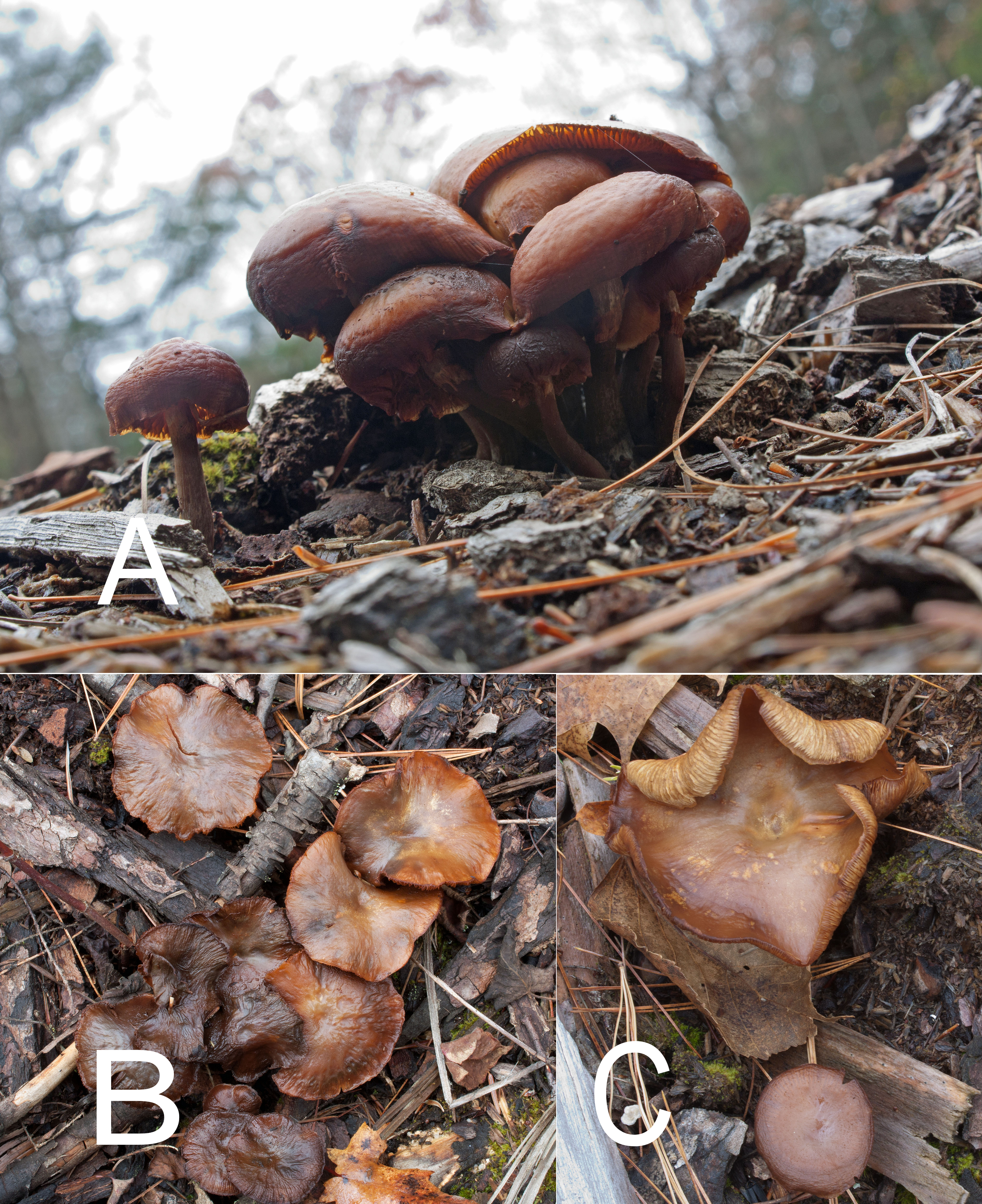
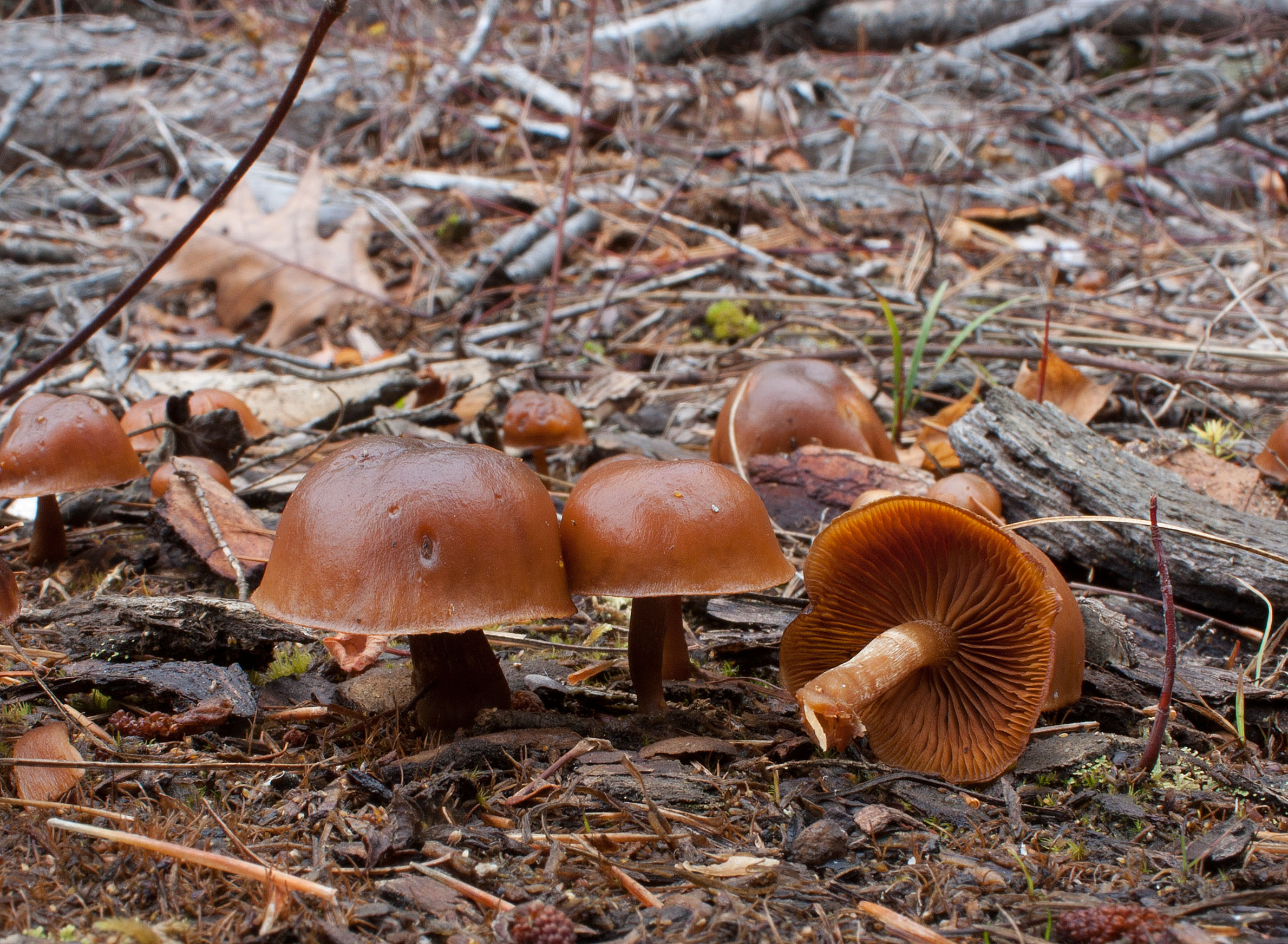
When I looked beyond into the wood pile, I saw so many more, many larger and older. Later visits to the site weeks after revealed mature mushrooms that varied in cap morphology. Some were bell-shaped and drooping, others were broadly convex like an open umbrella. Yet others were wrinkled and puckered with faded brown to buff colours. Several older mushrooms even curled back on themselves, exposing their widely spaced gills outward. I saw clusters of them throughout the wood pile.
.
I identified this Little Brown Mushroom (LBM) as Tubaria furfuraceae, commonly called Scurfy Twiglet. The word furfuraceae comes from a Latin word that means ‘tending to be bran-like’ (scurfy or finely scaly.) Scurfy Twiglet has a tawny-brown hygrophanous (colour changes depending on water absorbed) bell-shaped cap, striate cap margin and subdecurrent gills. And like another Little Brown Mushroom that closely resembles Scurfy Twiglet—Galerina marginata (Funeral Bell)—Scurfy Twiglet is also poisonous. Maybe not as deadly as the Funeral Bell, but certainly nasty. Mushroom Diary considers it inedible, but not dangerously so.
.


.
Ultimate-Mushroom describes this mushroom as sticky to greasy when fresh. The cap starts out convex then becomes broadly convex to broadly bell-shaped or nearly flat in age. The cap texture may vary from bald and smooth to prominently radially wrinkled and puckered—over the centre when young and later nearly overall. Young caps appear dark brown to grayish brown or yellow-brown and often fading to brownish or buff. The margin is incurved when young and sometimes uplifted when mature (see photo C above). It is known to fruit in vast numbers in its favoured habitat of wood chips, often accompanied by Psathyrella gracillis (which I didn’t see) and Leratiomyces ceres (Chip Cherry Mushroom) which I may have observed.
.

.
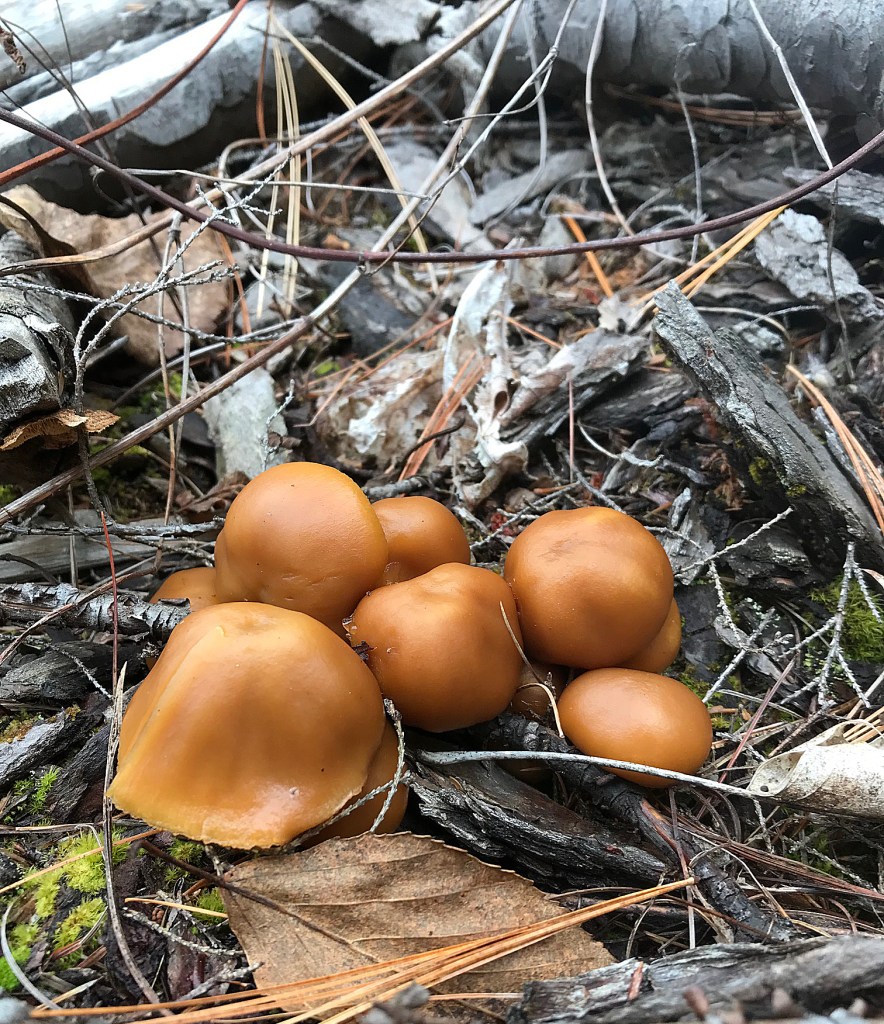
Ultimate-Mushroom describes Scurfy Twiglet’s preferred habitat as woody debris, such as sticks, bark, wood chips, sawdust. It typically fruits from early fall to late winter. Scurfy Twiglet is saprobic on deadwood of mostly hardwoods and occasionally grows on well decayed logs and stumps. More commonly it is attached to buried deadwood near stumps, appearing terrestrial.
.
Beaty Biodiversity Museum tells us that Scurfy Twiglet is a cosmopolitan ubiquitous fungus found everywhere in the world except places that are too hot, like the Sahara, or too cold, like Antarctica.
.
Little Brown Mushrooms
Little Brown Mushrooms (LBMs) are essentially a small mushrooms with tan to dark brown colour that are rather common in many habitats. They are hard to identify and are often mildly to deadly poisonous and/or hallucinogenic (so you’ll be wildly crazy as you die).
.

.
Little brown mushrooms can be found in lawns, pastures, and forests and grow on soil and wood (often rotting or under soil), appearing from spring through late fall. Common LBMs include the deadly Galerina marginata (Funeral Bell), which contains the same deadly toxin as amanitas, and Panaeolus foenisecii, common on lawns, which is also inedible.
.
.

Nina Munteanu is a Canadian ecologist / limnologist and novelist. She is co-editor of Europa SF and currently teaches writing courses at George Brown College and the University of Toronto. Visit www.ninamunteanu.ca for the latest on her books. Nina’s bilingual “La natura dell’acqua / The Way of Water” was published by Mincione Edizioni in Rome. Her non-fiction book “Water Is…” by Pixl Press(Vancouver) was selected by Margaret Atwood in the New York Times ‘Year in Reading’ and was chosen as the 2017 Summer Read by Water Canada. Her novel “A Diary in the Age of Water” was released by Inanna Publications (Toronto) in June 2020.
.
 The Meaning of Water