
.

.
It was a month after a spring ice storm had brought down large branches everywhere and forced the closure of most nature parks due to danger from falling branches and trees. Seeing the opportunity to find lichen on crown branches of tall trees, I drove to the Mark S. Burnham old-growth forest and negotiated the debris-strewn trail. I found some gems.
.


.
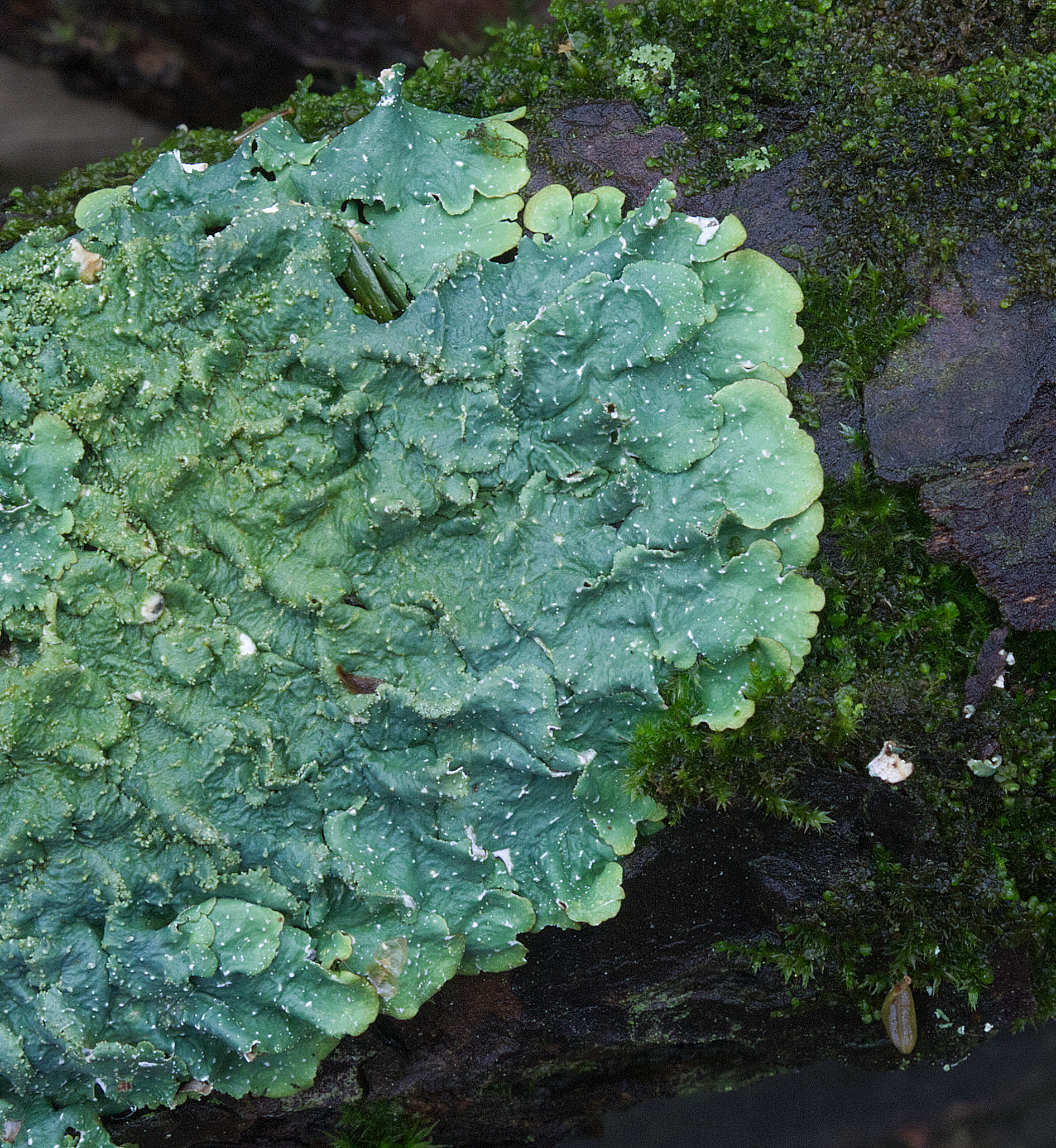
Punctelia rudecta was particularly visible from far away during wet conditions like it was that day. Known as Rough Speckled Shield Lichen or Speckleback Lichen, the stunning deep sea-green thallus of this shield lichen was a bright beacon in the dark forest, adorning large branches that littered the forest floor. Large rosettes of bright green P. rudecta wrapped themselves around thick wet branches that had been blown down from the tree’s crown.
.

.
Punctelia rudecta is distinguished by three telltale characteristics:
1) a flat foliose thallus with large lobes and brown margins and light-coloured underside. The thallus is dark greenish grey when wet (revealing the photobiont Trebouxia anticipata) and more bluish-grey when dry
.

.
.
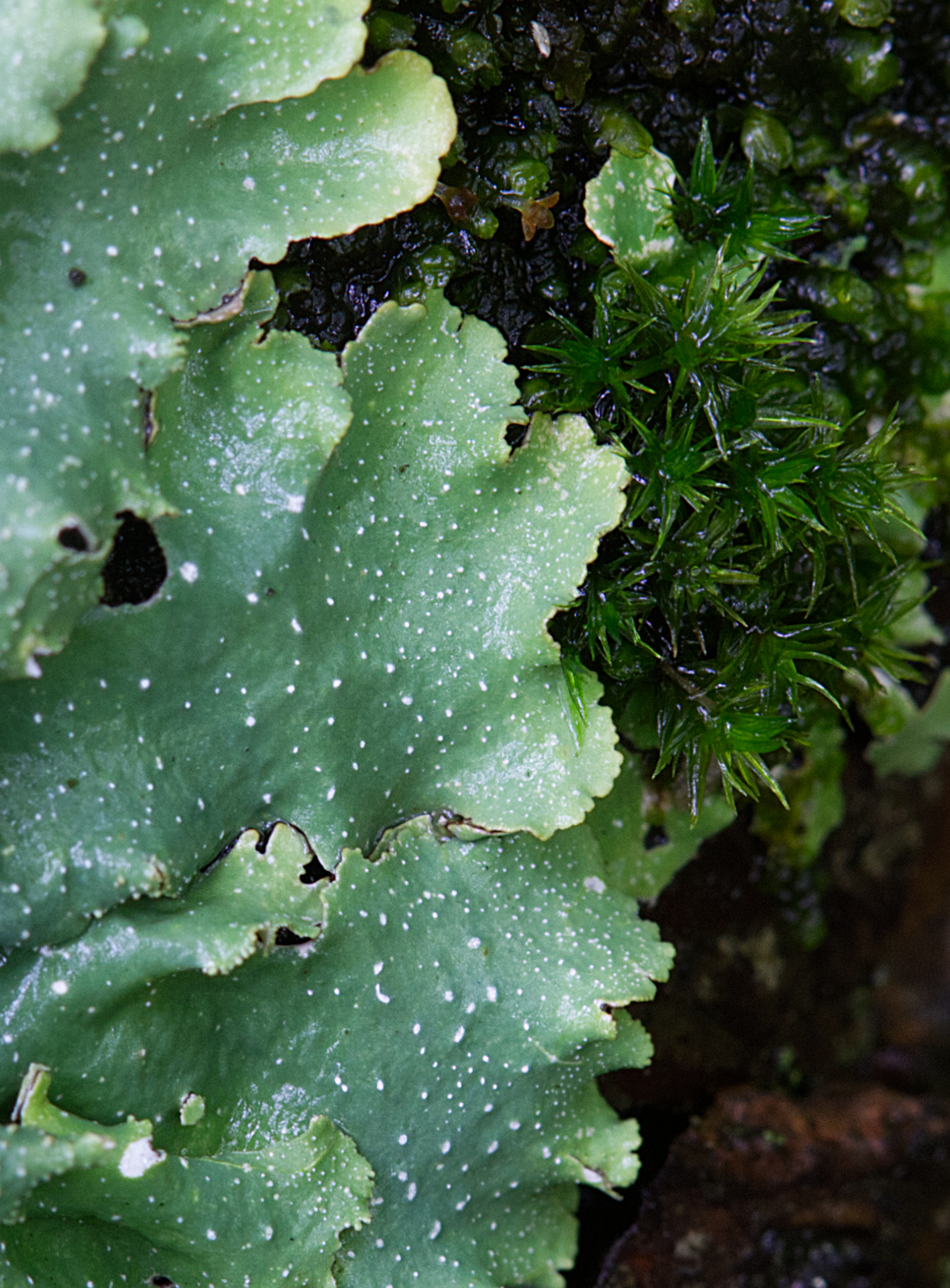
2) prominent white dots (pores called pseudocyphellae, which help in gas exchange) often on lobe tips, which are a telltale characteristic of the genus Punctelia
.


.
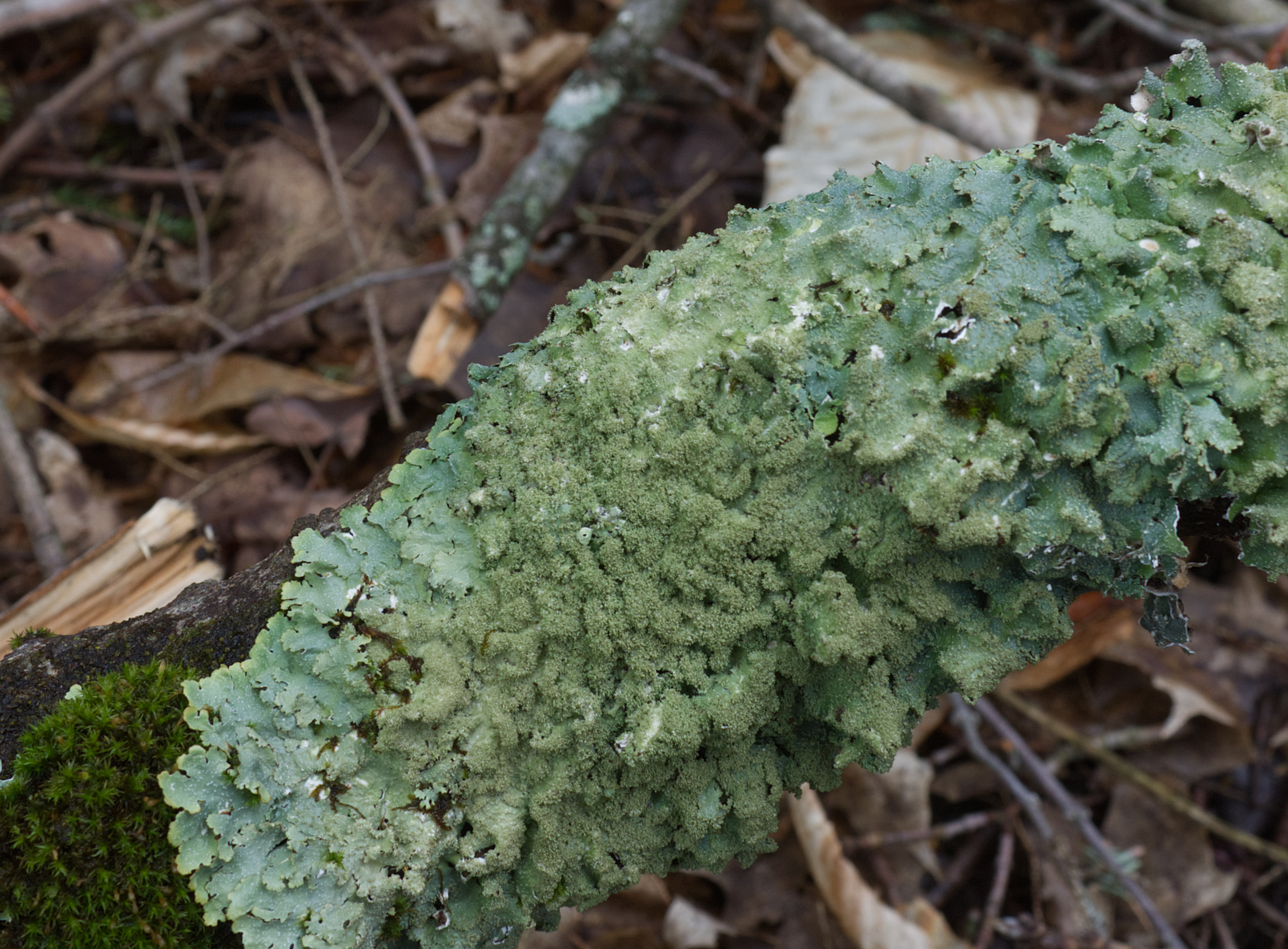
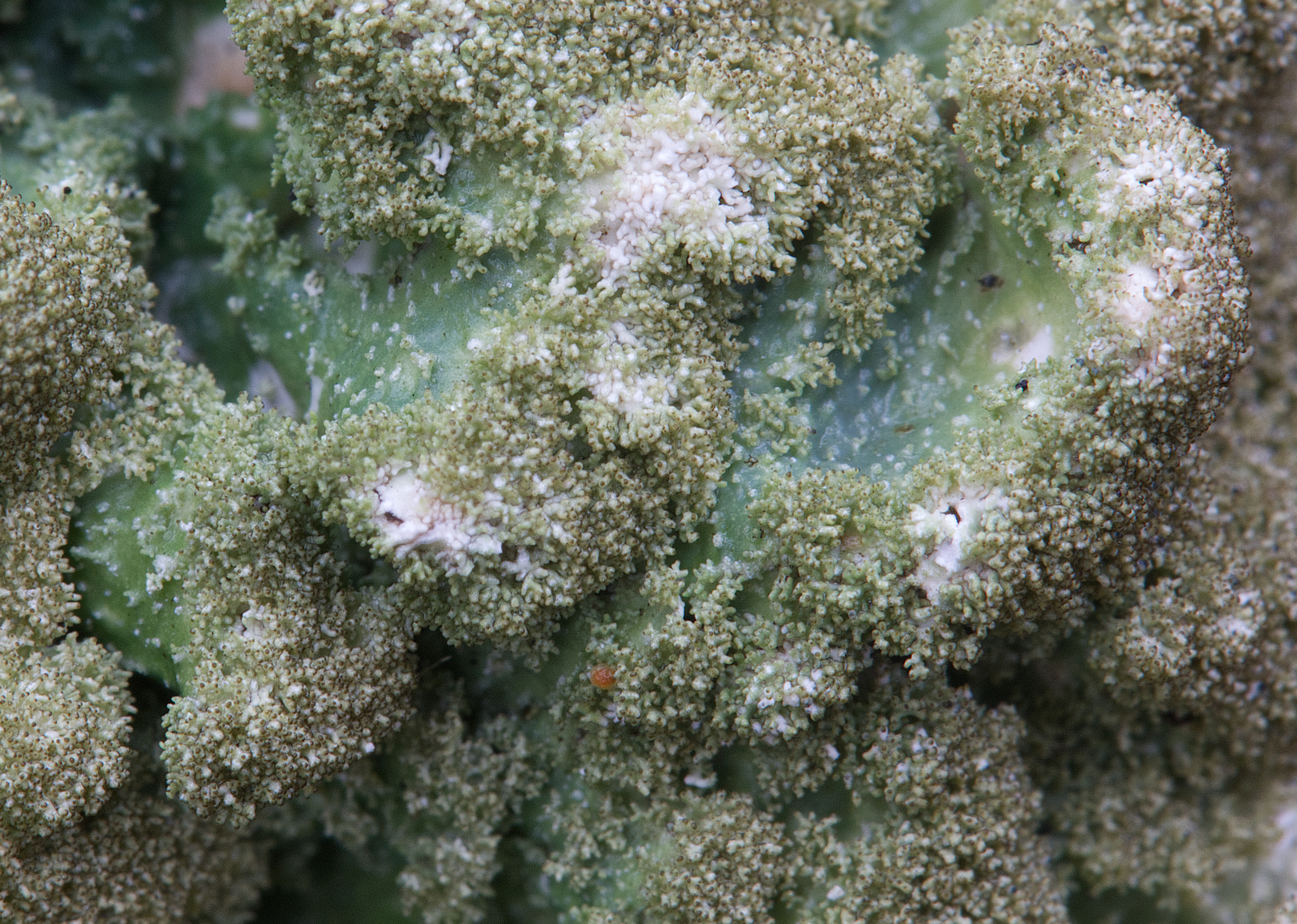
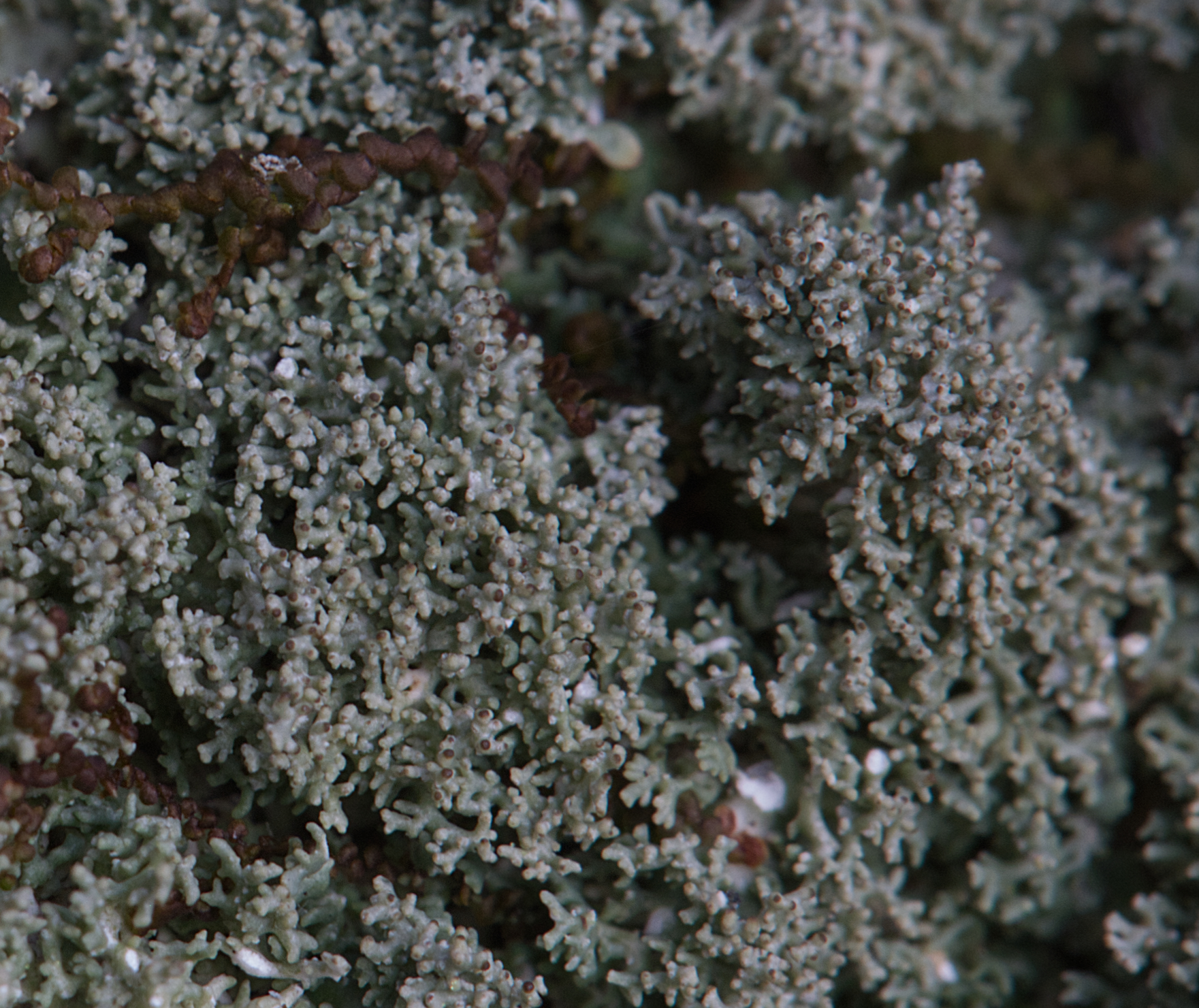
3) copious whitish cylindrical or branched brown-tipped isidia, usually concentrated in the centre of the thallus. The isidia can break off and serve as vegetative propagation. I’m told that the isidia can become so dense they form mounds that obscure the lobes underneath. I did see this in lichen I found on large sugar maple branches that had fallen from the recent ice storm.
Punctelia rudecta typically grows on bark (corticolous) and is rather common in forests of southern Ontario. I often found it on the large fallen branches of sugar maple, growing beside pale green rosettes of Common Greenshield (Flavoparmelia caperata) that wrinkles with age.
.

.
P. rudecta is widespread and common in North America, Europe, Asia and Australia. Given its moderate sensitivity to air pollution—particularly sulfur dioxide (SO2)—P. rudecta is a good candidate for air quality biomonitoring.
.

.

Nina Munteanu is a Canadian ecologist / limnologist and novelist. She is co-editor of Europa SF and currently teaches writing courses at George Brown College and the University of Toronto. Visit www.ninamunteanu.ca for the latest on her books. Nina’s bilingual “La natura dell’acqua / The Way of Water” was published by Mincione Edizioni in Rome. Her non-fiction book “Water Is…” by Pixl Press (Vancouver) was selected by Margaret Atwood in the New York Times ‘Year in Reading’ and was chosen as the 2017 Summer Read by Water Canada. Her novel “A Diary in the Age of Water” was released by Inanna Publications (Toronto) in June 2020.
.
 The Meaning of Water