.
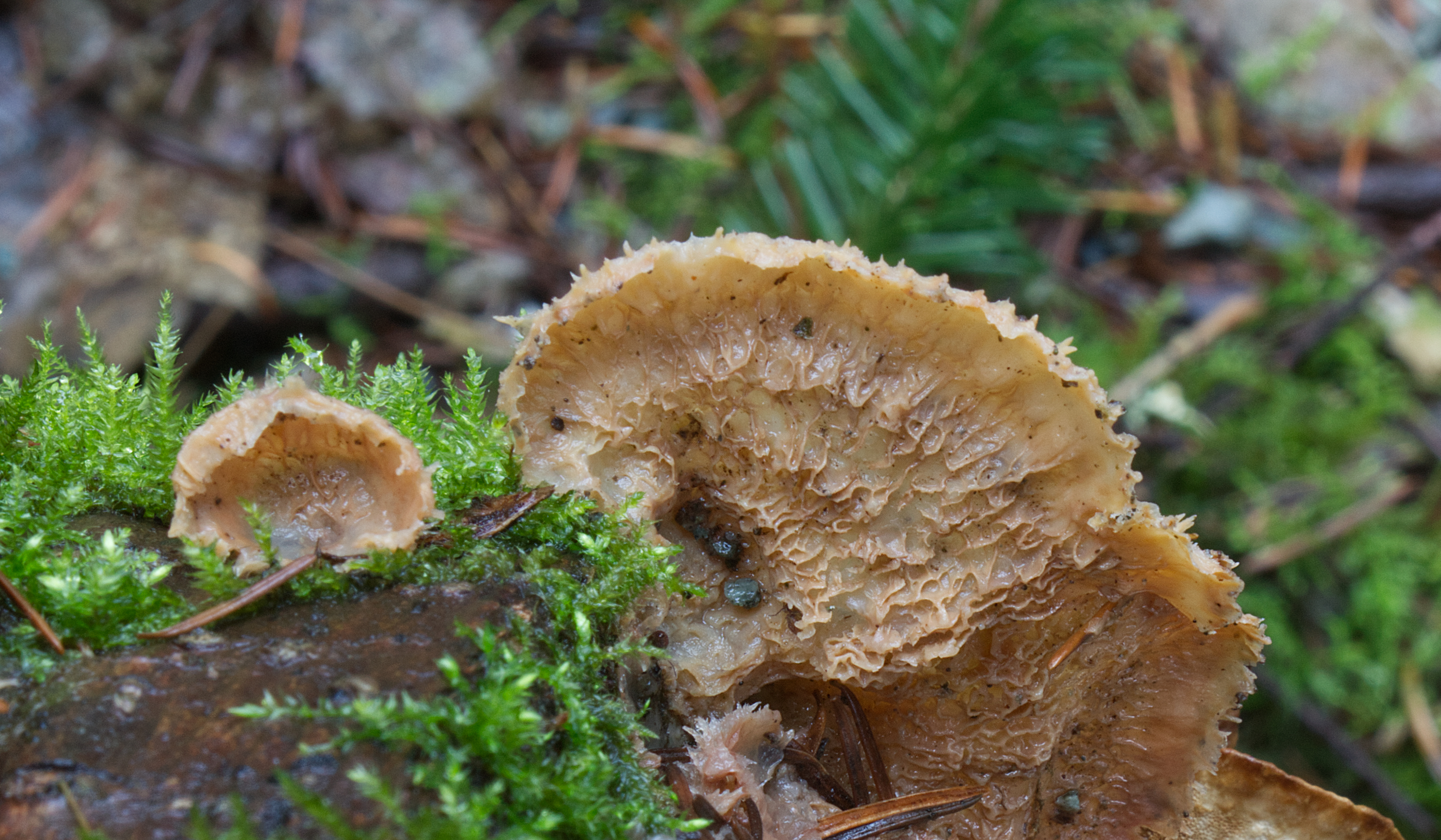
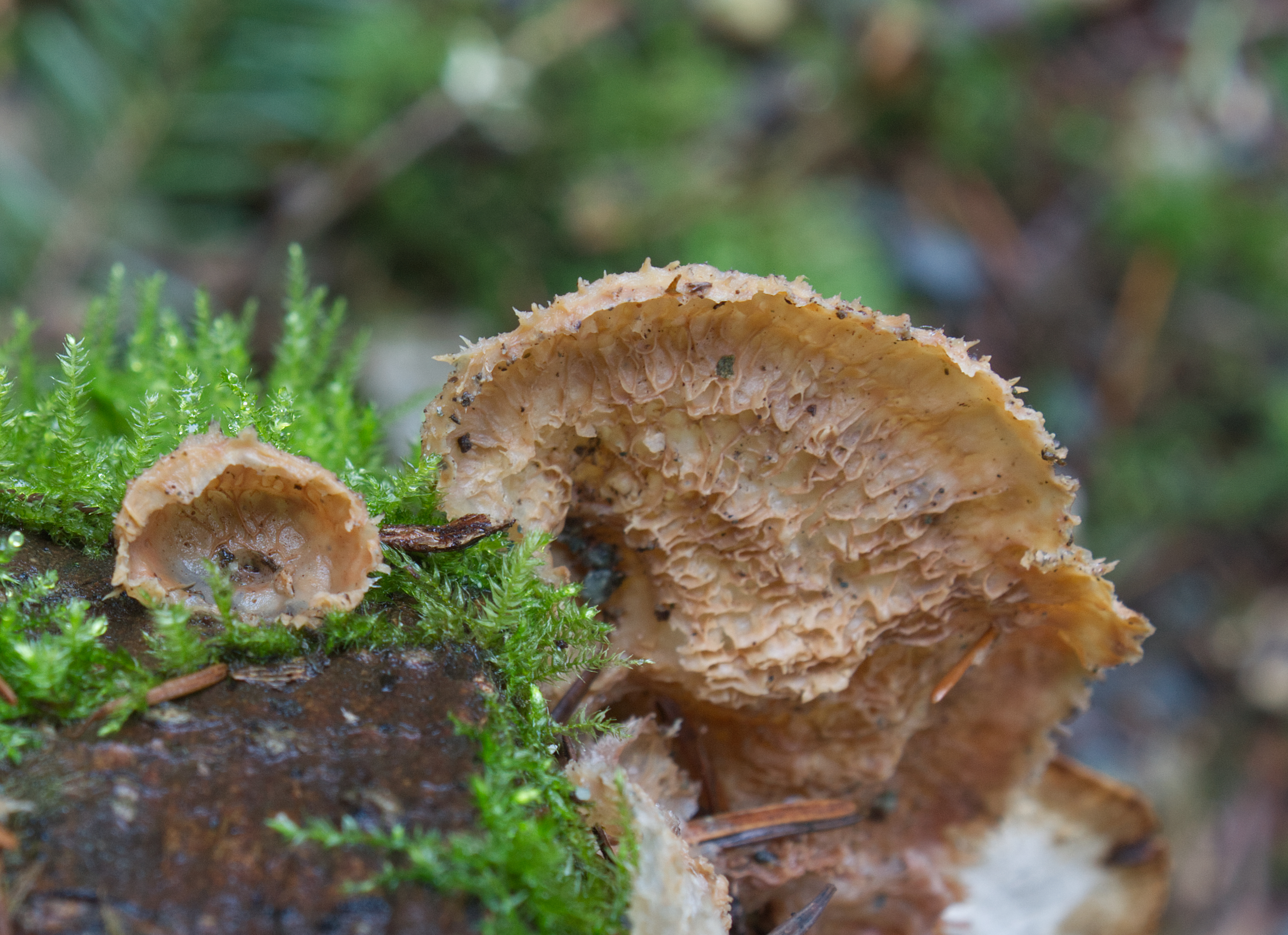
On a recent walk through the Campbell Valley Park forest, I encountered a strange fungus growing on a mossy Big Leaf Maple log. It was rubbery and all wrinkled and hairy, making me wonder if it was even a fungus. Where were the pores or gills to hold the spores? The wrinkled side looked positively brain-like and intrigued me. I got the impression I was looking at a mature dried form; nearby, I saw what looked like younger versions, still wrinkled but almost porous with almost translucent pinkish jelly-like portions.
After a long and convoluted search through the literature, I finally found my fungus—and, indeed, it was a fungus. Depending on where it’s found, it goes by several common names from Jelly Rot to Trembling Crust Fungus and Trembling Merulius.
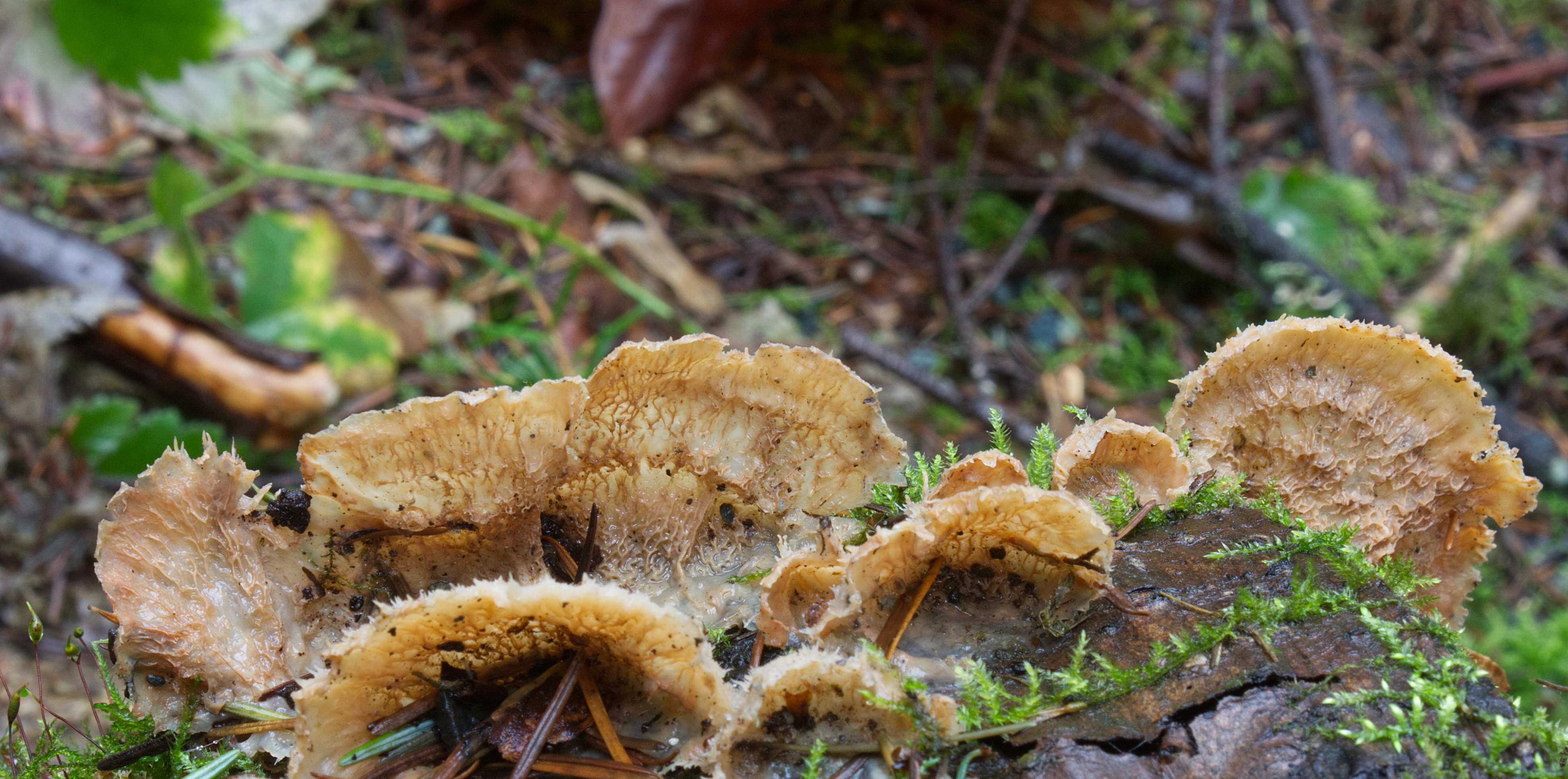
Jelly Rot is a white rot saprophytic fungus that grows mostly on decaying deciduous logs. When mature it reflexes back from its substrate to form ear-like fruiting bodies.
.
.
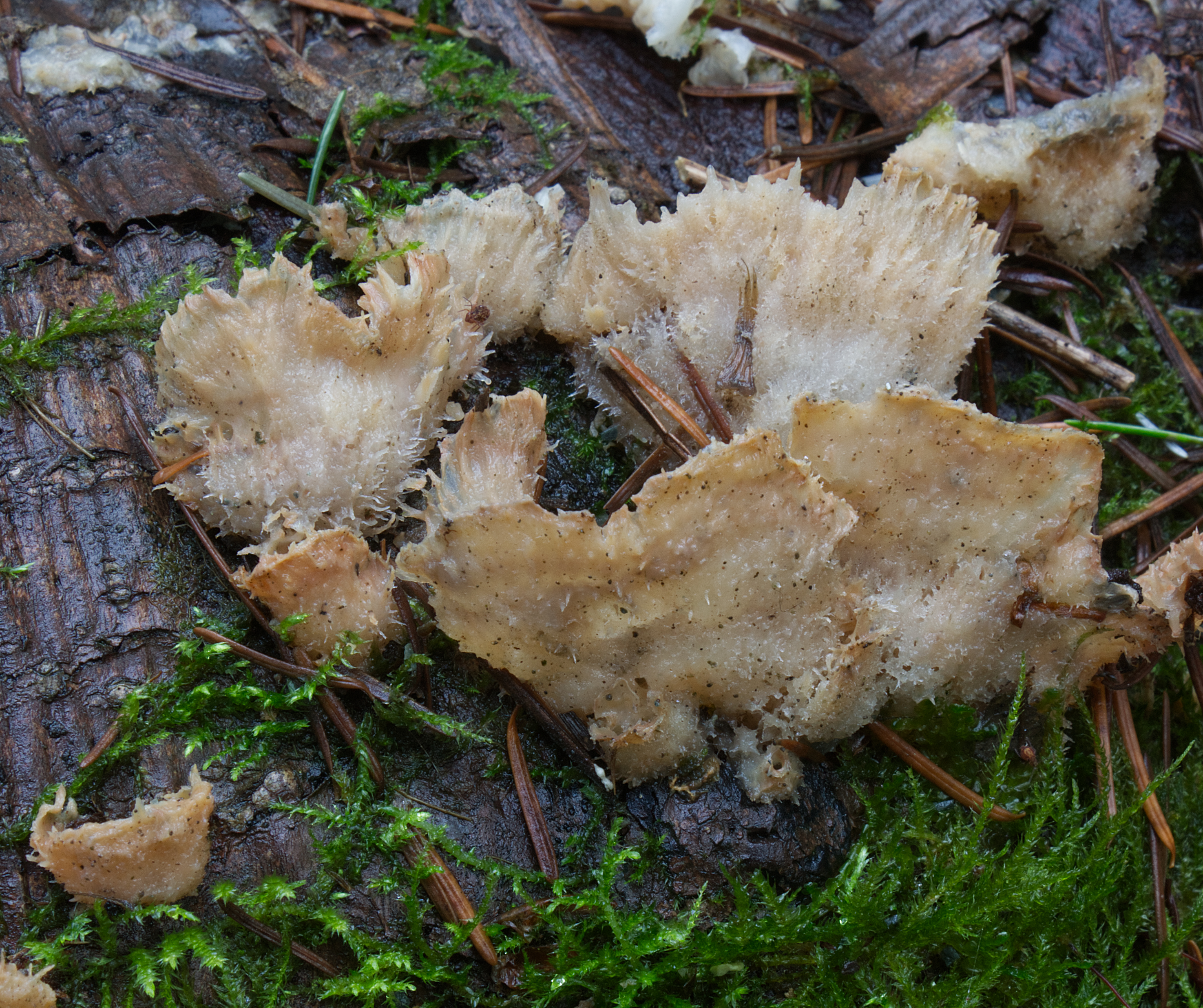
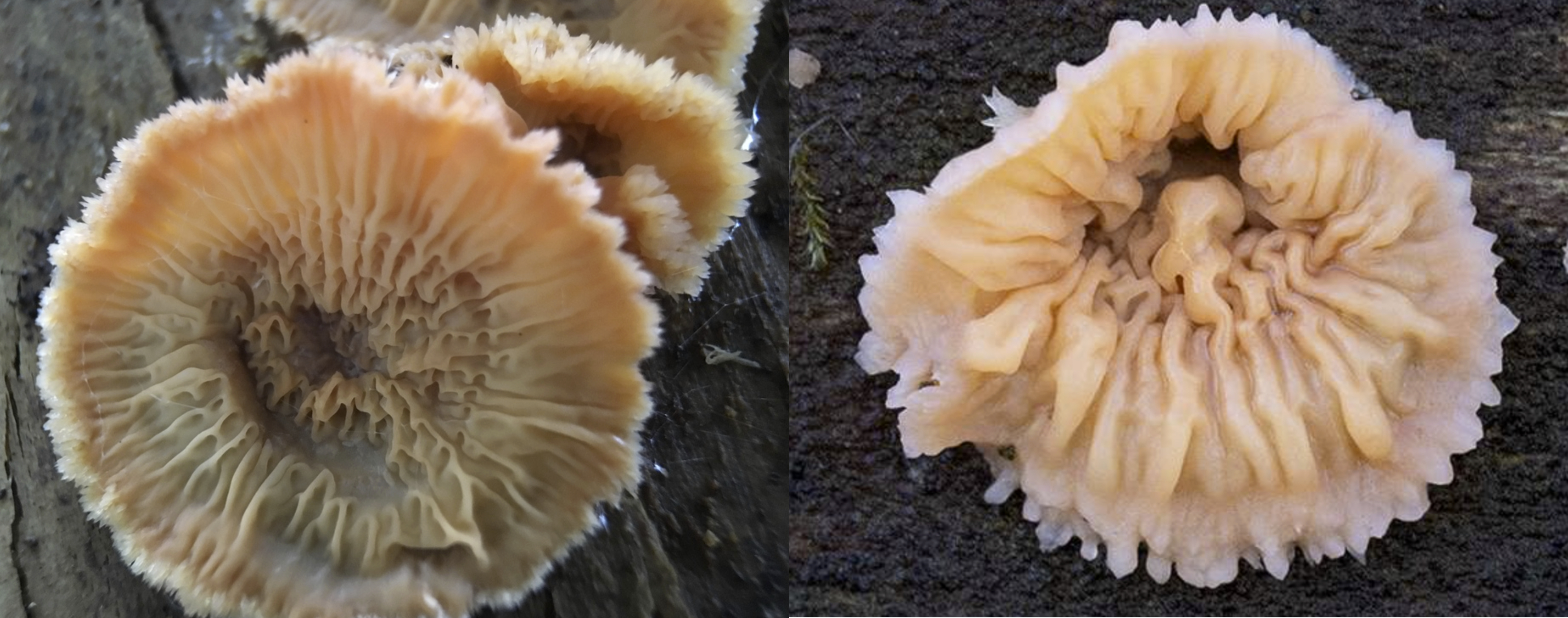
The fruiting bodies of this wood-rotting fungus are stalkless fan-shaped to semi- or almost circular spreading crusts with a spongy to fibrous texture. They are often resupinate (meaning) and often overlapping and emerging to each other. The upper non-fertile surface is pale and hairy or wooly with a usually white to translucent margin. The fertile undersurface with spore-bearing hymenium has wrinkled ridges and cross veins (instead of pores or gills), with a colour that ranges from yellow-orange to pinkish orange. The flesh is gelatinous and white to yellow.
.
.
In 1794 German botanist and mycologist Heinrich Adolf Schrader described this wood-rotting fungus and gave it the binomial scientific name Merulius tremellosus. The term merulloid means “wrinkled with low, uneven ridges.” A good choice of the genus name, I thought. The adjective is often applied to the surface texture of certain types of fungi, particularly bracket fungi. The name of this white rot fungus has since been changed to Phlebia tremellosa. This wood-rotting fungus lives in North America, Europe and Britain.
.
.
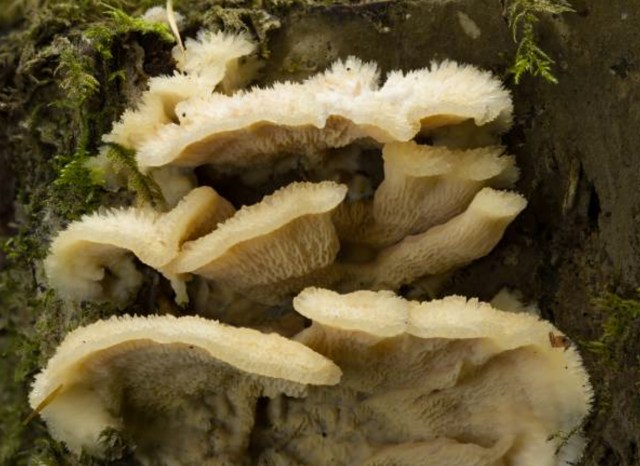
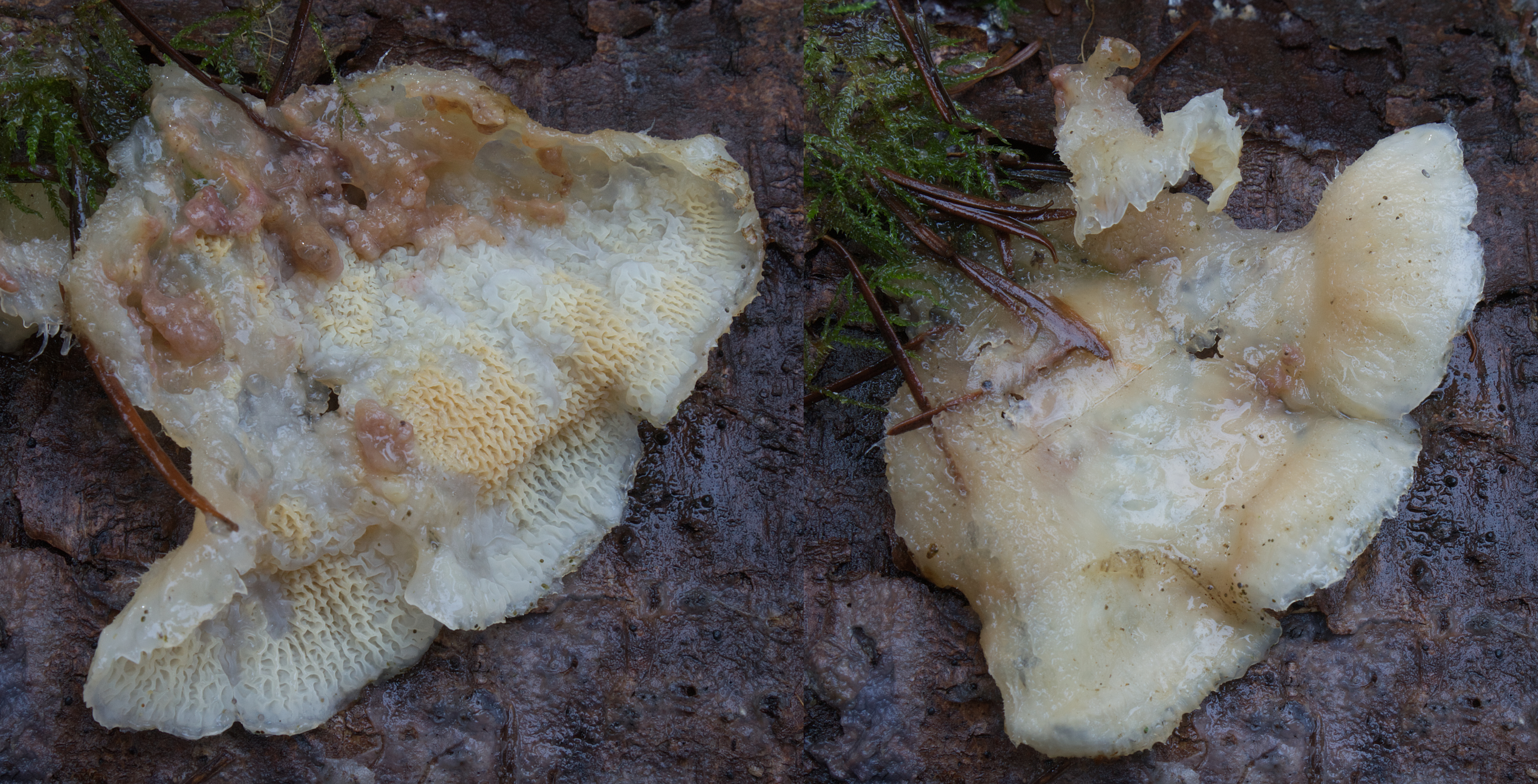
Often pale and fully resupinate when young, the fruiting bodies start out more or less circular; as they mature the upper edges reflex and become bracket-like with the spore-bearing surface turning pinkish-orange. The upper surface is more pale and hairy. There are no true pores on the fertile surface that is covered in patterned wrinkles.
Young still developing Jelly Rot Fungus (photo by First Nature)
.
.
The genus name Phlebia comes from the Greek term that means ‘veins’ The species name tremellosa means ‘trembling’ and refers to the jelly-like structure of mature reflexed fruitingbodies, which wobble when they are touched.
So, who says fungi can’t be goofy…
.
.

Nina Munteanu is a Canadian ecologist / limnologist and novelist. She is co-editor of Europa SF and currently teaches writing courses at George Brown College and the University of Toronto. For the lates on her books, visit www.ninamunteanu.ca. Nina’s bilingual “La natura dell’acqua / The Way of Water” was published by Mincione Edizioni in Rome. Her non-fiction book “Water Is…” by Pixl Press (Vancouver) was selected by Margaret Atwood in the New York Times ‘Year in Reading’ and was chosen as the 2017 Summer Read by Water Canada. Her novel “A Diary in the Age of Water” was released by Inanna Publications (Toronto) in June 2020.
.
 The Meaning of Water