
My daily walks often take me through the forests on a small path along the river. The narrow dirt path is strewn with small rocks; sections are root-gnarled and covered in the duff of Eastern White Pine and Scots Pine needles, twigs, cedar and poplar leaves.
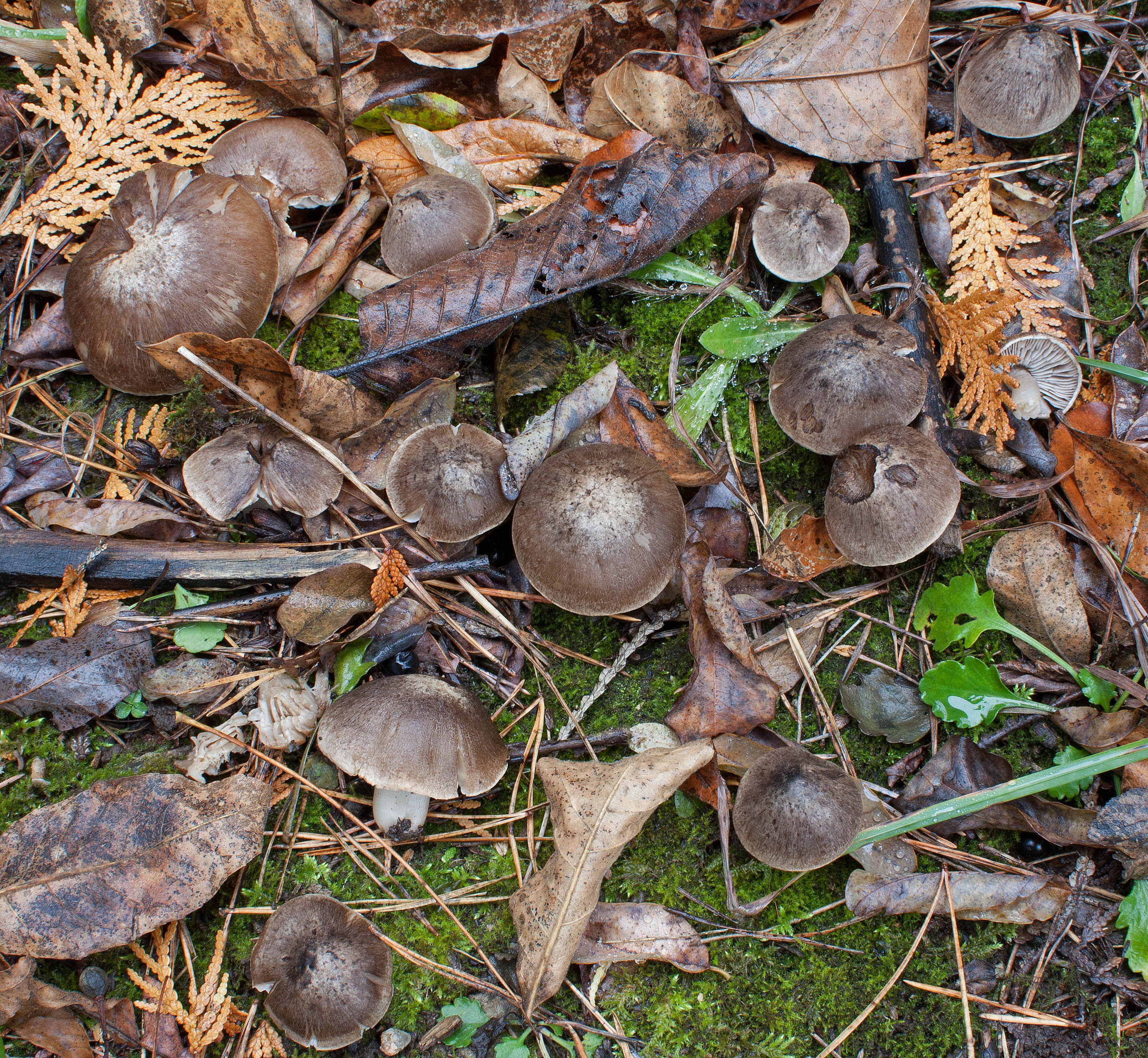

On this particular day in mid-November—after stepping aside into the duff to make way for a woman and her two dogs—I found myself staring down at an odd looking ‘pebble’ amid the dead leaves. It turned out to be a cleverly disguised grey mushroom! It even had the uneven colouration of a small pebble with ‘rust’ marks embedded in the grey.


I crouched down for a better look and once I did, I discovered so many more, among the berries, cones, leaves, and moss. It was as though, having discovered the one, I saw the many.
I was surrounded by them. Several dozens of these small ‘pebbles’ were scattered throughout the litter layer, pushing their way through the bed of leaves and moss and forming clusters and ‘rings’ in some cases.
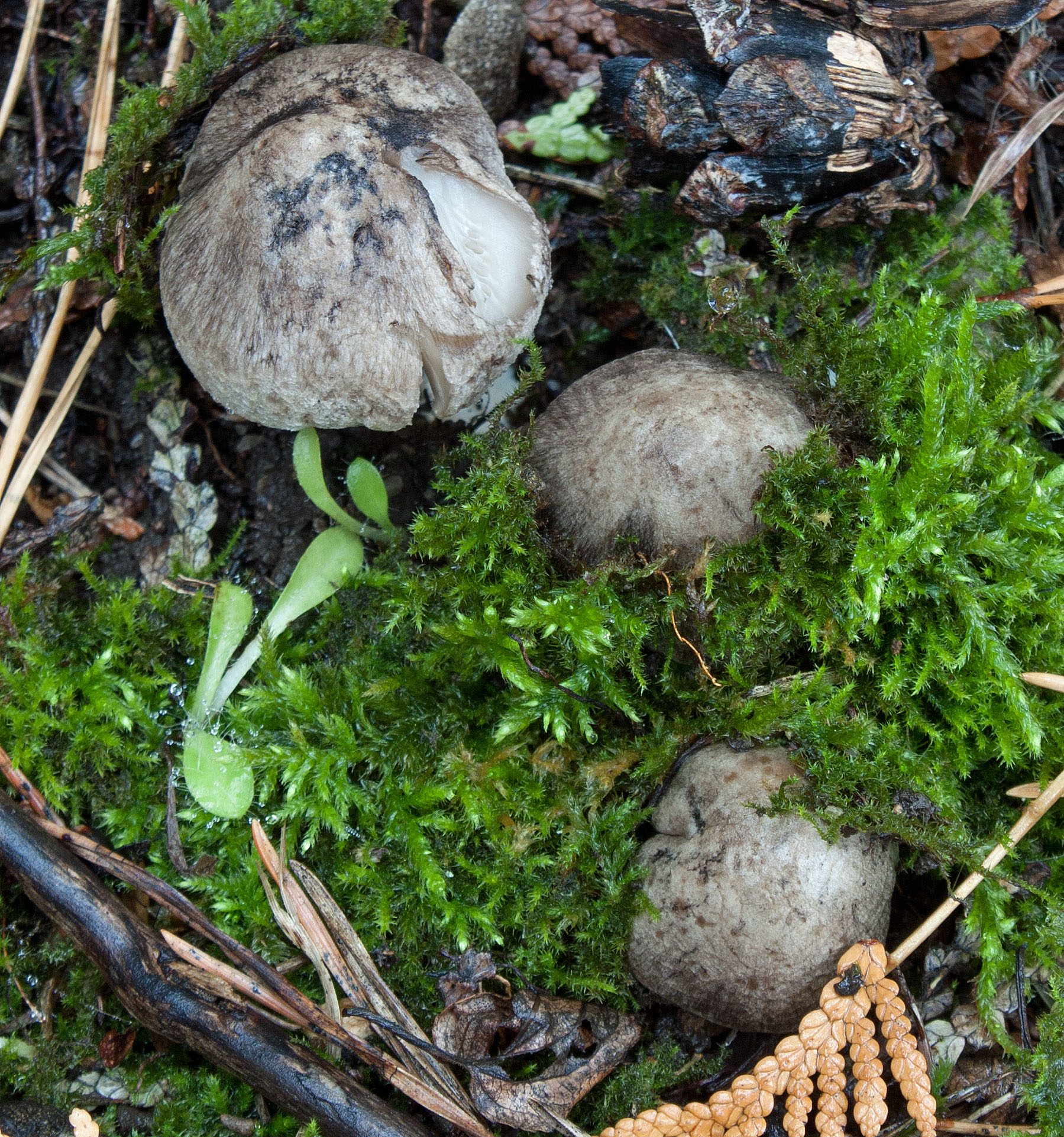

Now closely attentive, I noted that the mushroom caps were fibre-streaked to fibrillose-scaly with subtle vertical lines and the colour of rock, grey with grey-brown highlights. Depending on their growth stage, the mushrooms emerged as rounded to conical and became convex, often with a low broad central bump. Margins were also slightly incurved. Gills were creamy white and the mushroom’s stipe was fibrous vertically, but otherwise not marked or striated with no ring. Mature mushrooms had spread out their caps into a widely brimmed ‘hat’, often with a slight peak (umbo), similar to the Witch’s Hat (Hygrocybe conica). Placing my nose close to mushroom, I detected no scent to them.
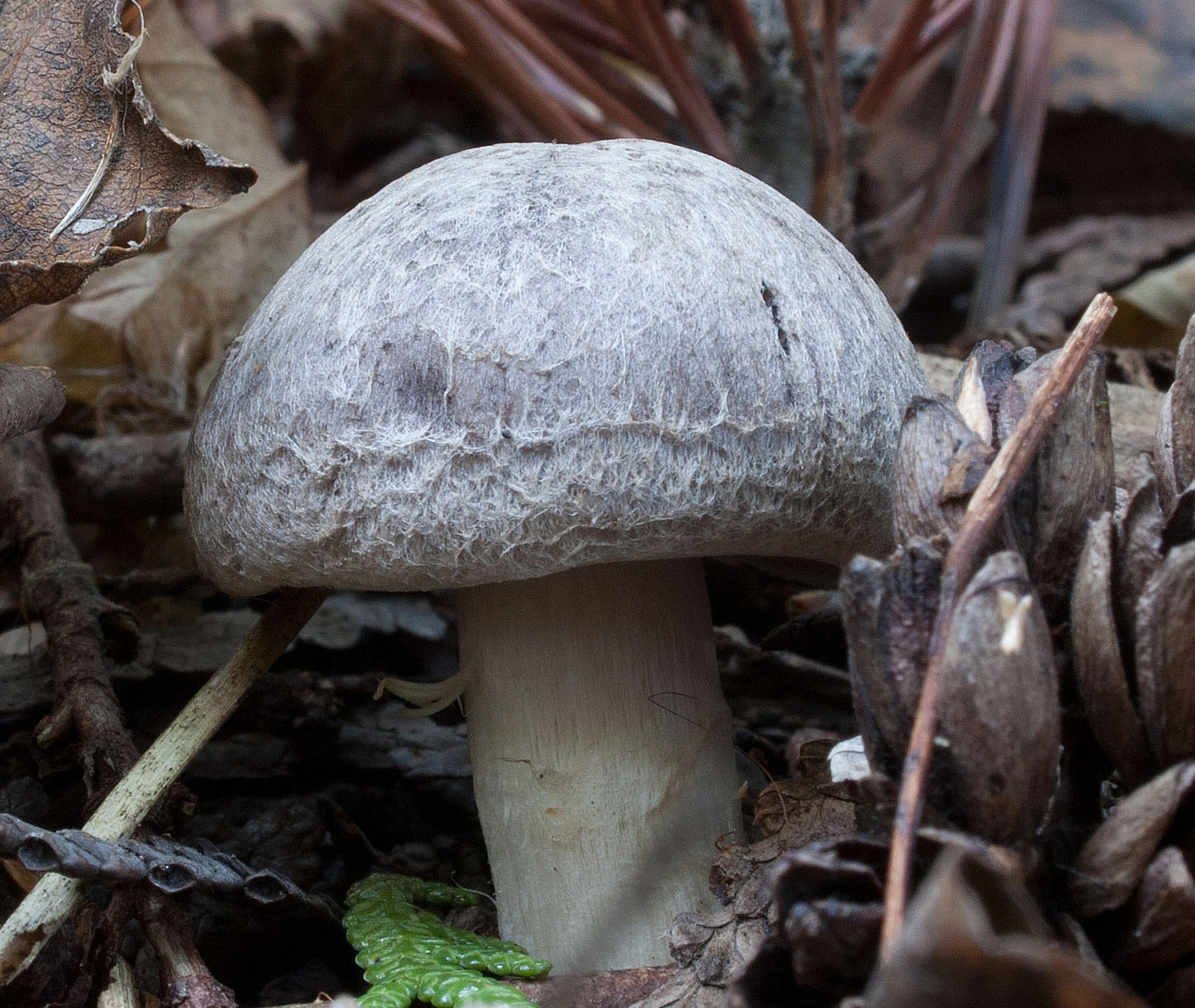
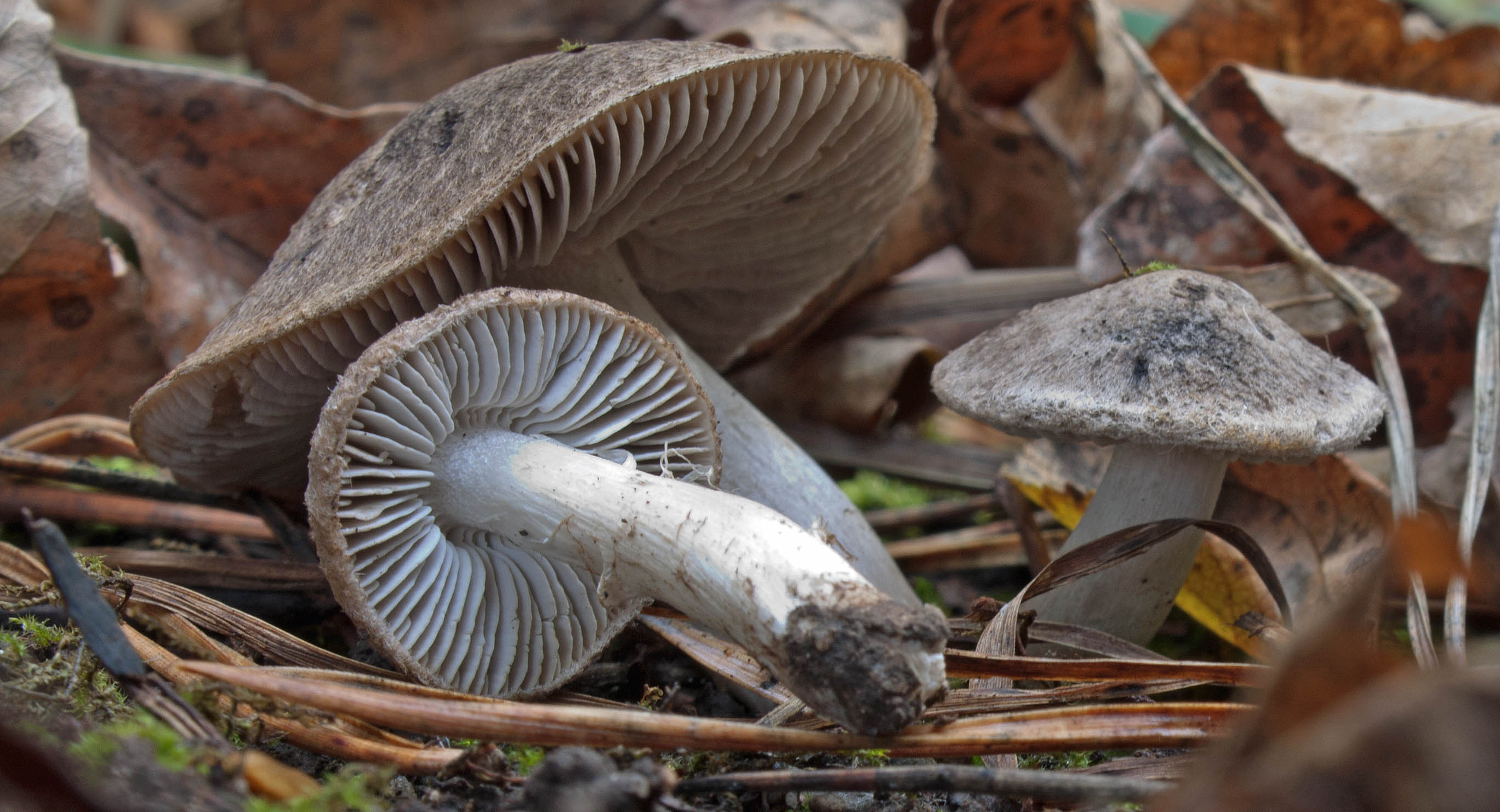
These mushrooms were literally everywhere, hidden in plain sight. Wherever I gingerly stepped, I found more, peeking up from curling leaves and pine needles. They spread out deep into the mixed forest of Scots pine and Eastern White pine, largetooth aspen, and cedar.
I practically ran home—I’d not brought my camera and tripod that one time—and returned for a photo session to document these delightful fungi.


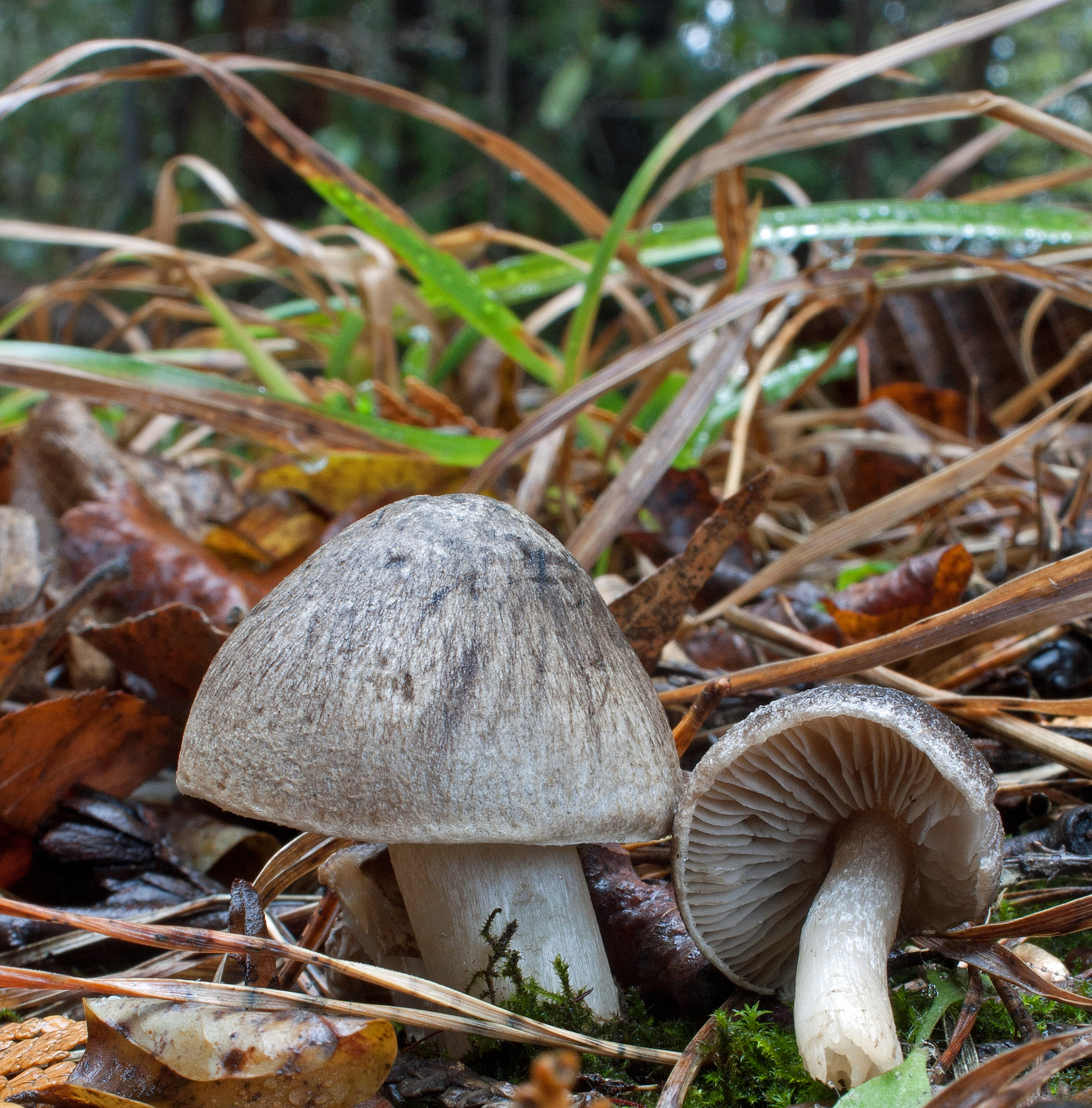
On my return home, I researched these mushrooms and identified them as Tricholoma terreum (also called Grey Knight or dirty tricholoma), based on their colour, shape, lack of smell, and particularly their habitat.
For a time, I pondered that they might also be T. myomyces (Mouse Mushroom), found in abundance in North America; in the 2014 guidebook Mushrooms of Ontario and Eastern Canada, George Barron describes T. myomyces as having the same shape and preferred habitat to T. terreum: fruiting in leaf litter under conifers, usually late in the year after the first frost. But two diagnostic differences given by Timothy J. Baroni, in Mushrooms of the Northeastern United States and Eastern Canada (2017) tell me that what I found are T. terreum: 1) I saw no cobwebby veil in the young stages of the mushroom that some use to distinguish T. myomyces; 2) the cap of T. myomyces also has no brown, which I saw. Baroni offers that some consider these two to be the same species and Mushroom Expert Michael Kuo confirms that the cortina-like veil used to distinguish these two species may not be a definitive diagnostic, given that European authors have shown that the veil is inconsistent and not correlated to other morphological features. Barron doesn’t even acknowledge Tricholoma terreum in his guidebook for Ontario mushrooms. The Canadian map in NatureServe Explorer shows Tricholoma terreum in every province except Ontario; but they also acknowledge that distribution records may be incomplete. Given that the well-established invasive Scots Pine—the preferred habitat of Tricholoma terreum in Europe and elsewhere in the world—is so prevalent in Ontario, this species of Tricholoma very likely exists here. I could find only one sighting from 2006 by Christopher Price with a photographic record of this species amid moss and pine needles in eastern Ontario.


Ecology & Habitat of Tricholoma terreum
Tricholoma terreum grows on the ground of forests, preferring rich acidic or neutral soil. Tricholoma terreum is a mycorrhizal fungus (mykes in Greek means fungus and rhiza in Latin means root), living in symbiotic association with the roots of conifers such as pine, spruce, and fir but also some hardwoods. I found this Tricholoma mushroom in a riparian urban forest of Scots Pine, along with cedar and poplar. I thought it interesting that another species of this genus, known as American matsutake (T. magnivelare) is known to thrive in Jack Pine forests of Northeastern North America.
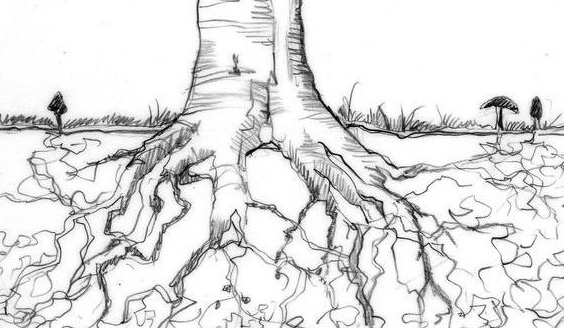
Mycorrhizal fungi provide the tree with micronutrients from the soil in a form the tree can use, in exchange for sugars produced by the tree through photosynthesis. The mycelium of mycorrhizal T. terreum helps extend the tree’s root network into the soil and can connect several different plants with the possibility of channelling micronutrients between them.

In North America, T. terreum has been found growing with Eastern White pine, Scots pine, Douglas fir, and several spruces. First-Nature out of Scotland shares that Tricholoma terreum prefers “dryish edges of well-used paths through Scots Pine plantations.” They add that this mushroom also occurs throughout most of mainland Europe and in Australia, where it was an introduced species brought in with pine trees from Europe. This is likely how T. terreum reached Canada and Ontario, where large numbers of Scots pine were imported to stabilize soils and impede erosion of deforested agricultural lands. In the 1950s, large Scots pine plantations were created in southern Ontario for the Christmas tree industry until interest died down in favour of other trees (e.g. Balsam fir) and the plantations simply abandoned. Given its vigorous and hardy nature, Scots pine established itself and flourished throughout southern Ontario. The Scots pine stands I’ve run across during my walks along the riparian strip of the Otonabee River were certainly initially planted then left to grow to wildness.

Taxonomic History of Tricholoma terreum
Jacob Christian Schaeffer called this species Agaricus terreus when he described it in 1762. These were the early days of fungus taxonomy, with most gilled mushrooms placed in the genus Agaricus; many specimens have since been relocated into newer genera. In 1871, German mycologist Paul Kummer transferred this mushroom to its present genus Tricholoma with the species name terreum. The genus name of Tricholoma comes from Greek words that mean ‘hairy fringe.’ The species name of terreum means ‘earth’ in Latin, referring to perhaps the cap colour but also to its habitat on the ground (other Tricholoma species grow on logs and trees).

Edibility of Tricholoma terreum
Tricholoma terreum has historically been considered a delicious edible mushroom when properly cooked; however, given that this mushroom could easily be confused with known poisonous grey to grey-brown species of the same genus, foraging for T. terreum has been risky at best.
Then, scientists Xia Yin and colleagues in the 2014 issue of Chemistry identified 15 triterpenoid terreolides and saponaceolides in Tricholoma terreum which demonstrated acute toxicity in test mice. This suggested that “T. terreum may be the cause of mushroom poisoning ultimately leading to rhabdomyolysis,” which can be fatal to humans. These results and conclusions were later disputed but not with clear evidence.

So, the old Irish adage still applies: There are old mushroom hunters and there are bold mushroom hunters. But there are no old bold mushroom hunters.
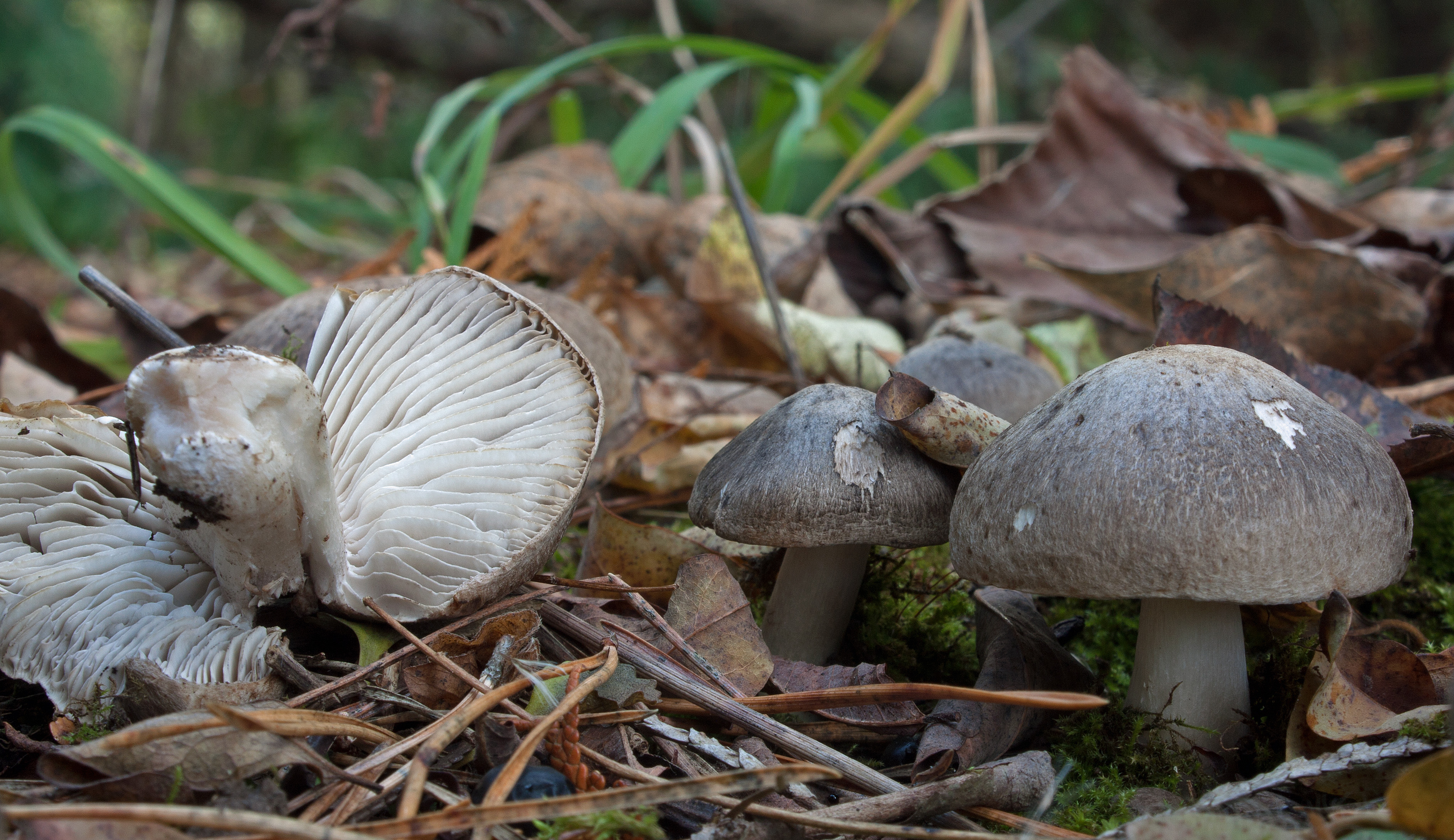
p.s. Days after I took these shots in two sessions, I developed a significant rash on my neck and arms. I knew right away that it was poison ivy; I’d had a run in with that pesky ivy before. I’d been essentially creeping and ‘rolling’ on the ground and had placed my scarf on the ground then worn it around my neck. It was November and there was no sign of poison ivy then. When I returned the following spring, there it was, growing in profusion right where I’d been crawling on the ground! My earlier encounter with this plant was also in early winter when only the stalks and roots–which are equally potent with the poisonous resin urushiol–were present (with no visible leaves). The lesson here is: be familiar with the environment, what grows there before you become intimate with the ground.


Nina Munteanu is a Canadian ecologist / limnologist and novelist. She is co-editor of Europa SF and currently teaches writing courses at George Brown College and the University of Toronto. Visit www.ninamunteanu.ca for the latest on her books. Nina’s bilingual “La natura dell’acqua / The Way of Water” was published by Mincione Edizioni in Rome. Her non-fiction book “Water Is…” by Pixl Press (Vancouver) was selected by Margaret Atwood in the New York Times ‘Year in Reading’ and was chosen as the 2017 Summer Read by Water Canada. Her novel “A Diary in the Age of Water” was released by Inanna Publications (Toronto) in June 2020.
 The Meaning of Water
Heh and I talked about mushrooms that looked like discarded orange peels! I stil don’t know what they were 😁
LikeLike
I’d love to see those!
LikeLike
I have so many rock like mushrooms. I dug up about 15 . I live on a farm here in USA. They are so unattractive. The size is about the size of the palm of your hand , man or women. Is this good or bad? I wish I was a scientist lol or biologist.
LikeLike
Hi Helena,
I have no idea if it is bad or good. Generally, mushrooms are a sign of good rich soil, though; lots of moisture and organics. Thanks for stopping by and commenting. All the Best, Nina
LikeLike