
.
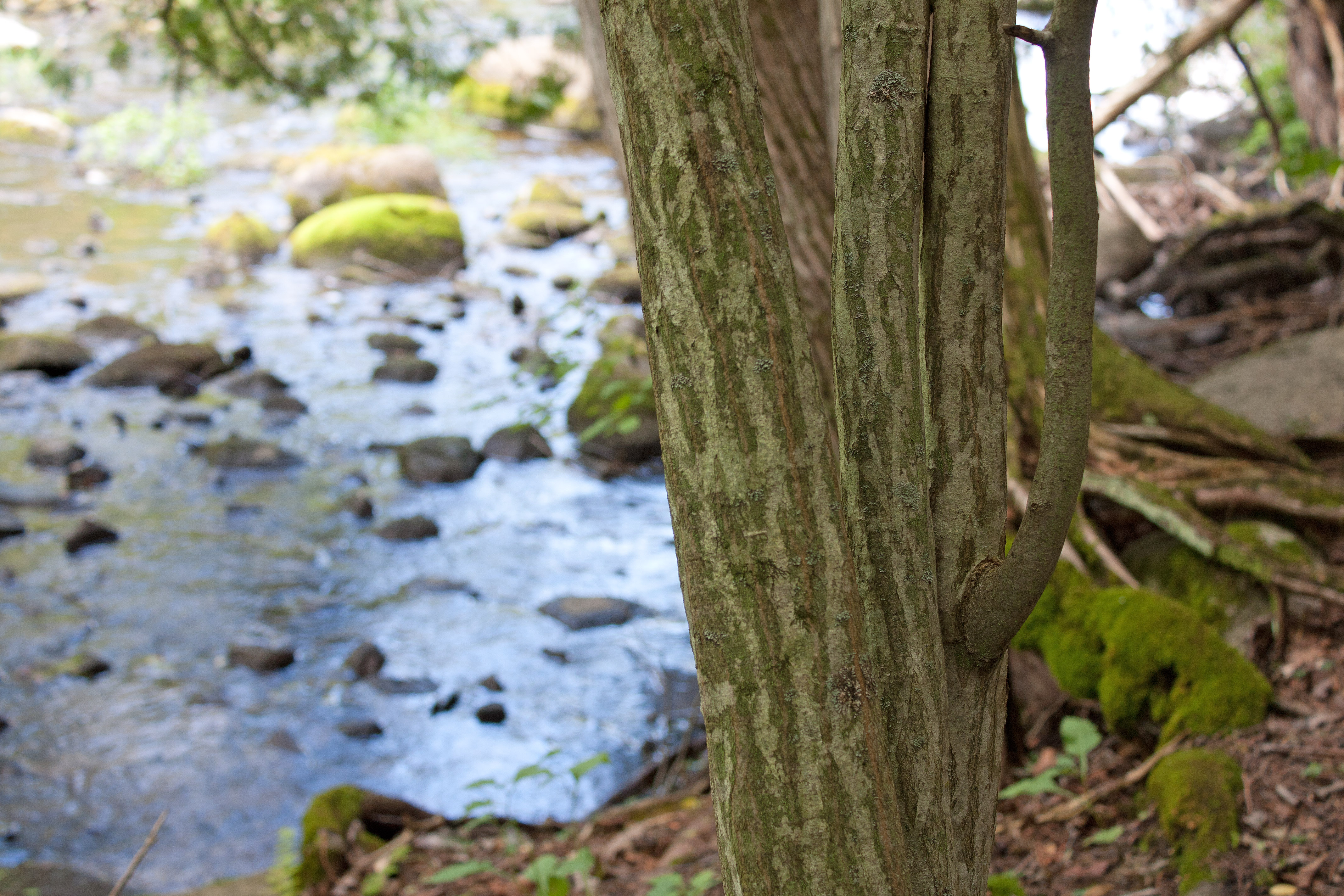
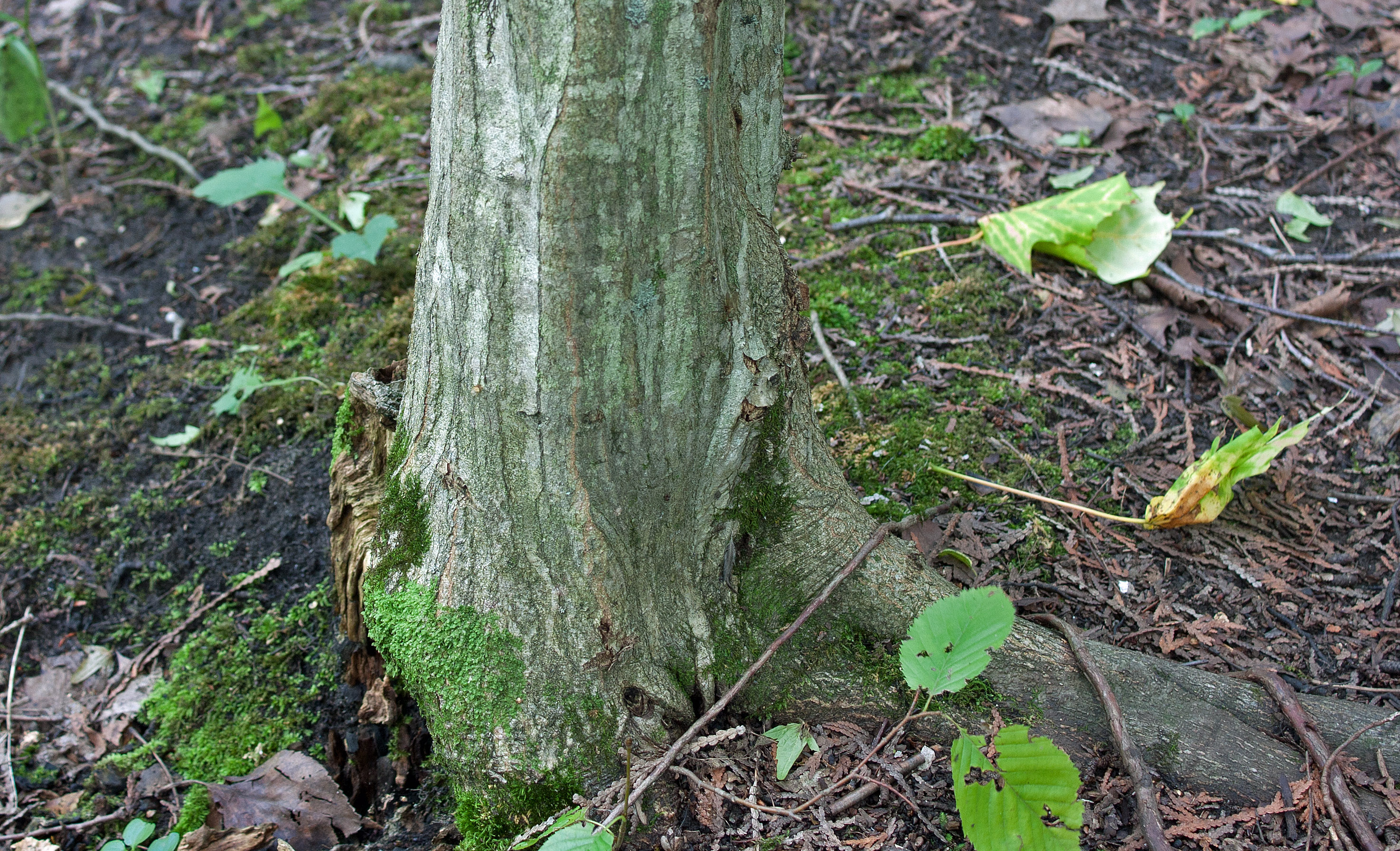
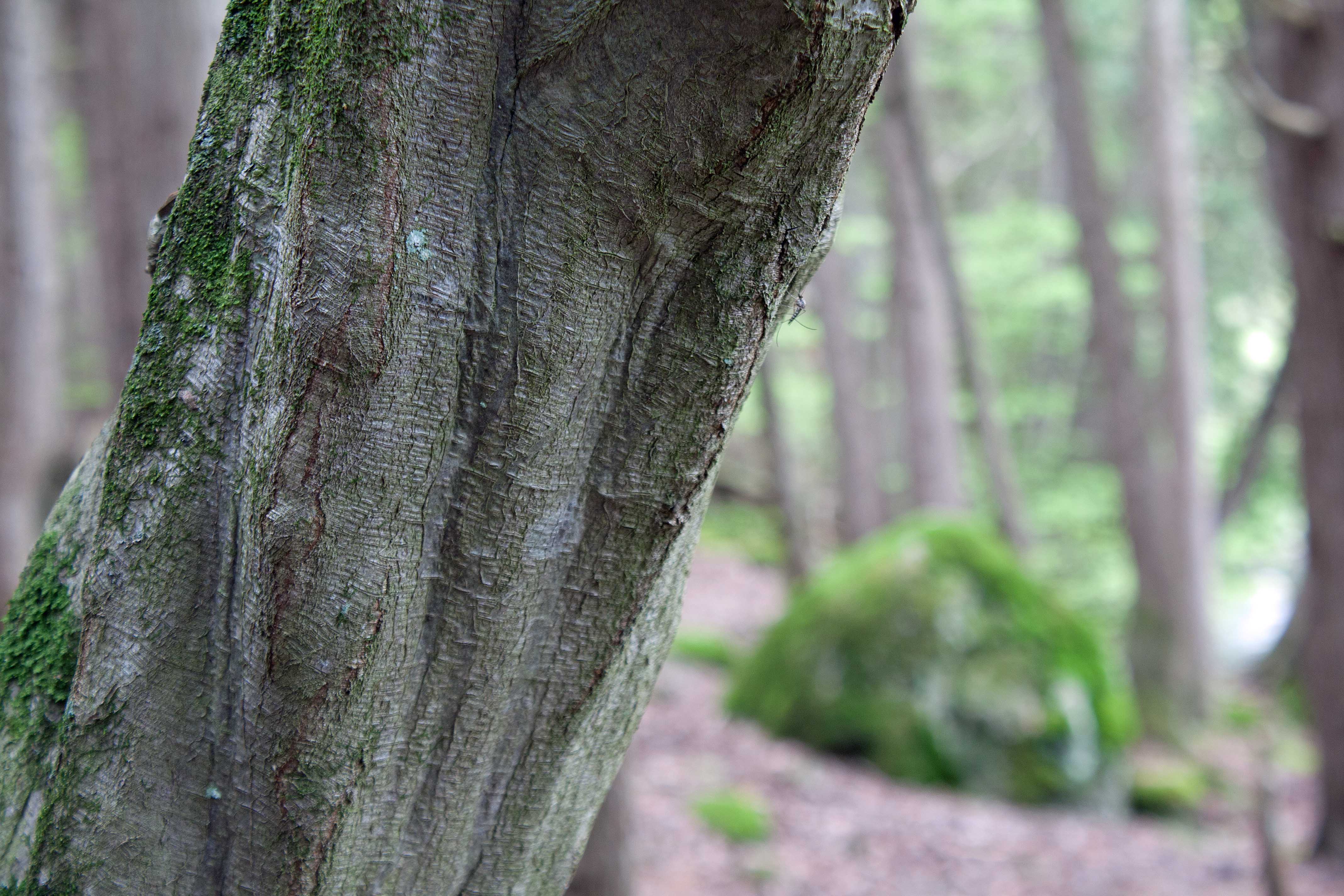
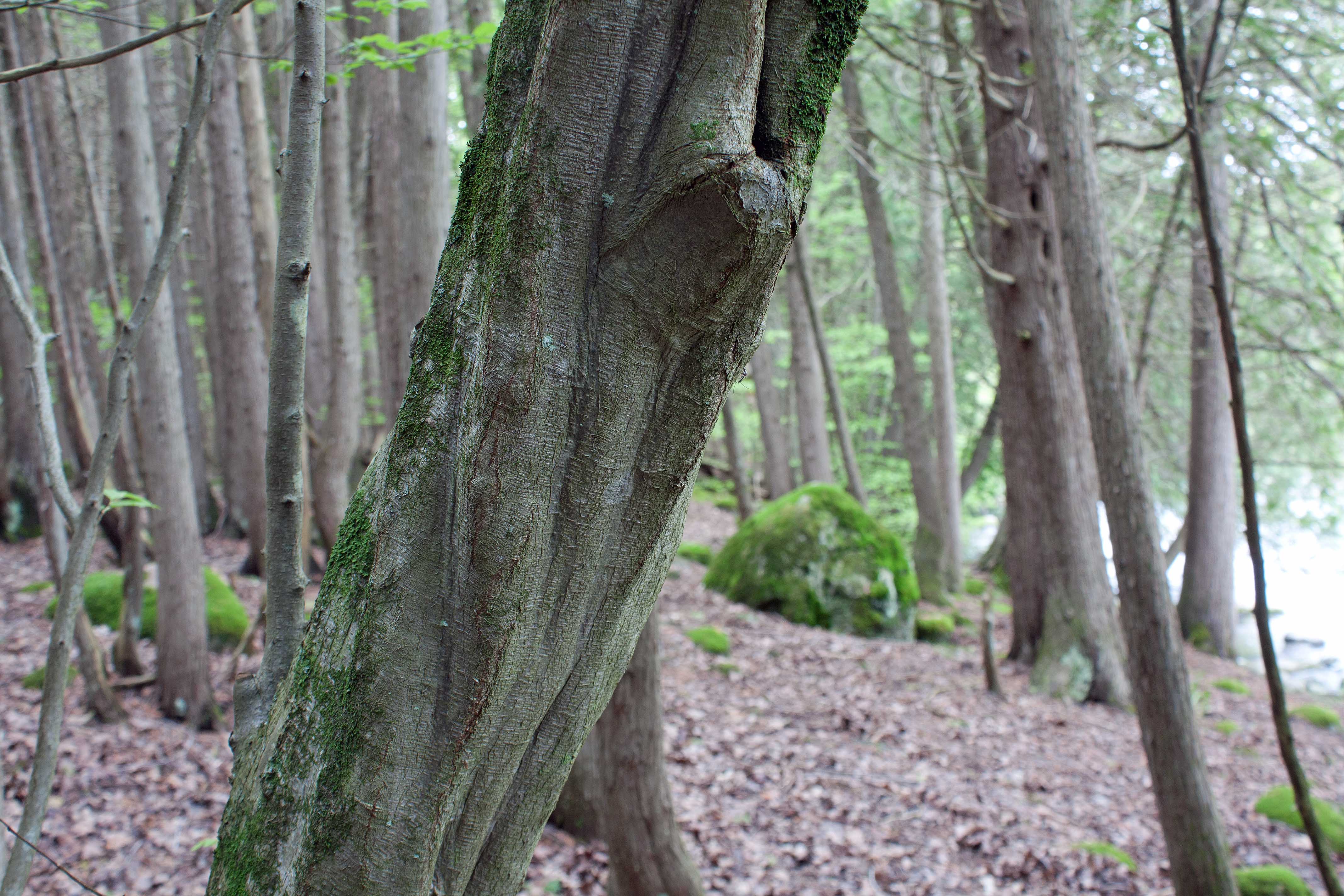
During a crisp November walk along Jackson Creek in southern Ontario’s Carolinian forest, I found several handsome understory trees beneath the canopy of mostly cedars that reminded me of the beech tree because of their smooth blue-grey bark and similar leaves. I quickly realized that these were not beech trees (several beeches grew nearby for easy comparison), because of their sinewy ‘muscled’ bark and the way they spread their slender branches. Being a diligent Nature detective, I checked the ground for clues and found papery dried fruiting bodies that were definitely not beech nuts.
.
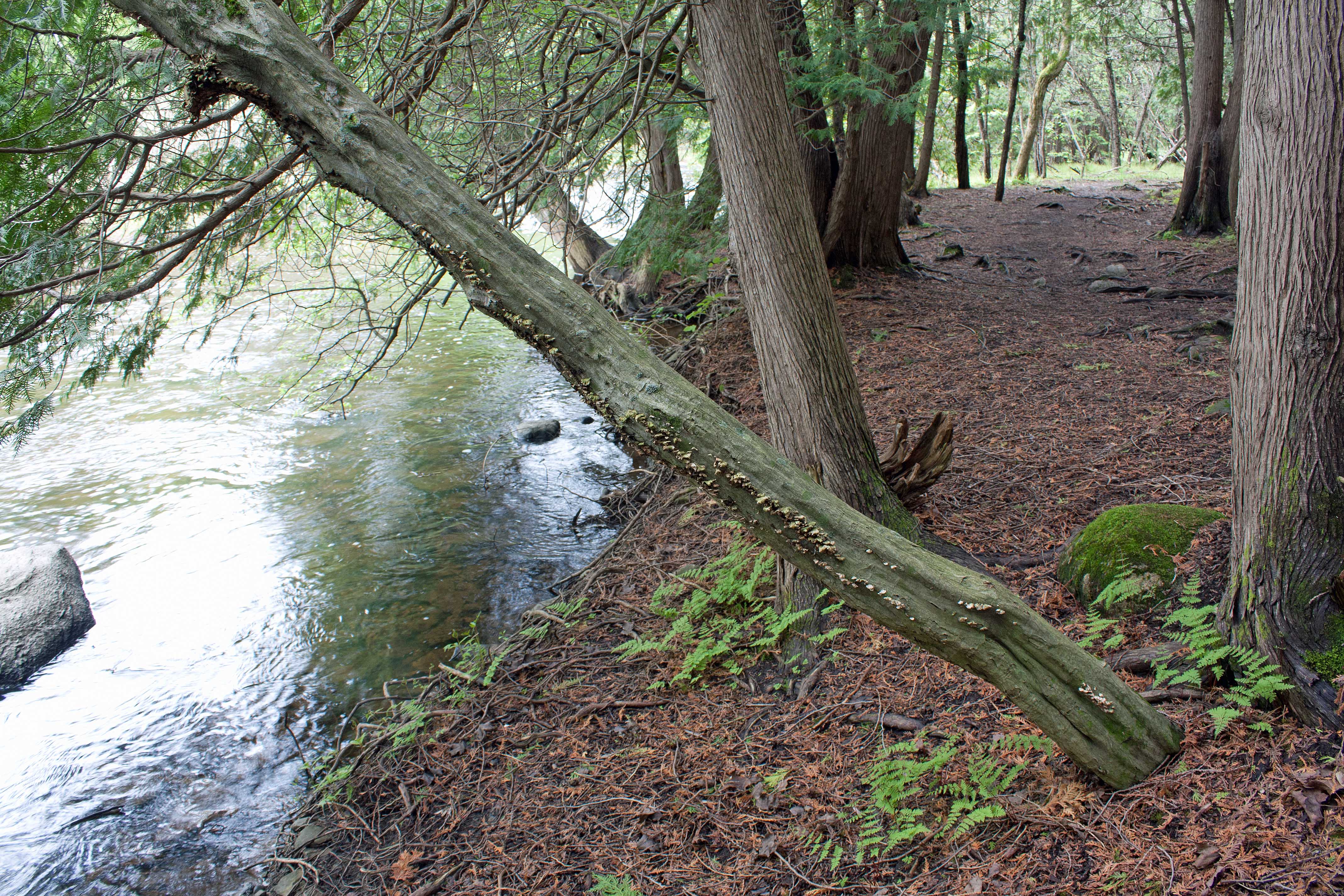
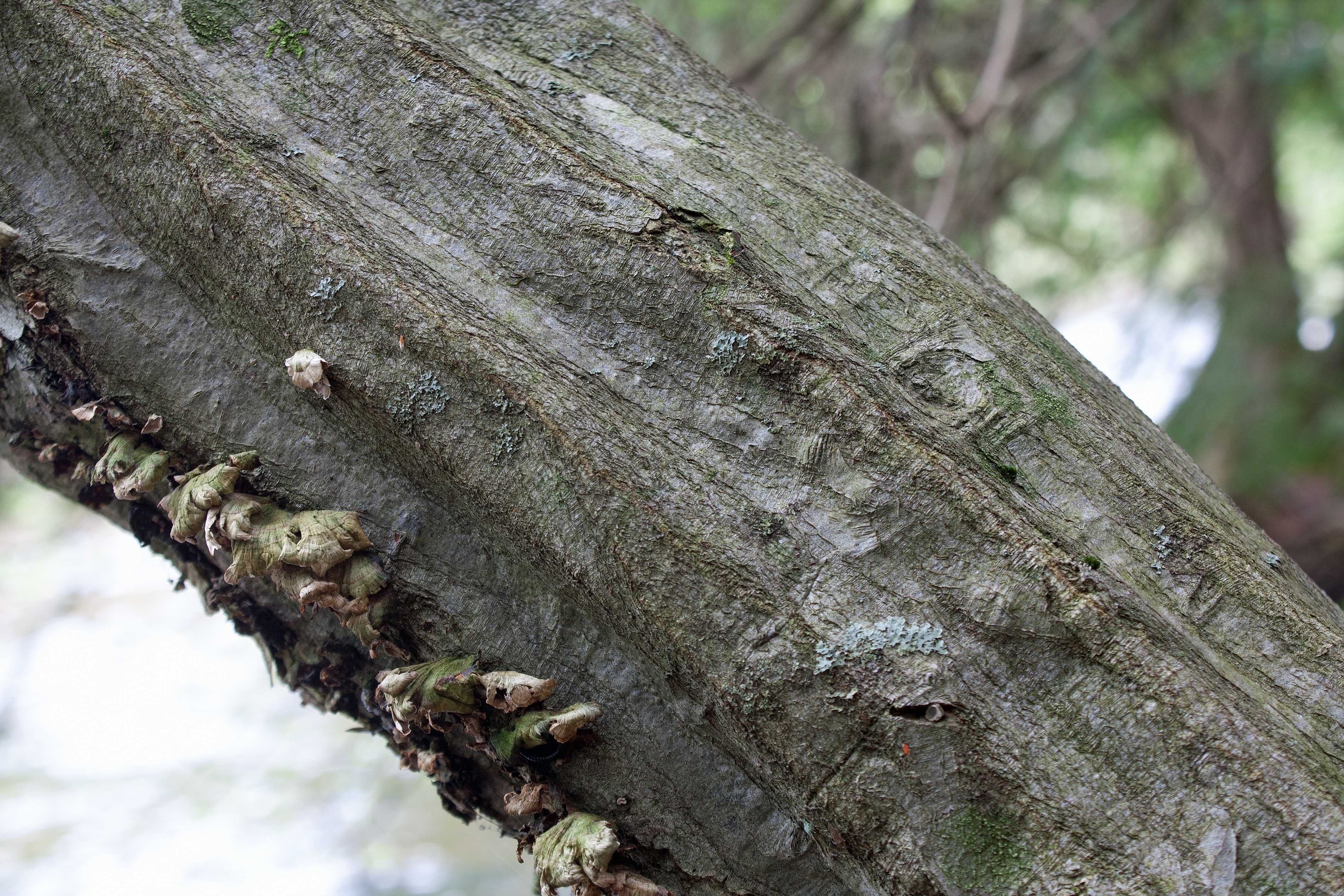
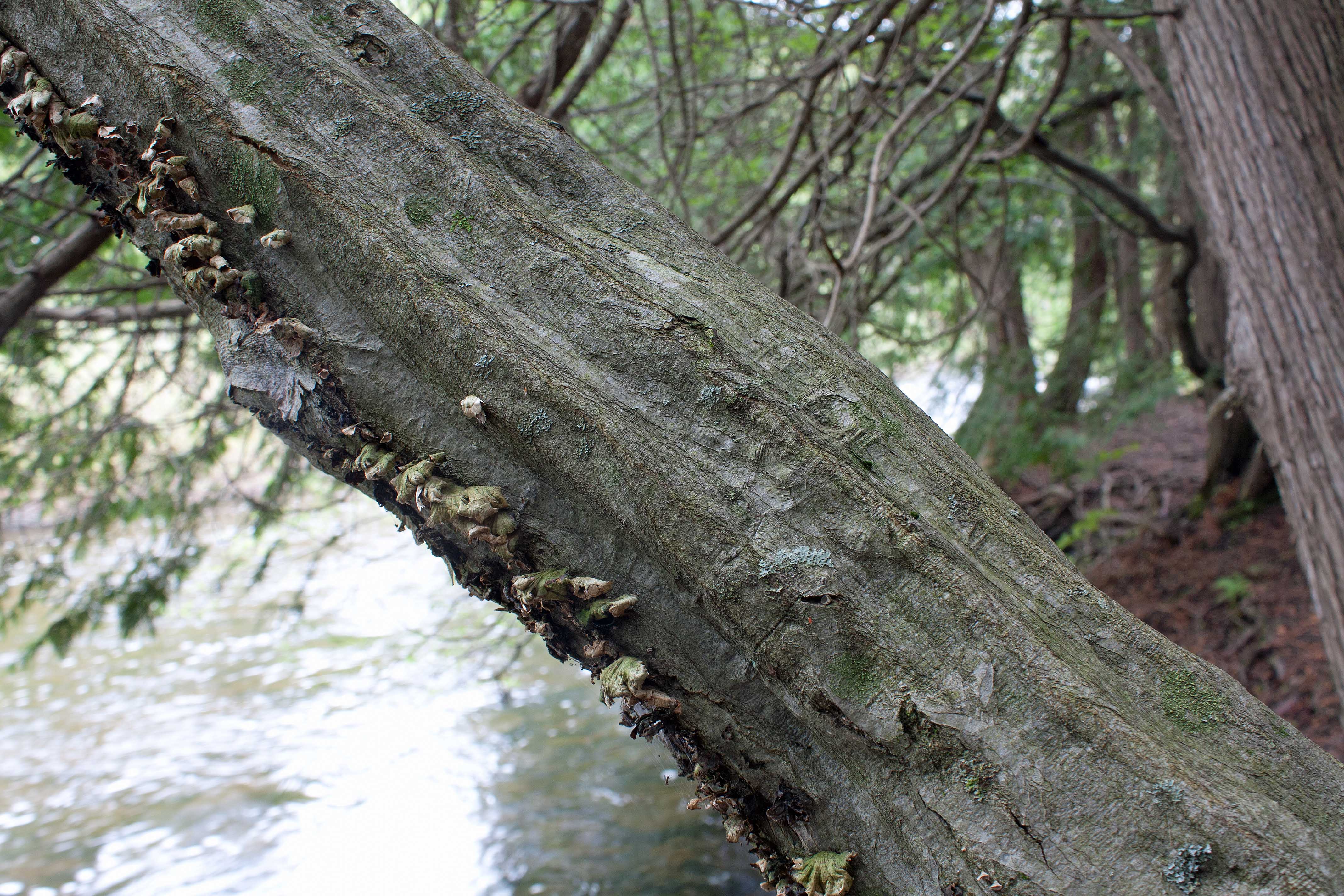
Several were bending precariously over the creek, defining them as a tree that likes moist lowlands and stream banks, beneath an overstory of maple-beech-hemlock-cedar and oak. This little tree showed serious attitude when it came to water. It didn’t just send limbs bending over the stream; its entire body leaned over the creek, its bark rippling like straining muscles over the water.
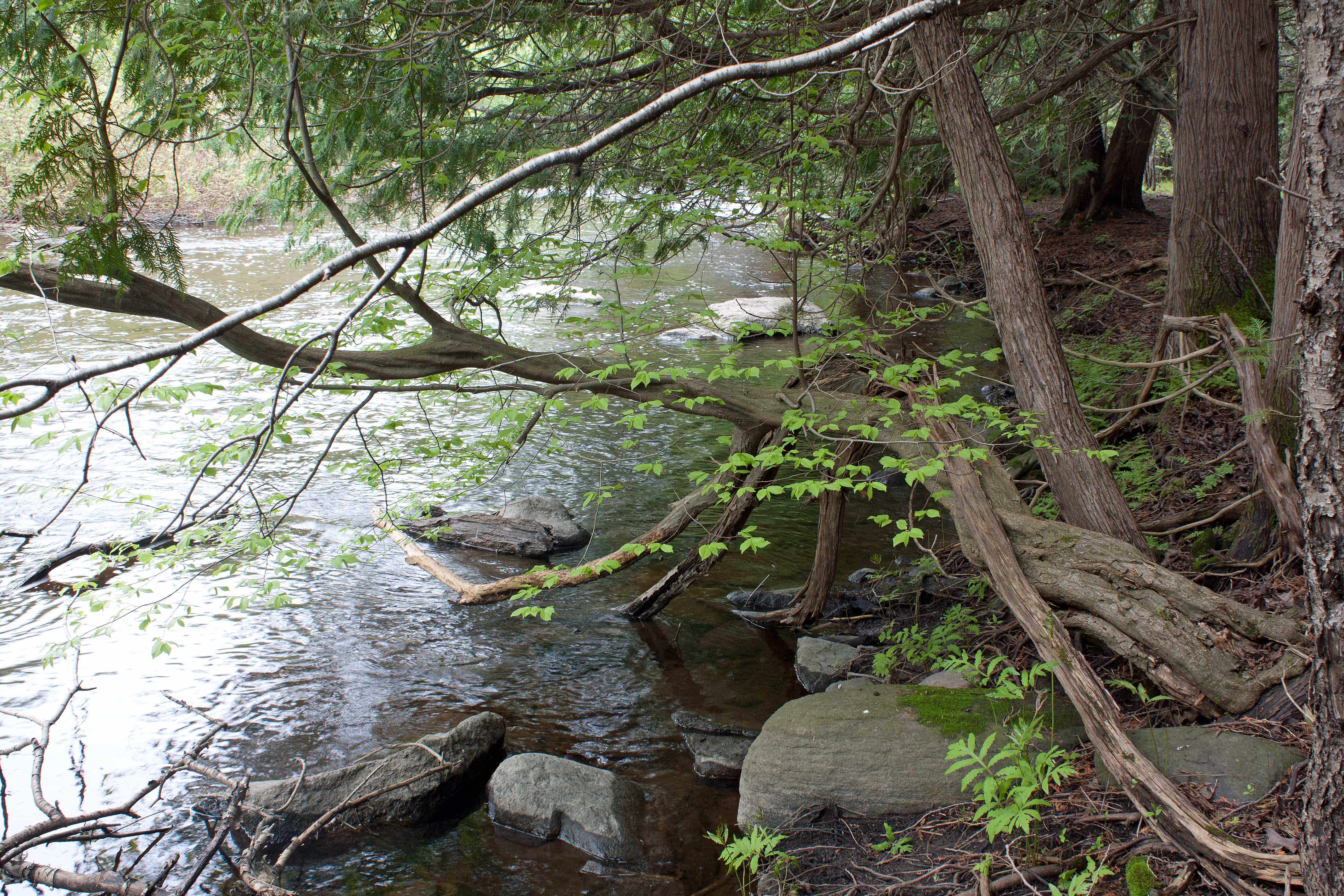

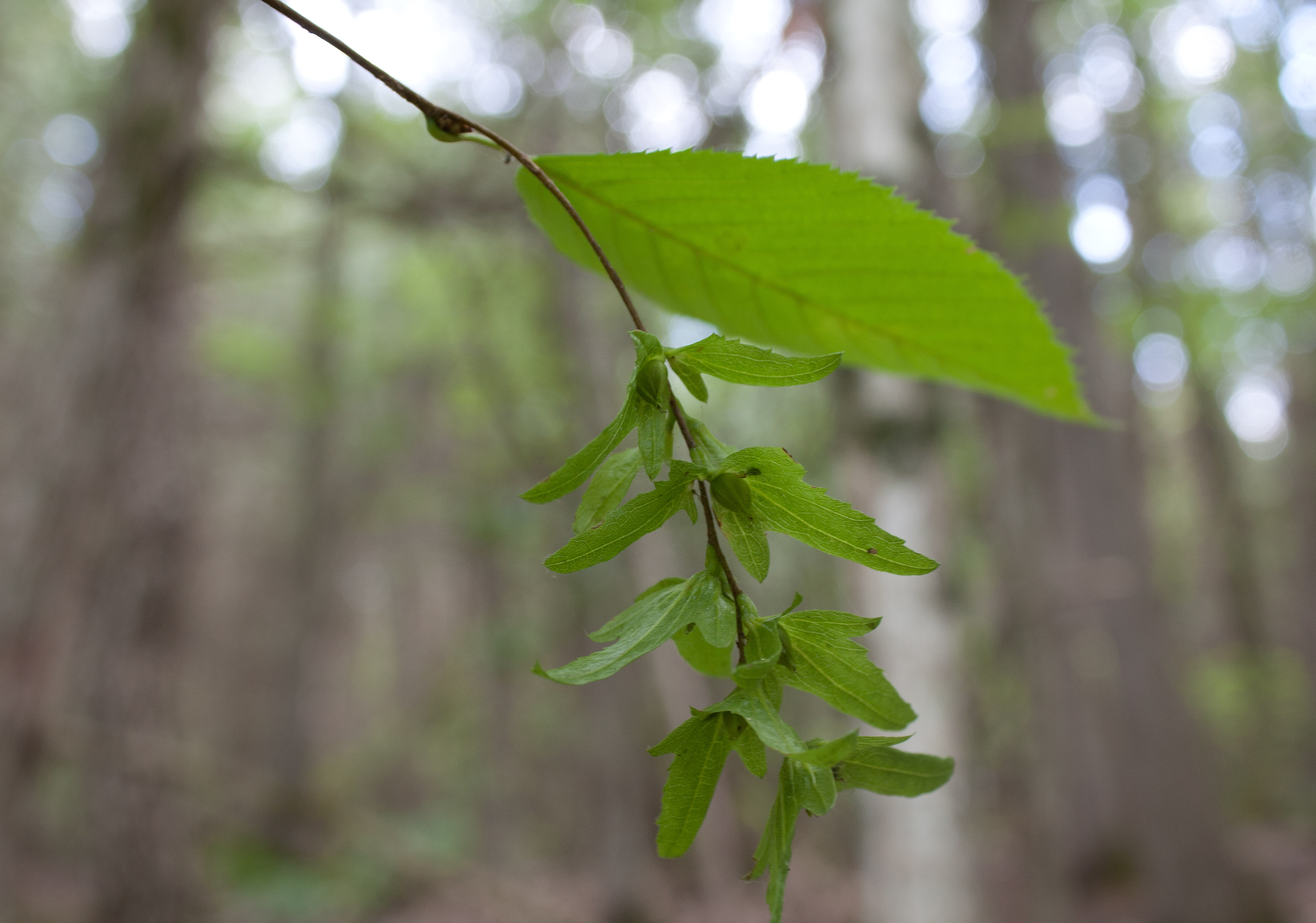
the small-stature of this tree and its tendency for multiple stems—even small colonies from root suckers—gave it a shrub-like appearance. On a later visit in summer, I positively identified the small tree by its little green fruiting bodies dangling from several branches. It was an American Hornbeam (Carpinus caroliniana), also known as Blue Beech.
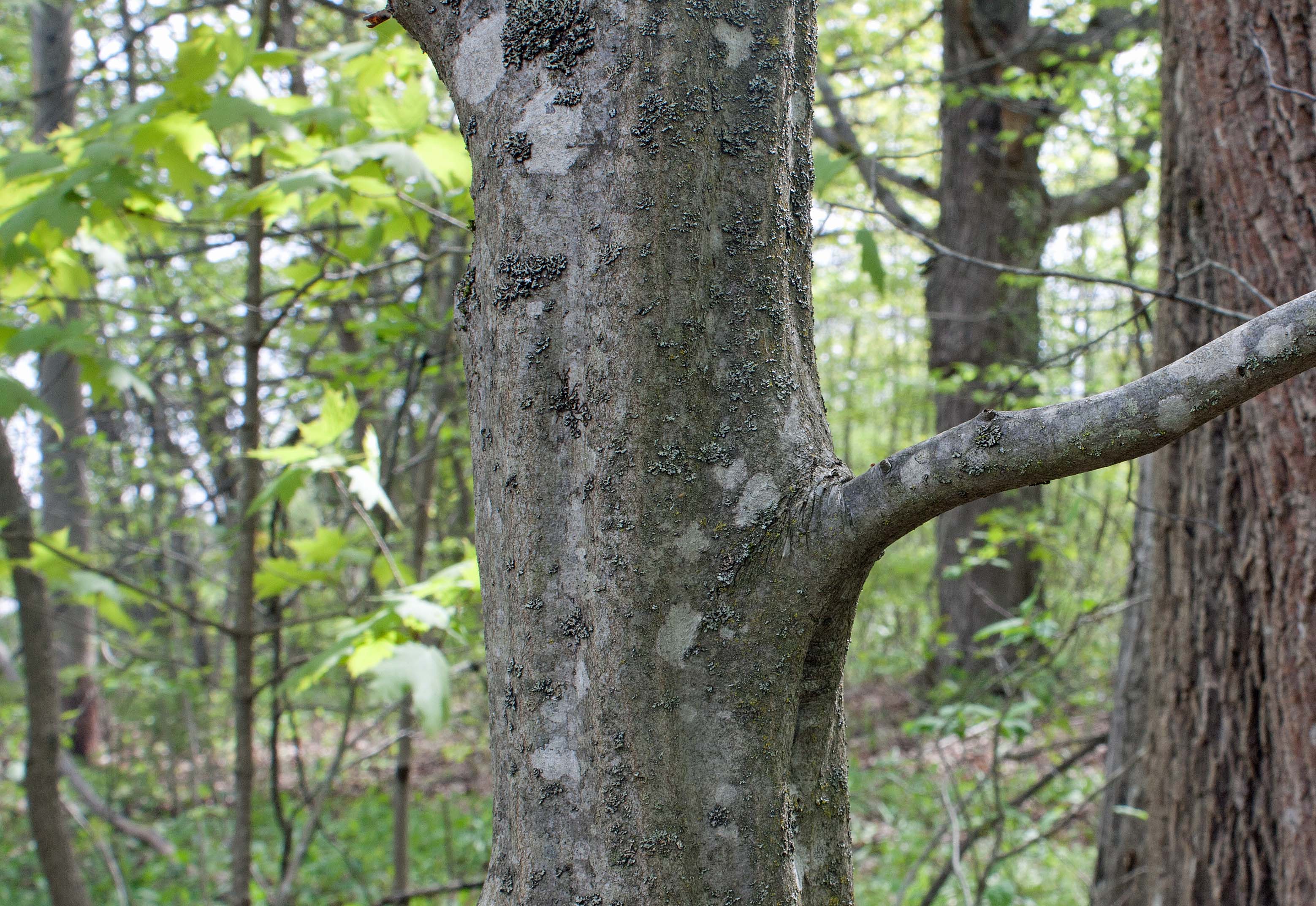
It’s called a Blue Beech because of its strong resemblance to the beech tree with its smooth grey wood; but this small tree is also called ‘ironwood,’ due to its very dense and hard wood, and ‘musclewood tree’ or ‘muscle-beech’ for its muscle-like ridges on smooth-gray beech-like trunk. The name Blue Beech is, in fact, a misnomer, given that this tree is in the birch family and unrelated to Beech (Fagus spp.) trees.

.
How to Identify the Blue Beech / American Hornbeam Tree
The American Hornbeam (Carpinus caroliniana) should not be confused with another tree that is also called ‘ironwood’, the American Hop-hornbeam (Ostraya virginiana). According to The Druids Garden, the American Hornbeam or Blue Beech has similar dense hard wood, leaves (elliptic, simple and alternate and sharply double-toothed) and hop-looking fruit to the American Hop-hornbeam.
The key difference between these two ‘ironwoods’ is their size, the bark of the trunk and their reproductive parts. Mature Blue Beech bark is light grey to blue-grey, smooth and sinewy, and the tree typically reaches 4-5 inches in diameter; a mature American Hop-hornbeam has a shaggy bark resembling Shagbark hickory and can reach much taller and wider trunk size (60 feet high and two feet wide). Although their leaves closely resemble one another, the under surface of Blue Beech leaves are dotted with tiny dark brown glands, unlike the Hop-hornbeam. Lastly, the female flowers and seeds/nutlets of these two ironwoods—though having some similarities—are also quite different. The seeds of the American Hop-hornbeam reside in a cluster of inflated flattish sacs; the seeds (nutlets) of the American Hornbeam sit inside a 3-cleft bract that is flat and open.
.

The Blue Beech occurs in the same type of habitat as the American Hop-hornbeam. I found them both near the banks of Jackson Creek and other creeks in the Kawarthas; in one case growing right next to one another. I later found them growing together in several other maple-oak-beech forests.
Blue Beech Distribution & Ecology

.
The Blue Beech is a small, slow-growing tree that reaches about eight metres high, making it one of the smaller trees in the Carolinian forests and with a shorter life span. This understory tree in the Carolinian forest grows in spaces between the taller overstory trees—a mix, depending on soil and moisture of maple, beech, hemlock, cedar, pine, basswood, oak and white and yellow birch. In the Jackson Creek forest, I found it standing beneath the shaded canopy of cedar, oak, beech, yellow birch and black walnut.
The Blue Beech is very shade tolerant tree, effectively using the sunlight filtering through the upper canopy. It’s commonly found on lower slopes, along streams and lake shorelines and grows best in moist, rich and well-drained sites with a high tolerance for seasonal flooding. This versatile tree grows in sandy, loamy and even clay soils.
.
Blue Beech Reproduction
.
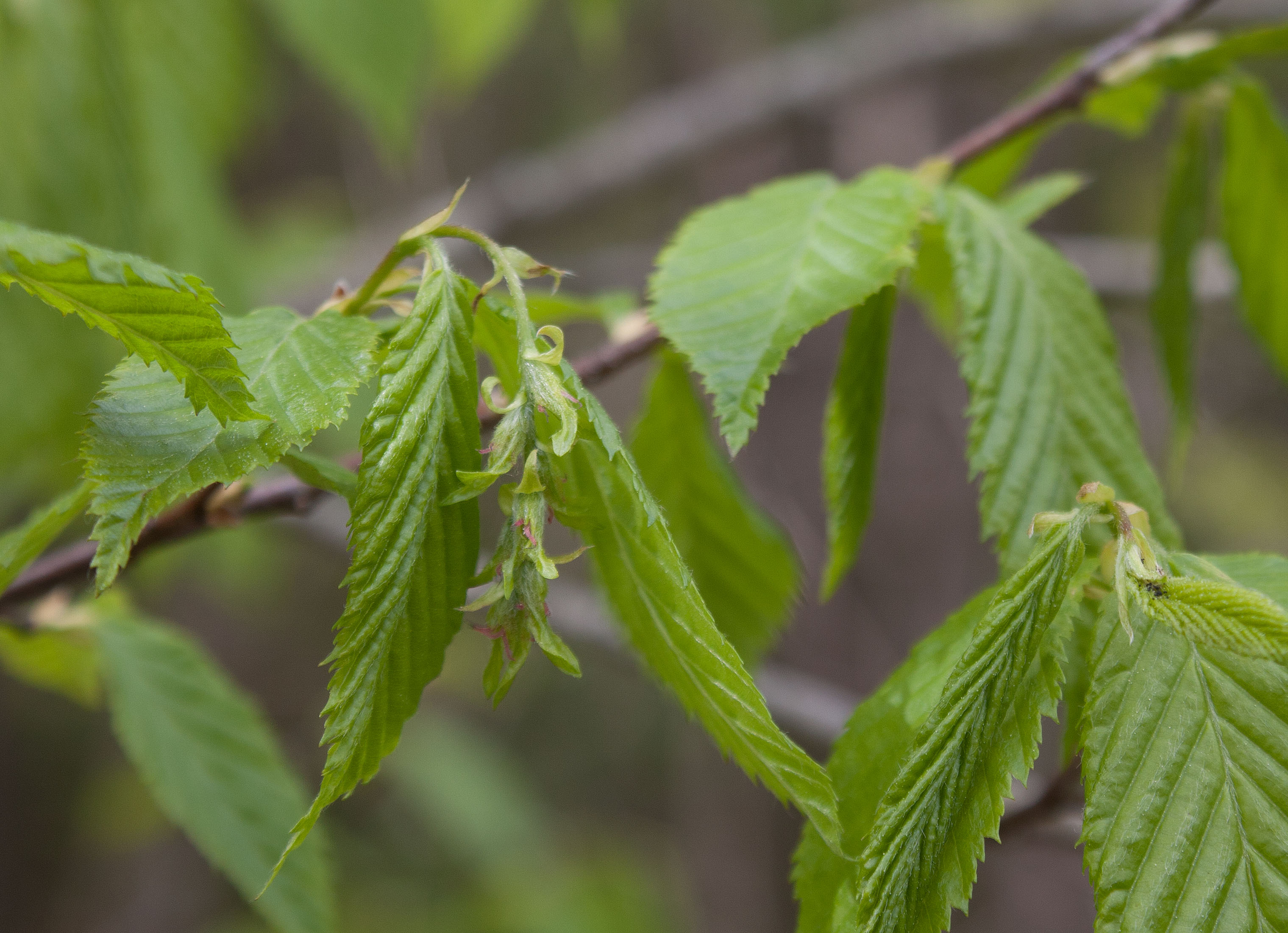
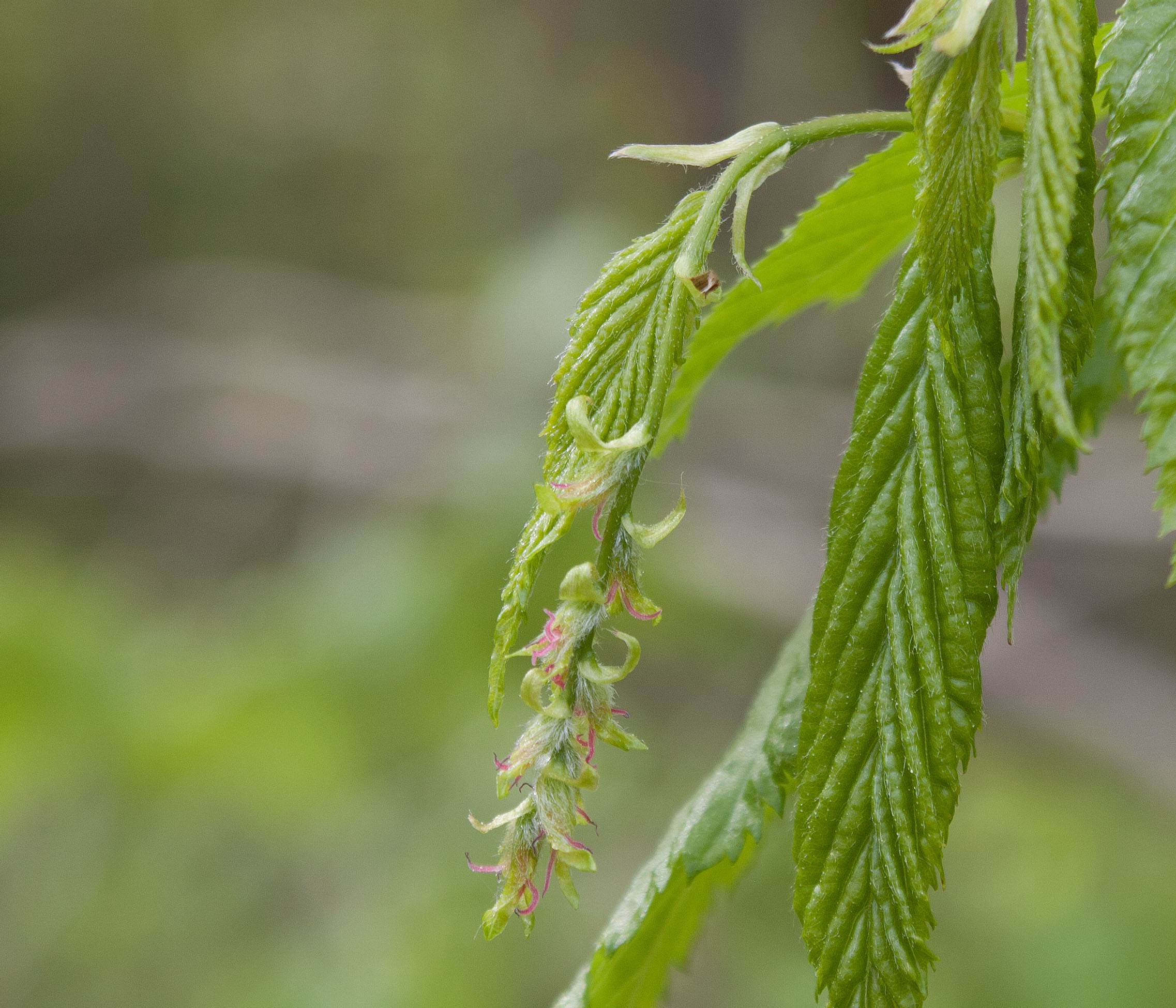
The Blue Beech starts producing fruit after about fifteen years until about seventy-five years. The tree produces both male and female flowers that dangle in clusters (racemes) called catkins on the same tree (making it monoecious) says ReForest London. The yellow male catkins remain during the winter; the shorter female green catkins show up in the spring at the tips of new leafy shoots. On windy days, the tree can self-pollinate. Its nutty fruit grows in elongated clusters that ripen in November.
.
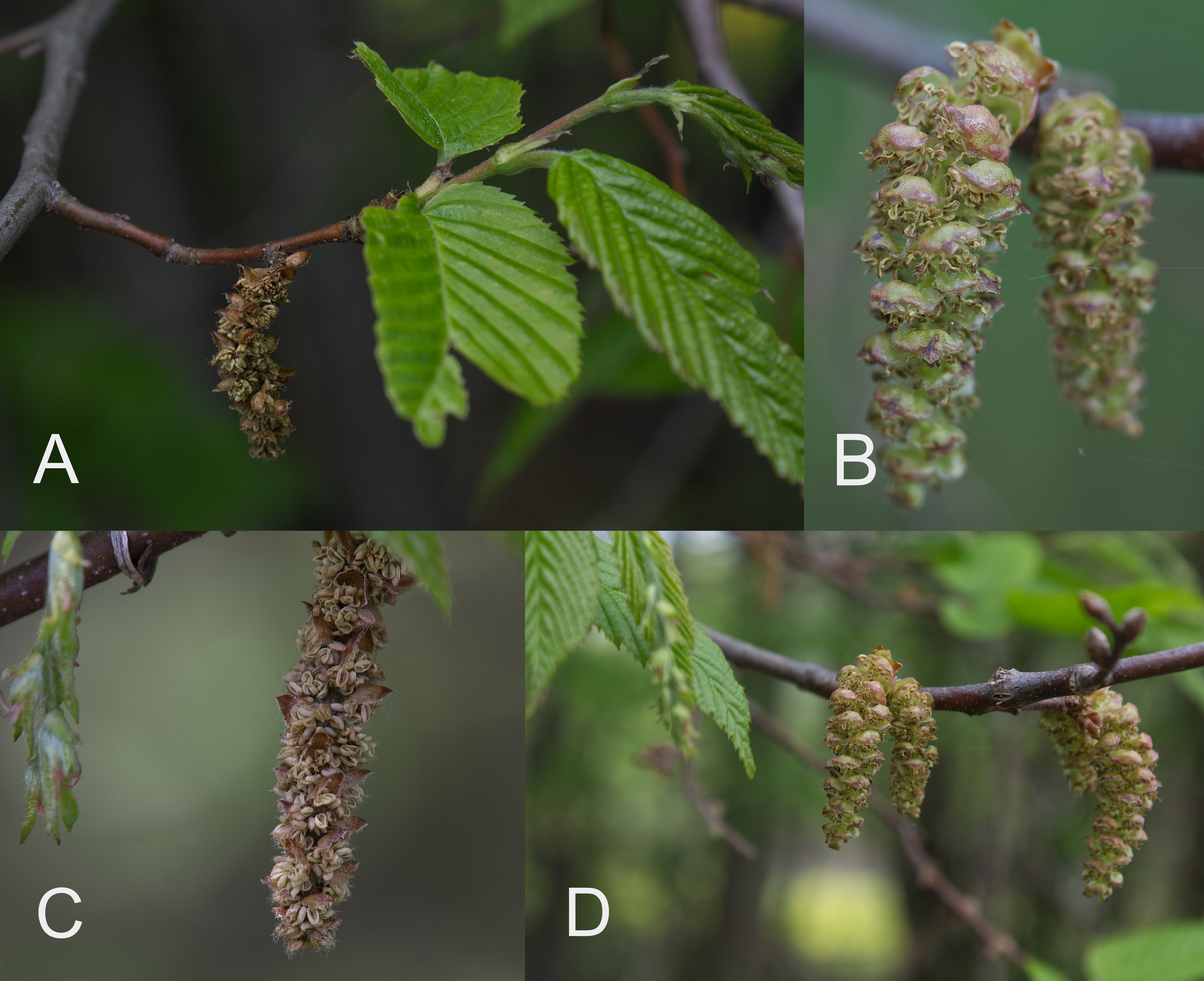
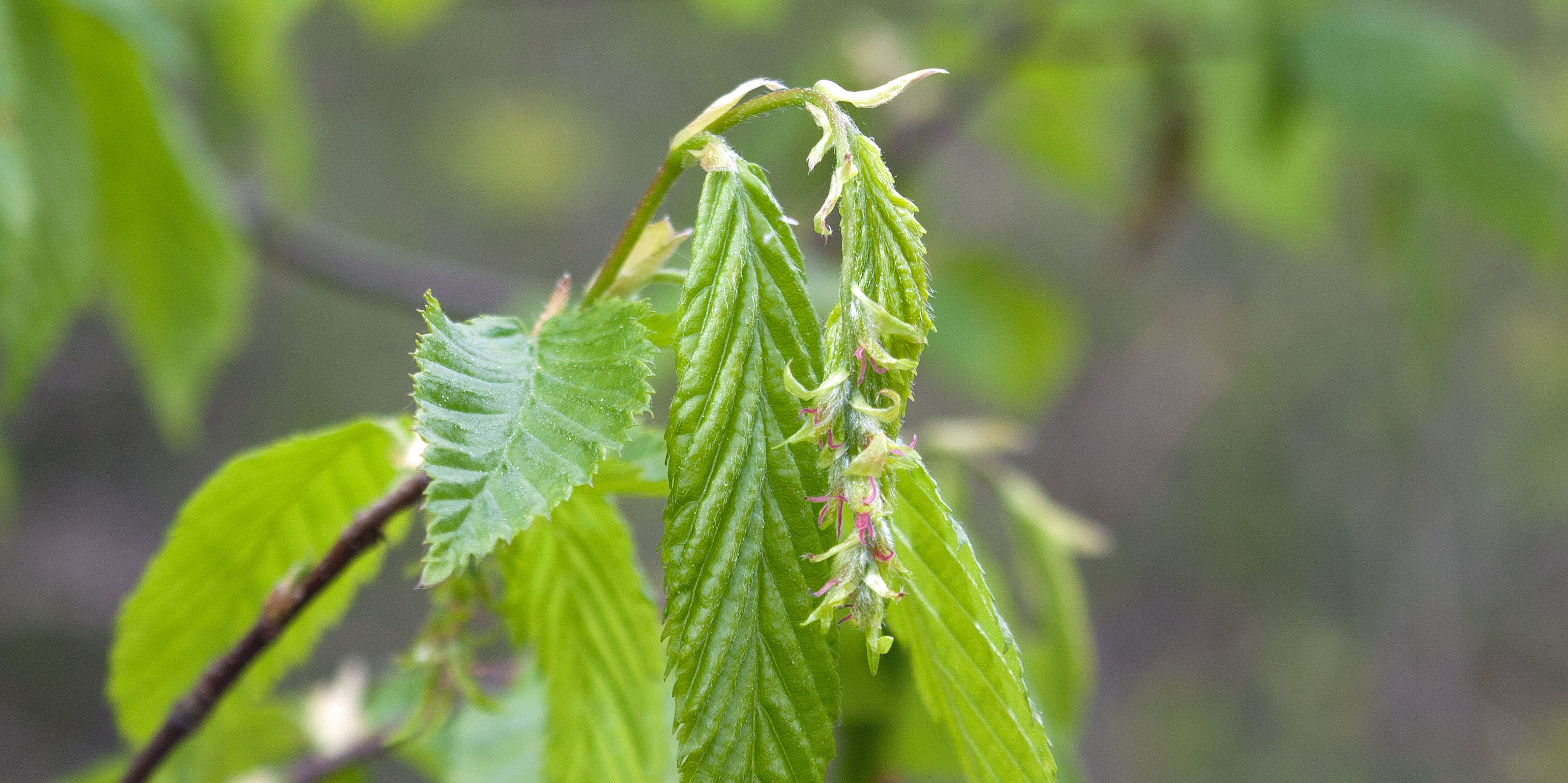
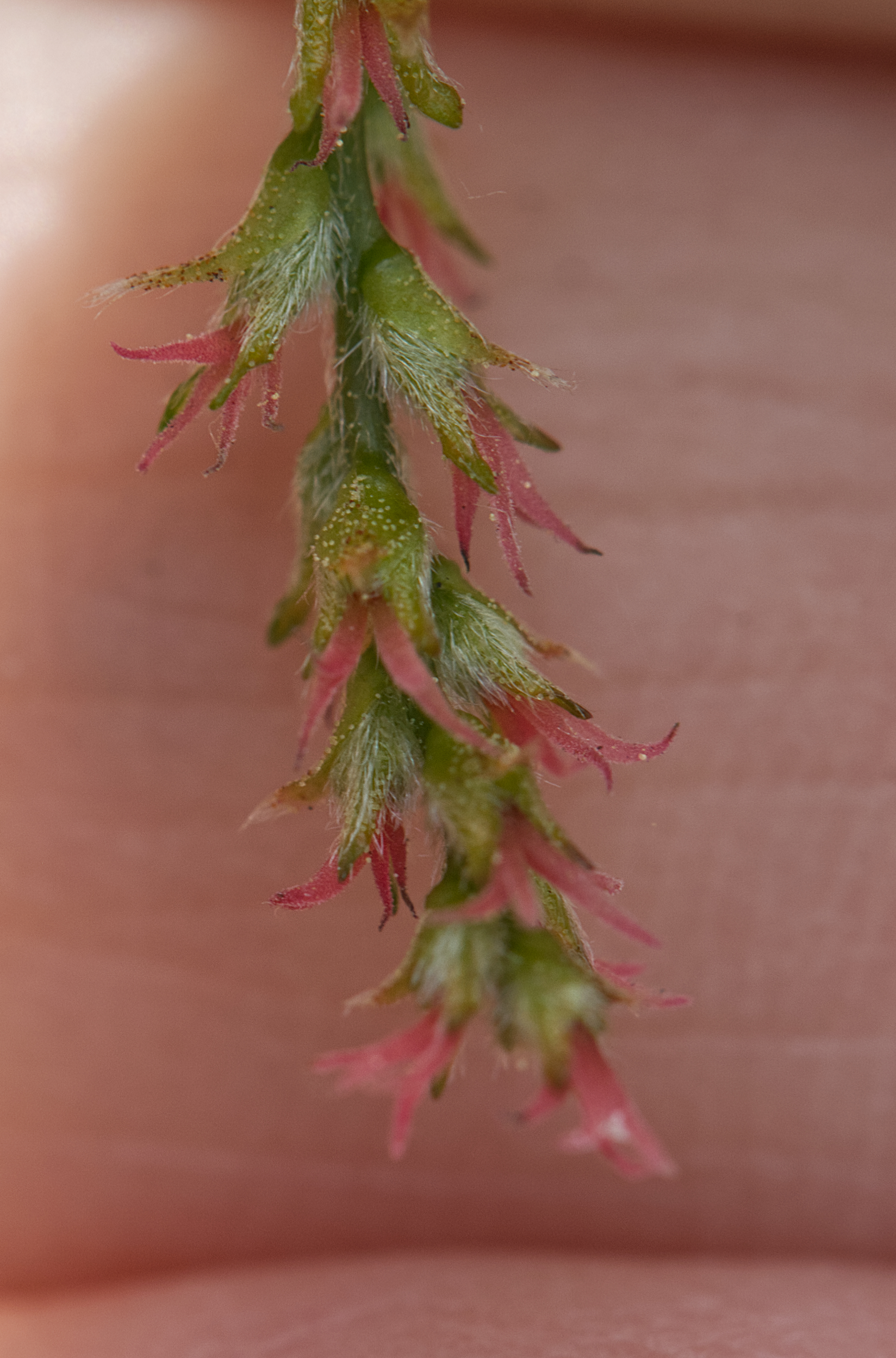
Minnesota Wildflowers describes the female catkins as occurring at the tip of new branchlets, with paired flowers, each with a hairy, leaf-like bract and red styles. The bracts eventually grow to 1 inch or more long, becoming 3-lobed with smooth or irregularly toothed edges.
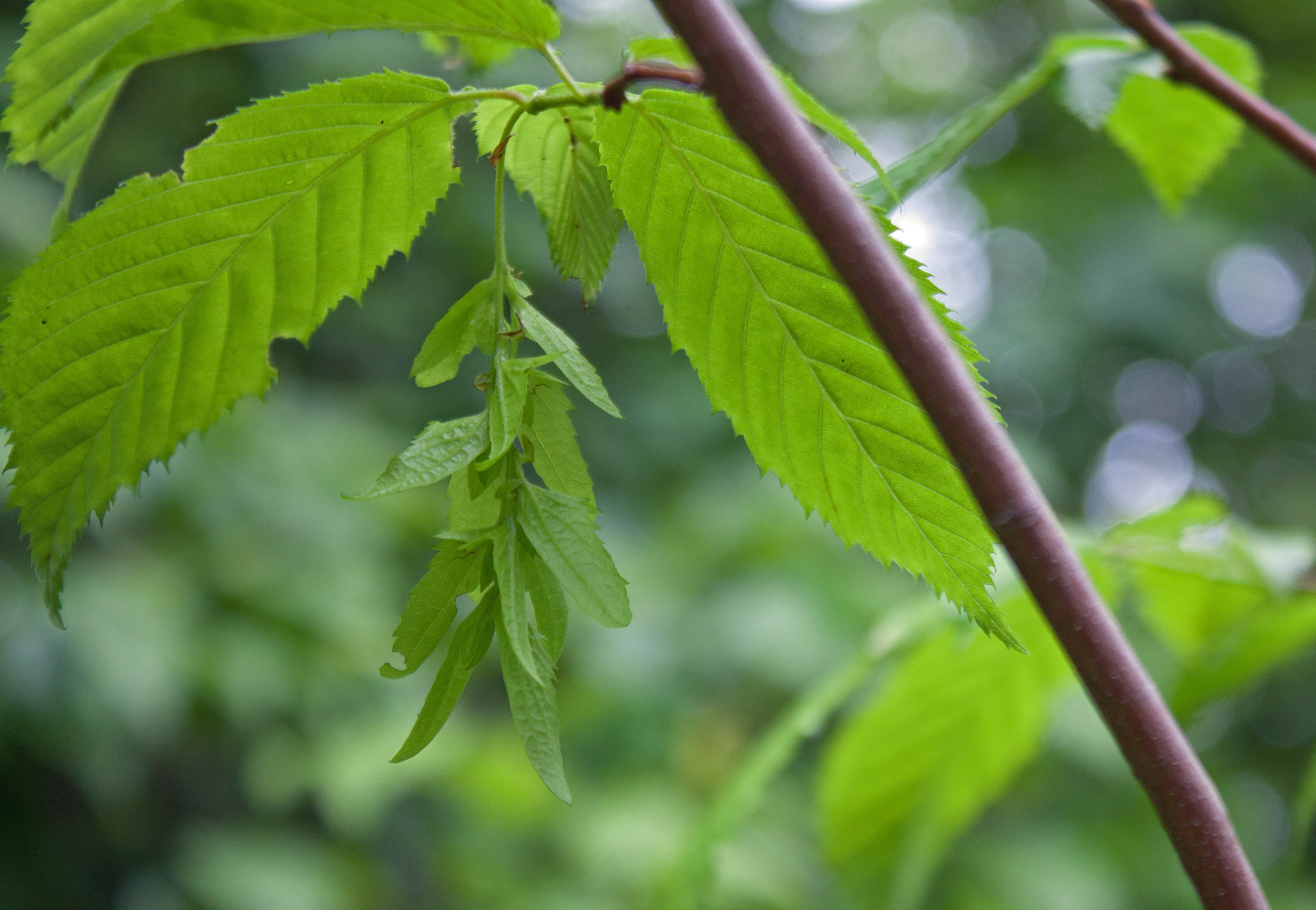
Once fertilized, the fruiting catkins form 3-inch long clusters of pendulous samaras containing pairs of greenish hairy nutlets. Each nutlet sits in the axil of a leafy three lobed bract that yellows and grows papery with age.

.
The Blue Beech also reproduces more of itself by sending out root suckers and creating multiple stems.
.

.
Wildlife Benefits of Blue Beech
According to Ontario.ca, deer, beavers and other mammals browse blue beech twigs and leaves. Seeds, buds, twigs and leaves are a food source for songbirds, wild turkeys and small mammals such as squirrels. Although Guelph University Arboretum mentions that most mammals avoid eating American Hornbeam twigs and branches for their unpalatable taste. Blue beech is also host to several butterfly species.
.

.
Human Uses for Blue Beech
Blue beech wood is dense and tough, but the tree’s small size makes it a poor choice for lumber. Early settlers used the wood to make bowls and tool handles. It is currently used for flooring, cogs, tool handles, golf clubs, and some furniture. Indigenous people use the blue beech for medicinal purposes.
.
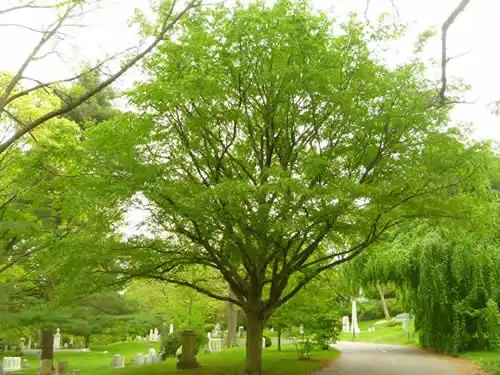
Given its adaptability to urban sites the Blue Beech provides a handsome addition to a city property. Apparently it can also be pruned as a hedge once established.
.

Nina Munteanu is a Canadian ecologist / limnologist and novelist. She is co-editor of Europa SF and currently teaches writing courses at George Brown College and the University of Toronto. Visit www.ninamunteanu.ca for the latest on her books. Nina’s bilingual “La natura dell’acqua / The Way of Water” was published by Mincione Edizioni in Rome. Her non-fiction book “Water Is…” by Pixl Press (Vancouver) was selected by Margaret Atwood in the New York Times ‘Year in Reading’ and was chosen as the 2017 Summer Read by Water Canada. Her novel “A Diary in the Age of Water” was released by Inanna Publications (Toronto) in June 2020.
.
 The Meaning of Water
Hornbeam (blue beech) is technically a beech tree.
LikeLike
Actually, it isn’t. Blue Beech (Carpinus caroliniana) is more closely related to birch than other beech trees.
LikeLike