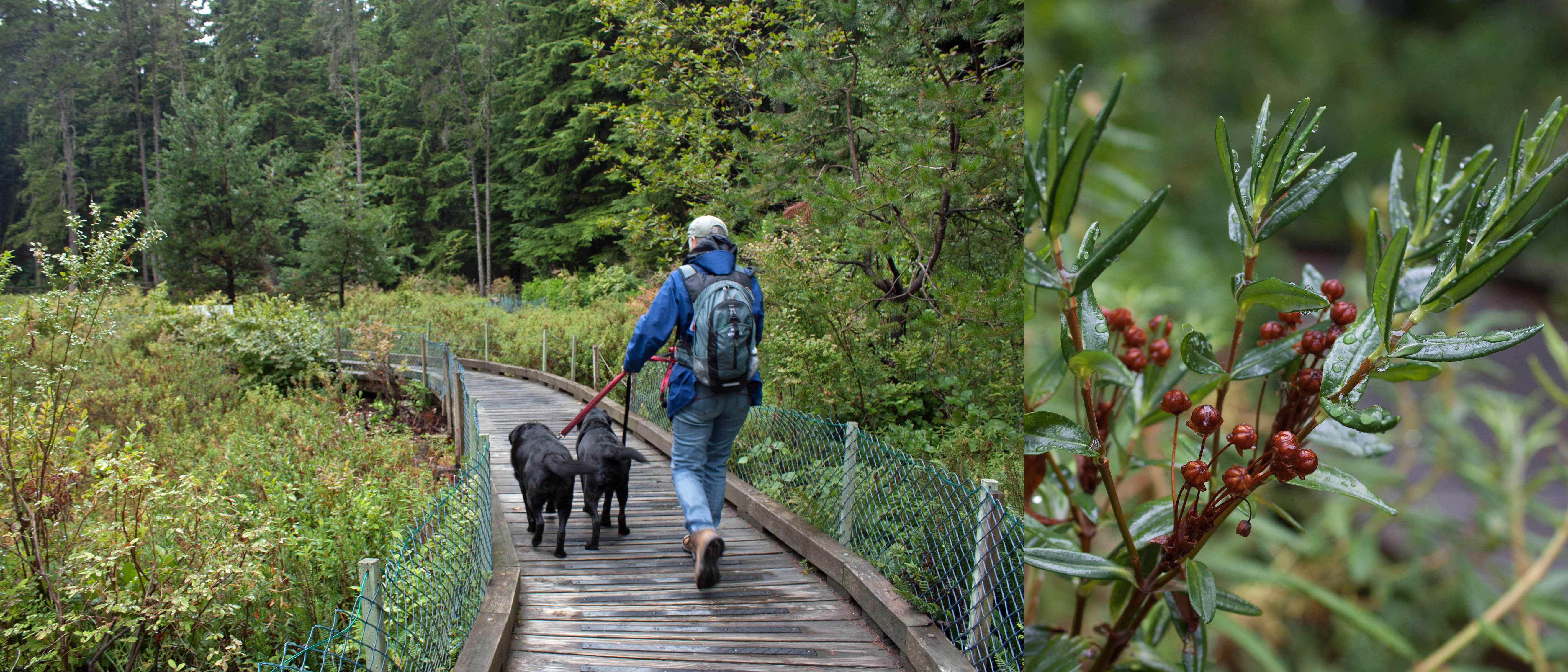
Since moving back to British Columbia and the Vancouver area this past summer, I’ve been enjoying my walks in the city. Some of my favourite places so far include Pacific Spirit Forest on UBC land, strolling in Camosun Bog then enjoying a wonderful matcha cake at Sweet Obsessions Café & Bakery on 16th.
.

.
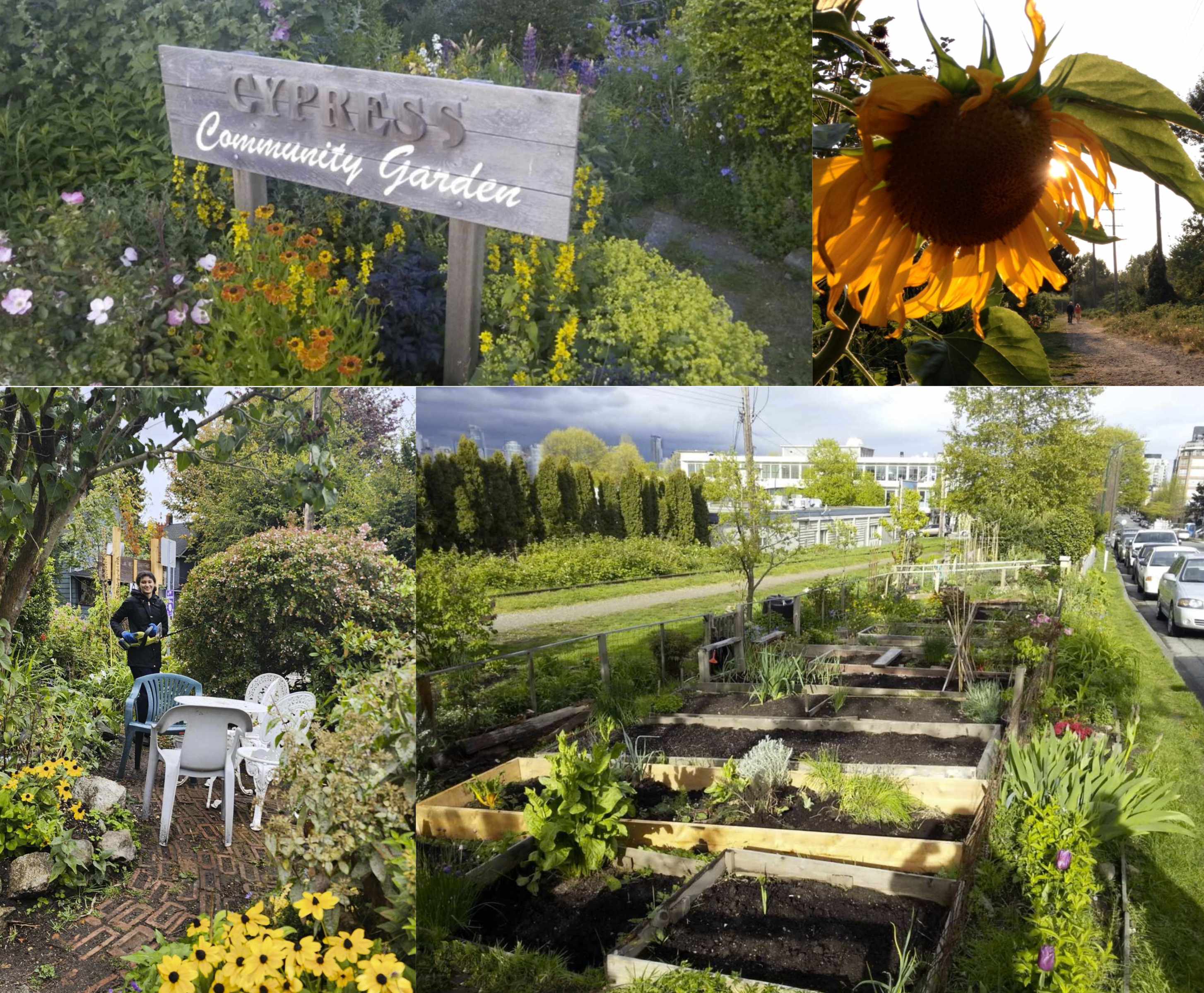
Another favourite thing to do is walk the Cypress Community Gardens with friends along the Arbutus Greenway, followed by a coffee and pastry at the Arbutus Cafe.
.

.
Vancouver hosts over a hundred community gardens and orchards for residents to grow their own food and connect with nature. Community gardens add so much natural beauty to the city. They are a wonderful resource for urban communities. They provide more than just gardening space for a community with no direct access to a garden; they enhance physical and mental health, enable stronger social connections, and increase access to fresh food. They are a place to walk, to meet people, and enjoy nature in an urban setting. Community gardens also support environmental sustainability and provide green space that improves stormwater management.
But, there are also hidden dangers…
.

.
A 2014 UBC study showed that “the community garden at 16th and Oak in Vancouver has more zinc and lead contamination than a brownfield that was used to dump scrap metal for 15 years,” writes Artemisa Forbes in a recent LinkedIn post. The metals, writes Forbes, aren’t just in the soil; they’re accumulating in the plants with higher concentrations in the shoots (the parts you eat).
The major source, of course, is traffic. Major contributors include vehicle exhaust, tire wear, and break dust, which travel as ‘dust’ in the air and settle on the ground or carried by rain and runoff. This urban runoff carries contaminating heavy metals, PAHs, PCBs, pesticides, herbicides and other hormone disrupting chemicals.
.

.
The UBC study tested three Vancouver sites: a university farm, a former scrap yard and this community garden on 16th and Oak. The farm, unsurprisingly, had the lowest concentrations, but was still contaminated.
This raises an issue with urban gardens, particularly those devoted to growing vegetables, herbs and other edibles for human consumption. “Growing vegetables 20 meters from a major road might be worse for your health than buying produce from a farm 50 km outside the city,” writes Forbes.
Sustainable and healthy gardening in the city relies on understanding where contamination comes from. Things to consider include traffic proximity and intensity; site history; and local air quality. Air quality figures notably here; the UBC study suggested that the contamination was related more to current atmospheric deposition (e.g. from current deposition of traffic exhaust, brake dust, and tire wear) than historical contamination (in the soil).
The bottom line, Oka and colleagues tell us, is that proximity to current contamination sources (e.g. traffic sources) should be considered even if the soil underneath started clean (e.g., no historical contamination).
.

.
References:
Forbes, Artemisa. 2025. Linked-In post, retrieved November 29, 2025.
Munteanu, N. 2017. “Why Stormwater Fees Are Necessary.” The Meaning of Water, May 1, 2017.
Munteanu, N. 2020. “Endocrine Disruption in the Age of Water.” The Meaning of Water, May 9, 2020.
Oka, G.A., L. Thomas, and L.M. Lavkulich. 2014. “Soil assessment for urban agriculture: a Vancouver case study.” J. Soil. Sci. Plant Nutr. 14(3): 657-669.
.

Nina Munteanu is a Canadian ecologist / limnologist and novelist. She is co-editor of Europa SF and currently teaches writing courses at George Brown College and the University of Toronto. For the lates on her books, visit www.ninamunteanu.ca. Nina’s bilingual “La natura dell’acqua / The Way of Water” was published by Mincione Edizioni in Rome. Her non-fiction book “Water Is…” by Pixl Press (Vancouver) was selected by Margaret Atwood in the New York Times ‘Year in Reading’ and was chosen as the 2017 Summer Read by Water Canada. Her novel “A Diary in the Age of Water” was released by Inanna Publications (Toronto) in June 2020.
.
 The Meaning of Water