.
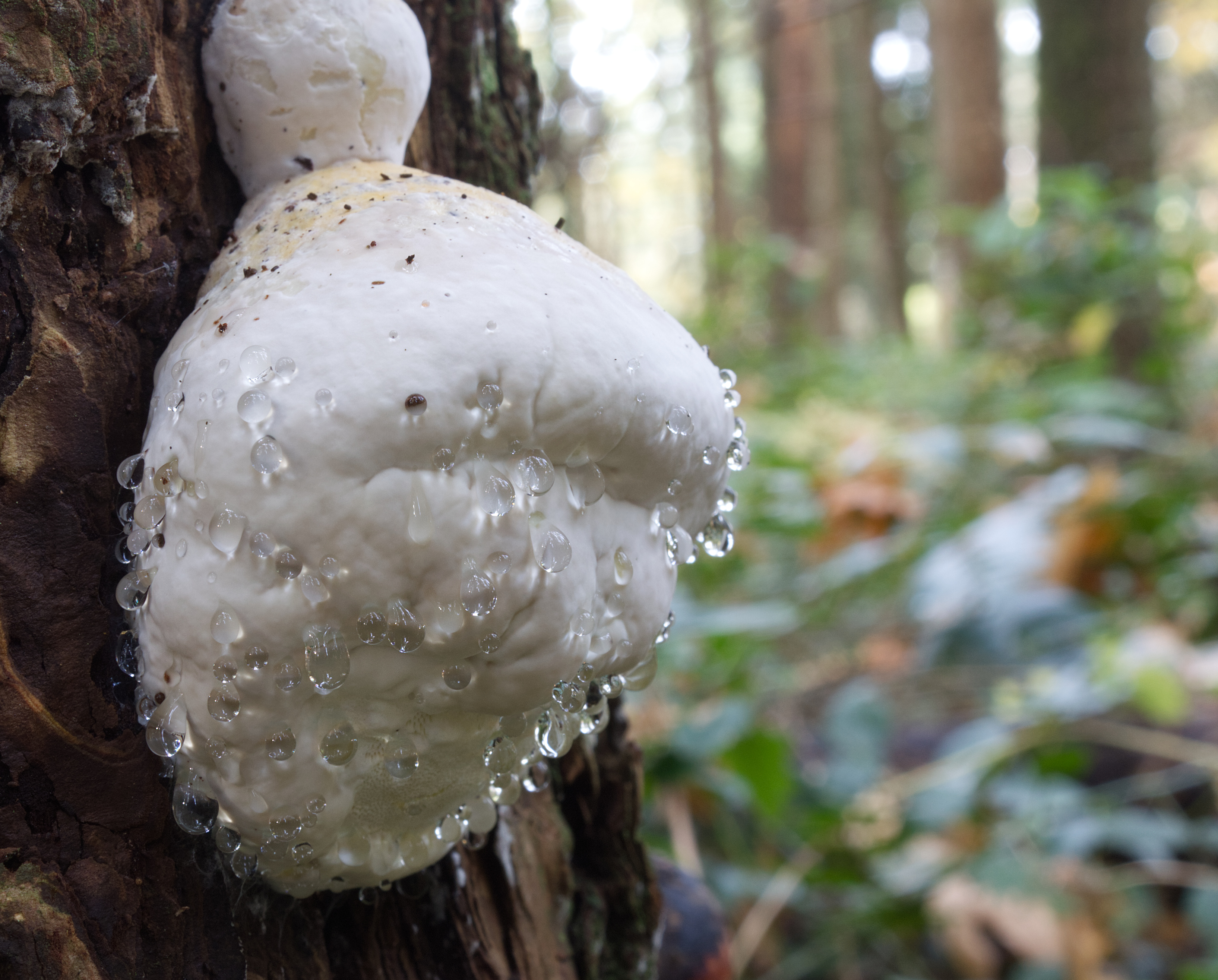
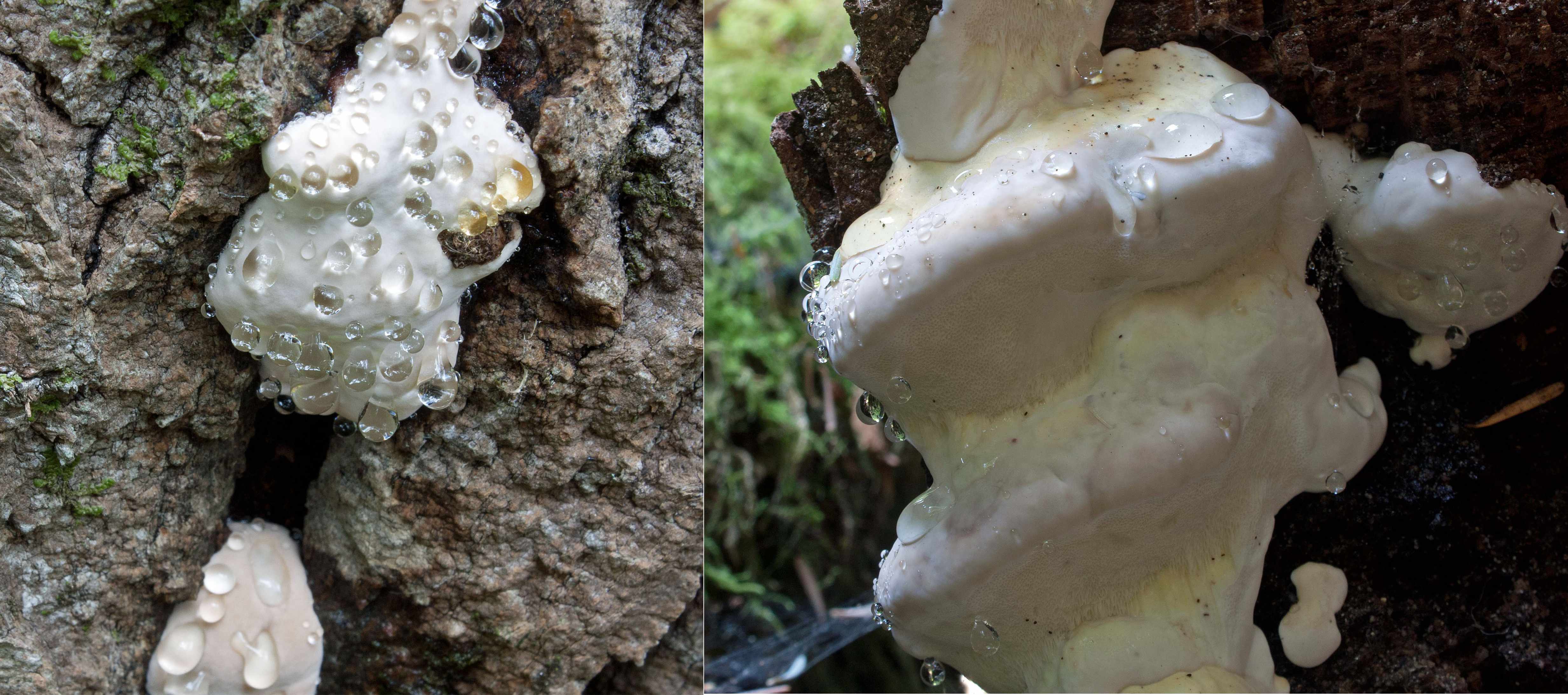
We sweat when we’re hot or nervous or excited. Plants sweat too—when they’re happy and productive, efficiently moving excess water through their systems. Fungi do this too. The word we use for plants and fungi is guttation: the exudation of liquid droplets from the mushroom’s surface, usually during rapid growth (when metabolism speeds up) in high humidity and when the ground is wet. Basically, the fungus is ‘sweating’ out excess water and secondary metabolites, proteins, and even toxins from rapid breakdown of organic matter. A guttating fungus is a productive, healthy hydrated and happy fungus.
Taylor Bright of Symbiotica explains that, “fungi are catabolic: catabolism is the sequences of enzyme-catalyzed reactions by which large molecules in living cells are broken down. Part of the chemical energy released during catabolic processes is conserved in the form of energy-rich compounds, such as ATP. Heat is also produced as proteins, polysaccharides, and lipids are degraded. As oxidation continues, carbon dioxide is produced via the Krebs cycle. Hydrogen atoms / electrons from the intermediate compounds formed during this cycle are then transferred via carrier molecules ultimately to oxygen, forming water. Because mushrooms grow so quickly and their metabolism is working so fast, they produce more water than their ells can hold, which they exude from their growing edge.”
Bright reminds us that put simply, “fungi consume organic matter from their environment and break it down to produce chemical energy and the metabolic by-products of heat, water and carbon dioxide.” Symbiotica tells us that the exuded secondary metabolites are specific to the fungus that produces them and can be used as an identifying feature. For instance, the guttation of Penicilllium species often contain penicillin, being a secondary metabolite of that genus. These phenomena led Jan Thornhill of Weird and Wonderful Wild Mushrooms to ask: “Do these fungi use guttation droplets as reservoirs for metabolic byproducts, or do they simply use them for water storage? Or have different species evolved to produce guttation droplets for different purposes? The edible bolete, Suillus bovinus, for instance,has been shown in the lab to reabsorb nutrients from its guttation droplets, while leaving behind less useful byproducts, such as oxalic acid. So perhaps guttation has evolved as an efficient method of expelling waste for some fungi.”
.
.
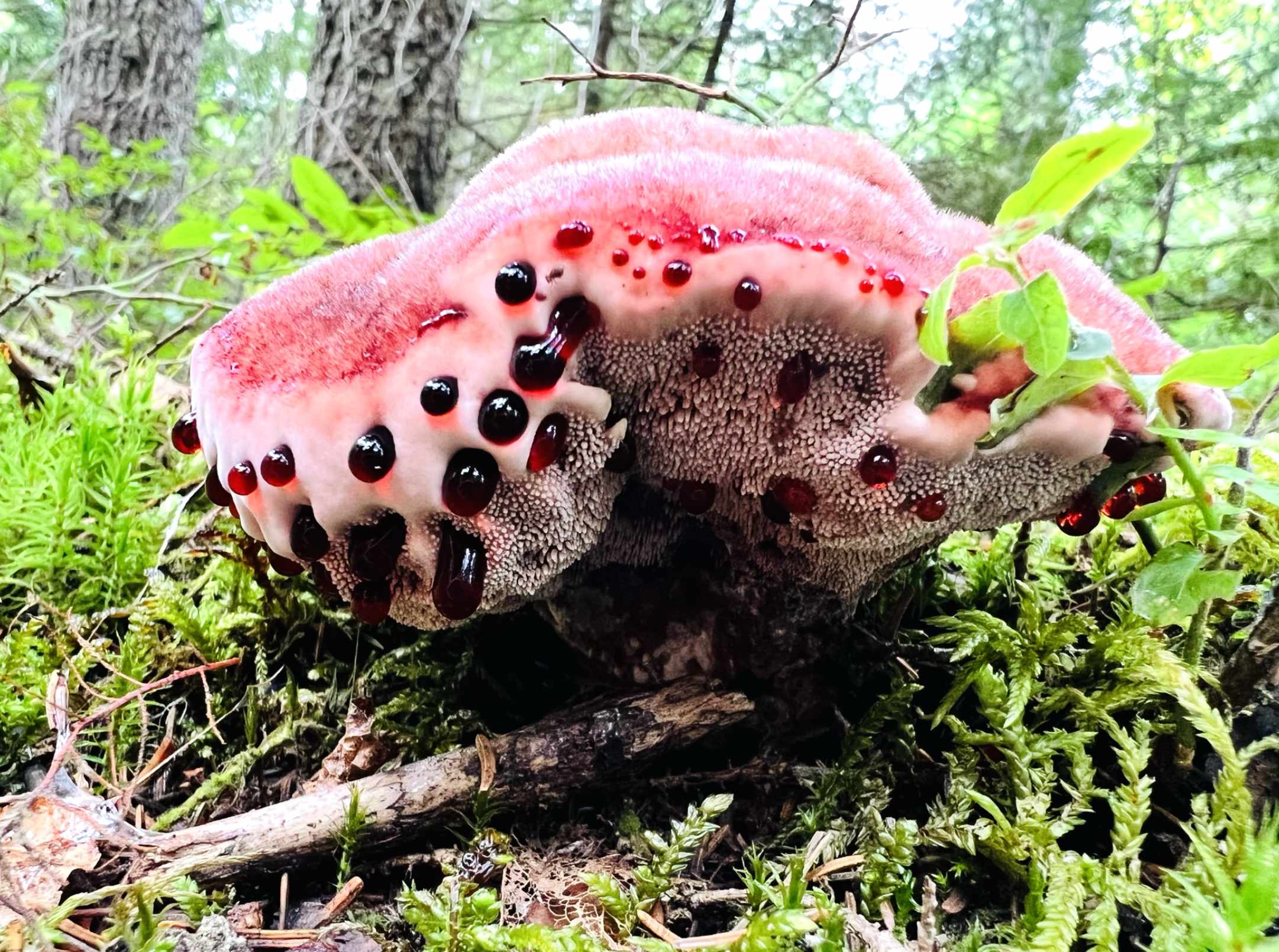
Bright reports that mushroom sweat is bitter, indicating the presence of secondary metabolites. The drops are often sticky and can provide bioactive compounds such as antimicrobials, insecticides, bioherbicides, antiviral and anticancer agents. A rather colourful example of fungal guttation is the Bleeding Tooth Fungus (Hydnellum peckii), which releases blood-coloured fluid that contains a terphenylquinone pigment.
.
.
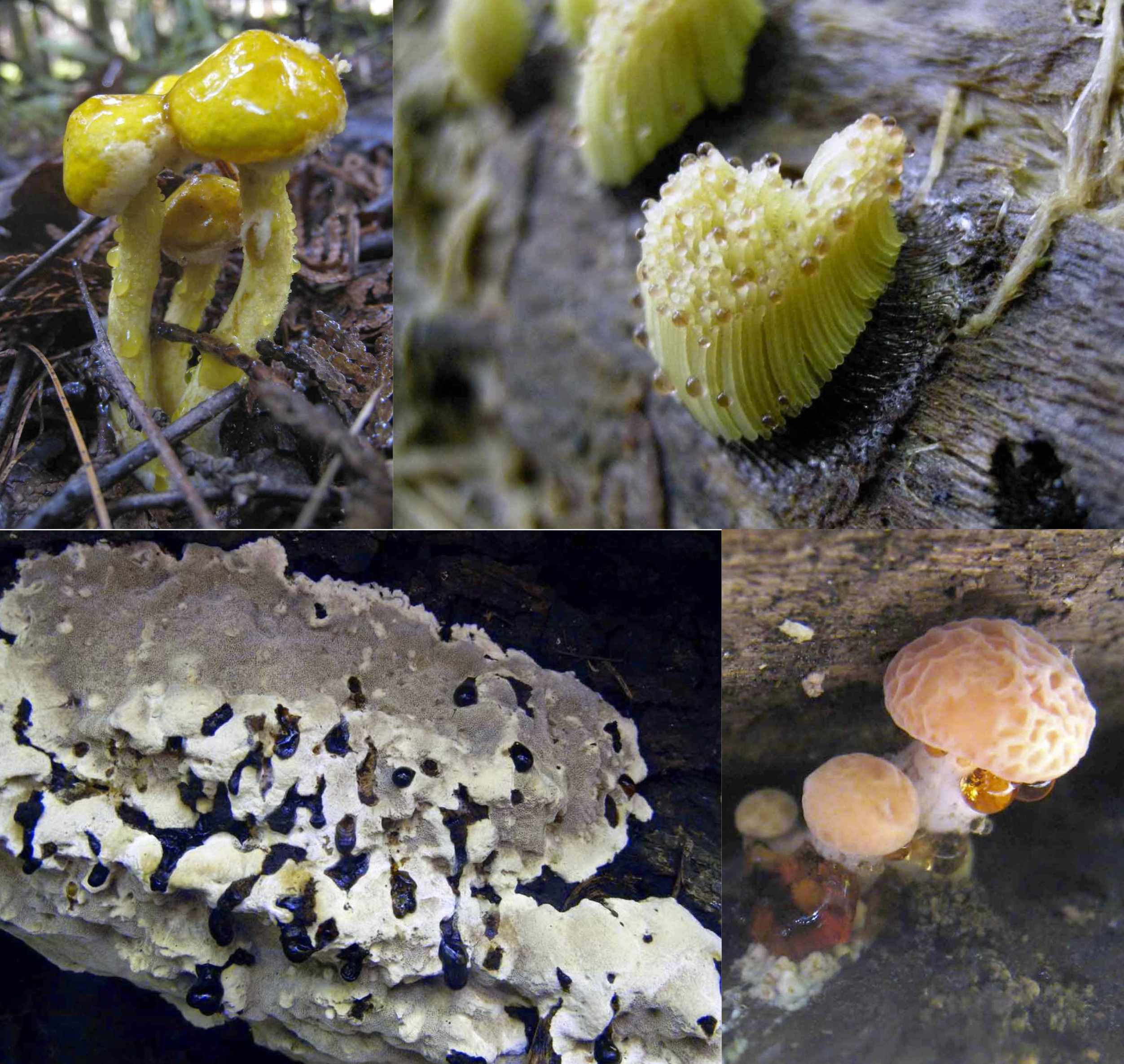
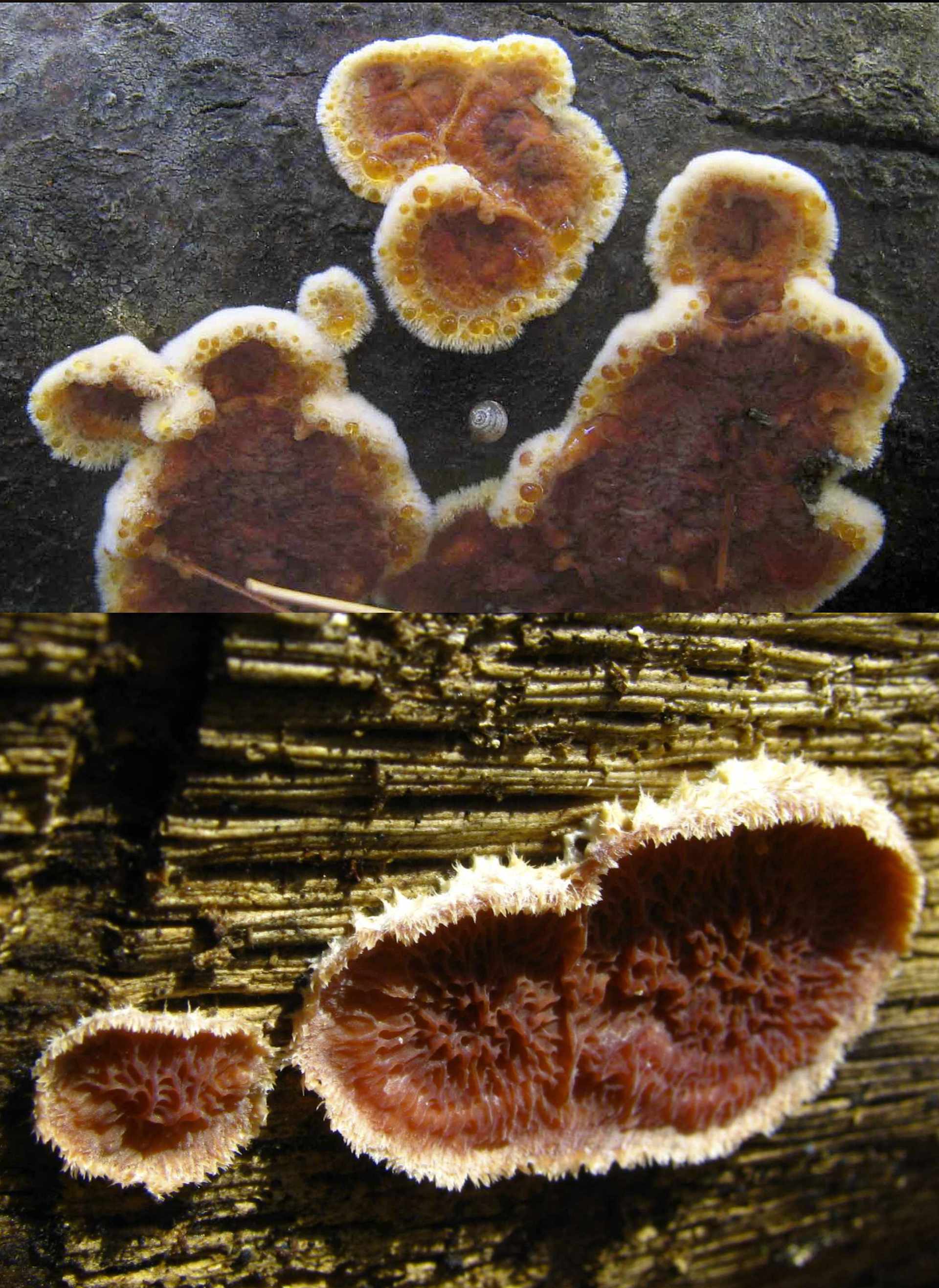
Most fungi produce clear exudate, but some may be milky, yellow—like the bolete Suillus americanus—or brown—like the slimemold Stemonitis flavogenita—or tarry—like Inonotus glomeratus. Jan Thornhill of Weird and Wonderful Wild Mushrooms observed that the fungus Rhodotus palmatus weeps orange exudate. The fungus Punctularia strigosozonata, which produces the antibiotic phlebiarubrone, also undergoes guttation, which resembles drops of rust.
.
.
Fungimag.com tells us that guttation is most common in corticioid and bracket fungi, as well as some stipitate hydnoids; it is less common in gilled fungi and boletes, except some Suilli (e.g. Suillus americanus).
.
.
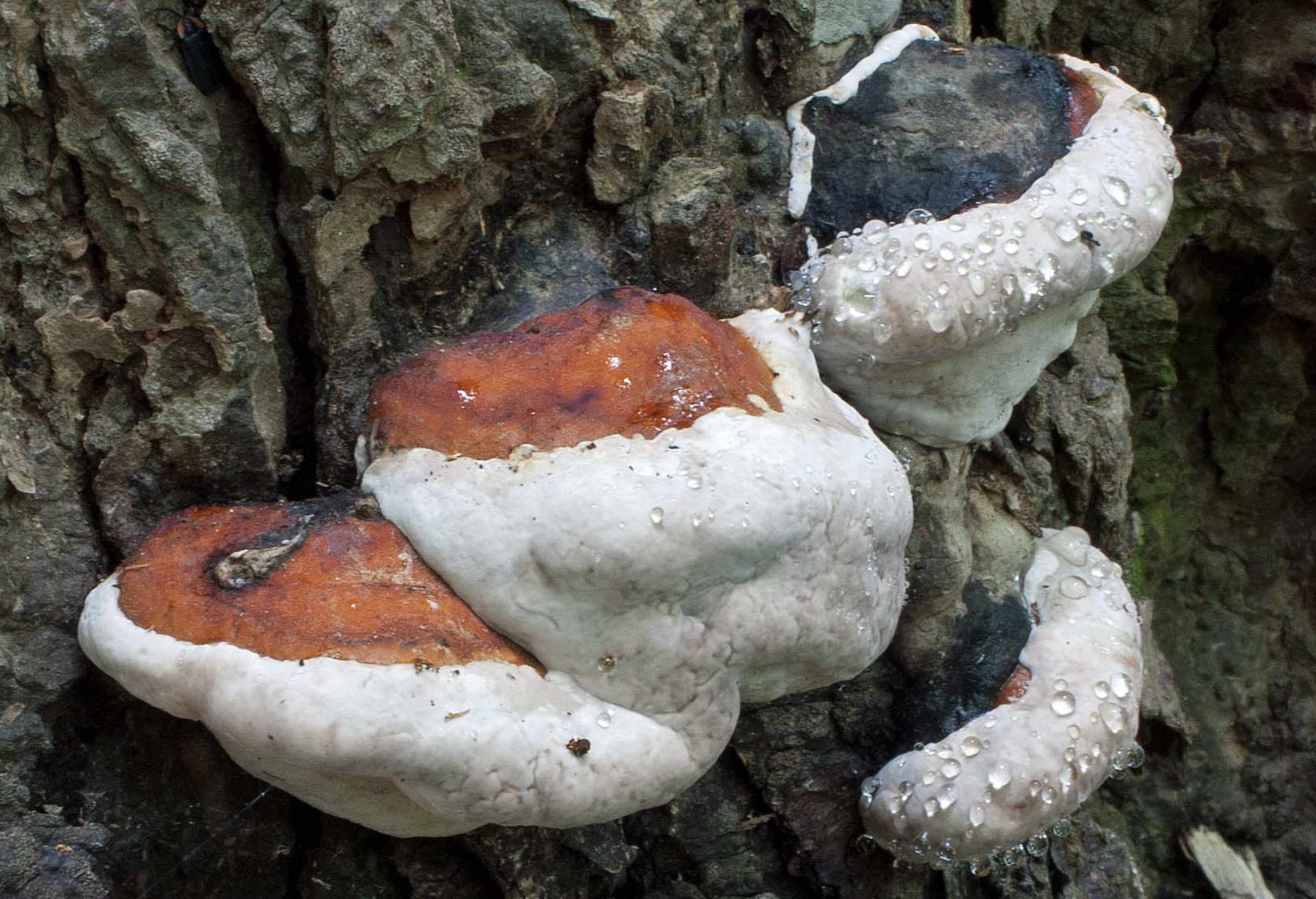
My first introduction to this oozing phenomenon was on a rusty-white bracket fungus on a maple tree in an Ontario forest: Fomitopsis pinicola, a stem-decay polypore known as Red-Belted Conk. The exuded clear droplets of a young conk sparkled in the sun like jewels. I’ve read that Fomitopsis pinicola is one of the most damaging decay fungi in old-growth forests. It can cause heart rot in living trees but is mostly observed decomposing the wood of trees already killed by other pathogens.
.
.
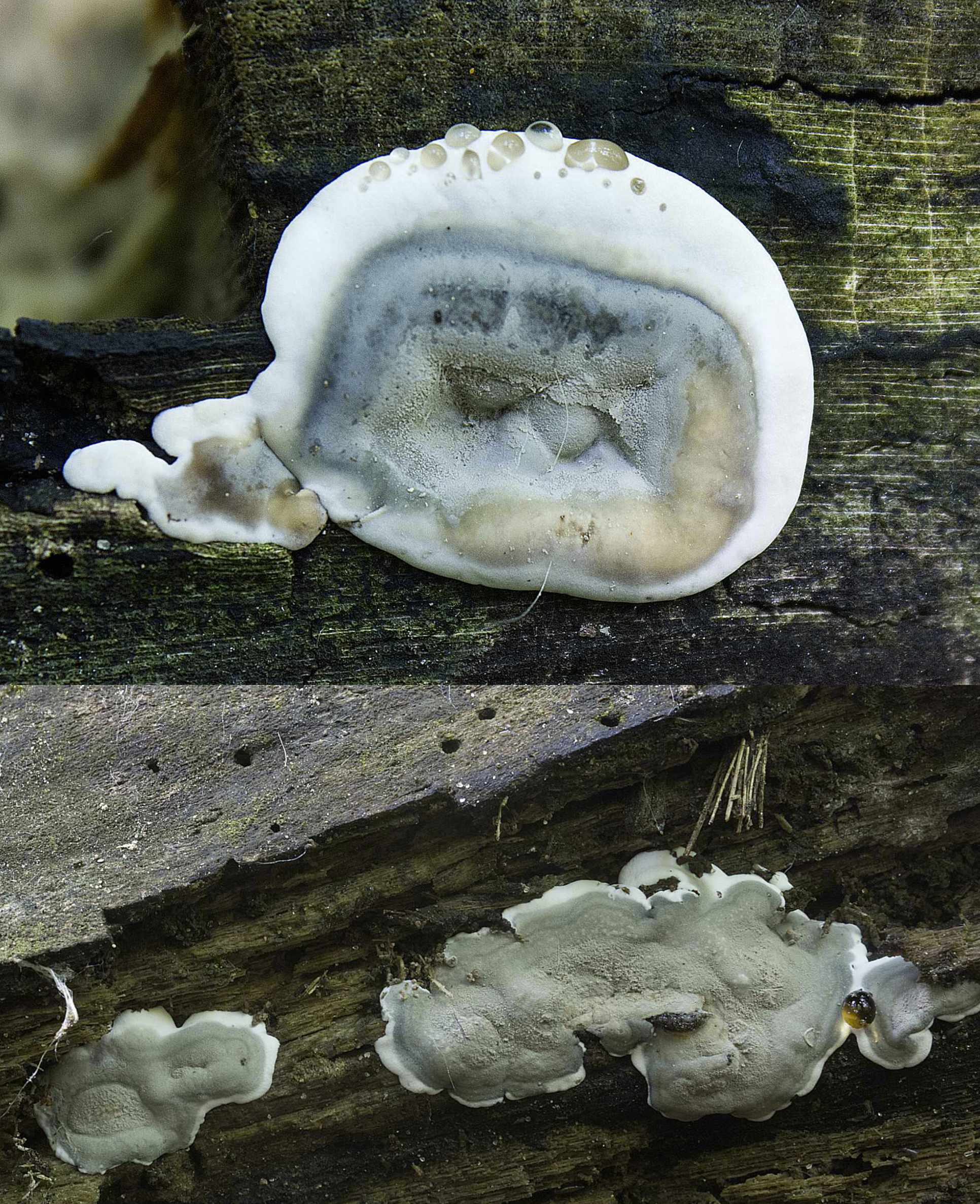
I found Brittle Cinder Fungus (Kretzschmaria deusta) on the base of one living maple tree and several fallen logs and stumps in the Mark S. Burnham Forest in Ontario. K. deusta colonizes trees through heart rot, invading the tree through injuries or root contact with infected trees, and spreads from the root base to the bole. But, like Fomitopsis pinicola, Kretzschmaria deusta tends to act more as a saprophytic fungus, helping already dead organic matter decompose and returning all back to the environment.
.

.
I also saw several colonies of Deadman’s Fingers (Xylaria polymorpha) in the same Ontario old-growth forest amid fallen maple trees and on decaying logs. Fingers emerged through the cracks in the rotting bark and some were undergoing guttation, clear drops forming on the ‘finger tips’. This saprotrophic fungus grows on dead woods of various hardwood trees, preferably beech, where I had found it before. But this time it was a maple tree. Xylaria polymorpha is a wood-rotting fungus that consumes the polysaccharides such as glucan that bind the cellulose and lignin to form wood. What remains is a nutrient-rich soft mess that insects and other creatures feed on.
.
.
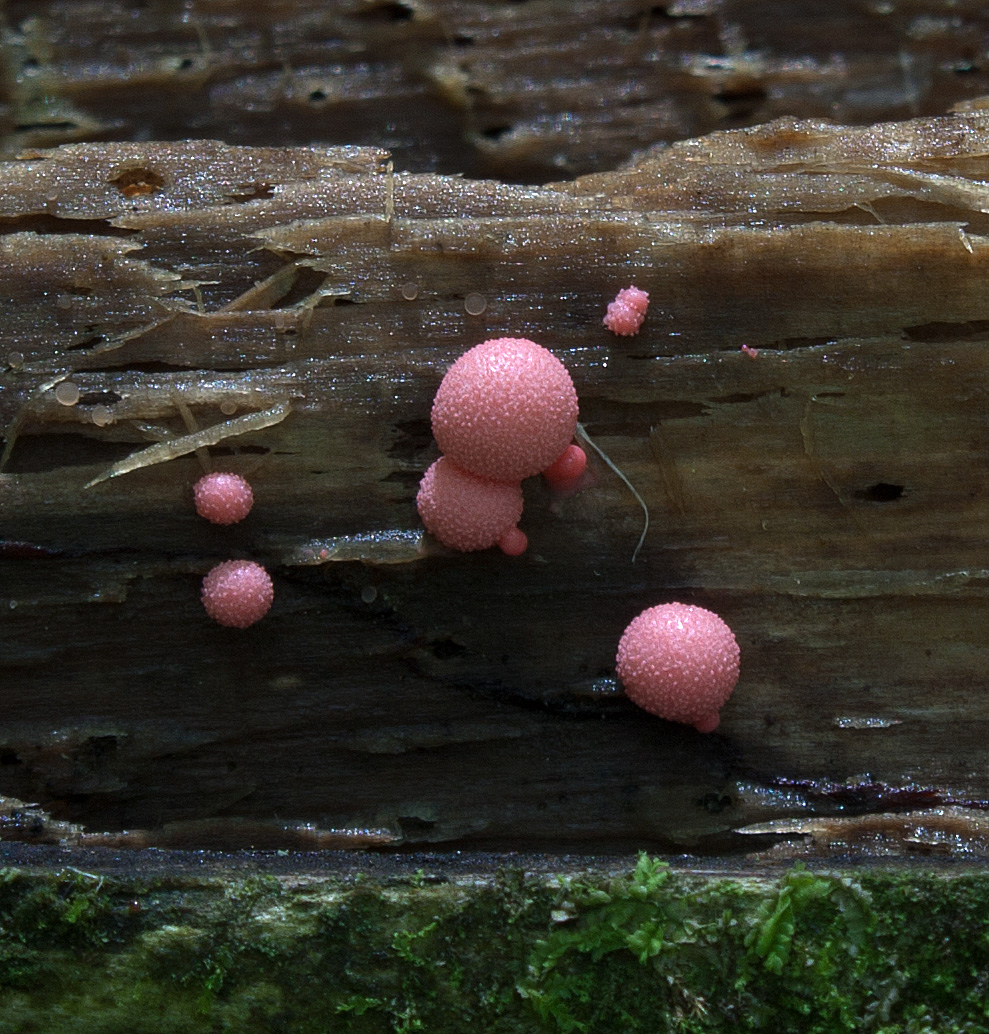
In several other forests in Ontario, I saw the slime mold known as Wolf’s Milk (Lycogala epidendrum) colonizing rotting cedar logs and resembling a pink or grey puffball. Their colour varies quite a bit, ranging from orange or pink and reddish to grey to yellowish brown or greenish black; they often start out pinkish orange and become grey-ocher as they mature. I saw round and somewhat compressed balls, some with distinct warts. When immature they are filled with a pink, paste-like fluid that spills out when popped; as they age, the paste becomes powdery.
Wolf’s Milk grows in groups on dead wood, especially large logs such as decaying cedar, beech or hemlock, usually from June to November.
.
.
References:
Bright, Taylor. 2022. “Guttation.” Symbiotica, March 8, 2022.
Colotelo N. 1978. “Fungal exudates.” Can. J. Microbiol. 24:1173–1181.
Gareis M., Gareis E.-M. 2007. “Guttation droplets of Penicillium nordicum and Penicillium verrucosum contain high concentrations of the mycotoxins ochratoxin A and B.” Mycopathologia 163:207–214.
Hutwimmer, S., Wang, H., Strasser, H., Burgstaller, W. 2010. Formation of exudate droplets by Metarhizium anisopliae and the presence of destruxins. Mycologia, Vol. 102 no. 1, 1-10
Krain, Adam and Piotr Siupka. 2021. “Fungal Guttation, a Source of Bioactive Compounds, and Its Ecological Role—A Review.” Biomolecules 11(9): 1270.
Parmasto, Erast and Andrus Voitk. 2010. Why Do Mushrooms Weep? Fungi, Vol. 3:4
Saueracker, Gerhard. 2013. On the Exudates of Polypore Fungi. Fungimap Newsletter 48, Jan. 2013
Thornhill, Jan. 2014. “Read It and Weep: Fungal Guttation.” Weird and Wonderful Wild Mushrooms. August 2014.
.

Nina Munteanu is a Canadian ecologist / limnologist and novelist. She is co-editor of Europa SF and currently teaches writing courses at George Brown College and the University of Toronto. For the lates on her books, visit www.ninamunteanu.ca. Nina’s bilingual “La natura dell’acqua / The Way of Water” was published by Mincione Edizioni in Rome. Her non-fiction book “Water Is…” by Pixl Press (Vancouver) was selected by Margaret Atwood in the New York Times ‘Year in Reading’ and was chosen as the 2017 Summer Read by Water Canada. Her novel “A Diary in the Age of Water” was released by Inanna Publications (Toronto) in June 2020.
.
.
 The Meaning of Water