Named after Boreas, the Greek god of the Northwind, the boreal forest is also called taiga (a Russian word from Yakut origin that means “untraversable forest”). Boreal forests are crucial for mitigating global climate change by capturing and storing large amounts of atmospheric carbon dioxide. Unfortunately, previously unmanaged primary boreal forests are being rapidly transformed to managed secondary forests to meet the rising global demand for materials and energy.
.
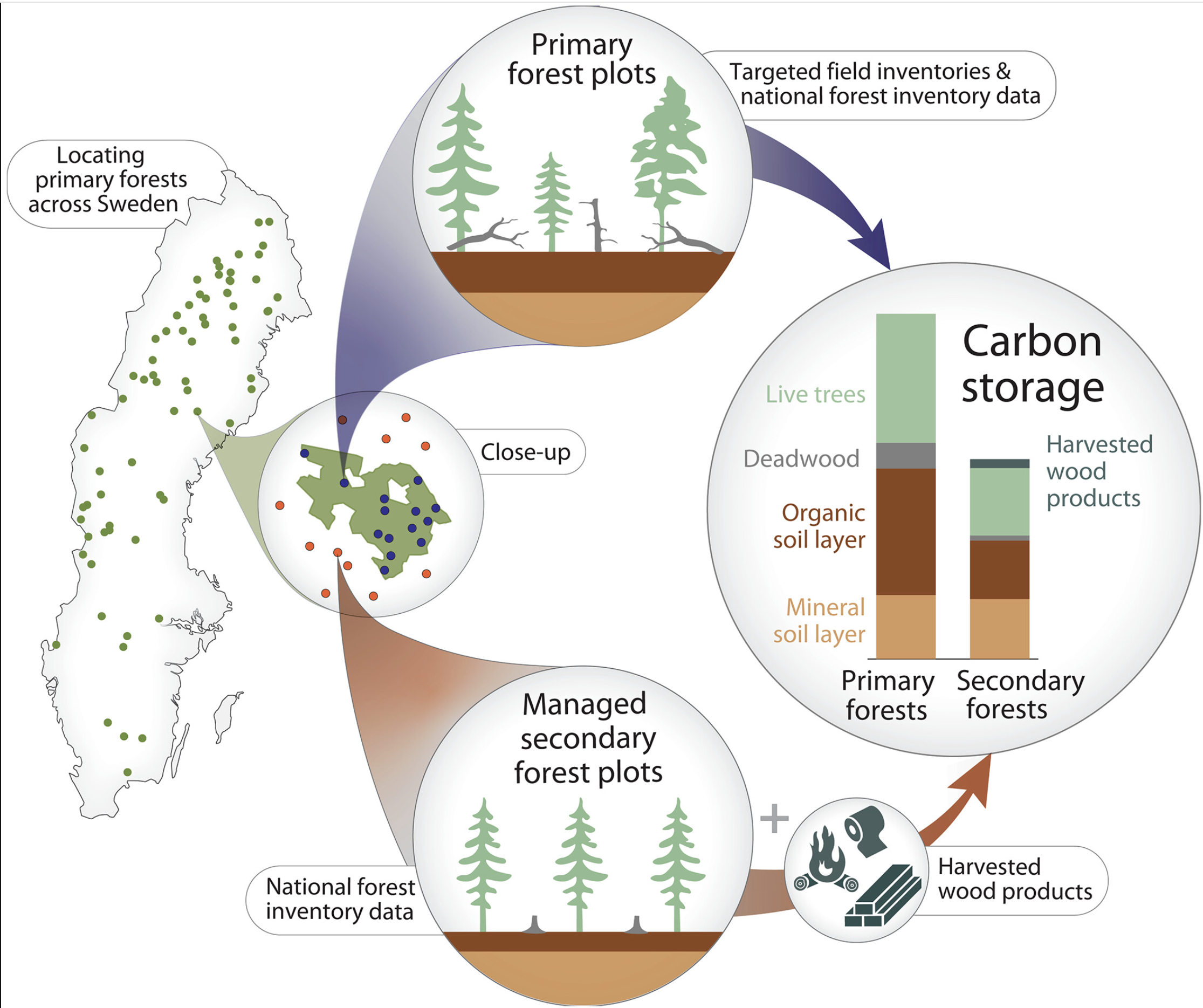
Pascual and colleagues showed that, in Sweden’s boreal regions, primary forests stored over 70% more carbon than secondary forests; this revealed previously underappreciated value in protecting primary boreal forests and their vital role in climate change mitigation. The scientists found that soils constituted both the largest C store and the largest difference between primary and managed secondary forests. Their estimated difference in land C storage between primary and managed secondary forests in Sweden was 2.7 to 8.0 times larger than reported in global state-of-the-art data-driven studies and bookkeeping models informing the Global Carbon Project. Ultimately, their findings suggest that preservation and conservation of European boreal forests may be more effective as a climate change mitigation strategy than previously thought. A 2017 NRDC report demonstrated that “an intact boreal forest is vital to mitigating the worst effects of global climate change.”
.
The Canadian Boreal Forest
.
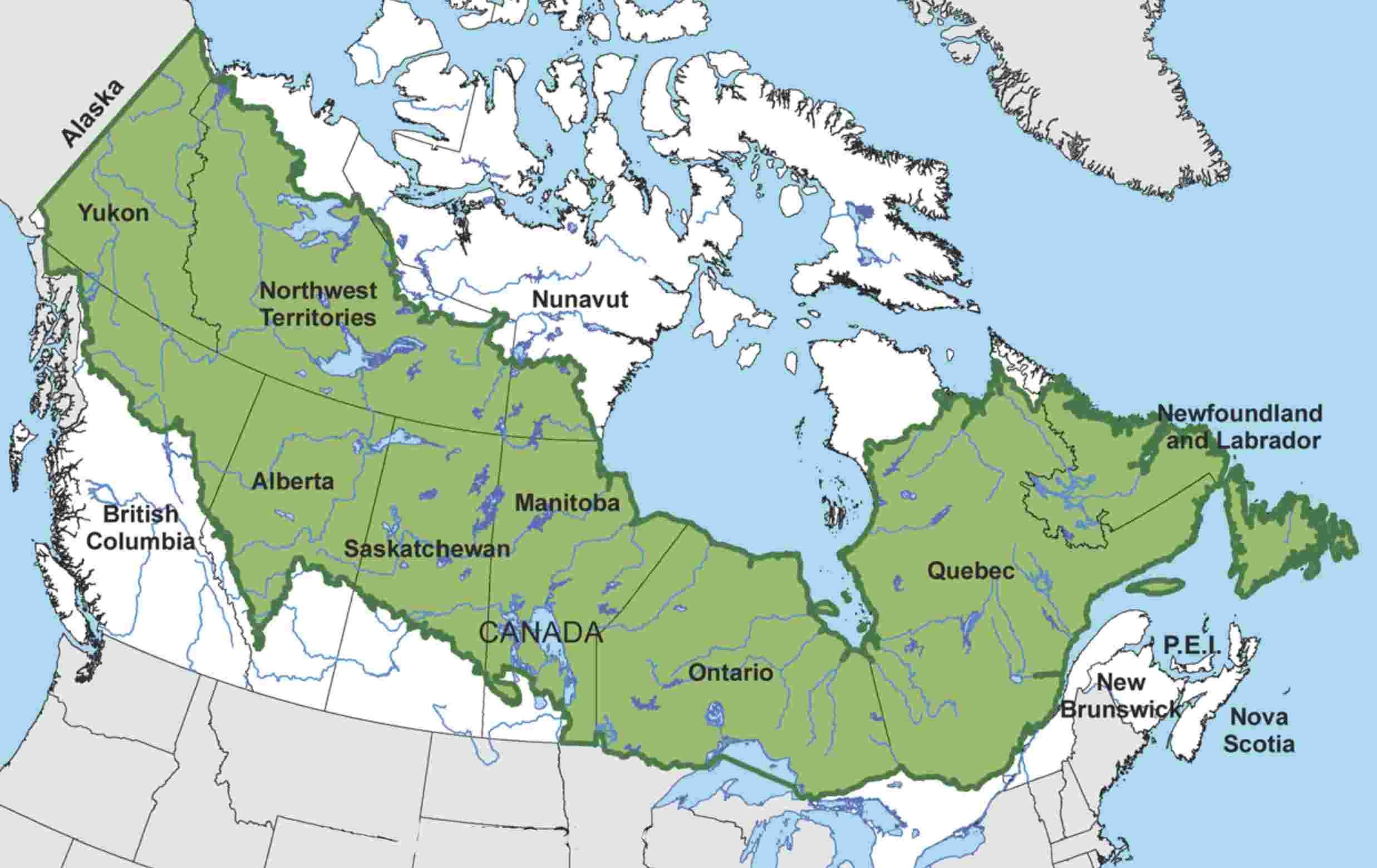
Canada’s boreal forest is considered the largest intact forest on Earth, with around three million square kilometres still undisturbed by roads, cities and industrial development. The boreal forest stores carbon, purifies the air and water, and regulates climate. Canada’s boreal forest holds 12 percent of the world’s land-based carbon stock (306 billion tons) in place. At the same time, its trees and plants remove some 113 million metric tons of carbon dioxide from the atmosphere annually—equivalent to the exhaust of 24 million vehicles.
.
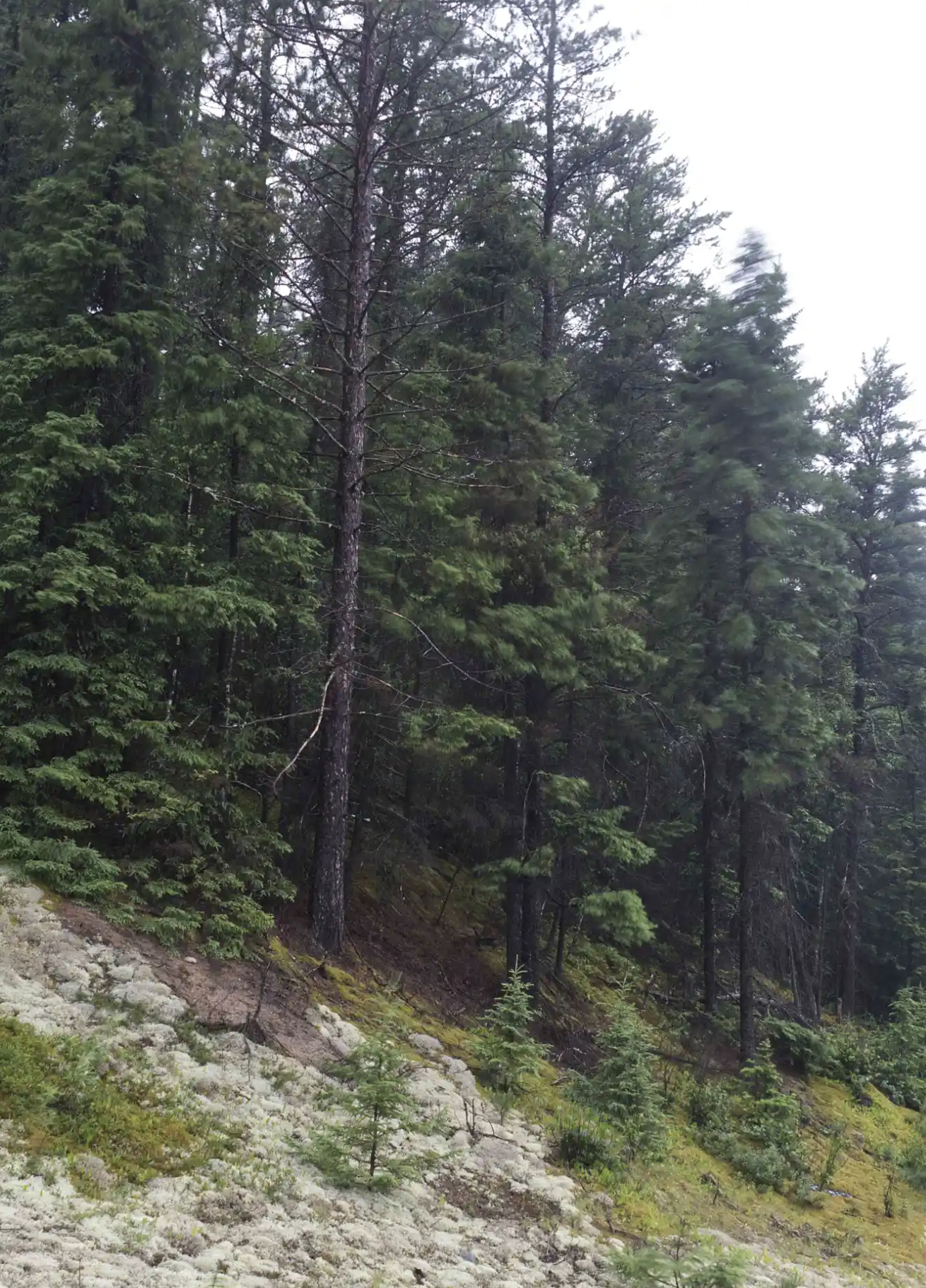
The black spruce (Picea mariana) dominates much of Canada’s boreal forests, frequently occurring in the Canadian Shield ecoregion where it forms extensive stands with groundcover of various mosses and reindeer lichen. Which of the two groundcover types depends on soil conditions and gaps in the forest from disturbance or fire.
.
Boreal forest along the Trans Canada Highway, showing black spruce, lichen and moss communities, northern ON (photo by Nina Munteanu)
.
In fact, the boreal forest relies on natural disturbances such as forest fires and outbreaks of insects and disease. These disturbances help recycle aged trees, expose the land to sunlight for new growth, allow the next group of trees to germinate and promote natural succession, and recycle nutrients to other parts of the forest.
.
Why We Should NOT Clearcut the Boreal
In an interview on Emergence Magazine, forest ecologist Suzanne Simard tells us that historical forest harvesting “had a lighter touch. Indigenous people always did selective harvesting to meet their needs.” But lately that has evolved into, “this sort of capitalistic-driven extraction process called industrial forestry. And so today, if we look around the world, probably half of the forests have been affected in this way. Some would say they’ve been degraded in certain ways.” This is urgent because “forests are large natural sinks for carbon, and they also are home to the vast majority of biodiversity in the world…degrading those two ecosystem services…It’s an existential problem.”
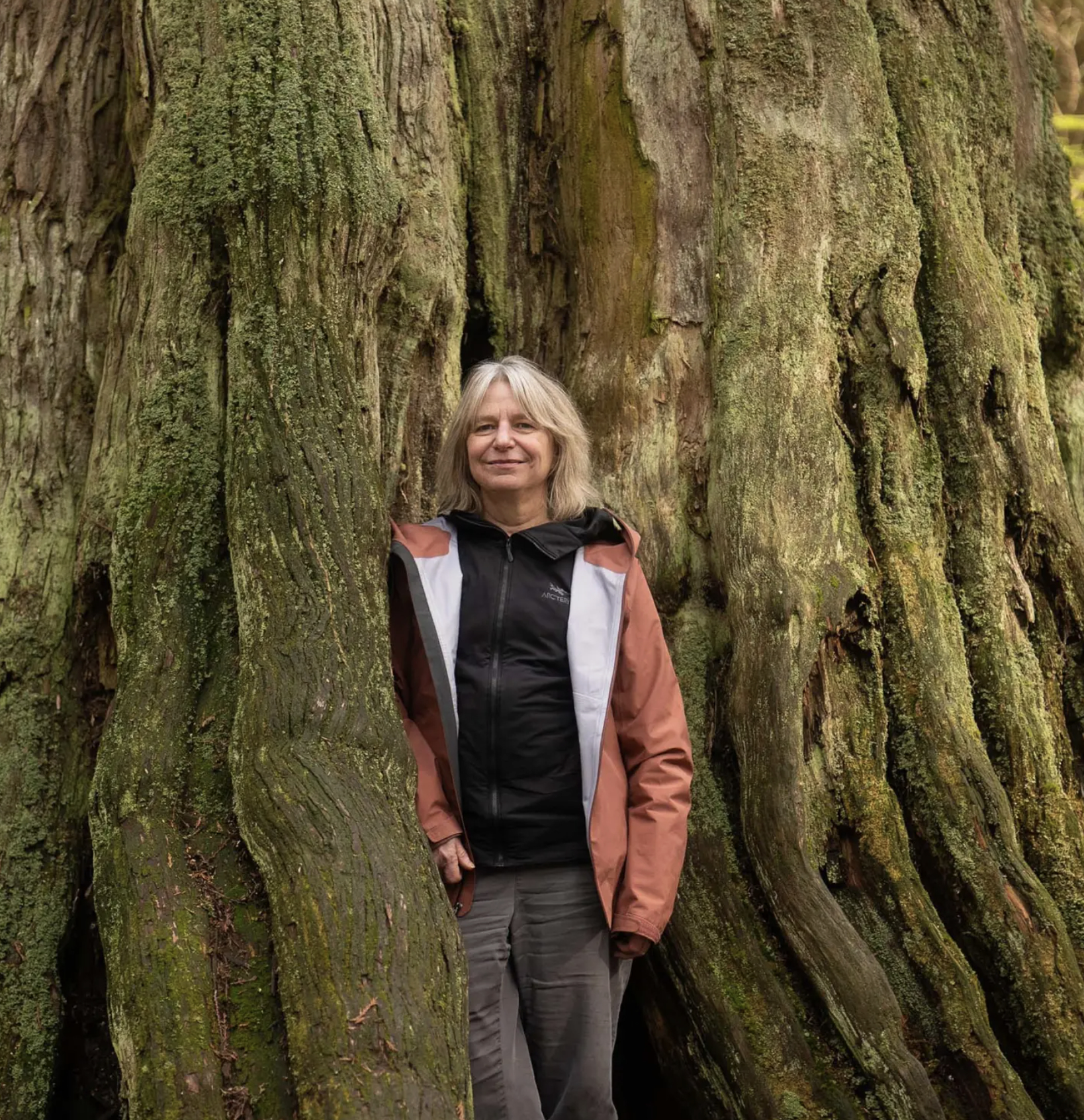
Suzanne Simard (photo by Emergence Magazine)
.
We all know that mitigating climate change requires bringing down greenhouse gas emissions and natural solutions include protecting forest ecosystems. Simard gives the example of the Great Bear Rainforest of the Pacific Coast, where Indigenous people have the rights and jurisdiction to manage their own land in their own way. “Those forests are highly productive, and they’re diverse, they’re carbon rich. In fact, worldwide, there’s a lot of evidence that with Indigenous-led stewardship those forests are more biodiverse and more carbon rich, the cycles are more intact, contrasting with colonial stewardship of the land in Canada.” Unfortunately, most Canadian forest practices, she shares, have “harvested so severely that we’ve pushed these ecosystems to the point of almost collapsing, To where we’re having wildfires and plantations that were planted with flammable species; to the point where we’re logging steep slopes, and the slopes are giving way ad sliding; to where we’re flooding out whole countries because the headwaters have been cut 80 percent.”
Clear-cutting impacts carbon sequestration from the above-ground carbon pool but also from below-ground carbon pool.
“When you clear-cut a forest, pretty much all of that disappears,” says Simard. “Everything is gone, basically. The shrubs, the plants, the mosses are also removed through the use of heavy machinery. What’s left behind is some slash, and usually it’s the twigs and branches and any broken bits of wood that are left behind…So you can assume that almost all of the aboveground carbon pool is removed with a clear-cut except for this new slash.” Simard adds that the forest floor, which contains 50% of the total carbon pool is basically removed by the clearcutting process. This is devastating, says Simard, because it took ten thousand years to develop that forest floor and the machines that drag whole trees across the forest (to process) disrupt the forest floor and remove labile carbon and nutrients associated with the spongy litter and even top soil.
.
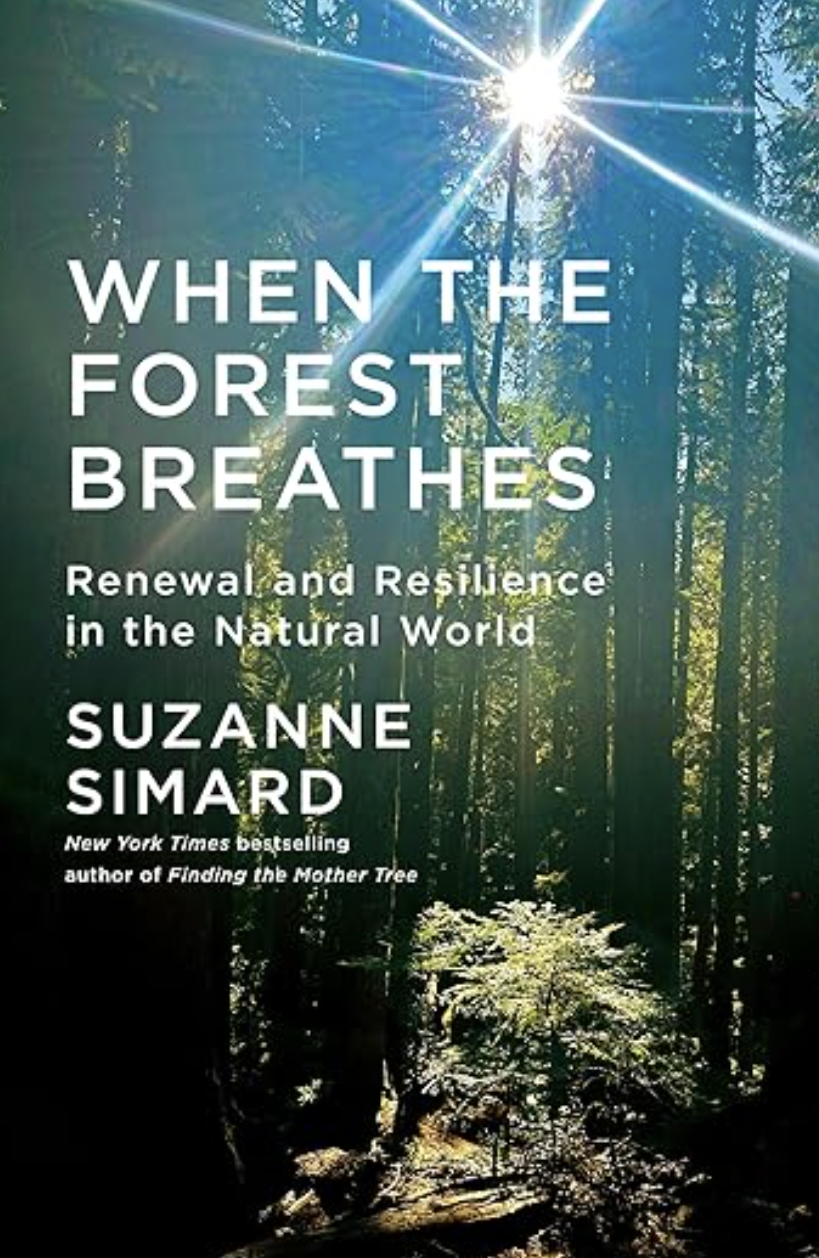
In her latest book When the Forest Breathes: Renewal and Resilience in the Natural World Simard shares her landmark findings on the role elder trees, carbon stocks, salmon nutrient, and the relational networks that include Mother Trees that ensure an ecosystem’s function. Simard’s work proved that the forest “is an intimately connected place, interdependent, based on intimate relationships between all creatures, all the beings in the forest, including the water and the soil and the forest floor and the tree and the animals… [when] we sever those linkages…we’re actually unraveling the forest—through the practice of clear-cutting, which is the dominant form of forestry that’s practiced in Canada and in many parts of the world.”
.
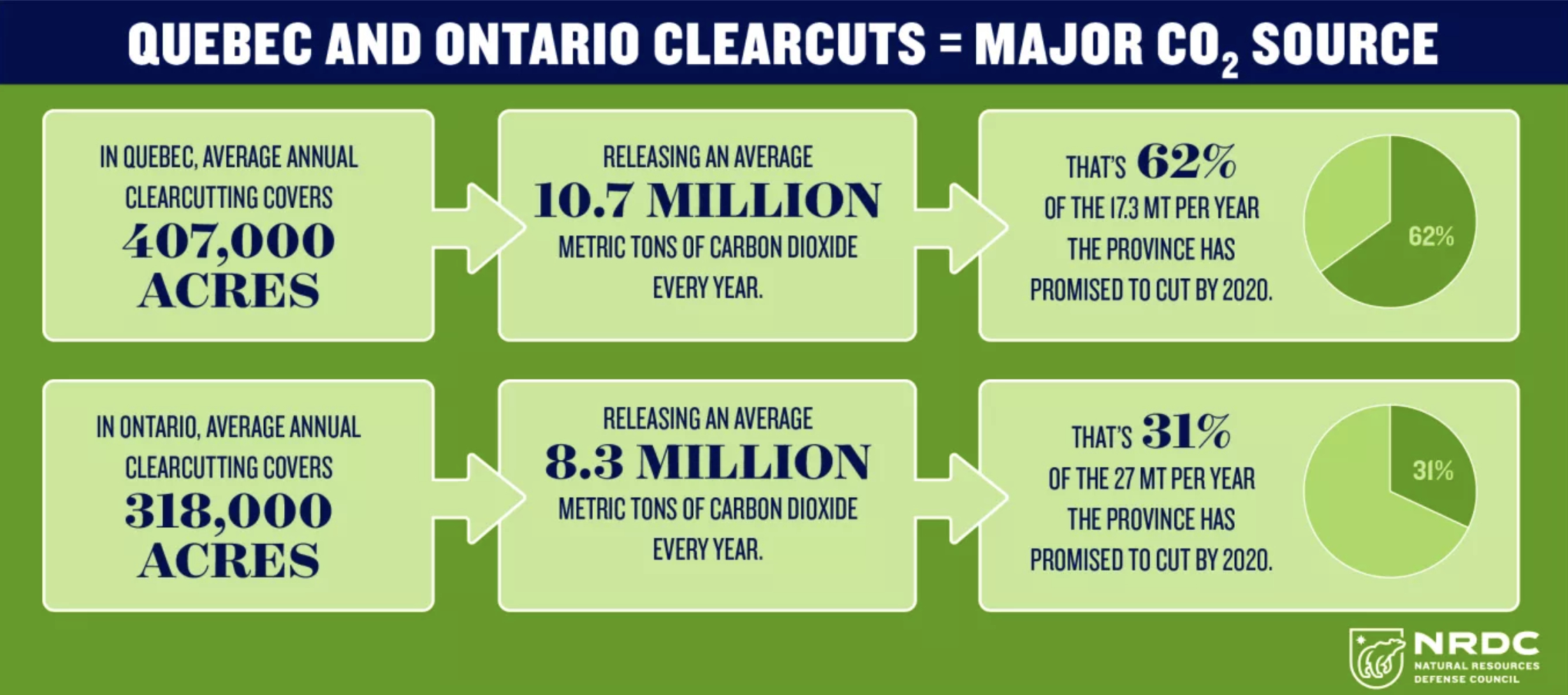
Some 400,000 hectares of intact boreal forest are clear-cut annually in Canada—a lot of it for toilet paper, reports The Narwhal. Most are replanted with designated high-production trees (not ecosystem-specific trees), if there is replanting at all. The NRDC reported that this magnitude of clearcutting is a climate threat. The CBC reported in 2024 that clearcutting 14 million hectares of Canada’s boreal forest (of Ontario and Quebec since 1976) has put caribou at risk.
The Government of Canada Natural Resources website tells us that “Canada’s laws protect the boreal forest and ensure its sustainability,” regulating harvesting practices and applying land-use planning through legislation and other policies. Yet, when I drill down to the various pages of the site, I get no indication what these regulations and plans are, particularly in reference to clear-cutting practices used in industrial logging. It all reads like so much rhetoric. I particularly took exception to the site’s definition of deforestation in which the site claimed that, “harvested areas regrow. An area with very young trees is still a forest.” But not the same forest that was cut down. Long-established primary trees—Mother Trees—take decades—even centuries—to become what they once were and fulfill their previous role. In fact, according to Global Forest Watch-Canada-British Columbia, deforestation in British Columbia has resulted in a net loss of 1.06 hectares of tree cover between the years 2000 and 2020.
.
Simard challenges us—the Canadian government and the forest industry—to work with the intelligence of the forest and see Mother Trees as models of generational resilience—not to senselessly clear-cut it all.
.
References:
Axelrod, Josh. 2017. “Canada’s Boreal Clearcutting Is a Climate Threat.” NRDC, November 1, 2017.
Berman, Tzeporah. 2019. “Canada clearcuts one million acres of boreal forest every year … a lot of it for toilet paper.” The Narwhal, March 21, 2019.
Houle, Gilles and Louise Fillon. 2003. “The effects of lichens on white spruce seedling establishment and juvenile growth in a spruce-lichen woodland of subarctic Québec.” Ecoscience 10(1): 80-84.
Pascual, D. et al. 2026. “Higher carbon storage in primary than secondary boreal forests in Sweden.” Science 391(6791): 1256-1261.
Payette, Serge, Najat Bhiry, Ann Delwaide and Martin Simard. 2000. “Origin of the lichen woodland at its southern range limit in eastern Canada: the catastrophic impact of insect defoliators and fire on the spruce-moss forest.” Canadian J. of Forest Res. 20(2).
Rydin, Håkan, Urban Gunnarsson, and Sebastian Sunberg. 2006. “The Role of Sphagnum in Peatland Development and Persistence.” In: Boreal Peatland Ecology, Ecological Studies 188, R. K. Wieder and D. H. Vitt (eds) Springer-Verlag Berlin Heidelberg, pp 47-65.
Simard, Suzanne. 2022. “Finding the Mother Tree: Discovering the Wisdom of the Forest.” Penguin Canada. 384pp.
Simard, Suzanne. 2026. “When the Forest Breathes: Renewal and Resilience in the Natural World.” Allen Lane. 336pp.
Vaughan-Lee, Emmanuel. 2026. “The Scaffolding of Life / An Interview with Suzanne Simard.” Emergence Magazine, Podcast. April 20, 2026.
.

Nina Munteanu is a Canadian ecologist / limnologist and novelist. She is co-editor of Europa SF and currently teaches writing courses at George Brown College and the University of Toronto. For the latest on her books, visit www.ninamunteanu.ca. Nina’s bilingual “La natura dell’acqua / The Way of Water” was published by Mincione Edizioni in Rome. Her non-fiction book “Water Is…” by Pixl Press (Vancouver) was selected by Margaret Atwood in the New York Times ‘Year in Reading’ and was chosen as the 2017 Summer Read by Water Canada. Her novel “A Diary in the Age of Water” was released by Inanna Publications (Toronto) in June 2020. Her latest eco-fiction novel Gaia’s Revolution was released March 2026 by Dragon Moon Press.
.

