
The cloud forest of Los Cedros in northern Ecuador is alive with the squeals of monkeys, scuffle of squirrels, cries and squawks of more than 400 species of birds, writes Becca Warner of the BBC in a recent article. Warner shares a bracing and heartening story about the protection of a richly biodiverse rainforest from the saws of loggers and the shovels of miners by being granted its legal rights.
With the help of friends and non-profits including Friends of the Earth Sweden and the Rainforest Information Center of Australia, environmental activist Jose DeCoux bought land in Los Cedros forest, and established the Los Cedros Biological Reserve, a conservation and eco-tourism project.
Despite extensive surrounding deforestation, the 4,800 ha Los Cedros rainforest remains unharmed. Most of the reserve is a cloud forest, shrouded in heavy mist, rain and permanent condensation. The constant moisture encourages the rich growth of lichens, fungi, and plants. Many species, such as the Los Cedros rainfrog, are only found in this forest.
“In 2008, Ecuador became the first country to change its constitution to state that nature has the same rights as people. The change was led by Ecuador’s Indigenous movement, and marked one of the first major steps in what has become known as the ‘rights of nature’ movement – a movement centred on a legal framework that recognises the inherent right of the natural world to the same protections as people and corporations,” writes Warner.
The rights of nature movement “is a move to transform natural entities from objects to subjects, in courts and in front of the law”, says Jacqueline Gallant from New York University’s School of Law’s Earth Rights Advocacy Clinic. “But in a much broader sense, it’s been a movement to reanimate and recentre nature as a subject of intrinsic worth,” Gallant explains. This is in contrast, she says, to the Western view of nature as “an inanimate backdrop against which the drama of human activity unfolds”.
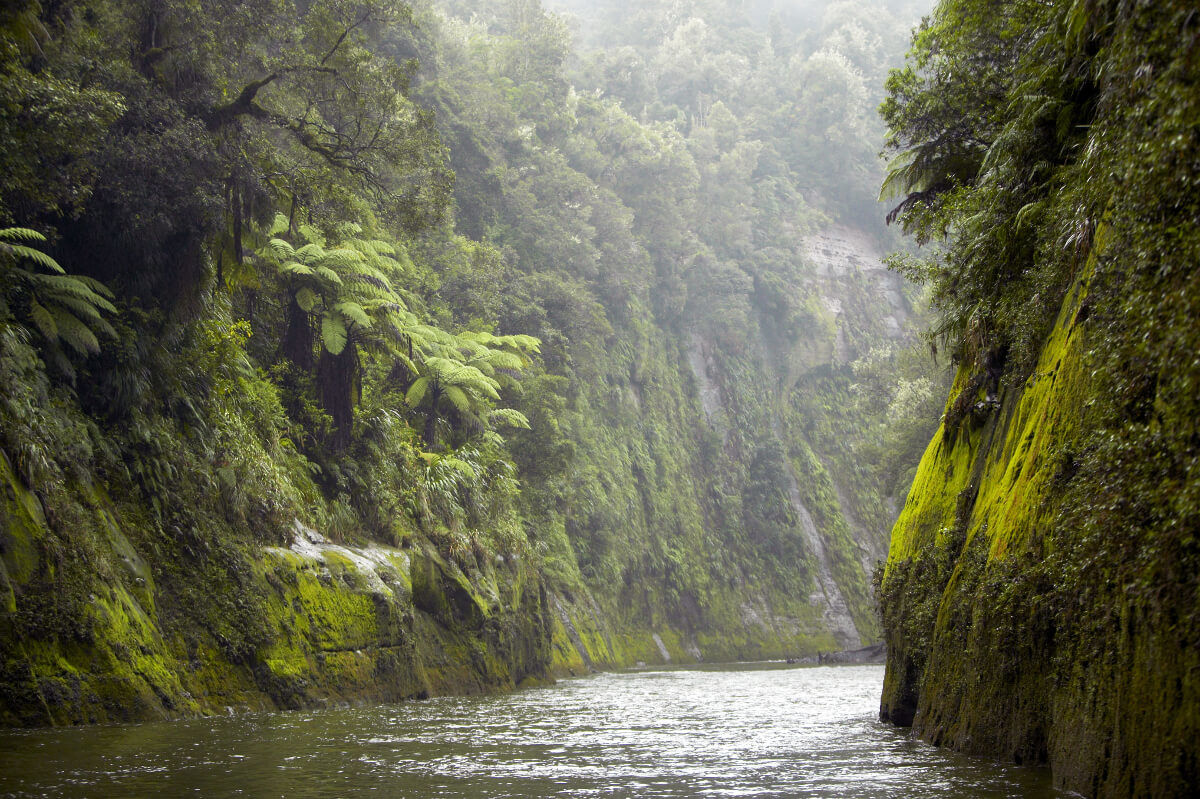
Warner tells us that to date 44 countries have defended a single animal, while other legal decisions have recognized the rights of rivers, mountains, and a region’s entire environment.
Article 71 of the Ecuadorian Constitution specifies that nature “has the right to integral respect for its existence and for the maintenance and regeneration of its life cycles, structure, functions and evolutionary processes.”
“Rather than treating nature as property under the law, Rights for Nature articles acknowledge that nature in all its life forms has the right to exist, persist, maintain and regenerate its vital cycles. And we— the people—have the legal authority to enforce these rights on behalf of ecosystems. The ecosystem itself can be named as the defendant,” writes the Global Alliance for the Rights of Nature.
Establishing a ‘Rights of Nature’ is not unprecedented or even strange from a legal standpoint: companies, foundations and organizations around the world have legal rights and responsibilities independent of the people who staff them. And they do this for the same reason that a river or natural environment would be designated with personal rights. Such a legal status provides an effective means to procure environmental justice and put real protection into place.
In 2021, DeCoux won his case for the Los Cedros forest against proposed mining by several companies; the judge ruled that mining would harm the biodiversity of the forest, and would therefore violate the constitutional rights of nature. The judge was also clear that the area deserves protection as an intrinsic existential right—not because it provides resources, like clean water, to humans. The verdict turned the rights of nature from a constitutional idea into a practical reality. This case was important in providing judges with an opportunity to look at the rights of nature beyond the theoretical framework of Ecuador’s Constitution, helping to show what these rights look like in action. The mining companies had to remove their machinery immediately and the court placed a ban on all future mining and extractive activities in Los Cedros.
The dialogue and debate of nonhuman rights has been an interesting journey, fraught with slippery terminology. Justin E.H. Smith, professor of history and philosophy of science at the Université Paris Diderot writes in his article Nature is Becoming a Person:
Building upon his own 2010 article, “Legal Personhood and the Nonhuman Rights Project” (Animal Law 17/1), the philosopher and animal-rights activist Steven Wise has spearheaded a movement for animal freedom that has successfully used the writ of habeas corpus to secure it—a writ that generally presupposes of the entity whose freedom is being sought that it is a “person.” Following Wise’s strategy, in 2018 a group of philosophers wrote a brief in support of two captive chimpanzees, Tommy and Kiko, arguing that they “satisfy the criteria [for personhood] and are entitled to habeas corpus relief.” As early as 2004, before the Nonhuman Rights Project had begun, a landmark case known as The Cetacean Community vs. George W. Bush asked an American court to decide whether marine mammals have the legal standing necessary to bring a suit in their own name. Again, the presumption is that such legal standing flows from personhood, even if until recent years this did not have to be made explicit, since the kind of persons brought before the court were consistently those we take to be paradigmatic: human beings.
Smith reminds us that for a long time the only way under the law to protect an animal from wanton abuse was to characterize the abuse as harm to property (e.g., not recognizing the animal as having inherent rights; any rights were attached to its owner). Smith adds that the broadening of personhood to include nonhuman entities is not so much a recent adaptation of an old legal concept as it is a return to an even older one. He suggests that Ecuador’s revised constitution and similar legislation elsewhere draws from Indigenous conceptualizations of nature and humanity’s place in it, in what scholar Francois Ost calls “legal animism.” This means incorporating the preservation of traditional belief systems within Western legal frameworks to help determine a law’s content and scope: that human society and the natural environment constitute a single “socio-natural” and political unity.
Achieving Rights of Nature through personhood is not the same as recognizing a corporate entity as “a person” in terms of legal rights. The former requires a paradigm shift for most of us in how we see the world and how we place ourselves in it: an eco-centric, Gaian view that recognizes us not as hubristic lords who exploit Nature, but as participants within this planetary natural world of complex beauty through respectful humility and appreciation.
Smith concludes his article with sage advice: “as environmental protection rapidly takes on a degree of existential urgency … there may indeed be some value in placing … personhood on other entities than those who have been at the center of our attention for the last several centuries: to let rivers speak or to let people attuned to what rivers are speak for them.”
The work of the Rights of Nature movement is powerful, but it cannot operate alone – and nor should it, says Jacqueline Gallant. “The judiciary alone can’t do everything that’s needed to promote a paradigm where the more than human world is valued more centrally and where we structure our politics and our culture to reflect that more”. Gallant points out that the Rights of Nature movement is a vehicle for Indigenous principles and priorities to have sway, and it is these ideas that lead the rest of the world.

References:
Ainge Roy, Eleanor. 2017. “New Zealand river granted same legal status rights as human being.” The Guardian, March 16th. Online.
Smith, Justin E. H. 2021. “Nature Is Becoming a Person.” Foreign Policy. November 24.
The Economist. 2017. “New Zealand declares a river a person.” The Economist, March 25th. Online.
Youatt, Rafi. 2017. “Personhood and the Rights of Nature: The New Subjects of Contemporary Earth Politics.” International Political Sociology 11(1): 39-54

Nina Munteanu is a Canadian ecologist / limnologist and novelist. She is co-editor of Europa SF and currently teaches writing courses at George Brown College and the University of Toronto. Visit www.ninamunteanu.ca for the latest on her books. Nina’s bilingual “La natura dell’acqua / The Way of Water” was published by Mincione Edizioni in Rome. Her non-fiction book “Water Is…” by Pixl Press (Vancouver) was selected by Margaret Atwood in the New York Times ‘Year in Reading’ and was chosen as the 2017 Summer Read by Water Canada. Her novel “A Diary in the Age of Water” was released by Inanna Publications (Toronto) in June 2020.
 The Meaning of Water