.
Upon returning to the lower mainland of British Columbia, one of my favourite forests to hike through is Watershed Park, a coastal rainforest of Douglas fir, Western hemlock, cedar and Bigleaf maple. More on the biodiversity of Watershed Park and its iconic tree, the Douglas fir, can be found in the several articles I’ve previously written.
.
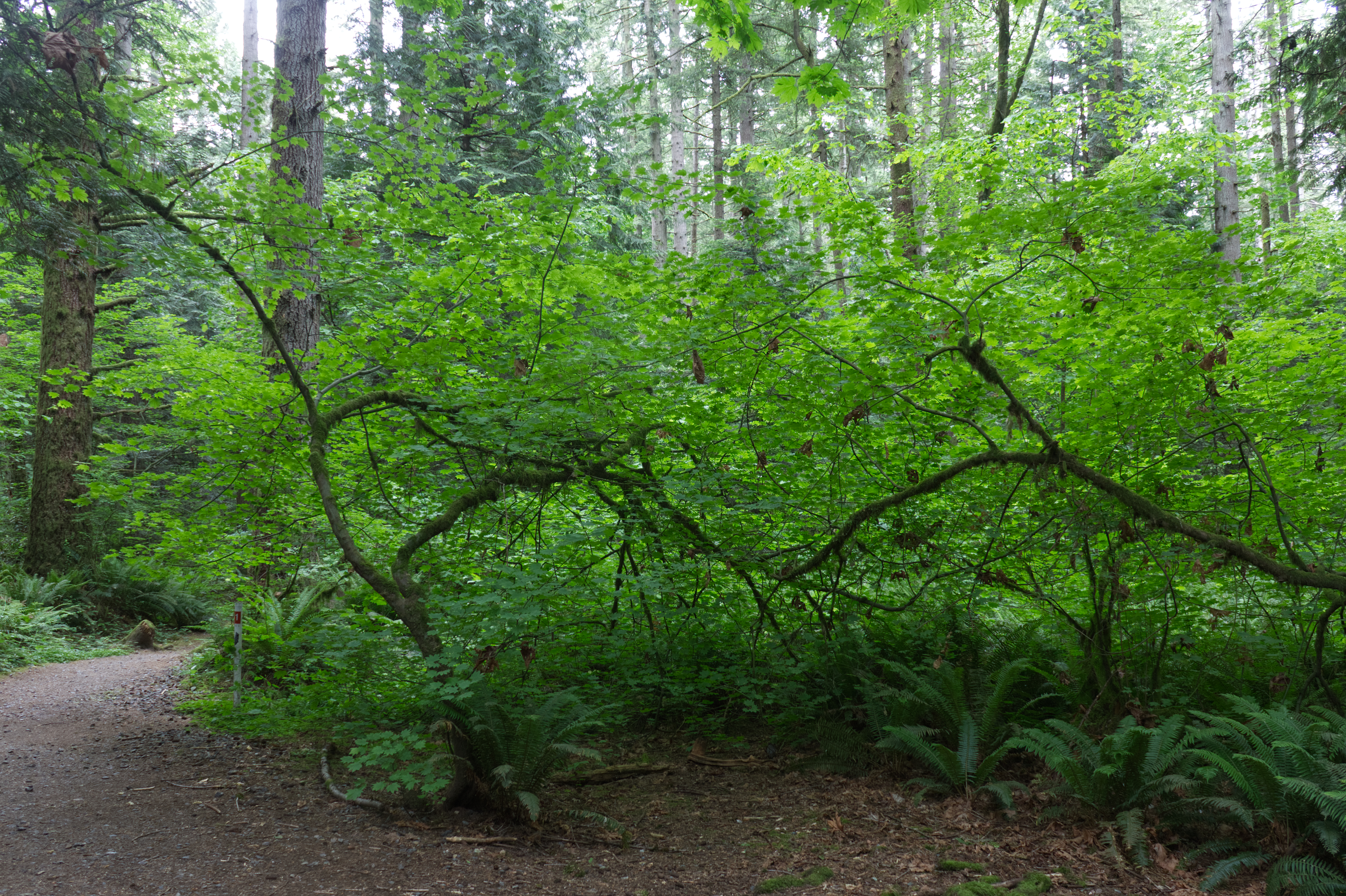
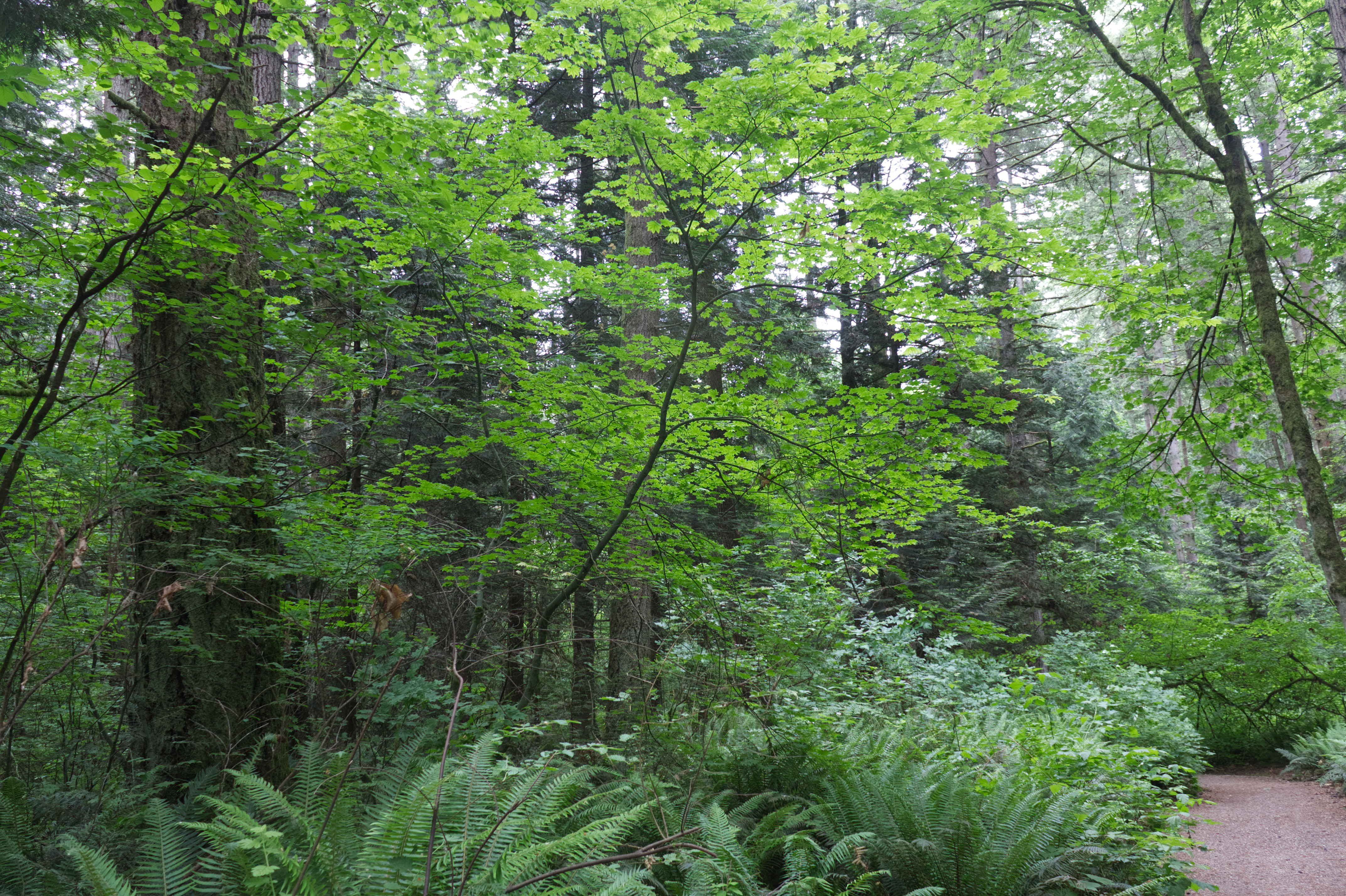
When I first came through the park after returning from Ontario, it was late spring. While I was entranced by the towering firs and cedars that rose out of the thick green froth of sword ferns, it was the wily vine maples—‘dripping’ with moss tassels—that captured my imagination. Their bowing slender branches, clothed in star-shaped leaves and dripping moss, lit up the dark forest with clouds of electric green. Like beacons of joy, they painted the landscape with brilliant light. It felt like I’d entered a Monet painting.
.
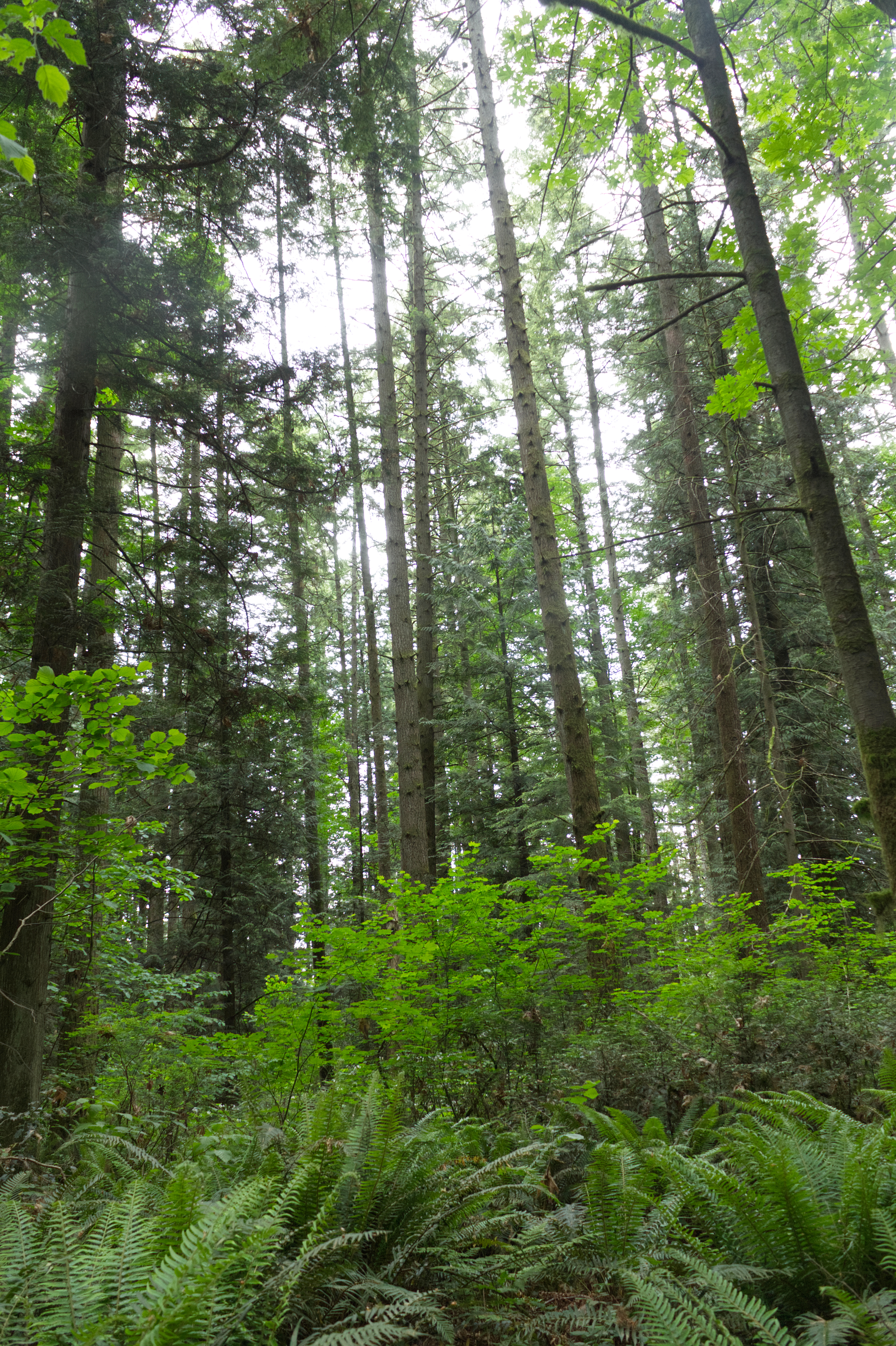
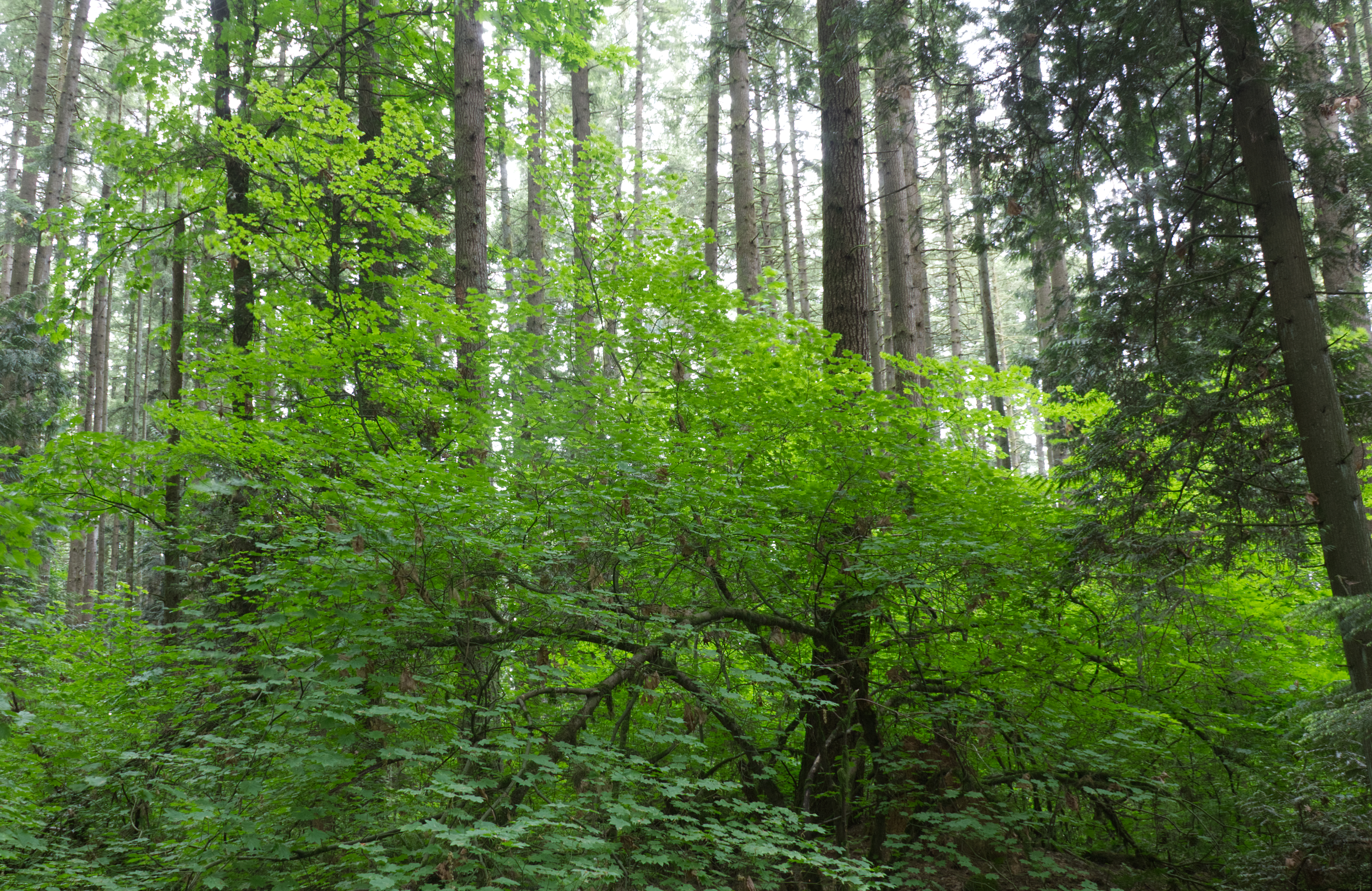
Tall Douglas firs and Big Leaf maples tower over vine maples and sword ferns, Watershed Park, BC (photo by Nina Munteanu)
.
.
.
Vine Maple
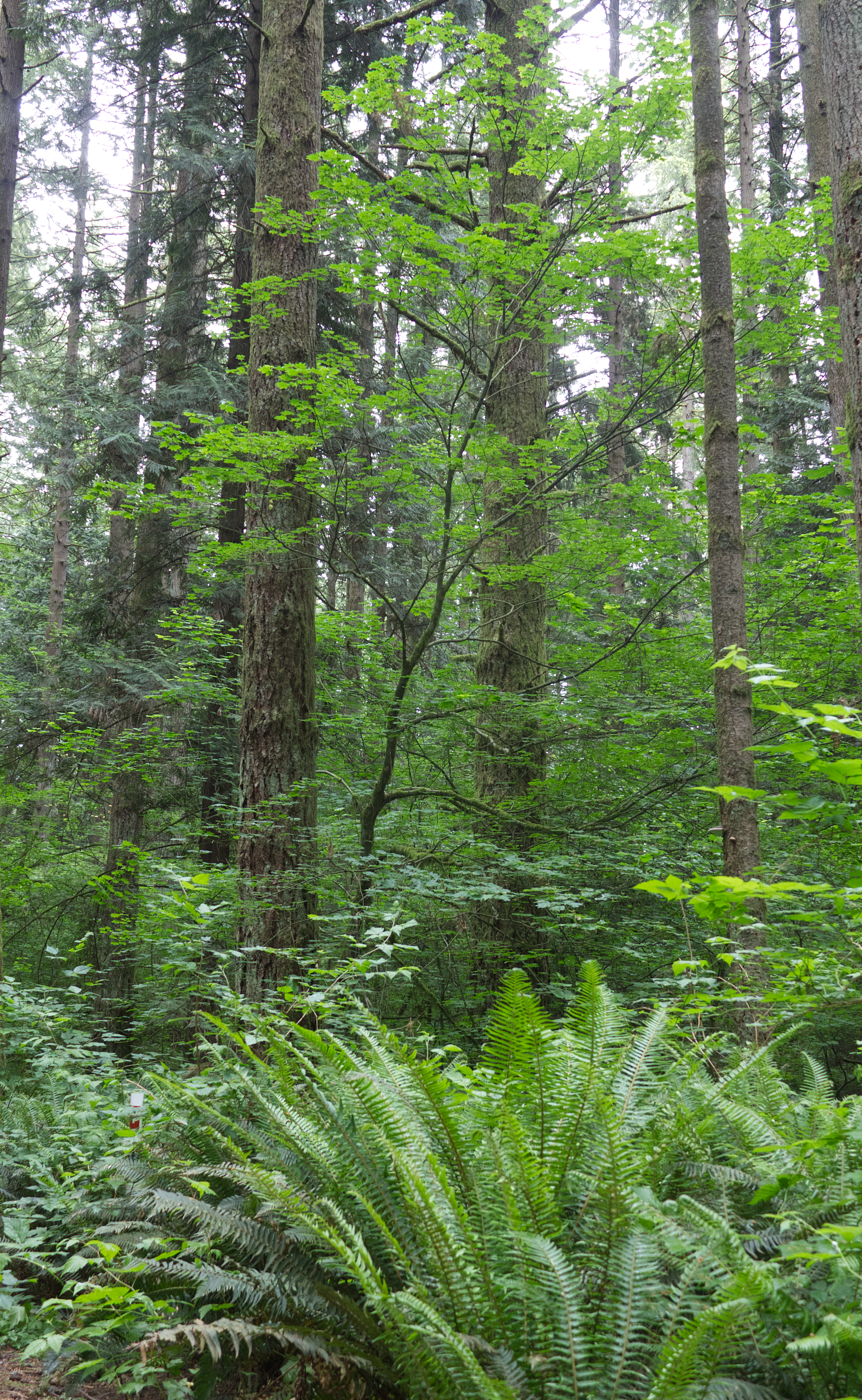
The vine maple (Acer circinatum) is a sort of gnarly tree that thrives in moist, nitrogen-rich soils in the southwest British Columbia, particularly in the coastal forests of Douglas-fir, Western hemlock, Bigleaf maple and Grand fir, where they are often accompanied by salal, salmonberry, huckleberry, elderberry, and sword fern.
.
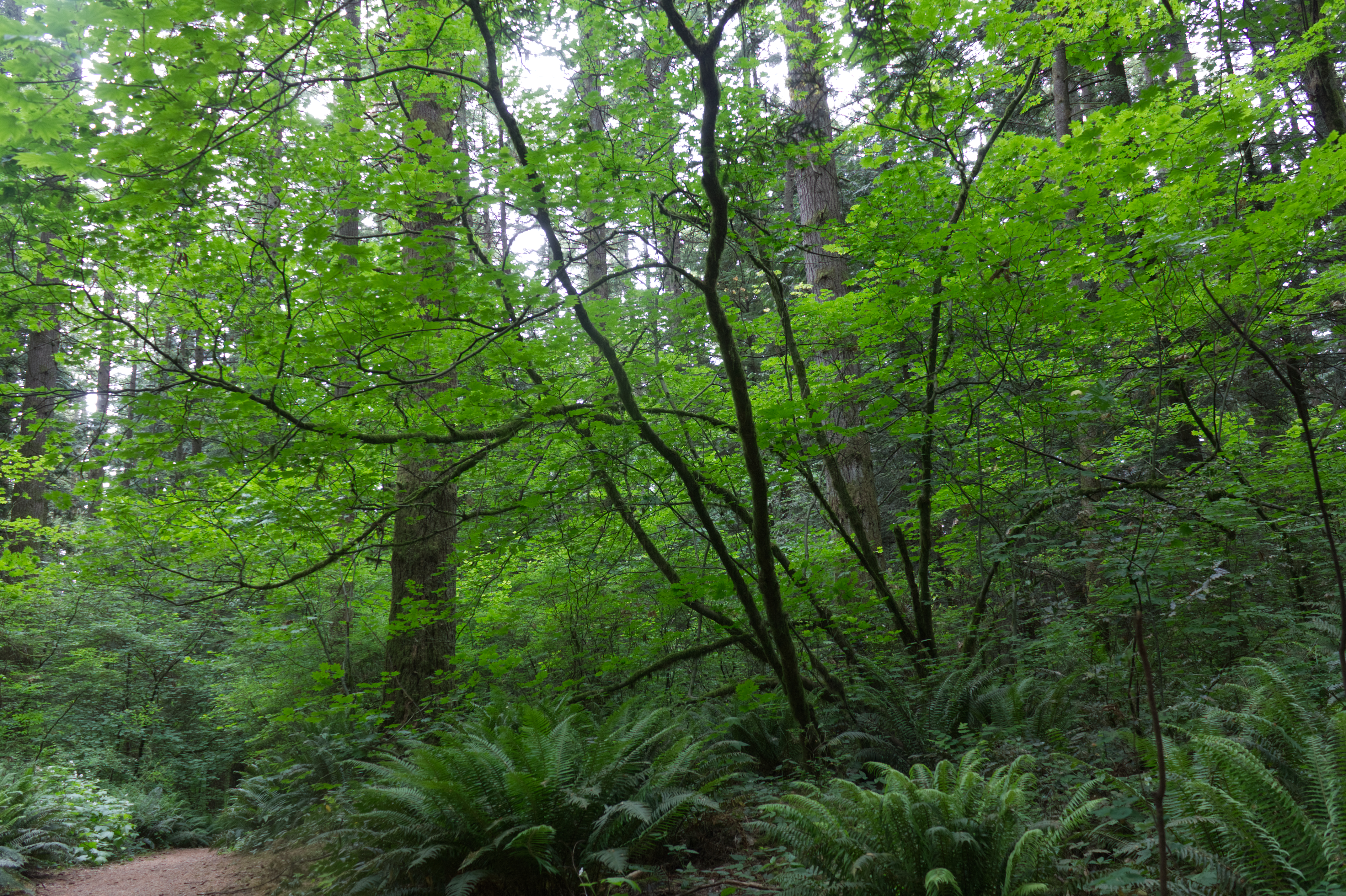
A young vine maple winds its way up from the froth of sword fern to capture light beneath the towering Douglas firs and Bigleaf maples, Watershed Park, BC (photo by Nina Munteanu)
.
.
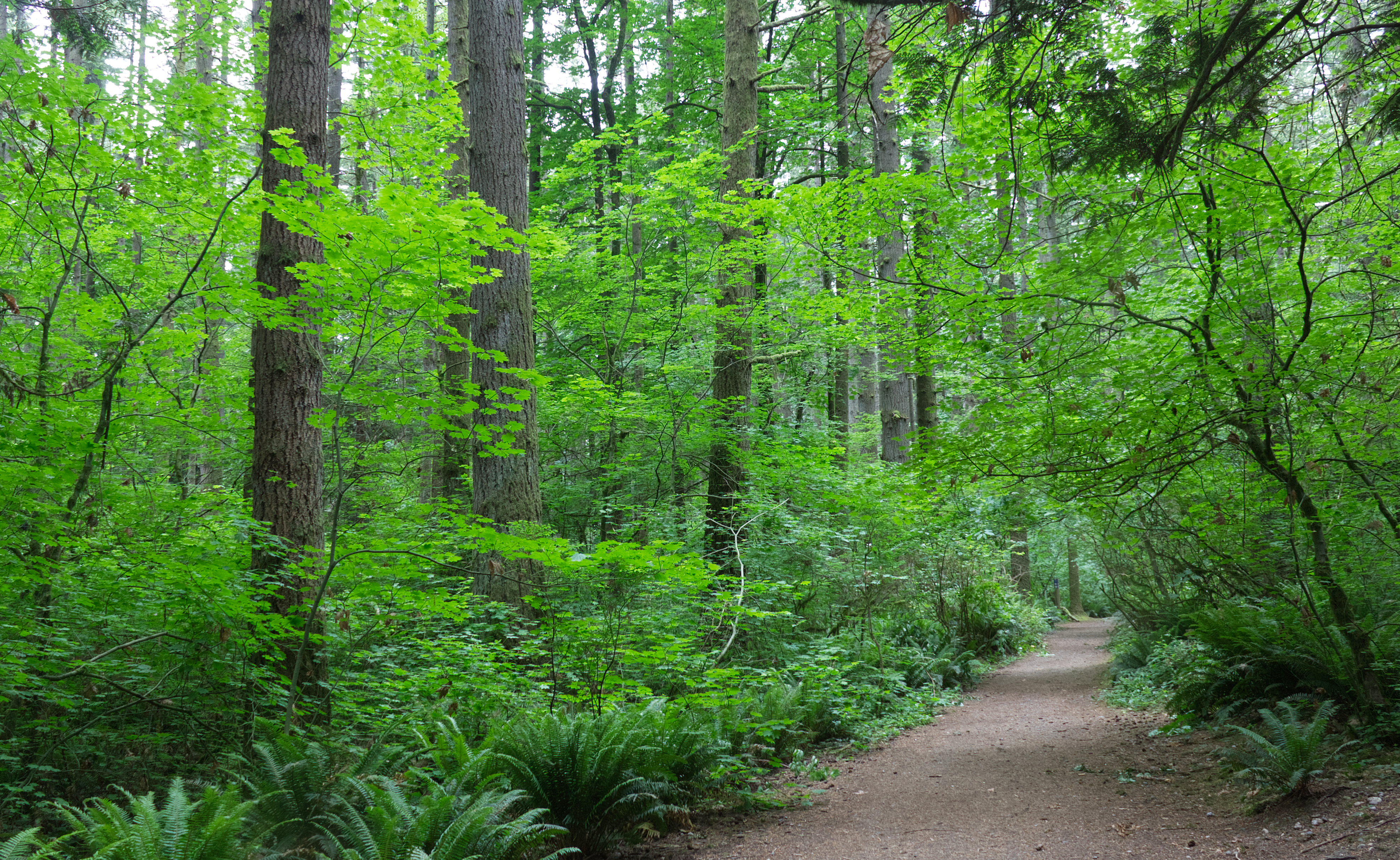
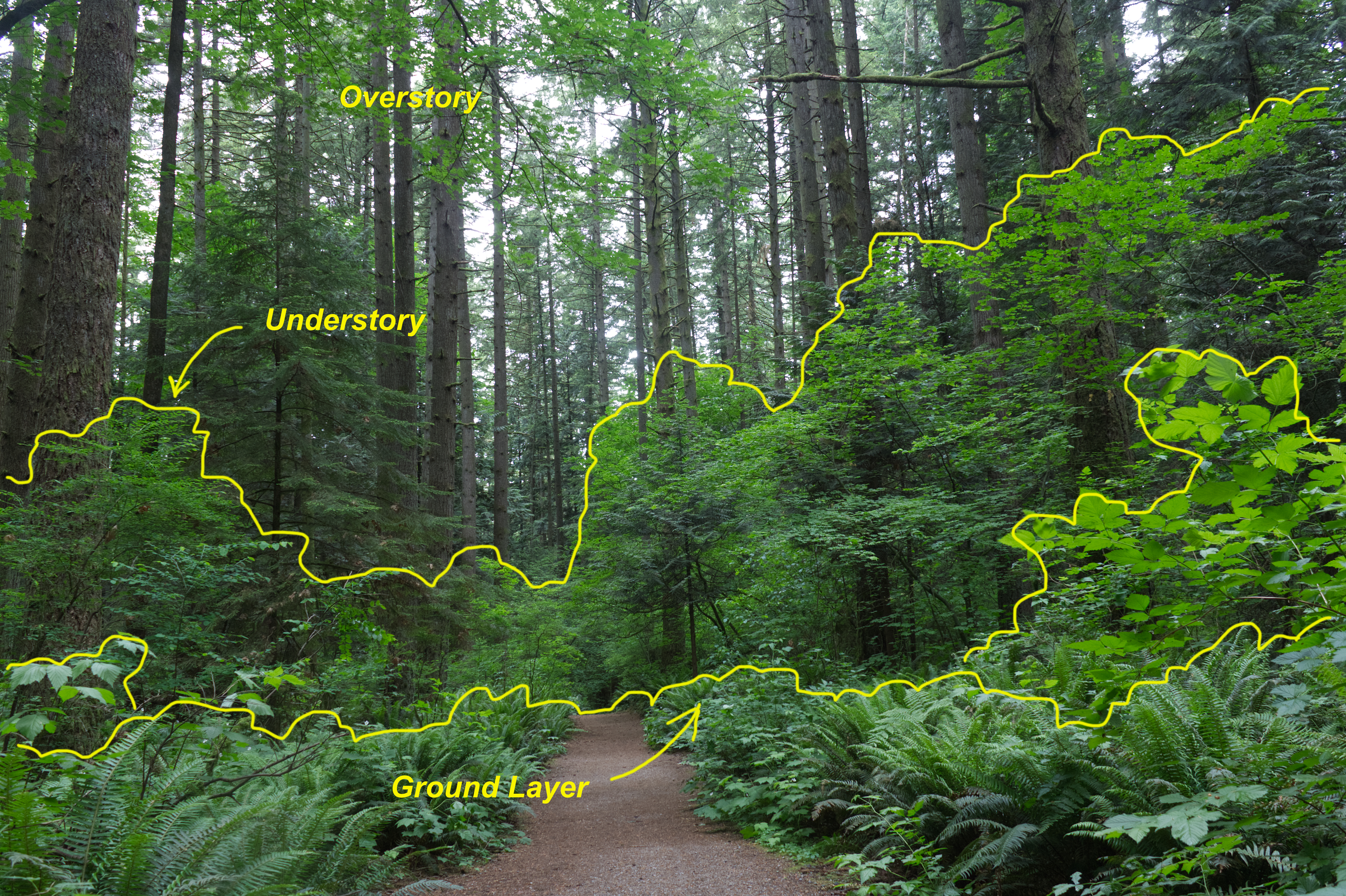
Vine maples are understory trees; they frequently form dense, sprawling thickets and archways over hiking trails or streams, always looking for light. A scrappy early successional and shade-tolerant tree (partially due to photosynthesizing stems), the vine maple establishes quickly after disturbance from logging or landslides.
.
.
Vine maples spread naturally by arching their long, slender branches to the ground, where the stems often take root to establish new colonies. These scrappers also spread via root suckers, allowing them to form dense thickets.
.
.
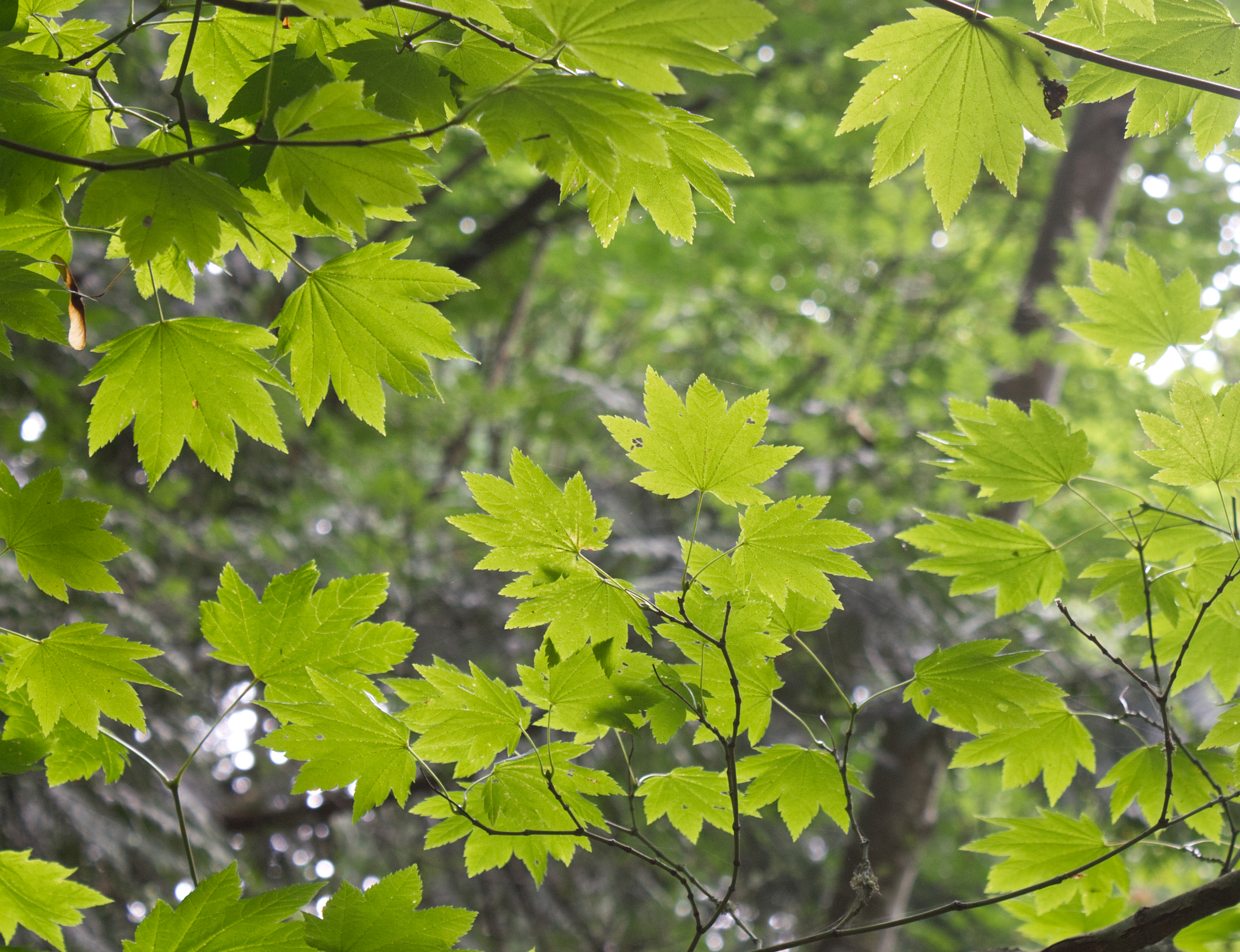
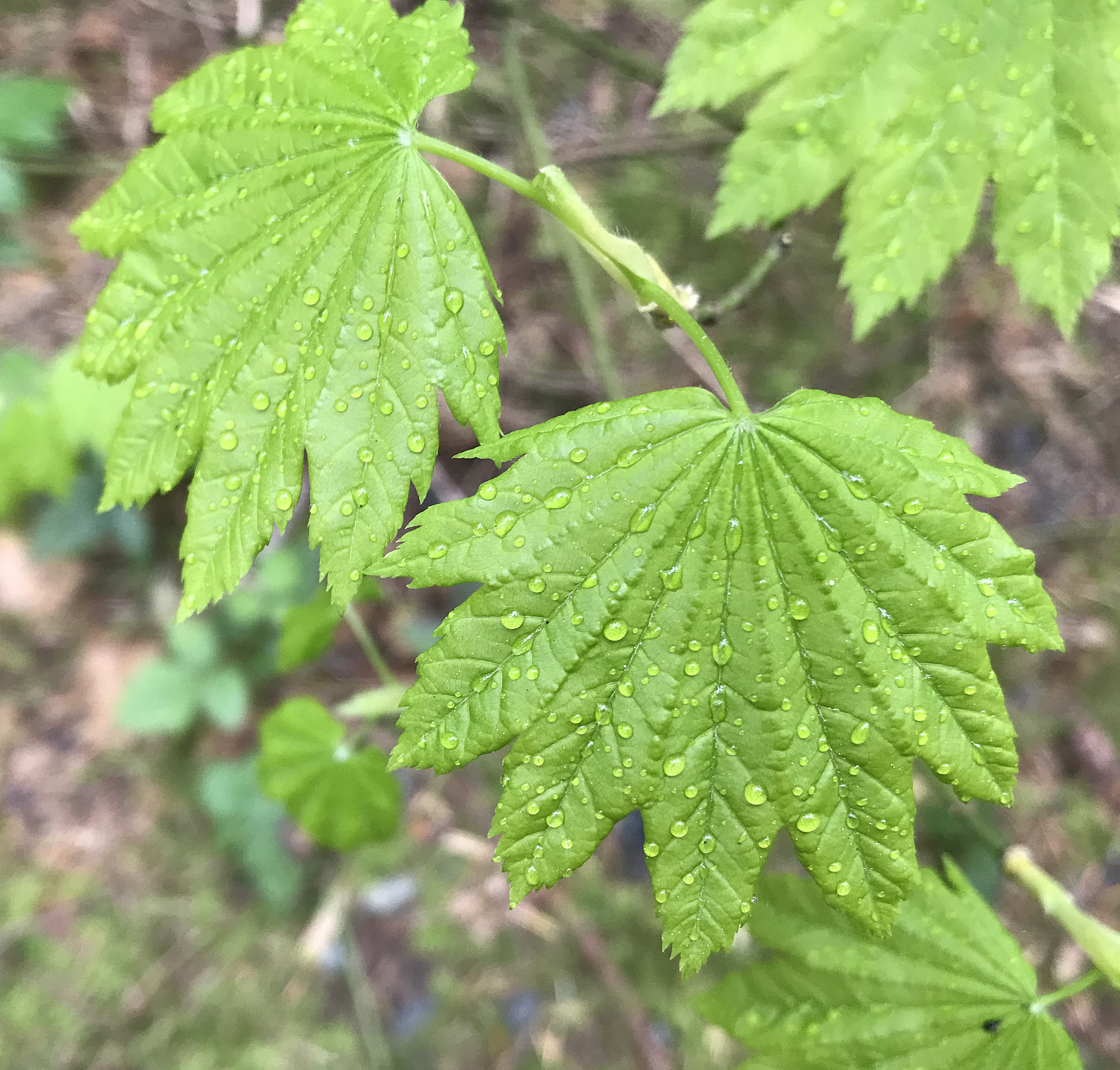
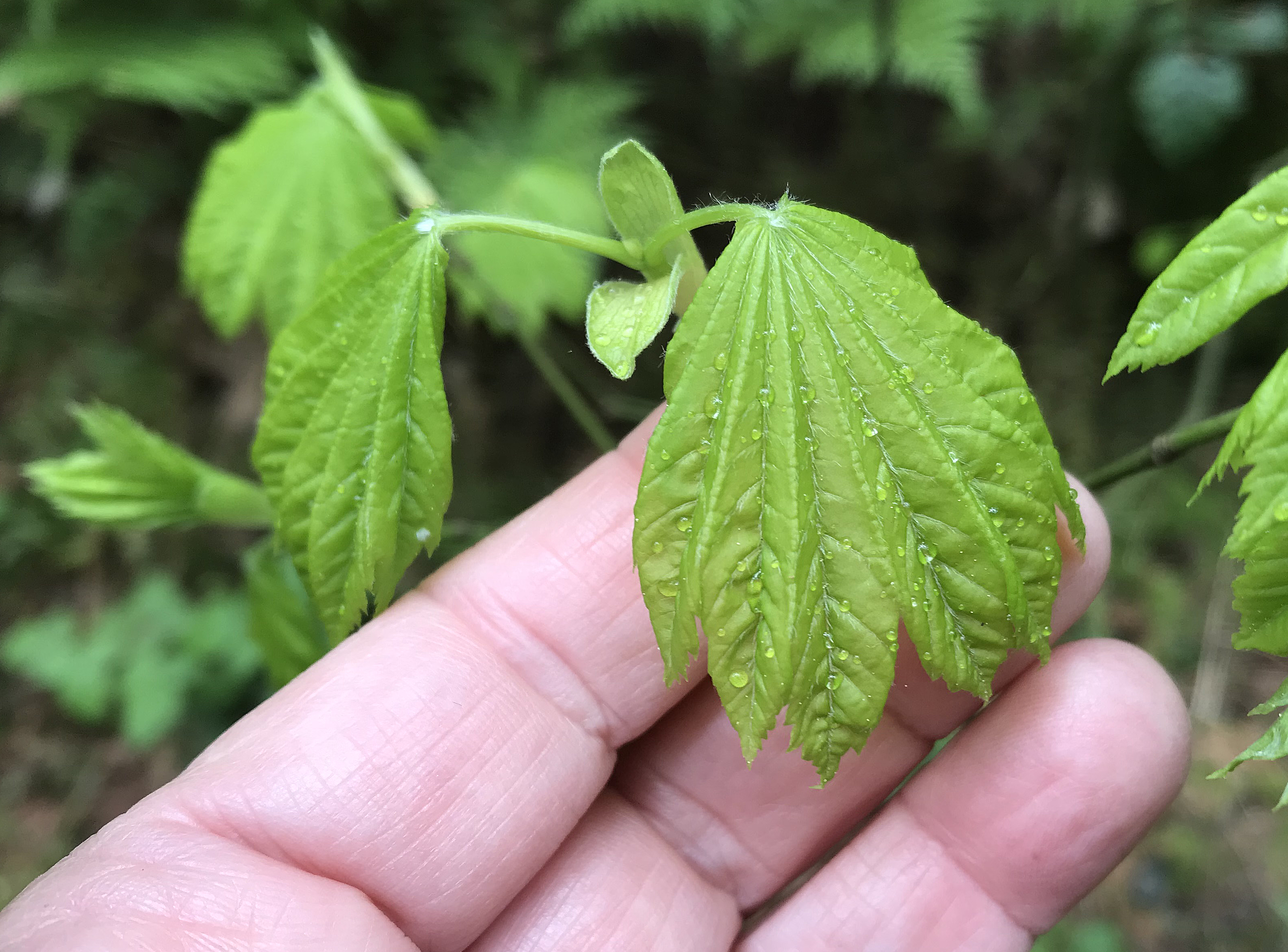
The species name ‘circinatum’ refers to the “rounded” regularly lobed star-like leaves (7-9 radiating lobes) that form beautiful dappled cover, particularly in spring, when young brilliant yellow-green leaves create a vibrant new flash of colour.
.
.
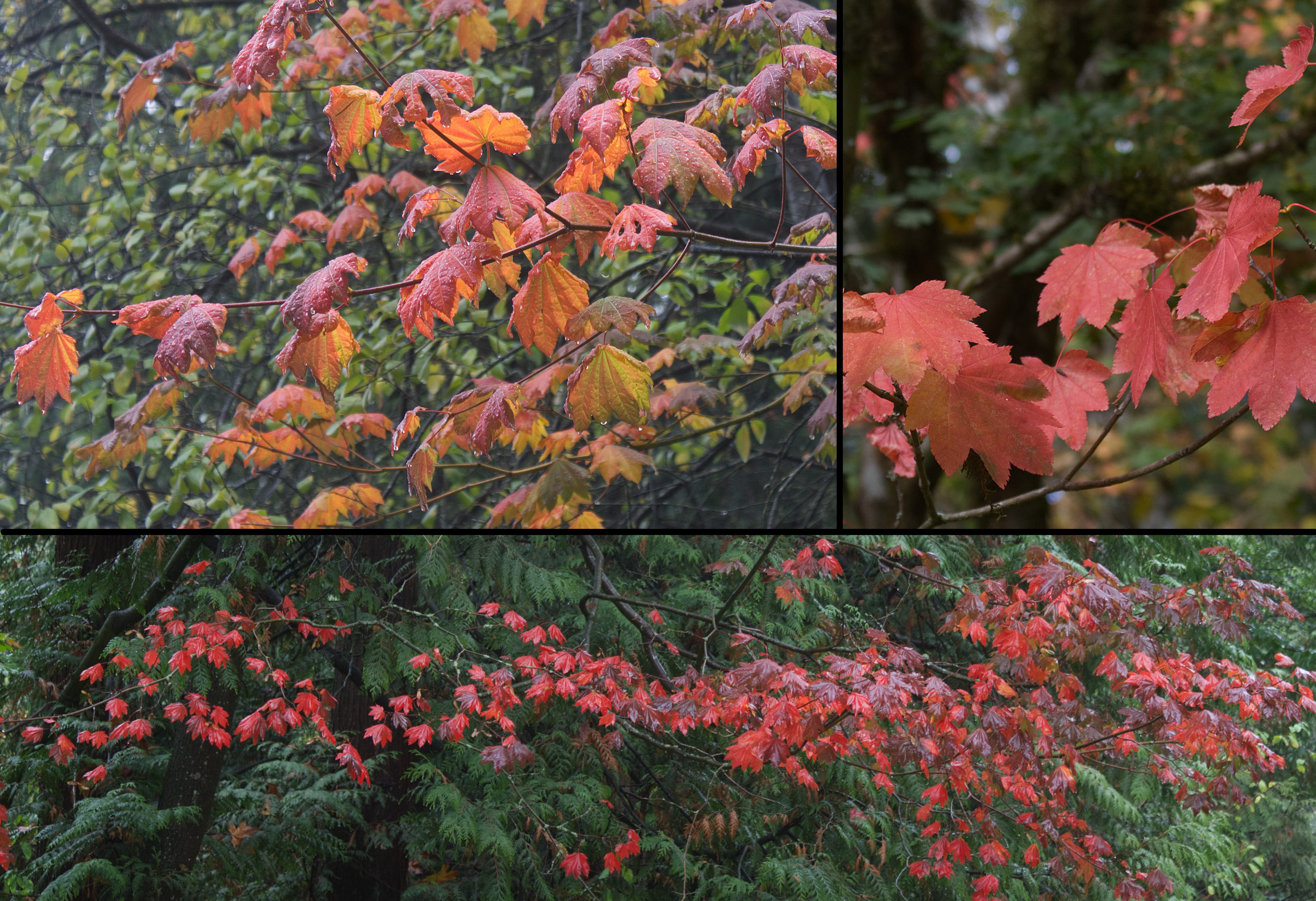
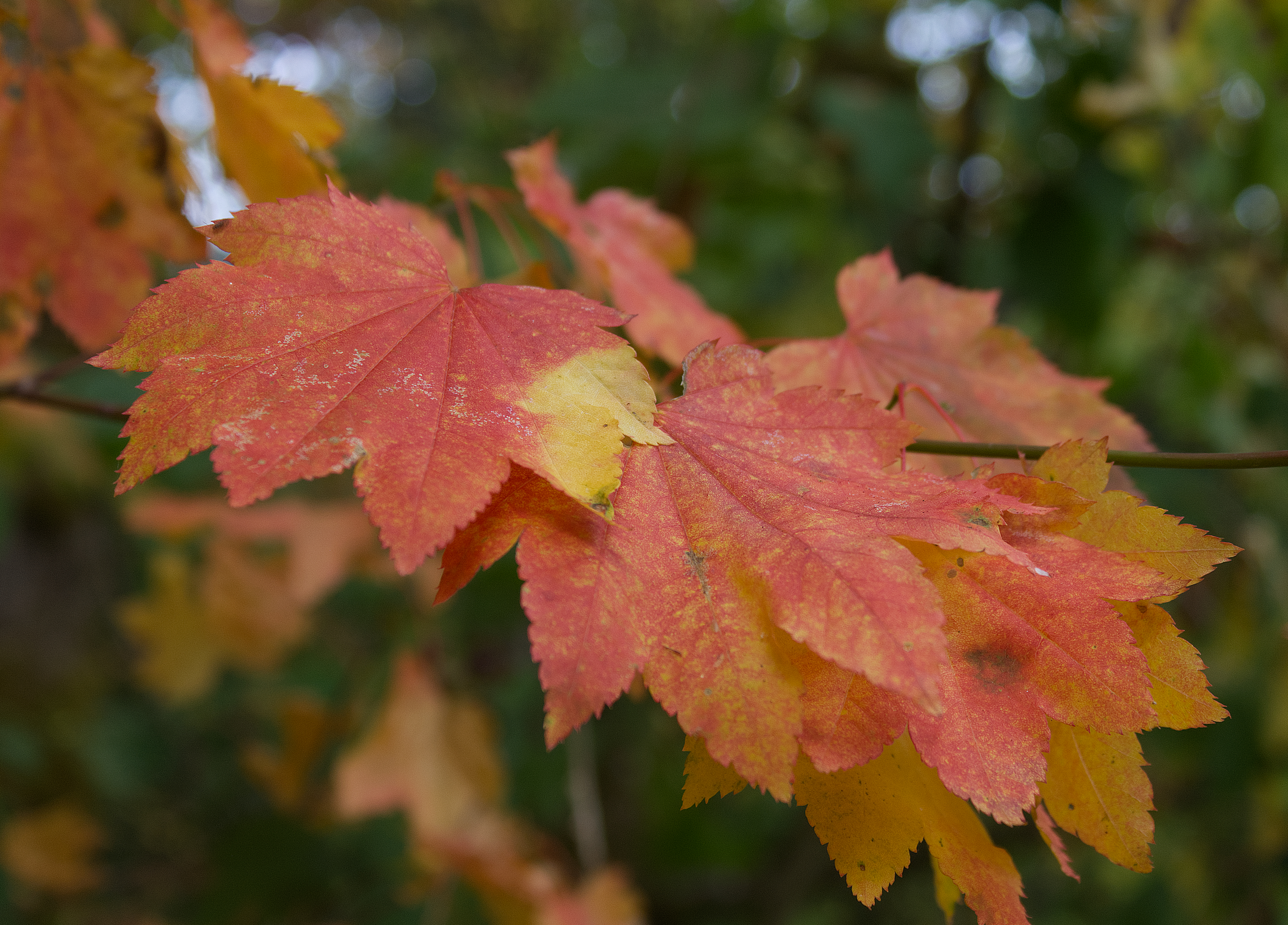
Later, in autumn, the leaves turn mustard yellow (in shade) to fire-engine red (in full sun). Their flowers, which come out in early spring, hang from the ends of their branches, creating rose-coloured seeds (the iconic maple samaras) later in the summer.
.
.
.
I’m told that the vine maple grows to about 7-10 m and lives about 80-90 years. This small scrappy tree is native to the Pacific Northwest of North America, ranging from southwestern British Columbia (some say Alaska), south to northern California.
.
.
.
Birds find them particularly attractive for nesting and deer happily browse the leaves and twigs. Squirrels feed on seeds and cache them throughout the forest. Rabbits make their homes in tangle of a vine maple, whose lower bowing branches often touch the ground.
.
.
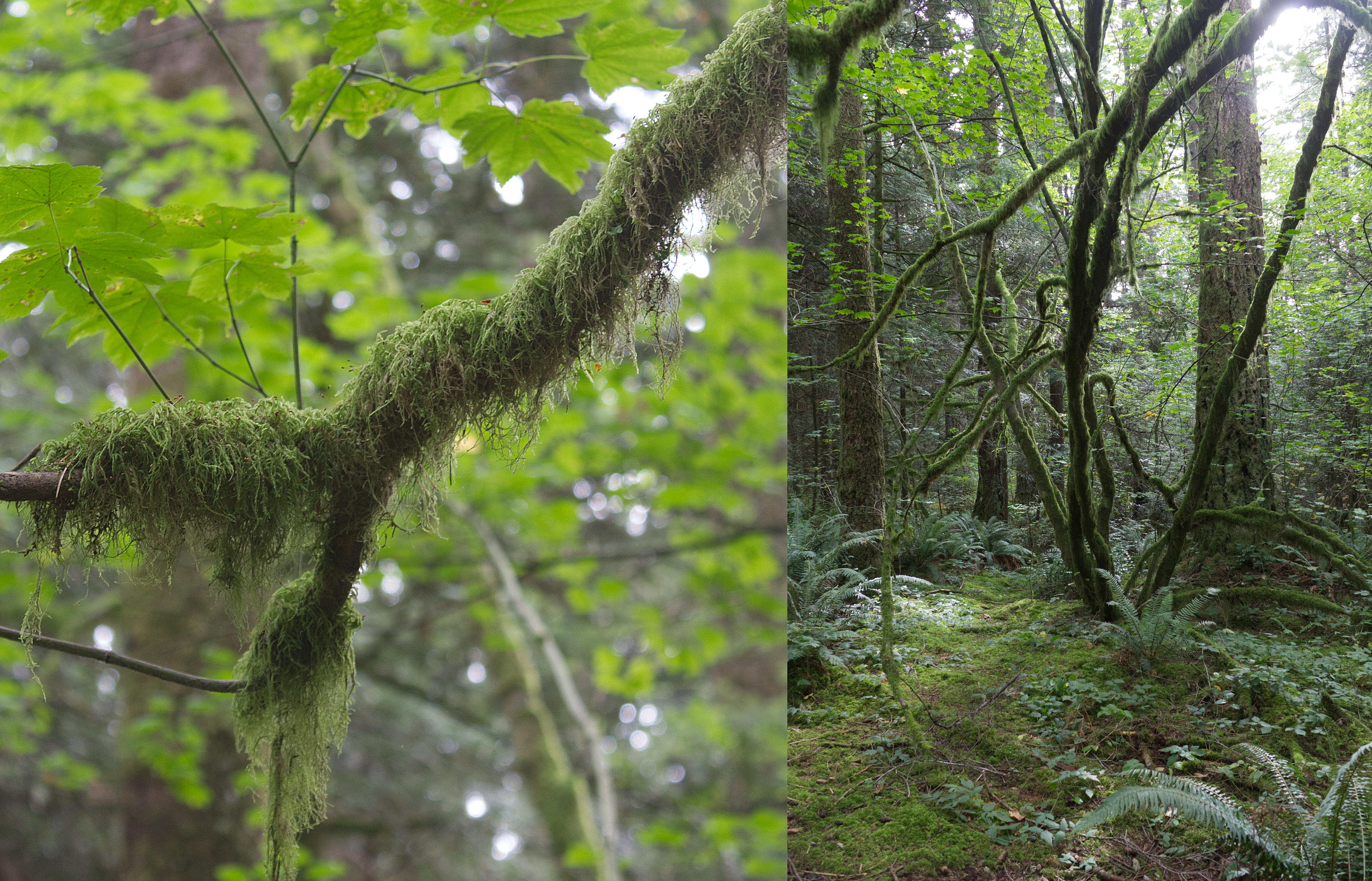
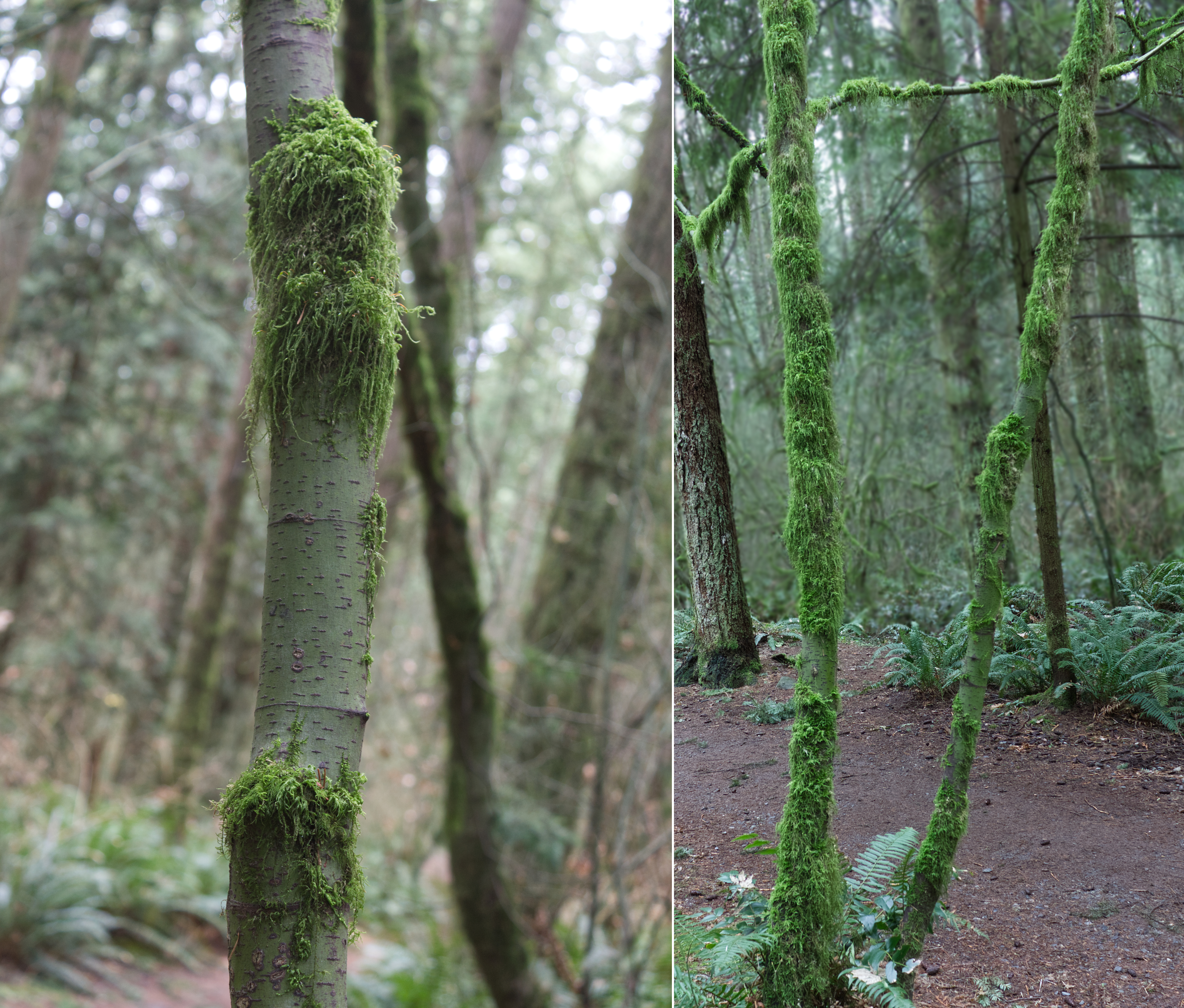
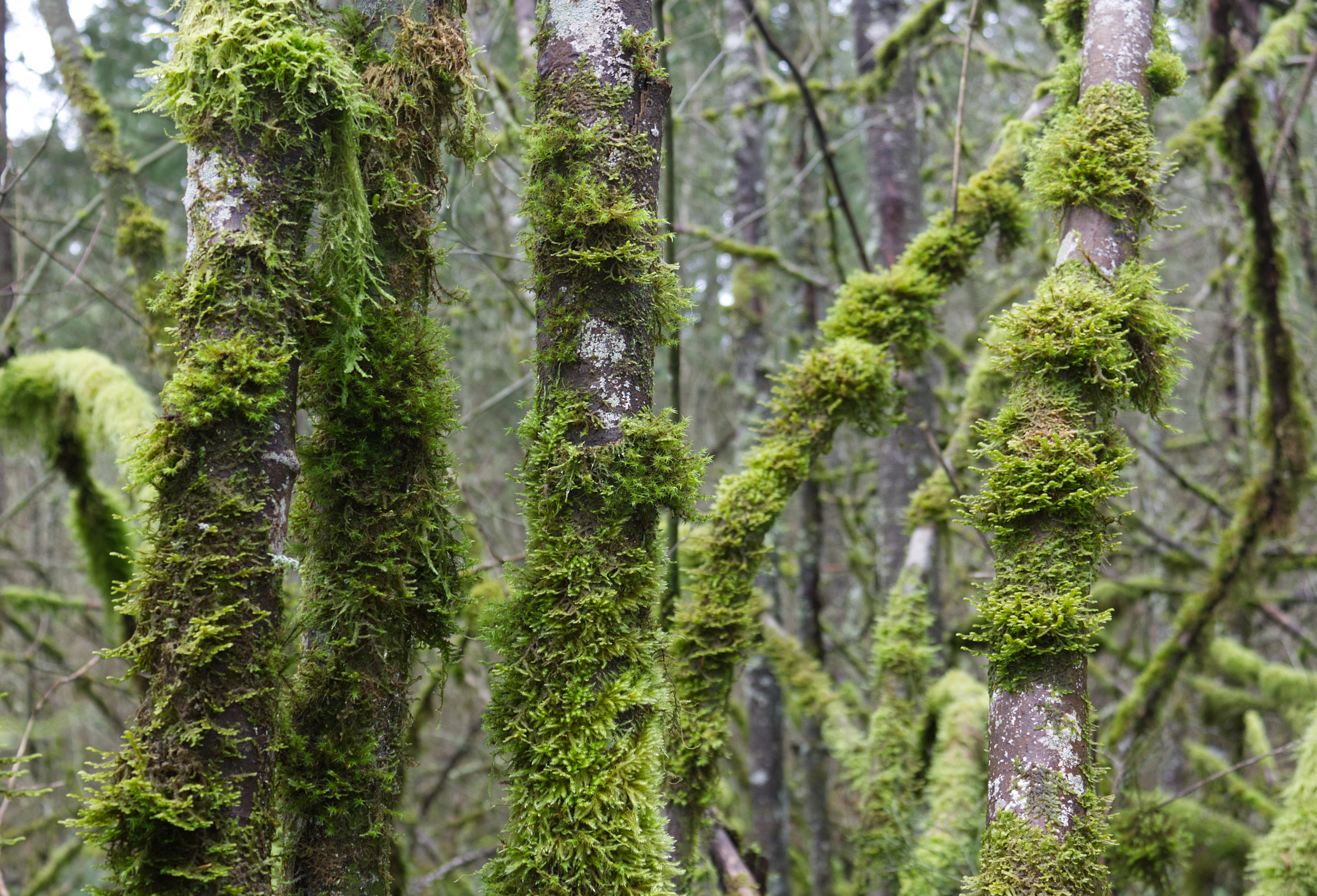
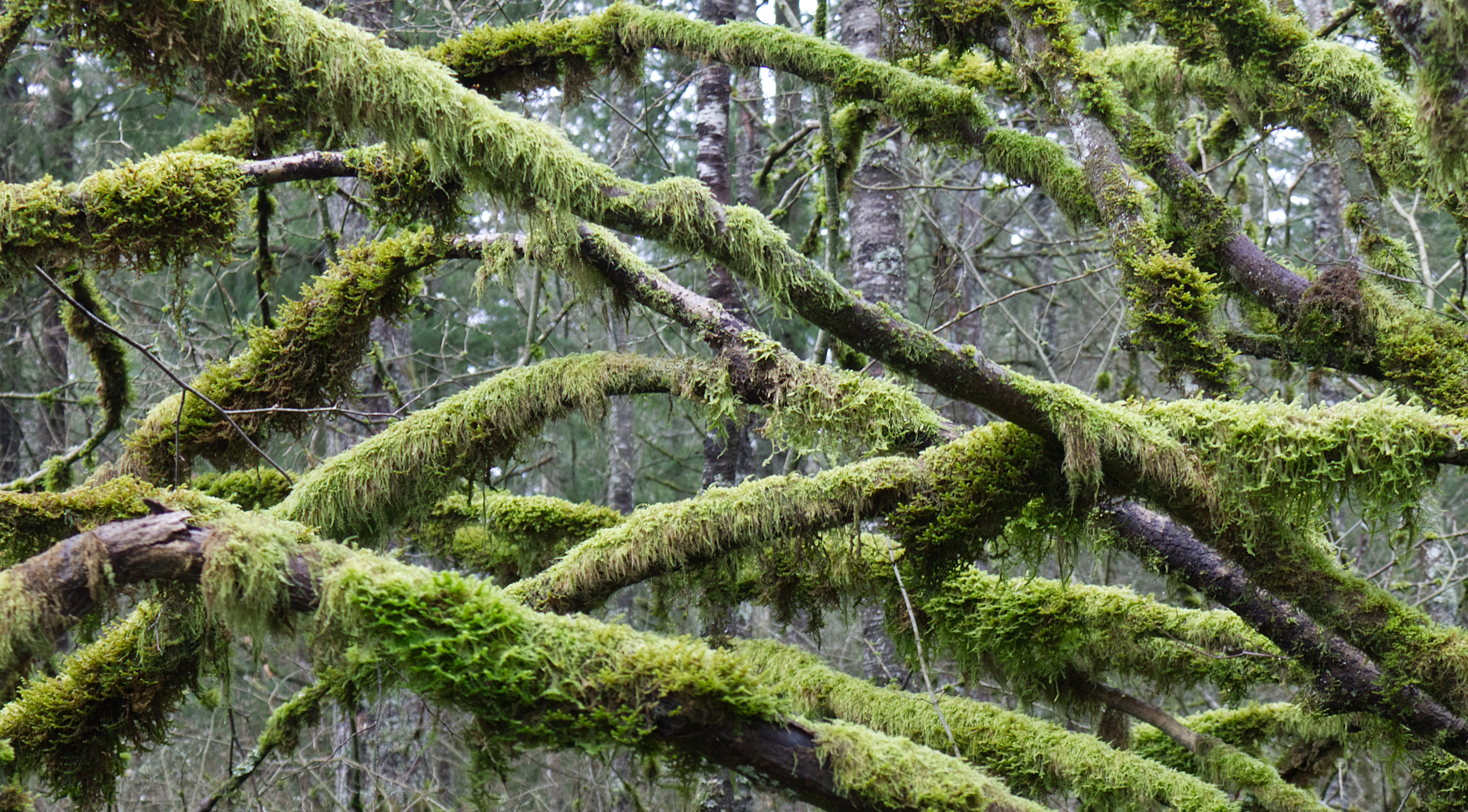
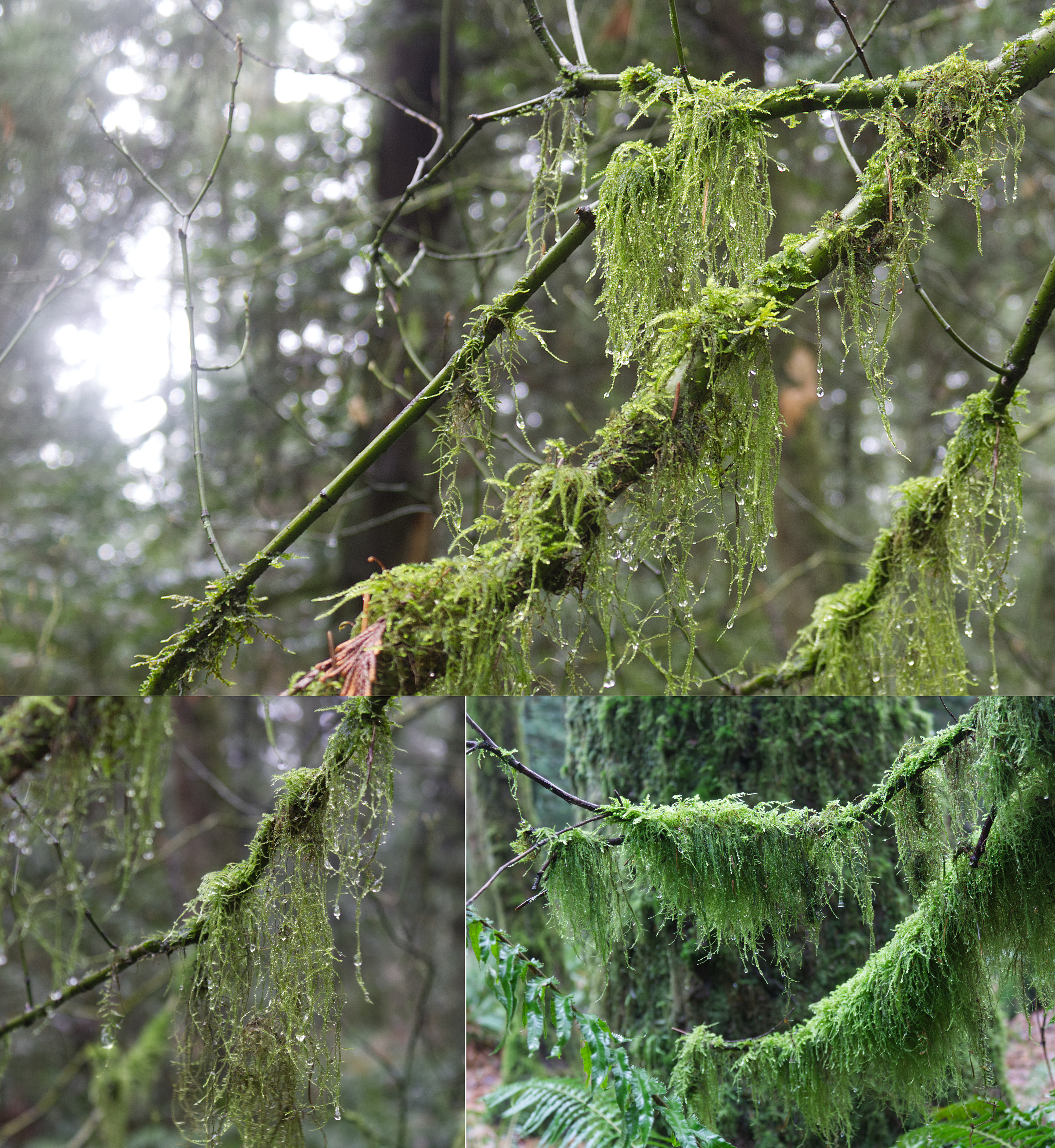
As with the Bigleaf maple (Acer macrophyllum), the vine maple was covered, both trunk and branches by brilliant green moss that formed joyful cushions on the branches and dangled down in long tassels that flicked like a cat’s tail tickled by a trickster breeze. When I discovered the name of the moss, I had to smile: Cat-tail moss. Even the name was fun.
.
.
Cat-tail Moss
.
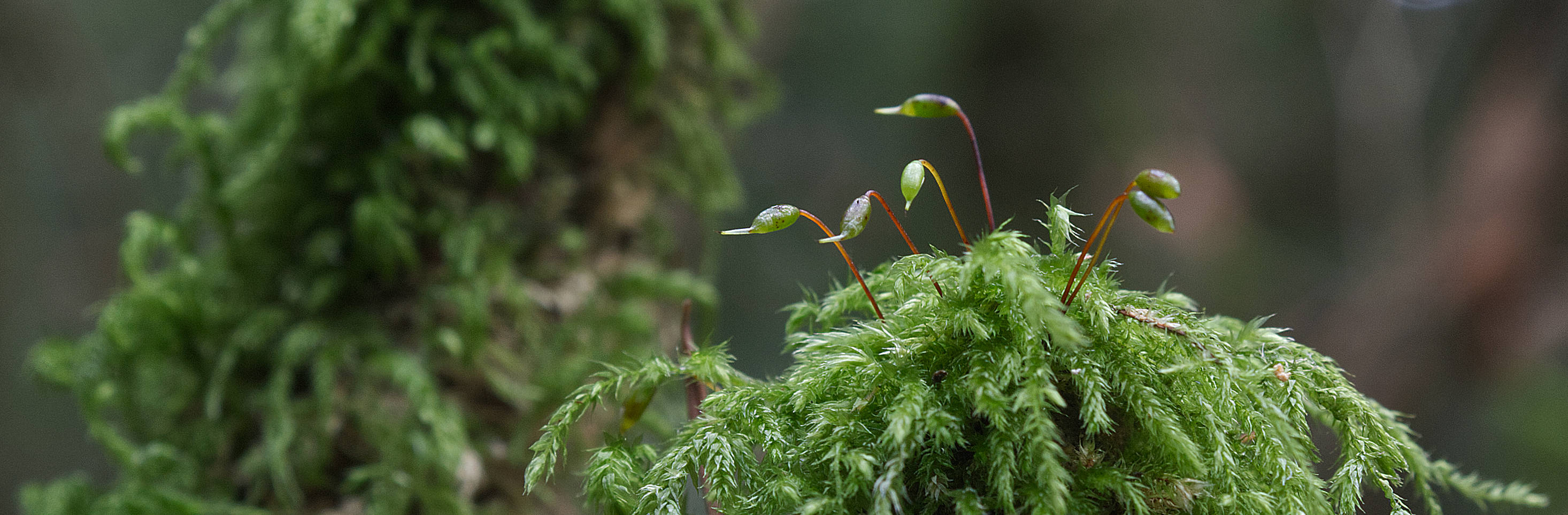
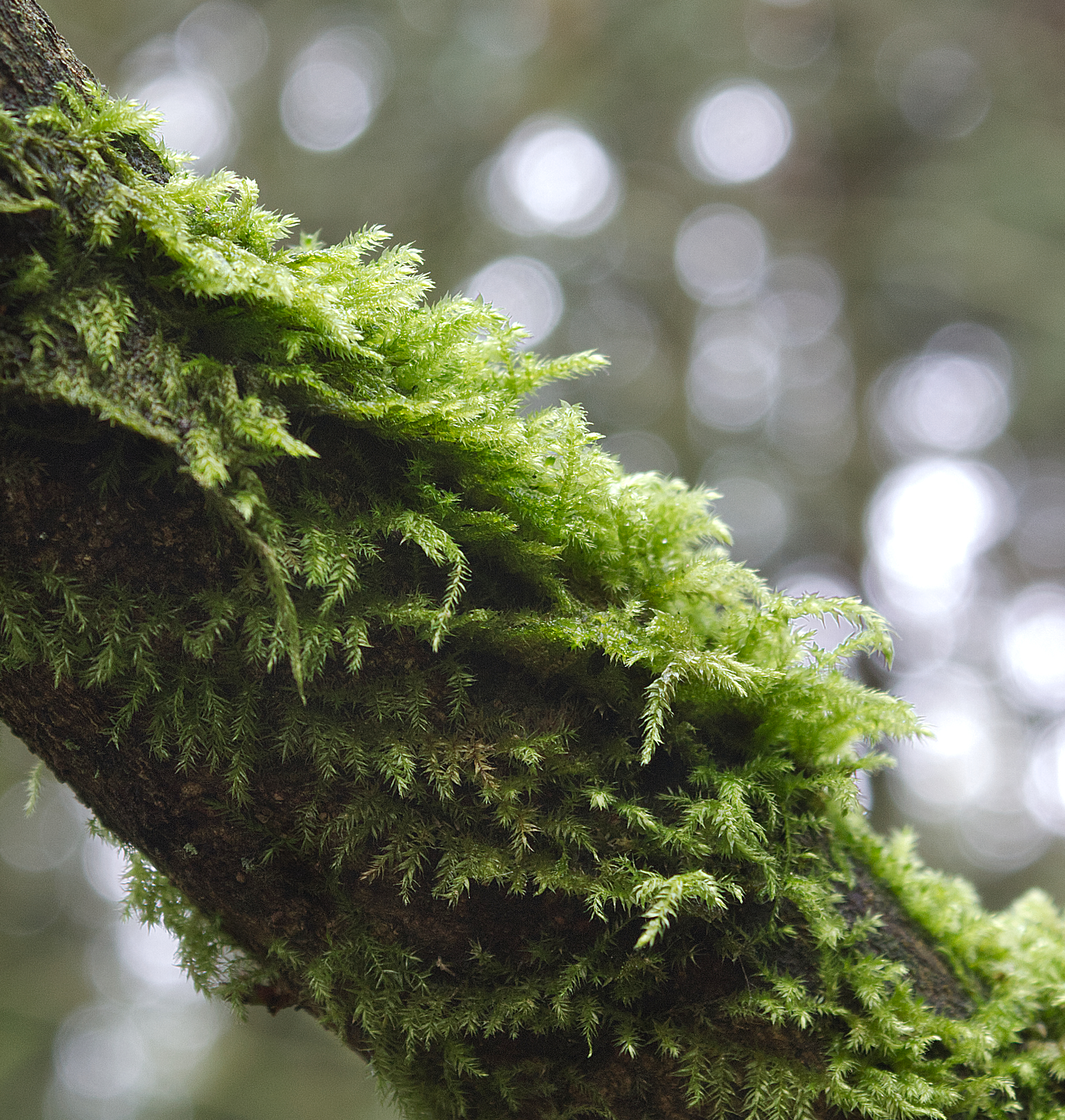
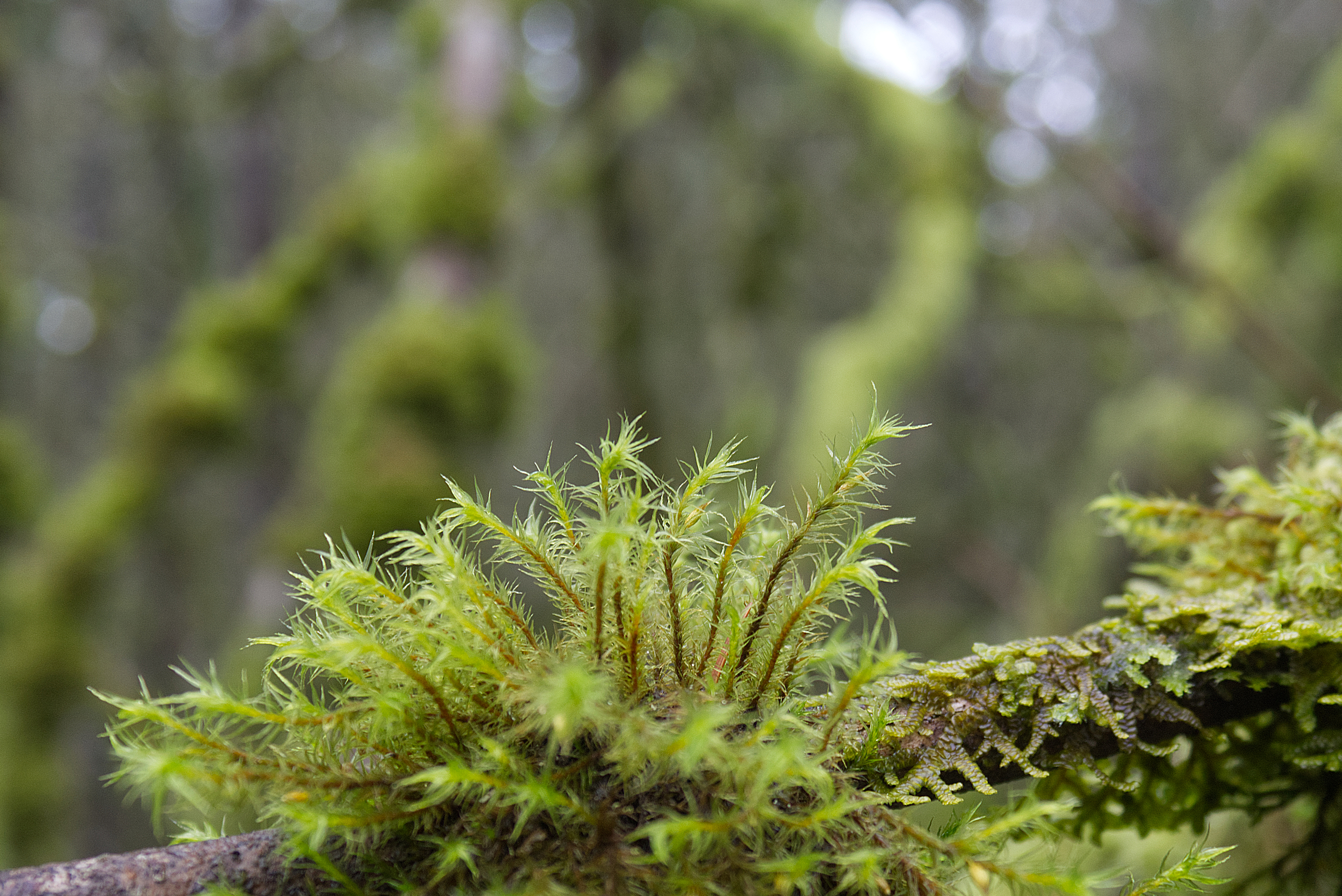
The feather moss Cat-tail Moss (Isothecium myosuroides) forms brownish-green cushions and long strands of bright green that dangle off the vine maple’s many branches. Cat-Tail moss goes by many other names (e.g., reed mace or club rush, tree moss or Slender moss-tail moss) though why one would bother to use something other than Cat-tail Moss is beyond me. It also turns out that Isothecium myosuroides is very common here, throughout humid coastal BC forests and likes to grow on deciduous trees, decaying logs, and rocks.
.
.

Nina Munteanu is a Canadian ecologist / limnologist and novelist. She is co-editor of Europa SF and currently teaches writing courses at George Brown College and the University of Toronto. For the latest on her books, visit www.ninamunteanu.ca. Nina’s bilingual “La natura dell’acqua / The Way of Water” was published by Mincione Edizioni in Rome. Her non-fiction book “Water Is…” by Pixl Press (Vancouver) was selected by Margaret Atwood in the New York Times ‘Year in Reading’ and was chosen as the 2017 Summer Read by Water Canada. Her novel “A Diary in the Age of Water” was released by Inanna Publications (Toronto) in June 2020. Her latest eco-fiction novel Gaia’s Revolution was released March 2026 by Dragon Moon Press.
.

