.
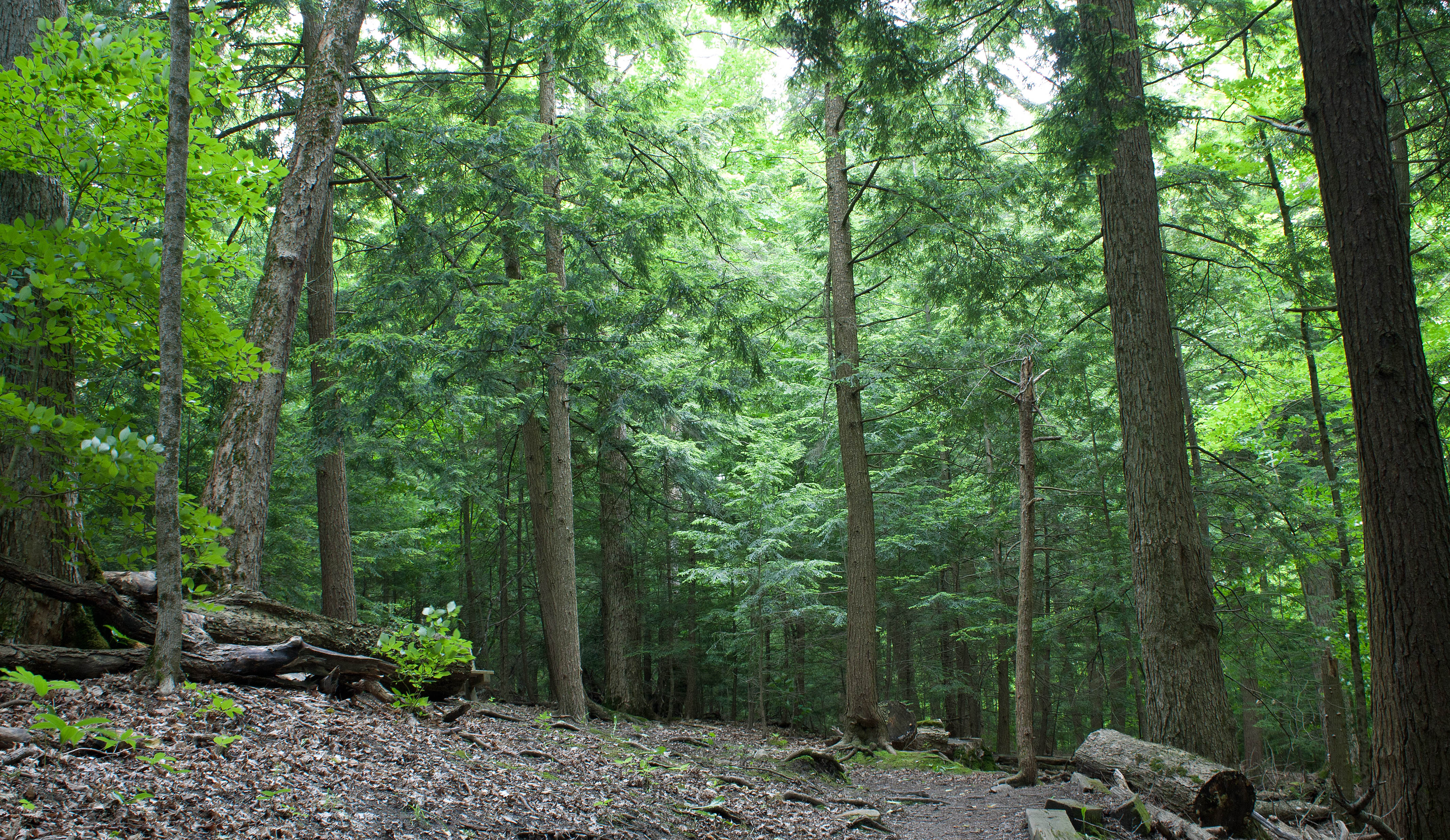
My relationship with the eastern hemlock tree started when I was a little girl and endures to this day; I remember scrambling after my older brother and sister in the woods behind our house in the Eastern Townships of Quebec. We’d find a plethora of tiny cones on the spongy forest floor and my brother taught me how to make mini catapults by demolishing maple saplings to fling the cones as tiny projectiles at one another. Such destructive fun! And so vividly lodged in my memory that I incorporated those moments in two stories I later wrote as an adult: Julia’s Gift (a short story in Natural Selection by Pixl Press) and Gaia’s Revolution (a climate thriller published by Dragon Moon Press). See below for an excerpt taken from the novel.
.
.
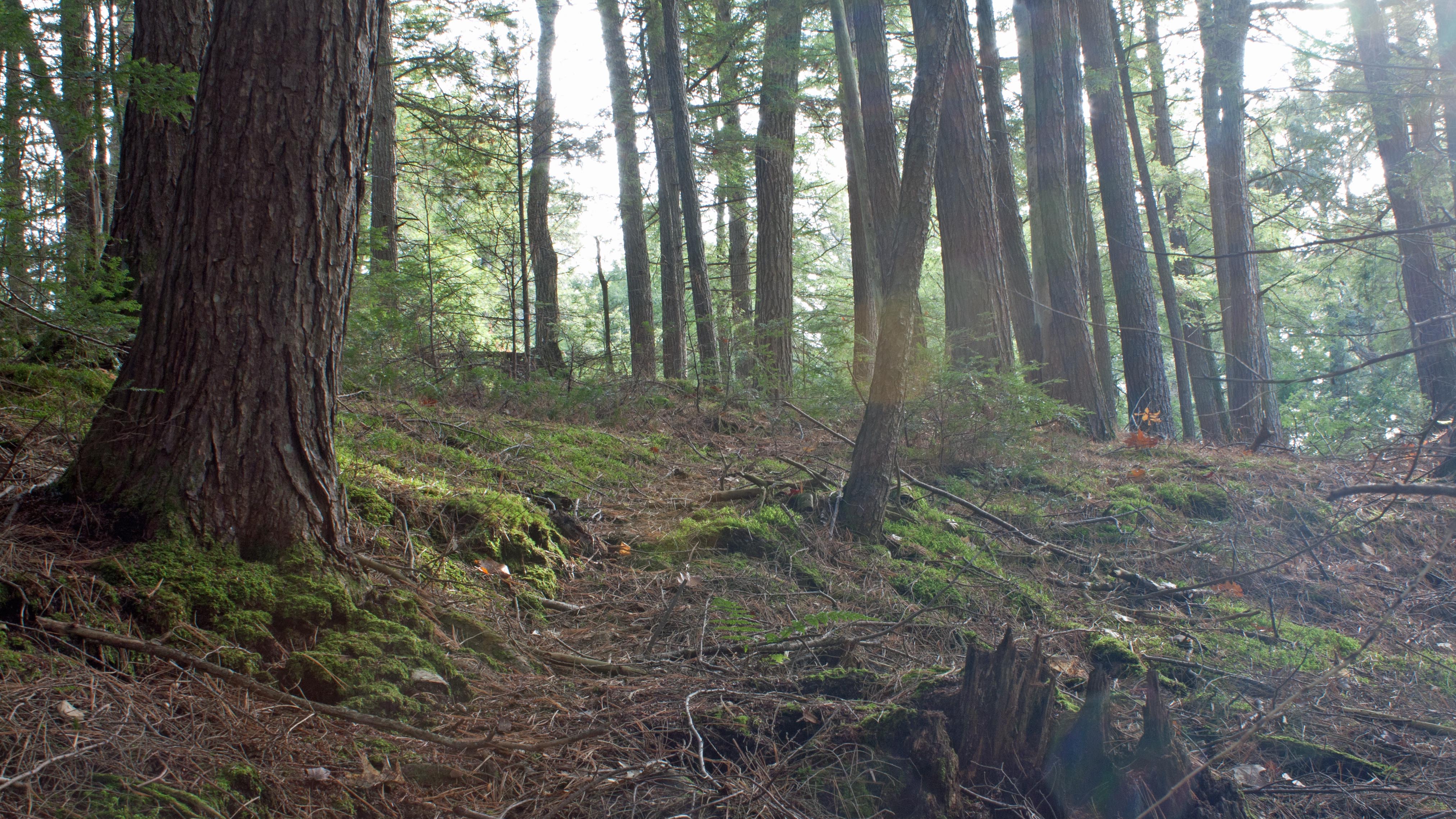
After moving from coast to coast, I lived for about two decades in southern Ontario (teaching at the University of Toronto). While I was there, I discovered, and made my own, two wilderness forests near the town where I lived: the Mark S. Burnham old-growth maple-beech-hemlock forest near Peterborough; and the old-growth hemlocks of Catchacoma Forest and marsh, 53 km north of Peterborough on the Canadian Shield. There, I discovered a myriad of lichens and fungi amid a diverse understory. And the heavenly song of the hermit thrush…
.
Old-Growth Eastern Hemlock Forest of Catchacoma, Ontario
.
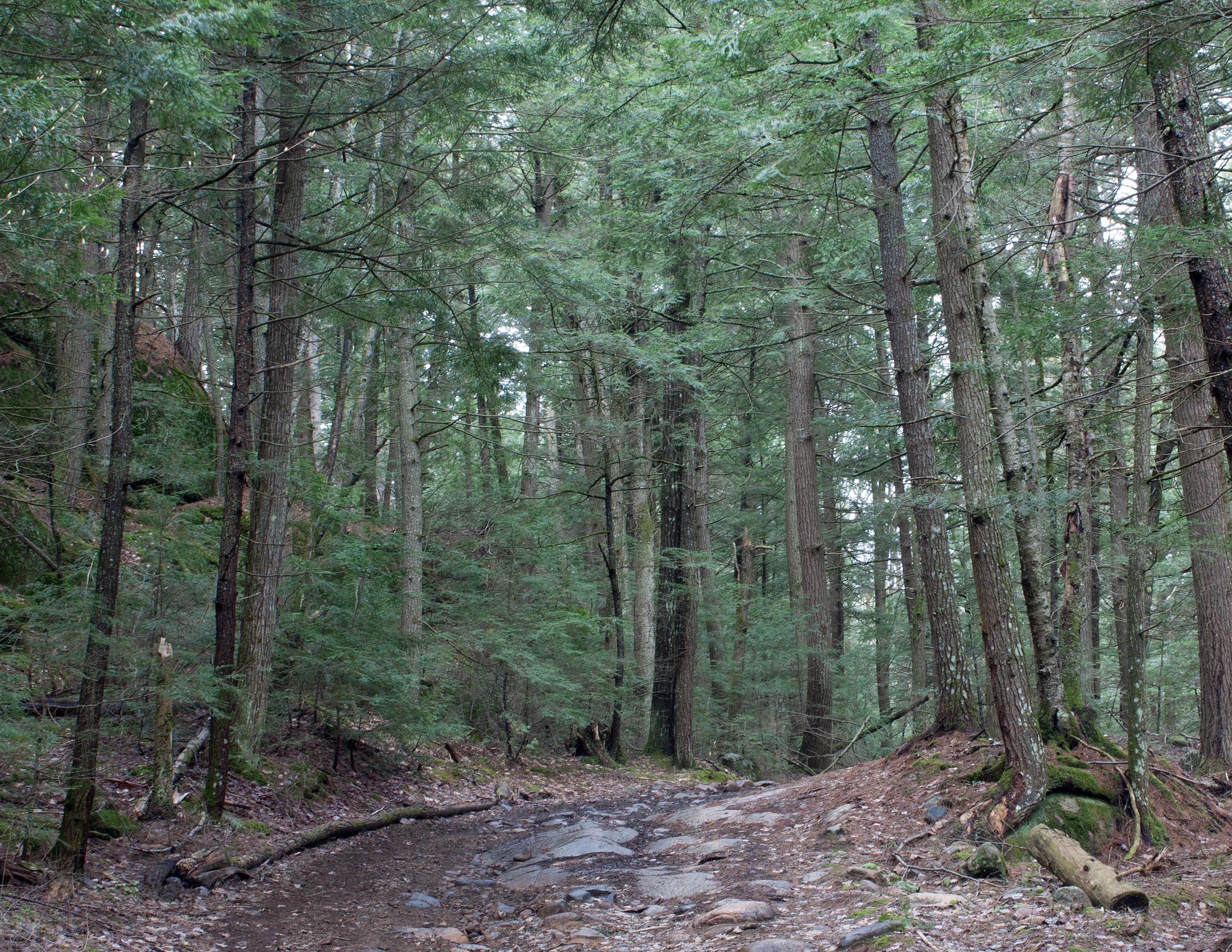
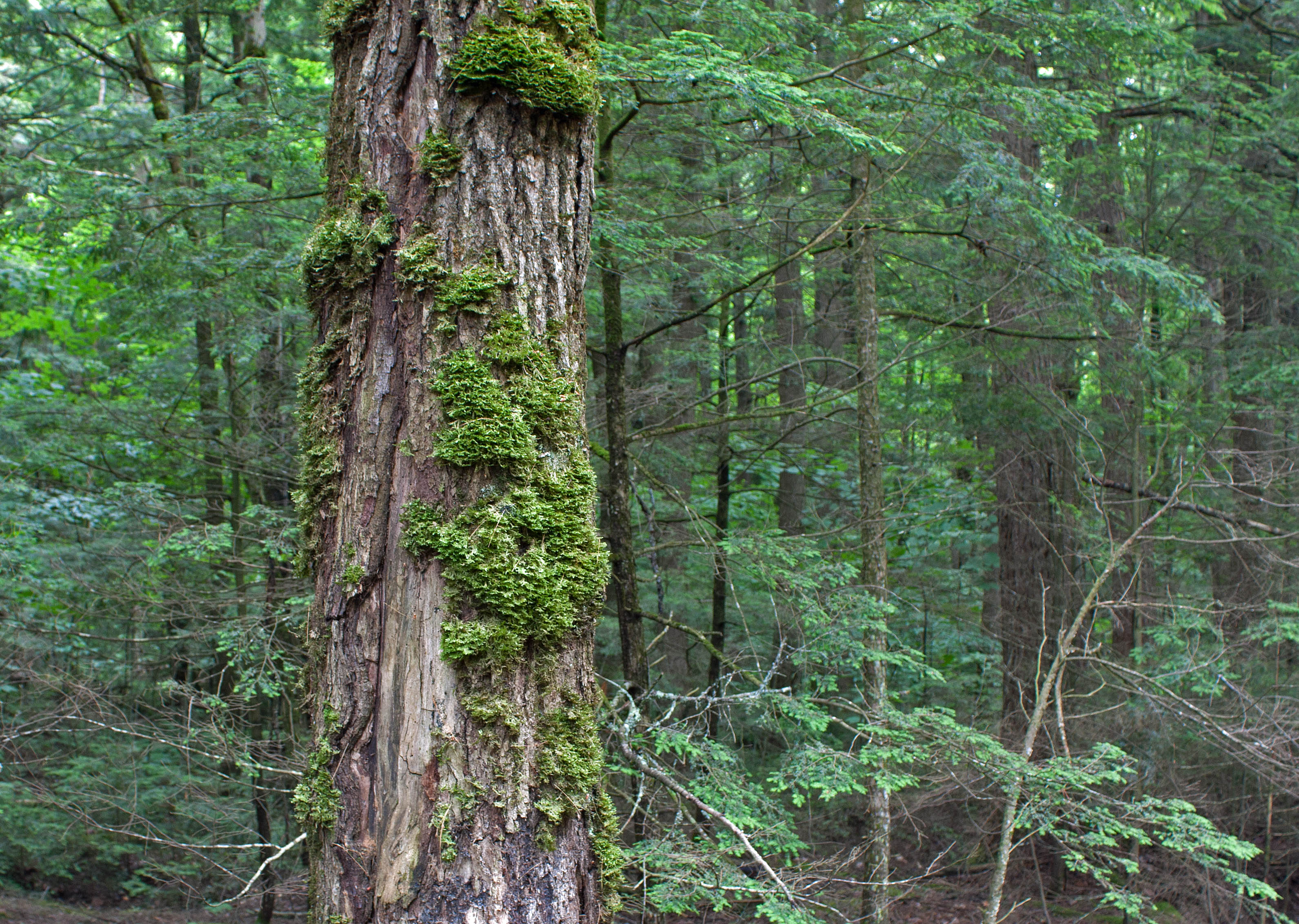
Very soon after I started on the trail, I entered a dense forest of over 20-metre (70 ft) tall hemlocks. Hemlock trees over 40 cm wide (DBH) and over 375 years old towered above me in a mixed forest that included a diverse mix of conifer and deciduous trees. Red and white pine, some spruce and fir, white and yellow birch, basswood, poplar, hop hornbeam, red and sugar maple, and oak, both white and red. And down the slope to the large wetland, there was also speckled alder.
.
.
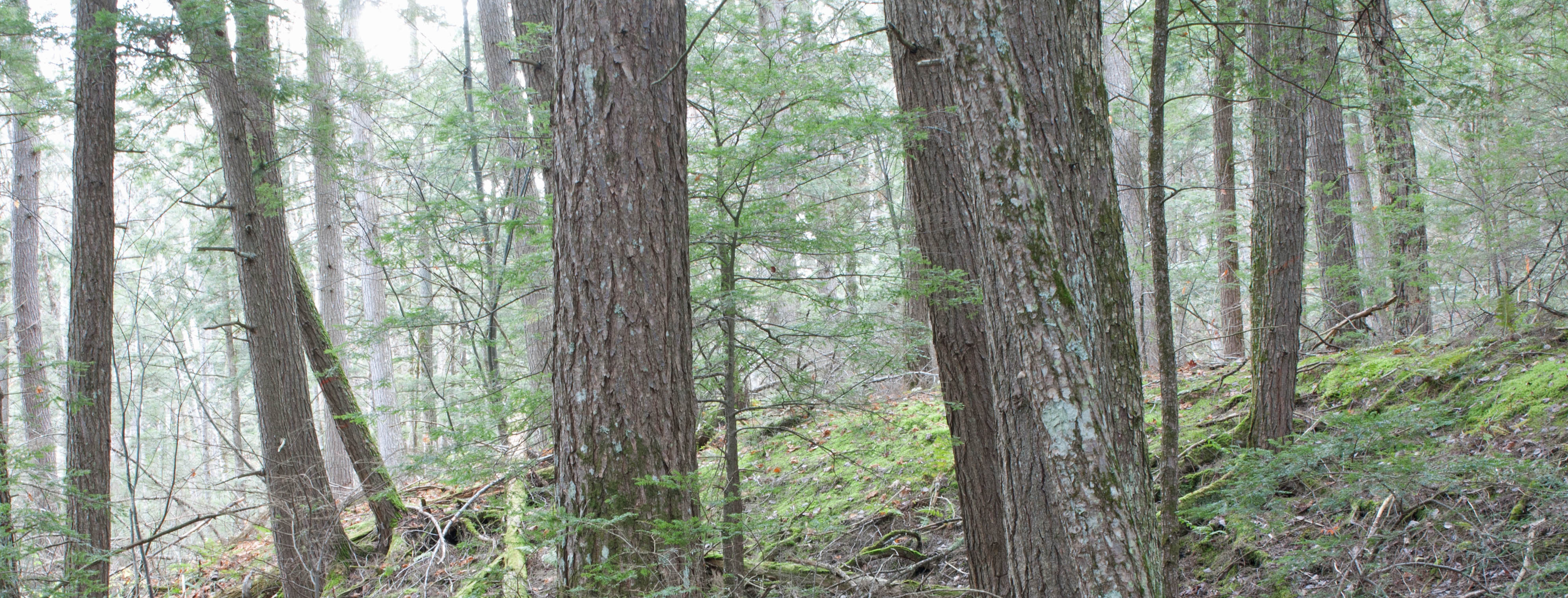
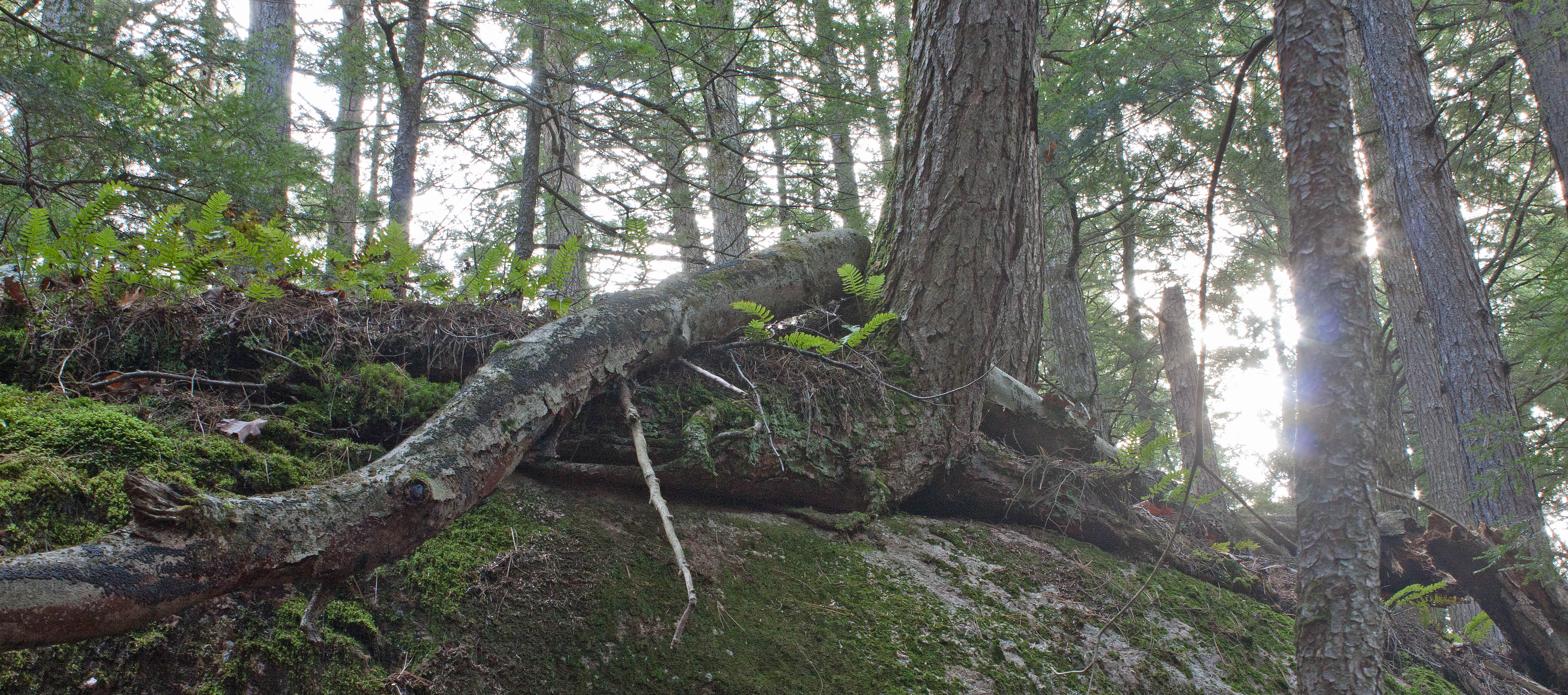
I strayed off the main path, climbing upslope, to take a picture of moss-covered granite and limestone boulders. My feet sank into the spongy forest floor as I gingerly stepped toward my photoshoots. The soft ground was covered in leaf litter, mosses, lichens and fungi. On the slope, I witnessed how resilient and imaginative the eastern hemlock was; sending its roots snaking across bare rock to find purchase in soil below. I imagined the tiny hemlock cone, no larger than my thumbnail, finding just enough organic matter to grow.
.
.
At a rocky outcrop and clearing in the dense forest, a hermit thrush offered its tender ode to the forest: a pure song that opened from a singular note into successive waves of pure light that echoed throughout the forest. The outpouring of heaven’s light from this tiny creature sent my own heart soaring and filled me with joy. Soon after, the red-listed wood thrush added its notes into a resonating chorus of ethereal beauty. On hearing them—they were both singing nearby at the same time—my whole body relaxed into a euphoric trance and I felt like I was in an old giant cathedral filled with heavenly arias.
.
Old-Growth Eastern Hemlock of Mark S. Burnham Forest
.
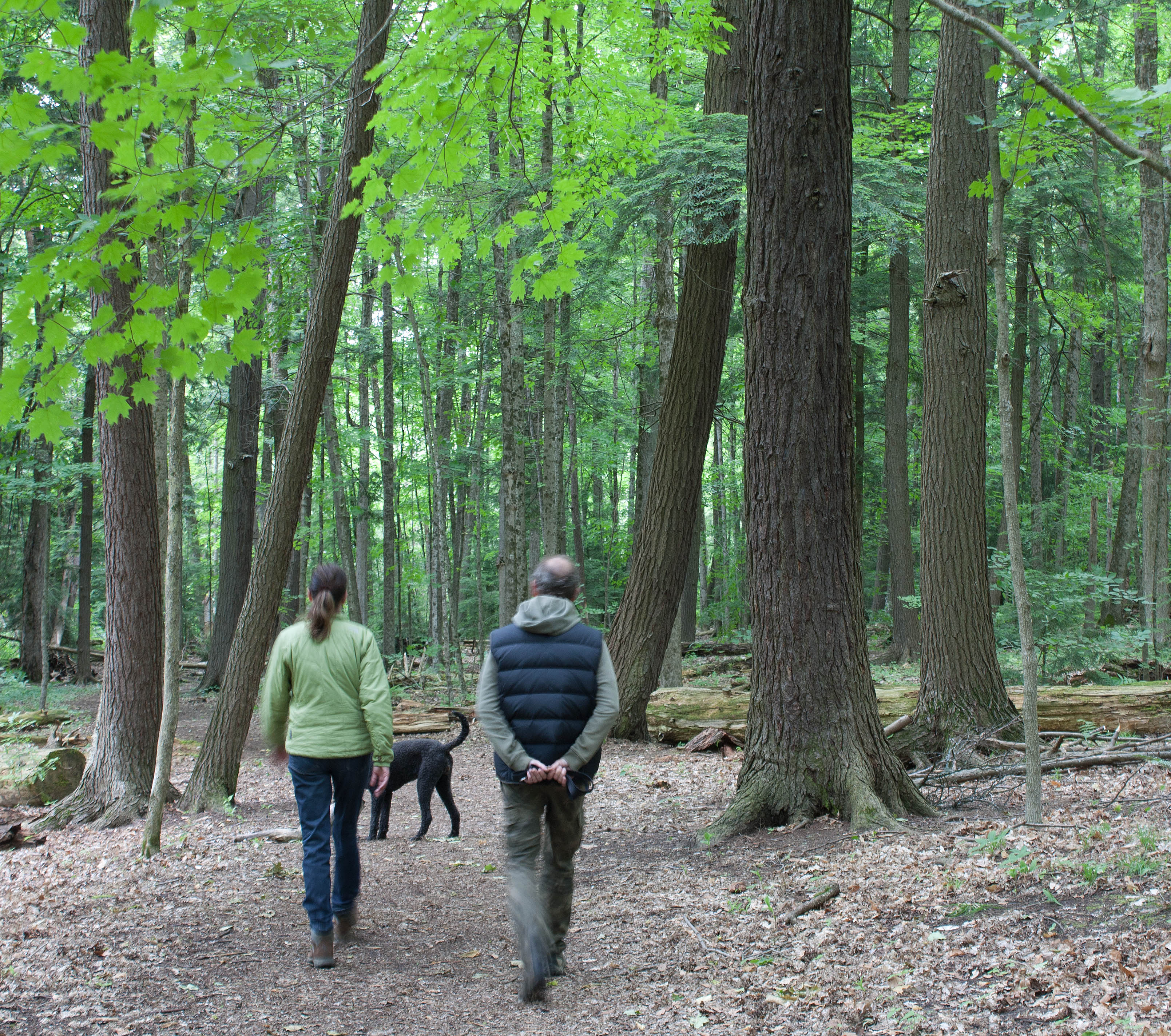
The Mark S. Burnham Provincial Park is one of few remaining and well-preserved mixed old-growth forests in Ontario. The 39-hectare park lies just east of the town of Peterborough off Highway #7 and features 2.5 km of trails on two interconnected loops that meander along and over a drumlin through ancient maple, beech, hemlock and cedar forest. Some of these majestic trees are among the oldest in Ontario, many of which are over 200 years old. For instance, the world’s oldest sugar maple (over 330 years) lives here.
.

.
This tall dark hemlock forest is one of my favourite places to be. As I walk the soft path beneath a closed canopy of towering trees over twenty meters above me, I dream of a time long ago. As if reading my thoughts, the sudden primeval laughing shriek of the Pileated woodpecker cuts in and I imagine timeless ancient scenes, when these two hundred-year-old trees were still young and the drowned cedar jungle west of me harboured roaming amphibians and reptiles.
.

.
My senses opened wide to take in the forest’s gifts. Beech and maples rustled amid the low hush of hemlock in the warm breeze. That same breeze carried with it the musky smell of swamp water and the sweet rot of vegetation. In the distance, a ruffed grouse thumped.
Then a hermit thrush offered its tender ode to the forest. I stopped in my tracks to listen and breathe in that heavenly sound. The hermit thrush is a reclusive indistinct brown bird; yet its song—an echoing flute-trill—celebrates the forest like no other sound. It is a prayer to beauty, stirring one’s heart into celebration. The hermit thrush song is Nature’s hymn to the beauty of all life. They are the forest’s poets.
.
Eastern Hemlock Ecology and Distribution

.
The eastern hemlock (Tsuga canadensis)—also known as Canadian hemlock—is a coniferous tree native to eastern North America. The tree grows widespread throughout much of the Great Lakes region, from the Maritimes west through southern Quebec and Ontario in the boreal-temperate transition zone of eastern North America. It prefers highland climates, with cool and humid conditions.
.
.
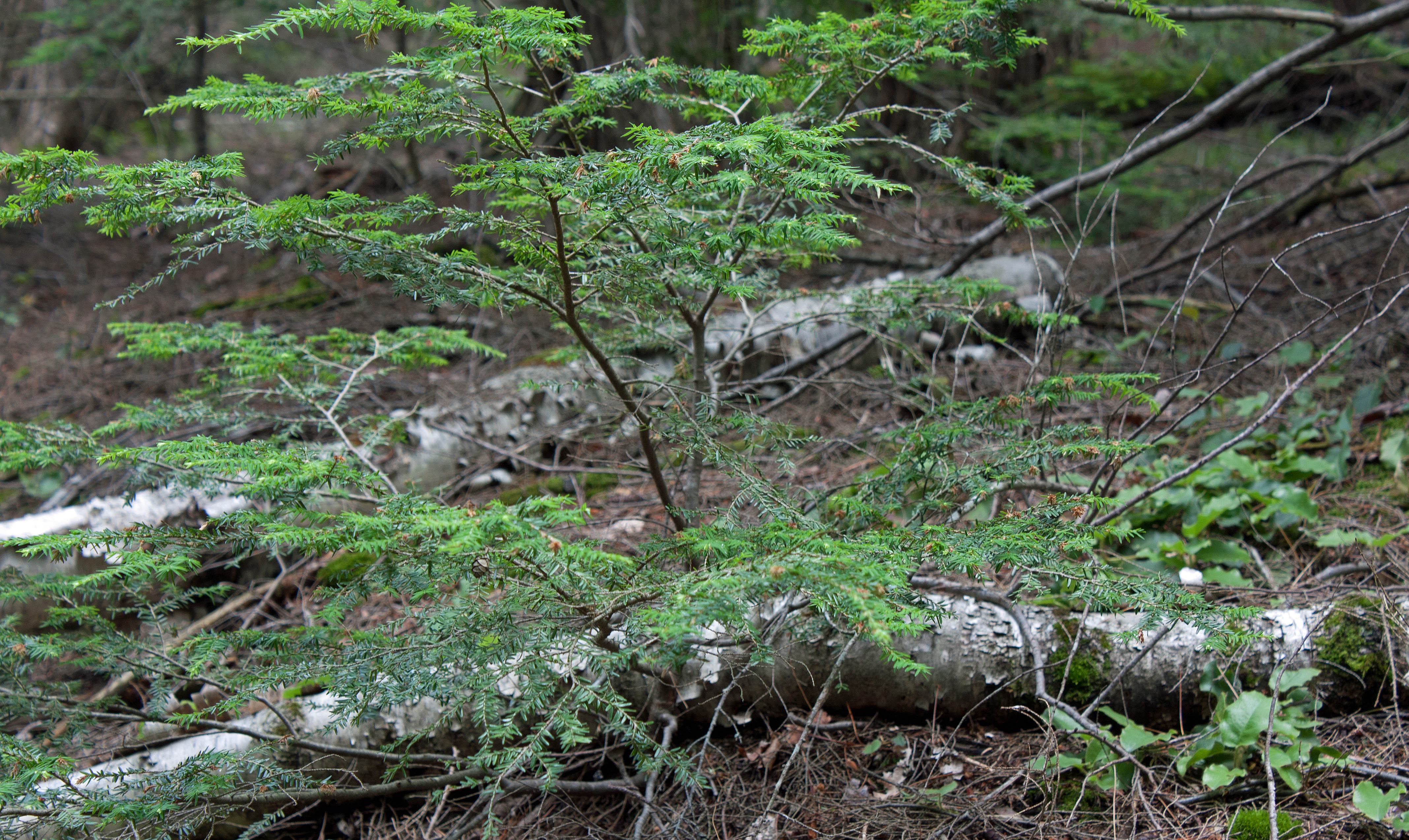
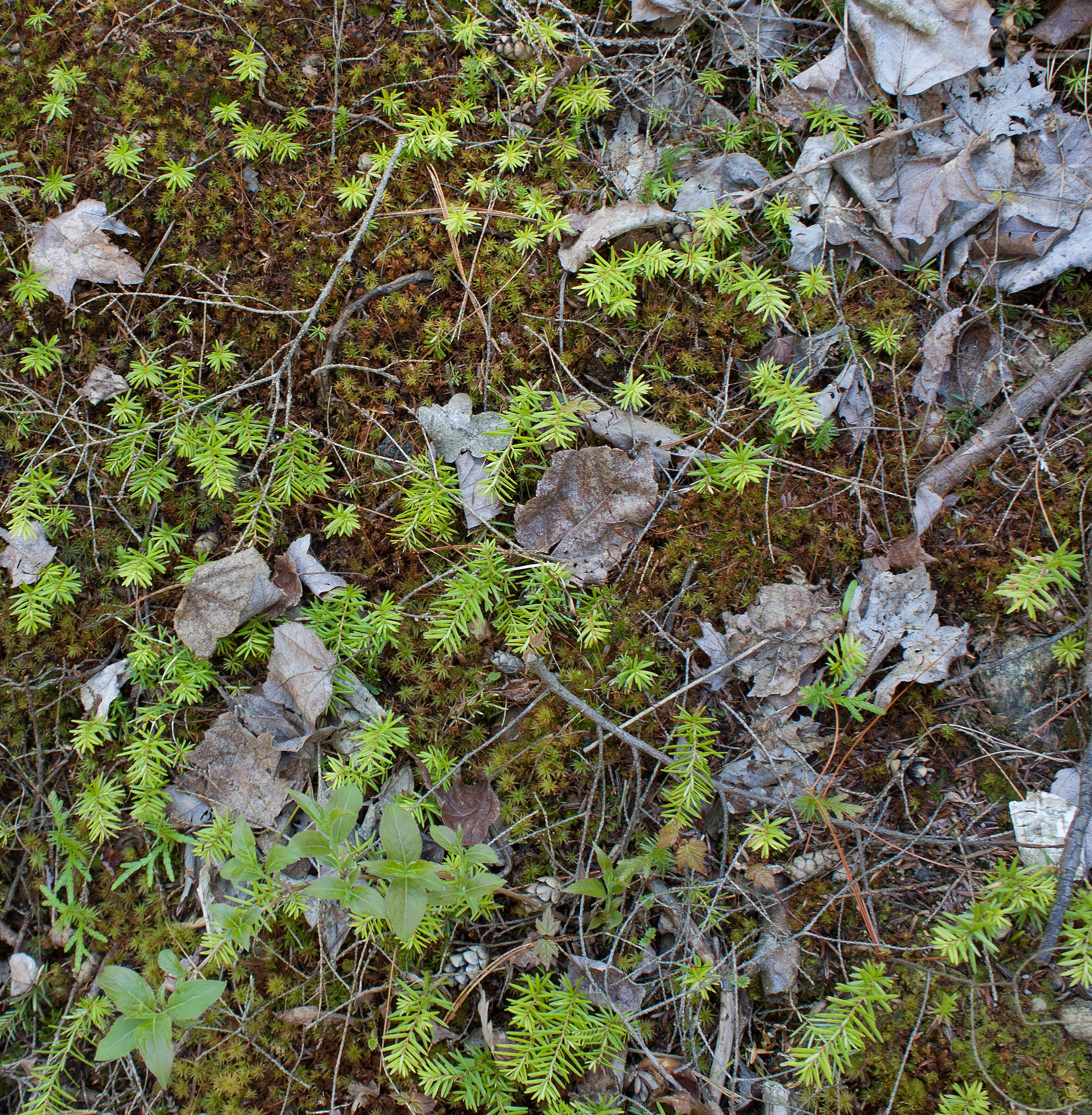
Hemlocks (Tsuga spp.) are classic keystone foundation species; their remarkable shade tolerance permits them to thrive in low light environments. Hemlocks can photosynthesize in less than 5% full sunlight, allowing them to grow under dense canopies and persist for centuries, modifying their local environment to create cool, humid microclimates that shape entire ecosystems. These ‘forest air conditioners’ will keep a shaded understory area 10° C cooler than surroundings in the summer. Hemlock stands also intercept precipitation and lower evaporation rates, effectively creating a higher humidity that slows the decomposition of needles; adding to the spongy forest floor. This is very evident in either of the two forests I used to visit in Ontario. Young hemlock seedlings thrive in deep shade, often germinating on moist, rotting nurse logs. Seedlings will persist in a suppressed state for decades until a gap opens in the upper canopy when they take advantage of the light and shoot up to become a dominant tree. Once established, the deep shade cast by hemlock crowns prevents many other tree species from germinating.
.
.

.
You can often find the eastern hemlock in pure stands, like the one my siblings and I played in as children. The hemlock is generally mixed with yellow birch, eastern white pine, red and white spruce, sugar maple, and American beech. The forests I often visited in Ontario included this mix.
.
.
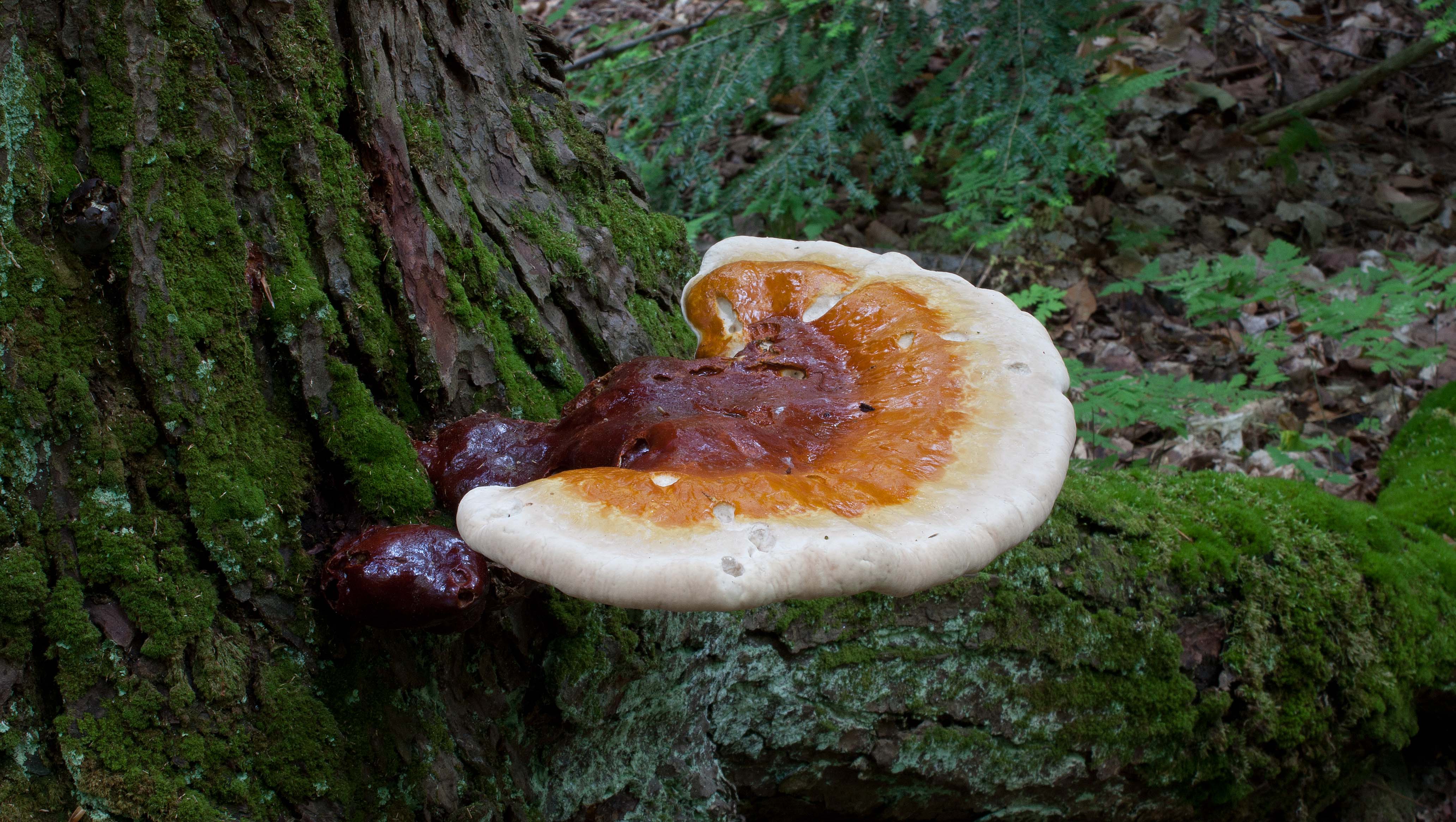
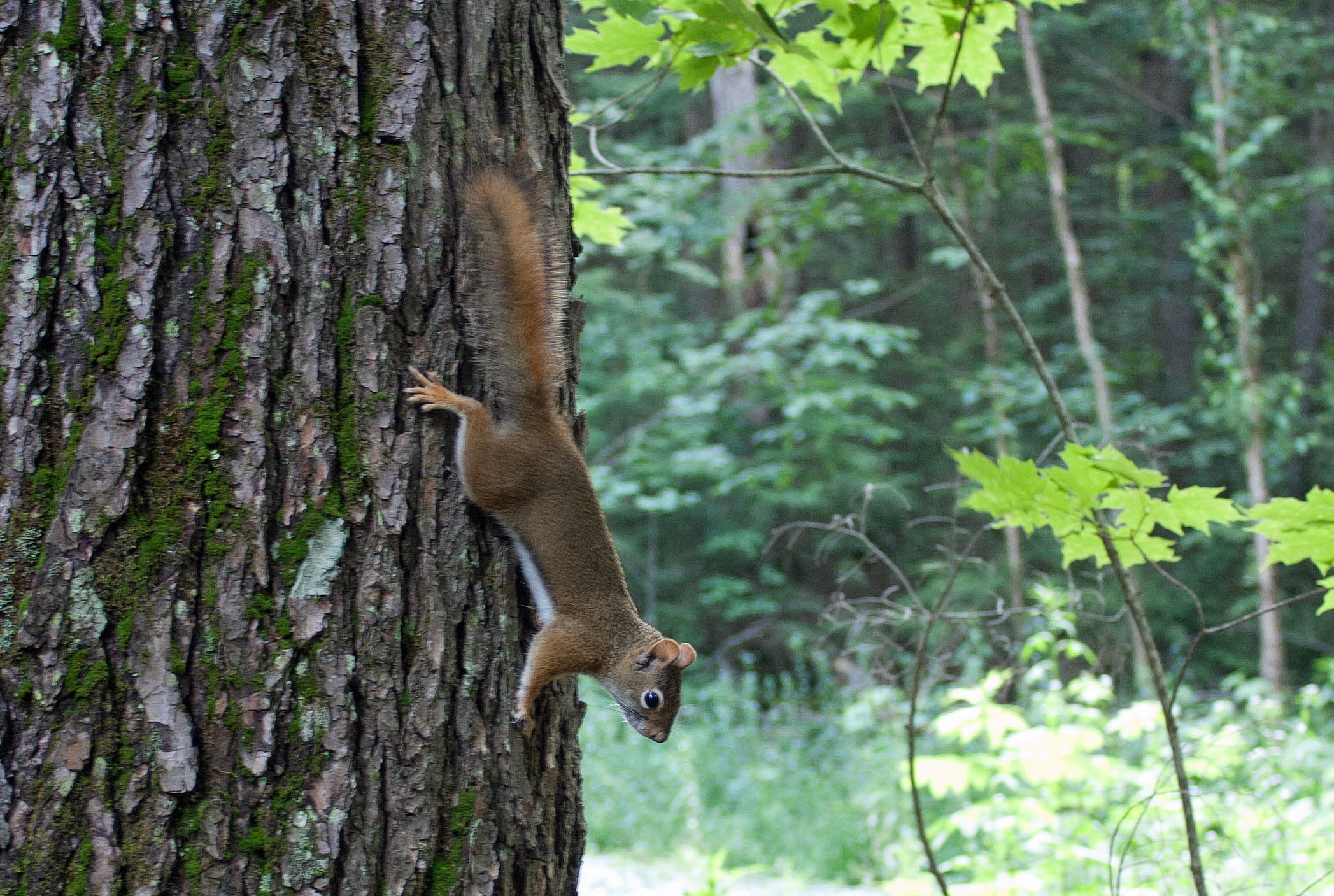
The tree is found often living in association with forest mushrooms, particularly Ramaria flavosaponaria (common name) and Ganoderma tsugae (hemlock varnish shelf). As conifers, hemlocks provide winter shelter and nesting sites. Cones provide an important food source for small mammals (like the chatty red squirrel) and songbirds.
.
.
.
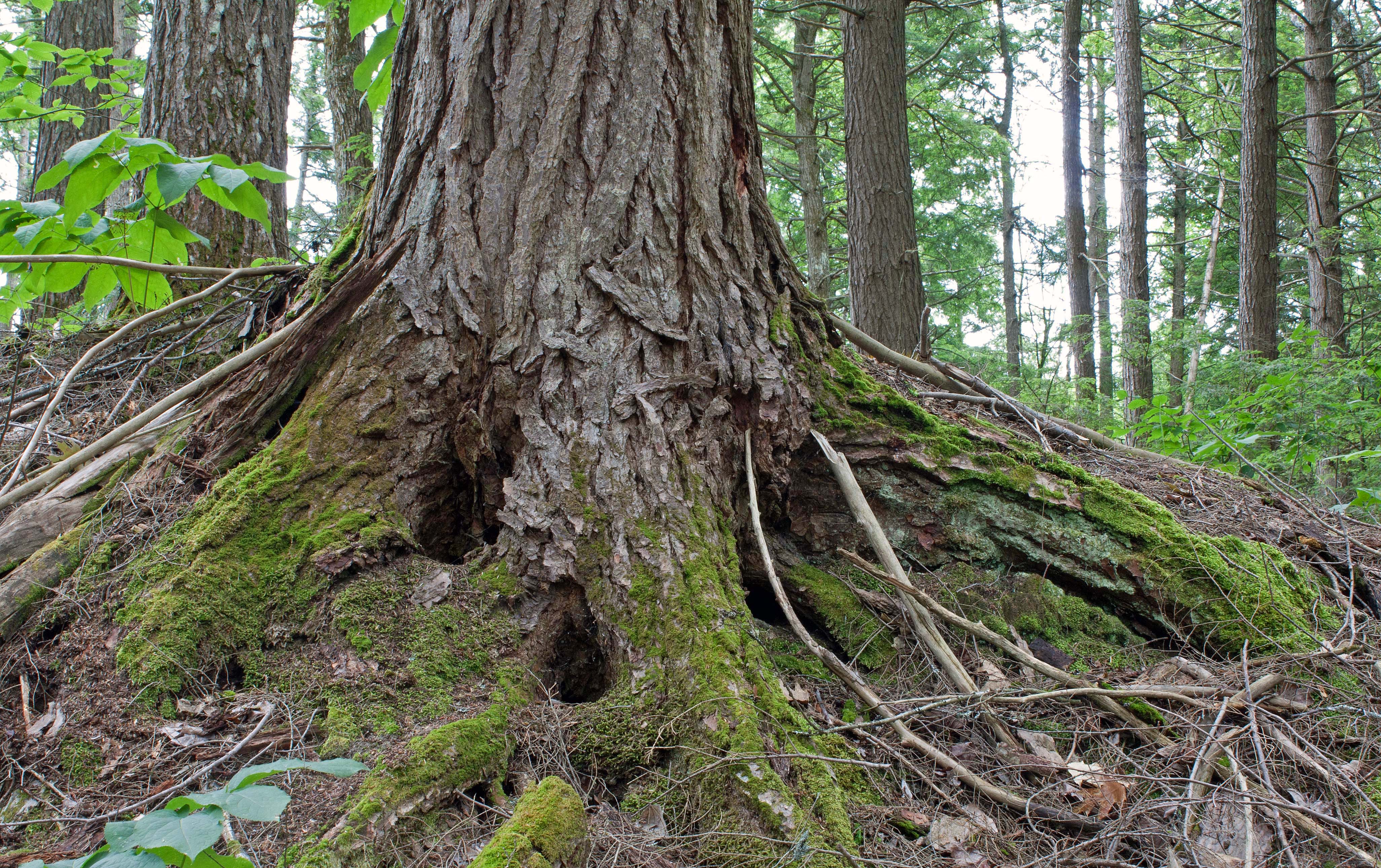
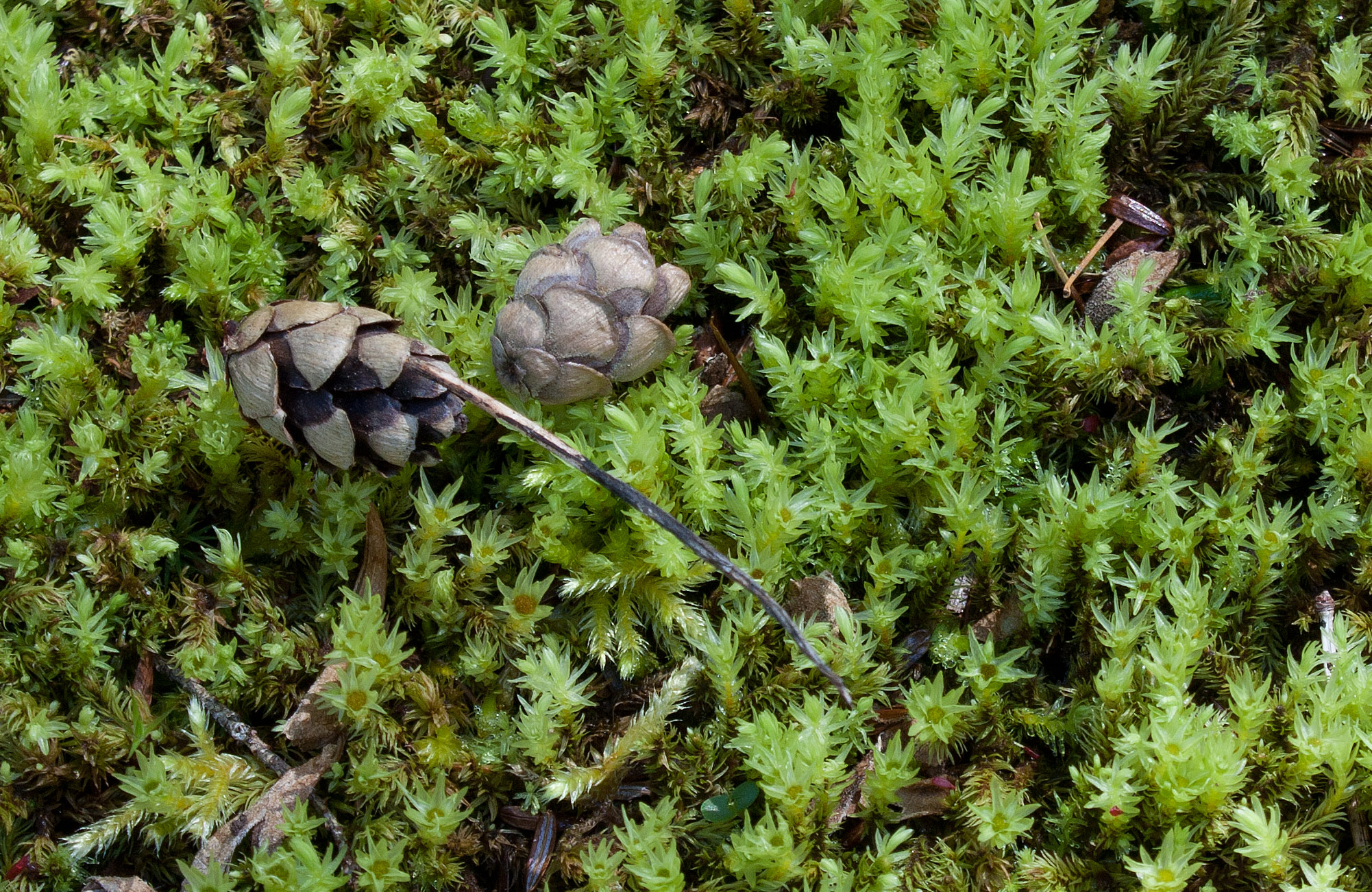
Eastern hemlocks live long lives, some reaching 500 years. The oldest recorded tree, found in Pennsylvania, is close to 600 years old. The hemlock generally grows 30 metres tall, but can reach over 50 metres high, with a trunk diameter at breast height of 1.5 m to 1.75 m. The hemlock crown is conic and the tree’s silhouette can be easily distinguished by its drooping apex. Hemlocks have flat needles, arranged in two ranks; small grey purplish-brown seed cones, about the size of my thumb nail; and scaly (when young) to furrowed dark brown bark with broad, flat-topped ridges when older.
.
How to Tell a Hemlock from a Fir or Spruce

.
Leaves / Needles: Hemlocks can be easily distinguished from their fir and spruce relatives by examining their leaves (needles), which are flat (unlike spruce needles), slightly tapered with a blunt tip that is rounded or notched. Their needles are typically 15 to 20 mm long, arranged on little stalks—a unique diagnostic characteristic for evergreens; firs, which also have needles arranged more or less flatly, attach directly to the twig like a suction cup. Fir needles also tend to be longer than hemlock needles. They also have a citrus-like scent when crushed. Hemlock needles are two-ranked with shiny green tops and glaucous bottoms with clearly visible stomatal bands.
.

.
Branching & Tree Shape: Hemlock branchlets tend to droop, particularly at the apex. The branches can be described as “lacy” while fir branches grow more rigidly in opposite, horizontal pattern, creating a neater conical outline.
Cones: Hemlock cones are tiny (1.5 to 2.5 cm long), dangling down from branch tips, compared to fir cones that grow upright on branches (like candles on a cake).
Bark & Aroma: the bark of mature hemlock trees is scaly with narrow, rounded ridges. Fir bark tends to be smoother with horizontal lines, narrow rounded ridges. Fir bark also has raised, resin-filled blisters that pop when pressed. The bark of both trees is reddish-brown to grey in colour. Hemlock needles are soft and somewhat fruity or tea-like when crushed; fir needles give off a strong and distinct citrus balsam aroma.
.
Dangers to the Eastern Hemlock Forests

.
The eastern hemlock is unfortunately under attack by the invasive woolly adelgid, native to Asia. The aphid-like insect feeds on the sap at the base of the needles and slowly starve the tree. Infestations eventually kill trees within 4 to 15 years.
A more insidious danger to the eastern hemlock comes from humankind’s relentless need to harvest old growth. Catchacoma old-growth forest is in danger of being logged (right to the edge of the marsh, which violates the forest practice code). Despite much public outcry—particularly from locals—the Bancroft Minden Forest Company, which holds logging rights in the area, still plans to log several large blocks of the old growth.
The severe population declines of hemlock across North America from the woolly adelgid and aggressive logging has put the eastern hemlock on the New Threatened listing of the IUCN Red List.
.
Excerpt from Gaia’s Revolution:
.
The scene follows the three cousins and their friend who have snuck off their enclosed property into the forbidden forest for a hike. At this point, the revolution in is full swing, particularly in the countryside. What the children miss while on their adventure and what they later encounter will change all of them permanently…
They plunge back into the forest out of the burning sun and into a white pine stand with oak trees, yellow birch and tall aspens. The deer flies buzz furiously around their heads amid wild arm waving and frustrated outcries. Simon leads them up a hill toward a large hemlock grove. He scrambles a steep incline to a narrow long ledge that may have once been a path. The forest floor is carpeted with dead needles and tiny fallen cones and dotted with young maple saplings. Like a man who has found gold, Simon bends down and gathers a handful of cones then darts behind a tree. Janet, who has waited for Bobby and Leonard to catch up before she scrambles up, shrieks at the deluge of cones Simon flings at her face. He sniggers as she practically falls backwards on top of her cousins then swears furiously at Simon, her face red with embarrassment.
“Come on!” Simon says enthusiastically. “Let’s play war!”
Eager to play, Janet runs for cover and gathers her own arsenal of weapons.
“You can’t use your hands!” Simon warns just as Janet is about to throw some cones at him. “You have to make a slingshot using a tree like this.” He squats over a young sapling and bends its branches into a mutilated mess, fits a cone into his makeshift catapult, pulls the sapling back then lets it spring naturally towards Janet. The cone flies past her head, barely missing her. Both participants shriek with pleasure.
As Janet and Simon collect their cones, Bobby and Leonard, left out of the game as usual, sit back like a dutiful and appreciative audience to watch their creative entertainment. The warriors shoot in earnest, sometimes hitting their opponent with a victorious cry, other times—most of the time—missing widely. In the process the poor saplings they use are swiftly demolished and they must forage for a new catapult.
Bobby tugs Leonard’s sleeve and points far into the forest. Leonard gruffly tells him to let go. Bobby insistently pulls and points again. This time Leonard looks and listens. He thinks he hears something and sees some movement in the forest. Beast or person? Or just a bird? Maybe a squirrel. Still…
.
.
References:
Conlin, B., C. Dewar and P. Quinby. 2020. “Species-at-risk in the Catchacoma Old-growth Forest Region, Peterborough County, Ontario.” Research ReportIng-preparation, Ancient Forest Exploration & Research, Powassan & Peterborough, Ontario.
Dewar, C. 2019. “Catchacoma Old-Growth Eastern Hemlock Forest based on 1987-20013 FRI data [Map].” Ancient Forest Exploration & Research. Powassan & Peterborough, Ontario.
Hosie, R.C. 1990. “Native Trees of Canada”, Eighth Edition. Fitzhenry & Whiteside Ltd. & Canadian Forest Service. Markham, Ontario.
Nature Conservancy of Canada (NCC) and TD Bank Group. 2017. “Putting a Value on the Ecosystem Services Provided by Forests in Canada: Case Studies on Natural Capital and Conservation.” Nature Conservancy of Canada, Toronto, Ontario.
Quinby, P. 2019a. “An Inventory of Documented Old-growth Eastern Hemlock Forests in Canada.” Forest Landscape Baselines No. 35, Ancient Forest Exploration & Research, Powassan & Peterborough, Ontario.
Quinby, P. 2019b. “Rare, Threatened and Endangered Forest Ecosystems in Ontario’s Temperate Forest Region.” Forest Landscape Baselines No. 34, Ancient Forest Exploration & Research, Powassan & Peterborough, Ontario.
Quinby, P. 2020a. “The Catchacoma Ancient Forest Landscape: An Initial Inventory of Species and Habitats.” Ancient Forest Exploration & Research. Research Report No. 39. 14pp.
.

.

Nina Munteanu is a Canadian ecologist / limnologist and novelist. She is co-editor of Europa SF and currently teaches writing courses at George Brown College and the University of Toronto. For the latest on her books, visit www.ninamunteanu.ca. Nina’s bilingual “La natura dell’acqua / The Way of Water” was published by Mincione Edizioni in Rome. Her non-fiction book “Water Is…” by Pixl Press (Vancouver) was selected by Margaret Atwood in the New York Times ‘Year in Reading’ and was chosen as the 2017 Summer Read by Water Canada. Her novel “A Diary in the Age of Water” was released by Inanna Publications (Toronto) in June 2020. Her latest eco-fiction novel Gaia’s Revolution was released March 2026 by Dragon Moon Press.
.

