In Spring 2027 my latest eco-fiction novel Thalweg releases with Inanna Publications. The Canadian eco-thriller spans from the 1917 Halifax Explosion to British Columbia’s drowned Rocky Mountain Trench for the largest reservoir in North America in 2060.
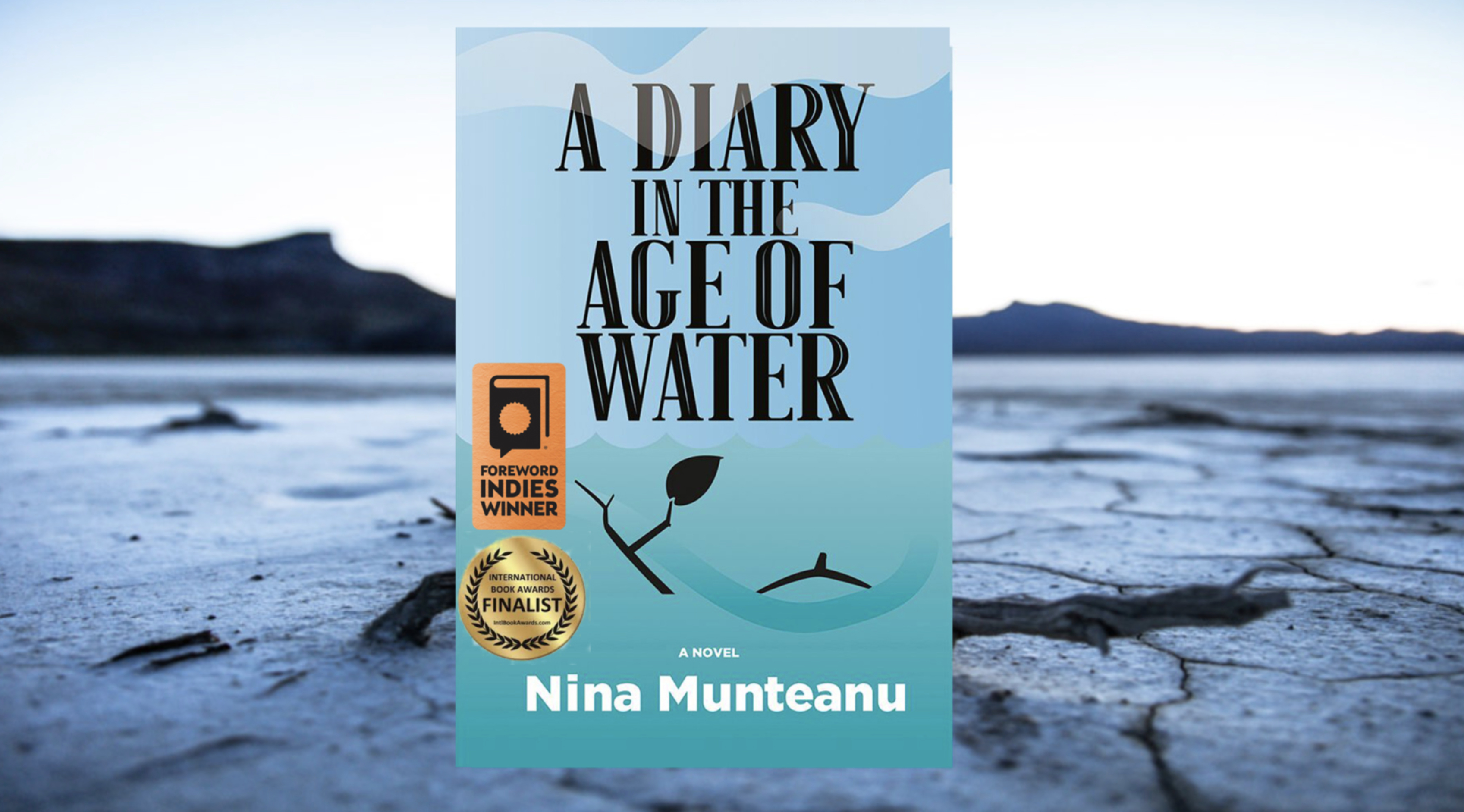
Set in the same world as A Diary in the Age of Water, Thalweg follows a few of the same characters. To celebrate, Inanna Publications will issue a new cover for A Diary in the Age of Water to match its companion novel. In anticipation of the new release, Lisa Timpf interviewed me about the 2020 book.
.
.
The interview, which took place over a video call and subsequent emails in Marsh 2026, covered how the book came about, some of my writing process and the political / social influences that shaped the novel, much of it based on true events. What follows is an excerpt of the interview. For the complete interview go to the site on The / tEmz / Review: “Lisa Timpf Interviews Nina Munteanu.”
This is how she introduces my book:
Nina Munteanu’s novel A Diary in the Age of Water (Inanna, 2020) explores a future in which Canada has lost control over its water resources. Much of the water is funneled south to the United States, while corporations also have their hooks into water resources. This leaves Canadians to struggle with increasingly small daily water quotas in a land where water was once taken for granted. In Munteanu’s book, disregard for the science of water and the consequences of messing around with phenomena like watersheds and aquifers have disastrous long-term outcomes. What makes A Diary in the Age of Water more sobering is the fact that Munteanu has a water science background, adding credence to the book’s content.
I first read the book six years ago. Recent events, like the unraveling of environmental protections, the rising disregard of fact-based science, and the proliferation of water-hungry data centers got me thinking that water stewardship in Canada is becoming an even more important issue. Curious about Munteanu’s take on things, I caught up with her recently to discuss her book and talk about how it connects with some of the things happening in the world today.
.
Timpf’s first question mentions how “some of the things depicted [in the 2020 novel] seem to be even more true now than before; for example, distrust of facts. I responded with:
A Diary in the Age of Water was published in 2020 but I was actively writing it during Trump’s first entry to the [political] stage. I still remember Kellyanne Conway’s remark about “alternative facts” in 2017; it’s a silly remark in the sense that it’s an oxymoron, but it touches on the paradoxes of George Orwell’s dystopia 1984, and in some ways serves as a gateway to the post-truth era of Trump—still ongoing because it suits many of us. Elements of this kind of deception run through my novel; for instance, many entries by the diarist address the dangerous divergence from evidence-based truth to faith-based and agenda-based ‘truths’—and how this political strategy serves the exploitive government and associated oligarchy…You could say that I was writing about a post-truth Trump world…I’ve been writing A Diary in the Age of Water for years. I had lots of years to think about the things this novel explores. The water crisis. Climate change. Habitat destruction. Ongoing extinction. What happened during Trump’s first term just provided the last crucial material for the book.
.
Timpf noted that my character Lynna says in her diary, “We all just let it happen. We paid attention to the wrong things,” and asked me to elaborate on what we do need to pay attention to in order to avoid a future like the one depicted in the novel. I did, with:
I’m not sure any of us agree on the answer to that. Canadians are in a very unique position being who we are and where we are. To answer the question, I think we need to pay attention to all that we have ‘othered,’ and listen, give what we have ‘othered’ a voice. When I was in school I wasn’t taught about the Indigenous people and their knowledge; I wasn’t taught about ecology, stewardship and our role in maintaining biodiverse ecosystems. We can’t afford to make decisions based on ignorance. In this, our education system has failed us. We are not educated on some of the fundamental things we need to be leaders; we’re taught, rather, to be competitive, get a job and be a good consumer. That’s not really us. I believe we’re born empathic and cooperative and taught to be selfish and competitive. That is what needs to change. How we are taught.
To go back to what Lynna was thinking, if I was to re-enter her head to interpret what she meant (and what her own regrets and her daughter may have taught her), I’d say that ultimately it isn’t our intelligence—our cleverness—that will save us; it is our kindness and compassion that will do that. We don’t need to invent some techy thing or reinvent ourselves or implant some intelligent virus into us. What we simply need to do is accept ourselves with humility, find and express joy. Give in to the beauty of our world and our own part in it. Become a participant. Embrace the feminine. Respect Nature and all that lies in it. Find something there to love, cherish it, and protect it. The rest will follow.
.
For the complete interview go to The tEmz Review.
.
.
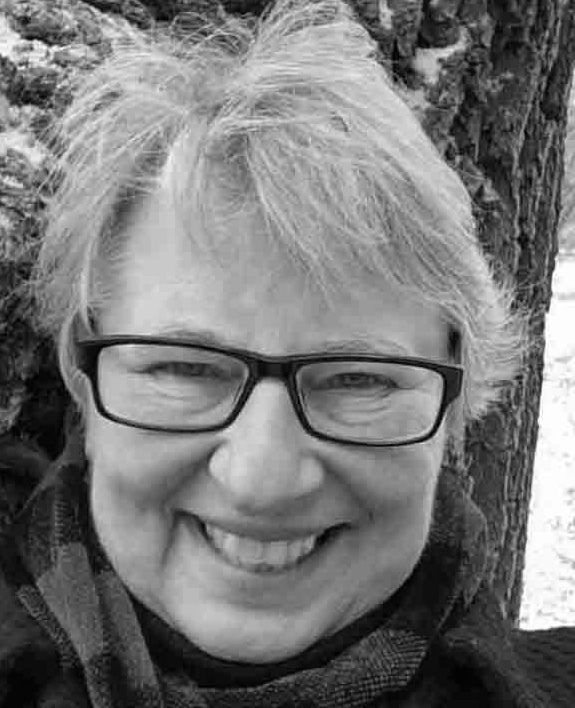
Nina Munteanu is a Canadian ecologist / limnologist and novelist. She is co-editor of Europa SF and currently teaches writing courses at George Brown College and the University of Toronto. For the latest on her books, visit www.ninamunteanu.ca. Nina’s bilingual “La natura dell’acqua / The Way of Water” was published by Mincione Edizioni in Rome. Her non-fiction book “Water Is…” by Pixl Press (Vancouver) was selected by Margaret Atwood in the New York Times ‘Year in Reading’ and was chosen as the 2017 Summer Read by Water Canada. Her novel “A Diary in the Age of Water” was released by Inanna Publications (Toronto) in June 2020. You can read her just released eco-fiction thriller Gaia’s Revolution by Dragon Moon Press.
.

