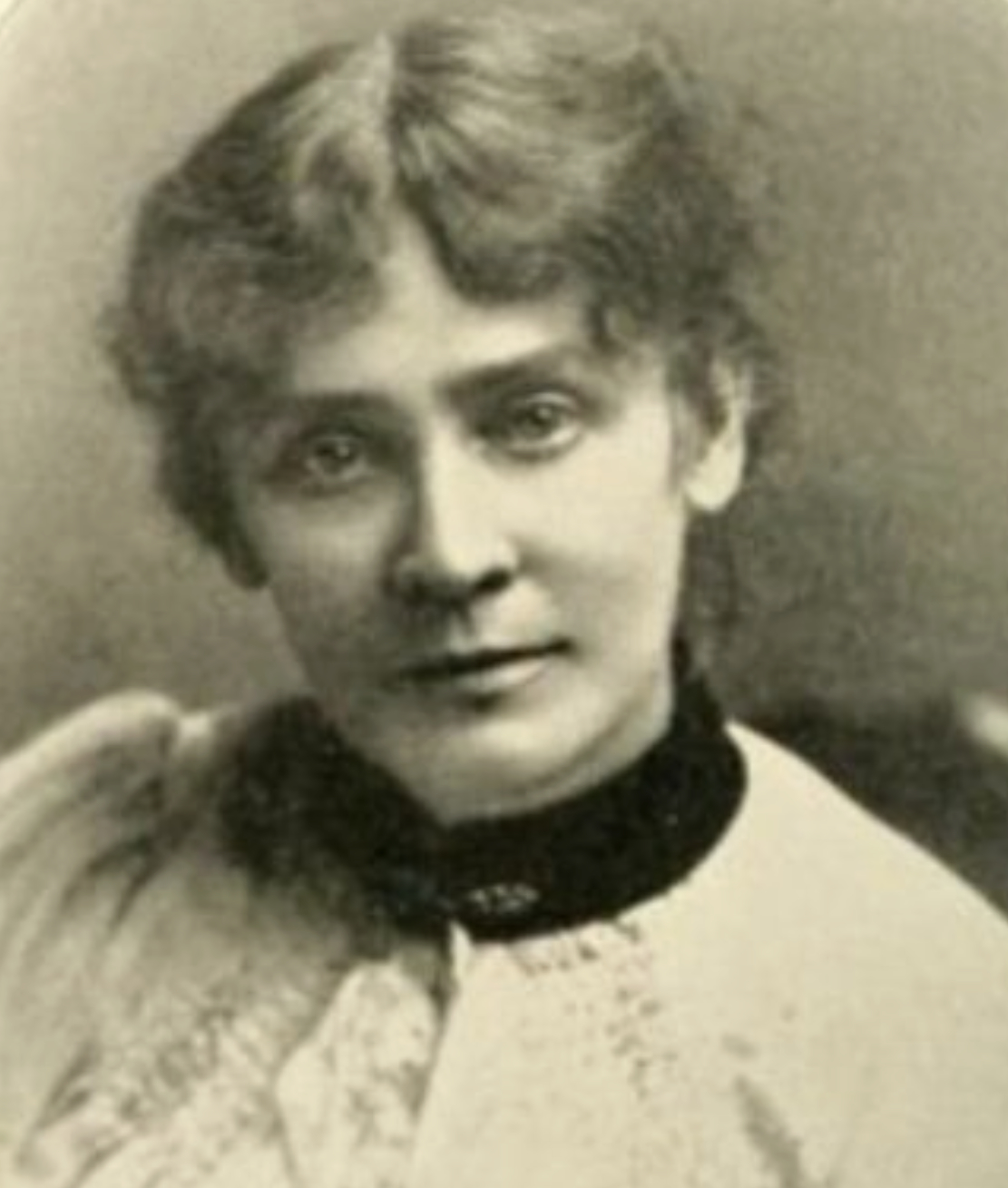
Three years before Darwin published his ground-breaking book Origin of Species and 19 years after Alexander Humboldt predicted climate change, amateur scientist Eunice Newton Foote discovered that greenhouse gases can warm the atmosphere.

.
Foote’s experiments were relatively simple but elegant; using cylinders filled with different gases, Foote showed that water vapor combined with carbonic acid gas (carbon dioxide) can raise atmospheric temperature. Her studies inspired her to hypothesize that Earth would have been much warmer in the past in an atmosphere with higher carbon dioxide. Yet her work went unnoticed in the history of climate science—until recently. I found out about it in a recent talk by climate scientist Martin Bush. And now you’re hearing it from me.
It was 1856. The end of the Crimean War with the Treaty of Paris and the beginning of the Second Opium War. It was a time of transition from idealism to empiricism and the growth of materialism with tensions over anxieties about the potential replacement of religious worldviews with science. In a largely patriarchal world, women were harshly restricted by the “cult of domesticity,” and expected to focus on household management, marriage and child-rearing. Rights to property or wages were little to zero for women. A married woman’s legal personhood went to her husband. Higher education was closed to women.
.
Though somewhat recognized as a scientist and inventor, Foote was still a woman and that single fact prevented her from being taken seriously by the scientific community. In truth, women have been making significant contributions to science and other epistemological and phenomenological pursuits for centuries, receiving little to no credit for their efforts. For instance, Rosalind Franklin received no recognition for capturing the X-ray images of the DNA molecule that allowed James Watson and Francis Crick to decipher its structure. NASA mathematicians—African-American women Katherine Johnson, Dorothy Vaughan, and Mary Jackson, to name a few—solved the equations that guided the launch of astronaut John Glen into orbit in 1962. Only after the bestselling book Hidden Figures by Margot Lee Shetterly, followed by the film in 2016, did their contributions come to public light. Canada’s ‘Jane Goodall of giraffes’ Anne Innis Dagg was ignored for decades—and even lost her tenure at university—because she was a woman. Her work in the 1950s was only recently recognized.
.

.
All too often, into the present day even, women have been neglected for authorship in papers for which they had often significantly contributed. Foote was almost one of these.
.
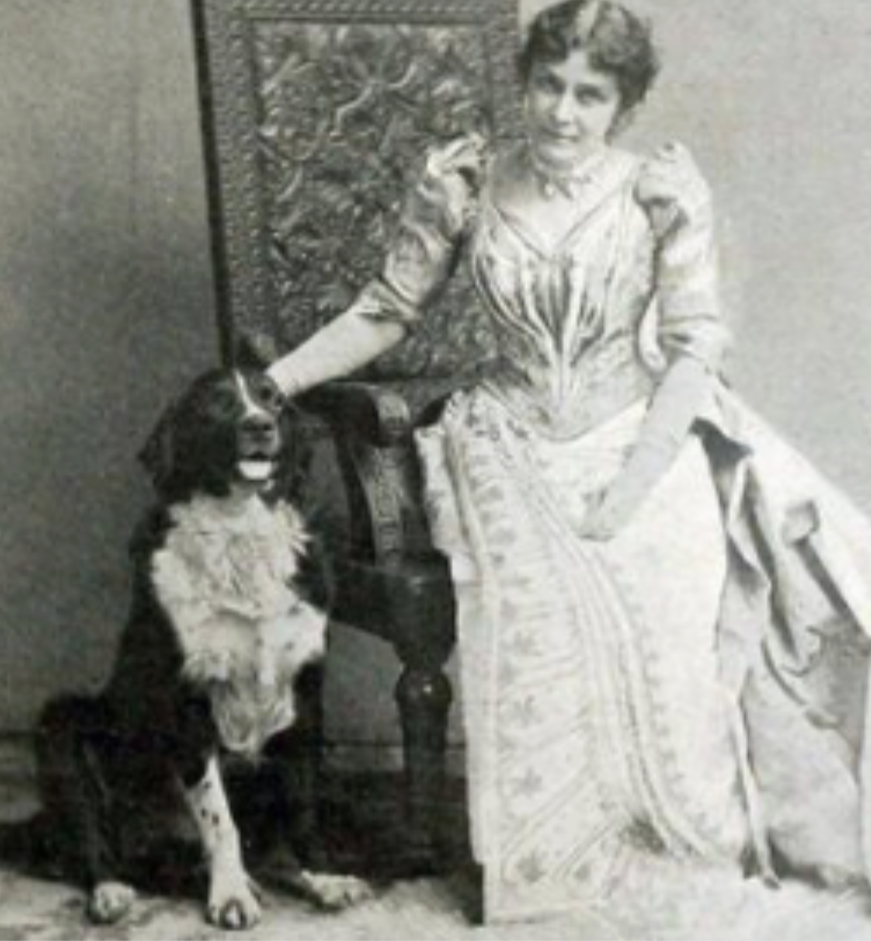
After making her discoveries and recognizing the prejudice against her sex, Foote arranged to have male colleague Joseph Henry read her paper at the 1856 meeting of the American Association for the Advancement of Science (AAAS). Foote’s work showing that carbon dioxide and water vapor modulated solar heating was later refined by John Tyndall, who demonstrated conclusively that Earth’s greenhouse effect originates from water vapor interacting with carbon dioxide to absorb and emit thermal infrared energy, not visible sunlight. Tyndall credited Mathias Pouillet for his work on the passage of solar radiation through the atmosphere—he didn’t mention Foote. Was she unnoticed or simply ignored?
.
Medical reports and scientific discourse well into the 1800s frequently characterized women as inherently “weak-minded”, intellectually inferior, and emotionally volatile—attributing these traits to a delicate or ‘feeble’ physical constitution. In a largely androcentric world of patriarchal hegemony, men thought of women as less rational and more susceptible to mental and physical ailments. ‘Female hysteria’ was a common diagnosis to explain behaviours in women that made men uncomfortable and were apparently rooted in ancient beliefs that the uterus caused irrationality.
.
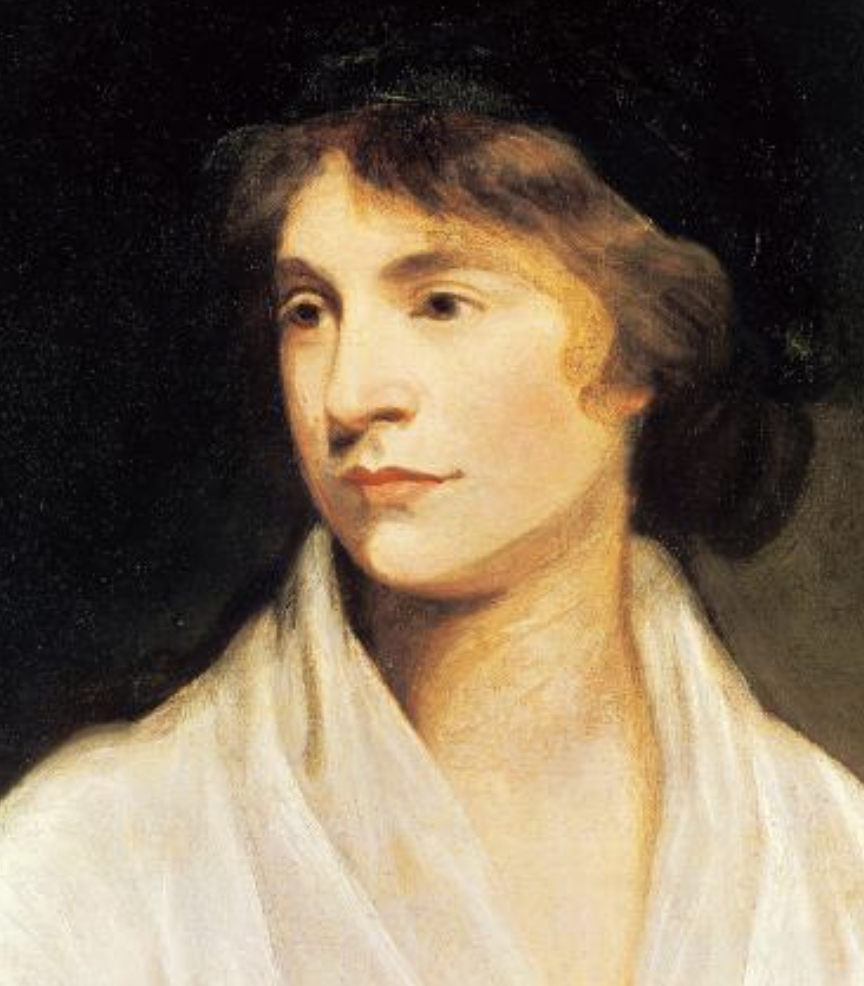
In A Vindication of the Rights of Women, Mary Wollstonecraft argued that this perceived weakness was an artificial construct imposed by men in power who denied women education and forced them into submissive, decorative roles. A self-taught genius of sorts, Wollstonecraft insinuated herself into the male hegemony by engaging directly with leading male thinkers of her time and arguing for women’s rationality and right to education. She found support from liberal publisher Joseph Johnson, publishing critical reviews and pamphlets, which established her as a working intellectual and political thinker.
.
In the September 1856 issue of Scientific American, a (male) writer wrote: “Some have not only entertained, but expressed the mean idea that women do not possess the strength of mind necessary for scientific investigation.”
How are we doing today?
.
References:
Foote, Eunice, 1856. Circumstances affecting the heat of the Sun’s rays: Art. XXXI, The American Journal of Science and Arts, 2nd Series, v. XXII/no. LXVI, November 1856, p. 382-383.https://ia800802.us.archive.org/4/items/mobot31753002152491/mobot31753002152491.pdf
Wollstonecraft, Mary. 1792. “A Vindication of the Rights of Women: with Strictures on Political and Moral Subjects” (J. Johnson, London) Penguin Classics. 512pp.
.

Nina Munteanu is a Canadian ecologist / limnologist and novelist. She is co-editor of Europa SF and currently teaches writing courses at George Brown College and the University of Toronto. For the latest on her books, visit www.ninamunteanu.ca. Nina’s bilingual “La natura dell’acqua / The Way of Water” was published by Mincione Edizioni in Rome. Her non-fiction book “Water Is…” by Pixl Press (Vancouver) was selected by Margaret Atwood in the New York Times ‘Year in Reading’ and was chosen as the 2017 Summer Read by Water Canada. Her novel “A Diary in the Age of Water” was released by Inanna Publications (Toronto) in June 2020. You can read her just released eco-fiction thriller Gaia’s Revolution by Dragon Moon Press.
.

