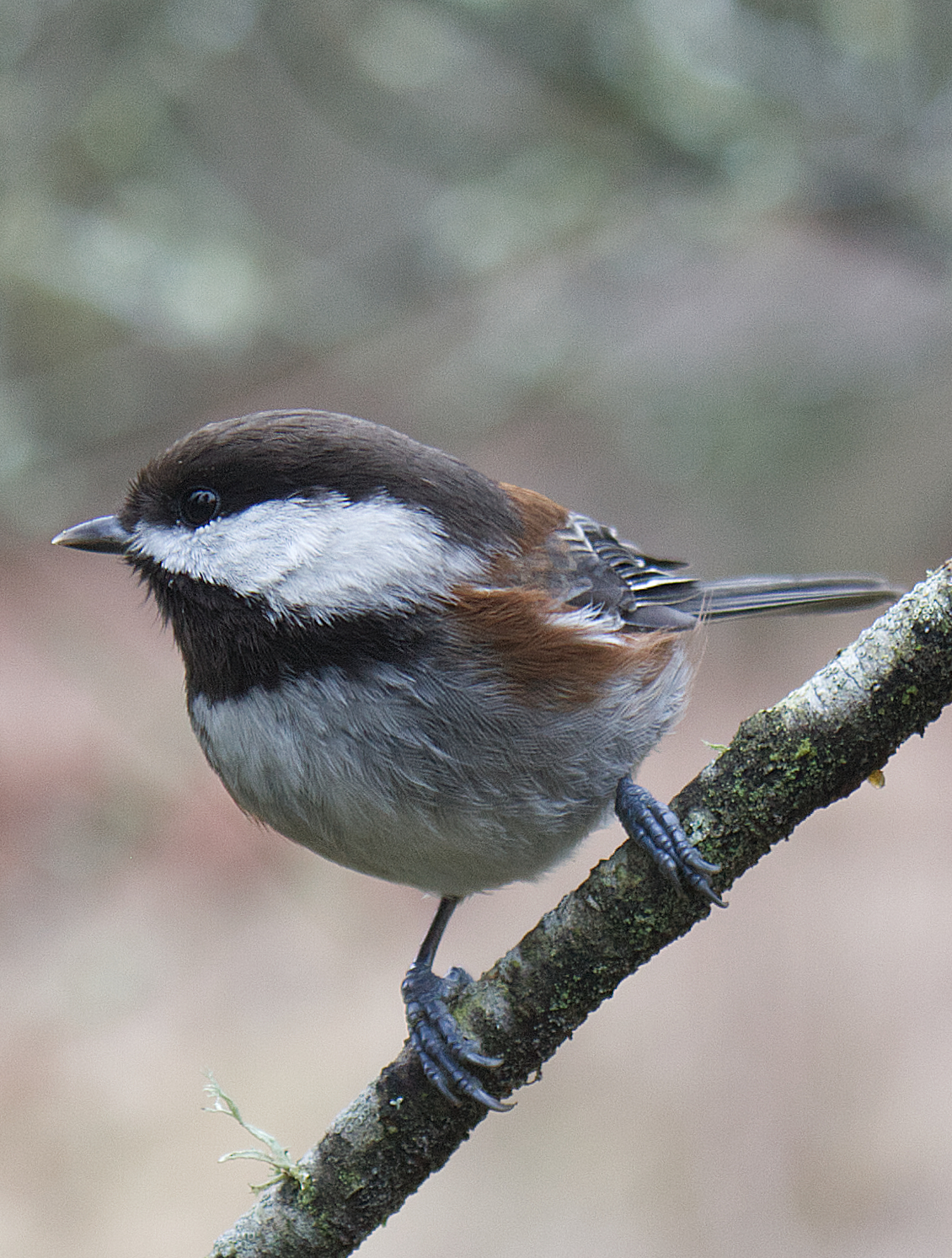
Ornithologists have known for some time that songbirds communicate differently depending on their environment. In an area with relatively few lurking predators, their songs deliver very specific phrases to warn only their family group that something is amiss. But when the birds face widespread danger, they switch to an alarm call that everyone in the area can understand, including members from other species—not just birds but mammals and reptiles. The logic behind this is that communities operate in concert within an integrated multi-functional ecosystem; when the larger community is threatened, it’s best to save as many as you can to maintain the resilience of diversity.
Rufous-backed chickadee, Campbell Valley Park, BC (photo by Nina Munteanu)
.
.
Goldenrod Communication
.
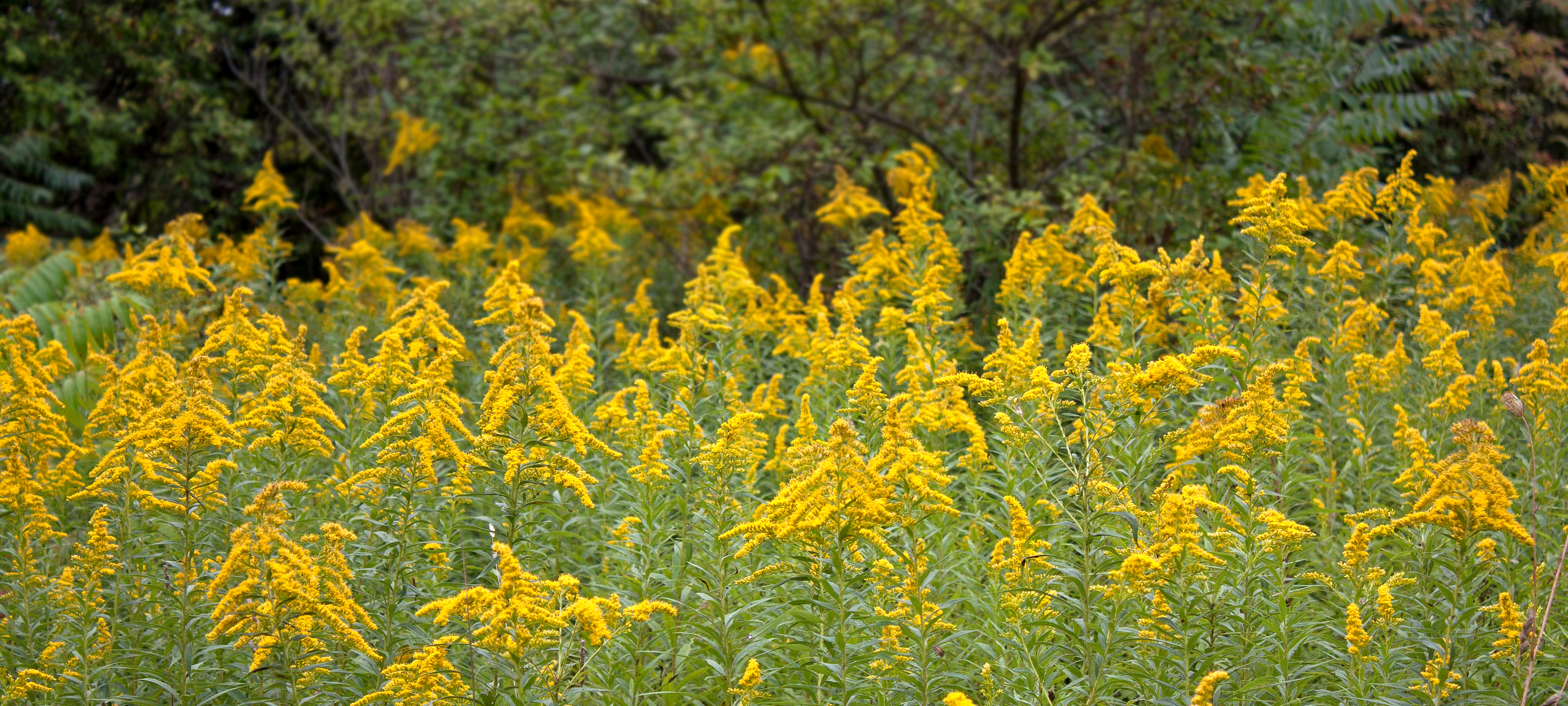
Finnish evolutionary ecologist Aino Kalske, Japanese chemical ecologist Kaori Shiojiri, and Cornell chemical ecologist Andre Kessler found that tall goldenrods (Solidago altissima) interpret environmental cues, shift chemical ‘dialects’, and exhibit a decentralized form of intelligence to survive herbivore attacks.
They showed that goldenrods living in areas without much threat from predators normally issue chemical alarm calls that are specific to and only decipherable by their close kin—distinct chemical profiles called ‘private dialects’. But goldenrods in more hostile territory signal to their neighbours using chemical phrases easily understood by all the goldenrods in the area—not just their biological kin—shifting their chemical signatures into a universal language.
.
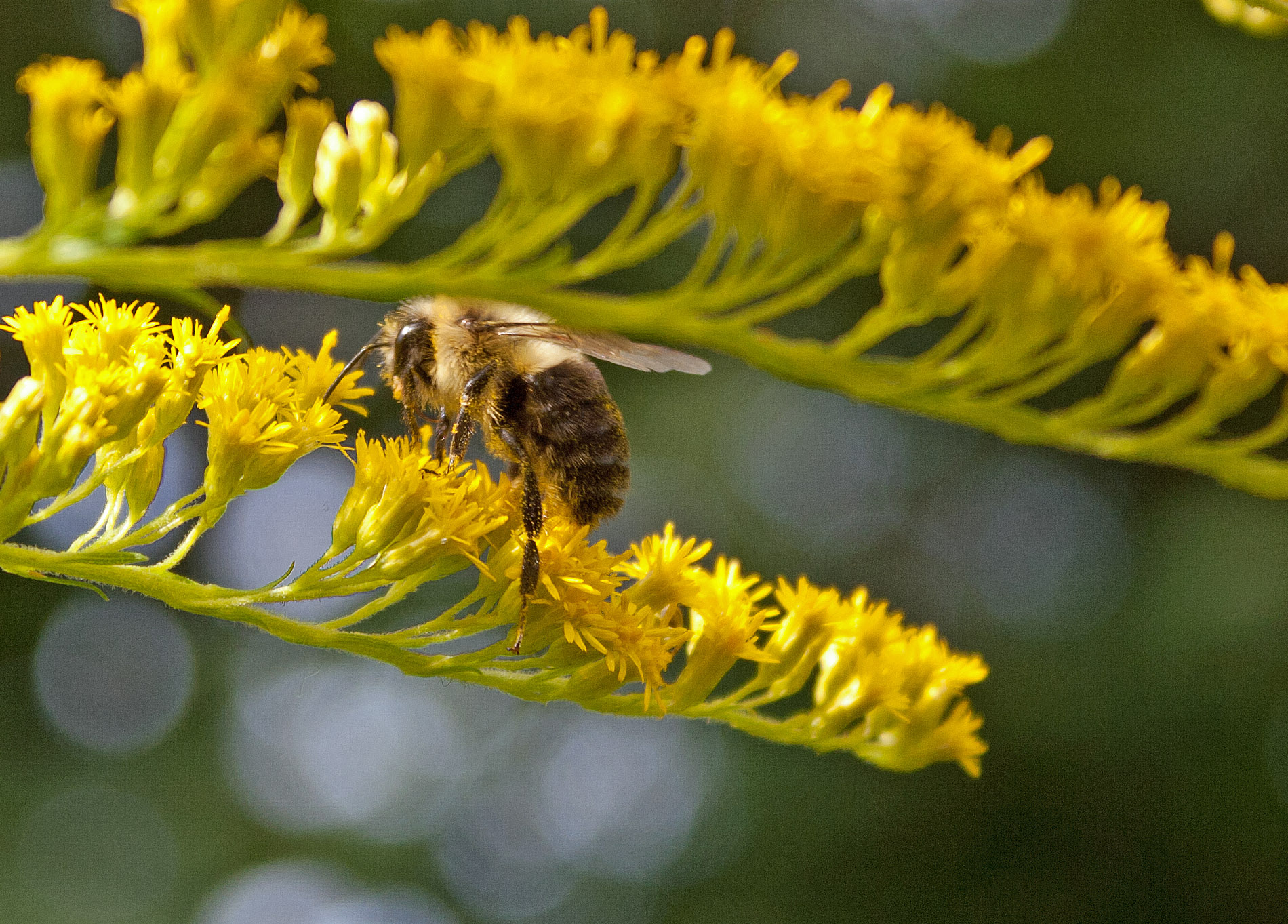
“Instead of using coded whisper networks, these goldenrod broadcast the threat over loudspeaker,” writes Zoë Schlanger, author of The Light Eaters. Schlanger adds, “When times are truly tough, you don’t want to be left standing in a field alone when it’s over.” You’d have no one to mate with, no one to help bring in pollinators.
Honeybee feeds on a goldenrod flower, ON (photo by Nina Munteanu)
.
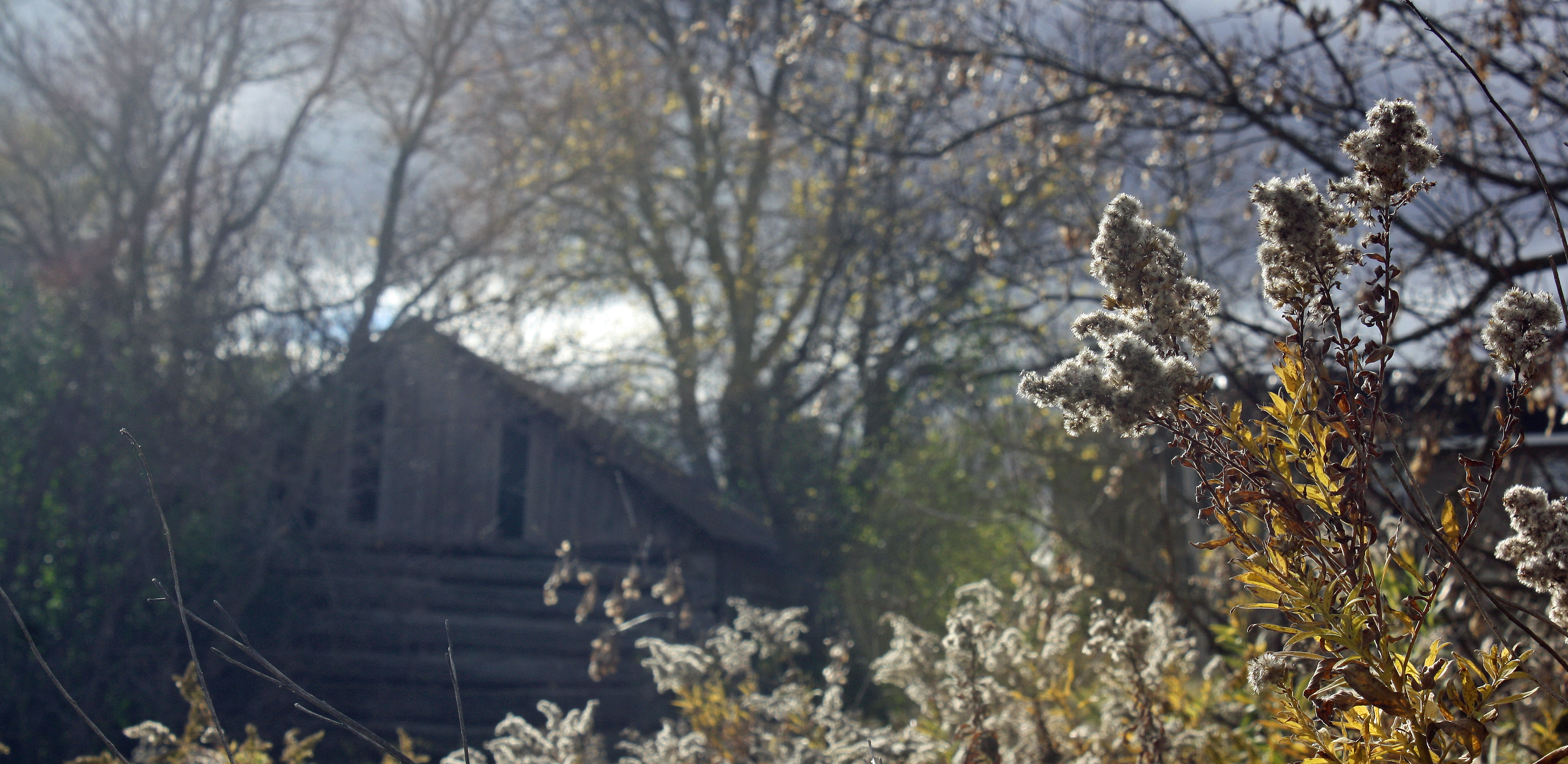
Goldenrods don’t just rely on smell; they use light to interpret their immediate social context. Given that their leaves absorb certain light spectrums and reflect a specific ratio of far-red light, they can sense their neighbours by monitoring these light changes and can detect how close their neighbours are without physically touching them.
.
.
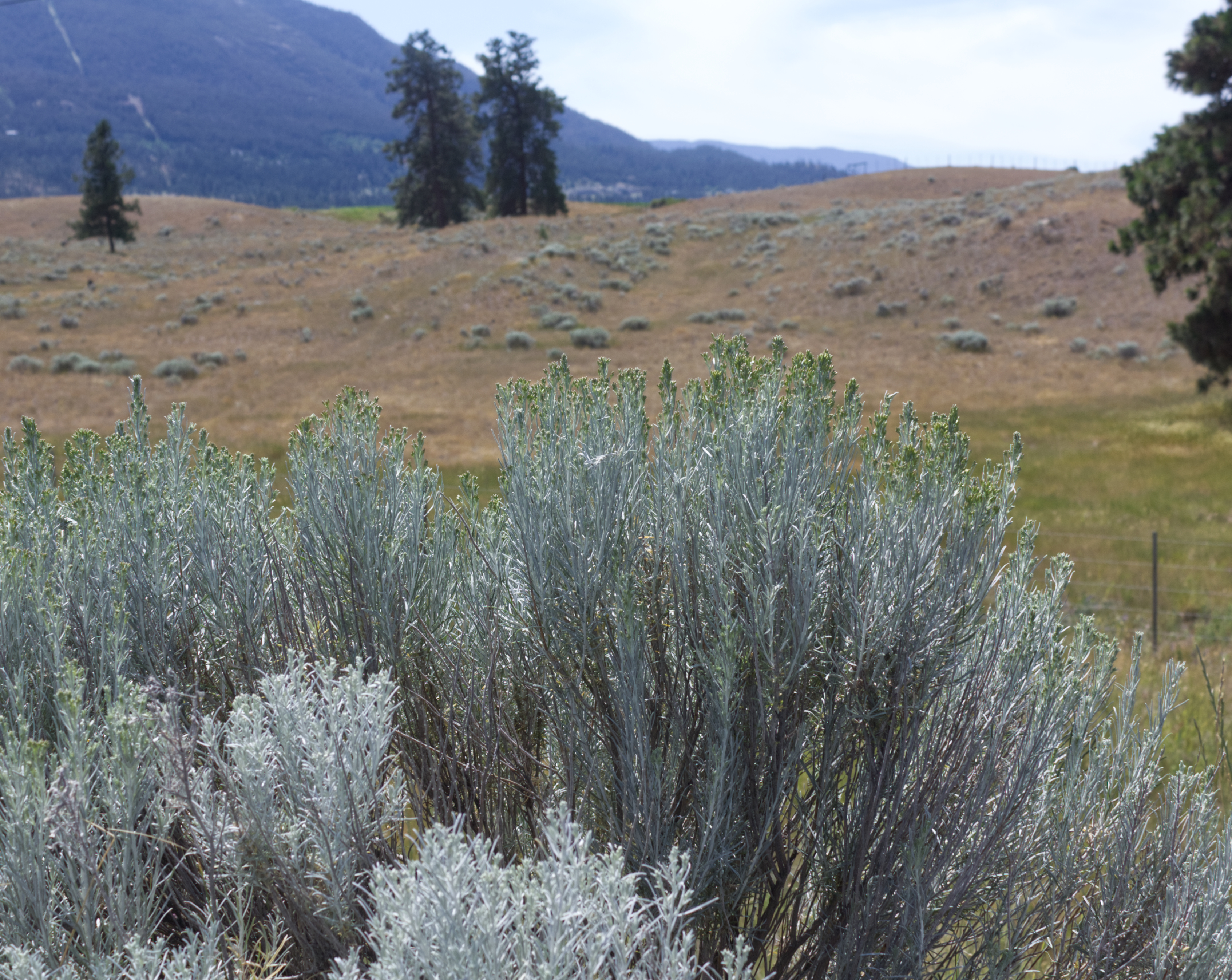
Sagebrush Communication
.
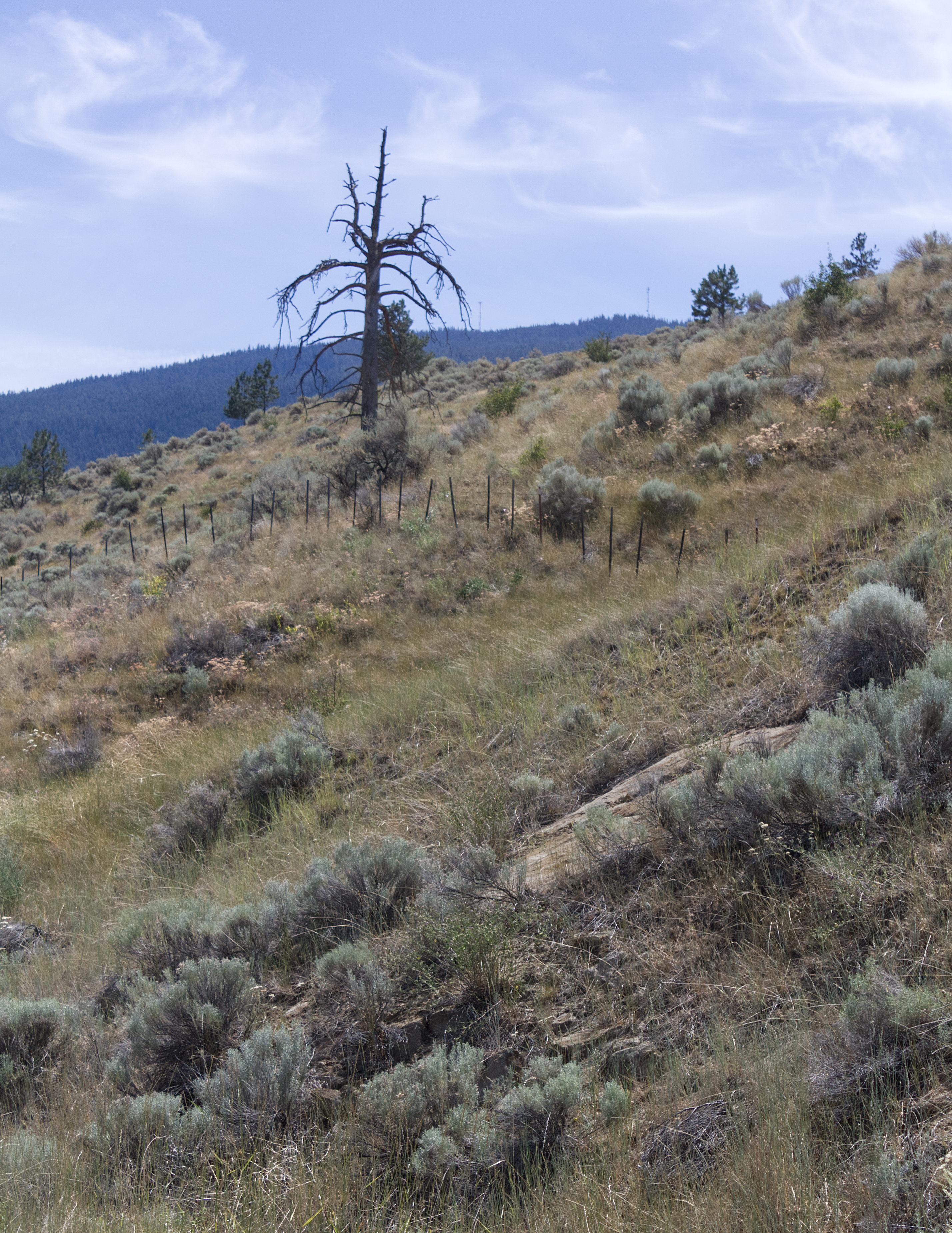
Work by entomologist/ecologist Richard Karban at UC Davis showed that Big Sagebrush (Artemisia tridentata) use specific communication to warn only their family groups about insect attacks when the threat from bugs was generally low. The volatile organic compounds they emit are complex and specific to them and their closest allies—essentially using ‘private’ back-channels that a limited kin-population understands. However, when the community is heavily attacked, sagebrush switches to ‘public’ channels, more universally understood.
.
Given the logic of this approach, it’s safe to say that many other plants use this strategy of shifting dialects and understanding the conditions for their use. This means that plants understand who is who, who is kin and who is not. They are well-connected and understand their environment, their Umwelt.
.
Sagrebrush dot a hill near Merritt, BC (photo by Nina Munteanu)
.
“[Plant] communication is not just rudimentary but complex and layered, alive with multiple meanings.”
Zoë Schlanger, The Light Eaters
This is clearly a case of biosemiosis in action.
Indeed, the new term phytosemiotics, which views plants as active, non-mechanistic semiotic agents rather than passive biological objects, was introduced in 1981 by botanist Martin Krampen, who acknowledged that plants observe, interpret and respond to their surroundings by processing signs in their Umwelt.
p.s. It’s been a long slog in plant science to accept certain possibilities such as plant communication; but some botanists have persevered and we’ve come a long way. Read The Light Eaters for a good summary of the history of plant science and the hard push back against the evidence for and study of plant intelligence and communication. I remember one guided hike a few years ago through the Pacific Spirit Forest led by a botanist, who, it turned out, had an anthropocentric bias on what communication is; he summarily discounted any form of communication in plants. Hampered by old school, androcentric biases, the hegemony of conservative science weighs heavy with us still, slowing progress.
.
References:
Dutour, Mylene, Jean-Paul Lena, and Thierry Lengagne. 2017. “Mobbing Calls: A Signal Transcending Species Boundaries.” Animal Behaviour 131: 3-11.
Fallow, Pamela M. and Robert D. Magrath. 2010. “Eavesdropping on Other Species: Mutual Interspecific Understanding of Urgency Information in Avian Alarm Calls.” Animal Behaviour 79: 411-17.
Grof-Tisza et al. 2021. “Risk of Herbivory Negatively Correlates with the Diversity of Volatile Emissions Involved in Plant Communication.” Proceedings of the Royal Society B 288(1961): 20211790.
Karban Richard, et. al. 2013. “Kin Recognition Affects Plant Communication and Defence.” Proceedings of the Royal Society B. 280 (1756): 20123062.
Karban, Richard. 2015. “Plant Sensing and Communication.” Chicago University Press, Chicago.
Krampen, Martin. 1981. “Phytosemiotics.” Semiotica 36(3/4):187-209.
Magrath, R.D. and T.H. Bennett. 2012. “A micro-geography of fear: learning to eavesdrop on alarm calls of neighbouring heterospecifics.” Proc. Biol. Sci. 279: 902-909.
Schlanger, Zoë. 2024. “The Plant Eaters.” Harper. 304pp.
Suzuki, T.N. 2016. “Referential calls coordinate multi-species mobbing in a forest bird community.” J. Ethol. 34: 79-84.
Templeton, C.N., E. Greene. 2007. “Nuthatches eavesdrop on variations in heterospecific chickadee mobbing alarm calls.” Proc. Natl. Acad. Sci. USA 104: 5479-82.
.
Glossary:
Biosemiosis: a biological term for ways organisms communicate, interpret meaning, and interact with their environments through signs and codes.
Phytosemiotics: a branch of biosemiotics that studies how plants process signs, communicate, and interpret their environments without a nervous system or brain. Introduced by botanist Martin Krampen in 1981.
Umwelt: a segment of the world that has significance and meaning based on an organism’s biology and needs: sounds it hears, scents it smells, foods it tastes.
.

Nina Munteanu is a Canadian ecologist / limnologist and novelist. She is co-editor of Europa SF and currently teaches writing courses at George Brown College and the University of Toronto. For the latest on her books, visit www.ninamunteanu.ca. Nina’s bilingual “La natura dell’acqua / The Way of Water” was published by Mincione Edizioni in Rome. Her non-fiction book “Water Is…” by Pixl Press (Vancouver) was selected by Margaret Atwood in the New York Times ‘Year in Reading’ and was chosen as the 2017 Summer Read by Water Canada. Her novel “A Diary in the Age of Water” was released by Inanna Publications (Toronto) in June 2020. You can read her just released eco-fiction thriller Gaia’s Revolution by Dragon Moon Press.
.

