In my latest eco-fiction novel (Re)Genesis (upcoming), four teenagers in ‘small town’ Ontario discover and unravel a conspiracy by a chemical factory that uses shapeshifting substances to create weapons, causing a shift in the genetics of humanity itself. The discovery eventually leads them to communist Poland where it all started.
(Re)Genesis follows the premise of dark karma as Nature learns to reflect back what we send out. Making use of real examples of learning, pattern recognition, anticipation and adaptation in non-human life, the novel explores the concept of biosemiosis* in this eco-thriller.
.
.
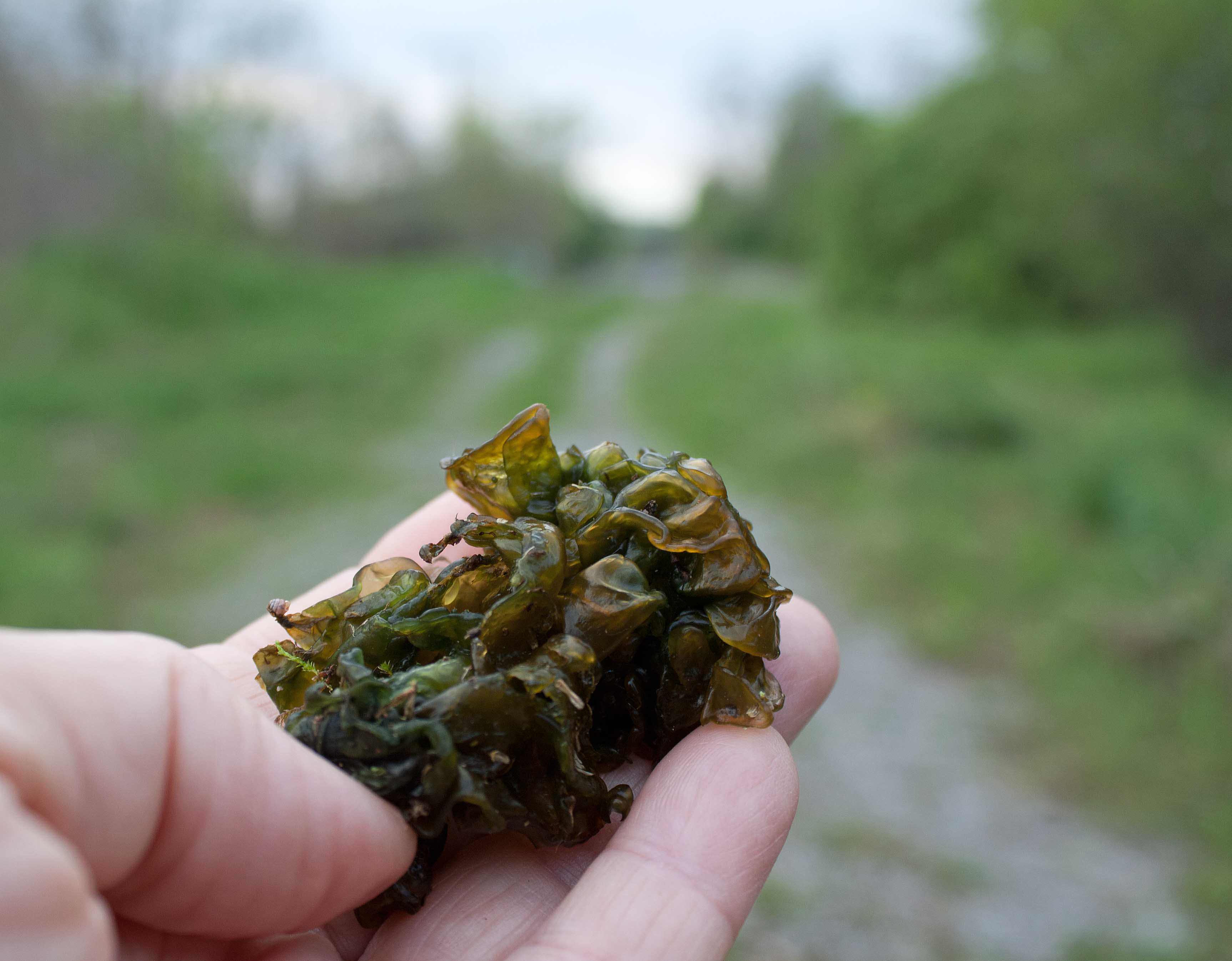
Ahmed Bennu, a mind-challenged boy, who is arcanely transformed by a tragic incident into a genius publishing papers at Harvard, pursues the concept of biosemiosis in Nostoc commune, a ubiquitous cyanobacteria (blue-green algae)—and an organism his own body has begun to mimic—that has colonized the world. In a scientific paper published by Nature, he describes the ever-increasing fluidity in Nature and argues that Nostoc can anticipate and exert goal-oriented behaviour to change itself and its environment. He joins Harriet—who lost her best friend in that arcane incident—and their investigation leads them to a nefarious past, to the 1950s, deep in the Kurpioska Forest of Poland, where chemical company Zima Elastomers used Nostoc to concoct a freakish substance for the communist military. Not only did the substance infect the workers there; it escaped with dire consequences for the world’s future.
.
Of course, it’s just science fiction. But is that all it is?…
.
Biosemiosis & Umwelt
In the 1930s, Jakob von Uexküll coined the term Umwelt* (species-specific reality or subjective environment) to define a life process that involved semiotic* interactions. He argued that an organism’s behaviour results from activity that attributes meaning to the world around it, rather than merely mechanically reacting to stimuli. Building on this notion, Friedrich S. Rothschild coined the term “biosemiosis” in 1962 to postulate that life has its subjective interpretation of the world around it—its Umwelt—a segment of the world that has significance and meaning based on that life’s biology and needs. Developing the concept of biosemiosis further, Thomas Sebeok later contended that all organisms are enveloped in a cloud of messages about themselves and their situation, which they constantly transmit, receive, and interpret. Life itself is a process of signification and meaning-making, from bacteria and plants to mammals and birds. Biosemiosis involves pattern recognition, anticipation, flexibility, goal-directed movement, memory, and learning.
.
.
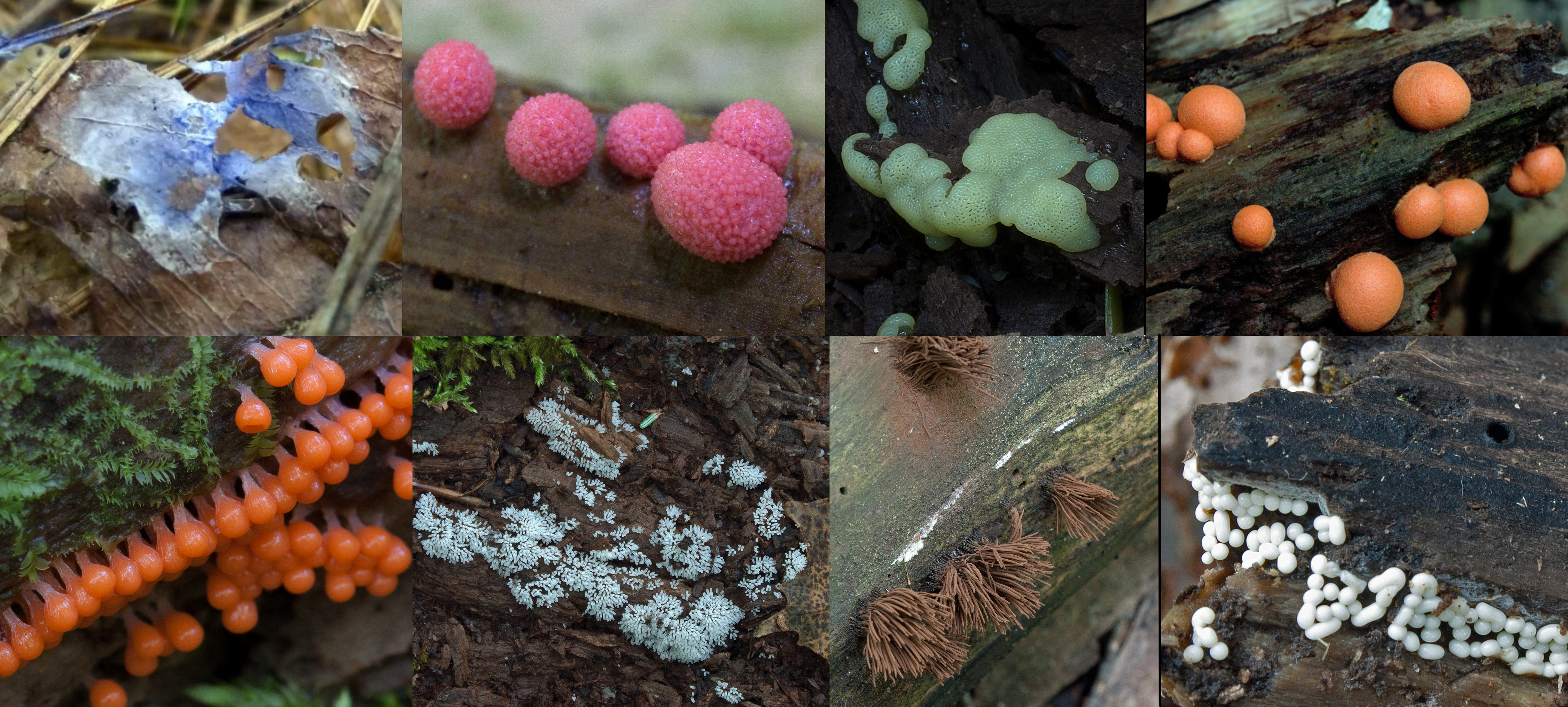
All organisms participate in complex interactions that involve sophisticated signaling and exchange. In Planta Sapiens, Paco Calvo argues that, “this happens at the level of single-celled organisms, which can collect information and make decisions.” The slime mold Physarum polycephalum, for example, is an amoeba-like cell that can navigate its environment through learning, memory, and decisions. In the 1980s, evolutionary biologist Lynn Margulis argued for intelligence of bacteria based on similar observations.
.
.
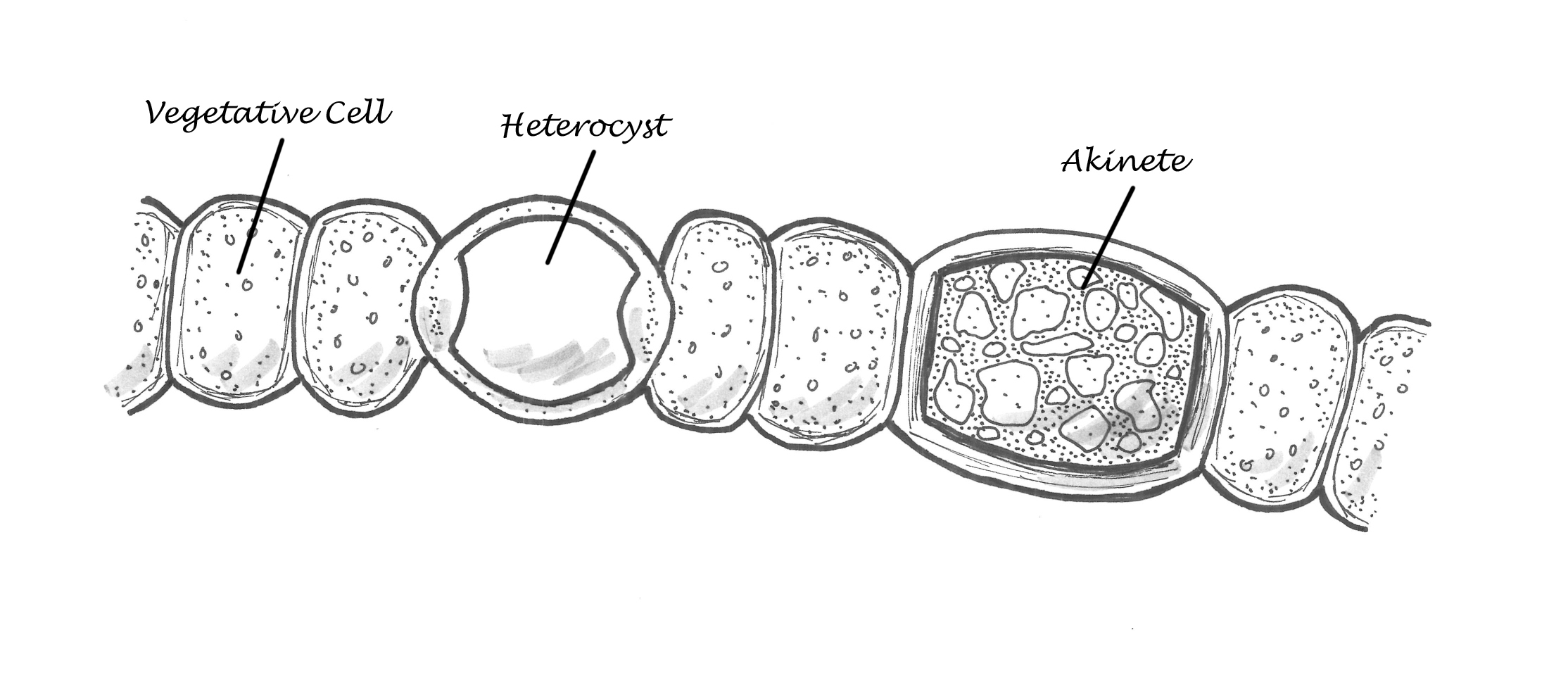
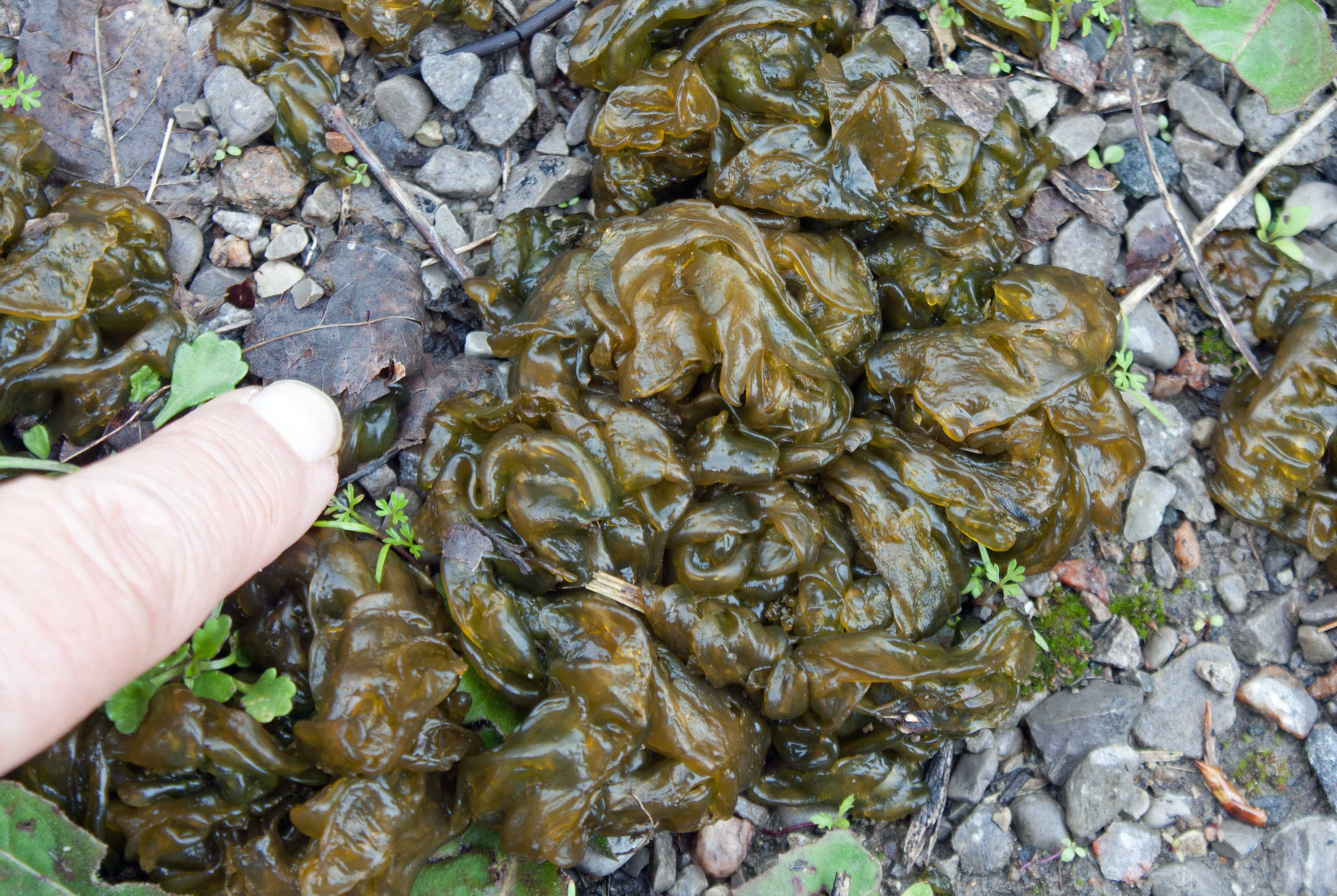
My novel (Re)Genesis features the cyanobacteria Nostoc commune, known to be highly adaptable to changing environments and known to participate in complex interactions by entering into symbiotic relationships (e.g. plants, fungi and lichen) that involve complex communication and exchange of resources; biosemiosis in action. In my novel, Nostoc commune is used by Polish biochemical company Zima Performance Elastomers as the driving core of a synthetic protein substance with chameleon properties called Syprene and meant for covert stealth operations by the military. Not unlike Margaret Atwood’s calamitous dystopia Oryx & Crake, things go wrong at Zima: terrible unintended consequences occur as non-human biological intelligence asserts its self-determination and humans find their sovereignty eroded into a more fluid existence.
In a scene close to the middle of the book, two sisters wish each other goodbye at the train station in the village of Mala Dolina, built for Zima Elastomers; a veil of dark portent overshadows them both:
Ewa and Zofia stand in awkward silence at the little train station in town, waiting for the train. A thick snowfall covers the tracks and the ground. The snow comes down like thick confetti, covering everything with a soft blanket of white.
It’s time for her to return to Warsaw to teach the winter semester at the university. She hates to leave Zofia with the twins so young, especially with Piotr not totally recovered. But, given how their work shifts now overlap less, surely Piotr can look after the twins when he’s home. It is not perfect, but it must work, she decides. Things must go on.
Ewa glances covertly at Zofia, standing next to her on the platform, and worries nonetheless. Piotr is definitely not fully recovered from his accident last fall. She finds him often morose and strange, staring off into the distance for a protracted time or saying odd things that have nothing to do with anything. Pieces of nonsense. He seems to have lost his joy for life and it is impacting her sister. He now walks with a stoop. Shortly after Christmas, Zofia had anxiously confided to her something distressing: Piotr had told Zofia that there was something in the brine pit. Something moving and alive. This is, of course, impossible. Nothing can live in that cesspool of poisonous waste. Zofia reminded her that Agata had made that same claim shortly before she was found dead and floating face down in the brine pit. Ewa recognized real terror in Zofia’s eyes. Neither said aloud the terrible thought that went through their minds: was Piotr going mad?
Ewa hears the train approach and soon it comes around the corner, emerging out of the thick pine forest, pushing through the snow on the tracks. Both women glance at one another with fake smiles.
What follows validates their fearful foreboding.
Process philosopher Alec Borislow writes, “There are invisible meanings, signs, and messages constantly being transmitted that shape the reality of all life forms. Biosemiotics aims to make the unseen seen.”
Heterogenous Being*
In his 2025 PhD thesis, Steven L. Ogden explored the dichotomous narrative that separated human with non-human. Evoking the term “heterogenous being,” Odgen acknowledged the influences and potentialities of nonhuman subjects in narrative, both in fiction and nonfiction.
Ogden writes that “like René Descartes, many today still consider the mind or “rational soul” of humanity to be entirely exceptional to and independent of animality, and believe no part of Man (as master and possessor of nature) could derive from the “potentiality of [nonhuman] matter.” Ogden quotes Donna Haraway (author of When Species Meet) who said that “to exist as an individual is always to become with many.” She is talking about the thousands of species living symbiotically inside us and around us that keep us alive. This is what philosopher Levi Bryant refers to as a democracy of objects in which “humans are no longer monarchs of being, but are instead among beings … and implicated in other beings.” We are entangled in beings. We are implicated in other beings.
In his exploration of Richard Powers’s novel The Overstory, Ogden points out that one of Powers’s main characters, botanist Patricia Westerford, understands that her peers believe plants live an inanimate existence, whose rooted immobility points to a kind of “unfreedom” that represents an “archetype of inert matter.” According to poet David Hinton, this devaluation of plant life relates to the human-nonhuman duality, “a Western dichotomy that relegates the vegetal world to a space of ‘linguistic silence.’” And yet plants are biosemiotics, exhibiting cognitive behaviour through adaptation, anticipation, flexibility, and goal-direction. Plants demonstrate phenotypic plasticity through their complex engagement with their environment, shaping what emerges.
There is a growing zeitgeist of not just planetary awareness but of sensibility, a sense that we are interlinked with all other life and nonlife, that we are all more than the sum of our parts. And that intelligence—no matter how it is interpreted and measured—is far more prevalent than we thought, and found everywhere: from bacteria to insects to plants to animals, fungi and slime molds. Indeed, works devoted to incredible and intelligent nature of the non-human world have increased dramatically. Notable examples include Merlin Sheldrake’s Entangled Life: How Fungi Make Our Worlds; Robin Wall Kimmerer’s Gathering Moss, Suzanne Simard’s The Breathing Trees, Paco Calvo’s Planta Sapiens and Zoe Schlanger’s The Light Eaters.
.
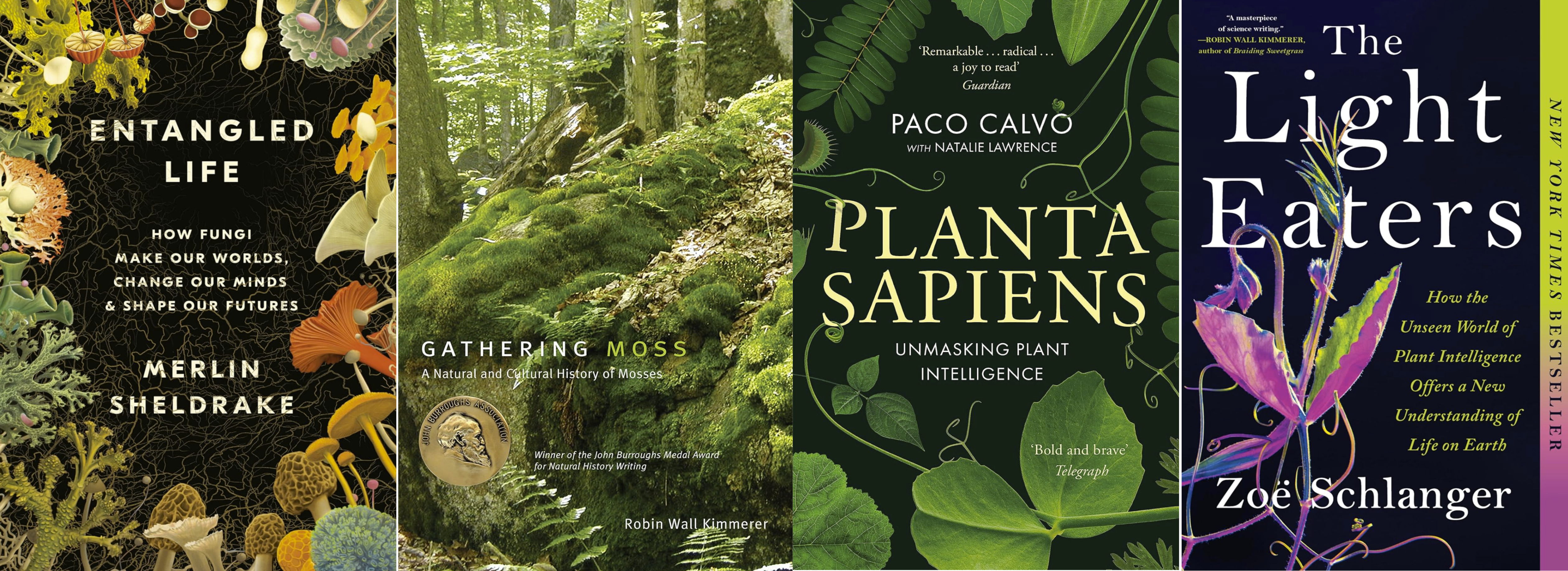
.
Is it possible that we have finally escaped the oppressive shackles of 17th Century Cartesian dogma contesting that dogs have no feelings?
God, I surely hope so.
.
Glossary:
Umwelt: a segment of the world that has significance and meaning based on an organism’s biology and needs: sounds it hears, scents it smells, foods it tastes.
Semiosis: the process of interpreting something as signifying something else using the process of signs, symbols or sound to produce meaning.
Biosemiosis: a biological term for ways organisms communicate, interpret meaning, and interact with their environments through signs and codes.
Heterogenous Being: a way of being that recognizes and incorporates humanity’s pluralized configurations with the nonhuman world by uniting the studies of science and humanities into an interdisciplinary hybrid creative-scientific aesthetic.
.
References:
Barbieri, Marcelo. 2008 (ed). “Introduction to Biosemiotics: The New Biological Synthesis” Springer, Netherlands. 525pp.
Borislow, Alec. 2023. “Send Me a Sign: Biosemiosis, Umwelt, And Signifiers.” Medium, November 30, 2023.
Calvo, Paco, M. Gagliano, G. Souza, and A. Trewavas. 2020. “Plants are intelligent, here’s how.” Annals of Botany 125: 11-28.
Calvo, Paco. 2022. “Planta Sapiens.” W.W. Norton & Company, NY. 285pp.
Haraway, Donna Jeanne. 2008. “When Species Meet.” University of Minnesota Press.
Hata, Shingo et al. 2022. “Dried Nostoc commune exhibits nitrogen-fixing activity using glucose under dark conditions after rehydration.” Plant Signal Behav. 17(1): 2059251.
Hinton, David. 2012. “Hunger Mountain.” Shambhala.
Kecsey, et. al. 2018. “Adaptations of cyanobacterium Nostoc commune to environmental stress: Comparison of morphological and physiological markers between European and Antaarctic populations after rehydration.” Czech Polar Reports 8(1): 84-93.
Kimmerer, Robin Wall. 2003. “Gathering Moss: A Natural and Cultural History of Mosses.” Oregon State University Press. 176pp.
Marder, Micheal. 2013. “Plant-Thinking: A Philosophy of Vegetal Life.” Columbia University Press.
Munteanu, Nina. 2024. “The Use of Character-Coupling in Eco-Literature to Give Voice to the Other, Part 1: Introduction” February 18, 2024.
Munteanu, Nina. 2024. “The Use of Character-Coupling in Eco-Literature to Give Voice to the Other, Part 2: Types of Character-Coupling in Seven Examples of Eco-Literature” February 2024.
Ogden, Steven L. 2025. “Heterogenous Being: The Inhumanities and the Creative-Scientific Aesthetic.” A Dissertation submitted to the University at Albany, State University of New York in partial fulfillment of the requirements for the Degree of Doctor of Philosophy. 207pp.
Reber, A.S. 2019. “The First Minds: Caterpillars, ‘Karyotes and Consciousness.” Oxford University Press, New York. 296pp.
Schlanger, Zoe. 2025. “The Light Eaters.” Harper Perennial. 304pp.
Simard, Suzanne. 2026. “When the Forest Breathes.” Allen Lane. 336pp.
Trewavas, Anthony. 2003. “Aspects of Plant Intelligence.” Annals of Botany 92(1): 1-20.
Uexküll, Jakob von. 1921. “Umwelt und Innenwelt der Tiere” 2nd ed. Julius Springer, Berlin.
Uexküll, Jakob von. 1931. “Die Rolle des Subjekts in der Biologie.” Die Naturwissenschaften 19: 385-391.
.
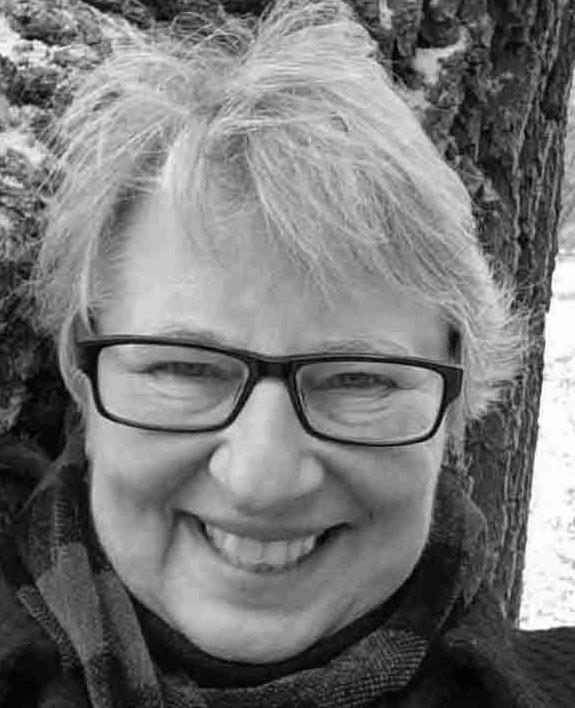
Nina Munteanu is a Canadian ecologist / limnologist and novelist. She is co-editor of Europa SF and currently teaches writing courses at George Brown College and the University of Toronto. For the latest on her books, visit www.ninamunteanu.ca. Nina’s bilingual “La natura dell’acqua / The Way of Water” was published by Mincione Edizioni in Rome. Her non-fiction book “Water Is…” by Pixl Press (Vancouver) was selected by Margaret Atwood in the New York Times ‘Year in Reading’ and was chosen as the 2017 Summer Read by Water Canada. Her novel “A Diary in the Age of Water” was released by Inanna Publications (Toronto) in June 2020. You can read her just released eco-fiction thriller Gaia’s Revolution by Dragon Moon Press.
.


One thought on “Biosemiosis: Acknowledging Intelligence in Nature”