Douglas fir trees in a morning mist, Watershed Park, BC (photo by Nina Munteanu)
.
Since moving back to Vancouver, British Columbia, I’ve been exploring anew old haunts and finding new places to explore. Forests, saltwater marshes, grassy meadows, beaver ponds and rivers.
.
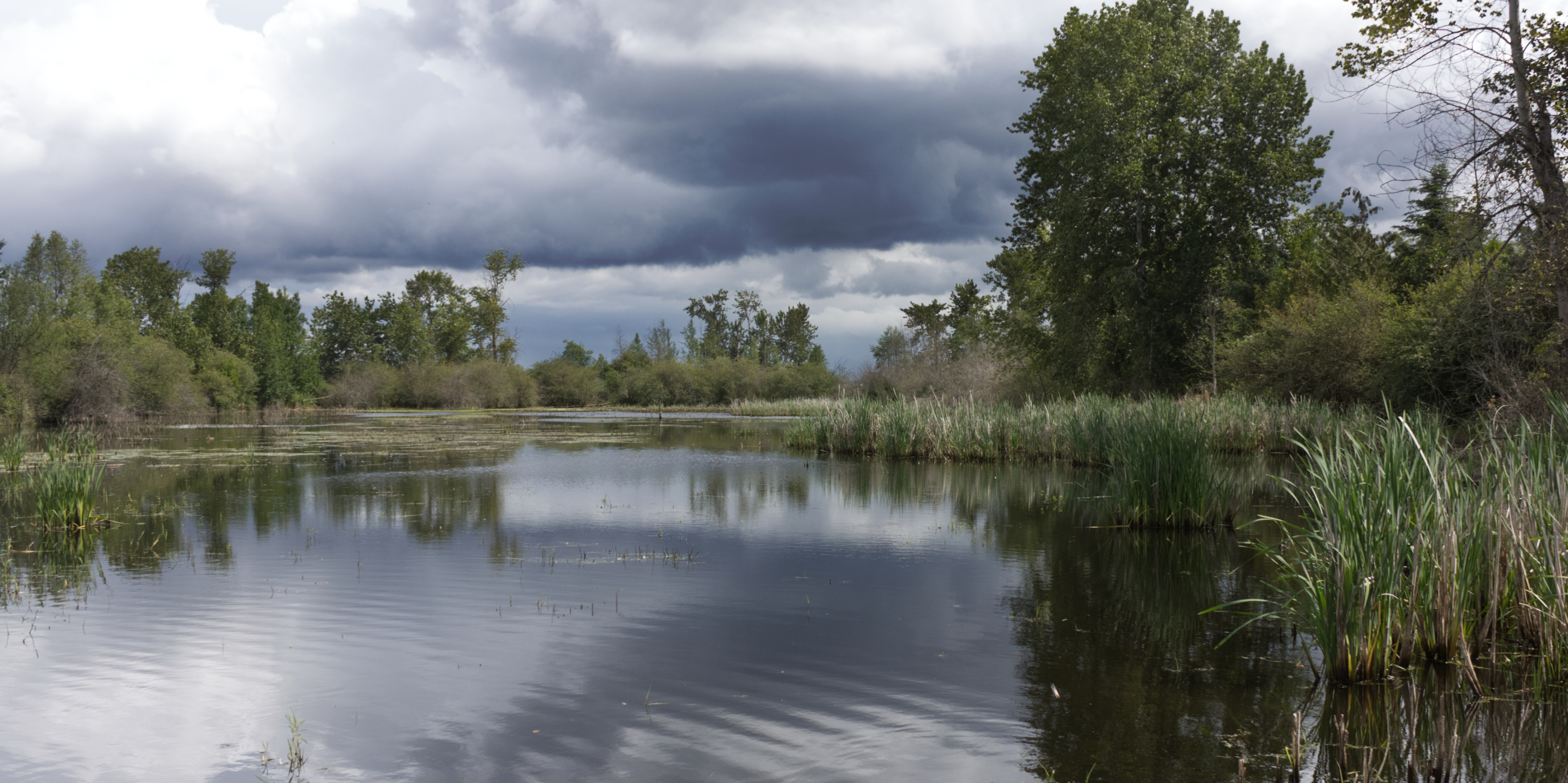
View of coming storm from boardwalk of Elgin Park beaver pond, BC (photo by Nina Munteanu)
.
During my walks, I find interesting characters and study their ecology, how each lives and relates to others. Poking at the micro and gaping at the macro. The towering trees. The fungi. The lichen. The mosses and ferns. The flowers. I normally bring my camera and sometimes my macro-lens to take fascinating close-ups: lichen fruiting bodies; parasitic mushrooms; horsetail strobili.
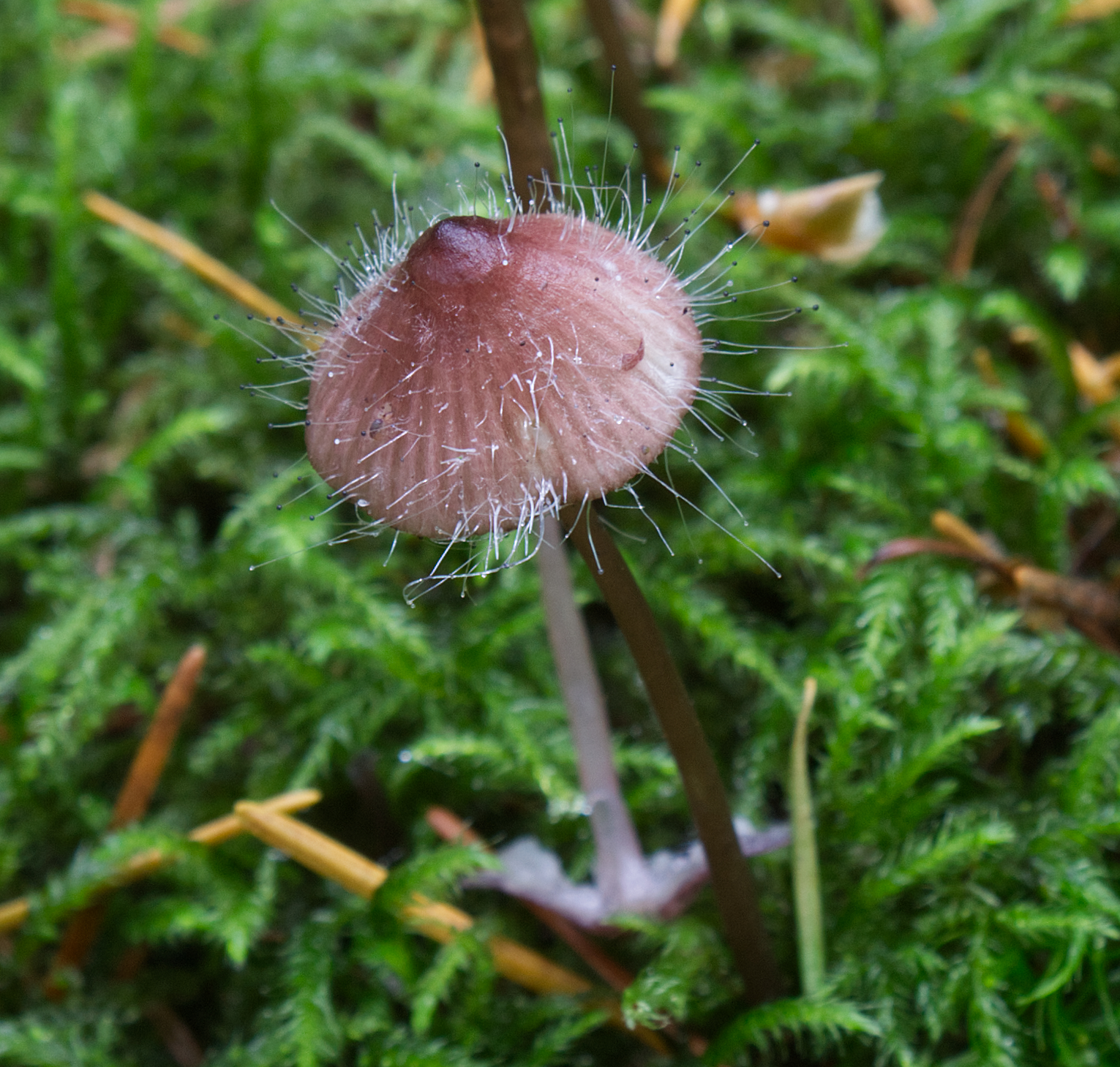
Mycena sanguinolenta hosts parasitic fungus Spinellus fusiger, Watershed Park, BC (photo by Nina Munteanu)
.
Nature walks tug at all my senses. A walk in the forest is as much about its fresh balsamic scent as it is its dappled greens. There are its glorious sounds. The wind teasing the firs that sway in hushing breaths. The sudden scurry of a chipmunk or scolding chatter of a red squirrel.
And, of course, there are the birds and their calls and songs.
A Chestnut-backed Chickadee watches me from a shrub branch, Campbell Valley Park, BC (photo by Nina Munteanu)
.
My latest purchase is a pair of binoculars and a handy bird guide book. I am now an official birdwatcher!
I find these days that I bring my binoculars more often than my camera on hikes. Each outing provides me with at least one gift: a new sighting or discovery. With the help of the binoculars, my acute hearing alerts me first and I soon find the bird and able to describe it. Once returned to my vehicle, I confirm the sighting and identify my bird. So exciting!
Birdwatching is so rewarding. Soon after I started seriously birdwatching with my binoculars, I discovered that my powers of observation had increased. My bird sightings have improved with the practice; I’m able to spot the bird from its call with more success and identify it more quickly than before. Birdwatching helps me train my senses to observe and analyze.
But, I’m told, birdwatching does so much more than this…
.
Birdwatching Rewires the Human Brain
Neuroscientific evidence from the University of Zurich suggests that the activity of birdwatching offers far more than just relaxation and destressing. Researchers have shown that expert birders possess significant structural differences in their brains compared to novices. Specialized neural pathways permit them to accurately identify even unfamiliar species.
Water fowl in Deer Lake, British Columbia (photo by Nina Munteanu)
.
As with the cognitive shifts seen in polyglots or professional pianists, the act of birding appears to fine-tune the brain’s visual and auditory processing centers, turning a casual interest into a powerful exercise in neuroplasticity. Scans have shown that brains of birdwatchers are more dense in areas associated with processes that include working memory, spatial awareness, and object recognition. This is because “our brains are very malleable,” says lead researcher Erik Wing, a research associate at York University in Toronto. When we learn a new skill, the brain reorganizes through a process called neuroplasticity. According to Wing, birders use a unique merging of cognitive skills in observing and identifying birds: fine-grain identification, visual search and attention to the immediate environment, and sensitivity to motion, pattern detection, and building these elaborate conceptual networks of different related species.
Through their ability to distinguish subtle variations in plumage, song, and flight patterns, birdwatchers effectively reshape their cortex to perceive details that others might miss. The researchers showed that this expertise is not an innate talent but a result of prolonged practice.
Birdwatching reshapes the brain in a similar way to learning a language or instrument. Engaging meaningfully with the natural world is a cognitive investment that sharpens the mind for a lifetime.
.
Benefits of Being in Nature
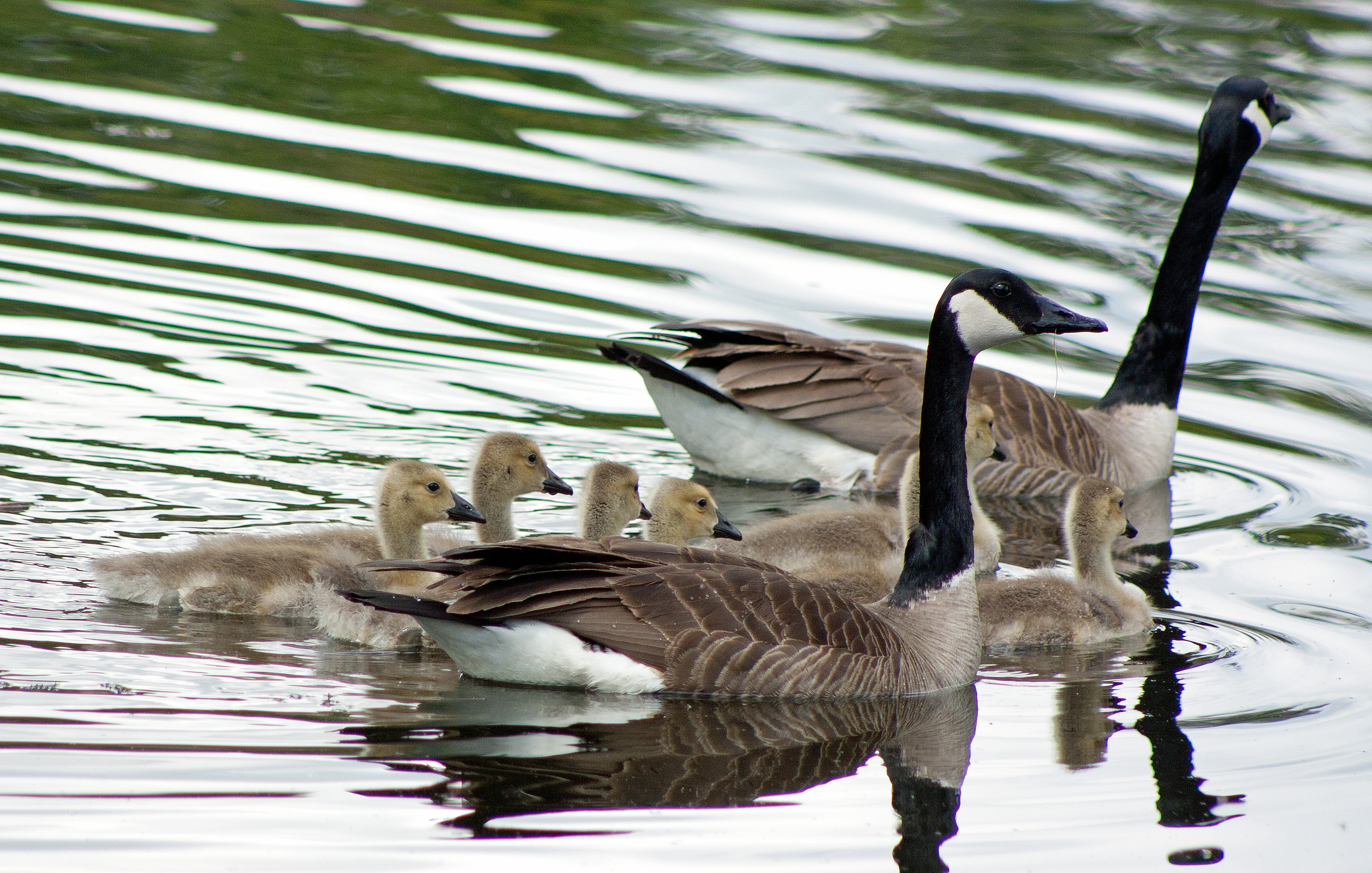
Geese family on Otonabee River, ON (photo by Nina Munteanu)
.
Benjamin Katz, an associate professor in the department of human development and family science at Virginia Tech, notes that other facets of birding support brain health. Being in nature improves attention; walking, reduces risk of cognitive impairment; and socializing can help increase processing speed. “Birding isn’t just a single thing,” says Katz. “There are so many different cognitive aspects.”
Like learning new things and getting excited about our natural world …
.
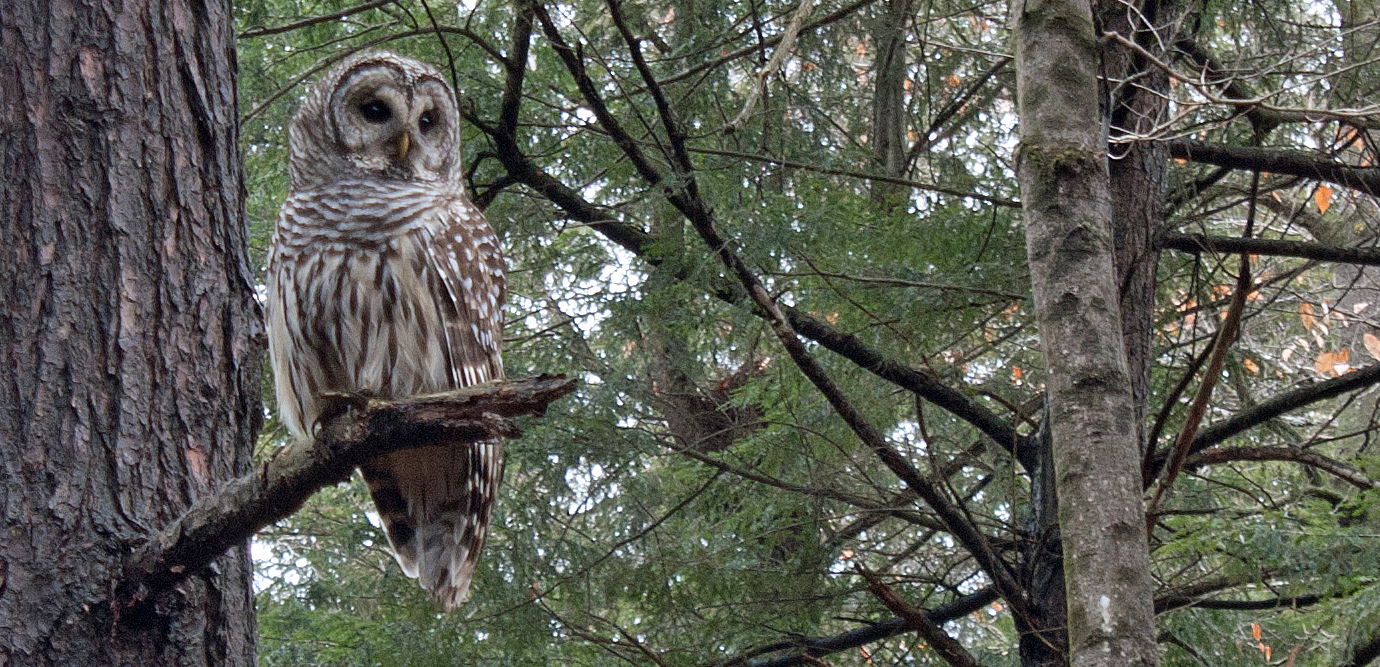
Barred owl poses for me, Mark S. Burnham Forest, ON (photo by Nina Munteanu)
.
References:
Akermi, Nassim. 2026. “The ‘Birder’s Brain’: How Ornithology Rewires Neural Pathways.” Medium, March 2, 2026.
Cannings Richard, Tom Aversa, and Hall Opperman. 2005. “Birds of Southwestern British Columbia.” Heritage House Publishing Company, Vancouver, BC. 414pp.
Mattson, Jennifer. 2026. “Neuroscience says you can alter your brain structure to improve cognition. Here’s how—it’s already a popular hobby.” Fast Company, 02-24-2026.
Wade, Grace. 2026. “Birdwatching may reshape the brain and build its buffer against ageing.” New Scientist. 23 February 2026.
Wing, Erik A., Jordan A. Chad, Geneva Mariotti, Jennifer D. Ryan, and Asaf Gilboa. “The Tuned Cortex: Convergent Expertise-Related Structural and Functinal Remodeling across the Adult Lifespan.” Journal of Neuroscience 46(12): 1307-25.
.
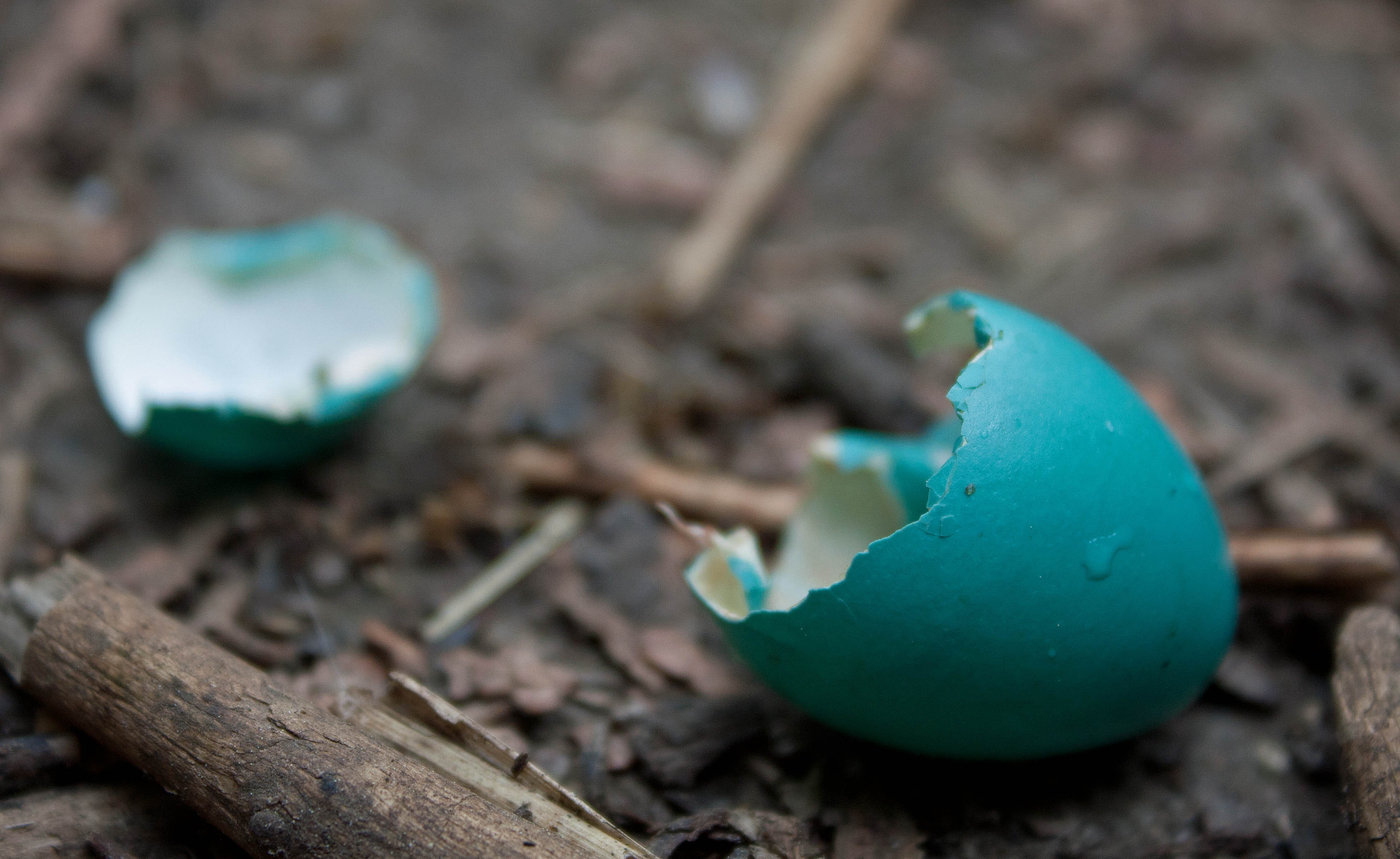
Robin’s egg (photo by Nina Munteanu)
.
Nina Munteanu is a Canadian ecologist / limnologist and novelist. She is co-editor of Europa SF and currently teaches writing courses at George Brown College and the University of Toronto. For the latest on her books, visit www.ninamunteanu.ca. Nina’s bilingual “La natura dell’acqua / The Way of Water” was published by Mincione Edizioni in Rome. Her non-fiction book “Water Is…” by Pixl Press (Vancouver) was selected by Margaret Atwood in the New York Times ‘Year in Reading’ and was chosen as the 2017 Summer Read by Water Canada. Her novel “A Diary in the Age of Water” was released by Inanna Publications (Toronto) in June 2020.You can read her just released eco-fiction thriller Gaia’s Revolution by Dragon Moon Press.






2 thoughts on “How My Birdwatching Helps Me Stay Smart”