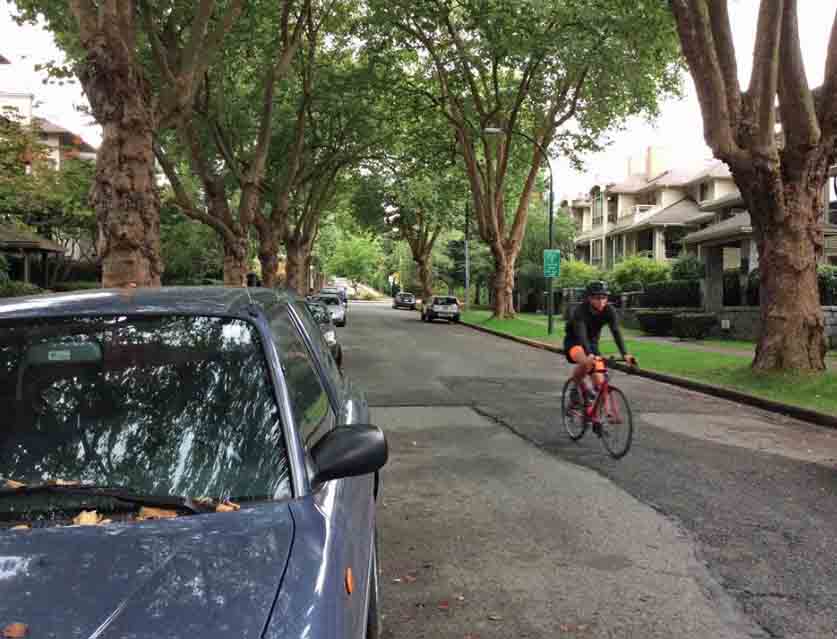
“Trees play a vital role in shaping the well-being and sustainability of communities.”
Short Elliott Hendrickson Inc.
.
Most Canadians live in a city or town; we don’t truly understand what the natural environment is and—perhaps more to the point—aren’t capable of relating to it meaningfully. Many of us have learned to ignore Nature, we stop recognizing it, we pocket it away as we go about our busy lives in the city. A park is a bit of greenery. A tree is a decoration that provides shade. Shrubs border a mall.”— Nina Munteanu “Climate Change and the Colour of Resilience”
But if we can’t even recognize the natural environment, how can we understand its functional role in the intricate well-being of this entire precious planet and ultimately ourselves? And without this, how can we pursue a sustainable life on this planet?
Many of us intellectually understand that city trees provide significant benefits to any urban environment. They: 1) help regulate the water cycle, particularly with stormwater absorption and flood reduction; 2) provide shade and reduce heat islands; 3) and they provide immense health benefits through connection. They also contribute to climate resiliency, capture carbon and help reduce greenhouse gas emissions.
.
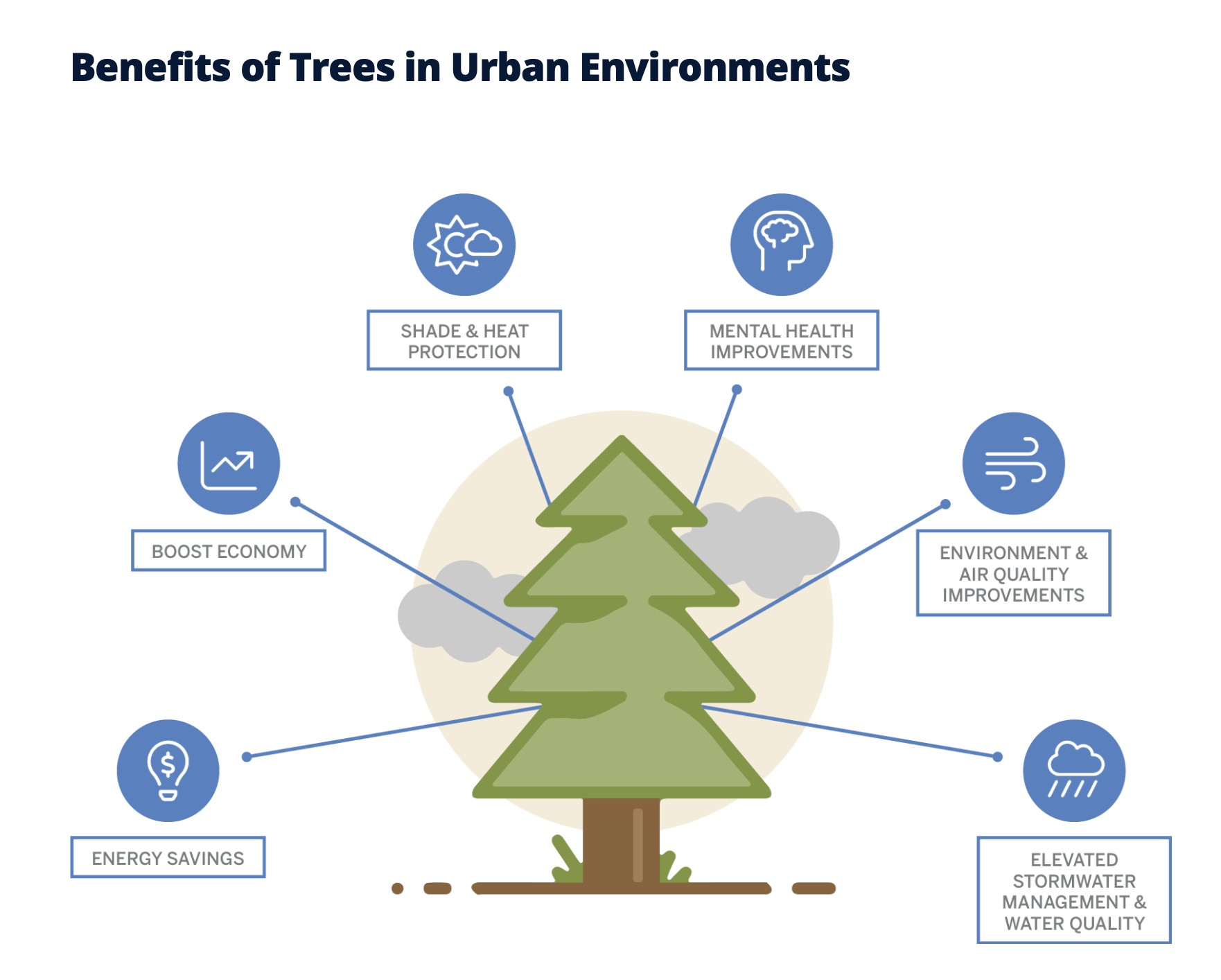
“A single tree can soak up to 22 kg of carbon dioxide in a year and produce enough oxygen to sustain two people.”
Short Elliott Hendrickson Inc.
If planted well, trees and their associated permeable surroundings reduce runoff, erosion and flooding. Their root systems help against erosion and help consolidate the soil to more effectively retain water and prevent slopes from slumping.
.
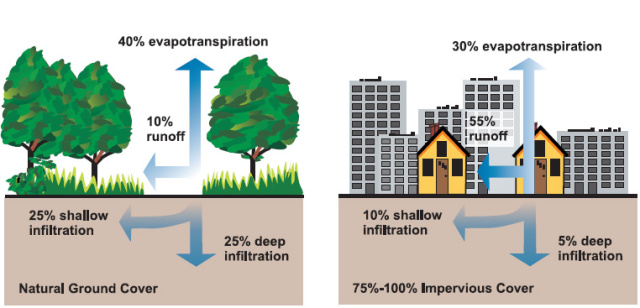
“Runoff from an area covered in impervious surface is 5 times that of a forested watershed of the same size.”
Short Elliott Hendrickson Inc.
Trees, whether a single tree or a grove along a street, provide a wealth of well-being for humans, whether through habitat for birds, through chemical aerosols, or simple aesthetics. Many studies have shown the benefits of trees and associated green space and birds to human mental health. Scientists have proven that conservation of natural areas in urban settings is just as important for human well-being as financial security. Trees and forests provide habitat for birds; and birds give us joy. Birds help with mental health and mental acuity.
In Part 2 of “Why I Love Trees” I write about a study by Lancaster University that showed the birch tree’s detoxifying capabilities when they planted silver birch trees between a street of houses and a busy road. According to Professor Barbara Maher, the trees absorbed more than 50 per cent of the particulate dust — linked to respiratory problems — from passing traffic. The tree “is a chemical factory,” says botanist and biochemist Diana Beresford-Kroeger. They broadcast a host of chemicals into the environment that may travel for hundreds of kilometres, as well as affect the immediate area. Beresford-Kroeger argues that trees help maintain the health of the natural world, given that they constantly shower healing chemical mists into the air. “These substances are at the heart of connectivity in nature,” says Beresford-Kroeger.
.
Planting and Maintaining Urban Trees
City trees must deal with lack of water, compacted soil, not enough food, physical injuries, imported pests and diseases, road salt and air pollution, soil compaction and restricted root space. Other considerations include suitability of tree species planted, when and where it was planted and how the individual tree is looked after.
Short Elliott Hendrickson promotes five key best practices for urban tree planting and maintenance:
Choose the right tree for the right location. Select tree species that are well-suited to the urban environment. This includes considering space, sunlight exposure, and soil conditions. It also means understanding which trees can tolerate salt, deicing chemicals, drought or prolonged water inundation, or pollution and others don’t. It also means understanding how some root systems can damage sidewalks, pipes, foundations, or buried utilities.
Space trees appropriate to their mature size. Plan for expected tree maturity. A tree’s maximum size and genetic characteristics should be considered to avoid future conflicts between roots and sidewalks, nearby vegetation, or power lines. A general rule of thumb, says SEH, is to allow at least 10 ft. of clearance between the tree and any overhead or underground utility lines, and at least 4 ft. of clearance between the tree and any pavement or building.
Incorporate innovative, ecologically sound elements: These include structural supports or organic mulch that protect trees and enhance their growth, while also improving the aesthetic appeal of the urban landscape. Use features such as soil cell tree pits and tree guards to support tree growth and protect them from urban stresses, such as foot traffic, vandalism, and construction activities. Soil cells use vertical recycled plastic structures that support a concrete sidewalk above while preventing soil compaction and root damage from vehicles or pedestrians. Granite mulch is a viable alternative to limestone mulch (that adversely alters soil pH) and not only enhances structural support, but also provides a neutral pH balance for the soil. It also helps retain moisture and suppresses weed growth around the tree base. However, granite mulch may raise soil temperature and reflect heat, which may not be suitable for certain tree species or in specific climate conditions.
Ensure proper soil mix, drainage, and air exchange: Plant trees at the right depth, Implement drainage systems, and provide adequate access to air exchange to ensure healthy root growth and soil health. Often, it’s not the lack of moisture that puts undue stress on trees, it’s the lack of available oxygen in the soil. By incorporating a system of aeration pipes and vertical ducts into the planting system, better and long-term tree health can be obtained. Using the correct balance of engineered soil mix will allow tree roots to thrive.
Regular monitoring and ongoing care: Implement regular oversight and maintenance programs to identify and address issues promptly. Monitoring includes measuring tree growth, health, and survival rates, as well as detecting signs of pests, diseases, or environmental stress. Maintenance may involve pruning, watering, fertilizing, mulching, or treating trees as needed. Monitoring and maintenance can be done by professional arborists, city staff, or trained volunteers. Regular monitoring and care ensures the longevity and vitality of urban trees and reduces potential risks or liabilities.
.

.
“Urban trees are not just aesthetically pleasing but vital components of sustainable and resilient cities – responsible planning and preservation of trees within urban landscapes should be a top priority,” —Short Elliott Hendrickson Inc.
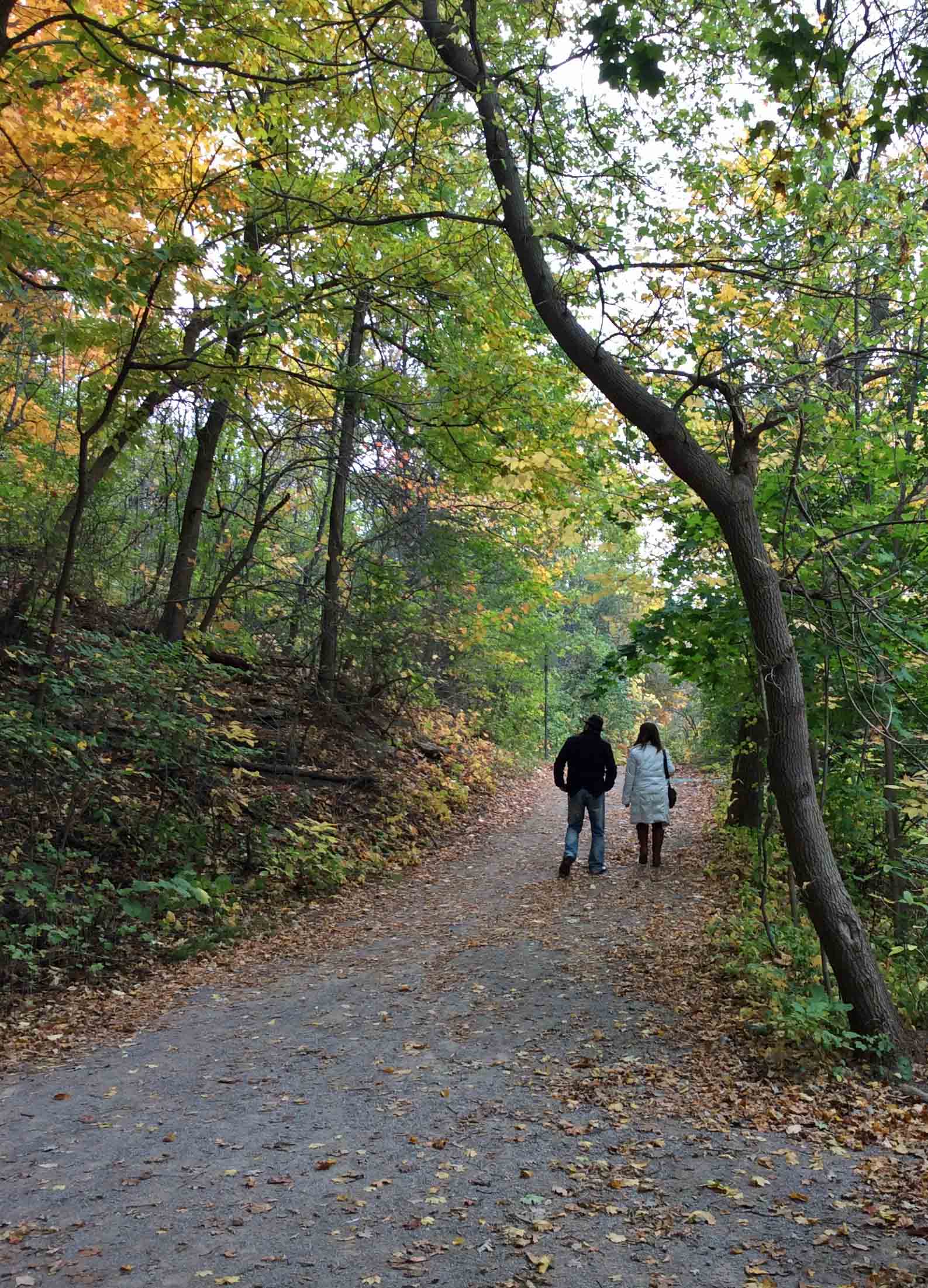
Most urban trees are planted linearly as street trees. But trees don’t behave the same as a forest. Street trees are not part of a functional ecosystem and are therefore unable to perform certain ecosystem functions. Street trees lack coherence with other trees and other components of a natural community that includes lichen, fungi, other vegetation, insects and wildlife. Street trees remain isolated and are more vulnerable than their counterparts in a forest community to weather, disease, and other factors. You can read more about urban trees vs. urban forests in my article “Our Well-Being in the City: Urban Trees vs. Urban Forests.”
Walking the urban park of the Credit River, Mississauga, ON (photo by Nina Munteanu)
.
References:
Akbari, H. (2002). Shade trees reduce building energy use and CO2 emissions from power plants. Environmental Pollution, 116(1), S119-S126. https://doi.org/10.1016/S0269-7491(01)00264-0
Akbari, H. & Taha, H. (1992). The impact of trees and white surfaces on residential heating and cooling energy use in four Canadian cities.Energy, 17(2) 141-149. https://doi.org/10.1016/0360-5442(92)90063-6
Alexander, C. & DePratto, B. (2014). The Value of Urban Forests in Cities Across Canada. Special Report – TD Economics. Retrieved from https://www.td.com/document/PDF/economics/special/UrbanForestsInCanadianCities.pdf
Alexander, C. & McDonald, C. (2014). Urban Forests: The Value of Trees in the City of Toronto. Special Report: TD Economics. Retrieved from https://www.td.com/document/PDF/economics/special/UrbanForests.pdf
Alvey, A. A. (2006). Promoting and preserving biodiversity in the urban forest. Urban Forestry & Urban Greening, 5(4), 195-201. https://doi.org/10.1016/j.ufug.2006.09.003
Andrada, R., & Deng, J. (2010). Enjoying Green Cities: Assessing Visitors’ Attitudes and Preferences for Urban Forests in Washington, D.C. Proceedings of the 2010 Northeastern Recreation Research Symposium, 168-174. Retrieved from https://www.nrs.fs.fed.us/pubs/gtr/gtr-p-94papers/25andrada-p94.pdf
Aronson, M., Christopher, F. J., Lepczyk, A., Evans, K. L., Goddard, M. A., Lerman, S. B., . . . Vargo, T. (2017.) Biodiversity in the city: key challenges for urban green space management. Frontiers in Ecology and the Environment, 15(4), 189-196. https://doi.org/10.1002/fee.1480
Bartens, J., Day, S. D., Harris, J. R., Dove, J. E., & Wynne, T. M. (2008). Can Urban Tree Roots Improve Infiltration through Compacted Subsoils for Stormwater Management?. Journal of Environmental Quality Abstract – Bioremediation and Biodegradation, 37(6), 2048-2057. Retrieved from https://dl.sciencesocieties.org/publications/jeq/abstracts/37/6/2048
Bartholomew, Alick. 2010. “The Spiritual Life of Water”. Park Street Press, Rochester Vermont. 338 pp.
Beresford–Kroeger, Diana. 2003. “Arboretum America: A Philosophy of the Forest.” University of Michigan Regional. 214 pp.
Berland, A., Shiflett, S. A., Shuster, W. D., Garmestani, A. S., Goddard, H. C.,. . .Hopton, M. E. (2017). The role of trees in urban stormwater management. Landscape and Urban Planning, 162, 167-177. https://doi.org/10.1016/j.landurbplan.2017.02.017
Brandt, L., Derby Lewis, A., Fahey, R., Scott, L., Darling, L., Swanston, C. (2016). A framework for adapting urban forests to climate change. Environmental Science & Policy, 66, 393-402. https://doi.org/10.1016/j.envsci.2016.06.005
Colinas, J., Bush, P., & Manaugh, K. (2018). The socio-environmental impacts of public urban fruit trees: A Montreal case-study. Urban Forestry & Urban Greening.In press, corrected proof. https://doi.org/10.1016/j.ufug.2018.05.002
Cooper Marcus, C. (2007). Healing Gardens in Hospitals. Interdisciplinary Design and Research, 1(1). Retrieved from https://intogreen.nl/wp-content/uploads/2017/07/cooper_marcus.pdf
Edmondson, J. L., Stott, I., Davies, Z. G., Gaston, K. J., & Leake, J. R. (2016). Soil surface temperatures reveal moderation of the urban heat island effect by trees and shrubs. Scientific Reports, 6. https://doi.org/10.1038/srep33708
Escobedo, F. J., Adams, D. C., & Timilsina, N. (2015). Urban forest structure effects on property value. Ecosystem Services, 12, 209-217. https://doi.org/10.1016/j.ecoser.2014.05.002
Han, D., Shen, H., Duan, W., and Chen, L. (2020). A review on particulate matter removal capacity by urban forests at different scales. Urban For. Urban Green. 48.
Kardan, O., Gozdyra, P., Misic, B., Moola, F., Palmer, L. J., Paus, T., & Berman, M. G. (2015). Neighborhood greenspace and health in a large urban center. Scientific Reports, 5. Retrieved from https://www.nature.com/articles/srep11610
Kuo, F. E. (2003). Social Aspects of Urban Forestry: the Role of Arboriculture in a Healthy Social Ecology. Journal of Arboriculture, 29(3),148-155. Retrieved from https://www.fs.usda.gov/treesearch/pubs/13860
Livesley, S. J., McPherson, E. G., & Calfapietrac, C. (2016). The Urban Forest and Ecosystem Services: Impacts on Urban Water, Heat, and Pollution Cycles at the Tree, Street, and City Scale. Journal of Environmental Quality, 45(1), 119-124. doi:10.2134/jeq2015.11.0567
Miller, R. W., Hauser, R. J., & Werner, L. P. (2015). Urban Forestry: Planning and Managing Urban Greenspaces (3rd ed.). Long Grove, IL: Waveland Press, Inc.
Mok, J.-H., Landphair, H. C., & Naderi, J. R. (2005). Landscape improvement impacts on roadside safety in Texas. Landscape and Urban Planning, 78, 263–274. Retrieved from https://www.naturewithin.info/Roadside/RdsdSftyTexas_L&UP.pdf
Mörtberg, U. M. (2001). Resident bird species in urban forest remnants; landscape and habitat perspectives. Landscape Ecology, 16(3), 193-203. Retrieved from https://link.springer.com/article/10.1023/A:1011190902041
Mytton, O. T., Townsend, N., Harry Rutter, H., & Foster, C. (2012). Green space and physical activity: An observational study using Health Survey for England data. Health Place, 18(5): 1034-1041. doi: [10.1016/j.healthplace.2012.06.003]
Naderi, J.R. (2003). Landscape Design in the Clear Zone: Effect of Landscape Variables on Pedestrian Health and Driver Safety. Transportation Research Record,1851, 119-130. Retrieved from https://aggie-horticulture.tamu.edu/syllabi/435/Articles/Naderi%20article.pdf
Nowak, D. J., Hirabayashi, S., Doyle, M., McGovern. M., & Pasher, J. (2018). Air pollution removal by urban forests in Canada and its effect on air quality and human health. Urban Forestry & Urban Greening, 29, 40-48. Retrieved from https://www.fs.fed.us/nrs/pubs/jrnl/2018/nrs_2018_nowak_001.pdf
Nowak, D. J., Hoehn, R. E., Bodine, A. R., Greenfield, E. J., & O’Neil-Dunne, J. (2016). Urban forest structure, ecosystem services and change in Syracuse, NY. Urban Ecosystems, 19(4) 1455-1477. Retrieved from https://link.springer.com/article/10.1007/s11252-013-0326-z
Parker, T. S. (2018). Trees and crime in urban areas: recommendations. Forestry Research and Engineering, 2(3), 127-129. https://medcraveonline.com/FREIJ/FREIJ-02-00037.pdf
Price, C. (2003). Quantifying the aesthetic benefits of urban forestry. Urban Forestry & Urban Greening, 1(3), 123-133. https://doi.org/10.1078/1618-8667-00013
Rahman, M. A., Armson, D., & Ennos, A. R. (2015). A comparison of the growth and cooling effectiveness of five commonly planted urban tree species. Urban Ecosystems, 18(2), 371-389. Retrieved from https://link.springer.com/article/10.1007/s11252-014-0407-7
Robbins, Jim. 2012. “The Man Who Plants Trees”. Spiegel & Grau, New York. 256 pp.
Sandström, U. G., Angelstam, P., & Mikusiński, G. (2006). Ecological diversity of birds in relation to the structure of urban green space. Landscape and Urban Planning, 77(1-2), 39-53. https://doi.org/10.1016/j.landurbplan.2005.01.004
Schroeder, H. W. (2009). Variations in the perception of urban forest recreation sites. Leisure Sciences, 5(3), 221-230. https://doi.org/10.1080/01490408309513004
Spracklen, Dominick V., Boris Bonn, and Kenneth S. Carslaw. 2008. “Boreal Forests, Aerosols and the Impacts on Clouds and Climate”. Phil. Trans. R. Soc. A 366: 4613–4626.
Sinnett, D. (2018). Mitigating air pollution and the urban heat island effect: The roles of urban trees. In I. Douglas, D. Goode, M. Houck, & D. Maddox (Eds.), Handbook of Urban Ecology. Routledge. [In Press] Retrieved from http://eprints.uwe.ac.uk/38014
Threlfall, C. G., Walker, K., Williams, N. S. G., Hahs, A. K., Mata, L.,. . .Livesley, S. J. (2015). The conservation value of urban green space habitats for Australian native bee communities. Biological Conservation, 187, 240-248. Retrieved from https://www.sciencedirect.com/science/article/abs/pii/S0006320715001895
Troy, A., Grove, J. M., & O’Neill-Dunne, J. (2012). The relationship between tree canopy and crime rates across an urban-rural gradient in the greater Baltimore region. Landscape and Urban Planning, 106, 262-270. Retrieved from https://www.fs.usda.gov/treesearch/pubs/40701
Tyrväinen, L., Pauleit, S., Seeland, K., & de Vries, S. (2005). Benefits and Uses of Urban Forests and Trees. In C. Konijnendijk, K. Nilsson, Th. B. Randrup, & J. Schipperijn (Eds.), Urban Forests and Trees (81-114). New York: Springer Berlin Heidelberg.
Ulmer, J. M, Wolf, K. L., Backman, D. R., Tretheway, R. L., Blain, C. J. A., . . . Frank, L. D. (2016). Multiple health benefits of urban tree canopy: The mounting evidence for a green prescription. Health & Place, 42, 54-62. https://doi.org/10.1016/j.healthplace.2016.08.011
Ulrich, R. S. (1992). How design impacts wellness. Healthcare Forum, 35(5), 20-25. Retrieved from https://www.researchgate.net/profile/Roger_Ulrich4/publication/13177406_How_Design_Impacts_Wellness/links/54b3afd80cf26833efcea0e3/How-Design-Impacts-Wellness.pdf
Wang, Y. & Akbarib, H. (2016).The effects of street tree planting on Urban Heat Island mitigation in Montreal. Sustainable Cities and Society, 27, 122-128. https://doi.org/10.1016/j.scs.2016.04.013
Westphal, L. (2003). Urban greening and social benefits: a study of empowerment outcomes. Journal of Arboriculture, 29(3), 137-147. Retrieved from https://www.fs.usda.gov/treesearch/pubs/14148
Wolf, K. L. (2003). Public response to the urban forest in inner-city business districts. Journal of Arboriculture, 29(3): 117-126. Retrieved from https://www.fs.usda.gov/treesearch/pubs/34957
.

Nina Munteanu is a Canadian ecologist / limnologist and novelist. She is co-editor of Europa SF and currently teaches writing courses at George Brown College and the University of Toronto. For the latest on her books, visit www.ninamunteanu.ca. Nina’s bilingual “La natura dell’acqua / The Way of Water” was published by Mincione Edizioni in Rome. Her non-fiction book “Water Is…” by Pixl Press (Vancouver) was selected by Margaret Atwood in the New York Times ‘Year in Reading’ and was chosen as the 2017 Summer Read by Water Canada. Her novel “A Diary in the Age of Water” was released by Inanna Publications (Toronto) in June 2020. You can read her just released eco-fiction thriller Gaia’s Revolution by Dragon Moon Press.
.

