.
James Cahill, researcher at the University of Alberta, studies the interface between plant behaviour and community ecology. Specifically, he studies how plants behave with each other in social cultures. Cahill argues that the way roots forage for food is tied into the plants’ social environment: how they approach each other; retreat from each other; avoid each other; touch each other.
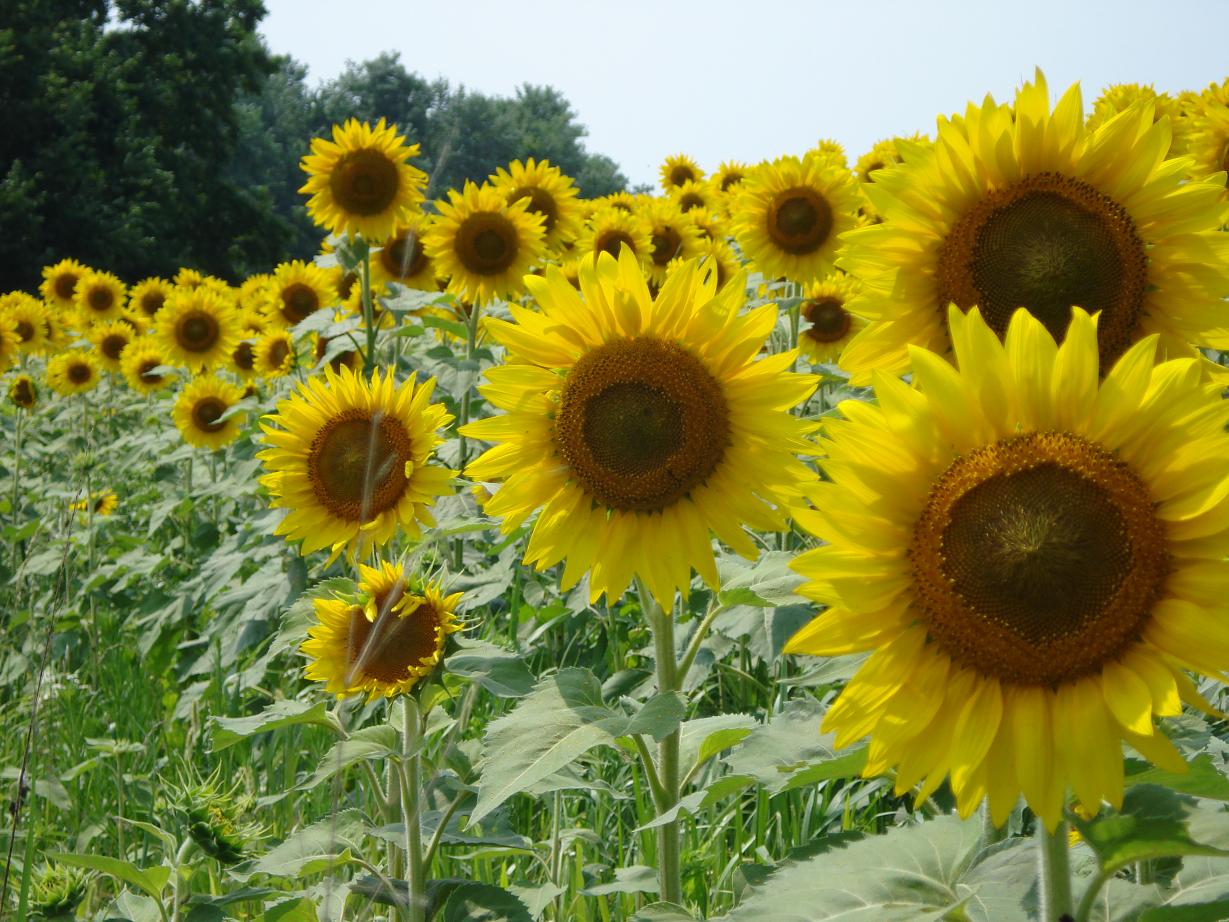
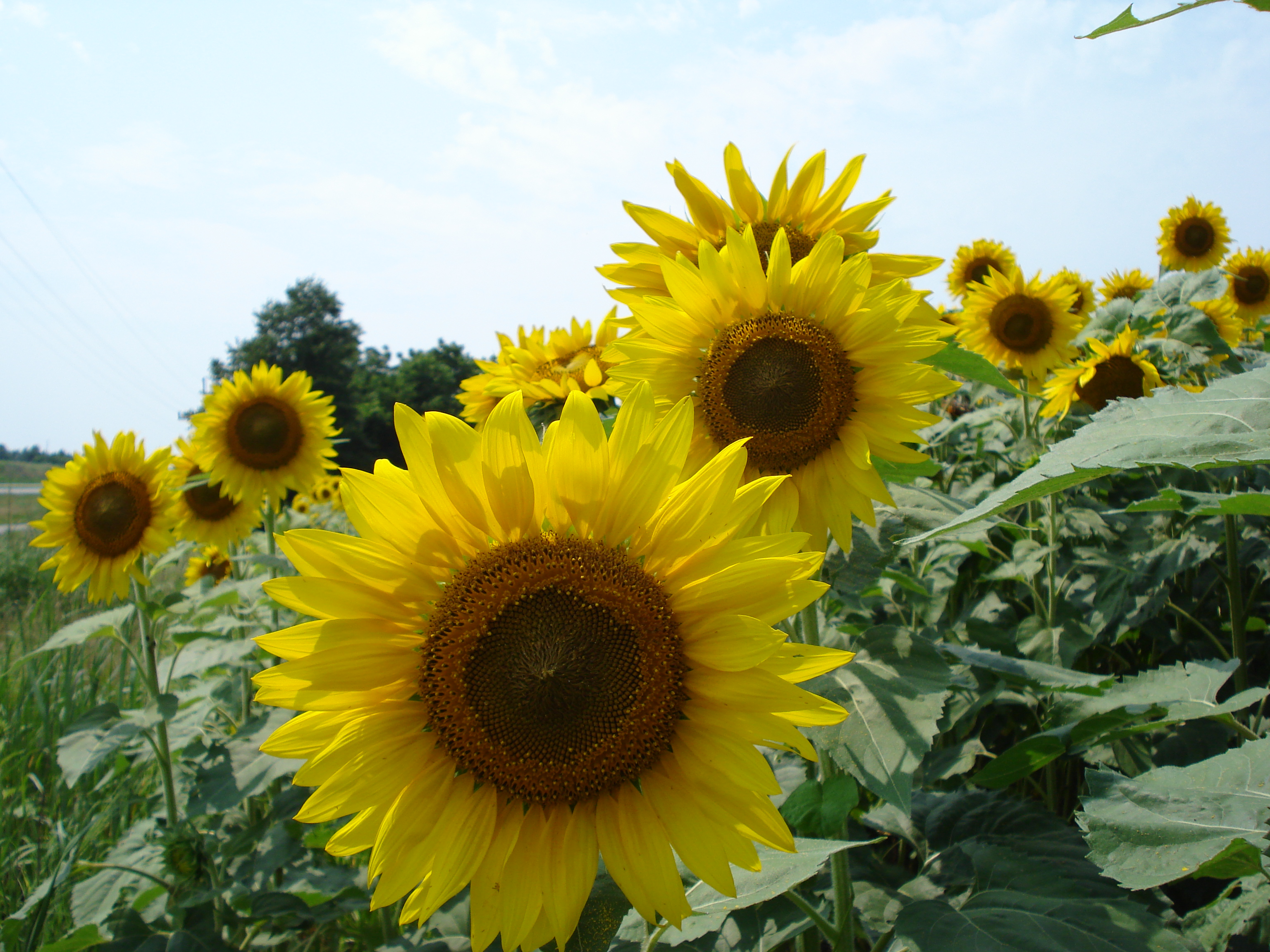
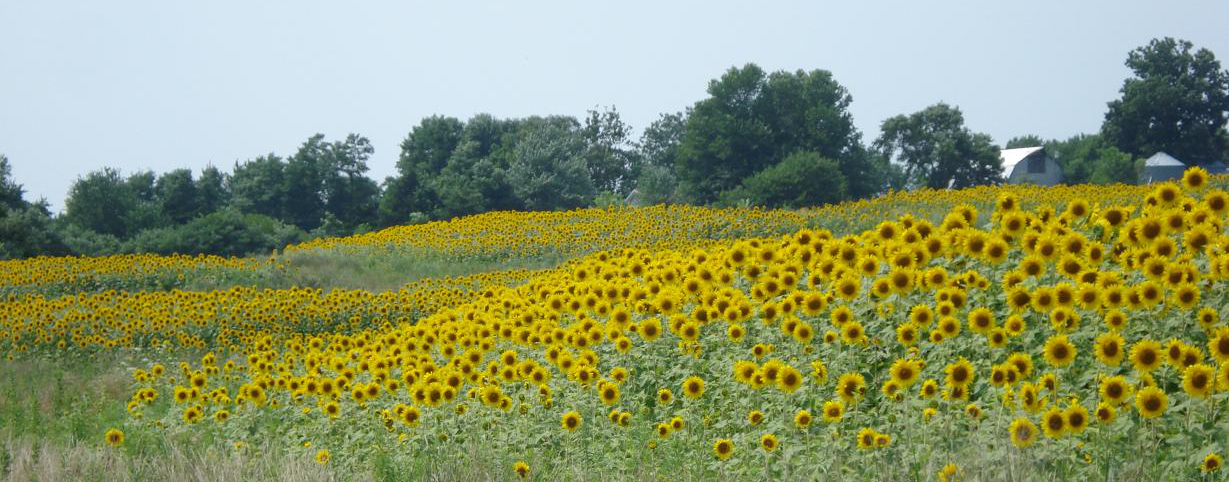
Sunflowers provided a good example. While stems are known as spatially aware, avoiding shading their siblings, sunflower roots were shown to ‘decide’ where to place their roots.
In a 2019 study, Cahill and fellow researcher Megan Ljubotina found that sunflowers “take note of their social environment to decide where to place their roots.” When grown alone, sunflowers easily located a high-nutrient soil and placed most of their roots there. When other sunflowers were added, a clear structure of social etiquette evolved. When a high-nutrient patch of soil was located halfway between a sunflower and its neighbour, the sunflower directed its roots away, avoiding competition. However, if the nutrient-rich soil was closer to one over another sunflower, the closer one directed its roots to it.
Coexistence was shown to override competition. This was particularly the case when nutrients were abundant. When resources were scarce, the sunflower will release allelopathic chemicals to prevent other plants’ seeds from germinating near it.
Cahill noted that in the grasslands of Canada, several species prefer to grow together, forming multispecies “neighbourhoods.” According to Cahill, it is not mere tolerance; these grasses actively seek each other out. He argues that they are actively co-existing. “Ecologists have decided neighbours must be antagonistic,” says Cahill. Some kind of lingering interpretation of Darwinian survival of the fittest. But Cahill and his researchers discovered that in the fields he studied and manipulated, the grasses did not behave in a competitive way.
“You don’t need competition to explain [their behaviour],” Cahill argued. “It doesn’t mean that competition isn’t there, but we can explain all of our patterns without ever once talking about competition. Just because people said it fifty years ago doesn’t mean it’s true.” Why give competition such an important role in community ecology?
Speaking of fifty years ago, this question was addressed by microbiologist Lynn Margulis in the 1960s, when she developed her theory of endosymbiosis. The theory’s basis suggested that evolution advanced through cooperation more than competition. Briefly, the theory posited that primitive cells gained entry into host cells as undigested prey or as internal parasites after which the ‘arrangement’ became mutually beneficial to both (e.g., two examples include chloroplasts from cyanobacteria and mitochondria from bacteria). The theory challenged Neo-Darwinism by arguing that inherited variation does not come mainly from random mutations, but that new tissues, organs and even species evolve primarily “through the long-lasting intimacy of strangers”: the fusion of symbiosis followed by natural selection leads to increasingly complex levels of individuality. The controversial theory took twenty years to be accepted by the scientific community as cannon.
.
.
What ecologists are now finding is that Darwin’s concept of survival of the fittest is not necessarily restricted to an individual or a single species but can apply to a community of several species, a high-functioning association. While changes may impact individual plants, what survives is the biome, the whole community. Our focus on autecology—thanks, in part to the Darwinian lexicon—has limited our understanding of functioning ecology. In some ways, this limited viewpoint aptly reflects the North American obsession with the individual and the hegemony of industrial capitalism focused on alienation, competitive conquest and expansion. Anna Lowenhaupt Tsing, author of The Mushroom at the End of the World, argues that twin master sciences of the twentieth century—neoclassical economics and population genetics—have promoted competitive self-containment. “At the heart of each is the self-contained individual actor, out to maximize personal interest, whether for reproduction or wealth:” Richard Dawkins’s selfish gene.
Real magic happens at the community and ecosystem level, with interacting associations as part of a larger complex of life. According to Lowenhaupt Tsing, “assemblages are open-ended gatherings…Staying alive—for every species—requires livable collaborations. Collaboration means working across difference, which leads to contamination. Without collaboration we all die.” Think adapting to change through socialism and community resilience. The opposite of Dawkins’s “selfish gene.”
“Change for a species … is never finished,” writes Zoë Schlanger author of The Light Eaters, “Complexity—the marriage of the extreme idiosyncrasy of species and the constant fluctuations of a zillion variables in their environment—may be the whole point.”
In my upcoming eco-fiction novel (Re)Genesis—which features the secret industrial compound CH-1 that manipulates DNA—the protagonist’s bohemian history teacher Ms. Dorcus argues that, “DNA, the poster child of control, is no more than the raw material from which the true master picks and chooses … Scientists have found that we happily harbour gene-jumped DNA from bacteria, algae, viruses, plants, and fungi. Human beings have at least 145 genes we picked up from somewhere else. We are part bacterium, part fungus and part alga.”
Scientists have shown that virtually all organisms commonly shed DNA into their environment. From there, DNA is potentially acquired by another organism—either directly or through a vector such as bacteria, protista or fungus. This and other natural phenomena entails an unruly soup of opportunity and sharing—from biocommunication between species (e.g., via semiochemicals) to horizontal gene transfer, phytosemiosis and phenotypic shapeshifting. All to say…
“Where exactly does one species end and another begin?” Ms. Dorcus poses.
.
References:
DeMoraes, Consuelo M. et.al.1998. “Herbivore-Infested Plants Selectively Attract Parasitoids.” Nature 393(6685): 570-73
Dutour, Mylene, Jean-Paul Lena, and Thierry Lengagne. 2017. “Mobbing Calls: A Signal Transcending Species Boundaries.” Animal Behaviour 131: 3-11.
Fallow, Pamela M. and Robert D. Magrath. 2010. “Eavesdropping on Other Species: Mutual Interspecific Understanding of Urgency Information in Avian Alarm Calls.” Animal Behaviour 79: 411-17.
Grof-Tisza et al. 2021. “Risk of Herbivory Negatively Correlates with the Diversity of Volatile Emissions Involved in Plant Communication.” Proceedings of the Royal Society B 288(1961): 20211790.
Karban Richard, et. al. 2013. “Kin Recognition Affects Plant Communication and Defence.” Proceedings of the Royal Society B. 280 (1756): 20123062.
Karban, Richard. 2015. “Plant Sensing and Communication.” Chicago University Press, Chicago.
Krampen, Martin. 1981. “Phytosemiotics.” Semiotica 36(3/4):187-209.
Ljubotina, Megan K. and James E. Cahill. 2019. “Effects of Neighbour Location and Nutrient Distributions on Root Foraging Behaviour of the Common Sunflower.” Proceedings of the Royal Society B 286(1911): 20190955.
Pashalidou, Foteini G., et.al. 2020. “Bumble Bees Damage Plant Leaves and Accelerate Flower Production When Pollen Is Scarce.” Science 368(6493): 881-84.
Schlanger, Zoë. 2024. “The Plant Eaters.” Harper. 304pp.
Suzuki, T.N. 2016. “Referential calls coordinate multi-species mobbing in a forest bird community.” J. Ethol. 34: 79-84.
Tsing, Anna Lowenhaupt. 2021. “The Mushroom at the End of the World: On the Possibility of Life in Capitalist Ruins.” Princeton University Press. 352pp.
Yamato, Akira et al. 2019. “Damage to Leaf Veins Suppresses Root Foraging Precision.” American Journal of Botany 106(8): 1126-30.
.
Glossary:
Allelopathy: the production by one organism of biochemical that influence the growth, survival and/or reproduction of other neighbouring organisms.
Biocommunication: communication that uses chemical, visual, tactile or auditory signals, within or between living organisms such as plants, animals, fungi and microorganisms.
Biosemiosis: a biological term for ways organisms communicate, interpret meaning, and interact with their environments through signs and codes.
Phytosemiotics: a branch of biosemiotics that studies how plants process signs, communicate, and interpret their environments without a nervous system or brain. Introduced by botanist Martin Krampen in 1981.
Semiochemicals: a chemical substance or mixture released by an organism that triggers a behavioural or physiological response in another organism.
.
.

Nina Munteanu is a Canadian ecologist / limnologist and novelist. She is co-editor of Europa SF and currently teaches writing courses at George Brown College and the University of Toronto. For the latest on her books, visit www.ninamunteanu.ca. Nina’s bilingual “La natura dell’acqua / The Way of Water” was published by Mincione Edizioni in Rome. Her non-fiction book “Water Is…” by Pixl Press (Vancouver) was selected by Margaret Atwood in the New York Times ‘Year in Reading’ and was chosen as the 2017 Summer Read by Water Canada. Her novel “A Diary in the Age of Water” was released by Inanna Publications (Toronto) in June 2020. You can read her just released eco-fiction thriller Gaia’s Revolution by Dragon Moon Press.
.

