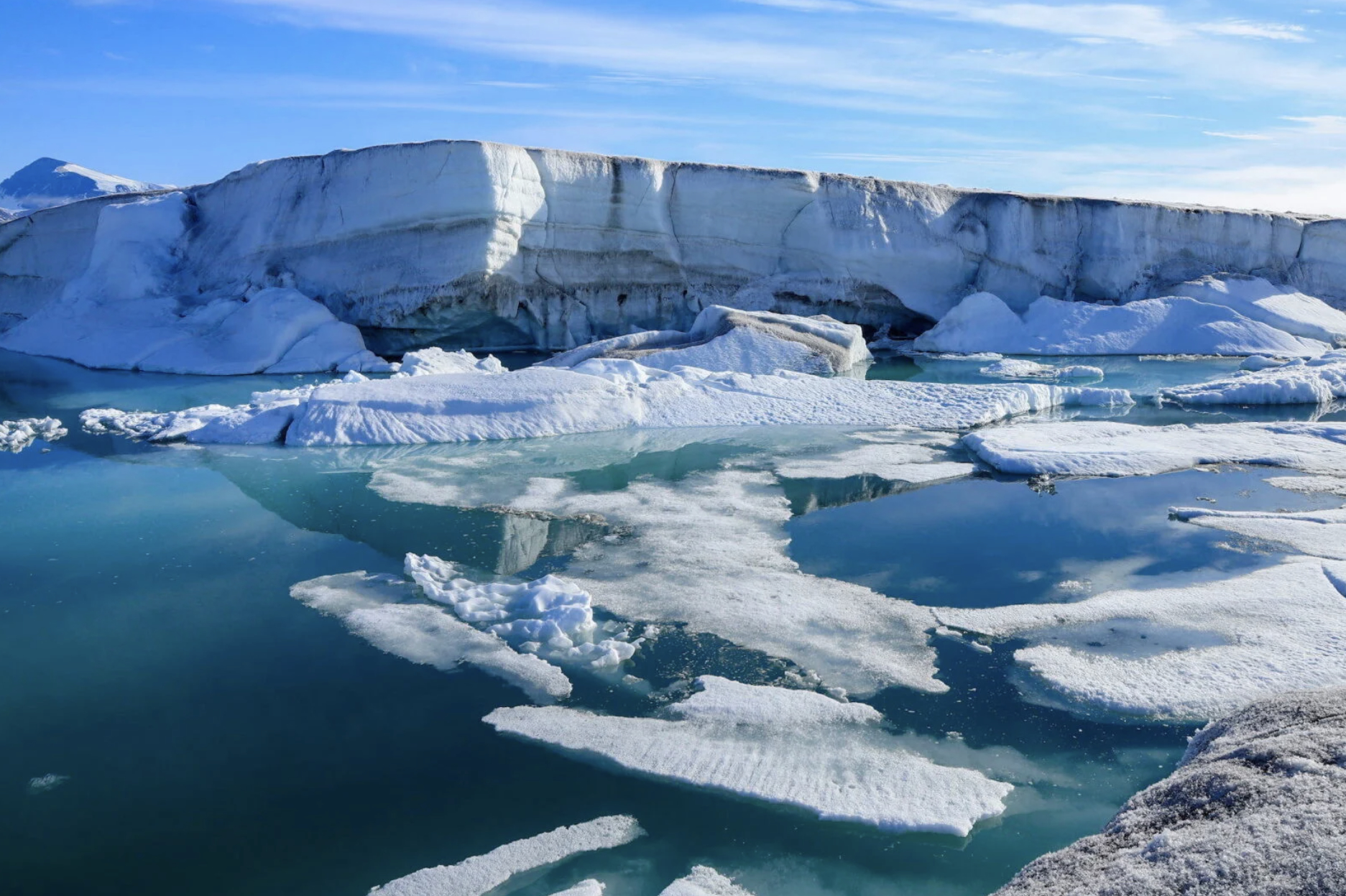
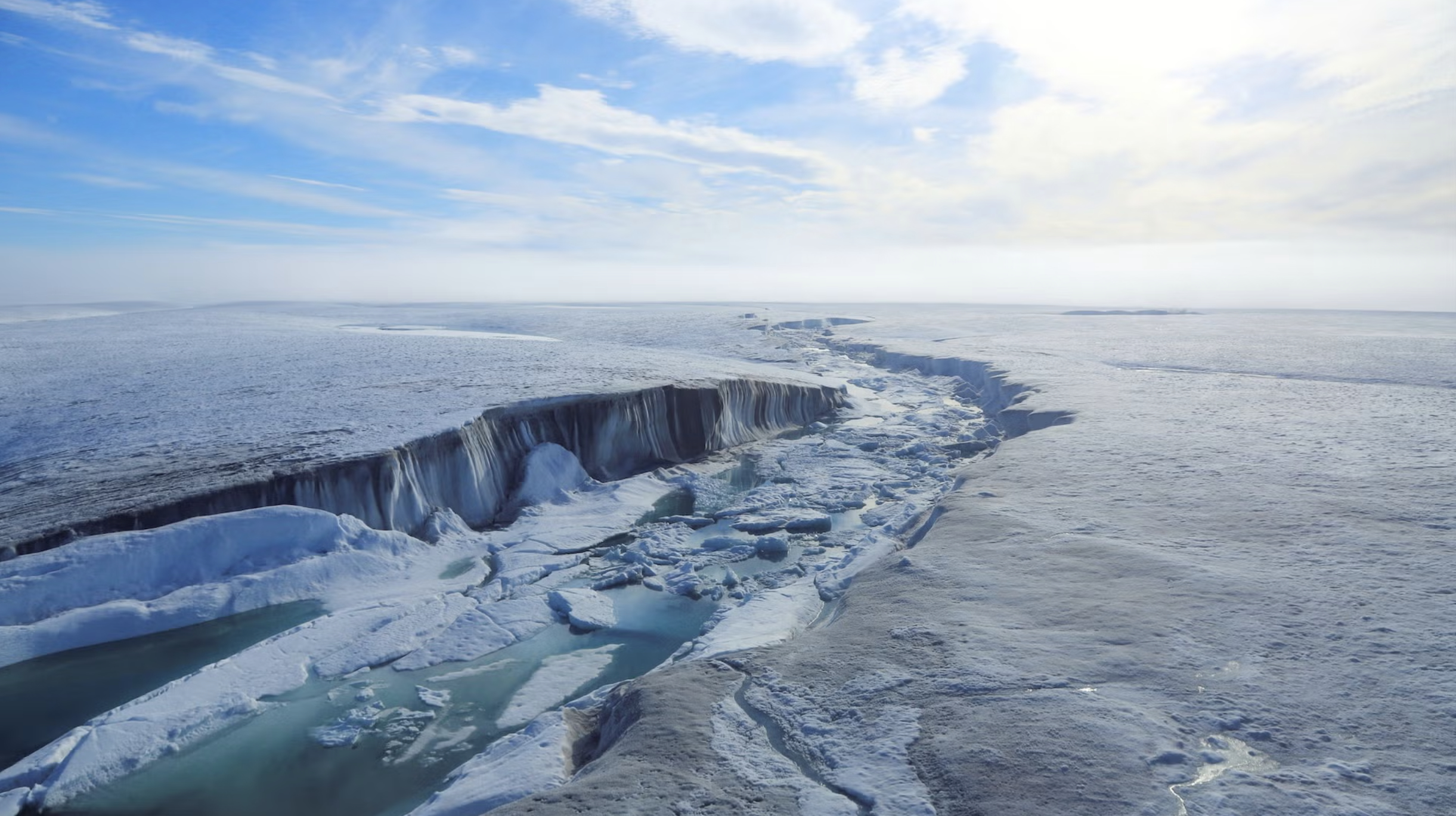
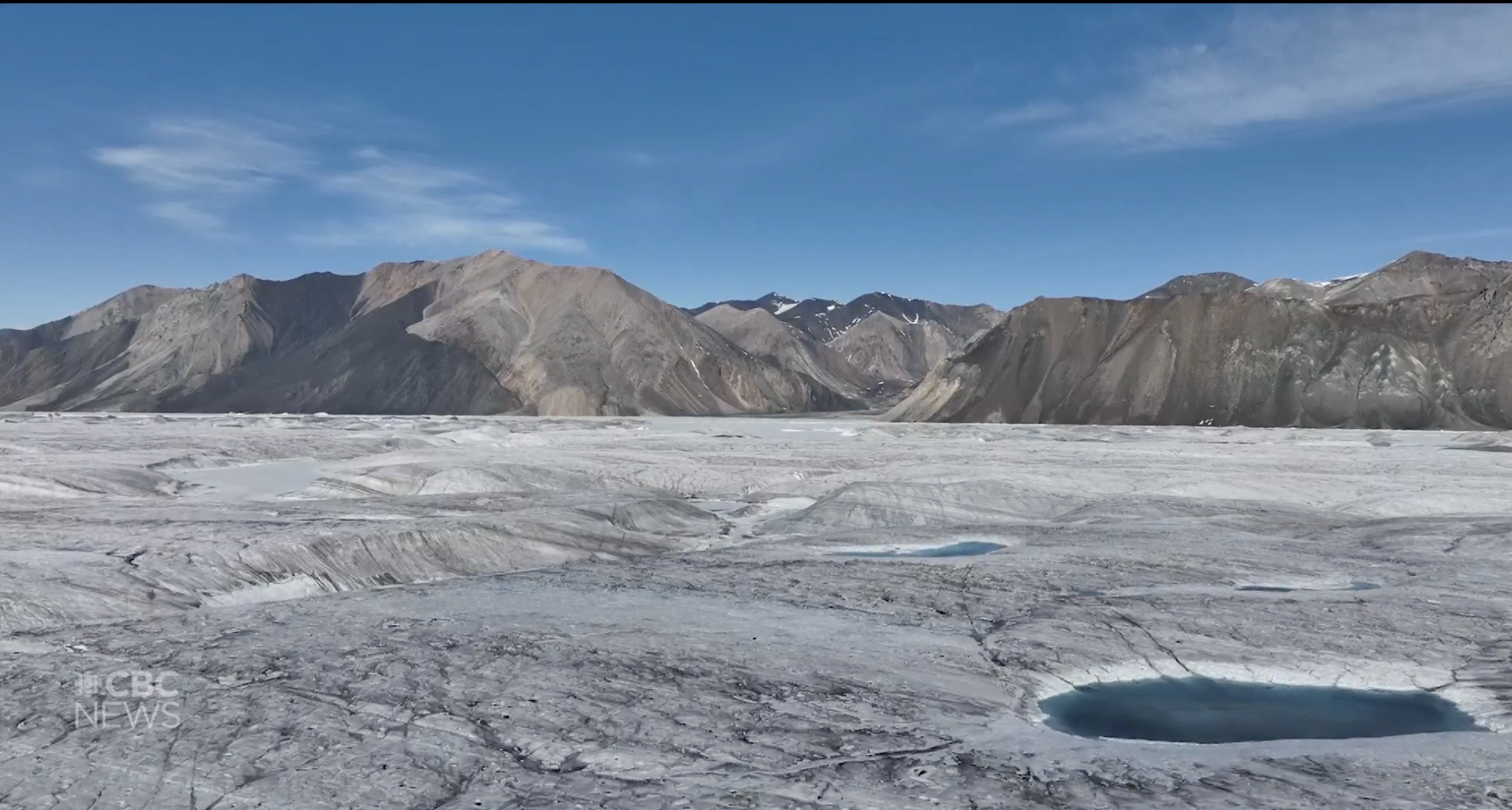
Ice break up, Ellesmere Island (photo by University of Alberta)
.
“Canada’s only remaining epishelf lake—made up of freshwater floating on saltwater—is gone, along with the unique ecosystem it supported, scientists confirmed in a new study,” writes Emily Chung of CBC News, September 16, 2026, based on a paper by Bonneau et al. in the journal Scientific Reports. The Milne Fjord epishelf lake just drained away in 2020 after the ice shelf dam started to break up.
.
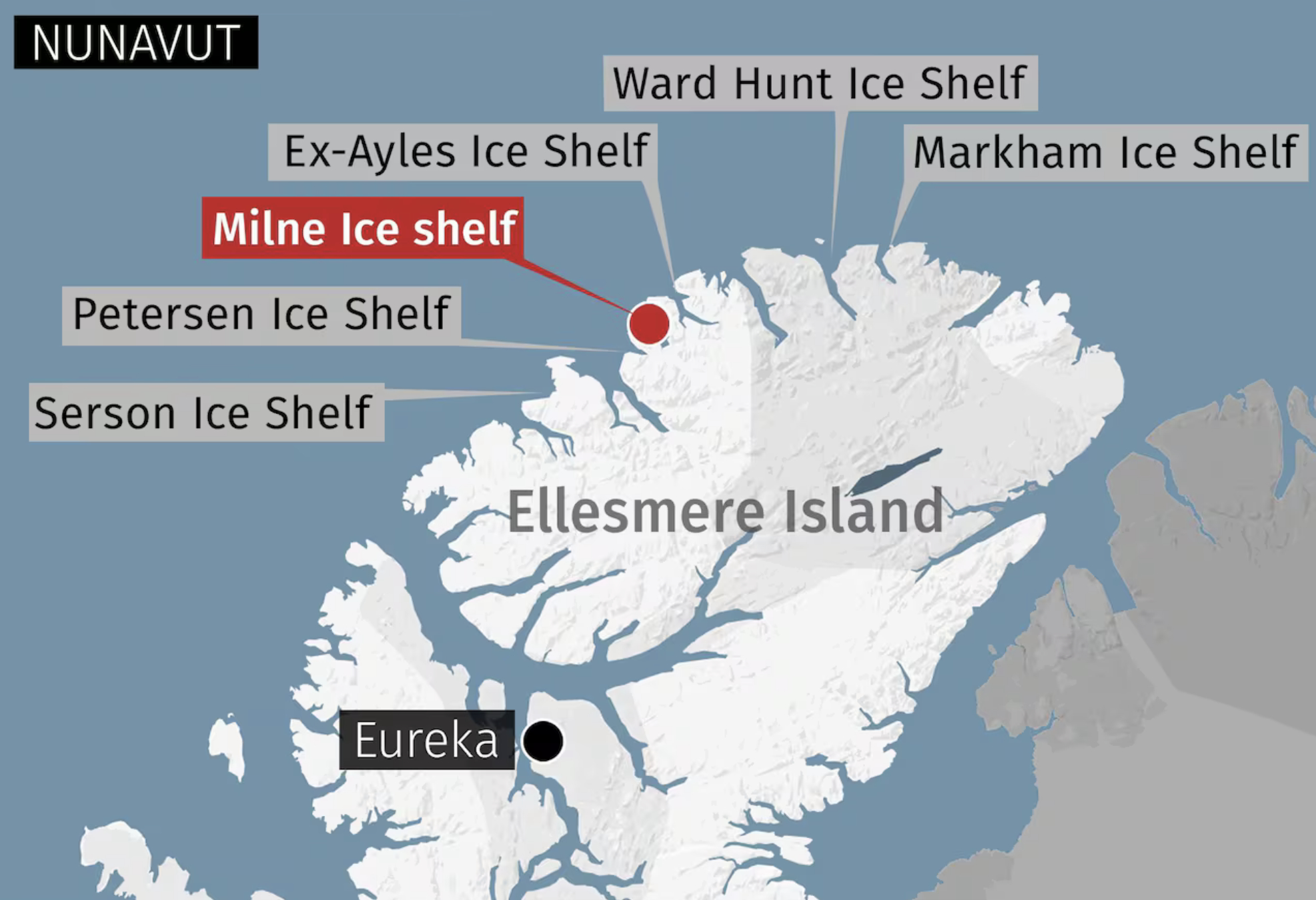
Location of Milne epishelf lake on Ellesmere Island, Nunavut (Government of Canada)
.
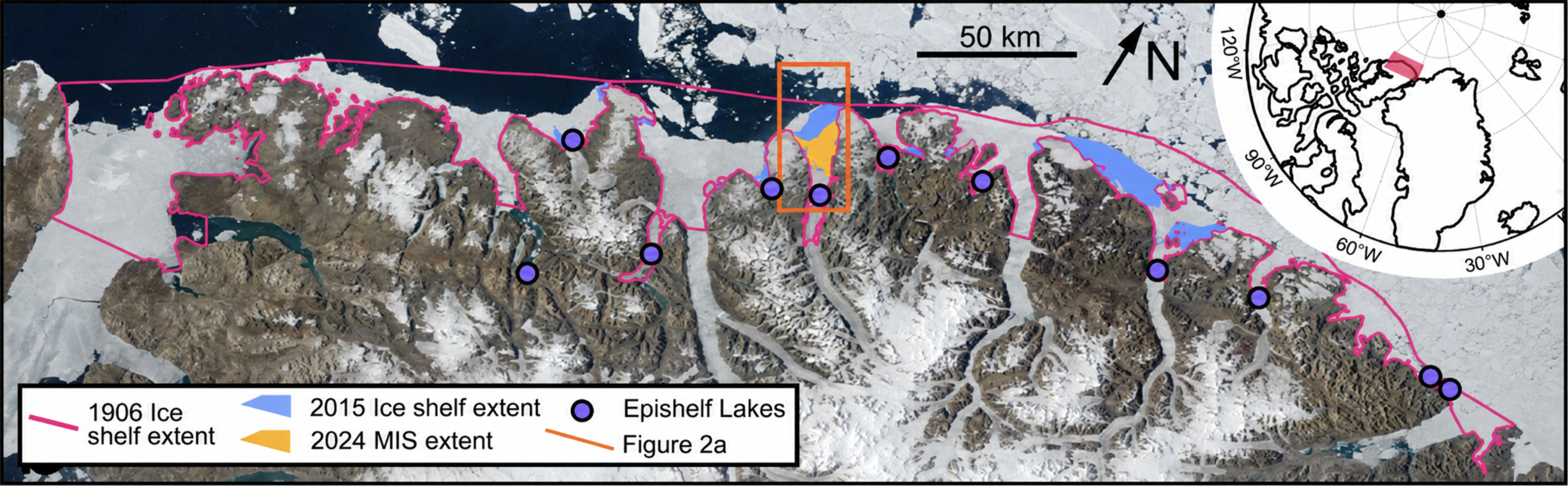
Milne Fiord on Ellesmere Island, Nunavut, lies within the Last Ice Area, the region along northern Canada and Greenland expected to retain perennial sea ice longer than other parts of the Arctic. It also sits within the Tuvaijuittuq Marine Protected Area, whose Inuktitut name means “the place where the ice never melts.”
.
History of ice shelf extent (Laval et. al.)
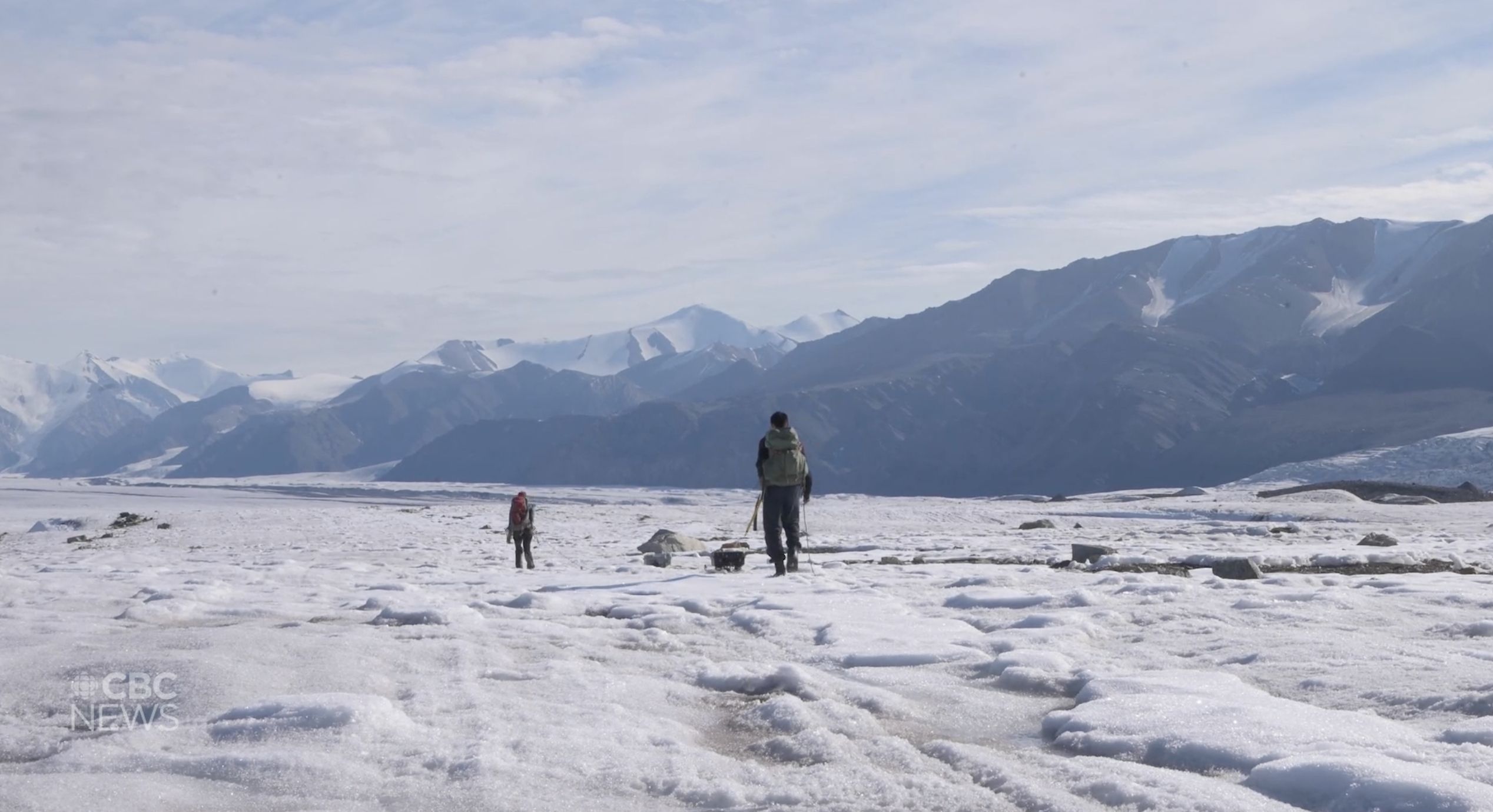
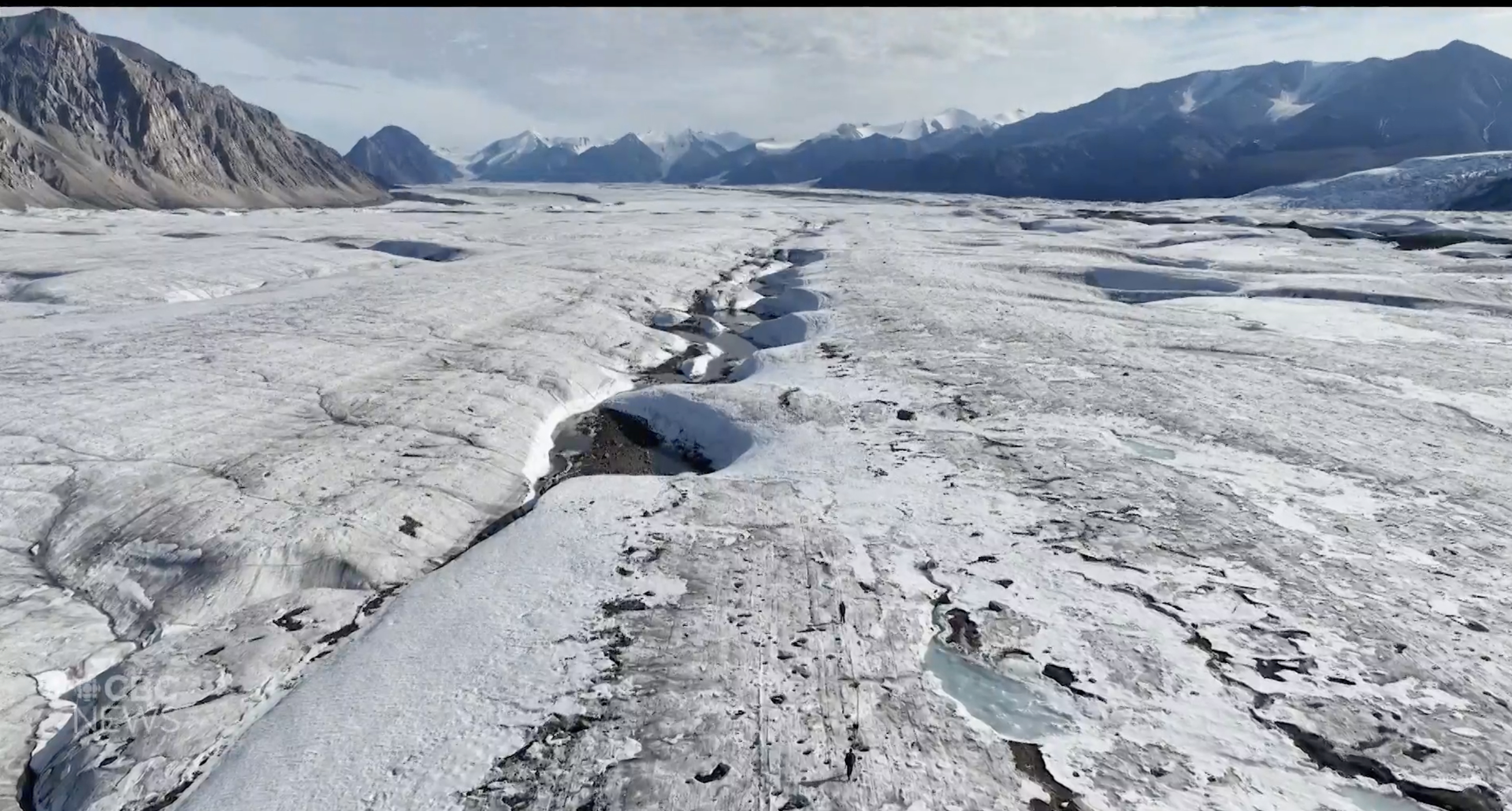
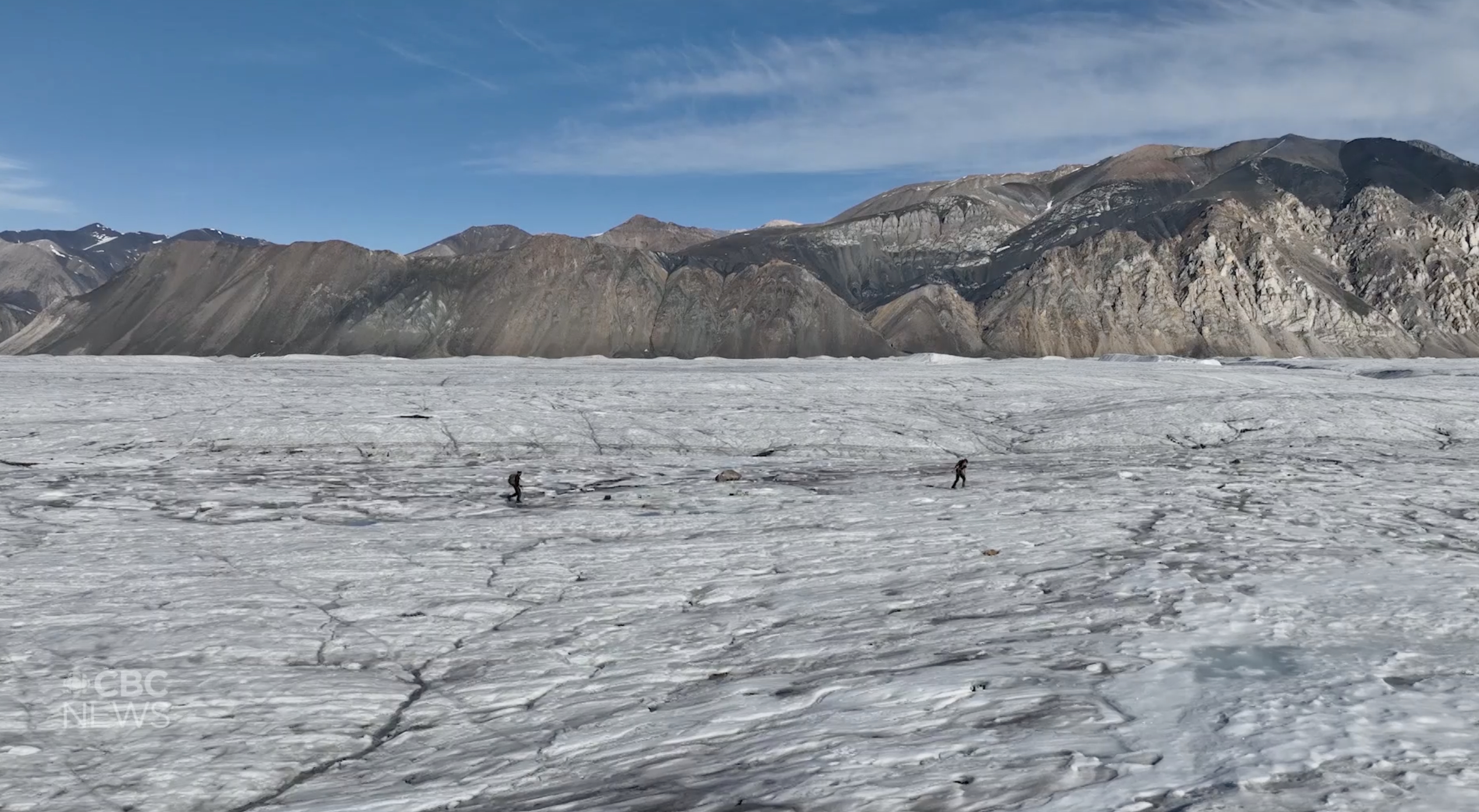
Scientists making their way on the Milne Ice Shelf (photo by CBC)
.
The region was considered a refuge for ecosystems that depend on persistent ice; the collapse of the Milne ice shelf demonstrates that even this high-Arctic environment is undergoing major change.
Jérémie Bonneau, assistant professor at Laval University in Quebec City, noted that the disappearance of this last epishelf lake in Canada “marks a regime shift and the end of a 4000-year era.” He noted that this event represents how climate warming is rapidly transforming the Arctic.
.
How The Milne Epishelf Lake Formed and Persisted—Then Perished
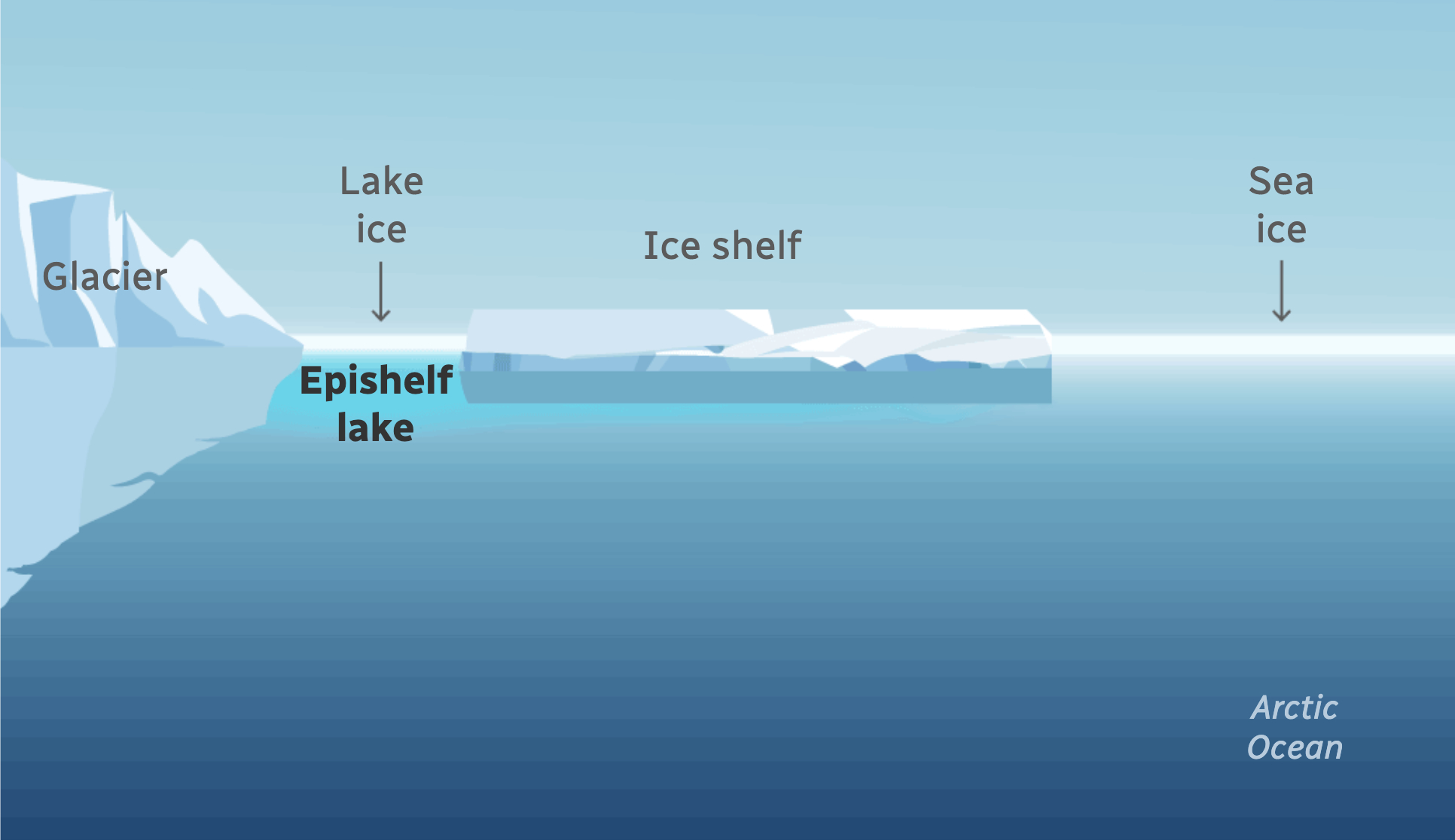
Formation of an epishelf lake (sketch from Bonneau et al. 2026, CBC)
.
Epishelf lakes typically form where a glacier meets the ocean and meltwater runoff that is dammed behind the ice shelf results in a perennial layer of freshwater (or lake) floating directly on seawater. Normally the glacier meltwater mixes quickly into the seawater by wind and waves. But, for thousands of years, the Milne Ice Shelf has dammed the mouth of the Milne Fjord. This huge, flat floating piece of ice was attached to the north shore of Ellesmere Island, an effective stopper for the freshwater flowing into the ocean. The freshwater accumulated on top of the saltwater of the Arctic Ocean, and because freshwater is less dense than saltwater, it floated on top. The surface freshwater, in turn, iced over, forming a 50-100 cm thick layer of ice that covered the lake year-round. The surface ice prevented the freshwater and saltwater layers from mixing through wind.
.
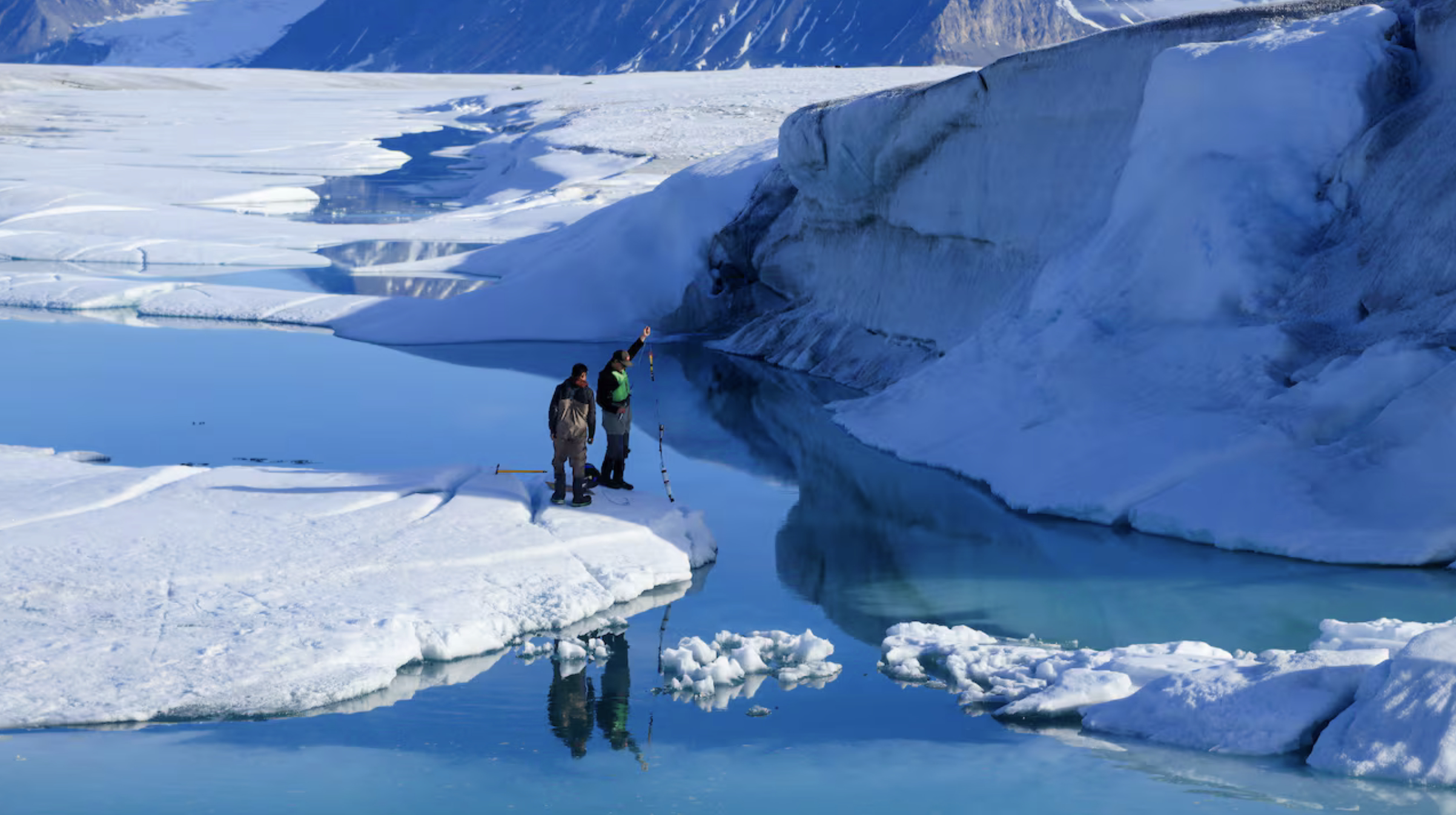
Scientists Joseph Shoapik and Jeremie Bonneau measure temperature and salinity of the water through rifts in the Milne Ice Shelf in 2022 (photo by Cameron Fitspatrick/Water and Ice Research Laboratory/Carleton University)
.
Fieldwork conducted in 1983 revealed that the freshwater layer was 18 metres deep—the height of a six-storey building or mature sugar maple tree. In addition to freshwater sitting on top of an ice shelf, the Milne Fjord epishelf lake was connected to the ocean by an under-ice channel in the ice shelf.
Epishelf lakes were once widespread in the Arctic for thousands of years and evidence suggests that this lake may have existed for over 4,000 years.
.
Former channel beneath the Milne Ice Shelf exposed after the shelf break up (photo by Cameron Fitzpatrick)
.
In 2020, nearly half of the Milne Ice Shelf broke off the coast of Ellesmere Island; the ice shelf dam longer held the lake within its protective walls and within two months of the shelf break up, the freshwater drained away. By 2022, the halocline had risen to just 2.4 meters below the surface; the distinct freshwater layer had been replaced by brackish water. The freshwater organisms living in the epishelf lake—unique biota such as phytoplankton, bacteria and others—perished when exposed to the seawater.
The remaining sections of the Milne Ice Shelf are thinner and more fractured than the portion that broke away in 2020, leaving them vulnerable to further collapse.
.
Milne Ice Shelf (image by CBC)
.
Epishelf lakes were once widespread in the Arctic for thousands of years and evidence suggests that this lake may have existed for over 4,000 years.
.
The Unique Ecosystem & Biology of The Milne Epishelf Lake
Scientists treking across the Milne Ice Shelf (image by CBC)
Scientists identified two unique and distinct ecosystems in the two vertical layers of the lake; 18 m of less dense freshwater above and centimeter-thick saltwater-edge below and associated under-ice channel. The two layers remained distinct, separated by a sharp salinity boundary called a halocline.
.
Freshwater Top Layer
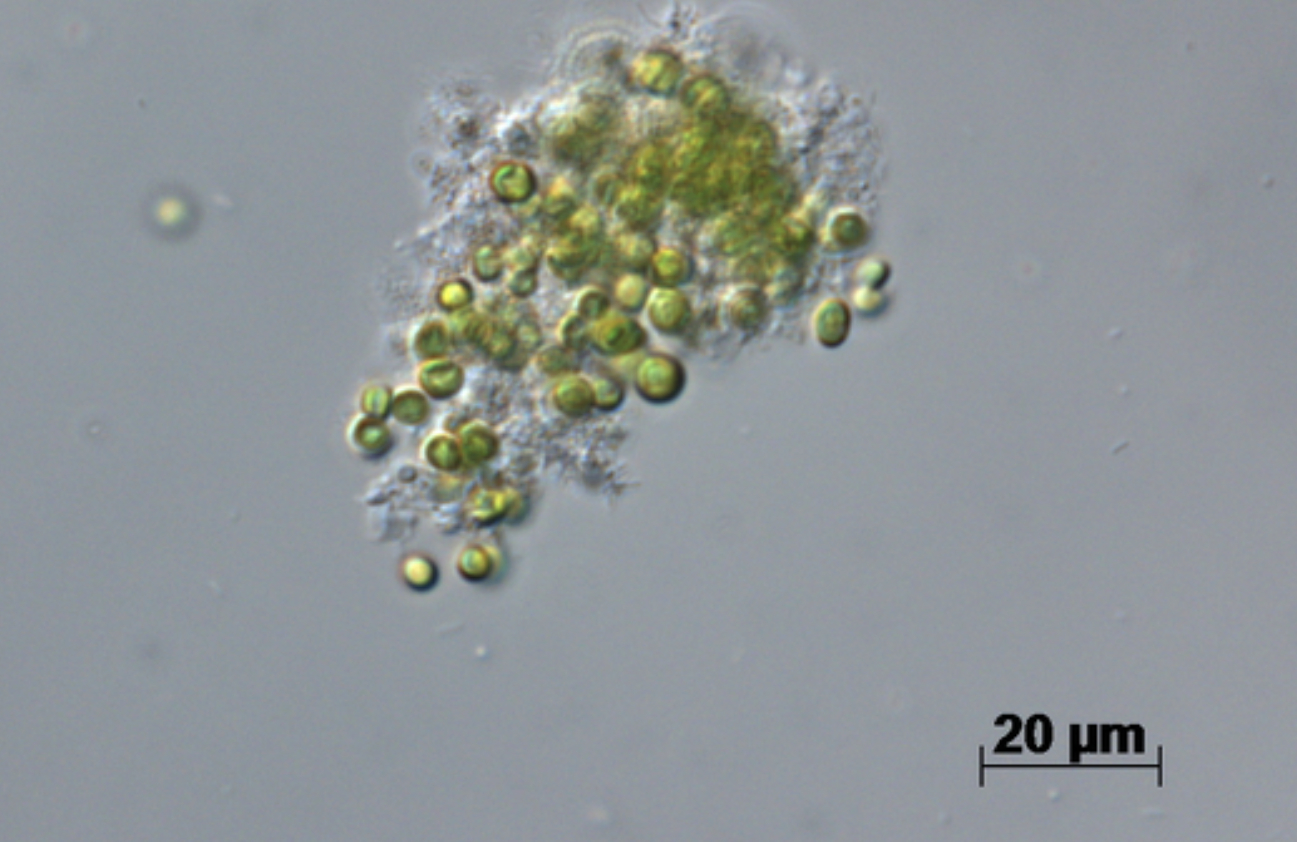
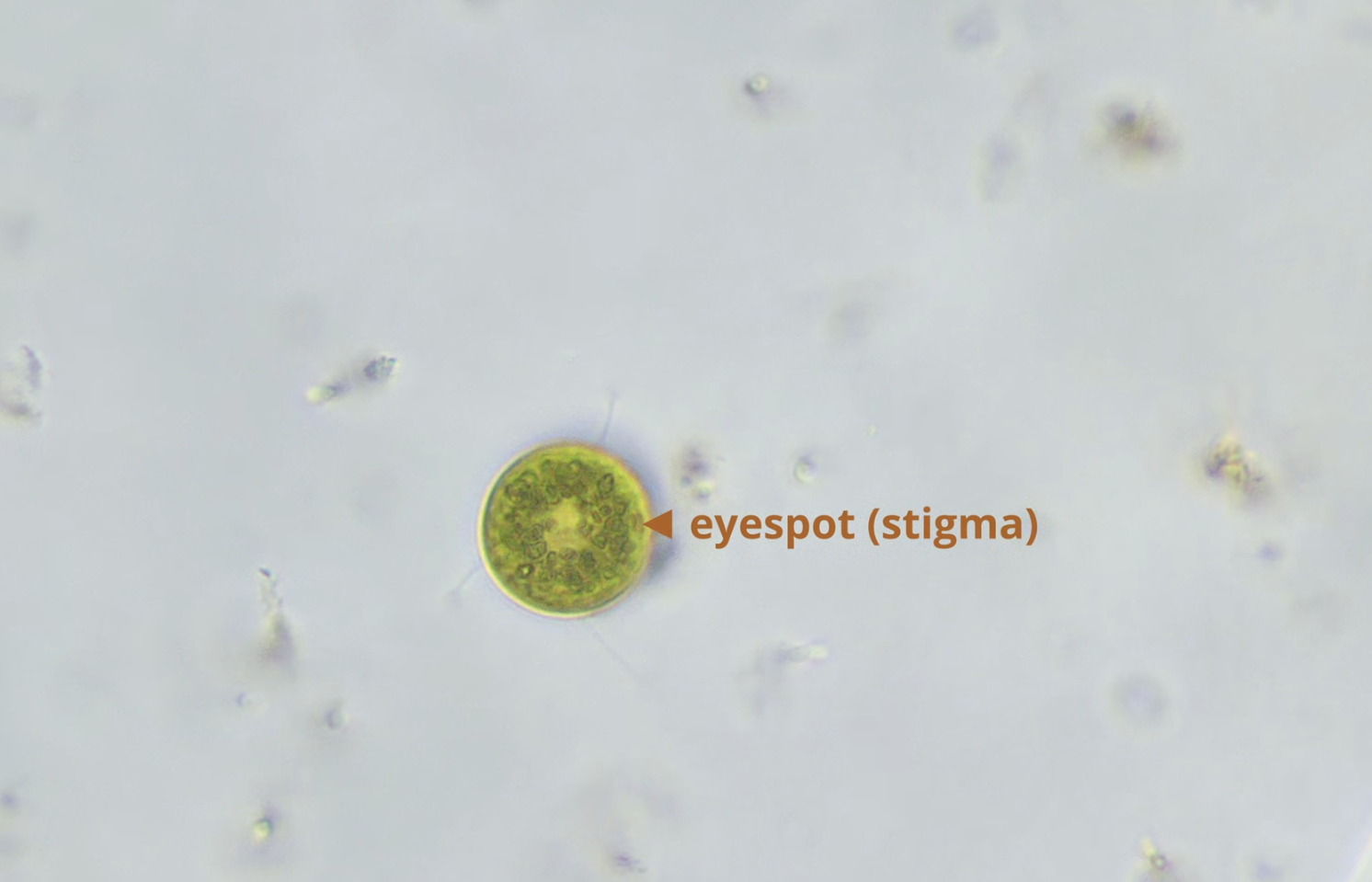
The top freshwater layer teamed with cold-loving freshwater bacteria. These included Polynucleobacter, Variovorax, Flavobecterium and Polaromonas). Plankton-net sampling of the freshwater column revealed a mix of marine, freshwater, and brackish zooplankton (animal floating organisms) and phytoplankton (algal floating organisms). The phytoplankton was dominated by green algae (Chlorophyta), particularly the protist Radiococcus (which forms colonies of spherical cells held together in clear, jelly-like mucilage) and Carteria (single-cells with flagella, and eye-spot much like Chlamydomonas).
.
Top: green alga Radiococcus sp.; Bottom: green alga Carteria (photos by Culture Collections)
.
Microscopic single-celled eukaryotes, such as ciliates, also lived in the freshwater layer.
Scientists documented a rich and distinct viral community, with those in the upper freshwater layer differing markedly from those in the salty waters below; these viruses contained special genes to help them survive nutrient limitations.
.
Halocline Layer
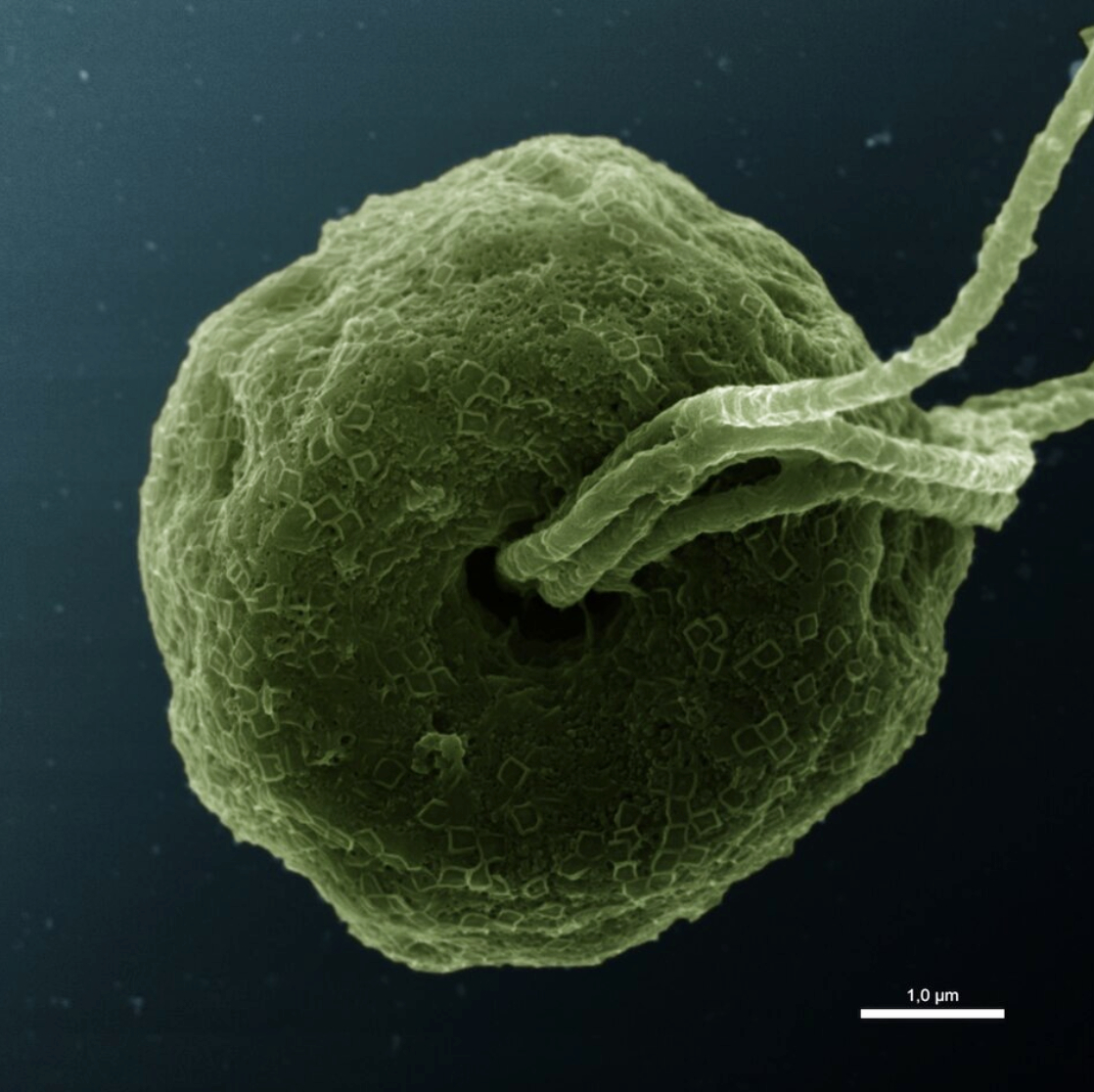
Pyramimonas sp. (image by Wikipedia)
.
Prasinophytes—ancient, highly diverse primitive flagellated single-celled algae—such as Pyramimonas sp. preferred the brackish 30 cm thick halocline.
.
Saltwater Bottom Layer
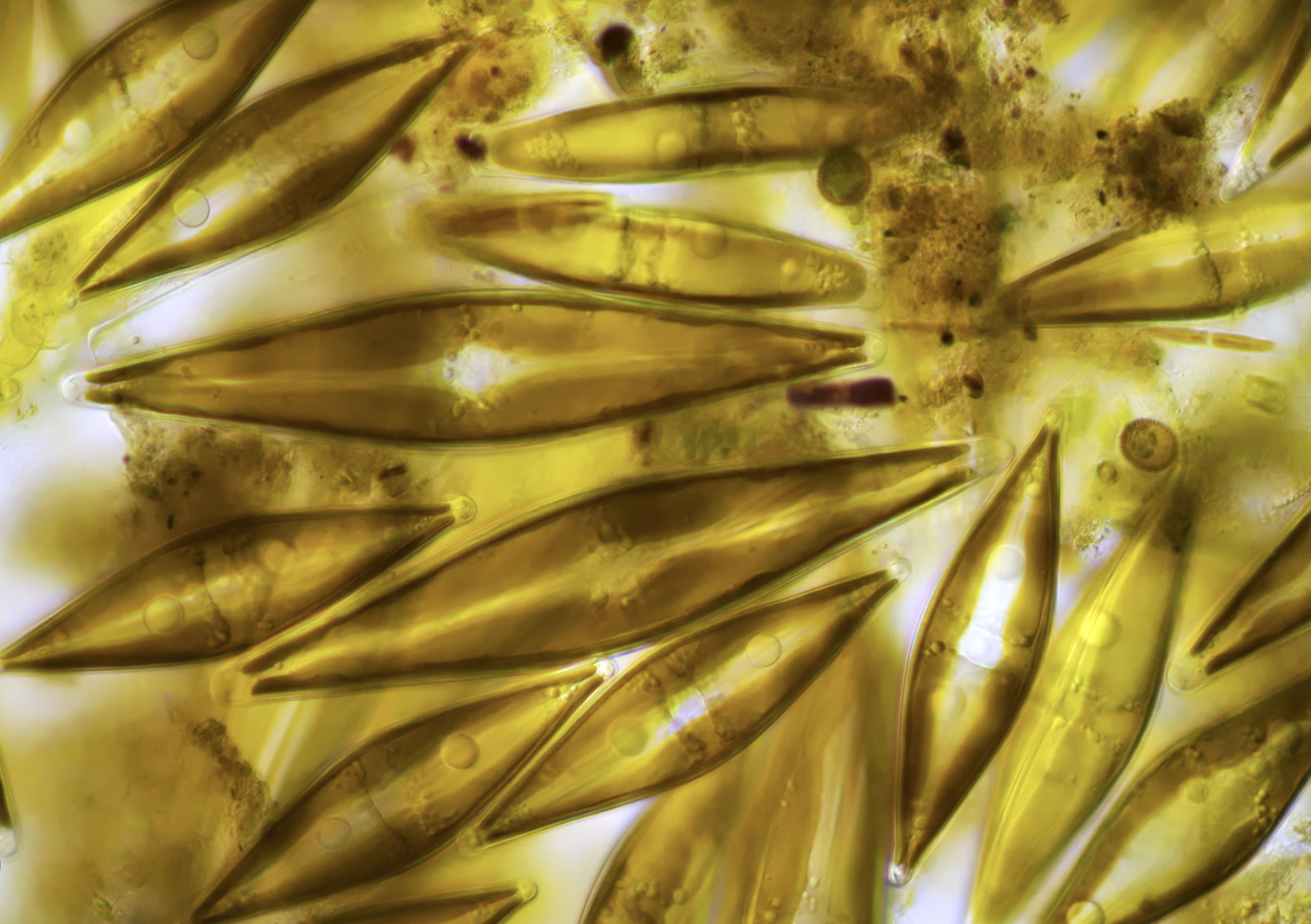
Diatoms (image by Wikipedia)
.
Below the halocline in the dark salty bottom waters, scientists found mostly marine Archaea (mainly Crenarchaeota) and bacteria known to occur in both Pacific and Arctic Oceans (e.g., Roseobacter, Oleispira, Colwellia). This marine layer supported mostly fucoxanthin-containing eukaryotic organisms called heteroconts. Fucoxanthin is a carotenoid pigment that gives brown algae and diatoms their brownish-olive or golden-brown colour.
.
Surrounding Ice Channels
The ice channels, through which the freshwater lake drains into the ocean, harboured marine animals thriving on the flushed nutrients. These included sea anemones, scallops, sea stars and brittle stars, and even Arctic cod.
.
Epishelf Lakes and Meromictic Lakes
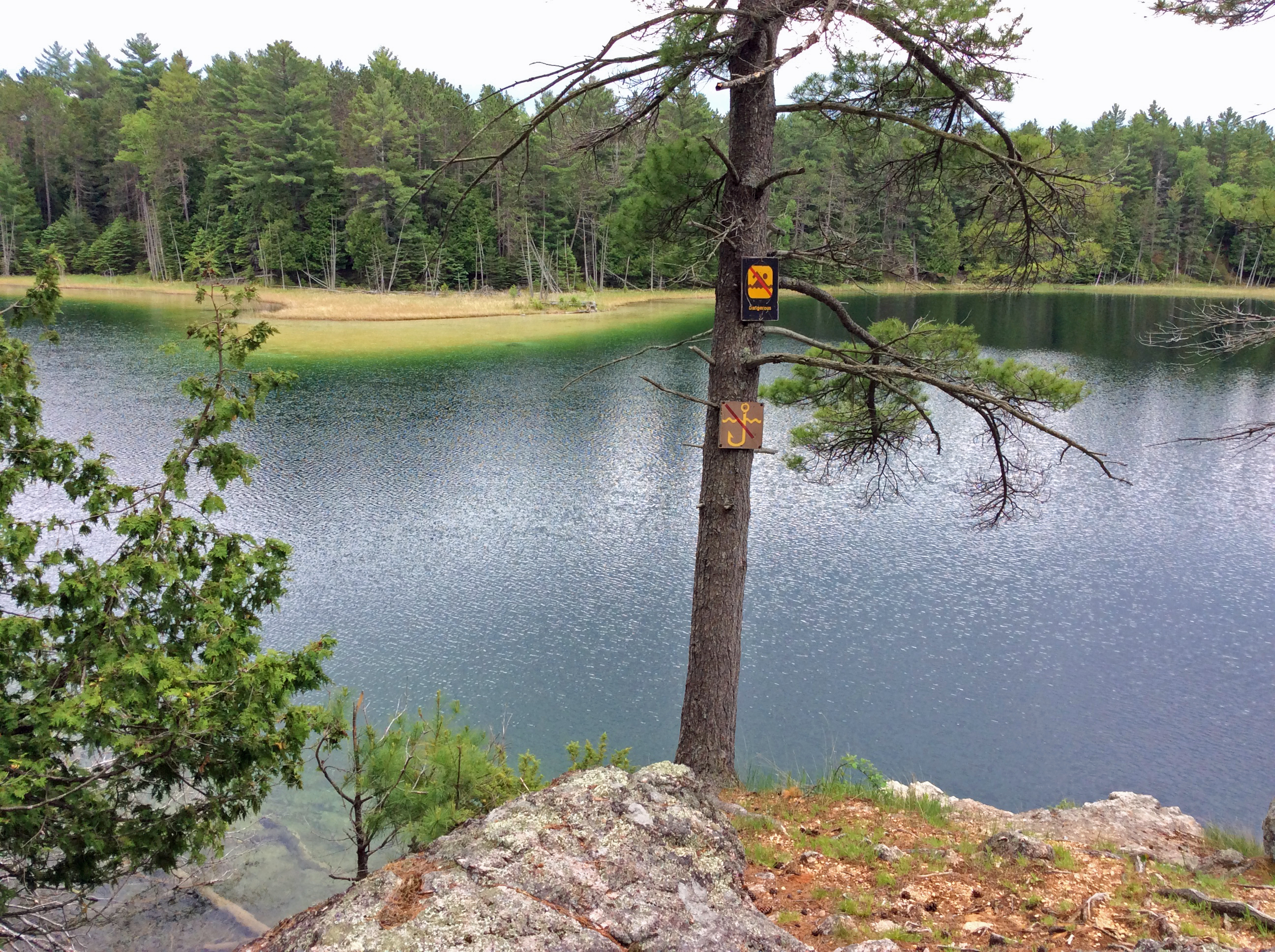
McGinnis Lake, Ontario, a meromictic lake (photo by Nina Munteanu)
.
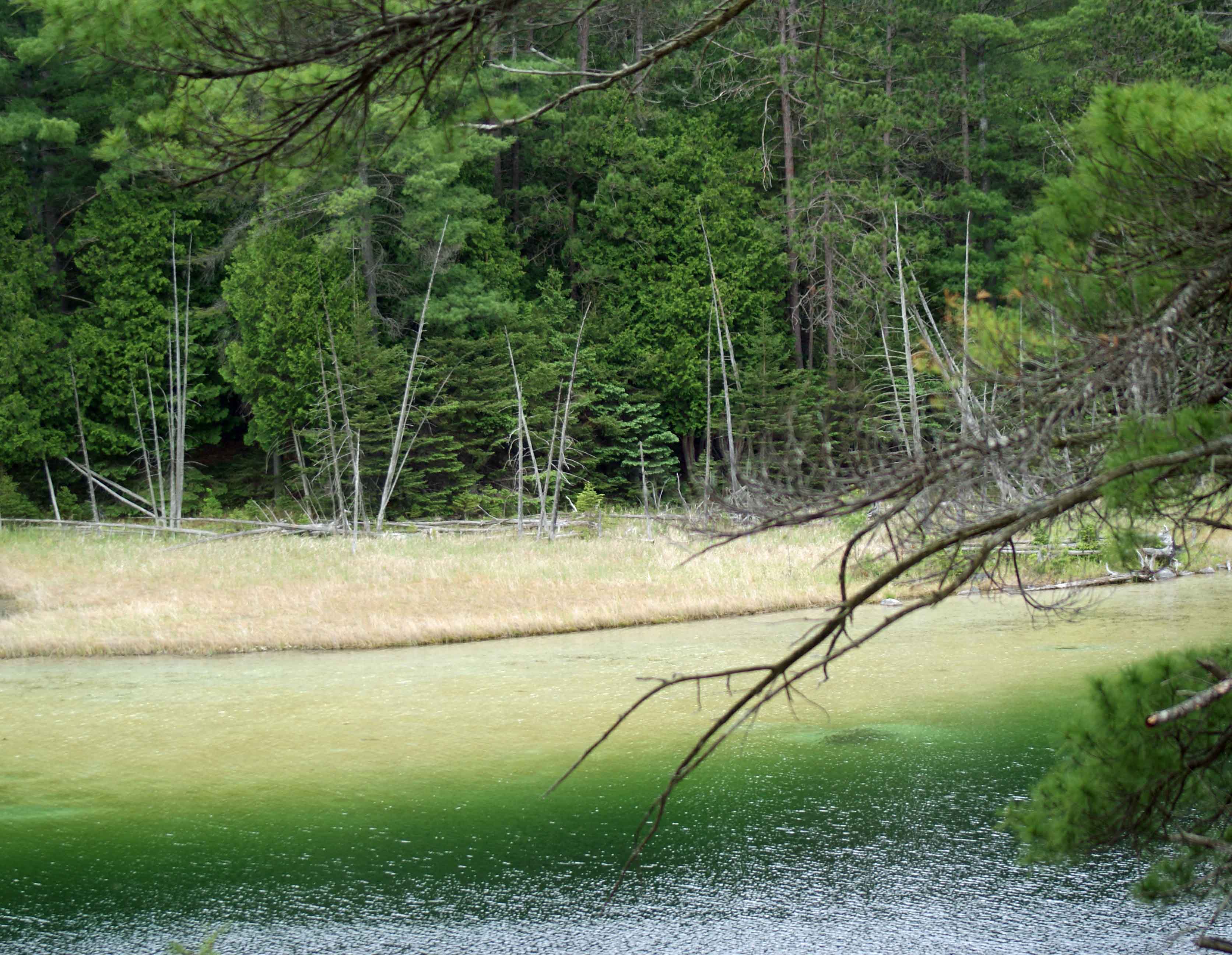
I am reminded of the meromictic lake I visited in Petroglyph Park, Ontario. Like the Milne epishelf lake, McGinnis Lake also has freshwater overlying an undisturbed layer of anoxic salty water rich in salty dissolved minerals with a chemical barrier preventing mixing.
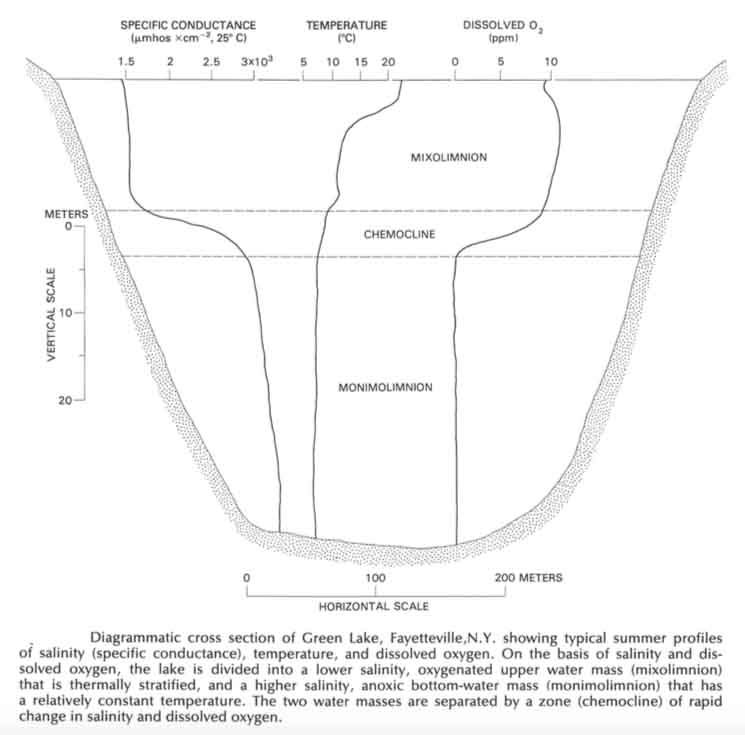
Cross section of Green Lake, a meromictic lake, showing the chemocline and salinity and dissolved oxygen layers
.
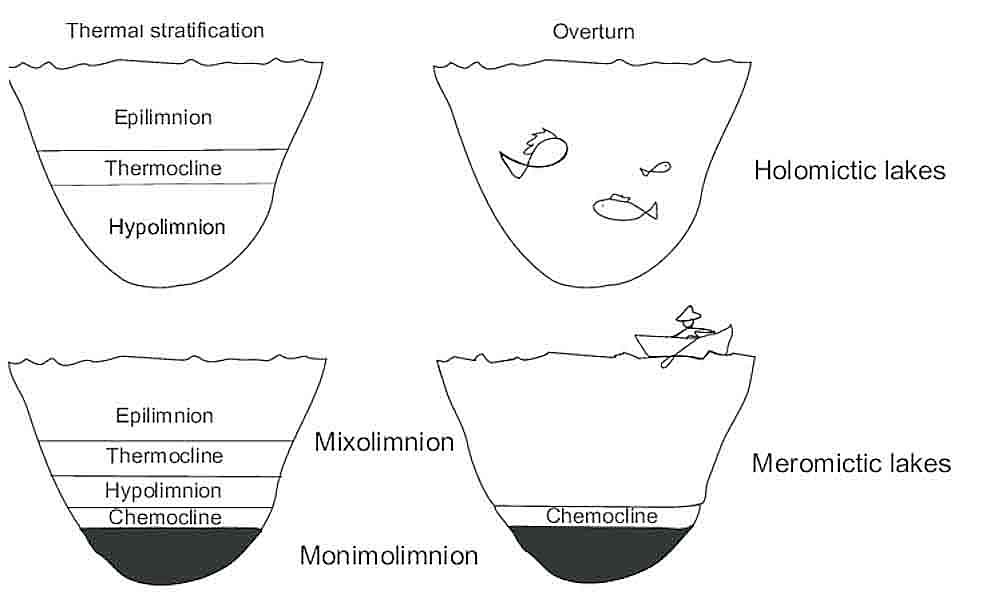
The 4.4 ha, 12 m deep lake’s water was a deep blue-green jade colour rimmed by shallows of lighter green that graded to a cream colour. Rocks, logs and large shore debris hung precariously over the steep sides of the lake below us, covered in creamy marl. Meromictic lakes experience incomplete vertical mixing of only the upper water mass during the circulation period (called meromixis). The upper water mass (mixolimnion) mixes twice yearly like a dimictic lake; however, below this upper mixing layer lies a salinity barrier known as a chemocline (which, like the salt-density barrier of a halocline, marks where dissolved oxygen decreases markedly with depth and dissolved solids [minerals] and gasses markedly increase); beneath it lies the anoxic (lacking oxygen) water mass known as the monimolimnion, which experiences a fairly constant temperature and higher salinity. The higher dissolved salt at the bottom with greater associated water density prevents wind-driven mixing of this bottom quiescent layer that accumulates hydrogen sulfide and methane.
McGinnis Lake, Ontario (photo by M. Cox)
.
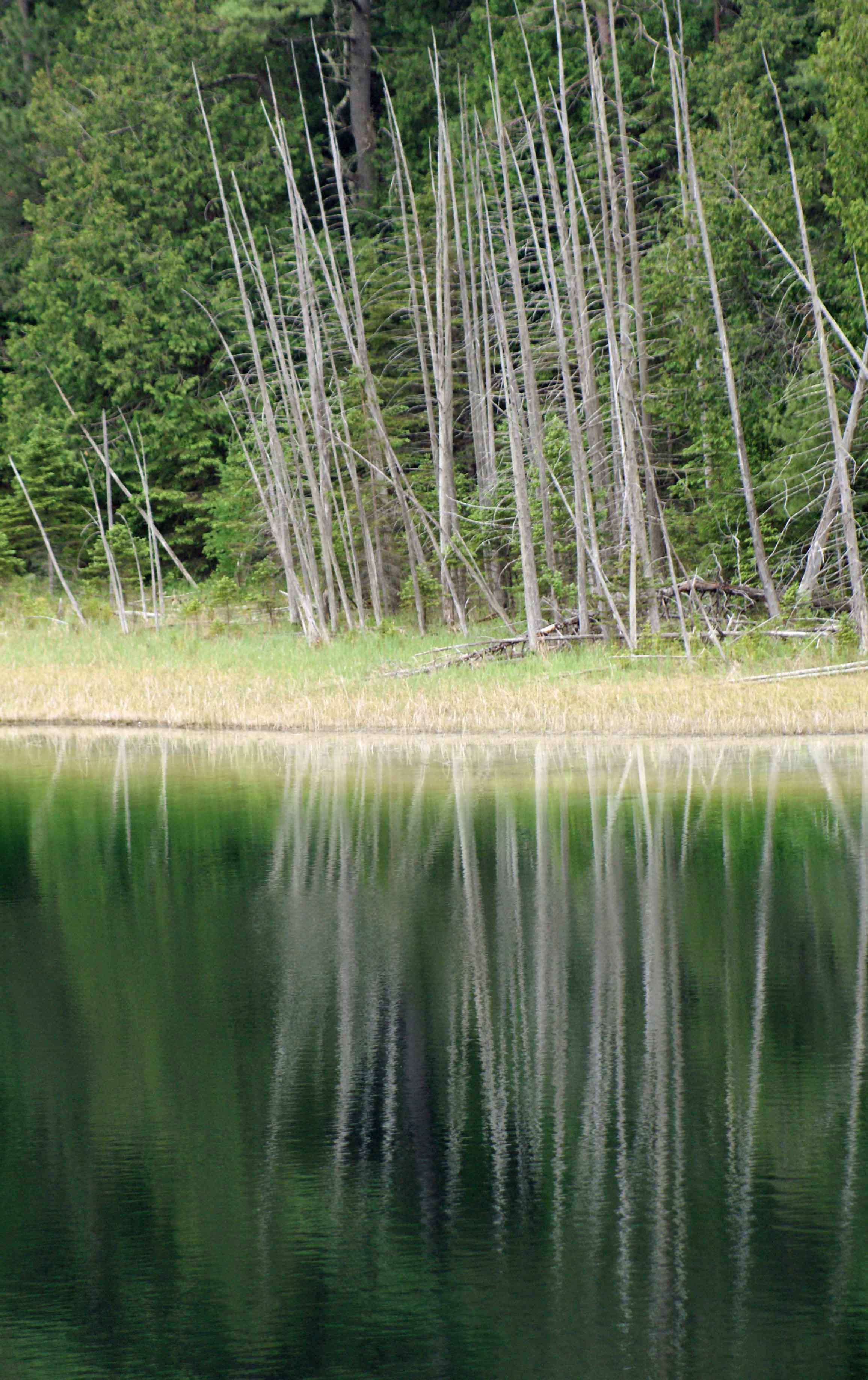
A meromictic lake may develop if it contains a deep hole in a shallow basin or is sheltered from the prevailing wind by tall vegetation or other barriers—like McGinnis Lake, which rests in a steep-sided limestone basin, sheltered from the winds by a dense pine forest. McGinnis Lake may have formed through karst erosion; it may also simply occupy a deep glacial trough. Because of the barrier and lack of mixing, any exchange of dissolved materials from the lower quiescent layer into the mixing layer occurs very slowly through eddy diffusion across the chemocline. This makes Lake McGinnis’s monimolimnion a nutrient sink and why it is, like most meromictic lakes, unproductive (oligotrophic).
.
Diagram of lake cross-sections showing different mixing regiimes
.
While both types of lakes have vertical water layers that don’t mix with a connection to ocean saltwater, these two types of lakes form very differently:
Epishelf lake: Found almost exclusively in polar regions (Arctic or Antarctica) where massive ice shelves block fjords. Epishelf lakes have an open, direct connection to the ocean, effectively floating on the dense seawater layer behind an ice shelf dam. The upper freshwater layer does not mix with the lower marine layer because of the density difference.
Meromictic lake: An inland lake with distinct layers that never mix located in deep, steep-sided basins or craters where wind cannot physically stir the deeper waters. These permanently stratified lakes are landlocked basins with a salty bottom layer that is often ancient seawater trapped by old land uplift. The top layer (mixolimnion) mixes seasonally; the deep bottom layer (monimolimnion) remains permanently isolated with a dense brine, rich in dissolved minerals.
.
Shoreline of McGinnis Lake, ON (photo by Nina Munteanu)
Benneau et al tell us that: “The loss of the Milne Fjord epishelf lake marks the extinction of a rare feature of a colder world and highlights the vulnerability of even the “Last Ice Area’ of Arctic sea ice to climate warming.” While epishelf lakes no longer exist in Canada, a few remain in Greenland and Antarctica—two last bastions of ice shelf phenomena. Under the climate change procession, their disappearance too is imminent.
Milne ice Shelf, Ellesmere Island, Nunavut (image CBC)
.
References:
Benneau, Jeremie, et. al. 2026. “Regime shift in high arctic fjord signals the vulnerability of the Arctic’s Las Ice Area” Scientific Reports, 27 August 2026.
Chung, Emily. 2026. “This was the last lake of its kind in Canada. Now it’s gone.” CBC News, September 16, 2026.
Labbe, Myriam et al. 2022. “Climate-Endangered Arctic Epishelf Lake Harbors Viral Assemblages with Distinct Genetic Repertoires.” Appl Environ Microbiol. 88(17).
Lovejoy, Veillette J., et al. 2011. “Milne Fjord epishelf lake: A coastal Arctic ecosystem vulnerable to climate change.” Ecoscience 18(3): 304.
Munteanu, Nina. 2020. “Lake Study: A Meromictic Treasure in Petroglyph Park” www.NinaMunteanu.me, web article, August 8, 2020.
Nina Munteanu is a Canadian ecologist / limnologist and novelist. She is co-editor of Europa SF and currently teaches writing courses at George Brown College and the University of Toronto. For the latest on her books, visit www.ninamunteanu.ca. Nina’s bilingual “La natura dell’acqua / The Way of Water” was published by Mincione Edizioni in Rome. Her non-fiction book “Water Is…” by Pixl Press (Vancouver) was selected by Margaret Atwood in the New York Times ‘Year in Reading’ and was chosen as the 2017 Summer Read by Water Canada. Her novel “A Diary in the Age of Water” was released by Inanna Publications (Toronto) in June 2020.You can read her just released eco-fiction thriller Gaia’s Revolution by Dragon Moon Press.