The Dempster Highway: Gateway to The Permafrost Thaw … ’Thalweg’
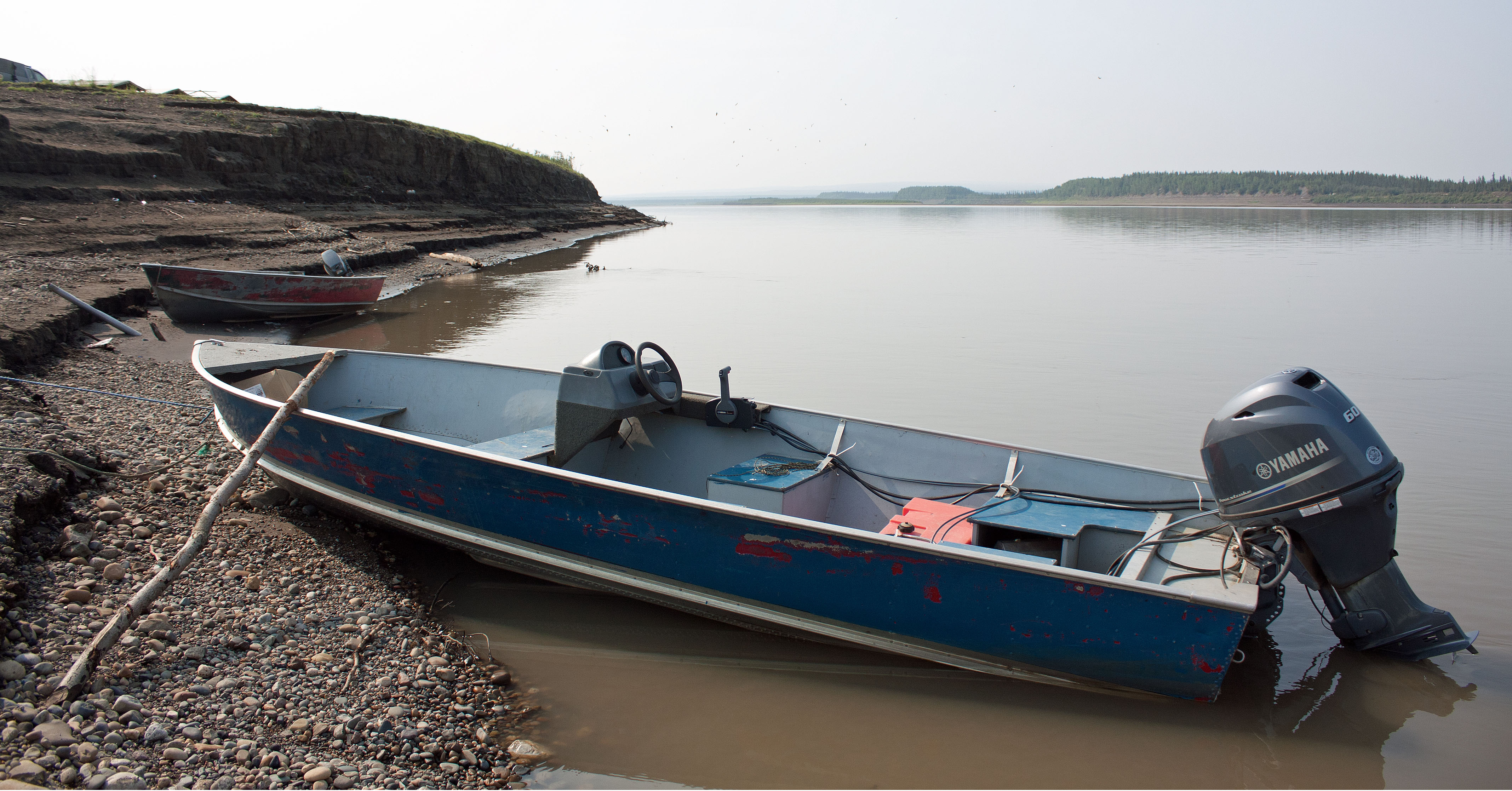
Boats secured on the shores of the Peel River at Fort McPherson, NWT (photo by Nina Munteanu)
.
In my upcoming eco-fiction novel Thalweg, Gwich’in limnologist Bobby-Jo makes her way to Fort McPherson, NWT, after the sudden flood of the Peel River, caused by permafrost thaw, has all but destroyed her Arctic hometown. She starts in Dawson City and takes the challenging gravel Dempster Highway north.
The road eventually turned east, dipping steeply down with a revealing view of the lowlands of the unruly Peel River and Mackenzie Delta and what was left of my old home. I remembered something my jijuu said to me about the Peel River—as if she knew what was going to happen: “Water wants to flow, a’aanlak. It doesn’t like to be restrained. It’s always moving, even when it isn’t. Water is never the same. Its life depends on its rhythm over surfaces, curling playfully over the rocks and boulders and down falls, finding its way in a sinewy dance …” She was talking about the thalweg. “Water starts in the ddhah tshik then flows and shifts to a wild rhythm only it knows …”
Except when the uunjit trapped it in dams and channels and forced it to flow backwards, I thought, envisioning the giant NAWAPA inland sea.
.
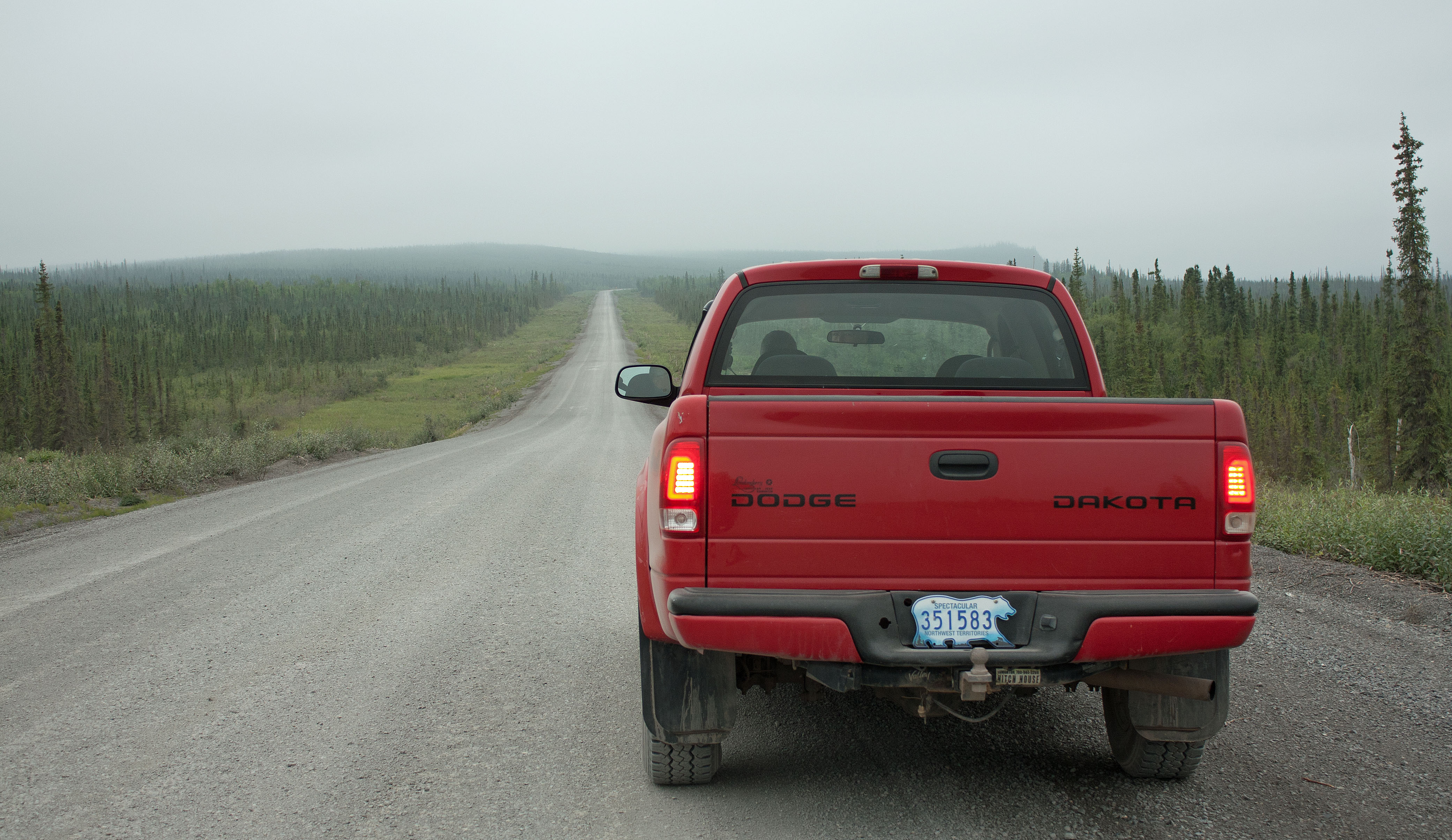
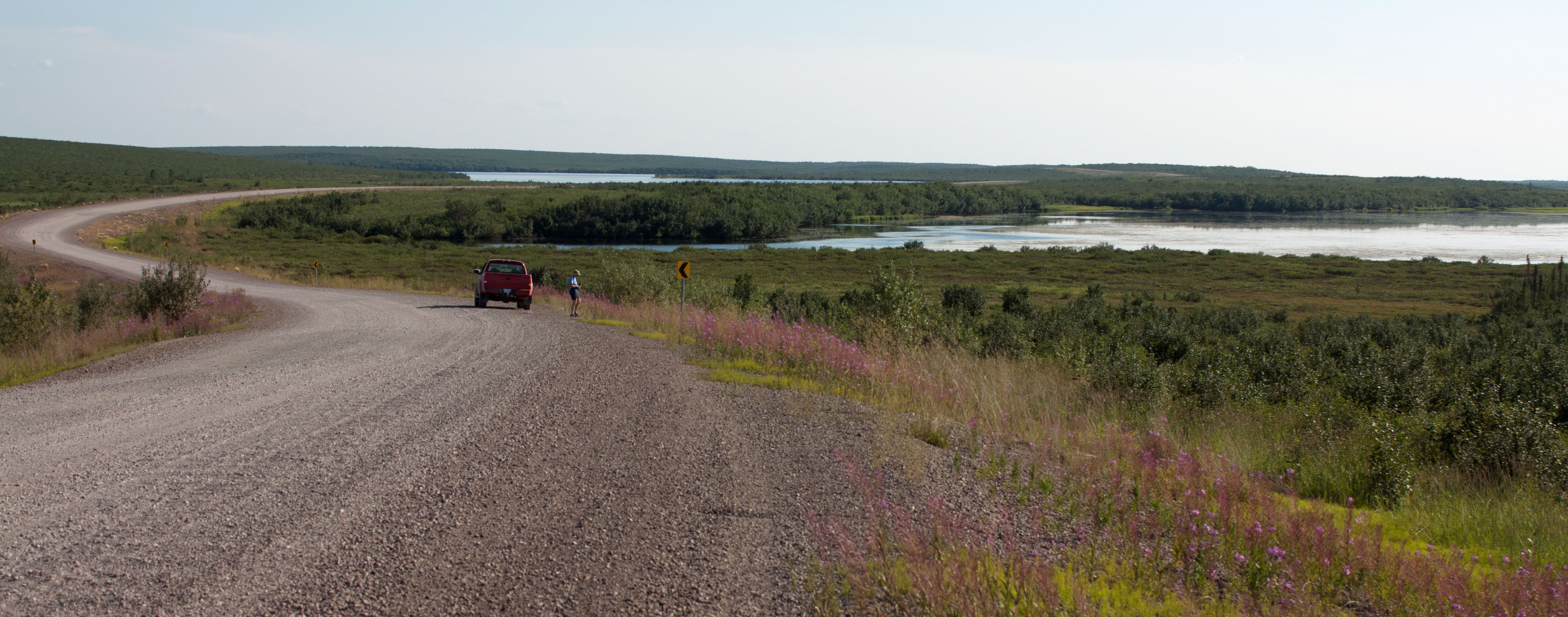
Author’s rental truck on the Dempster Highway north of Fort McPherson, NWT (photo by Nina Munteanu)
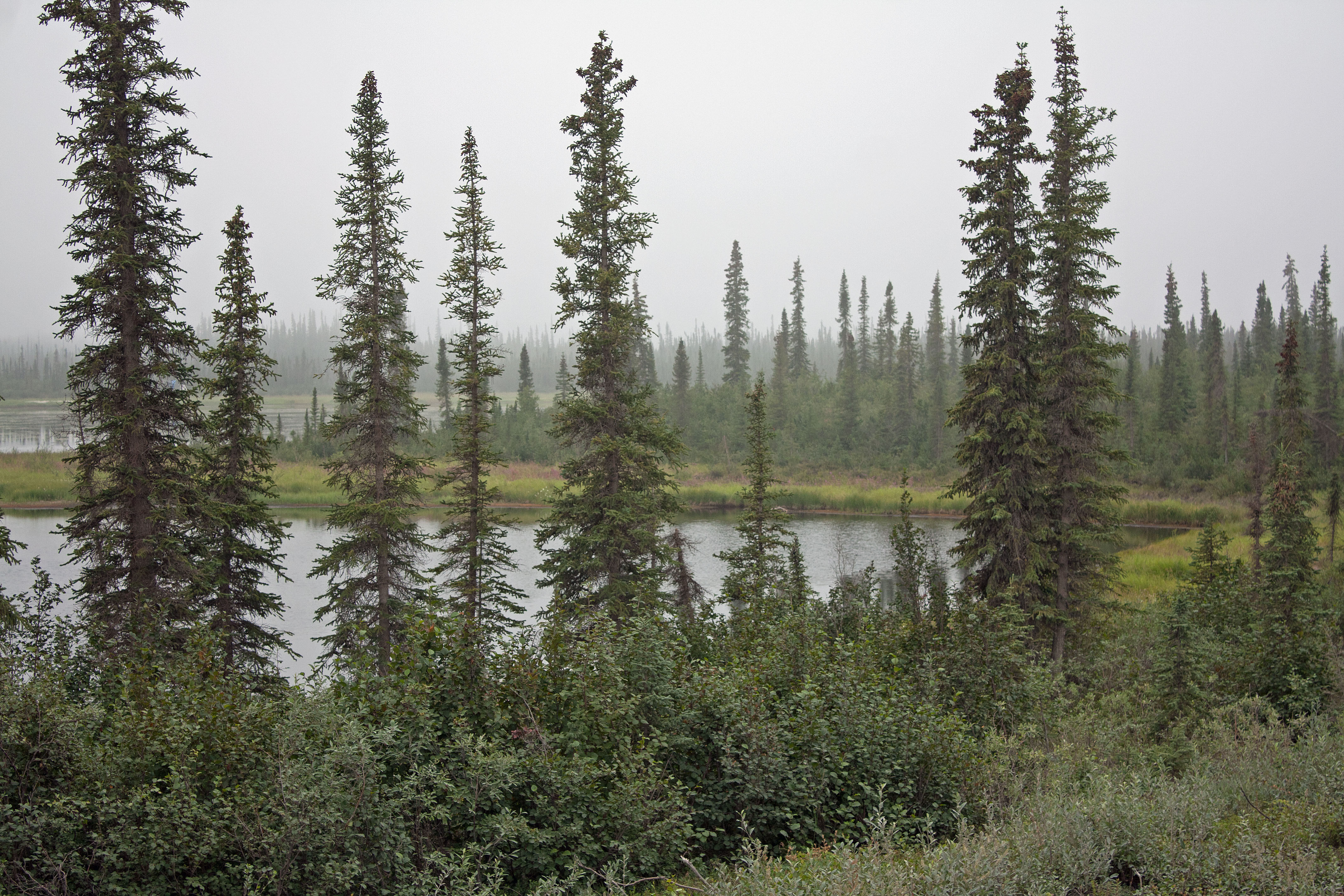
Black spruce forest on a mist-covered lake, off Dempster Highway just north of Fort McPherson, NWT (photo By Nina Munteanu)
.
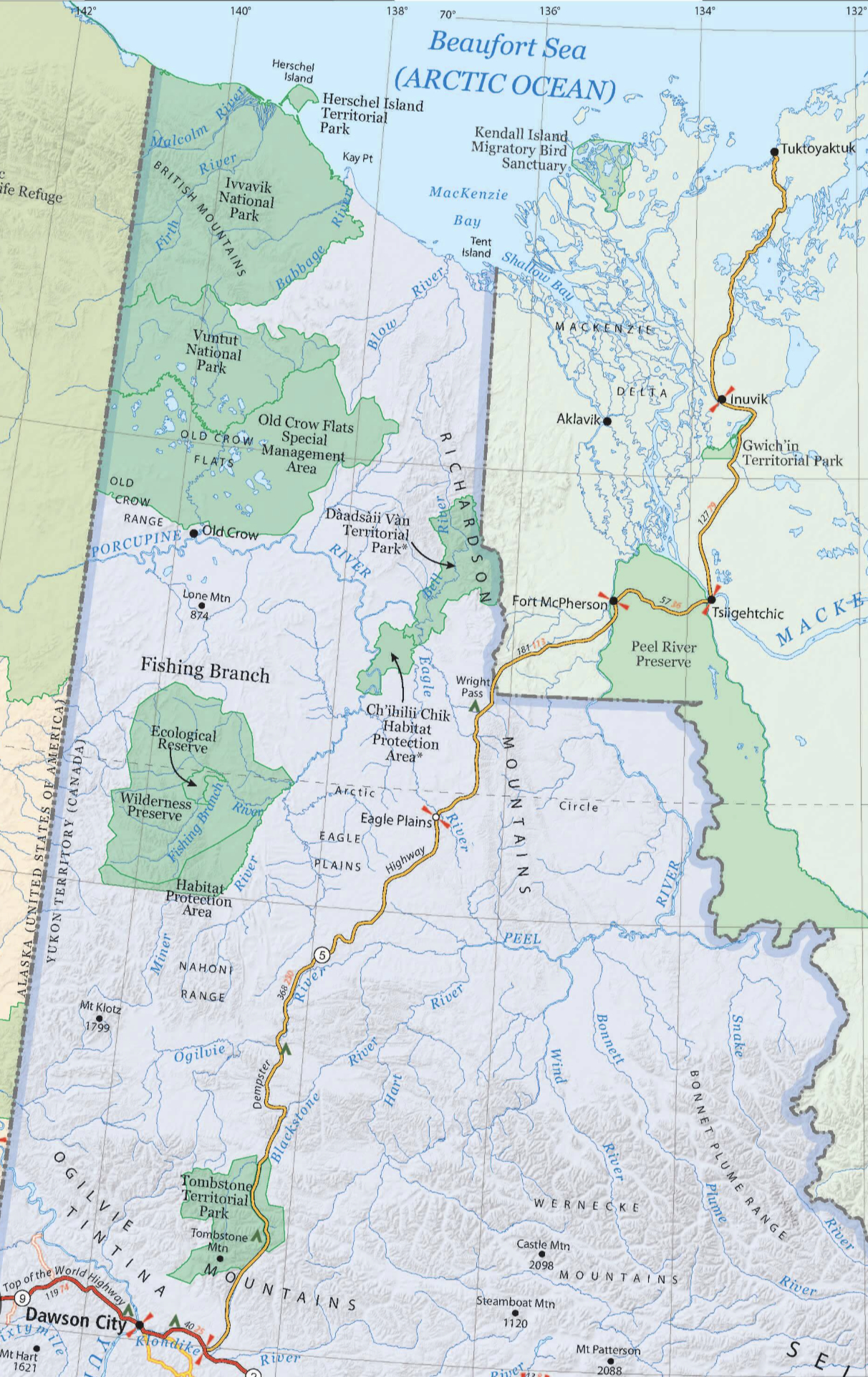
The Dempster, which runs north from Dawson City to Tuktoyaktuk, is renowned for its remote beauty and driving hazards. Drivers today are cautioned to take sufficient provisions, including a tire-fixing kit and spare tires. By the time Bobby-Jo is driving the Dempster in the 2050s, the permafrost is actively thawing. One of the characters describes it as: “a thin ribbon of shale and mud floating tenuously on an unstable sea of melting ice, slushy rock, and murky water.”
.
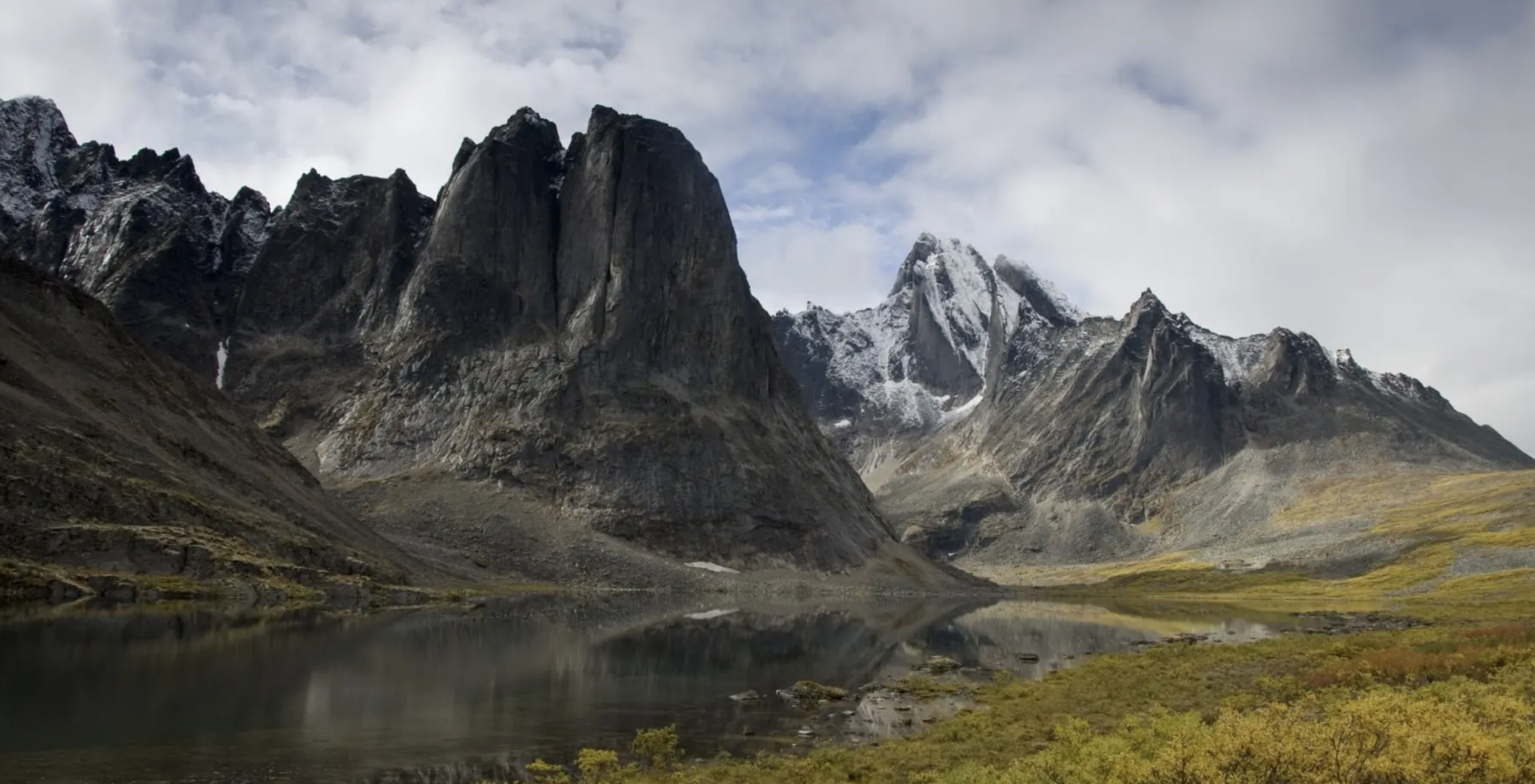
Tombstone Territorial Park, Yukon (photo by Yukon Travel)
The Dempster is a temperamental gravel and shale road originally built in 1978 when explorers found oil and gas in the deep bedrock of Eagle Plains. The highway roughly follows Jack Dempster’s original trail that he learned from the Gwich’in and old dogsled routes. They used two-metre thick berms of gravel and shale to prevent the road from sinking into the ground; other materials would cause the permafrost to thaw and buckle the road, creating small lakes. When the uunjit discovered that the deposits weren’t large enough to exploit, the Dempster turned into a ghost road. The road to riches turned into the road to nowhere, abandoned to the rugged wilderness of mountains and tundra and the wildlife that inhabit it. The Dempster was left to itself and its people.
Bobby-Jo, Thalweg
Bobby-Jo’s experience driving the Dempster north from Dawson City follows:
On a cloudy morning in late August, I drove the North Klondike Highway and turned north on the Dempster as it started to rain. After a few kilometres, the cracked pavement gave way to loose gravel. The car slid along the slick mud like a sled on snow.
The first stretch of the Dempster followed a wide valley of moraines fed by glaciers in the high granite peaks of the southern Ogilvie Mountains. In Tombstone Territorial Park I stopped the car and stepped out into the cold breeze to rest my eyes on the bald sheer towering rock that rose out of a broad sloping alpine valley with peaks sharp enough to cut the sky like a knife.
Gold, russet, gray-green, stunning yellow and purple carpeted the valley floor with impressionistic swirls of lichen, alpine shrubs, cotton grass and blazing fireweed. Dark flecks of stunted spruce trees and dwarf birch and willow added contrast. A fine mist flowed and pooled in the depressions of the lower slopes.
I breathed in the freshness of sub-arctic air and moist earth. It had stopped raining, but the moisture that clung to the air brought out an incredible richness of fragrances, an aria of sweet floral scents mixed with earth and tree pitch. It smelled like home. I inhaled slowly and deeply, filling my lungs with ancestral energy. It resonated deep inside me where this place lay embedded in my soul.
.
Dempster-Tuk Highway near Tuktoyaktuk, NWT (photo by Nina Munteanu)
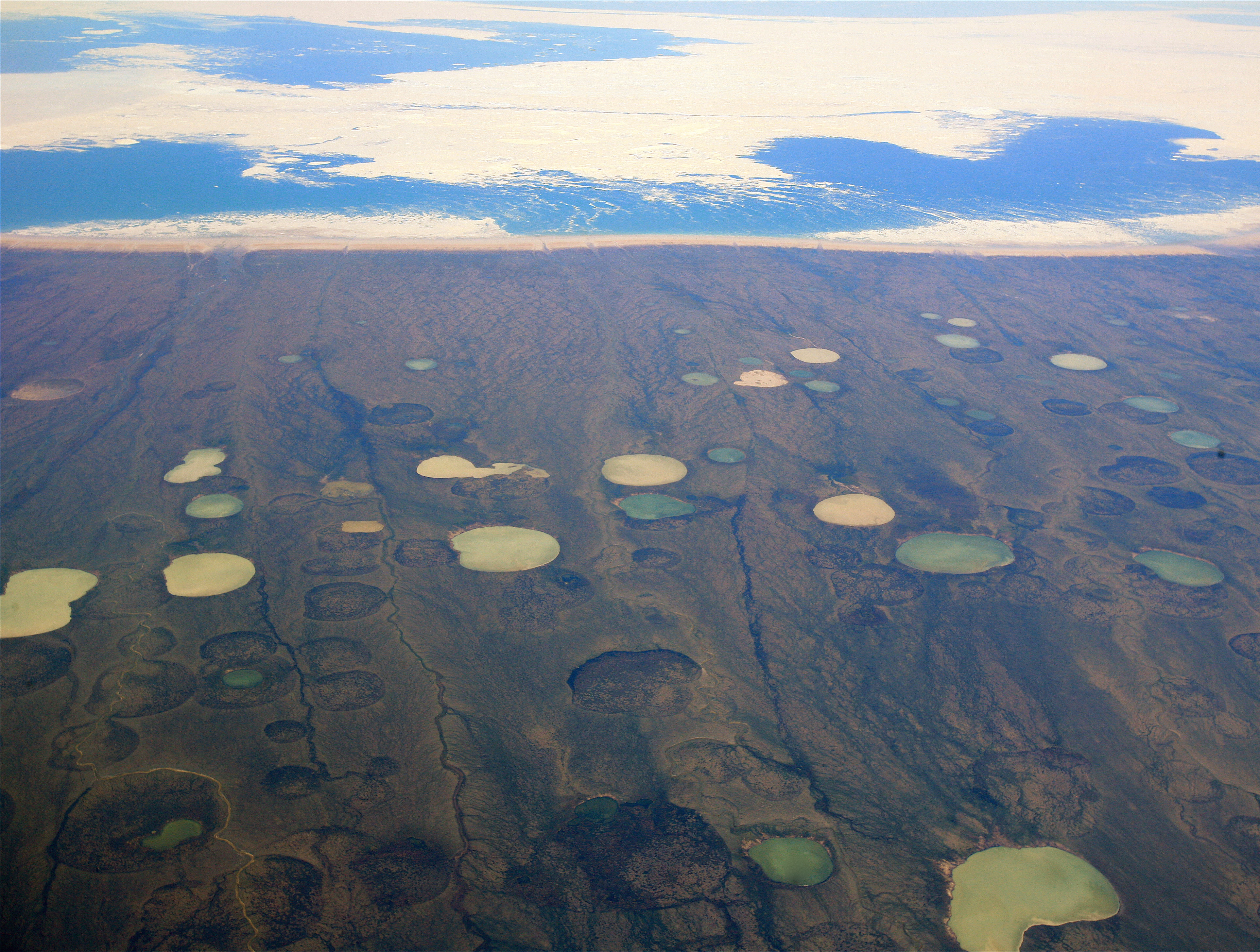
Permafrost thaw ponds in the Hudson Bay area (photo by Steve Jurvetsonjpg, 2008)
.
Bobby-Jo had chosen to study the nature of climate-induced thermokarst erosion and permafrost degradation in the Peel River region. Her thesis work involved creating a thermokarst landform model to predict and failure and slumping using networked sensors and inclinometers that detect small changes in the permafrost. The sensor would have accurately predicted whether the thawing permafrost would cause a thaw slump and send an alarm to the nearby community. She was still working on a prototype when her family disappeared in a deadly thaw-slump and Peel River flood.
All these water phenomena rippled out in a fractal storm that was changing my world in devastating ways. I was playing with band aids in a world of arterial gashes.
Bobby-Jo, Thalweg
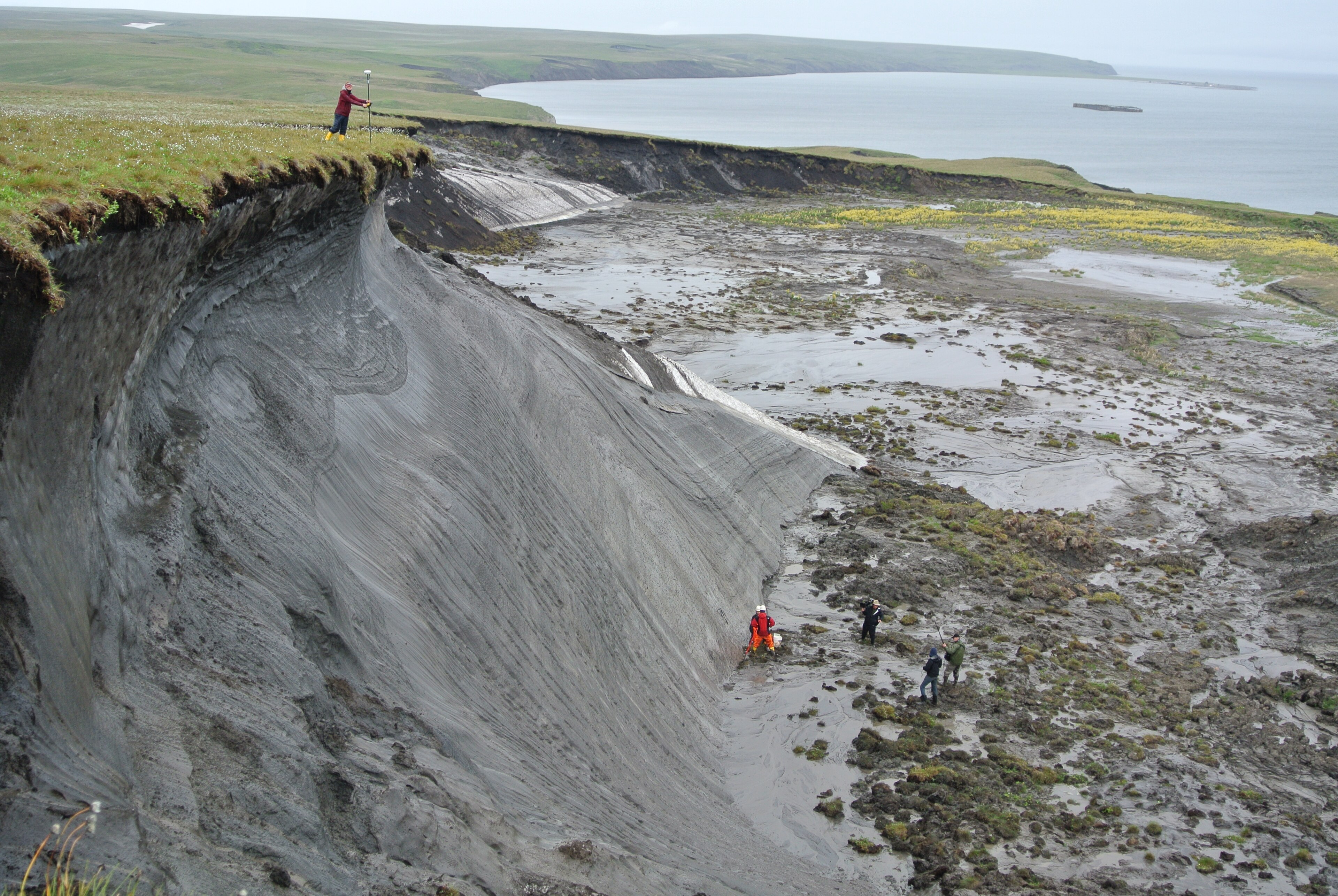
The Arctic is the Northern Hemisphere’s refrigerator, its frozen surface helps regulate the Earth’s climate system. And it is warming twice as fast as the rest of the planet. For decades, the Gwich’in and the Inuvialuit watched with growing trepidation as slumps and slides increased. I documented thaw slumps as large as 50 ha with headwalls as high as 35 m. That represented the downslope movement of hundreds of thousands of cubic metres of sediments.
.
Permafrost thaw slump, Herschel Island, Yukon (photo by Boris Radosavljevic, 2013)
.
The year I started my studies at U of T, a mega-slump in the Vittrekwa River watershed killed our neighbour Ben Snowshoe. He’d been camping off the river, hunting and trapping muskrat and other game and had been caught in a flash debris slide. They never found his body. That slump should have warned everyone. I should have warned them…somehow. Now it is too late.
—Bobby-Jo, Thalweg
When Bobby-Jo reaches her home of Fort McPherson, she finds only destruction:
I stand where the eastern bank of the Peel River used to be. A wet wind howls in from the distant Beaufort Sea, pelting my face with rain missiles. The crisp Arctic air smells of freshly turned earth, undercut by a musty odour of ripped and rotting vegetation. It’s the smell of change.
I’ve scrambled over uneven ground, a wild aggregate of rocks, debris and disturbed soil, with no indication of where the old river channel once was. The land has all been rearranged.
I am lost in my own home.
This is all that remains of Teetł’itZheh. My family are gone. Ropes of frozen slurry coil like scar tissue over what used to be a partly-forested village of nine hundred people. The actual river—the Teetł’it Gwinjik—has slithered east, cutting through the gravel Dempster Highway that sank to join the massive permafrost thaw. The river, debris, and ice have obliterated the ferry crossing and carved a new braided channel that snakes north, having choked the Mackenzie River delta with the detritus of a dying north.
I stare at the frozen moonscape of gullies, hillocks and boulders. Not one house, building, or street pole remains of the town…
Sitting there in the rain and the mud, I bend to the ground, surrendering to the water and its trickster power. First the river murders my family then it slinks off, leaving only torn up ropes of sediment for me to confront. And now it sends its minion rains to mock my sadness.
I think of water’s wily ways. How it maintains its existential integrity through its many transformations, from icy permafrost to liquid mud. To rain and snow and back to ice again in a constant cycle of change and renewal. Changing yet the same.
Maybe Johnny’s right. I don’t understand water at all. When he told me stories of his fishing adventures with Clarence on the Peel River, he used the language of a poet. Like Jijuu, Johnny claimed that water is alive, that it has intelligence and memory. Its living quality flows in a rhythmic dance as it finds synchronicity in paradox. Water needs to move and hates to be confined, they both kept saying, always managing to poke at what my father did [he helped build the Rocky Mountain Trench dam]. Is that why all this has happened?
.
Massive ice retrogressive thaw slump, Herschel Island (photo by Dave Fox)
.
The North is a celebration of contrasts. A wilderness of rugged beauty, often misunderstood. A place, both harsh and desolate yet incredibly rich and beautiful. A wild place that promises infinite possibilities yet intimate connection.
Climate change is changing all that; the permafrost is thawing. Along with the melting pingos, land is sinking and exposing dangerous sinkholes. Ground is slumping and landslides are increasing, coastlines are eroding to the sea, waterways are acidifying, and wildlife habits are changing:
Climate change and habitat destruction were silently destroying the Gwich’in’s way of life. Though, you’d never think it, looking at the pristine-like wilderness along the Dempster. That was the problem: much of the destruction was invisible. It isn’t seen; it’s felt I could hear Johnny say.
That was the North. More a mindset than a place. For most Canadians the North encompassed this collective myth of vast inaccessibility, and hostile grandeur. Early settlers’ portrayal of the North as hostile and isolated came from their inability to read the land and its rhythms, to know where the animals were and why they were there. The uunjit didn’t feel the land, Johnny kept saying. And because of that they would not know how to adapt to change.
Bobby-Jo, Thalweg
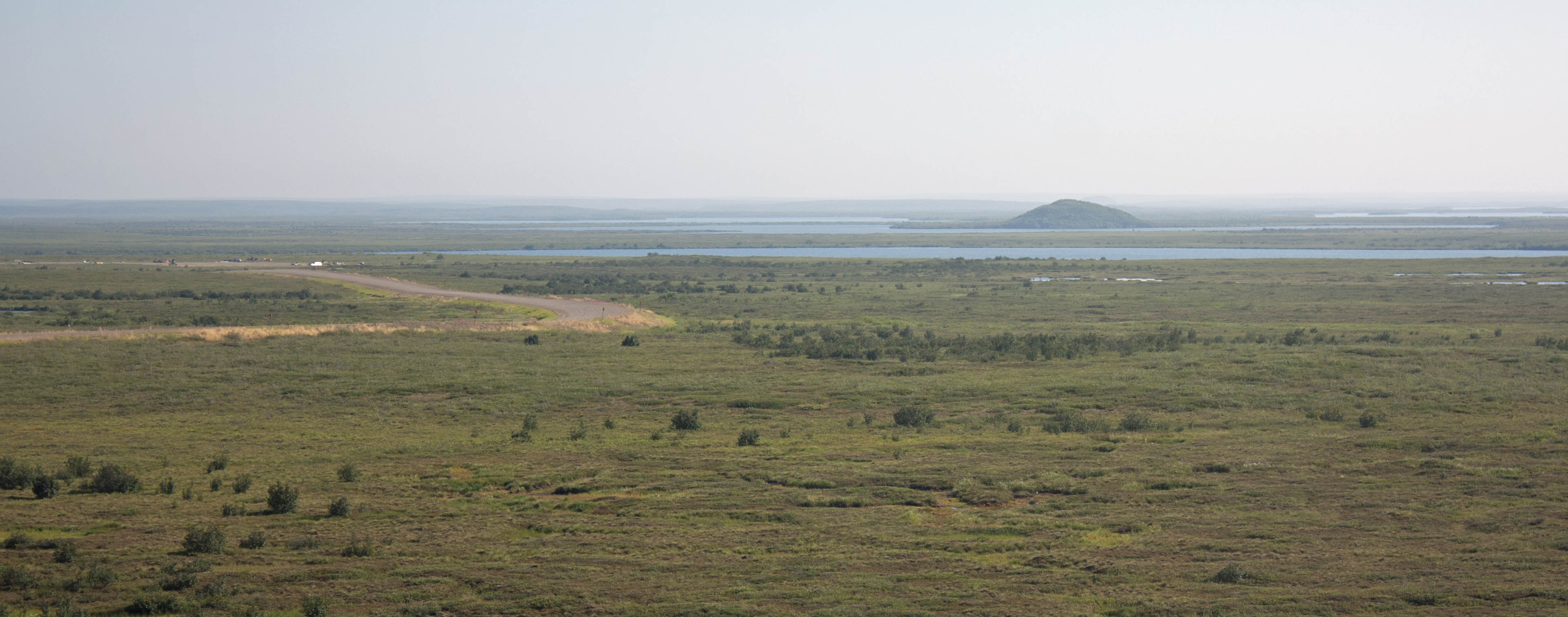
Road to Tuktoyaktuk with pingo in background, NWT (photo By Nina Munteanu)
.
Thalweg releases with Inanna Publications in Spring 2027.
.
Glossary:
NAWAPA-2: A fictionalized project (derived from the original NAWAPA plan conceived in 1964 by Parsons Engineering and US Army Corps of Engineers with a favourable review by Congress). Completed in 2031, it consists of over 240 dams, pipelines, canals, pumps and lifts, moving water at 6,300 cubic metres per second to hydrate the thirsty south and irrigate 160,000 square kilometres of the desert basins of the USA. Based on the revised plan by Parsons engineer Roland Kelley and the extended 2012 NAWAPA XXI plan by conspiracy theorist and convicted fraudster Lyndon LaRouche, the project flooded a tenth of British Columbia and inundating entire communities and First Nation heritage sites. Rugged wilderness rivers in northern Canada and Alaska that used to flow into the Arctic or Pacific Ocean now run backwards into the mountains.
Permafrost: Permafrost is ground (soil, rock, ice, and organic material) that remains at or below 0º C for at least two consecutive years (Jorgenson, 2013). Permafrost covers over half of Canada and most of its north. Permafrost is an efficient carbon sink, storing four times the carbon that was released to the atmosphere by human activities. Species that thrive in the permafrost habitats are highly adapted to their harsh conditions; these include the shallow roots of Black Spruce; the arctic fox that hunts lemming; the arctic hare that builds grass nests up on rocks instead of burrowing and eats snow when it’s thirsty. Cariboo find food and safe places to have their young in the bogs of the permafrost. Grasses, lichens and shrubs have adapted to the shallow soils of the tundra and protect the permafrost from thawing with a blanketing buffer. When permafrost thaws under a lake, microbes decompose organic material and convert it to methane.
Permafrost Degradation: A naturally or artificially caused decrease in the thickness and areal extent of permafrost (Jorgenson, 2013). Widespread degradation of near-surface permafrost (40-80%) is projected by 2100 (Abbott & Jones, 2015). Release of greenhouse gases from thawing permafrost is likely the largest terrestrial feedback to climate change and one of the most likely to occur (Abbott & Jones, 2015). Degradation of permafrost soils can lead to the collapse, drainage and disappearance of water bodies (Vincent et. al., 2011).
Permafrost Thaw: Permafrost thaw deepens the active layer and soil subsidence, which in turn changes hydrology and plant cover (Johansson et al., 2006). Thawing permafrost releases organic matter, gases, inorganic solutes, and microbiota into the surrounding environment. Permafrost thaw occurs in four main ways. The first happens when the active-layer (the thawing layer) thickens through air warming and increased rain and snow. That active layer may cut loose and start to slide in what’s called “active layer detachment failure,” causing catastrophic slumps and mudslides. The second way is through the formation of a talik, a layer of year-round unfrozen ground in a permafrost area. As the climate warms and the active-layer gets deep enough, the summer-thawed layer doesn’t refreeze; instead it forms a supra-permafrost talik, an island of unfrozen ground sandwiched between the seasonally thawing and freezing top layer and the permanently frozen layer beneath. The third way is through river and coastal erosion over time, particularly with rising sea levels and storm events. The fourth way is through thermokarst development, when catastrophic thaw of ice-rich permafrost results in ground subsidence (sinking).
Retrogressive Thaw Slump: Retrogressive thaw slumping is a process of permafrost degradation in which thaw of ice-rich permafrost on a hill slope causes soil structural instability and mass-wasting subsidence (Balser et. al., 2014). Triggered by warm weather and precipitation events, the destabilized active layer detaches and slides down slope, exposing the permafrost table below. Retrogressive thaw slumps continue to deepen and expand, forming steep headwalls up to 20 m deep, a floor of thawed and flowing debris, and a run out of restabilizing deposits. Retrogressive thaw slumps are the most active geomorphic features of thermokarst permafrost terrain. These are the most rapid and dramatic changes in permafrost regions resulting from global warming.
Thermokarst: As ice-rich permafrost and glacial terrain thaws, the melting ground ice causes the land surface to collapse through a series of processes resulting in the formation of an irregular land surface, called thermokarst, composed of hummocks and hollows. Permafrost collapse results in soil collapse or subsidence (Larouche et. al., 2015). Jorgenson characterizes 23 thermokarst landforms based on macro- and micro-topography. Three most common upland thermokarst morphologies include: active-layer detachment slides, thermos-erosion gullies, and retrogressive thaw slumps (Abbott & Jones, 2015). Thermokarst can export substantial quantities of sediment, carbon, nitrogen and phosphorus to Arctic streams, rivers and lakes (Larouche et. al., 2015).
.
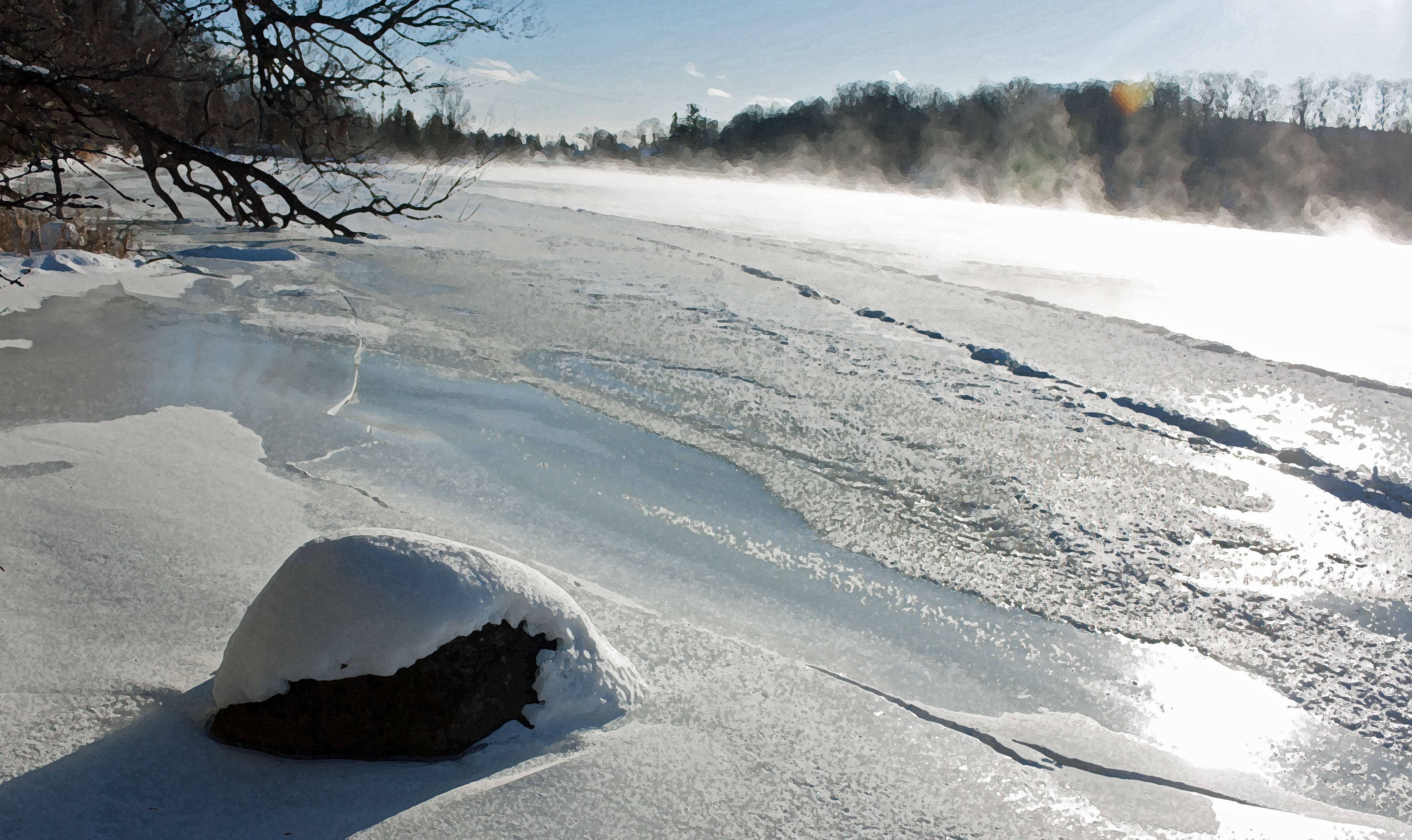
Snow and ice cover a river in Ontario (photo by Nina Munteanu)
.
Nina Munteanu is a Canadian ecologist / limnologist and novelist. She is co-editor of Europa SF and currently teaches writing courses at George Brown College and the University of Toronto. For the latest on her books, visit www.ninamunteanu.ca. Nina’s bilingual “La natura dell’acqua / The Way of Water” was published by Mincione Edizioni in Rome. Her non-fiction book “Water Is…” by Pixl Press (Vancouver) was selected by Margaret Atwood in the New York Times ‘Year in Reading’ and was chosen as the 2017 Summer Read by Water Canada. Her novel “A Diary in the Age of Water” was released by Inanna Publications (Toronto) in June 2020.Her latest eco-fiction novel Gaia’sRevolution was released by Dragon Moon Press in March 2026.